Blog

  • Building Small Town Water Resilience in Chikkaballapur District

    Building Small Town Water Resilience in Chikkaballapur District

    News –

    • The “Building Small Town Water Resilience in Chikkaballapur District” project, was launched in April 2026

    About –

    • It aims to improve water security for 300,000 residents across six drought-prone towns (Chikkaballapura, Bagepalli, Gowribidanur, Shidlaghatta, Gudibande, and Chintamani) in Karnataka.
    • Supported by the CDRI and implemented by IIHS,
    • Significance – This initiative focuses on risk-informed planning, water audits, and treated wastewater reuse to combat water shortages.
  • Ghaggar River | Andaman Sea | AZEC Plus and Maritime Security

    Ghaggar River

    Geography

    In News

    • Villages near the Ghaggar River report rising cancer cases linked to polluted water, but lack of data and poor healthcare hinder action.

    Ghaggar River in northern India

    • The Ghaggar River is an intermittent, monsoon-fed river in northern India.
    • It originates in the village of Dagshai in the Shivalik Hills of Himachal Pradesh at about 1,927 metres elevation and flows through Punjab and Haryana into Rajasthan.
    • Its main tributaries include the Kaushalya, Markanda, Sarsuti, Tangri, and Chautang rivers.

    Andaman Sea

    Geography

    In News

    • A boat carrying Rohingya refugees and Bangladeshi nationals from Bangladesh to Malaysia capsized in the Andaman Sea.

    Andaman Sea

    • The Andaman Sea is a marginal sea in the northeastern Indian Ocean.
    • It is bordered by Myanmar to the north and east, Thailand and Malaysia to the east, Indonesia to the south, and India’s Andaman and Nicobar Islands to the west.
    • It connects to the South China Sea through the Strait of Malacca and serves as an important international shipping route, especially between India and China.

    Additional Information – Rohingya Crisis

    • Rohingya – They are an ethnic group largely comprising Muslims who predominantly live in the Western Myanmar province of Rakhin
    • In Myanmar, they are classified as illegal migrants and foreigners residents.

    Convention Relating to the Status of Refugees

    • It is also known as the 1951 Refugee Convention.
    • It is a United Nations multilateral treaty which asserts that a refugee should not be returned to a country where they face serious threats to their life or freedom.
    • India’s membership – India is not a signatory to this Convention.

    International Covenant on Civil and Political Rights (ICCPR) 

    • Adopted in – It is a multilateral treaty adopted by the United Nations in 1966.
    • The covenant commits its parties to respect the civil and political rights of individuals including the right to life, freedom of religion, freedom of speech, freedom of assembly, electoral rights and rights to due process and a fair trial.

    India’s Stand on Rohingyas

    • Operation Insaniyat: In 2017, India launched “Operation Insaniyat” to provide relief assistance for the refugee camps in Bangladesh.

    AZEC Plus and Maritime Security

    International Relations

    Context

    • India, raised concerns over disruptions in maritime energy routes at the AZEC Plus meeting, amid tensions in the Strait of Hormuz, a critical global energy chokepoint.

    Asia Zero Emission Community (AZEC)

    • It is a Japan-led initiative launched in 2023
    • Objective – to promote decarbonisation, clean energy transition, and energy security in Asia.
    • It provides an alternative, Asia-centric model of energy transition, recognising diverse developmental needs of Asian economies.

    AZEC focuses on:

    • Facilitating technology transfer in clean energy (hydrogen, ammonia, renewables).
    • Supporting carbon neutrality goals while maintaining economic growth.
    • Strengthening energy supply chain resilience in the region.
    • AZEC Plus is an expanded framework that includes more Asian countries and global institutions such as Asian Development Bank and International Energy Agency.
    • It addresses emerging challenges like supply disruptions, critical mineral access, and maritime security.
  • 2025-26 Karnataka state literary and cultural awards

    2025-26 Karnataka state literary and cultural awards

    News –

    • The Karnataka Kannada and Culture Department, led by Minister Shivaraj Tangadagi, has announced the 2025-26 state literary and cultural awards, highlighting eminent achievers

    Key Award Highlights (2025-26):

    • Pampa Award: Noted writer Devanuru Mahadeva has been selected for this prestigious award.
    • Basava National Award: Awarded to religious personality Siddarama Sharana of Beldale.
    • Bhagwan Mahaveer National Peace Award: Awarded to BhanuKeerthi Bhattaraka Swami of the Jain Mutt in Kambadahalli.

    Literary & Theatre Awards:

    1. K.G. Kundanagara Gadinada Sahitya Award: Allabhaksh Meerasaheb Mirji
    2. Danachintamani Attimabbe Award: Sukanya Maruthi
    3. Dr. Gubbi Veeranna Award: G.V. Sharada
    4. B.V. Karanth Award: Prasanna
    5. Dr. Siddalingaiah Literary Award: Gangarama Chandala
    6. Kumaravyasa Award: Kallinatha Shastry

    Art & Dance Awards:

    1. Varna Shilpi Venkatappa Award: V. Hari Ram
    2. Jakanachari Award: Ashok Gudigar
    3. Natyarani Shantala Award: Prathibha Prahlad

    Folklore & Social Awards:

    1. Janapadasri Award: M. Mahadevaiah and B. Lakshmana
    2. Sangolli Rayanna Award: Siddanagouda Patil
    3. Akka Mahadevi Award: K. Neela
    4. Kayakayogi Siddarameshwara Award: S.G. Siddaramaiah

    Additional Information – Pampa Award (Pampa Prashasti)

    • It is the highest literary honour in Karnataka.
    • Established in 1987. It is named after Adikavi Pampa, the first great Kannada poet.
    • Focus: Exceptional lifetime contribution to Kannada literature.
    • Prize: ₹5 lakh cash, a citation, a memento, and a shawl.
    • Latest Winner (2025-26): Devanur Mahadeva has been selected for the upcoming cycle.
    • Historical Fact: The first recipient was Kuvempu in 1987 for his epic Sri Ramayana Darshanam.
  • India’s New Deportation Policy | BRICS and Quad Groupings | Cancer-Fighting Herbs of Konyak Naga Tribe | Glufosinate

    India’s New Deportation Policy

    Governance

    In News

    • Recently, the new deportation policy was issued by the Ministry of Home Affairs.

    Deportation

    • It  is a formal legal process where foreigners suspected of staying illegally in India are detained, tried in court, and deported only after all legal steps are completed and their identity is confirmed with their home country.
    • Under the Citizenship Act, 1955, an “illegal migrant” is defined as a foreigner who either entered India without valid travel documents, or entered legally but remained beyond the permitted period.

    Key Features of the New Policy

    • 30-Day Verification Deadline: States/UTs must identify and verify the credentials of illegal migrants within 30 days, triggering automatic deportation upon failure to meet the deadline.
    • District-Level Special Task Forces (STFs): Newly established district-level police units are dedicated to identifying and holding undocumented migrants, often in designated, fenced centres.
    • Biometric & Data Tracking: Mandatory digitization of biometric data via the Foreigners’ Identification Portal (FIP) is enforced for tracking, with data shared between UIDAI (Aadhaar), the Election Commission of India, and the Ministry of External Affairs (MEA) to prevent identity fraud. 

    Statutory Changes (Immigration and Foreigners Act, 2025)

      • The Immigration and Foreigners Act, 2025, active from September 1, 2025, replaces colonial-era laws, including the 1946 Foreigners Act. 
      • Expanded Authority: The Bureau of Immigration receives statutory status, granting officials greater powers to deny entry based on “adverse security reports”.
    • Stricter Penalties: Penalties for illegal entry increase to up to 5 years of imprisonment and fines up to ₹5 lakh.
    • Exemptions: Aligned with the Citizenship Amendment Act (CAA), the Immigration and Foreigners (Exemption) Order, 2025, spares specific religious minority groups from Afghanistan, Bangladesh, and Pakistan who entered before 2025.

    BRICS and Quad Groupings

    International Relations

    In News

    • India is going to host major diplomatic meetings including the BRICS Foreign Ministers’ meeting and the Quad Foreign Ministers’ meeting.

    BRICS

    • Founded in – 2009
    • HeadQuarters – Shanghai
    • It is an acronym for the grouping of the world’s leading emerging economies, namely Brazil, Russia, India, China, and South Africa (included in 2010)
    • Origin – The term “BRIC” was coined by the British Economist Jim O’Neill in 2001 to describe the four emerging economies of Brazil, Russia, India, and China.
    • Recent Expansion (BRICS+): In 2024–2025, the bloc expanded to include Egypt, Ethiopia, Iran, the UAE, and Indonesia. Saudi Arabia has received an invitation but has not yet formalized its membership.
    • Share of BRICS – BRICS brings together five of the largest developing countries, representing 41% of the global population, 24% of the global GDP, and 16% of the global trade (By 2028, BRICS is expected to make up 35 percent of the global economy)
    • Chairmanship – The chairmanship of the forum is rotated annually among the members.

    Initiatives of BRICS

    1. New Development Bank (NDB)
    2. Contingent Reserve Arrangement (CRA)
    3. BRICS Payment System
    4. Customs Agreements
    5. Constellation of Remote Sensing Satellites

    New Initiative

    • BRICS is planning to launch its own “new currency” system, a major step towards de-dollarization (reducing dependence on the US dollar for trade).

    India’s 2026 Presidency

    • India assumed the BRICS Presidency on January 1, 2026, taking over from Brazil.
    • 18th Summit: India is set to host the 18th BRICS Summit in 2026.
    • Theme: “Building for Resilience, Innovation, Cooperation, and Sustainability”.
    • Key Pillars: Resilience, Innovation, Cooperation, and Environmental Sustainability

    Cancer-Fighting Herbs of Konyak Naga Tribe

    Health

    Context

    • A recent study by Nagaland University has identified the anti-cancer potential of traditional herbal medicine used by the Konyak Naga tribe.

    Konyak Naga Tribe

    • Habited in – It is one of the largest Naga tribes of Nagaland, inhabits mainly the Mon district of Nagaland.
    • Konyaks were historically known for the practice of headhunting, which was linked to warrior status and prestige.
    • The traditional political system is headed by hereditary chiefs known as Angh
    • Konyak language belongs to the Tibeto-Burman language family.
    • The primary occupation is jhum (shifting cultivation).
    • Major festival: Aoleang Festival, celebrated in April to mark the New Year and sowing season.

    Glufosinate

    Science and Technology

    In News

    • The government has imposed a six-month restriction on imports of glufosinate and its salts, a herbicide used in farming.

    Glufosinate-ammonium

    • It is a herbicide used to control a broad range of weeds.
    • It is highly water-soluble and has low potential to leach into groundwater.
    • It is considered highly hazardous, with risks including neurotoxicity, reproductive harm, cardiovascular effects, and fetal damage
    • Its volatile nature exposes farmers and nearby populations through inhalation and skin contact.
  • Yana Caves

    Yana Caves

    News –

    • The Yana Caves, located in Karnataka’s Uttara Kannada district, were officially declared a Geo-Heritage Site of National Importance by the Geological Survey of India (GSI) in April 2026.

    Key Geographical & Geological Features:

    • Location: Situated in the Western Ghats near Gokarna, within the Kumta forest range of the Sahyadri mountains.
    • Composition: Composed of solid, black dolomitic limestone that has been shaped by karstification (dissolution of rock by water).
    • Geo-Heritage Status: Recognized by the GSI for their scientific and cultural value, featuring 61 distinct karst formations in the surrounding 3 km radius.
    • Geological Age: The rock formations are estimated to be around 2,700 million years old.

    Mythological & Cultural Significance:

    • Bhasmasura Legend: Local lore associates the blackened appearance of the rocks with the fire from the episode where Lord Vishnu (as Mohini) tricked the demon Bhasmasura into burning himself.
    • Temple Site: A cave temple dedicated to Lord Shiva (Bhairaveshwara) exists at the base of the larger peak, attracting many pilgrims.
    • A small stream called Chandihore, believed to be sacred, originates from the roof of the caves and flows into the Aghanashini river.

    Significance

    • Environment & Biodiversity: The site is nestled in the biodiversity-rich Western Ghats (a UNESCO World Heritage Site).
    • Geography: Excellent example of karst topography (fissures, caves, sinkholes) in a tropical region.
    • Culture: Represents the intersection of geology and mythology.
  • Ambedkar Jayanti | 9th Indian Ocean Conference | India Rejects China’s Fictitious Naming of Places in Arunachal Pradesh | Project HIM SAROVAR | National Agriculture Market (e-NAM)

    Ambedkar Jayanti

    History

    Context

    • On April 14, India commemorates Ambedkar Jayanti, marking the 135th birth anniversary of Dr. BR Ambedkar.

    Dr. Bhimrao Ambedkar

    • Babasaheb Dr. Bhimrao Ambedkar was a social reformer, jurist, economist, author, polyglot (knowing or using several languages), orator, a scholar and thinker of comparative religions.
    • Birth – He was born in 1891 in Mhow, Central Province (now Madhya Pradesh).

    Brief Profile

    • He is known as the Father of the Indian Constitution and was India’s first Law Minister.
    • He was the Chairman of the Drafting Committee of the Constitution.
    • He was a well-known statesman who fought for the rights of the Dalits and other socially backward classes.

    Contributions

    • He led the Mahad Satyagraha in March 1927 against Hindus who were opposing the decision of the Municipal Board which had barred the untouchables from using water from the mahad tank.
    • In 1926, the Municipal Board of Mahad (Maharashtra) passed an order to open the tank to all communities.
    • He participated in all three Round Table Conferences.
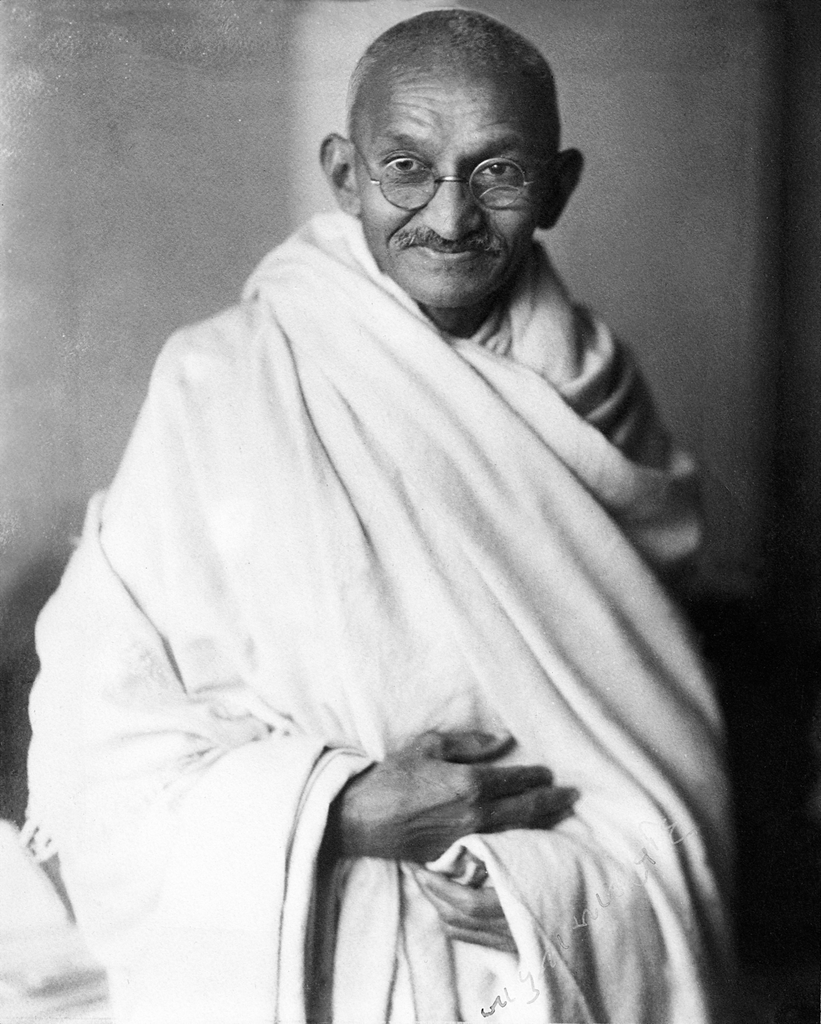
    • In 1932, Dr. Ambedkar signed the Poona pact with Mahatma Gandhiji, which abandoned the idea of separate electorates for the depressed classes (Communal Award).
    • However, the seats reserved for the depressed classes were increased from 71 to 147 in provincial legislatures and to 18% of the total in the Central Legislature.
    • His ideas before the Hilton Young Commission served as the foundation of the Reserve Bank of India (RBI).

    Election and Designation

    • In 1937, he was elected to the Bombay Legislative Assembly as a legislator (MLA).
    • He was appointed to the Executive Council of Viceroy as a Labour member in 1942.
    • In 1947, Dr. Ambedkar accepted PM Nehru’s invitation to become Minister of Law in the first Cabinet of independent India.

    Shift to Buddhism

    • He resigned from the cabinet in 1951, over differences on the Hindu Code Bill. He converted to Buddhism in 1956.
    • He was awarded India’s highest civilian honour the Bharat Ratna in 1990.

    Important Works

    Journals

    • Mooknayak (1920), Bahishkrit Bharat (1927), Samatha (1929), Janata (1930).

    Books

    • Annihilation of Caste, Buddha or Karl Marx, The Untouchable: Who are They and Why They Have Become Untouchables
    • Buddha and His Dhamma
    • The Rise and Fall of Hindu Women

    Organizations

    • Bahishkrit Hitkarini Sabha (1923)
    • Independent Labor Party (1936)
    • Scheduled Castes Federation (1942)

    Death

    • He died on 6th December 1956.
    • Chaitya Bhoomi is a memorial to B R Ambedkar, located in Mumbai.

    Relevance of Ambedkar in Present Times

    • Caste-based inequality in India still persists. While Dalits have acquired a political identity through reservation and forming their own political parties, they lag behind in social (health and education) and economic dimension.

    9th Indian Ocean Conference

    Defence/Security

    Context

    • The External Affairs Minister addressed the 9th Indian Ocean Conference, which was centered on the theme “Collective Stewardship for Indian Ocean Governance.”

    Indian Ocean Conference

    • It is a premier annual consultative forum launched in 2016 by the India Foundation
    • Objective – to discuss regional cooperation, maritime security, and economic development in the Indian Ocean Region (IOR).
    • Significance – It connects over 40 countries—including ministers and experts—focused on the SAGAR (Security and Growth for All in the Region) vision.
    • The 9th edition was held in Mauritius (April 2026), with the 8th held in Oman.

    Additional Information – Government Initiatives

    • Sagarmala Programme-Supports port infrastructure, coastal development, and connectivity.
    • Maritime India Vision 2030 (MIV 2030): Aiming for India to become a top 10 shipbuilding nation by 2030 and create a world-class, efficient, and sustainable maritime ecosystem.
    • Sagarmanthan Dialogue: An annual maritime strategic dialogue to position India as a global center for maritime conversations.
    • Maritime Development Fund: ₹25,000 crore fund for long-term financing to modernize ports and shipping infrastructure, encouraging private investment.
    • Launch of MAHASAGAR (Mutual and Holistic Advancement for Security and Growth for All in the Region) reflects India’s strategic rebranding in the IOR.
    • Naval Modernisation and Indigenous Development: India is modernising naval capabilities:
    • Commissioning indigenous warships (e.g., INS Vikrant, INS Visakhapatnam).
    • Boosting maritime domain awareness and power projection.

    India Rejects China’s Fictitious Naming of Places in Arunachal Pradesh

    International

    In News

    • India has strongly rejected China’s attempts to assign “fictitious names” to places it considers part of its territory, calling such actions “mischievous” and harmful to bilateral relations.

    China’s actions

    • China claims Arunachal Pradesh as “southern Tibet” (Zangnan)
    • It has issued multiple lists of renamed locations since 2017, which India consistently rejects as invalid.
    • China is creating administrative units such as He’an and Hekang counties in areas of Ladakh, including parts of Aksai Chin, which is a long-standing border dispute region.
    • China has also reportedly created a new county, Cenling.

    Cenling

    • It is located near the Karakoram mountain range, which falls in the vicinity of Pakistan-occupied Kashmir (PoK) and Afghanistan’s Wakhan corridor.
    • He’an – It included parts of the Aksai Chin plateau, which has been in focus because of the long-running India-China border issue.
    • India’s Response The Ministry of External Affairs (MEA) reiterated that regions like Arunachal Pradesh and other disputed areas are “integral and inalienable” parts of India.

    Line of Actual Control (LAC)

    • The LAC is the demarcation that separates Indian-controlled territory from Chinese-controlled territory.
    • India considers the LAC to be 3,488 km long, while the Chinese consider it to be only around 2,000 km.
    • It is divided into three sectors: the eastern sector which spans Arunachal Pradesh and Sikkim, the middle sector in Uttarakhand and Himachal Pradesh, and the western sector in Ladakh.

    Project HIM SAROVAR

    Environment

    Context

    • Project Him Sarovar has been launched in Ladakh.

    Project Him Sarovar

    • It is a scientific water conservation initiative launched on April 10, 2026,
    • The project aims to address chronic water scarcity in the region by creating 50 small water bodies to capture and store annual snowmelt and rainwater.

    Key Objectives & Impact

    • Water Security: To provide year-round water availability for irrigation and rural needs in the high-altitude cold desert, where melting snow often goes to waste.
    • Climate Resilience: Serving as a “shield” against the visible impacts of climate change, such as receding glaciers and falling water tables.
    • Infrastructure Plan: The goal is to construct 50 reservoirs—30 in Leh and 20 in Kargil—within the next year.
    • Restoration Goals: Aligns with the national vision of restoring 2.6 crore hectares of degraded land by 2030

    National Agriculture Market (e-NAM)

    Economy

    Context

    • The e-NAM portal reflects increasing market integration, with the number of connected mandis rising from 1,389 in 2024 to 1,656 as of March 2026, spanning 23 States and 4 Union Territories.

    National Agriculture Market (e-NAM)

    • It is a pan-India electronic trading portal launched on April 14, 2016.
    • It functions as a “central sector scheme” fully funded by the Central Government via the Agri-Tech Infrastructure Fund (ATIF).
    • Its primary goal is to create a unified national market for agricultural commodities by networking existing Agricultural Produce Market Committee (APMC) mandis.

    Core Objectives

    • Unified National Market: Integrating state-level markets to facilitate pan-India trade, moving towards the vision of “One Nation, One Market”.
    • Transparent Price Discovery: Enabling real-time price discovery based on actual demand and supply through transparent online auctions.
    • Reducing Intermediaries: Minimising the role of middlemen to ensure farmers receive a larger share of the final consumer price.
    • Quality Assuring: Implementing quality assaying and grading so that prices are commensurate with produce quality.
  • Global Innovation Alliance (GIA) 2.0

    Global Innovation Alliance (GIA) 2.0

    News –

    • The Karnataka government will launch Global Innovation Alliance (GIA) 2.0 on April 17, 2026, in New Delhi during the ‘Bridge to Bengaluru 2026’ event.

    Global Innovation Alliance (GIA) 2.0

    • Objective – This initiative aims to strengthen international technology partnerships, support startups with global market access, and deepen sector-specific collaborations in areas like AI and deep tech.
    • The event will feature over 80 countries, aiming to position Karnataka as a global innovation gateway.
  • Constitution of India in Sindhi Language | Justice Varma Resigns Amid Proceedings For Removal | Keytruda | Sentinel Species

    Constitution of India in Sindhi Language

    Syllabus: GS2/Governance

    In News

    • Recently, the Vice-President released the latest version of the Constitution of India in the Sindhi language in both Devanagari and Persian scripts.
    • About Sindhi
    • It is an Indo-Aryan language spoken in Pakistan and in India, with smaller communities worldwide.
    • It was officially included in the Eighth Schedule of the Constitution of India by the 21st Constitutional Amendment Act 1967.
    • It is one of the oldest and most melodious languages with a rich literary tradition blending Vedantic and Sufi philosophies that promote unity, love, and brotherhood.
    • Original Language of the Constitution
    • Drafted originally in English, a Translation Committee under Ghanshyam Das Gupta produced the official Hindi version.
    • Both English and Hindi versions were signed by Constituent Assembly members and submitted to Rajendra Prasad on 24 January 1950.
    • Source :Air

    Justice Varma Resigns Amid Proceedings For Removal

    Syllabus: GS2/Polity & Governance; Judiciary

    Context

    • Recently, Justice Yashwant Varma, an Allahabad High Court judge submitted his resignation to the President of India..
    • About Judiciary in India
    • India has a single unified judiciary (unlike the US dual system).
    • Supreme Court of India (Top level); Articles 124–147
    • High Courts (State level); Articles 214–231
    • Subordinate Courts (District & lower courts); Articles 233–237
    • This structure ensures uniform interpretation of law across the country.
    • Key Features of Indian Judiciary
    • Independence of Judiciary (basic structure doctrine)
    • Judicial Review, as it can strike down unconstitutional laws
    • Separation of Powers
    • Rule of Law
    • High Court Judges
    • High Court judges are governed mainly by:
    • Article 214: High Courts for States
    • Article 216: Constitution of High Courts
    • Article 217: Appointment & conditions of office
    • Article 218: Application of provisions of removal (same as SC judges)
    • Article 219: Oath or affirmation
    • Article 220–224: Other provisions (practice restrictions, additional judges, etc.)
    • Appointment of High Court Judges [Article 217(1)]: By the President of India, after consultation with the Chief Justice of India (CJI), Governor of the State, and Chief Justice of the High Court (for other judges).
    • Qualifications: A person must be a citizen of India. Held judicial office for 10 years, or been an advocate of a High Court for 10 years.
    • Tenure (Term of Office): Holds office until age of 62 years (Article 217(1))
    • Oath or Affirmation (Article 219): Judge must take oath before the Governor of the State; Oath includes upholding Constitution, and performing duties without fear or favour.
    • Removal of High Court Judges
    • Grounds: Proved misbehaviour & Incapacity;
    • Procedure (Impeachment-like): Motion introduced in Parliament; supported by special majority (majority of total membership, and 2/3rd of members present & voting), address sent to President and President orders removal.
    • Resignation: Judge may resign by writing to the President of India.
    • Source: News On AIR

    Keytruda

    Syllabus: GS2/Health

    Context

    • Recent investigations exposed a dangerous counterfeit market for Keytruda in India, fuelled by hospital-level supply chain breaches.
    • What is Keytruda?
    • Brand name for Pembrolizumab, a revolutionary immunotherapy / checkpoint inhibitor drug for advanced and aggressive cancers.
    • Manufactured by Merck & Co. (USA) known as MSD outside the US and Canada.
    • Unlike traditional treatments that attack tumours directly, Keytruda empowers the body’s own immune system to identify and destroy cancer cells.
    • Immunotherapy
    • Immunotherapy is a type of medical treatment that uses the body’s own immune system to fight diseases.
    • While chemo and radiotherapy directly kill cancer cells and some healthy cells along with it, immunotherapy pushes the body’s own immune system to recognise and kill cancer cells.
    • Being highly targeted, immunotherapy spares healthy cells.
    • These therapies have been shown to extend life even in patients with aggressive forms of cancer.
    • Other Types of Immunotherapy for Cancer Treatments
    • CAR-T cell therapy involves collecting a patient’s own T cells, engineering them to create chimeric receptors, multiplying these modified cells, and returning them to the patient.
    • These engineered T cells can then identify, attach to, and destroy cancer cells that would normally evade immune detection.
    • mRNA vaccines for cancer are currently under development.
    • Unlike vaccines for infections given to healthy individuals, cancer vaccines are administered to patients who already have certain cancers to prevent relapse.
    • These vaccines train the immune system to identify proteins called neoantigens found only in cancer cells.
    • Once recognised, the immune system remembers these markers for years, continuing to fight cancer and prevent recurrence.
    • Implications for India’s Cancer Fight
    • Rising Burden: India’s cancer cases projected to surge by nearly 74% by 2045 making access to drugs like Keytruda critical.
    • Affordability Crisis: Extreme cost creates a dual-tier health system, only the wealthy or specially insured can access top-tier immunotherapy.
    • Counterfeit Risk: Price-driven desperation has opened the door to fake drug markets, with hospital supply chains as weak links posing lethal risks to patients.
    • Source: IE

    Sentinel Species

    Syllabus: GS3/Environment

    Context

    • Emperor Penguin (Aptenodytes forsteri) upgraded from Near Threatened to Endangered on the IUCN Red List, driven by climate-induced sea-ice loss.
    • As a sentinel species, its decline signals broader Antarctic ecosystem stress, populations projected to halve by the 2080s.
    • What is a Sentinel Species?
    • It is a plant or animal whose health reflects the overall condition of the ecosystem it inhabits.
    • They respond quickly and visibly to environmental stressors such as pollution, disease, and climate change.
    • They act as early warning systems, allowing detection of ecological imbalance before it becomes widespread.
    • Examples of Sentinel Species
    • Amphibians (Frogs): Frogs have permeable skin, making them highly sensitive to pollutants and pathogens. Decline in frog populations is often an early indicator of ecosystem stress.
    • Canaries in Coal Mines: Historically used to detect carbon monoxide poisoning. They showed distress before humans due to faster metabolism.
    • Honeybees: Used to monitor agricultural chemicals and pesticide loads. Decline in bee populations signals ecosystem imbalance and pollination crisis.
    • Polar Bears: Indicators of Arctic ecosystem health and contaminant accumulation. Reflect impacts of climate change and ice loss.
    • About IUCN
    • Created in 1948.
    • Headquarter: Gland, Switzerland
    • It is a membership union, and works closely with international frameworks.
    • India, a State Member since 1969.
    • It is an intergovernmental and NGO network (hybrid organisation)
    • Source: TH
  • e-Swathu 2.0

    e-Swathu 2.0

    News –

    • Minister Priyank Kharge announced crucial upgrades to the e-Swathu 2.0 platform to resolve technical glitches and improve user experience

    E-Swathu 2.0

    • It is an upgraded digital platform launched by the Karnataka government in late 2025 to manage rural property records.
    • Mandate – It aims to eliminate land fraud by mandating geo-tagging (GPS mapping) for every property before issuing essential documents like Form 9 and Form 11.

    Key Features of E-Swathu 2.0

    • Mandatory Geo-Tagging: Properties must be physically mapped with GPS coordinates to link digital records to their exact spatial location.
    • Unique PID Number: Every verified property receives a unique Property Identification (PID) number, creating a “digital fortress” against fake claims.
    • Simplified Applications: Supports Aadhaar-based verification and online tracking for property ownership and tax data.
  • Project Glasswing | Indus River Dolphin | Light Pollution: Rising Threat from Artificial Light at Night (ALAN)

    Project Glasswing

    Syllabus: GS/ Science & Technology

    Context

    • Anthropic has launched Project Glasswing, a global cybersecurity initiative linked to its advanced AI model Claude Mythos.
    • What is Project Glasswing?
    • Project Glasswing is a global cybersecurity initiative led by Anthropic.
    • It is a consortium of around 40 global technology firms and open-source contributors aimed at securing critical digital infrastructure, using advanced Artificial Intelligence.
    • The project provides early access to the Claude Mythos model to selected partners. It is backed by;
    • $100 million in AI usage credits,
    • $4 million support for open-source security.
    • Major participating firms include: Amazon Web Services, Apple, Google, Microsoft, NVIDIA etc.
    • Role of Claude Mythos
    • Claude Mythos is an advanced Large Language Model (LLM) with exceptional coding and vulnerability detection capabilities. It can;
    • Detects zero-day vulnerabilities (previously unknown flaws).
    • Identify decades-old bugs in widely used systems.
    • Combine vulnerabilities to gain system-level control.
    • Source: TH

    Indus River Dolphin

    Syllabus: GS3/Species in News

    Context

    • The dolphin is one of the world’s most endangered freshwater cetaceans and a flagship species of the Indus river system.
    • Indus River Dolphin
    • Cetaceans are aquatic mammals which include whales, dolphins and porpoises.
    • Indus River Dolphin was once distributed across the Indus and its tributaries in Pakistan and northwestern India.
    • But its range has drastically contracted due to flow regulation, loss of connectivity, pollution, climate change and entanglement in fishing gears.
    • The Indus river dolphin is functionally blind, it relies entirely on echolocation to navigate, hunt and avoid obstacles.
    • indus river dolphin
    • Source: DTE

    Light Pollution: Rising Threat from Artificial Light at Night (ALAN)

    Syllabus: GS3/Environment

    Context

    • A study published in the journal Nature has found that artificial light at night increased by 16% globally between 2014 and 2022.
    • The sharpest rise has been observed in Sub-Saharan Africa and Southeast Asia, with India and China emerging as major contributors in Asia.
    • What Is Light Pollution?
    • Light pollution is the human-made alteration of outdoor light levels from those occurring naturally. In practical terms, it refers to unwanted, inappropriate, or excessive artificial lighting, primarily caused by Artificial Light at Night (ALAN).
    • It is increasingly recognised as an anthropogenic environmental pollutant. It is estimated that:
    • Over 80% of the world’s population lives under light-polluted skies;
    • Around 23% of Earth’s land area is affected by skyglow.
    • Causes
    • Rapid urbanisation: Today, about 55% of the global population lives in urban areas, and this is projected to rise to 68% by 2050, significantly increasing the demand for outdoor lighting.
    • Unregulated outdoor lighting: In poorly regulated systems (unshielded streetlights, billboards, façade lighting), 30–50% of emitted light is wasted upward or sideways, directly contributing to skyglow.
    • Vehicle-induced light pollution: Rapid growth in vehicle numbers increases headlight glare and roadway illumination.
    • India has over 30 crore registered vehicles, contributing significantly to urban night brightness.
    • Shift-based work: Expansion of 24×7 services (IT, healthcare, transport, manufacturing) leads to continuous lighting demand.
    • Impacts
    • Human Health: Exposure to artificial light at night suppresses melatonin production, leading to insomnia and other health issues.
    • Chronic exposure to light pollution has been linked to increased stress and reduced cognitive performance.
    • Environmental and Ecological: Nocturnal animals, migratory birds, and insects rely on natural light cycles.
    • Birds living in brightly lit areas tend to sing earlier at dawn and later at dusk, disrupting their natural rhythms and negatively impacting migration, feeding, and breeding patterns.
    • Similar effects occur in species like fireflies, whose communication suffers. Artificial lighting confuses navigation and feeding patterns.
    • Astronomy and Scientific Research: Brightening of the night sky hampers astronomical observations, especially near urban centers.
    • Energy Waste: Billions of units of electricity are wasted annually due to poorly directed lighting, increasing carbon emissions.
    • Government Initiatives to Curb Light Pollution
    • Energy Conservation Building Code (2017): The ECBC is a set of standards established by India’s Bureau of Energy Efficiency (BEE) to promote sustainable design and reduce energy consumption by 25–50% in new commercial buildings.
    • Street Lighting National Programme (SLNP): Launched in 2015, to replace conventional street lights with smart and energy-efficient LED streetlights across the country.
    • Smart Cities Mission: Adaptive lighting is a core component of India’s Smart Cities Mission, designed to optimize energy consumption and reduce light pollution by dynamically adjusting street lamp intensity based on real-time traffic and time conditions.
    • Environmental Protection Act 1986: Provides umbrella power to the Central Government to regulate environmental pollution of all kinds.
    • Light pollution is not explicitly defined, but can be regulated as a form of environmental disturbance.