Blog

  • Karnataka Sets Up Panel to Strengthen Palliative Care

    Karnataka Sets Up Panel to Strengthen Palliative Care

    News –

    • The Karnataka government has established a State-level Technical Advisory Committee (TAC) to plan and monitor palliative care services, focusing on improving the quality of life for patients with serious illnesses.

    Key details of the initiative:

    • Objectives: The TAC will advise on policy, treatment protocols, infrastructure, and ensure the availability of essential narcotics.
    • Structure: The panel includes members from health departments, experts from leading Bengaluru medical institutions, and NGOs.
    • Goal: The initiative focuses on integrating palliative care into the existing health system (consistent with the National Programme for Palliative Care) to enhance access and quality.
    • Best Practices: The initiative is looking to implement models that incorporate home-based and community-based care.
  • Project Chetak celebrates 47th Raising Day | BioNEST | Bharat Tribes Fest 2026

    Project Chetak celebrates 47th Raising Day

    Defence

    Context

    • Project Chetak of the Border Roads Organisation (BRO) celebrated its 47th Raising Day.

    Project Chetak

    • It is one of the largest projects of the BRO in terms of geographical area.
    • Raised in 1980, it has played a key role in developing and maintaining road networks across Rajasthan, Punjab and northern parts of Gujarat.
    • It supports the Defence Forces by maintaining key feeder roads towards the International Border.
    Additional Information – Border Roads Organisation (BRO)

    • Established in – It was formed in 1960 by Pandit Jawaharlal Nehru
    • Objective – To coordinate the speedy development of an adequate road communication network of roads in the North and the North-Eastern border regions of the country.
    • Functions under – It works under the administrative control of the Ministry of Defence.
    • Significance – Support the armed forces meet their strategic needs by committed, dedicated and cost-effective development and sustenance of the infrastructure.
    • Recent  and upcoming Projects: This includes the construction of Sela Tunnel in Arunachal Pradesh on Balipara-Chariduar-Tawang Road.

    BioNEST

    Science and Technology

    ContextProbiotics and postbiotics

    • Recently, the BIRAC-BioNEST Incubation Centre was inaugurated at CSIR-CFTRI, Mysuru.

    BIRAC-BioNEST Incubation Centre

    • Objective – to support food bioprocessing, biotechnology research, scale-up validation, and regulatory support.
    • Its main goal is to convert scientific research into market-ready products.
    • Focus Areas: The startups are working in emerging areas such as Nutraceuticals, Precision fermentation, , CRISPR-based technologies and Botanicals.

    CFTRI

    BIRAC

    Central Food Technological Research Institute (CFTRI), Mysuru

    It is a constituent laboratory of Council of Scientific and Industrial Research, New Delhi.

    – It came into existence during 1950.

    – Its vision is to  pursue in-depth research and development in the areas of food science and technology.

    – Key areas of research CSIR-CFTRI  include:

    a. Engineering Sciences

    b. Technology Development

    c. Translational Research

    d. Food Protection and Safety


    CFTRI has its Resource Centres at Hyderabad, Lucknow and Mumbai.

    Biotechnology Industry Research Assistance Council (BIRAC)

    –      It is a not-for-profit Public Sector Enterprise, set up by the Department of Biotechnology (DBT), Government of India as an Interface Agency.

    – It strengthens and empowers the emerging Biotech enterprise to undertake strategic research and innovation, addressing nationally relevant product development needs.


    Bharat Tribes Fest 2026

    Polity and Governance

    Context

    • Bharat Tribes Fest 2026 was concluded recently.

    About

    • It is a flagship initiative of the Ministry of Tribal Affairs organised in association with TRIFED.
    • Objective – The 19-day festival brought together tribal artisans, entrepreneurs, and self-help groups from across the country, showcasing India’s diverse tribal heritage and products.

    Additional Information – Tribes of Karnataka

    • Karnataka is home to approximately 50 notified Scheduled Tribes, representing about 95% of the state’s total population.
    • These communities are primarily concentrated in the districts of Bellary, Raichur, Mysore , Chitradurga, and Belgaum.

    Major Tribal Communities

    • Naikda / Nayaka / Bedar: This is the largest tribal group in Karnataka. Historically a warrior and hunter community, they are also known by names like Valmiki and Beda.
    • Gond: The second-largest tribal group in the state, primarily settled in northern districts like Bidar and Uttara Kannada.
    • Jenu Kuruba: Their name literally translates to “honey people” (Jenu means honey), reflecting their traditional expertise in honey gathering in the Western Ghats.
    • Soliga (Sholaga): Primarily inhabiting the Biligiriranga Hills (BR Hills), they have a deep spiritual connection to the forest and are known for practicing shifting cultivation.
    • Hakkipikki: Historically semi-nomadic “bird catchers” (Hakki means bird, Pikki means catch), they claim ancestral links to the warrior clans of Rajasthan.
    • Siddi: A unique ethnic group of African descent, brought to India centuries ago. They are mostly found in the forests of Uttara Kannada and are known for their distinct culture and “Kawandi” quilting art.
    • Koraga: Identified as a Particularly Vulnerable Tribal Group (PVTG), they are native to coastal districts like Udupi and Dakshina Kannada and are traditional basket weavers and drum beaters.
    • Yerava: Mostly found in Kodagu and Mysore, they are traditionally forest-dwellers who now often work in coffee and tea plantations.
  • UDAN (Ude Desh ka Aam Nagrik) scheme

    UDAN (Ude Desh ka Aam Nagrik) scheme

    News – 

    • The Union Ministry of Civil Aviation has utilized ₹146.89 crore to operationalize seven regional airports in Karnataka under the UDAN (Ude Desh ka Aam Nagrik) scheme.
    • These airports, which include Bidar, Mysuru, Vidyanagar, Hubballi, Kalaburagi, Belagavi, and Shivamogga, have 118 routes.

    UDAN Scheme

    • It is a regional connectivity scheme launched in 2016.
    • The first UDAN flight operated between Shimla and Delhi in 2017.
    • Ministry: Ministry of Civil Aviation.
    • Aim: To make air travel affordable and accessible to the common citizen by connecting Tier-2 and Tier-3 cities to major hubs.

    Implementation:

    • Viability Gap Funding (VGF): Financial support to airlines to ensure affordable fares.
    • Airfare Cap to ensure affordability.
  • Major Ports in India Surpass Cargo Target | OPEC+ | Stagflation

    Major Ports in India Surpass Cargo Target

    Economy

    Context

    • The major ports of India handled 915.17 million tonnes (MT) of cargo in FY 2025–26, exceeding the target of 904 MT and recording a 7.06% year-on-year growth.

    About

    • There are 14 major ports out of which 12 Major Ports are in Operation and 200 non-major ports (minor ports) in the country.
    • New ports: Vadhavan Port in Maharashtra and Galathea Bay Port in Andaman and Nicobar Islands, have been notified as Major Ports.
    • While the Major Ports are under the administrative control of the Ministry of Ports, Shipping and Waterways, the non-major ports are under the jurisdiction of respective State Maritime Boards/ State Government.

    Operational Major Ports in India

    Western Coast Ports

    Eastern Coast Ports

    Deendayal Port (Kandla, Gujarat)

    Paradip Port (Odisha)

    Mumbai Port (Maharashtra)

    Visakhapatnam Port (Andhra Pradesh)

    Jawaharlal Nehru Port (JNPT, Maharashtra)

    Chennai Port (Tamil Nadu)

    Mormugao Port (Goa)

    Kamarajar Port (Ennore, Tamil Nadu)

    New Mangalore Port (Karnataka)

    V.O. Chidambaranar Port (Tuticorin, Tamil Nadu)

    Cochin Port (Kerala)

    Syama Prasad Mookerjee Port (Kolkata–Haldia, West Bengal)

    OPEC+

    International

    Context

    • The Organization of the Petroleum Exporting Countries group decided to increase oil production by 206,000 barrels per day amid rising global energy tensions.

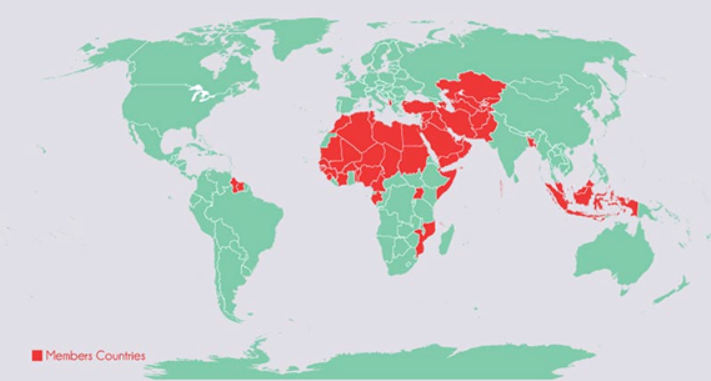
    OPEC and OPEC+

    • The Organization of the Petroleum Exporting Countries (OPEC) is a permanent, intergovernmental Organization, created at the Baghdad Conference in September 1960, by Iran, Iraq, Kuwait, Saudi Arabia and Venezuela.
    • OPEC Members (12 Nations): The core organization includes Algeria, Congo, Equatorial Guinea, Gabon, Iran, Iraq, Kuwait, Libya, Nigeria, Saudi Arabia, the United Arab Emirates, and Venezuela.
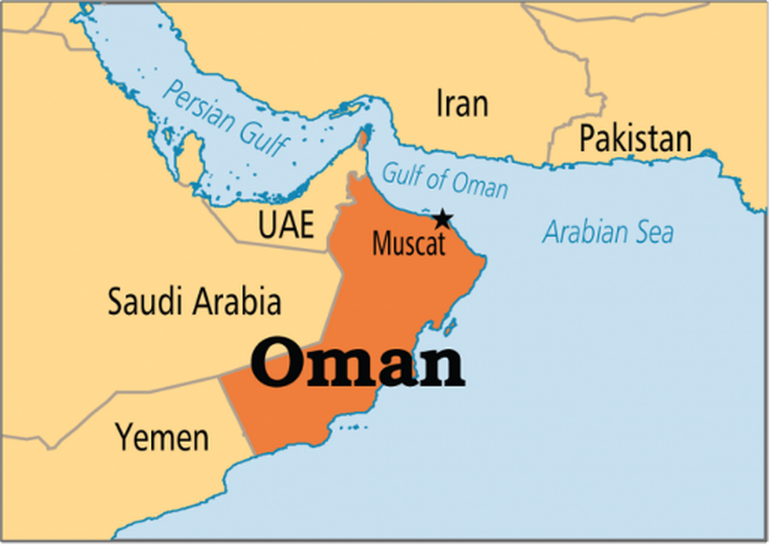
    • Non-OPEC Partners (10 Nations): The extended “Plus” group consists of Azerbaijan, Bahrain, Brunei, Kazakhstan, Malaysia, Mexico, Oman, Russia, South Sudan, and Sudan
    • OPEC is headquartered at Vienna, Austria.
    • In 2016, OPEC formed an alliance with other oil-producing nations to create OPEC+. The 10 countries now in OPEC+ include Russia, Kazakhstan, Azerbaijan, Mexico, and Oman.
    • Member states of OPEC hold more than 80% of the world’s proven oil reserves.
    • OPEC produces about 40% of the world’s crude oil and its members’ exports make up around 60% of global petroleum trade.

    Stagflation

    Economy

    In Context

    • The ongoing US-Israel vs Iran conflict has triggered a sharp energy supply disruption, reviving fears of stagflation.

    Stagflation

    • Definition: Simultaneous occurrence of stagnant/negative economic growth + high unemployment + high inflation.
    • Term Coined By: British politician Iain Macleod (1960s).
    • Why It’s Dangerous: Normal monetary policy tools fail, raising interest rates fights inflation  but worsens unemployment; cutting rates boosts growth but fuels inflation further.
  • KSRTC honored with the 2025 SKOCH National Award

    KSRTC honored with the 2025 SKOCH National Award

    News –

    • The Karnataka State Road Transport Corporation (KSRTC) was honored with the 2025 SKOCH National Award in New Delhi for its “Transparent Recruitment and Training Programme”.
    • The award recognizes technology-driven, transparent hiring practices, including automated driving tests and online exams, along with extensive employee training initiatives.

    Key details regarding the award include:

    • Award Ceremony: The SKOCH National Award 2025 was presented on March 28, 2026, in New Delhi.
    • Recruitment Methodologies: KSRTC implemented automated driving tests, online examinations, digital document verification, and webcasting to minimize human intervention and ensure transparency.
    • Achievements: The initiative facilitated the recruitment of 2,000 drivers/conductors, 300 technical staff, and 441 candidates under compassionate grounds, while training over 12,000 employees in six months.
    • Award Recipient: The award was received by KSRTC Managing Director Akram Pasha.
    • Significance: The SKOCH Group, a New Delhi-based think tank, presents these awards to recognize excellence in governance and technology adoption
  • Yuva Sangam | Purchasing Manager’s Index (PMI) | Coal Gasification Incentive Scheme | Aditya-L1 Mission | INS Taragiri | INS Aridhaman

    Yuva Sangam

    Government Initiatives

    Context

    • Registrations for institution-led exposure tours under Yuva Sangam Phase-VI were held, covering 22 States and Union Territories.

    Yuva Sangam

    • It is an initiative by the Government of India to strengthen people-to-people connect between youth belonging to different States/UTs of India.
    • It was conceptualised by the Ministry of Education and was launched under the banner of Ek Bharat Shreshtha Bharat (EBSB).

    Ek Bharat Shreshtha Bharat (EBSB)

    • It is a landmark initiative to celebrate the country’s unity in diversity.
    • It was announced by Prime Minister Narendra Modi on 31st October 2015, coinciding with the 140th birth anniversary of Sardar Vallabhbhai Patel.

    Key Initiatives Under Ek Bharat Shreshtha Bharat

    • Yuva Sangam: A youth exchange program that allows students and off-campus youth to travel to paired states, focusing on five pillars: Paryatan (Tourism), Parampara (Tradition), Pragati (Progress), Paraspar Sampark (People-to-people connect), and Devshakti (Spiritual connection).
    • Bhasha Sangam: An initiative to encourage people to learn basic sentences in different Indian languages, promoting linguistic harmony.
    • Educational Integration: Schools and universities across the country conduct EBSB clubs, student exchange trips, and cultural festivals like Kala Utsav.
    • Special Events: Celebration of Statehood Days and integration of cultural themes in national events like Bharat Parv.
    • Implementation – The Ministry of Education serves as the nodal ministry for coordinating the program

    Purchasing Manager’s Index (PMI)

    Economy

    Context

    • The West Asia crisis has led to India’s Manufacturing PMI falling from 56.9 in February 2026 compared to 53.9 in March 2026.

    Comparison: PMI vs. IIP

    Feature

    Purchasing Managers’ Index (PMI)

    Index of Industrial Production (IIP)

    Source

    Private (S&P Global)

    Government (NSO, MoSPI)

    Basis

    Perception-based survey

    Actual physical output data

    Coverage

    Manufacturing & Services

    Broad Industrial Sector (Mining, Mfg, Elec)

    Timing

    Monthly, at the start of the month

    Monthly, with a 6-week lag

    Coal Gasification Incentive Scheme

    Economy

    In Context

    • The Union Minister has unveiled India’s roadmap to address this through domestic coal utilisation, with the Coal Gasification Incentive Scheme as a central instrument.

    Coal Gasification

    • Coal gasification is the process of converting coal into syngas (synthesis gas) — a mixture primarily of hydrogen (H₂) and carbon monoxide (CO) — through a reaction with steam and oxygen at high temperatures.

    Syngas serves as a feedstock for producing:

    • Ammonia → used in fertiliser manufacturing
    • Methanol → used as fuel and chemical feedstock
    • Hydrogenclean energy carrier
    • Synthetic natural gas → substitute for imported LNG.

    Aditya-L1 Mission

    Science and Tech

    News

    • ISRO invites proposals from the Indian solar physics community to analyse data from the Aditya-L1 mission.

    Aditya-L1 mission

    • Uniqueness – Aditya-L1 is the first space-based Indian observatory to study the Sun. It will be launched by the PSLV-C57.
    • Note – The solar mission will not see the spacecraft actually go to the sun, it will instead create a space observatory at a point from which the sun can be observed even during an eclipse.
    • The spacecraft is planned to be placed in a halo orbit around the Lagrange point 1 (L1), around 1.5 million km from the Earth, of the Sun-Earth system.

    Major objectives of the mission

    • The mission will focus on study of the Solar upper atmospheric (chromosphere and corona) dynamics.
    • It will also identify what drives space weather, along with the origin, composition and dynamics of the solar wind.

    Additional Information – International Solar Missions

    Mission

    Space Agency

    Key Feature

    Parker Solar Probe (2018)

    NASA

    Closest mission to the Sun; first spacecraft to “touch” the corona.

    Solar Orbiter (2020)

    ESA & NASA

    Focuses on high-resolution images of the Sun’s poles.

    SOHO (1995)

    ESA & NASA

    An older observatory at L1 that has provided over two decades of solar data.

    PUNCH (2025)

    NASA

    A constellation of four small satellites studying how the corona becomes solar wind.

    ASO-S (Kuafu-1) (2022)

    CNSA (China)

    Studies the relationship between the solar magnetic field, solar flares, and CMEs.

    INS Taragiri

    Defence

    Context

    • INS Taragiri, a Nilgiri-class stealth guided missile frigate, has been commissioned into the Indian Navy.

    INS Taragiri

    • It is the 4th of the 7 Project 17A multi-mission stealth guided missile frigates.
    • It was built by Mazagon Dock Shipbuilders Limited (MDL).
    • It is named after the Taragiri hill ranges of Uttarakhand.
    • About 75% of the ship is indigenously built.

    Key Features

    • It is designed for multi-role operations across air, surface and sub-surface warfare.
    • It is equipped with MF-STAR radar, MRSAM, Barak air defence missiles, and BrahMos missiles.

    Additional Information – Project 17A (P-17A)

    • Objective: To build seven advanced stealth guided-missile frigates for the Indian Navy.
    • Key Manufacturers: The project is split between Mazagon Dock Shipbuilders Limited (MDL) in Mumbai (4 ships) and Garden Reach Shipbuilders & Engineers (GRSE) in Kolkata (3 ships).
    • Design: Designed in-house by the Warship Design Bureau (WDB).
    • Indigenization: Approximately 75% of the content is indigenous, involving over 200 MSMEs, aligning with the Aatmanirbhar Bharat (Self-reliant India) initiative.

    List of Seven Frigates

    1. INS Nilgiri – Commissioned Jan 2025
    2. INS Himgiri – Commissioned Aug 2025
    3. INS Udaygiri – Commissioned Aug 2025
    4. INS Taragiri – Commissioned April 2026
    5. INS Dunagiri  – Delivered March/April 2026
    6. INS Vindhyagiri – Under sea trials/outfitting
    7. INS Mahendragiri – Under construction/outfitting

    INS Aridhaman

    Defence

    In News

    • INS Aridaman, part of India’s Arihant-class ballistic missile submarine (SSBN) fleet, has been commissioned as a more advanced platform than its predecessors — INS Arihant (commissioned 2016) and INS Arighaat (commissioned 2024).

    Key Features

    • It is larger than INS Arihant and INS Arighaat, with a displacement of about 7,000 tonnes.
    • It can carry up to 24 K-15 Sagarika missiles, or 8 K-4 / K-5 missiles.
    • The K-4 missile has a range of about 3,500 km.
    • These are nuclear-capable submarine-launched ballistic missiles (SLBMs).
    • India’s Nuclear Submarine Programme – It was developed through collaboration between DRDO, the Department of Atomic Energy (DAE), the Navy, and private defence firms, with technical assistance from Russia in the early phases.
  • CALM-Brain initiative

    CALM-Brain initiative

    News – 

    • Launched in Bengaluru, CALM-Brain is India’s first digital repository for major psychiatric disorders, including addiction, bipolar disorder, dementia, OCD, and schizophrenia. 
    • It compiles multi-modal data (clinical, imaging, behavioral, and genetic) from over 2,000 participants to improve diagnostic accuracy and personalize treatments.

    CALM-Brain initiative:

    • Developers: The project was developed by the Rohini Nilekani Centre for Brain and Mind (CBM), a partnership between NIMHANS and the National Centre for Biological Sciences (NCBS).
    • Objectives: The repository aims to identify biomarkers, understand disease progression, and aid in personalized, data-driven treatment strategies.

    Additional Information  –

    • Bipolar Disorder: Characterized by alternating periods of depression and mania (elevated mood, high energy, reckless behavior).
    • Dementia: A neurodegenerative condition leading to cognitive decline, including memory loss and impaired thinking, with Alzheimer’s being the most common type. Studies show bipolar disorder and schizophrenia increase the risk of developing dementia.
    • OCD (Obsessive Compulsive Disorder): Involves persistent, unwanted thoughts (obsessions) and repetitive behaviors (compulsions). It is often comorbid (occurring together) with schizophrenia and bipolar disorder.
    • Schizophrenia: A severe, chronic mental disorder characterized by distortions in thinking, perception, emotions, language, and sense of self (hallucinations, delusions)
  • Kar Saathi | E20 Petrol | India’s Push for Piped Natural Gas | India’s Multi-Hazard Early Warning Decision Support System | Indonesia | NCERT Granted Deemed University Tag

    Kar Saathi

    Economy

    Context

    • An AI-enabled digital chatbot platform launched by the Income Tax Department to provide 24×7 guidance on direct tax matters under the new Income Tax Act, 2025 framework.

    Kar Saathi

    • It provides round-the-clock assistance for queries related to ITR filing, tax provisions, forms, notices, deductions, refunds, and compliance.
    • It brings all direct tax-related resources such as forms, challans, e-payment, e-verification, and FAQs under one platform.
    • Supports taxpayer grievance resolution and compliance queries.

    Connect with the basics –

    Direct Tax

    • A direct tax is paid straight to the government by the person or business that earns the income or profit.
    • The burden of this tax cannot be shifted to anyone else; you are solely responsible for paying it.
    • Governing Body: Central Board of Direct Taxes (CBDT).

    Key Examples:

    • Income Tax: Paid by individuals on their annual earnings.
    • Corporate Tax: Paid by companies on their yearly profits.
    • Capital Gains Tax: Levied on profits from selling assets like property or stocks.
    • Securities Transaction Tax (STT): Charged on the sale and purchase of securities on stock exchanges.

    Indirect Tax

    • An indirect tax is levied on the consumption of goods and services.
    • Unlike direct taxes, the burden is transferable; a shopkeeper pays the tax to the government but recovers that cost from you through the selling price.
    • Governing Body: Central Board of Indirect Taxes and Customs (CBIC).

    Key Examples:

    • Goods and Services Tax (GST): The primary indirect tax in India that replaced multiple older taxes like VAT and service tax.
    • Customs Duty: Imposed on goods imported into or exported out of India.
    • Excise Duty: Still applicable to limited items like petroleum products and alcohol

    E20 Petrol

    Environment

    Context

    • India has officially mandated the nationwide rollout of E20 petrol at all fuel stations from April 1, 2025.

    E20 petrol

    • It refers to a fuel blend of 20% ethanol and 80% petrol.
    • Objective – It is a critical part of India’s Ethanol Blended Petrol (EBP) Programme, which aims to reduce reliance on crude oil imports and lower vehicular emissions.
    • Target Advancement: The initial target for 20% blending was 2030, but it was advanced to 2025–26 under the amended National Policy on Biofuels (2022).

    Significance for India

    Category

    Impact

    Energy Security

    Reduces dependence on imported crude oil (~85% of India’s needs are imported).

    Economic

    Saves roughly ₹30,000–₹50,000 crore in foreign exchange annually.

    Environment

    Lowers carbon monoxide, hydrocarbons, and particulate matter emissions by 30–50%.

    Agriculture

    Boosts rural income by creating demand for crops like sugarcane, maize, and damaged food grains.

    India’s Push for Piped Natural Gas

    Science and Tech

    Context

    • India is accelerating the expansion of Piped Natural Gas (PNG) connections to reduce import dependence, improve energy security, and transition towards a cleaner fuel mix.

    Types of Gases

    Liquefied Petroleum Gas (LPG):

    • Composition: Propane and Butane.
    • State & Storage: Stored as a liquid under moderate pressure in cylinders.
    • Usage: Domestic cooking, water heating, and small-scale industrial applications.
    • Key Characteristic: Heavier than air; collects on the ground if leaked.

    Piped Natural Gas (PNG):

    • Composition: Primarily Methane.
    • State & Storage: Delivered as a gas through underground pipelines.
    • Usage: Residential kitchens, commercial cooking, and industries.
    • Key Characteristic: Continuous supply; no need for cylinder storage.

    Compressed Natural Gas (CNG):

    • Composition: Primarily Methane.
    • State & Storage: Compressed to high pressure (200-250 bar) in tanks.
    • Usage: Vehicles (cars, buses, autos) and low-pressure industrial burners.
    • Key Characteristic: Cleaner burning than petrol/diesel.

    Liquefied Natural Gas (LNG):

    • Composition: Primarily Methane.
    • State & Storage: Cooled to roughly –160°C to become a liquid for transport.
    • Usage: Transporting natural gas over long distances by sea, power generation.
    • Key Characteristic: Volume is reduced by 600 times, making it easy to store in bulk.

    India’s Shift Towards Piped Natural Gas (PNG)

    • Reducing Import Dependence: India imports nearly 60% of its LPG requirement, with a large share coming from West Asia and supply routes like Strait of Hormuz are geopolitically vulnerable.
    • Economic Efficiency: PNG eliminates logistics costs associated with cylinder transportation and storage.
    • Pricing can be more stable compared to LPG, which is sensitive to global oil prices.
    • Environmental Benefits: Natural gas burns cleaner than LPG, producing fewer pollutants and greenhouse gases.

    India’s Multi-Hazard Early Warning Decision Support System

    Environment

    Context

    • The India Meteorological Department (IMD) received the National Award for e-Governance 2025 for its indigenously developed Multi-Hazard Early Warning Decision Support System (MHEW-DSS).

    Multi-Hazard Early Warning Decision Support System (MHEW-DSS)

    • Launched in 2024, it is a digital platform that automates decision-making in critical weather forecasting processes and provides forecast and warning services to the public, government, and non-government agencies, as well as specific stakeholders.
    • Developed under Mission Mausam, the system has automated 90% of weather data processing and improved forecast accuracy by 30%, while reducing preparation time from six hours to three.
    • It integrates real-time data from satellites, radars, and ground and upper air-based sensors into a centralized GIS-enabled platform, replacing outdated manual workflows.

    India Meteorological Department (IMD)

    • It was established in 1875 and completed 150 years of service in 2025.
    • Functions under – Ministry of Earth Sciences.
    • Objective – It is a government agency responsible for meteorological observations, weather forecasting, and seismology in India.

    Mission Mausam

    • It is an ambitious multi-faceted initiative launched by Ministry of Earth Sciences (MoES)
    • Objective – to transform the country into a “weather-ready and climate-smart” nation. It aims to dramatically improve the accuracy and lead time of weather and climate forecasts.

    Indonesia

    Geography

    Context

    • A magnitude 7.4 earthquake struck the Northern Molucca Sea off Indonesia’s Ternate island.

    Indonesia

    Basic Geography:

    • World’s largest archipelagic state, located between the Indian and Pacific Oceans, off mainland Southeast Asia.
    • Major islands: Sumatra, Java, Kalimantan (Borneo), Sulawesi, Papua.
    • It shares land borders with East Timor (Timor-Leste), Papua New Guinea, and Malaysia.
    • Capital: Jakarta (on the island of Java); new capital being developed — Nusantara in Kalimantan

    Tectonic Setting:

    • Located on the Pacific Ring of Fire, the seismically active belt where ~90% of the world’s earthquakes occur.
    • The Molucca Sea — where the recent earthquake originated — is a highly active tectonic zone in Indonesia’s northern region.

    Additional Information – Ring of Fire

    • Known as – The Ring of Fire also referred to as the Circum-Pacific Belt is present along the land borders of the Pacific Ocean.
    • Features – It is characterized by active volcanoes and frequent earthquakes.
    • Significance – It consists of 75% of Earth’s volcanoes i.e. more than 450 volcanoes are located along the Ring of Fire.
    • Reason for the occurrence – The abundance of volcanoes and earthquakes along the Ring of Fire is due to the frequent movement of tectonic plates in this area.

    Volcanoes in India

    • Barren Island, Andaman Islands (India’s only active volcano)
    • Narcondam, Andaman Islands
    • Baratang, Andaman Islands
    • Deccan Traps, Maharashtra

    NCERT Granted Deemed University Tag

    Government Initiatives

    In News

    • The Ministry of Education has declared the National Council of Educational Research and Training (NCERT) an Institution Deemed to be a University.

    Impact of the Decision

    • NCERT can now start courses and academic programmes and also award degrees.
    • It has also been asked to begin research programmes, doctoral programmes, and innovative academic programmes.
    • NCERT should also gradually expand into other academic domains in line with UGC norms and regulations, and the National Education Policy (NEP) 2020.

    Additional Information – The National Council of Educational Research and Training (NCERT)

    • It is an autonomous organisation established in 1961
    • Mandate – It assists and advises Central and State governments on policies and programmes aimed at improving the quality of school education.

    Key Roles and Functions

    • Curriculum Development: NCERT is the nodal agency for developing the National Curriculum Framework (NCF), which sets the standard for school education in India.
    • Textbook Publication: It publishes model textbooks for Classes I to XII in English, Hindi, and Urdu.
    • Educational Research & Training: It promotes research in school education and provides pre-service and in-service training for teachers.
    • Digital Initiatives: Through platforms like ePathshala and DIKSHA, it offers free digital access to textbooks, audio, and video resources.
  • Karnataka’s First Spring Census

    Karnataka’s First Spring Census

    News –

    • The Karnataka Minor Irrigation and Groundwater Development Department, supported by the Directorate of Groundwater, has completed the state’s first-ever digital census, identifying 274 natural springs across 31 districts to enhance water conservation.

    Key Findings of the Spring Census:

    • Total Count: 274 springs documented, with the majority located in hilly districts like Belagavi, Uttara Kannada, Chamarajanagar, and Kodagu.
    • Unique Feature: The census identified one hot spring, “Bendru Theertha,” in the Dakshina Kannada district.
    • Data Usage: The data will be used to protect and manage spring-fed water sources, which are critical for water security in rural areas.
    • Top Districts: Belagavi reported the highest number of springs with 59, followed by Uttara Kannada (31), Chamarajanagar (23), and Kodagu (23).
    • Ecological Health: Of the 274 springs, 144 are perennial (year-round flow), 114 are seasonal, and 16 have dried up.
    • River Origins: The report specifically mapped springs that serve as the birthplaces of major rivers, including the Cauvery at Talakaveri, the Hemavati at Javali, and the Sharavati at Ambutheertha.

    Connect with the basics – Springs

    • They are natural outflows of groundwater onto the Earth’s surface, common in fractured, karst, or faulted terrains.
    • They are crucial for water security in the Himalayas, though they are drying due to climate change.

    Key Aspects

    • Types & Formation: Formed when the water table hits the surface or through fractures. They occur in permeable layers restricted by impermeable rocks (contact springs).
    • Hot Springs in India: Found along deep faults, such as in the Himalayan region (Manikaran, Puga Valley, Yumthang).
    • Significance: Provide water for irrigation, drinking, and are vital for biodiversity.
    • 1000 Springs Initiative: A Tribal Affairs Ministry project using GIS-based spring mapping to provide sustainable water and livelihoods in rural areas.
    • Threats: Climate change and over-extraction are leading to the reduction of perennial springs, particularly in the Himalayan belt.
  • Bannerghatta Biological Park (BBP)

    Bannerghatta Biological Park (BBP)

    News –

    • Bannerghatta Biological Park (BBP) is constructing a 25-meter-high, eco-friendly public observation tower on Mirza Hill in collaboration with Rohini Nilekani Philanthropies

    Key Features of the New Observation Tower:

    • Location: Situated on Mirza Hill within the BBP premises.
    • Structure: A 25-meter-high tower designed to accommodate 50–70 visitors
    • Sustainability: The project will incorporate eco-conscious design elements, including solar energy systems and rainwater harvesting.
    • Views: It offers a panoramic view of the Bannerghatta National Park, the surrounding forests, and the Bengaluru city skyline.
    • Objective: To improve safety in wildlife observation and boost conservation awareness.

    Additional Information – Bannerghatta Biological Park (BBP)

    • It is a major wildlife conservation and eco-tourism hub located about 22 km south of Bengaluru, Karnataka.
    • It was carved out of the larger Bannerghatta National Park (BNP), which was declared a national park in 1974.

    Key Facts

    • Administration: BBP is governed by the Zoo Authority of Karnataka (ZAK) and follows the guidelines of the Central Zoo Authority (CZA) of India.

    Unique Features:

    • India’s first Butterfly Park: Inaugurated in 2006, it features a conservatory with a polycarbonate roof, a museum, and a research laboratory.
    • Fenced Elephant Sanctuary: It was the first biological park in India to have a dedicated, solar-fenced, forested elephant sanctuary.

    Geography & Ecology:

    • Location: Situated in the hills of the Anekal range.
    • Vegetation: Includes Dry Deciduous Scrub Forests, Southern Tropical Dry Deciduous Forests, and Southern Tropical Moist Mixed Forests.
    • Hydrology: The Suvarnamukhi stream runs through the center of the park and serves as the primary water source for wildlife.
    • Wildlife Corridor: BNP forms a vital corridor for elephants, connecting the Biligirirangan (BR) Hills and the Sathyamangalam forests.
    • Key Fauna: Home to the endangered Asian Elephant, Bengal Tiger, Indian Gaur, Leopard, Sloth Bear, and the Southern Birdwing (Karnataka’s state butterfly).