National and International Issues MCQ’s
- Consider the following statements:
Statement-1: Gray Zone conflicts occur between the conditions of peace and full-scale war. Gray Zone tactics may include cyber attacks, disinformation campaigns, and economic pressure.
Statement-2: Proxy warfare involves indirect conflict between states. In proxy warfare, countries often support non-state actors or armed groups to fight their opponents.
Which one of the following is correct?
- Both Statement-1 and Statement-2 are correct and Statement-2 is the correct explanation of Statement-1
- Both Statement-1 and Statement-2 are correct but Statement-2 is not the correct explanation of Statement-1
- Statement-1 is correct but Statement-2 is incorrect
- Statement-1 is incorrect but Statement-2 is correct
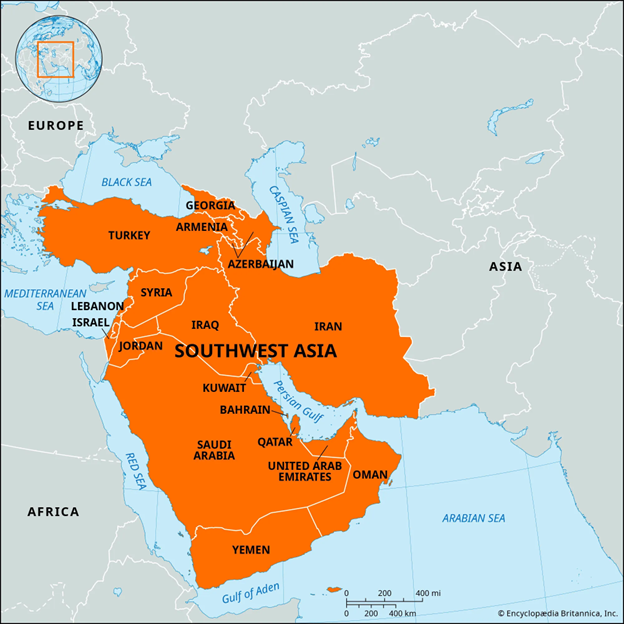
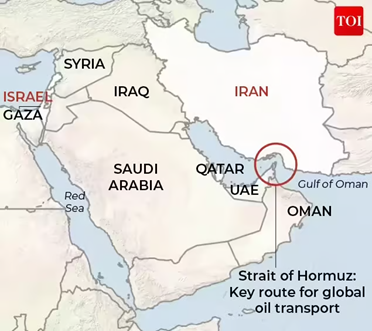
- The “Strait of Hormuz” connects which of the following water bodies?
- Red Sea and Arabian Sea
- Mediterranean Sea and Red Sea
- Persian Gulf and Gulf of Oman
- Gulf of Aden and Arabian Sea
- Consider the following statements regarding the objectives of SEBI:
- Protecting the interests of investors in securities.
- Promoting the development of the securities market.
- Regulating the securities market in India.
- Managing India’s foreign exchange reserves.
How many of the statements given above is/are correct?
- Two only
- Three only
- All Four
- One only
- Match the following Air-Defence Systems with their Country/Region:
|
List–I (Air-Defence System)
|
List–II (Country/Region)
|
|
a. S-400 Triumph
|
1. Israel
|
|
b. THAAD
|
2. Russia
|
|
c. Iron Dome
|
3. United States
|
|
d. HQ-9
|
4. China
|
Select the correct answer using the code below:
- a-2, b-3, c-1, d-4
- a-3, b-2, c-4, d-1
- a-2, b-1, c-3, d-4
- a-4, b-3, c-2, d-1
- Consider the following statements regarding India’s semiconductor initiatives:
- The India Semiconductor Mission (ISM) was launched by the Ministry of Electronics and Information Technology.
- The aim of the India Semiconductor Mission is to build a semiconductor manufacturing ecosystem and make India a global hub for electronics manufacturing and design.
- India’s first semiconductor facility/plant has been set up by Micron Technology at Sanand in Gujarat.
How many of the statements given above is/are NOT correct?
- One only
- Two only
- Three only
- All are correct
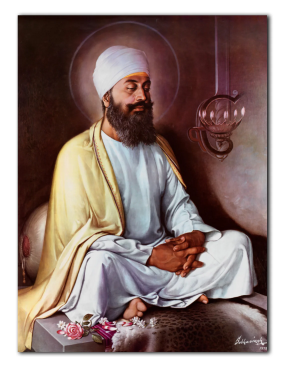
- Consider the following statements regarding Guru Tegh Bahadur:
- He was born in 1621 at Amritsar to Guru Hargobind.
- He was recognized as the ninth Sikh Guru in 1664 after being identified by the trader Makhan Shah Lubana.
- He founded Anandpur Sahib (earlier known as Chak Nanki) and travelled widely spreading spiritual teachings of equality and devotion to one God.
- He openly challenged the policies of the Mughal emperor Aurangzeb by standing up for the religious freedom of Kashmiri Brahmins.
Which of the statements given above is/are correct?
- 1 and 2 only
- 1, 2 and 3 only
- 1, 2, 3 and 4
- 2, 3 and 4 only
- With reference to the initiatives of the Bureau of Energy Efficiency (BEE), consider the following statements:
- The Standards and Labelling (S&L) scheme provides star-rating labels on appliances such as refrigerators and air conditioners.
- The Perform, Achieve and Trade (PAT) scheme is a market-based mechanism that targets large energy-intensive industries.
- The Energy Conservation Building Code (ECBC) provides guidelines for energy-efficient building design.
- The PAT scheme primarily focuses on improving energy efficiency in household appliances.
Which of the statements given above is/are correct?
- 1, 2 and 3 only
- 1 and 4 only
- 2, 3 and 4 only
- 1, 2, 3 and 4
- Consider the following statements regarding the World Obesity Atlas:
- It is published by the World Obesity Federation.
- It provides global data, projections, and policy insights related to obesity trends.
- It mainly focuses only on obesity trends in developed countries.
Which of the statements given above is/are correct?
- 2 and 3 only
- 1 and 2 only
- 1 only
- 1, 2 and 3
- Consider the following statements regarding El Niño and La Niña:
- El Niño is associated with warmer-than-normal sea surface temperatures in the Pacific Ocean.
- La Niña is associated with stronger trade winds than normal.
- Both phenomena significantly influence rainfall patterns across different parts of the world.
Which of the statements given above is/are wrong?
- 1 and 2 only
- 2 and 3 only
- All statements are wrong
- All statements are correct
- Consider the following statements regarding the Bilateral Swap Arrangement (BSA) between India and Japan:
- It is a currency swap agreement between the central banks of the two countries.
- It helps both countries address short-term liquidity shortages and stabilize foreign exchange markets.
- It is aimed at strengthening financial cooperation between the two countries.
- It allows the two countries to permanently exchange their currencies for trade settlement.
Which of the statements given above is/are correct?
- 1, 2 and 3 only
- 1 and 2 only
- 2, 3 and 4 only
- 1, 2, 3 and 4
- Consider the following statements regarding Madurai Sungudi Sari:
- Sungudi saris are traditional cotton saris perfected by the Saurashtrian community that migrated from Gujarat to Madurai in the 17th century.
- The saris feature intricate tie-and-dye patterns created through a hand-knotting technique that produces thousands of tiny white dots.
- The Madurai Sungudi sari received the Geographical Indication (GI) tag.
Which of the statements given above is/are correct?
- 1 and 3 only
- 1 and 2 only
- 1, 2 and 3
- 2 and 3 only
- Which of the following statements about the Kurdish people is/are correct?
- They are considered one of the largest stateless ethnic groups in the world.
- They have an independent sovereign state recognized by the United Nations.
- They have their own language known as Kurdish.
Select the correct answer using the code below:
- 1 and 2 only
- 1 and 3 only
- 2 and 3 only
- 1, 2 and 3
- With reference to the “Raisina Dialogue”, consider the following statements:
- The conference focuses on issues related to geopolitics and geoeconomics.
- The conference is organised by the Observer Research Foundation in collaboration with India’s Ministry of External Affairs.
- The event is organised by a government ministry without the involvement of any think tank.
- The 2026 edition carries the theme “Samskara: Assertion, Accommodation, Advancement.”
Which of the statements given above is/are correct?
- 1, 2 and 4 only
- 1 and 3 only
- 2 and 4 only
- 1, 2, 3 and 4
- Consider the following statements regarding the Gravity Bomb:
- It differs from cruise missiles such as the Tomahawk cruise missile in that it lacks an engine.
- It is typically guided throughout its flight by onboard radar systems.
- It can be upgraded with Joint Direct Attack Munition (JDAM) kits to improve accuracy.
- JDAM kits use GPS guidance and steerable fins to convert unguided bombs into precision-guided munitions.
Which of the statements given above is/are correct?
- 2, 3 and 4 only
- 1 and 2 only
- 1, 3 and 4 only
- 1, 2, 3 and 4
- With reference to the 7th National Report to the Convention on Biological Diversity, consider the following statements:
- The report evaluates India’s progress towards biodiversity targets set for 2030.
- It assesses India’s performance against 23 National Biodiversity Targets aligned with the Kunming-Montreal Global Biodiversity Framework.
- It legally binds India to achieve all biodiversity targets under the Framework.
- The report forms part of national reporting obligations under the Convention.
- The targets assessed in the report are linked to global biodiversity goals for 2050.
Which of the statements given above is/are correct?
- 1, 2, 4 and 5 only
- 1, 2 and 3 only
- 2, 3, 4 and 5 only
- 1, 2, 3, 4 and 5
- The moonshot project to develop brain co-processors has been launched by which institution?
- Indian Institute of Technology Delhi
- Indian Institute of Science
- All India Institute of Medical Sciences
- Indian Space Research Organisation
- Consider the following statements regarding India’s oil import trends:
- India is among the world’s largest importers of crude oil due to high energy demand.
- The share of imports from Russia has fallen below one-fourth of India’s total oil imports.
- The increase in imports from the United States indicates diversification of India’s crude oil sources.
- India’s dependence on crude oil imports has reduced to below 50%.
Which of the statements given above is/are correct?
- 2 and 3 only
- 1 and 4 only
- 1, 2 and 3 only
- 1, 2, 3 and 4
- Which of the following military exercises are conducted between India and the United States?
- Yudh Abhyas
- Malabar
- Cope India
- Tiger Triumph
- Vajra Prahar
How many of the given above is/are NOT correct:
- Two only
- Three only
- Four only
- All are correct
- With reference to student visas issued by the United States, consider the following statements:
- The F‑1 Visa is primarily meant for academic education and issued for students pursuing studies in universities, colleges, high schools, and language training programmes.
- The M Visa is issued for students enrolled in vocational or other recognised non-academic institutions.
- The M visa category also includes students enrolled in language training programmes.
Which of the statements given above is/are correct?
- 1 and 3 only
- 1 and 2 only
- 2 and 3 only
- 1, 2 and 3
- A Hydroxyl megamaser is primarily known as:
- A powerful emitter of microwave or radio waves in space.
- A type of asteroid found in the Solar System.
- A black hole at the centre of galaxies.
- A type of artificial satellite.
- Consider the following statements regarding the LGM-30G Minuteman III:
- It is operated by the United States.
- It is designed to deliver nuclear payloads across intercontinental distances.
- It is launched primarily from aircraft carriers.
- It forms part of the strategic nuclear deterrence system of the United States.
Which of the statements given above is/are correct?
- 1, 2 and 3 only
- 1 and 3 only
- 1, 2 and 4 only
- 1, 2, 3 and 4
- With reference to Quantum Computing, consider the following statements:
- It uses the principles of quantum mechanics for processing information.
- Classical computers process information using bits that represent either 0 or 1.
- Quantum computers use qubits that can exist in multiple states simultaneously.
- Quantum computers process information strictly using classical binary logic.
How many of the statements given above is/are correct?
- Two only
- One only
- Three only
- All Four
- Assertion (A): The Essential Commodities Act helps in controlling inflation of essential goods.
Reason (R): The government can impose price controls and stock limits under the Act.
Options:
- Both A and R are true, and R is the correct explanation of A
- Both A and R are true, but R is not the correct explanation of A
- A is true, but R is false
- A is false, but R is true
- With reference to euthanasia in India, consider the following statements:
- Passive euthanasia is legally permitted under certain conditions.
- Active euthanasia is legalized in India after judicial interpretation.
- The right to die with dignity is considered part of the Right to Life.
Which of the above statements is/are correct?
- 2 and 3 only
- 1 and 3 only
- 1 only
- 1, 2 and 3
- Which of the following components are part of the modernization strategy under Defence Vision 2047?
- Artificial Intelligence and autonomous systems.
- Cyber and space warfare capabilities.
- Exclusive reliance on manpower-intensive warfare.
Select the correct answer:
- 1 only
- 2 and 3 only
- 1 and 2 only
- 1, 2 and 3
- Consider the following statements regarding removal of the Chief Election Commissioner (CEC):
- The CEC can be removed only on the grounds of proved misbehaviour or incapacity.
- The procedure for removal is similar to that of a judge of the Supreme Court.
- The Constitution explicitly details the step-by-step removal procedure.
- The removal requires a special majority in both Houses of Parliament.
How many of the above statements is/are correct?
- Two only
- Three only
- All Four
- None
- Consider the following statements regarding National Investment and Infrastructure Fund:
- It is registered as an Alternative Investment Fund (AIF) with SEBI.
- It is wholly owned by the Government of India.
- It aims to attract both domestic and international investors.
- It primarily finances short-term working capital needs of industries.
Which of the above statements is/are correct?
- 1 and 3 only
- 1, 2 and 3 only
- 2 and 4 only
- 1, 3 and 4 only
- With reference to India in SIPRI reports, consider the following statements:
- India is often among the top arms importers globally.
- SIPRI data is used to rank countries based on military strength.
- SIPRI identifies major suppliers to India.
Which of the above statements is/are correct?
- 1 and 2 only
- 1 and 3 only
- 2 and 3 only
- 1, 2 and 3
- Consider the following statements regarding
National Highways Green Cover Index (NH-GCI):
- It is a satellite-based index to quantify vegetation along National Highways.
- It uses chlorophyll-sensitive sensors to estimate green cover.
- It measures vegetation within the Right of Way (RoW) of highways.
- It expresses green cover as an absolute area in square kilometres.
Which of the above statements is/are correct?
- 2, 3 and 4 only
- 1 and 4 only
- 1, 2, 3 and 4 only
- 1, 2, and 3 only
- Match the following:
|
List I (Year)
|
List II (International Year)
|
List III (Focus)
|
|
a. 2021
|
1. Fruits and Vegetables
|
i. Healthy diets
|
|
b. 2023
|
2. Millets
|
ii. Climate-resilient crops
|
|
c. 2024
|
3. Camelids
|
iii. Pastoral livelihoods
|
|
d. 2022
|
4. Glass
|
iv. Industrial innovation
|
Codes:
- a-1-i, b-2-ii, c-3-iii, d-4-iv
- a-2-i, b-1-ii, c-3-iv, d-4-iii
- a-1-iii, b-2-ii, c-3-i, d-4-iv
- a-3-i, b-2-ii, c-1-iii, d-4-iv
- Consider the following statements:
- Savitribai Phule is regarded as the first female teacher of modern India.
- She established the first girls’ school in Pune in 1848.
- She worked exclusively for upper-caste women’s education.
- She was associated with the Satyashodhak Samaj.
How many of the above statements is/are correct?
- Only one
- Only two
- Only three
- All four
- Consider the following pairs:
|
Art Form
|
Region
|
|
1. Kurumba Paintings
|
Nilgiris
|
|
2. Warli Paintings
|
Maharashtra
|
|
3. Gond Paintings
|
Rajasthan
|
|
4. Madhubani Paintings
|
Bihar
|
How many of the pairs given above is/are correctly matched?
- Only one
- Only two
- Only three
- All four
- With reference to “Fiscal Health Index” (FHI), released by NITI Aayog consider the following statements:
- It promotes competitive federalism among States.
- It provides a comparative framework for fiscal discipline.
- It is a constitutional mandate under Article 280.
Which of the above statements is/are correct?
- 1 and 2 only
- 2 only
- 1 and 3 only
- 1, 2 and 3
- Black rain differs from acid rain because:
- Acid rain contains soot particles, while black rain is chemically pure.
- Black rain occurs only in oceans, while acid rain occurs on land.
- Black rain contains visible particulate matter, while acid rain is mainly chemically acidic.
- Both are identical phenomena.
- Which of the following groups are included under KCC beneficiaries?
- Self Help Groups (SHGs)
- Joint Liability Groups (JLGs)
- Farmer Producer Organizations (FPOs)
Select the correct answer:
- 2 and 3 only
- 1 and 2 only
- 1 and 3 only
- 1, 2 and 3
- Consider the following paragraph:
A significant nationalist movement began with a march from an ashram and culminated in an act of breaking a colonial law related to an essential household item. The movement emphasized non-violence and civil disobedience and triggered nationwide protests, including demonstrations at salt production centers after the arrest of the leader.
Which of the following events is being referred to?
- Swadeshi Movement
- Dandi March
- Home Rule Movement
- Civil Disobedience Movement
- Consider the following description:
An aquatic predator possesses the rare ability among its group to tolerate a wide range of salinity levels. This is made possible by physiological adaptations that help maintain osmotic balance. It is found not only in coastal marine waters but also deep within inland river systems across multiple continents, including Asia, Africa, and the Americas. Its conservation status is classified as “Vulnerable”.
Which of the following species best fits the above description?
- Tiger Shark
- Blue Shark
- Bull Shark
- Basking Shark
- Consider the following statements:
- Joha rice is an indigenous aromatic rice variety from Assam.
- It received the Geographical Indication (GI) tag in 2017.
- It is primarily known for its high yield rather than quality.
- It is gaining recognition in premium global markets.
Which of the above statements is/are correct?
- 1, 2 and 4 only
- 1 and 3 only
- 2 and 3 only
- 1, 2, 3 and 4
- The Indian Army has launched a Major Bridge Project in Sri Lanka under which of the following operations?
- Operation Maitri
- Operation Sagar Bandhu
- Operation Samudra Setu
- Operation Rainbow
- Consider the following statements:
- NavIC was earlier known as IRNSS (Indian Regional Navigation Satellite System).
- It ensures independence from foreign navigation systems.
- All NavIC satellites are placed only in geostationary orbit.
- It has both civilian and encrypted services.
Which of the above statements is/are correct?
- 1, 2 and 4 only
- 1 and 3 only
- 2, 3 and 4 only
- 1, 2, 3 and 4
- Consider the following statements:
- Jayanthi Kumaresh has been announced as the recipient of the Sangita Kalanidhi award at the 100th Conference.
- Narendra G has been conferred the Nritya Kalanidhi award.
- Sangita Kalanidhi is awarded for excellence in both music and dance.
- Both awards are conferred during the annual conference of the Music Academy.
Which of the above statements is/are correct?
- 2, 3 and 4 only
- 1 and 3 only
- 1, 2 and 4 only
- 1, 2, 3 and 4
- Consider the following description:
A rare and visually striking pheasant species, often referred to as the “king of birds,” inhabits temperate and subalpine forests at elevations ranging from 2,400 to 3,600 meters, occasionally descending to about 2,000 meters during winter. It is distributed from the Swat Valley in Pakistan across Kashmir and Himachal Pradesh to Uttarakhand. The species is omnivorous, feeding on berries, seeds, buds, shoots, and insects, and faces threats from forest degradation, climate change, and human disturbances. It is also recognized as the state bird of Himachal Pradesh and is listed as “Vulnerable” on the IUCN Red List.
Which of the following species is being described?
- Himalayan Monal
- Western Tragopan
- Cheer Pheasant
- Satyr Tragopan
- Consider the following statements:
- The scheme provides health coverage under Ayushman Bharat TG Plus.
- It focuses on marginalized communities including transgender persons.
- It does not include any provision for shelter support.
- It aims at promoting livelihood and enterprise development.
Which of the above statements is/are correct?
- 1, 2 and 4 only
- 1 and 3 only
- 2, 3 and 4 only
- 1, 2, 3 and 4
- Kharg Island is located in:
- Arabian Sea
- Bay of Bengal
- Persian Gulf
- Mediterranean Sea
- Consider the following statements:
- SWAMIH Fund focuses on affordable and mid-income housing projects.
- It aims to ensure completion of housing projects stuck due to lack of funds.
- It directly finances new greenfield luxury housing projects.
- It is sponsored by the Ministry of Finance.
Which of the above statements is/are correct?
- 2 and 3 only
- 1, 2 and 4 only
- 2, 3 and 4 only
- 1, 2, 3 and 4
- Consider the following statements:
- The Global Pandemic Agreement was adopted by the World Health Assembly in May 2025.
- It aims to create a legally binding international framework for pandemic preparedness and response.
- It replaces the International Health Regulations (IHR) entirely.
- It addresses global inequalities in pandemic management.
Which of the above statements is/are correct?
- 2, 3 and 4 only
- 1 and 3 only
- 1, 2, 3 and 4 only
- 1, 2 and 4 only
- Consider the following statements regarding the Gyan Bharatam Mission:
- It aims to conserve more than one crore manuscripts across India.
- It focuses only on manuscripts housed in government institutions.
- It includes documentation as well as physical conservation of manuscripts.
- It is a completely new initiative unrelated to earlier manuscript preservation efforts.
How many of the statements given above is/are NOT correct?
- One only
- Three only
- Two only
- All are correct
- With reference to the National Manuscripts Mission, consider the following statements:
- It was launched in 2003 under the Ministry of Tourism and Culture.
- Its primary objective is to digitize all manuscripts in India.
- It aims to locate and document manuscript heritage across the country.
- It deals exclusively with manuscripts written in Sanskrit.
Which of the statements given above is/are correct?
- 1 and 3 only
- 1, 2 and 4 only
- 2 and 3 only
- 1, 3 and 4 only
- Consider the following statements regarding the Tropical Forest Forever Facility (TFFF):
- It incentivizes countries for preserving existing forest cover rather than only reducing deforestation rates.
- It is structured as a grant-based mechanism with no expectation of financial returns.
- It is introduced by Brazil and aims to align conservation outcomes with long-term financial sustainability.
- It has already mobilized over $5.5 billion in initial commitments.
Which of the statements given above is/are correct?
- 1, 3 and 4 only
- 1 and 2 only
- 2, 3 and 4 only
- 1, 2, 3 and 4
- Match the following art forms with their respective States:
|
List I (Art Form)
|
List II (State)
|
|
a. Warli Painting
|
1. Madhya Pradesh
|
|
b. Gond Art
|
2. Maharashtra
|
|
c. Bhil Painting
|
3. Assam / Northeast India
|
|
d. Rabha & Tamang Masks
|
4. Rajasthan
|
Select the correct answer using the code below:
- a-3, b-1, c-2, d-4
- a-1, b-2, c-4, d-3
- a-2, b-3, c-1, d-4
- a-2, b-1, c-4, d-3
- Consider the following statements:
- NMDC Limited is the first mining company in India to achieve 50 million tonnes of iron ore production in a single financial year.
- Magnetite contains more than 70% iron and is considered the best quality ore.
- Hematite is the most important industrial iron ore and typically contains 40–60% iron.
- Siderite is a carbonate ore with iron content less than 40%.
Which of the statements given above is/are correct?
- 2, 3 and 4 only
- 1 and 3 only
- 1, 2 and 4 only
- 1, 2, 3 and 4
- What does the term “Gynandromorphy” refer to?
- Presence of both male and female characteristics in a single organism and most commonly observed in Insects and birds.
- Ability of an organism to change sex during its lifetime and most commonly observed in Reptiles only.
- Presence of only male reproductive organs and most commonly observed in mammals.
- Absence of sexual characteristics and most commonly observed in Amphibians only
- Consider the following statements regarding the Nagoya Protocol:
- It was adopted in 2010 in Nagoya, Japan and it came into force in 2012.
- It aims to ensure fair and equitable sharing of benefits arising from genetic resources.
- It is a supplementary agreement to the Convention on Biological Diversity.
- India ratified the protocol in 2012 and its provisions are aligned with the Biological Diversity Act, 2002.
Which of the statements given above is/are correct?
- 1, 3 and 4 only
- 1 and 2 only
- 2, 3 and 4 only
- 1, 2, 3 and 4
- Consider the following statements regarding nominations for the Padma Awards:
- Any citizen of India can nominate a person, including self-nomination.
- Nominations are submitted through an online portal managed by the Ministry of Home Affairs.
- Only State Governments and Union Territories can recommend candidates.
- The awards are announced annually on Republic Day.
Which of the statements given above is/ are correct?
- 1, 2 and 4 only
- 1 and 3 only
- 2 and 3 only
- 1, 2, 3 and 4
- With reference to the Gajapati Dynasty, consider the following statements:
- Kapilendra Deva was the founder of the Gajapati dynasty.
- The empire reached its maximum territorial extent under Purushottama Deva.
- Prataparudra Deva was a contemporary of Krishnadevaraya of Vijayanagara.
- The dynasty had frequent conflicts with the Bahmani Sultanate and Vijayanagara Empire.
Which of the statements given above is/are correct?
- 1, 2 and 4 only
- 1, 3 and 4 only
- 2, 3 and 4 only
- 1, 2, 3 and 4
- Consider the following statements regarding the Ladakh Magmatic Arc:
- It is composed primarily of igneous rocks located in the Trans-Himalayan region.
- It represents an active volcanic arc system in present times.
- It is associated with the subduction of the Indian Plate beneath the Eurasian Plate.
- It formed due to the closure of the Neo-Tethys Ocean.
Which of the statements given above is/are correct?
- 1, 2, 3 and 4
- 1 and 2 only
- 2, 3 and 4 only
- 1, 3 and 4 only
- Consider the following statements regarding digital initiatives in India’s vaccination drive:
- eVIN enables real-time tracking of vaccine stock and storage temperature.
- U-WIN is designed as a digital registry for routine immunization tracking.
- CoWIN was used exclusively for vaccine procurement and supply chain management.
- CoWIN facilitated the administration of more than 220 crore COVID-19 vaccine doses.
How many of the statements given above is/are correct?
- One only
- Two only
- Three only
- All Four
- Consider the following statements regarding NATO:
- It was established in 1949 through the Washington Treaty.
- It was formed primarily to counter the threat from the Soviet Union after World War II.
- It is an economic and monetary union of North Atlantic countries.
- Its headquarters is located in Washington, D.C.
Which of the statements given above is/are correct?
- 1 and 2 only
- 1, 2 and 4 only
- 2 and 3 only
- 1, 2, 3 and 4
- Consider the following statements regarding PM-POSHAN:
- It was earlier known as the Mid-Day Meal Scheme.
- It is a Central Sector Scheme fully funded by the Union Government.
- It provides one hot cooked meal to students up to Class 8 in government and aided schools.
- It is implemented under the Ministry of Education.
Which of the statements given above is/are correct?
- 2 and 3 only
- 1 and 2 only
- 1, 3 and 4 only
- 1, 2, 3 and 4
- Consider the following statements regarding BHAVYA:
- It aims to develop 100 “future ready” industrial parks across India.
- It is integrated with the PM GatiShakti programme.
- The National Industrial Corridor Development Corporation plays a key role in implementation.
- The scheme duration is proposed for six years starting from 2026–27.
How many of the statements given above is/are NOT correct?
- Two only
- Three only
- All Four
- All Four are correct
- With reference to the Aravalli Hills, consider the following statements:
- Guru Shikhar is the highest peak located on Mount Abu.
- The range acts as a major water divide influencing river systems in western India.
- Rivers such as Luni and Sabarmati originate from this range.
- The Aravalli range forms a continuous high barrier like the Himalayas.
Which of the statements given above is/are correct?
- 1, 2 and 4 only
- 1, 2 and 3 only
- 2, 3 and 4 only
- 1, 2, 3 and 4
- Consider the following statements regarding India’s bioeconomy:
- India’s bioeconomy has grown from about $10 billion in 2014 to over $165 billion by 2024 and it contributes around 4.25% to India’s GDP.
- The government aims to expand the bioeconomy to about $300 billion by 2030.
- The sector has recorded a compound annual growth rate (CAGR) of around 17–18% in recent years.
- States such as Maharashtra, Karnataka, Telangana, Gujarat, and Andhra Pradesh together account for a major share.
How many of the statements given above is/are correct?
- Two only
- Three only
- One only
- All Four
- Consider the following statements regarding the RELIEF Scheme:
- It is designed to support Indian exporters facing logistics and freight-related disruptions in West Asia.
- The Export Credit Guarantee Corporation of India is the nodal agency and it primarily targets large corporations engaged in global trade.
- It is launched under the Export Promotion Mission and it addresses issues such as freight hikes and insurance premium spikes.
Which of the statements given above is/are correct?
- 1 and 2 only
- 1 and 3 only
- 2 and 3 only
- 1, 2, 3 and 4
- Consider the following statements:
- The Small Hydro Power Development Scheme was approved in 2026.
- It is implemented by the Ministry of Power.
- It aims to promote clean energy generation in rural and remote areas.
- It targets about 1,500 MW capacity addition by FY 2030–31.
Which of the statements given above is/are correct?
- 1, 3 and 4 only
- 1 and 2 only
- 2, 3 and 4 only
- 1, 2, 3 and 4
- With reference to the World Happiness Report 2026, consider the following statements:
- It is published by the University of Oxford’s Wellbeing Research Centre in partnership with Gallup and the UN Sustainable Development Solutions Network.
- The ranking is based on factors such as GDP per capita, life expectancy, social support, freedom, generosity, and perceptions of corruption.
- Finland has been ranked as the happiest country since 2018, while Afghanistan ranks last in 2026.
- India is ranked within the top 100 countries and has shown improvement from its previous year ranking.
Which of the statements given above is/are correct?
- 2 and 3 only
- 1 and 4 only
- 1, 2 and 3 only
- 1, 2, 3 and 4
- With reference to the SHINE App, consider the following statements:
- It provides a digital platform exclusively for government women employees to report workplace harassment.
- It ensures confidentiality of the complainant while allowing complaint tracking.
- It is aligned with provisions of the Sexual Harassment of Women at Workplace (Prevention, Prohibition and Redressal) Act, 2013.
- It replaces the role of Internal Complaints Committees (ICCs) in organizations.
How many of the statements given above is/are correct?
- One only
- Two only
- Three only
- All Four
- Consider the following statements regarding India’s crude oil imports:
- India is the third-largest oil-importing and consuming nation in the world.
- India imports more than 80% of its crude oil requirements from more than 40 countries.
- Nearly half of India’s oil imports pass through the Strait of Hormuz.
- India is a full member of IEA and does have an obligation to follow the mandate of the international body.
Which of the statements given above is/are correct?
- 1, 2 and 4 only
- 1, 3 and 4 only
- 2, 3 and 4 only
- 1, 2 and 3 only
- The term “LIGO” stands for:
- Laser Interferometer Geophysical Observatory
- Laser Interferometer Gravitational-Wave Observatory
- Light Interference Global Observatory
- Laser Integrated Gravity Observatory
- The “Kimberley Process Certification Scheme” regulates:
- Only trade of polished diamonds.
- Only trade of rough diamonds.
- Trade of both rough and polished diamonds.
- Only trade of synthetic diamonds.
- With reference to the Darknet, consider the following statements:
- It is a subset of the deep web.
- It is indexed by conventional search engines but requires login access.
- It ensures user anonymity through encryption and routing mechanisms.
- It can be accessed using specialized software such as Tor Browser.
Which of the statements given above is/are correct?
- 1, 3 and 4 only
- 1 and 2 only
- 2, 3 and 4 only
- 1, 2, 3 and 4
- White phosphorus is used in warfare primarily for:
- Creating smoke screens
- Illumination
- Chemical poisoning as a nerve agent
- Incendiary purposes
Select the correct answer:
- 1, 2 and 4 only
- 1 and 3 only
- 2 and 3 only
- 1, 2, 3 and 4
- With reference to the Anavaran Deforestation Alert System, consider the following statements:
- It is an AI-enabled platform for monitoring forest cover loss developed by the Forest Survey of India.
- It is based on the Google Earth Engine (GEE) platform, and uses Sentinel‑2 optical imagery and Sentinel‑1 Synthetic Aperture Radar (SAR) for monitoring during cloud cover or monsoon.
- Both Sentinel-1 and Sentinel-2 depend on visible light for imaging.
- It relies solely on optical satellite imagery for detection and it sends alerts periodically to State Forest Departments.
Which of the statements given above is/are correct?
- 1, 2 and 4 only
- 1 and 2 only
- 2, 3 and 4 only
- 1, 2, 3 and 4
- With reference to Kurumba paintings, consider the following statements:
- They were traditionally painted on walls of houses and temples.
- The paintings are closely associated with festival and ritual contexts.
- The art form predominantly uses perspective and realism techniques.
- Natural materials like tree resins are used for pigment preparation.
Which of the statements given above is/are correct?
- 1, 2 and 4 only
- 1 and 3 only
- 2, 3 and 4 only
- 1, 2, 3 and 4
- With reference to the NITI Aayog’s Fiscal Health Index (FHI 2026), consider the following statements:
- It is the second annual edition assessing the fiscal health of Indian states.
- The index evaluates parameters such as Quality of Expenditure, Revenue Mobilisation, Fiscal Prudence, Debt Index, and Debt Sustainability.
- The data used for the index is compiled by the Finance Commission of India.
- Odisha is the top-performing state, while Punjab, West Bengal, and Kerala are among the lowest performers.
- States like Bihar, Karnataka, and Telangana have shown moderate improvement in fiscal performance.
Which of the statements given above is/are correct?
- 1, 2, 4 and 5 only
- 1, 2, 3 and 4 only
- 2, 3, 4 and 5 only
- 1, 3 and 5 only
- Which of the following effects can be associated with Black Rain?
- Radiation sickness
- Genetic mutations
- Loss of Soil fertility
Select the correct answer:
- One only
- Two only
- None
- All
- With reference to the proposed Proton Accelerator Facility in Visakhapatnam, consider the following statements:
- It is a high-energy proton accelerator system used to accelerate charged particles.
- It will support India’s three-stage nuclear power programme, particularly thorium utilization.
- It is based on Accelerator-Driven Systems (ADS) which enhance nuclear reactor safety.
- The facility is primarily meant for weather forecasting and climate modelling.
Which of the statements given above is/are correct?
- 2, 3 and 4 only
- 1 and 4 only
- 1, 2 and 3 only
- 1, 2, 3 and 4
- With reference to the Sixth Schedule of the Constitution of India, consider the following statements:
- It provides autonomous administrative arrangements for tribal areas in Assam, Meghalaya, Tripura and Mizoram.
- Autonomous District Councils (ADCs) are empowered with legislative, executive, judicial, and financial powers.
- The provisions related to the Sixth Schedule are contained under Articles 244(2) and 275(1).
- Autonomous District Councils in Meghalaya function only as advisory bodies without legislative authority.
Which of the statements given above is/are correct?
- 1, 2 and 3 only
- 1 and 4 only
- 2, 3 and 4 only
- 1, 2, 3 and 4
- Consider the following description:
A stocky mountain ungulate with short yellowish-brown fur is endemic to a limited stretch of about 400 km in the Western Ghats, mainly across parts of Kerala and Tamil Nadu. It is a herbivore feeding on a wide variety of grasses, herbs, and shrubs. The species faces threats from habitat loss due to deforestation, plantation expansion, hydroelectric projects, competition with domestic livestock, and hunting. It is listed as Endangered in the IUCN Red List and is protected under Schedule I of the Wildlife (Protection) Act, 1972. The largest population is found in Eravikulam National Park, and it is also the state animal of Tamil Nadu.
Which one of the following species is being described above?
- Malabar Pied Hornbill
- Lion-tailed Macaque
- Indian Gaur
- Nilgiri Tahr
- Which of the following best describes the PRAHAAR Policy?
- To provide financial assistance to states affected by terrorism.
- To establish a legal tribunal system for terrorism cases.
- To lay down a comprehensive policy framework based on zero tolerance towards terrorism.
- To replace all existing anti-terror laws in India.
- Which of the following are the benefits of adopting green hydrogen and green ammonia?
- Reduction in dependence on fossil fuel imports.
- Decarbonization of hard-to-abate sectors.
- Balancing the greenhouse gas emissions.
- Energy storage and grid balancing.
Select the correct answer:
- 1, 2 and 4 only
- 1 and 3 only
- 2, 3 and 4 only
- 1, 2, 3 and 4
- With reference to the Rah-Veer Scheme, consider the following statements:
- It is aligned with the Good Samaritan provisions under the Motor Vehicles (Amendment) Act, 2019.
- It provides both legal protection and financial incentives to individuals who assist road accident victims.
- The scheme rewards citizens who help victims within the “golden hour” with a cash incentive of ₹25,000.
- The reward is disbursed by a central-level committee after approval from the Ministry of Road Transport and Highways.
Which of the statements given above is/are correct?
- 1, 2 and 3 only
- 1 and 4 only
- 2, 3 and 4 only
- 1, 2, 3 and 4
- With reference to the HAL Tejas, consider the following statements:
- It is a fifth-generation stealth fighter aircraft developed for both the Indian Air Force and Indian Navy.
- It has been designed by the Aeronautical Development Agency under the DRDO.
- It is manufactured by Hindustan Aeronautics Limited.
- It is capable of performing both air-to-air and air-to-ground missions.
Which of the statements given above is/are correct?
- 2, and 3 only
- 1, 2 and 3 only
- 2, 3 and 4 only
- 1, 3 and 4 only
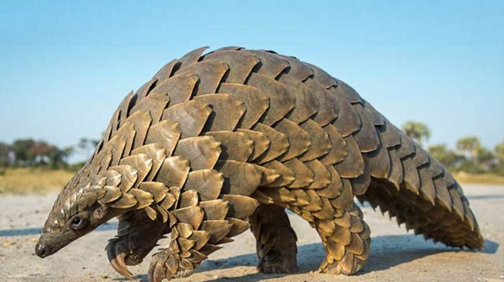
- Consider the following paragraph:
A certain mammal is unique in being covered with protective keratin scales, a feature not found in any other mammalian group. It primarily feeds on ants, termites, and larvae using a long sticky tongue and lacks teeth. When threatened, it rolls into a tight ball to shield its vulnerable parts. It also plays an important ecological role by aerating soil and controlling insect populations.
Which of the following species is being described above?
- Armadillo
- Pangolin
- Aardvark
- Anteater
- With reference to the RAMP Programme, consider the following statements:
- It is a World Bank-assisted Central Sector Scheme.
- It focuses on enhancing the competitiveness and productivity of MSMEs.
- It provides direct capital subsidies to MSMEs for machinery purchase.
- It includes measures to improve access to both domestic and global markets.
Which of the statements given above is/are correct?
- 1, 2 and 4 only
- 2 and 3 only
- 1, 3 and 4 only
- 1, 2, 3 and 4
- Mission Sudarshan Chakra is associated with which of the following?
- Naval anti-submarine warfare exercise
- Integrated air defence exercise
- Cyber security drill
- Space surveillance mission
- With reference to SUJVIKA portal, consider the following statements:
- It is an AI-driven digital platform developed by the Department of Biotechnology.
- It provides authenticated data on biotechnology product imports.
- It is designed to monitor exports of agricultural commodities.
- It presents sector-wise insights into biochemical products and industrial enzymes.
Which of the statements given above is/are correct?
- 1, 2 and 4 only
- 2 and 3 only
- 1 and 3 only
- 1, 2, 3 and 4
- With reference to the International Climate Initiative (IKI), consider the following statements:
- It was established in 2008 as Germany’s primary mechanism for funding international climate projects.
- It exclusively focuses on climate mitigation activities.
- It supports projects related to adaptation and biodiversity in partner countries.
- India is among the priority partner countries under the initiative.
Which of the statements given above is/are correct?
- 1, 2, 3 and 4
- 2 and 3 only
- 1 and 2 only
- 1, 3 and 4 only
- With reference to CAFE norms in India, consider the following statements:
- They were introduced by the Bureau of Energy Efficiency in 2017.
- They regulate fuel consumption and carbon emissions from passenger vehicles.
- They apply only to petrol and diesel vehicles.
- They cover vehicles with weight less than 3,500 kg.
How many of the statements given above is/are correct?
- One only
- Two only
- Three only
- All Four
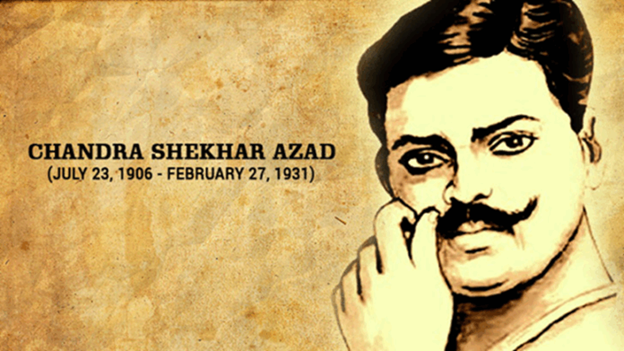
- Consider the following events:
- Non-Cooperation Movement.
- Kakori Train Robbery.
- Hindustan Republican Association.
- Lahore Conspiracy Case.
Which of the above events are associated with Chandrashekhar Azad?
- 1, 2 and 3 only
- 2, 3 and 4 only
- 1, 2 and 4 only
- 1, 2, 3 and 4
- The Hexagon Alliance is primarily associated with:
- Military cooperation
- Clean energy transition
- Space exploration
- Agricultural reforms
Key Answers
01). B 26). B 51). C 76). C
02). C 27). A 52). A 77). A
03). B 28). B 53). C 78). D
04). A 29). D 54). A 79). C
05). D 30). A 55). B 80). D
06). C 31). C 56). D 81). A
07). A 32). C 57). C 82). C
08). B 33). A 58). A 83). B
09). D 34). C 59). C 84). A
10). A 35). B 60). D 85). B
11). C 36). B 61). B 86). A
12). B 37). C 62). D 87). D
13). A 38). A 63). B 88). C
14). C 39). B 64). A 89). D
15). A 40). A 65). C 90). B
16). B 41). C 66). B
17). C 42). B 67). D
18). D 43). A 68). B
19). B 44). C 69). B
20). A 45). B 70). A
21). C 46). D 71). A
22). C 47). C 72). B
23). A 48). A 73). A
24). B 49). A 74). A
25). C 50). D 75). D