Concerns have been raised regarding the financial burden on the State due to the new rural employment Act which replaces the central funding model with a cost-sharing one.
Implications of the new rural employment Act for Karnataka
New Legislation: The Viksit Bharat-Guarantee for Rozgar and Ajeevika Mission (Gramin) (VB-G RAM G) has been introduced, replacing the MGNREGA Act.
Funding Mechanism: Unlike the previous MGNREGA framework where the Centre funded the entire cost, the new Act mandates the State government to fund 40% of the project costs.
Financial Impact: Karnataka estimates an additional annual expenditure of ₹3,000 crore to ₹4,000 crore, resulting in a cumulative burden of approximately ₹20,000 crore over the next five years.
Fiscal Challenge: This increased expenditure comes at a critical time when the State is already staring at a revenue loss of about ₹18,000 crore annually due to the rationalization of GST rates.
Allegations of loss of grasslands surface over water harvesting pits inside Cauvery Wildlife Sanctuary.
Key Highlights
Allegation: There are concerns that water harvesting pits dug by the Forest Department are resulting in the loss of natural grasslands.
Location: The activity is reported inside the Cauvery Wildlife Sanctuary, specifically impacting the Sangama, Halagur, and Mugguru ranges.
Method: Environmentalists report that heavy machinery is being used to dig these pits, causing the destruction of the landscape.
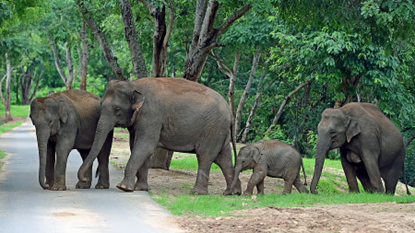
Ecological Impact: These grasslands are critical for providing fodder to herbivores such as elephants, sambar, spotted deer, and gaur.
Consequence: The destruction of natural grasslands is expected to impact fodder availability for wild ungulates, ultimately increasing the risk of human-wildlife conflict.
Additional information – Cauvery Wildlife Sanctuary:
Location : Spread across three districts: Chamarajanagar, Mandya, and Ramanagara. It comprises two sub-divisions (Hanur and Kanakapura) and seven ranges (Kothnur, Hanur, Cowdally, Gopinatham, Halagur, Sangam, and Muggur).
Area : Originally notified in 1987 with 510 km², it has been expanded to its present extent of 1,027 km².
Ecological Significance (Corridor): Serves as a vital wildlife corridor connecting Bannerghatta National Park in the north to BRT Tiger Reserve and MM Hills Wildlife Sanctuary in the south.
River Systems: The sanctuary is drained by three major rivers: Cauvery, Arkavathi, and Shimsha, along with numerous rivulets.
Forest Types: Primarily consists of dry deciduous and scrub forests. However, diverse types such as Hardwickia forests, riverine, shola, moist deciduous, and evergreen forests are found at varying altitudes.
Key Fauna: Important species include Tiger, Elephant, Leopard, Honey Badger (Ratel), and the Kollegal Ground Gecko (a reptile of specific interest). Other wildlife includes Bison, Wild Dog, Chevrotain (Mouse Deer), and Giant Squirrel.
US President Signs Order Withdrawing US from 66 International Organisations
International
In News
The US has withdrawn from 66 international organizations, including 31 UN entities and 35 non-UN bodies.
The entities include climate/energy/science forums such as the UN Framework Convention on Climate Change (UNFCCC), the Intergovernmental Panel on Climate Change (IPCC), the International Renewable Energy Agency (IRENA), and the International Solar Alliance (ISA).
US Withdrawing
Sovereignty Concerns: Resistance to binding international rules perceived to constrain domestic policy autonomy.
Perceived Institutional Bias: Allegations of politicisation, inefficiency, and bias against US or allied interests.
Domestic Political Pressures: Multilateral commitments viewed as costly with limited direct electoral benefits.
Burden-Sharing Argument: Claim that the US contributes disproportionately to global institutions.
Strategic Reorientation: Preference for bilateral or minilateral arrangements over universal institutions.
Strategic Competition: Desire to limit platforms where rival powers gain influence.
Potential Impacts
Climate Change Setback: Weakens global efforts to curb greenhouse gas emissions and provides other countries an excuse to delay climate commitments and finance pledges.
Fragmentation of Multilateralism: Further erodes international governance, intensifies power rivalries, and accelerates a shift towards protectionism and smaller ad-hoc regional blocs.
Development & Humanitarian Slowdown: US funding cuts worsen already declining international development and humanitarian aid, affecting health, education, food security, and SDG progress.
Global Peace & Security Risks: Reduced US support to bodies like the UN Peacebuilding Commission hampers peacebuilding and post-conflict recovery, especially in conflict-prone regions such as Africa and the Caribbean.
Weakening of Global Norms: Encourages selective compliance with international law and treaty obligations by other states.
Leadership Vacuum: Creates space for other major powers to shape global rules and institutions.
Doomsday Glacier
Geography & Environment
Context
A new study published in the Journal of Geophysical Research: Earth Surface explains recent structural changes in the Thwaites Glacier region and shows how other Antarctic ice shelves may collapse in the future.
Doomsday Glacier (Thwaites Glacier)
It is an outflow glacier of the West Antarctic Ice Sheet (WAIS), flowing into the Amundsen Sea.
It is nicknamed ‘Doomsday Glacier’ due to its potential to cause major sea-level rise.
The complete destruction of the Doomsday Glacier could lead to a global sea level rise of 3 meters.
Additional Information – Conservation efforts of Antarctic Treaty
The Treaty covers the area south of 60°S latitude.
It was signed at Washington D.C. in 1959 with the objective of the Demilitarisation of Antarctica.
The signatories are supposed to bring laws so that no activity in contravention of the treaty takes place.
India signed the treaty in 1983.
Convention on the Conservation of Antarctic Marine Living Resources (CCAMLR)
Signed in – Canberra in 1980
Objective – To protect and preserve the Antarctic environment and, particularly, for the preservation and conservation of marine living resources in Antarctica.
India ratified the CCAMLR in 1985.
The Protocol on the Environmental Protection to the Antarctic Treaty (Madrid Protocol)
Signed in – Madrid in 1991.
Objective – It aims to strengthen the Antarctic Treaty system and develop a comprehensive regime for the protection of the Antarctic environment and dependent and associated ecosystems.
India ratified the Madrid Protocol in 1998.
Council of Managers of the National Antarctic Programme (COMNAP)
India is also a member of the COMNAP which shows the significant position that India holds among the nations involved in Antarctic research.
Madhav Gadgil
Geography & Environment
Context
Noted ecologist Madhav Gadgil, known for his work on the conservation of Western Ghats, has passed away.
Major Contributions
In 2010, the Ministry of Environment and Forests appointed Madhav Gadgil to chair the Western Ghats Ecology Expert Panel (WGEEP), known as the Gadgil Commission.
His 2011 report recommended classifying 64% of the 1,40,000 sq km Ghats, spanning six states, as Ecologically Sensitive Areas (ESAs)
It led to debate and discussion on the significance of the Western Ghats as an ecological hotspot and the efforts to conserve them.
He played a key role in declaring the Nilgiris as India’s first biosphere reserve in 1986.
He later helped shape the Biological Diversity Act, 2002, and Forest Rights Act 2006.
He served on the Prime Minister’s Scientific Advisory Council and the National Tiger Authority, successfully bridging academic research with grassroots environmental activism.
His contributions were widely recognised with major honours, including the Padma Shri (1992), Padma Bhushan (2006), the Tyler Prize for Environmental Achievement (2015) and the UNEP Champions of the Earth award (2024).
Note – The annual Champions of the Earth award is the U.N.’s highest environmental honour awarded for his seminal work in the Western Ghats.
The Pravasi Bharatiya Divas (PBD) is celebrated once in two years on 9th January.
Pravasi Bharatiya Divas (PBD)
Objective – It is a significant event that honors the contributions of the Indian diaspora to their homeland.
Historic background – It symbolises Mahatma Gandhi’s return from South Africa in 1915.
Organised by – Ministry of External Affairs. Since 2015, it has evolved into a biennale event.
Indian Diaspora
The diaspora encompasses a group of people who can either trace their origins to India or who are Indian citizens living abroad, either temporarily or permanently.
As per the Indian Ministry of External Affairs [2024], the global Indian diaspora numbers approximately 35.42 million, consisting of 85 million non-resident Indians (NRIs) and 19.57 million people of Indian origin (PIOs).
Top 5 countries where the Indian diaspora resides: United States of America (USA): 5.4Mn, United Arab Emirates (UAE): 3.6Mn, Malaysia: 2.9Mn, Canada: 2.8Mn and Saudi Arabia: 2.4Mn.
India is the origin of the largest number of international migrants in the world, touching nearly 18 million, according to the UN World Migration Report 2024.
Importance of the Diaspora
Remittances: In 2024, India received an estimated $129.1 billion worth of remittances, the highest ever for a country in any year.
India’s share in global remittances was 14.3% in 2025, the highest such share since the turn of the millennium for any country.
These contribute significantly to foreign exchange reserves and rural household incomes.
Investment & Trade: NRIs and PIOs invest in Indian real estate, startups, and infrastructure, and act as trade facilitators between India and their countries of residence.
Tech & Innovation: Indian-origin professionals in Silicon Valley, academia, and global corporations contribute to knowledge transfer, mentorship, and innovation linkages.
Cultural Ambassadors: The diaspora promotes Indian languages, yoga, cuisine, Cinema, and festivals globally.
Policy Advocacy: Diaspora communities often influence foreign policy decisions in host countries in favor of India.
Citizen Diplomacy: Diaspora involvement helps India manage relations during bilateral tensions or negative media coverage.
Global Recognition: Their achievements enhance India’s image as a land of talent and opportunity.
PANKHUDI Portal
Health and Society
In News
The Ministry of Women and Child Development launched PANKHUDI Portal.
PANKHUDI Portal
It is an integrated Corporate Social Responsibility (CSR) and partnership facilitation digital portal.
Objective – It is aimed at strengthening coordination, transparency, and structured stakeholder participation in initiatives for women and child development.
Features
It is developed as a single-window digital platform that brings together individuals, Non-Resident Indians (NRIs), Non-Governmental Organisations (NGOs), Corporate Social Responsibility (CSR) contributors, corporate entities, and government agencies working in the domain of women and child development.
It supports and strengthens the implementation of the Ministry’s flagship missions—Mission Saksham Anganwadi & Poshan 2.0, Mission Vatsalya, and Mission Shakti—through a structured and transparent digital mechanism.
This is an integrated nutrition support program focused on combating malnutrition and improving early childhood development.
Target Beneficiaries: Children (0–6 years), adolescent girls (14–18 years), and pregnant/lactating women.
Mission Vatsalya
This mission focuses on child protection and the welfare of children in difficult circumstances, aiming to ensure “No Child is Left Behind”.
Objectives: To secure a healthy, happy childhood for every child through better implementation of the Juvenile Justice Act (2015) and POCSO Act (2012).
Mission Shakti
This umbrella scheme is dedicated to the safety, security, and economic empowerment of women. It is divided into two sub-schemes:
Sambal (Safety and Security):
One Stop Centres (OSC): Integrated support for victims of violence.
Women Helpline (181): 24/7 emergency assistance.
Beti Bachao Beti Padhao (BBBP): Prevention of gender-biased sex selection and promotion of girls’ education.
Nari Adalats: Community-level alternative dispute resolution forums.
Samarthya (Empowerment):
Shakti Sadan: Rehabilitation homes(merging former Swadhar Greh and Ujjawala schemes).
Hub for Empowerment of Women (HEW): Facilitating access to government services.
Graham-Blumenthal Sanctions Bill
International
Context
S. President Donald Trump has given his nod to the Graham-Blumenthal sanctions bill that will authorise the US President to levy up to 500% tariffs on nations that knowingly purchase Russian oil or uranium.
Graham-Blumenthal Sanctions Bill
Objective – This Bill would give the US tremendous leverage against countries like China, India, and Brazil to incentivise them to stop buying the cheap Russian oil.
In 2018, under similar pressure from the previous Trump administration, India had “zeroed out” its oil imports from Iran and Venezuela as well.
Tariffs on India: The United States has imposed high tariffs on Indian goods, up to 50%.
Part of this tariff is connected to India’s continued purchase of Russian oil.
India’s Stand: India says the decision to buy oil from Russia is based on national interest. It wants to ensure energy security and keep fuel prices affordable for its people.
Spina Bifida
Health and Society
Context
Many countries launched national awareness campaigns and programs to prevent spina bifida through folic acid supplementation.
Spina Bifida
It is a congenital defect of the spinal cord caused by improper closure of the neural tube during early pregnancy.
The condition results in varying degrees of paralysis, ranging from mild weakness of the feet to complete paralysis of the lower limbs.
Many affected children also suffer from hydrocephalus, urinary and bowel incontinence, and orthopaedic deformities such as clubfoot.
Role of Folic Acid in Prevention: Periconceptional folic acid intake prevents over 70% of Spina Bifida cases.
Folic acid is a B-complex vitamin that supports neural tube development in the embryo.
U.S. Withdraw From International Solar Alliance
International
Context
The United States has announced its withdrawal from the International Solar Alliance (ISA).
International Solar Alliance
Started – The ISA, is an Indian initiative that was launched by the Prime Minister of India and the President of France on 30th November 2015 in Paris.
Solar powered countries – It is an initiative with 124 solar resource rich countries lying fully or partially between the tropic of Cancer and the tropic of Capricorn.
Objective – To collectively address key common challenges to the scaling up of solar energy in ISA member countries.
Headquarter – National Institute of Solar Energy (NISE) campus, Gurugram.
Members: Member Countries are countries which have signed and ratified the Framework Agreement of the ISA.
At present, 120 countries are signatories to the ISA Framework Agreement.
Satellite Tagging of Sea Turtles Aims to Aid Conservation
Geography & Environment
Context
In a first-of-its-kind initiative,Olive Ridley sea turtles nesting on Chennai’s coast have been satellite-tagged and released as part of a two-year telemetry study (2025–27) to strengthen conservation efforts.
It will track turtle movements, nesting behaviour, migratory routes, and interactions with fishing activities across key sites.
Olive ridley turtles (Lepidochelys olivacea)
They are the smallest and most abundant of all sea turtles in the world.
Distribution – They get their name from the olive green colour of their heart-shaped shell, and inhabit warm waters of the Pacific, Atlantic, and Indian oceans.
These are carnivores and feed mainly on jellyfish, shrimp etc.
These turtles are best known for their unique mass nesting called Arribada, where thousands of females come together on the same beach to lay eggs.
Major nesting sites in India are Rushikulya rookery coast (Odisha), Gahirmatha beach (Bhitarkanika National park) and the mouth of the Debi River.
Odisha is the largest mass nesting site for Olive Ridleys in the world.
SVALSA (Slope Vulnerability and LandSlide Assessment).
Why in news :
Machine learning to predict landslips in Western Ghats
About SVALSA
Developed by: Researchers at NITK Surathkal have created an integrated early warning framework called SVALSA (Slope Vulnerability and LandSlide Assessment).
Aim : to provide reliable landslide warnings while significantly reducing false alarms, addressing incidents primarily triggered by intense and prolonged rainfall.
Target Region: The system is designed specifically for the Western Ghats, a region that accounts for nearly 60% of reported landslides in India.
Mechanism: The system operates through a three-stage warning mechanism implemented as a Python-based algorithm on a compact processing unit.
Technology & Inputs:It combines rainfall analysis, real-time monitoring of soil behaviour, and surface movement.
Data Analysis: In the first stage, the system analyzes rainfall data and past landslide records using a machine-learning method called K-Nearest Neighbour (KNN).
Sharp increase in child kidnappings across Karnataka; 1094 children still missing
Why in news :
In three years, 9,639 cases of missing children reported in Karnataka; 1,094 remain untraced
Key Highlights
Regional Distribution: Bengaluru city accounts for nearly one-third of the total cases, followed by Bengaluru Rural and Tumakuru districts.
Gender Statistics: A significant number of missing cases involved girls (6,894 cases), with 825 of these cases still pending.
Yearly Trends:
2023: 3,039 cases reported; 77 unresolved.
2024: 3,411 cases reported; 145 untraced.
2025 (till Nov 15): 3,189 cases reported; 872 unresolved.
District-wise Breakdown:
Bengaluru: 3,268 cases reported; 426 pending.
Bengaluru Rural: 694 cases reported; 55 untraced.
Tumakuru: 450 cases reported in the last three years; 33 unresolved.
Sanchara Yukta project
Why in news :
Sanchara Yukta project may add 90 km of roads beyond GBA limits
The Sanchara Yukta project
It is a major infrastructure initiative by the Greater Bengaluru Authority (GBA) and the Bruhat Bengaluru Mahanagara Palike (BBMP) designed to decongest Bengaluru’s traffic by constructing nearly 300 km of new roads along the buffer zones of stormwater drains (rajakaluves).
Key Objectives and Features
Buffer Zone Roads: The project focuses on utilizing the buffer zones of stormwater drains to create additional road capacity, strengthen neighbourhood streets, and prevent illegal encroachments.
Vehicle Restrictions: To ensure stability on these buffer zones, heavy vehicles are generally prohibited; most of these routes will be reserved for cars and two-wheelers.
Funding & Land: The project is part of the ₹3,000 crore (₹30 billion) “Brand Bengaluru” concept.
Additional Information – BRAND BENGALURU
Brand Bengaluru concept has been classified into eight categories
SUGAMA SANCHARA (FREE MOVEMENT)
Focus – Bengaluru City Comprehensive Mobility Plan (BCCMP) + construction of a tunnel road.
CLEAN BENGALURU
Land parcels of 50 to 100 acres each will be identified in different directions for treating waste for the next 25 to 30 years(Rs 100 crore)
SHE TOILETS
Make public infrastructure woman-friendly – By Bengaluru Solid Waste Management Limited (BSWML)
Sharane Satyakka award with an amount of Rs 50,000 will be paid to eight pourakarmikas (workers who carry out cleaning of public places) in eight zones in recognition of their honest and dedicated work.
HASIRU BENGALURU (GREEN BENGALURU)
Bengaluru’s first ever Climate Action and Resilience Plan (BCAP Climate Action and Resilience Plan) was launched on 27 November 2023
‘Hasiru Rakshak’, – a mobile application has been developed to sensitize school/college students on the importance of plants and trees in the environment and 2 lakhs saplings will be planted in the current year
HEALTHY BENGALURU
Twenty-seven e-vehicles (1 per constituency) under ‘Mane Bagilige Chuchhu Maddu’ shall be made functional to improve immunization and cover last mile coverage
EDUCATION BENGALURU
To enhance the quality of education, the BBMP will set up a well-equipped computer lab, digital lab, Information technology lab and e-libraries (Rs 10 crore)
TECH BENGALURU
Strengthening IT staff (Rs 50 crore)
VIBRANT BENGALURU
To provide a grant of Rs100 crore to illuminate with attractive electric lights in flyovers, underbridges, road junctions and parks
The BBMP will set up ‘Pink Rooms’ that will have sanitary napkins at malls, bus stations and toilets and they would act as rest rooms for women during menstruation
WELFARE PROGRAMMES
E-Sarathi scheme for the welfare of women,
Targeted beneficiary – Scheduled Castes, Scheduled Tribes, backward minorities, and the transgender community
Objective – to providing financial assistance for the purchase of approximately 250 electric autos or goods e-autos (Rs 5 crore)
Huntington’s Disease is increasingly recognised as underdiagnosed in India due to limited awareness and delayed diagnosis.
Huntington’s Disease (HD)
It is a rare, progressive, hereditary neurodegenerative disorder that affects the brain and leads to motor dysfunction, cognitive decline, and psychiatric disturbances (depression, psychosis, irritability, OCD), resulting in lifelong disability.
The disease is caused by a mutation in the huntingtin (HTT) gene and follows an autosomal dominant inheritance pattern, meaning a child inheriting the mutated gene from either parent will develop the disorder.
Consanguineous marriages significantly increase the probability of transmission, up to 75%.
Symptoms typically begin between 40 and 50 years of age and progress over 15–20 years.
While there is no cure for the disease, treatments are available that can improve patients’ quality of life and ease the burden on caregivers.
Policy Perspective
The WHO defines rare diseases as those affecting 1 or fewer per 1,000 people. Although over 7,000 rare diseases exist globally, fewer than 5% have treatment options.
In 2021, the Union government formulated the National Policy for Rare Diseases (NPRD)-2021 for identification, prevention and providing support to families with rare diseases.
The NPRD recognises 63 rare diseases in India, but Huntington’s Disease is not included. Patients with any of the 63 recognised diseases are eligible for financial assistance of up to ₹50 lakh under PM-JAY.
Payments Regulatory Board
Economy
In News
The first meeting of the Payments Regulatory Board (PRB) was held under the chairmanship of RBI Governor Sanjay Malhotra, marking the operationalisation of India’s new payments governance framework.
Payments Regulatory Board
It is a statutory body through which the Reserve Bank of India exercises regulatory and supervisory control over payment and settlement systems in India.
Established under – Payment and Settlement Systems (PSS) Act, 2007.
Mandate – Its objective is to ensure safety, efficiency, stability, and consumer protection in digital and non-cash payments.
Taj Trapezium Zone (TTZ)
Geography & Environment
In News
The National Green Tribunal issued a notice to the Centre and the Uttar Pradesh government over non-compliance with environmental norms in the Taj Trapezium Zone (TTZ).
Taj Trapezium Zone
Purpose: It is a 10,400 sq. km trapezoidal shape area to safeguard the Taj Mahal, Agra Fort, and Fatehpur Sikri (all UNESCO World Heritage Sites) from the damaging effects of air pollution.
Establishment: In 1996 by the Supreme Court to control pollution affecting the Taj Mahal.
SC Directive: The Supreme Court mandated that industries within the TTZ switch from using coal and coke to cleaner fuels like natural gas.
Additional Information – National Green Tribunal
Legal status – It is a statutory body established under the National Green Tribunal Act, 2010
Mandate – to ensure speedy and effective disposal of cases related to environmental protection and conservation.
It hears matters linked to major environmental laws in Schedule I, including the Environment (Protection) Act, 1986, Water (Prevention and Control of Pollution) Act, 1974, and Air (Prevention and Control of Pollution) Act, 1981, among others.
Insurance coverage in Karnataka for forest officials
Why in news :
Forest Department, outsourced personnel get insurance coverage in Karnataka
Key Highlights
Agreement: A Memorandum of Understanding (MoU) was signed between the Karnataka Forest, Ecology and Environment Department and Bank of Baroda.
Coverage: Provides ₹1 crore accidental death insurance to all permanent officers and staff, regardless of their cadre or salary.
Additional Duty Benefit: In case of accidental death while on duty, the bank will provide an additional ₹25 lakh.
Life Insurance: Permanent employees are also eligible for ₹10 lakh in life insurance coverage.
Outsourced Personnel Cover: Outsourced staff are provided with insurance coverage of ₹20 lakh.
Pensioner Extension: Personal accident insurance coverage remains valid up to the age of 70 for retired employees who continue their pension accounts with Bank of Baroda.
State Education Policy (SEP)
Why in news :
The State Education Policy (SEP)-2025 has made several recommendations like discarding the three-language formula and adopting a two-language formula instead
Recommendations
Language Formula: Recommends discarding the three-language formula in favor of adopting a two-language formula.
Medium of Instruction: Proposes Kannada or the mother tongue as the medium of instruction for the primary education sector.
RTE Extension: Suggests extending the Right to Education (RTE) eligibility up to 18 years of age.
Reservation Policy: Recommends implementing a reservation matrix even within private educational institutes.
Current status
Implementation Status: The policy has not yet been implemented, with hopes for rollout in the 2026-27 academic year. While an expert committee exists for higher education implementation, no such exercise has begun for school education.
KPS Magnet Schools: The government plans to develop 900 Karnataka Public Schools (KPS) as “magnet schools” (Pre-primary to II PUC) using an Asian Development Bank loan. 509 of these are set to be developed between 2025 and 2027.
Additional Information – KPS Magnet Schools in Karnataka
It is an an initiative to upgrade selected government schools into resource centers,merging smaller nearby schools (within 5-6 km)
Objective – to provide better infrastructure, digital learning, and comprehensive education (Pre-primary to Class 12) under one roof,
Significance – It aims to improve government education quality,
Concerns – The plan faces significant opposition due to fears of rural school closures, student displacement, and negative impacts on poor communities.
India has become the world’s largest producer of rice, surpassing China.
India’s rice production has reached 150.18 million tonnes, compared to China’s 145.28 million tonnes.
Rice
It is the most important food crop of India.
It is predominantly a Kharif or summer crop.
Geographical conditions
Annual average temperature required –22°C to 32°C.
Annual Average Rainfall -150-300 cm.
Soil: clayey and loamy soil.
Highest producing states – Based on data from the Ministry of Agriculture and Farmers Welfare for the 2024–25 crop year (finalized in late 2025), the highest producers are:
Uttar Pradesh: Produced 20.93 million tonnes
Telangana: Produced 17.09 million tonnes
West Bengal: Produced 16.49 million tonnes
Importance
It is the staple food crop of a majority of the people in India.
It plays a significant role in the national food and livelihood security system.
Do you know?
● ICAR has developed India’s first genome-edited rice varieties – DRR Rice 100 (Kamla) and Pusa DST Rice
● These varieties have the potential to bring about revolutionary changes in terms of higher production, climate adaptability, and water conservation
SAMPANN (System for Accounting and Management of Pension)
Polity and Governance
Context
SAMPANN (System for Accounting and Management of Pension) is an integrated, online pension management system for Department of Telecommunications (DoT) pensioners.
SAMPANN
It creates a single platform for processing, sanctioning and disbursing pension directly to the bank account of pensioners.
Implementing agency:- Controller General of Communication Accounts, Department of Telecommunications, Ministry of Communications.
It also offers online grievance redressal, digital profile management and transaction record, enhancing transparency and efficiency for telecom retirees.
Wolf Supermoon
Science and Technology
Context
The January 2026 Wolf Supermoon occurred recently.
A Wolf Supermoon combines two distinct concepts: Wolf Moon and Supermoon.
Wolf Moon:
The term refers to the full moon occurring in January.
Such traditional names for full moons originated from seasonal patterns and were popularised through folklore and almanacs to mark time before modern calendars.
The name is associated with winter stories of wolves being heard more frequently, though it has no astronomical significance.
Supermoon:
A supermoon is an astronomical phenomenon that occurs when a full moon coincides with the Moon’s closest approach to Earth, known as perigee.
The Moon follows an elliptical orbit, with its farthest point called apogee.
Key Features
During a Wolf Supermoon, the Moon appears slightly larger and brighter than a typical full moon.
An associated visual effect is the Moon Illusion, where the Moon appears larger near the horizon due to human perception, not actual size change.
Suryastra Rocket Launcher System
Science and Technology
Context
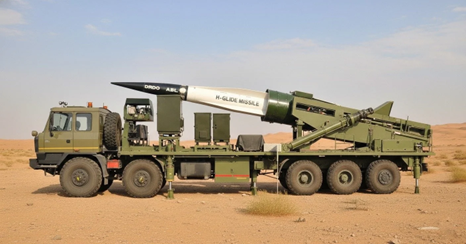
The Indian Army has signed a ₹293 crore contract with the NIBE Limited, in collaboration with Israel, for the supply of the long-range Suryastra Rocket Launcher system.
Suryastra Rocket Launcher
It is India’s first indigenously manufactured universal multi-calibre rocket launche
It is capable of precision surface-to-surface strikes up to 300 km.
The US strikes on Venezuela have brought to the forefront concerns over violations of international law, breach of national sovereignty & reinforcing perceptions of U.S. imperialism.
However, data shows that the U.S. attack on Venezuela is unlikely to have any direct impact on India’s energy security.
Probable Reasons for US Attack on Venezuela
Oil Reserves: Venezuela holds about 18% of the world’s oil reserves, more than Saudi Arabia (around 16%), Russia (about 5-6%), or the United States (around 4%).
Venezuela alone has more crude oil reserves than the US and Russia combined.
Countering China’s Expansion in Latin America: China, the world’s largest crude oil importer, has emerged as the biggest buyer of Venezuelan oil.
Venezuela is a strategic node in China’s energy security and global influence, making it geopolitically sensitive for the U.S.
S. Deals: The United States has signed trade deals with partners such as the European Union, Japan, South Korea and the United Kingdom, getting commitments from them to buy U.S. petroleum products and LNG, without having sufficient crude oil or refining capacity.
Resurrection of the Monroe Doctrine: The US has described the operation as consistent with the US foreign policy known as the Monroe Doctrine.
Other Stated and Unstated Motives:
Allegations of state-sponsored drug trafficking
Containment of socialist political ideology
Addressing mass migration flows towards the U.S.
Venezuela Share in Oil Supply
It is a member of the Organization of the Petroleum Exporting Countries (OPEC), a group of countries that largely dominates the global oil market.
Impact on India – India imported $255.3 million worth of oil from Venezuela in the current financial year in 2025, about 0.3% of its total oil import during this period.
Somnath Swabhiman Parv
Culture
Context
PM Modi commemorated 1,000 years since the first attack on the Somnath Temple in 1026 AD, describing the iconic shrine as a timeless symbol of India’s civilisational resilience and unbreakable spirit.
Somnath Temple
Somnath is revered as the first of the twelve Jyotirlings of Lord Shiva, as mentioned in the Dwadasha Jyotirling Stotram.
The temple is located at Prabhas Patan on the western coast of Gujarat, a region historically associated with maritime trade, cultural exchange, and prosperity.
The shrine was first attacked in January 1026 by Mahmud of Ghazni, marking the beginning of a series of invasions aimed at destroying symbols of Indian civilization.
Despite repeated devastation, the temple was rebuilt multiple times.
Restoration of the Temple
Ahilyabai Holkar played a crucial role in restoring the temple in the 18th century, demonstrating the role of indigenous rulers in cultural revival.
After Independence, Sardar Vallabhbhai Patel envisioned the reconstruction of Somnath.
The present structure was completed and inaugurated on May 11th 1951, by Dr. Rajendra Prasad, reflecting the constitutional ethos of cultural freedom.
M. Munshi was instrumental in the reconstruction of the temple.
Swami Vivekananda viewed Somnath as a symbol of India’s national spirit that regenerates despite adversity.
Human Rabies To Be Declared Notifiable Disease In Delhi
Health and Society
Context
The Delhi government is set to declare human rabies a notifiable disease in the National Capital Territory of Delhi under the Epidemic Diseases Act.
Notifiable Disease
A notifiable disease is one that must be legally reported to public health authorities upon diagnosis or suspicion.
Mandatory reporting enables real-time surveillance, early detection, rapid response, and evidence-based planning.
Additional Information – Rabies
It is a zoonotic viral disease (Disease Transmitted from Animals to Humans).
Pathogen – It is caused by the Rabies virus, of the Lyssavirus genus, within the family Rhabdoviridae.
It is a Ribonucleic Acid (RNA) virus that is present in the saliva of a rabid animal (dog, cat, monkey, etc).
Rabies is 100% fatal but 100% vaccine-preventable.
33% of global rabies deaths are recorded in India.
Common Vectors/ Reservoirs of Virus
Most mammals can carry the virus and hence can cause the disease.
In South Asia and Africa, the most common reservoir of the virus is the domestic/street dog.
In developed nations like the USA, animals that transmit rabies are bats, foxes, raccoons, and skunks.
Symptoms
Anxiety, Confusion, salivation, seizures, hallucinations and paralysis.
National Action Plan for dog Mediated Rabies Elimination by 2030 (NAPRE)
Under this, the union will encourage all the States and UTs to make Rabies a notifiable Disease.
A notifiable disease is any disease that is required by law to be reported to government authorities.
“Joint Inter-Ministerial Declaration Support Statement” for Elimination of Dog mediated Rabies from India by 2030 was also launched.
World Rabies Day
Celebrated on 28 September which marks the anniversary of Louis Pasteur’s death.
Louis Pasteur was a French chemist and microbiologist, who developed the first rabies vaccine.
He also discovered Pasteurisation, Vaccines for Anthrax and Cholera and Chamberland filters.