National and International Issues MCQ’s
1). Consider the following statements about the 16th Finance Commission:
- It was constituted in 2023 and its recommendations apply from 2026–27 to 2030–31.
- It is chaired by Dr. Arvind Panagariya.
- It recommends measures to strengthen the finances of Panchayats and Municipalities through State Consolidated Funds.
- It directly allocates funds to local bodies bypassing State governments.
How many of the statements given above is/ are correct?
- Only One
- Only Two
- Only Three
- All Four
Answer: C
2). Consider the following statements:
- Sant Ravidas is regarded as the founder of the Ravidassia religious tradition.
- Forty-one hymns attributed to Sant Ravidas are included in the Guru Granth Sahib.
- Mirabai is traditionally believed to have been influenced by Sant Ravidas.
- His teachings were opposed by Sikh Gurus and excluded from Sikh religious canon.
Which of the statements given above is/ are correct?
- 2 and 4 only
- 1, 2 and 3 only
- 1 and 3 only
- 1, 2, 3 and 4
Answer: B
3). Match the List-I (Buddhist Sacred Sites) with
List-II (Associated Event) and List-III (Location):
|
List-I
|
List-II
|
List-III
|
|
a. Lumbini
|
1. Mahaparinirvana
|
i. Bihar
|
|
b. Bodh Gaya
|
2. Birth of Buddha
|
ii. Nepal
|
|
c. Sarnath
|
3. Enlightenment
|
iii. Uttar Pradesh
|
|
d. Kushinagar
|
4. First Sermon
|
iv. Uttar Pradesh
|
Correct Matching:
- a – 2 – ii, b – 3 – i, c – 4 – iii, d – 1 – iv
- a – 1 – ii, b – 2 – i, c – 4 – iii, d – 1 – iv
- a – 4 – i, b – 3 – ii, c – 2 – iii, d – 1 – iv
- a – 3 – ii, b – 2 – i, c – 4 – iii, d – 1 – iv
Answer: A
4). Assertion (A): Carbon Capture, Utilisation and Storage (CCUS) is considered an important transitional technology for achieving net-zero emissions.
Reason (R): CCUS enables continued operation of hard-to-abate industrial sectors by preventing carbon dioxide emissions from entering the atmosphere.
Choose the correct answer:
- Both A and R are true, and R is the correct explanation of A
- Both A and R are true, but R is not the correct explanation of A
- A is true, but R is false
- A is false, but R is true
Answer: A
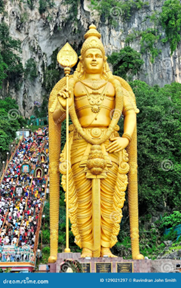
5). Consider the following statements:
- Thaipusam is celebrated predominantly by Tamil-speaking communities.
- It has significant public observance in countries with large Tamil diasporas.
- The festival is officially recognized as a public holiday in Malaysia and Singapore.
- In India, Thaipusam celebrations are confined only to Tamil Nadu.
Which of the statements given above is/are correct?
- 1 and 2 only
- 1, 2 and 3 only
- 2, 3 and 4 only
- 1, 2, 3 and 4
Answer: B
6). With reference to DAY-NRLM, consider the following statements:
- The mission focuses exclusively on self-employment and does not cover wage employment.
- It seeks to mobilise rural poor households into self-managed institutions.
- Financial inclusion is a core component of the mission.
- The mission emphasises universal social security coverage for rural households.
Which of the statements given above is/are NOT correct?
- 2 and 3 only
- 1, 2 and 4 only
- 1 and 4 only
- 1 and 3 only
Answer: C
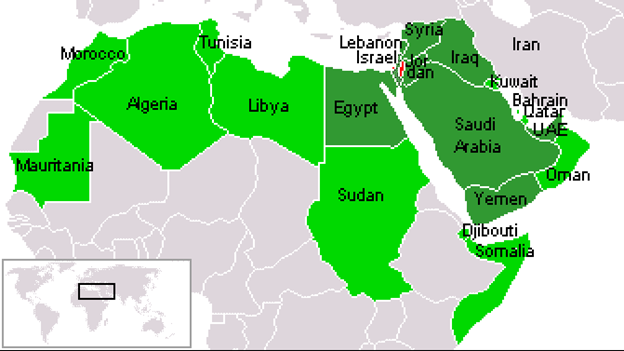
7). The Delhi Declaration was adopted in the context of:
- India–GCC Summit
- India–African Union Dialogue
- India–Arab Foreign Ministers’ Meeting
- NAM Ministerial Conference
Answer: C
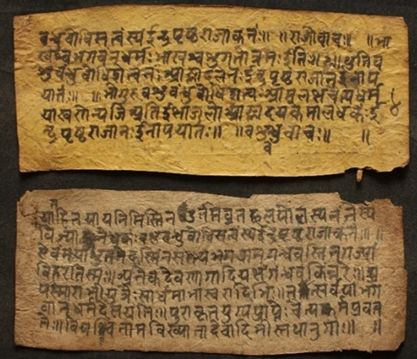
8). Consider the following statements regarding the Gyan Bharatam Mission:
- The mission focuses on the survey, documentation and conservation of manuscript heritage across India.
- It primarily targets manuscripts preserved in religious institutions alone.
- The mission envisages coverage of more than one crore manuscripts.
- Digital access to manuscripts is a core outcome of the mission.
Which of the statements given above is/are correct?
- 1, 3 and 4 only
- 1 and 3 only
- 2 and 4 only
- 1, 2, 3 and 4
Answer: A
9). The term “Bharat-VISTAAR” stands for:
- Virtual Interface for Sustainable Technology in Agriculture and Rural areas
- Virtually Integrated System to Access Agricultural Resources
- Value-based Integrated System for Technology Adoption in Agriculture
- Virtual Infrastructure Scheme for Technology and Agrarian Reforms
Answer: B
10). The GOBARdhan scheme aligns most closely with which of the following broader policy objectives?
- Circular economy
- Rural livelihood diversification
- Climate change mitigation
- Export-oriented agricultural growth
Select the correct answer using the code below:
- 1 and 2 only
- 1, 2, 3 and 4
- 2, 3 and 4 only
- 1, 2, and 3 only
Answer: D
11). Consider the following statements regarding the MPLADS:
- Lok Sabha MPs can recommend works anywhere in the country.
- Rajya Sabha MPs can recommend works anywhere in the country.
- Nominated MPs can recommend works anywhere in India.
- MPs are permitted limited flexibility to recommend works outside their normal jurisdiction.
How many of the statements given above is/are correct?
- Only One
- Only Two
- Only Three
- All Four
Answer: B
12). With reference to the Solid Waste Management (SWM) Rules, 2026, consider the following statements:
- The rules have been notified under the Environment (Protection) Act, 1986.
- The levy of environmental compensation under the rules is based on the “Polluter Pays” principle.
- The Central Pollution Control Board is responsible for levying environmental compensation for non-compliance.
- The rules come into full effect from April 1, 2026.
Which of the statements given above is/are correct?
- 1, 2 and 4 only
- 1, 3 and 4 only
- 2, 3 and 4 only
- 1, 2, 3 and 4
Answer: A
13). The New START (Strategic Arms Reduction) Treaty was signed between which two countries?
- USA and China
- Russia and China
- USA and Russia
- Russia and Ukraine
Answer: C
14). The primary objective of PM VIKAS is to:
- Provide universal scholarship to all minorities.
- Promote heritage tourism in minority-dominated areas.
- Support skill development, entrepreneurship and education of minority communities.
- Ensure reservation in government employment for minorities.
Answer: C
15). With reference to Solid Fuel Ducted Ramjet (SFDR) propulsion, consider the following statements:
- SFDR is an air-breathing propulsion system that uses atmospheric oxygen for combustion.
- Unlike conventional solid rocket motors, SFDR allows regulation of thrust during flight.
- SFDR engines can operate efficiently from standstill without any initial acceleration.
- SFDR technology is particularly suited for long-range air-to-air missiles.
Which of the statements given above is/are correct?
- 1, 2 and 4 only
- 1 and 3 only
- 2 and 3 only
- 1, 2, 3 and 4
Answer: A
16). The Agriculture Infrastructure Fund (AIF) directly supports which of the following activities?
- Creation of modern storage and warehousing facilities.
- Development of food processing and value-addition units.
- Construction of large-scale irrigation dams.
- Strengthening farm-gate level infrastructure.
Select the correct answer using the code given below:
- 1, 2, 3 and 4
- 1 and 3 only
- 2 and 3 only
- 1, 2, and 4 only
Answer: D
17). Assertion (A): NAMASTE supports the rehabilitation of manual scavengers.
Reason (R): The scheme promotes skill development, safety training and alternative livelihood opportunities for sanitation workers.
Choose the correct answer:
- Both A and R are true and R is the correct explanation of A
- Both A and R are true but R is not the correct explanation of A
- A is true but R is false
- A is false but R is true
Answer: A
18). With reference to Lake Urmia, consider the following statements:
- It is located in Iran and it lies in a tectonic depression associated with the Zagros mountain system.
- It is an endorheic (closed basin) lake with no outlet to the sea.
- It drains into the Caspian Sea during periods of high rainfall.
- It is designated as a Ramsar Wetland of International Importance.
Which of the statements given above is/ are correct?
- 1, 2 and 3 only
- 1 and 3 only
- 1, 2 and 4 only
- 1, 2, 3 and 4
Answer: C
19). The “Rafah border” crossing connects:
- Gaza Strip and Israel
- West Bank and Jordan
- Gaza Strip and Egypt
- Israel and Lebanon
Answer: C
20). A large bird species, standing well over 1.5 metres tall, was recently reported from agricultural landscapes and shallow wetlands outside protected forest areas. It is known for its strong social bonding, lifelong monogamous pairs and a breeding cycle closely aligned with the monsoon season. The species feeds on insects, fish, roots and plant matter, playing an important role in maintaining ecological balance in farmlands. Although it was once widely distributed across several states in northern and central India, recent observations show that its population is now largely restricted to one particular state. The species is listed as Vulnerable on the IUCN Red List and is protected under Schedule IV of the Wildlife (Protection) Act, 1972.
The species described in the paragraph above is most likely:
- Demoiselle Crane
- Sarus Crane
- Siberian Crane
- Black-necked Crane
Answer: B
21). The Frontier Nagaland Territorial Authority (FNTA) has been created through an agreement involving:
- The Government of India and Eastern Nagaland Peoples’ Organisation (ENPO)
- Government of India, Government of Nagaland and Eastern Nagaland Peoples’ Organisation (ENPO)
- Government of Nagaland and Naga insurgent groups
- Government of India, Eastern Nagaland Peoples’ Organisation (ENPO) and neighbouring countries
Answer: B
22). Which of the following space agencies is NOT a partner in the International Space Station (ISS) programme?
- NASA
- Roscosmos
- European Space Agency
- ISRO
Answer: D
23). With reference to the National Disaster Management Authority (NDMA), consider the following statements:
- NDMA derives its statutory authority from the Environment (Protection) Act, 1986.
- The Prime Minister of India is the ex-officio Chairperson of NDMA.
- NDMA’s guidelines are binding on State Disaster Management Authorities (SDMAs).
Which of the statements given above is/are correct?
- 2 only
- 1 and 3 only
- 2 and 3 only
- 1, 2 and 3
Answer: C
24). With reference to NexCAR19, consider the following statements:
- It is a fully murine CAR-T therapy developed for use outside India.
- It represents the first humanised CAR-T therapy developed indigenously in India.
- Humanisation of CAR constructs helps reduce immunogenic reactions in patients.
- Its development reflects India’s growing capabilities in advanced immunotherapy.
Which of the statements given above is/are correct?
- 1 and 2 only
- 2, 3 and 4 only
- 1, 3 and 4 only
- 1, 2, 3 and 4
Answer: B
25). With reference to Agni-P (Agni-Prime), consider the following statements:
- It is a lighter, more compact missile compared to earlier Agni variants.
- It incorporates advanced propulsion and navigation systems for greater accuracy.
- It is designed exclusively for conventional warfare and cannot carry nuclear warheads.
- Its range bridges the gap between short-range and long-range Agni missiles.
Which of the statements given above is/ are correct?
- 1, 2 and 3 only
- 2, 3 and 4 only
- 1, 2 and 4 only
- 1, 2, 3 and 4
Answer: C
26). With reference to the Jiyo Parsi Scheme, consider the following statements:
- It is a Central Sector Scheme implemented by the Ministry of Minority Affairs.
- The scheme focuses exclusively on financial incentives for childbirth among Parsis.
- Assisted Reproductive Technology (ART) is a component under the scheme.
- The scheme was launched during the 12th Five Year Plan period.
Which of the statements given above is/are correct?
- 1, 3 and 4 only
- 1 and 2 only
- 2 and 3 only
- 1, 2, 3 and 4
Answer: A
27). Indian teacher Rouble Nagi has won which international award in 2026?
- Ramon Magsaysay Award
- Global Teacher Prize
- UNESCO Peace Prize
- Padma Shri
Answer: B
28). Consider the following statements about the Hakki Pikki tribe:
- They are traditionally bird catchers and hunters.
- The society is matriarchal, and the eldest son is not allowed to cut his hair.
- Cross-cousin marriages are preferred, and monogamy is the norm.
- The tribe originally hails from the bordering districts of Gujarat and Rajasthan.
- In Karnataka, they strictly follow a vegetarian diet.
Which of the statements given above is/are correct?
- 1, 2, 3 and 4 only
- 1, 3, 4 and 5 only
- 2, 3, 4 and 5 only
- All of the above
Answer: A
29). Consider the following statements about the Greater Flamingo (Phoenicopterus roseus):
- It is the largest species of the flamingo family.
- Average height ranges from 110–150 cm, and weight from 2–4 kg.
- Its IUCN Red List status is Vulnerable.
- It is the state bird of Gujarat.
Which of the statements given above are correct?
- 1, 2 and 3 only
- 1, 2 and 4 only
- 2, 3 and 4 only
- All of the above
Answer: B
30). Which of the following statements about Sickle Cell Disease (SCD) is/are correct?
- Red blood cells become rigid and sickle-shaped, causing blood flow blockage.
- It is an infectious disease primarily transmitted via mosquitoes.
- The most severe form of the disease is sickle-cell anaemia.
- Haemoglobin in SCD patients can no longer carry oxygen.
- 1 and 3 only
- 1, 2 and 3 only
- 2 and 4 only
- All of the above
Answer: A
31). Exercise Harimau Shakti is primarily conducted between:
- India and Indonesia
- India and Thailand
- India and Malaysia
- India and Vietnam
Answer: C
32). Consider the following statements about the Bab el-Mandeb Strait:
- Connects the Mediterranean Sea directly with the Arabian Sea.
- It is a critical chokepoint for oil shipments from the Persian Gulf to Europe.
- Lies between Yemen and the Horn of Africa.
- It is controlled entirely by Saudi Arabia and Eritrea.
Select the correct answer using the code below:
- 1 and 4 only
- 2 and 3 only
- 1, 2 and 3 only
- 2, 3 and 4 only
Answer: B
33). Consider the following statements regarding PM CARES and PMNRF:
- Both funds are eligible for 100% tax exemption under Section 80G of the Income Tax Act.
- Both funds accept foreign donations.
- Both funds are subject to the RTI Act, 2005.
- Neither fund is audited by the CAG of India.
Which of the statements given above is/are correct?
- 1 and 2 only
- 1, 2 and 4 only
- 3 and 4 only
- 1, 2, 3 and 4
Answer: B
34). A large non-venomous snake species native to South and Southeast Asia, including Indonesia, the Philippines, Malaysia, Thailand and parts of India, is recognised as the longest snake species in the world. Though not the heaviest, it ranks among the three heaviest snake species globally, after the green anaconda and the Burmese python. It has distinctive net-like patterns on its scales and kills its prey by constriction, suffocating it before swallowing it whole. In rare instances, it has also been reported to prey on humans.
Which one of the following species is described above?
- Green Anaconda
- Burmese Python
- Reticulated Python
- Indian Rock Python
Answer: C
35). Consider the following pairs:
|
Festival
|
State
|
|
1. Bastar Pandum
|
Chhattisgarh
|
|
2. Hornbill Festival
|
Nagaland
|
|
3. Bhagoria Festival
|
Maharashtra
|
|
4. Wangala Festival
|
Meghalaya
|
Which of the pairs given above is/are correctly matched?
- 1, 2 and 4 only
- 1 and 3 only
- 2, 3 and 4 only
- 1, 2, 3 and 4
Answer: A
36). With reference to bonded labour in India, consider the following statements:
- Bonded labour involves repayment of debt through forced labour.
- The practice was historically linked to caste hierarchies and landlessness.
- The Constitution explicitly permits bonded labour in cases of economic necessity.
- Article 23 prohibits trafficking and forced labour.
How many of the statements given above is/are correct?
- Only One
- Only Two
- Only Three
- All Four
Answer: C
37). Arrange the following island nations from West to East in the Western Indian Ocean:
- Comoros
- Seychelles
- Mauritius
- Maldives
Select the correct answer using the code below:
- 1 – 2 – 3 – 4
- 2 – 1 – 3 – 4
- 1 – 3 – 2 – 4
- 2 – 3 – 1 – 4
Answer: A
38). Consider the following statements:
- For tea cultivation annual rainfall between 150–200 cm and average annual temperature between 15°C and 23°C is required.
- Deep, well-drained soil rich in humus and a long dry season for leaf maturation is required.
- India is the second largest tea producer and largest producer of black tea globally.
- India is the third largest tea exporter in the world and Assam accounts for more than half of India’s total tea production.
Which of the statements given above is/are NOT correct?
- 1 and 2 only
- 2 and 4 only
- 3 and 4 only
- 2, 3 and 4
Answer: B
39). With reference to the Network Readiness Index (NRI) 2025, consider the following statements:
- India was ranked 45th with a score of 54.43 out of 100.
- The report evaluates 150 economies across the world.
- The index is based on four pillars – Technology, People, Governance and Impact.
- The report is published by the Portulans Institute.
Which of the statements given above is/are correct?
- 1, 3 and 4 only
- 1 and 2 only
- 2, 3 and 4 only
- 1, 2, 3 and 4
Answer: A
40). With reference to the Ken–Betwa Link Project, consider the following statements:
- It aims to transfer surplus water from the Betwa River to the Ken basin.
- The transfer is proposed through a concrete canal system.
- The project primarily aims to provide irrigation to the Marathwada region.
- The beneficiary states are Madhya Pradesh and Uttar Pradesh.
Which of the statements given above is/are correct?
- 1, 2 and 4 only
- 1 and 3 only
- 2 and 4 only
- 1, 2, 3 and 4
Answer: C
41). Consider the following legal instruments related to biological weapons regulation in India:
- Environment (Protection) Act, 1986
- Biosafety Rules, 1989
- Weapons of Mass Destruction Act, 2005
- Atomic Energy Act, 1962
- 2017 Recombinant DNA & Biocontainment Guidelines
How many of the above are directly related to regulation or prohibition of biological weapons or hazardous microorganisms?
- One only
- Two only
- Three only
- Four
Answer: D
42). With reference to Vande Mataram, consider the following statements:
- The first two stanzas were adopted as India’s National Song on 24 January 1950.
- The Constitution of India explicitly defines the term “National Song.”
- Its recognition flows from Constituent Assembly discussions and executive practice.
- It is explicitly protected under Article 51A(a) of the Constitution.
How many of the statements given above is/are correct?
- One only
- Two only
- Three only
- All Four
Answer: B
43). With reference to the Corruption Perceptions Index (CPI), consider the following statements:
- It is published by Transparency International and it measures levels of public sector corruption.
- India scored 39 out of 100 and ranked 91st globally.
- It covers more than 180 countries and uses a scale from 0 (very clean) to 100 (highly corrupt).
- Denmark was the best performing country and Somalia was among the worst performing countries.
Which of the statements given above is/are correct?
- 1 and 2 only
- 1, 3 and 4 only
- 1, 2 and 4 only
- 1, 2, 3 and 4
Answer: C
44). India’s first musical road has been introduced in:
- Delhi
- Mumbai
- Bengaluru
- Ahmedabad
Answer: B
45). The SHANTI Act, 2025 primarily aims to:
- Nationalize all private power plants.
- Open the civil nuclear sector to greater private participation.
- Ban foreign investment in nuclear energy.
- Replace renewable energy with nuclear energy.
Answer: B
46). Consider the following statements regarding Maharshi Dayanand Saraswati:
- He believed that the Vedas are the ultimate and infallible source of knowledge.
- He rejected idol worship and elaborate ritualism.
- He supported hereditary caste hierarchy based strictly on birth.
- He advocated women’s education and widow remarriage.
How many of the statements given above is/are correct?
- One only
- Two only
- Three only
- All Four
Answer: C
47). Consider the following statements regarding Kyasanur Forest Disease (KFD):
- It is a tick-borne viral hemorrhagic fever caused by a virus belonging to the Flaviviridae family.
- It was first identified in 1957 in Karnataka.
- Human-to-human transmission has been documented during outbreaks.
- The disease is commonly known as Monkey Fever.
Which of the statements given above is/are correct?
- 1, 2 and 4 only
- 1 and 3 only
- 2, 3 and 4 only
- 1, 2, 3 and 4
Answer: A
48). Rajaji National Park is located in which State of India?
- Himachal Pradesh
- Uttarakhand
- Uttar Pradesh
- Bihar
Answer: B
49). Which of the following is NOT a principle of Panchsheel?
- Mutual non-interference in internal affairs
- Peaceful co-existence
- Equality and mutual benefit
- Pre-emptive self-defence
Answer: D
50). Consider the following statements regarding the Quad:
- The Quad is an informal strategic dialogue among India, the USA, Japan and Australia.
- It is a formal military alliance with a collective defence clause similar to NATO.
- Its objective includes promoting a free, open and prosperous Indo-Pacific.
- It conducts regular summit-level meetings among member countries.
Which of the statements given above is/are correct?
- 1, 3 and 4 only
- 1 and 2 only
- 2, 3 and 4 only
- 1, 2, 3 and 4
Answer: A
51). Consider the following statements regarding Seva Teerth:
- It houses the Prime Minister’s Office (PMO).
- It accommodates the National Security Council Secretariat (NSCS).
- It houses the Cabinet Secretariat.
- It was conceived to decentralize key executive offices into multiple locations across Delhi.
Which of the statements given above is/are correct?
- 1, 2 and 4 only
- 1 and 4 only
- 1, 2 and 3 only
- 1, 2, 3 and 4
Answer: C
52). Consider the following statements regarding the Consumer Price Index (CPI) in India:
- It measures the average change in prices paid by consumers for a basket of goods and services over time.
- It is used as an indicator of retail inflation.
- The base year has been revised from 2012 to 2024 using the Household Consumption Expenditure Survey 2023–24.
- CPI data are compiled and released by the National Statistical Office (NSO) under MoSPI.
How many of the statements given above is/are NOT correct?
- Two only
- Three only
- None are correct
- All are correct
Answer: A
53). Consider the following statements regarding the Lead Bank Scheme (LBS):
- It was introduced by the Reserve Bank of India in December 1969.
- It aims to coordinate banking and development activities at the district level.
- Under the scheme, each district is assigned to a designated lead bank.
- It functions under the direct supervision of the Ministry of Finance without RBI involvement.
Which of the statements given above is/are correct?
- 2 and 3 only
- 1 and 4 only
- 1, 2 and 3 only
- 1, 2, 3 and 4
Answer: C
54). With reference to the Vaikom Satyagraha, consider the following statements:
- It was launched in the princely state of Travancore against restrictions on lower castes using public roads near a temple.
- The immediate demand was complete temple entry for all castes.
- Mahatma Gandhi directly led the protests from the beginning.
- T. K. Madhavan was one of the key leaders associated with the movement.
How many of the statements given above is/are correct?
- One only
- Two only
- Three only
- All
Answer: B
55). With reference to the Land Acquisition Rehabilitation and Resettlement Act, 2013, consider the following statements:
- The Act mandates Social Impact Assessment (SIA) before acquisition in all cases without exception.
- It restricts acquisition of irrigated multi-cropped land except under exceptional circumstances.
- It provides for the return of unused land after five years.
- It provides for establishment of a Land Acquisition, Rehabilitation and Resettlement Authority for grievance redressal.
Which of the statements given above is/are correct?
- 2, 3 and 4 only
- 1, 2 and 3 only
- 1 and 4 only
- 2 and 4 only
Answer: A
56). With reference to the Hirakud Wetland, consider the following statements:
- It forms part of the Hirakud Reservoir built across the Mahanadi River.
- The reservoir is among the largest man-made reservoirs in India.
- It was designated as a Ramsar Site in 2021.
- It lies along the East Asian–Australasian Flyway.
Which of the statements given above is/are correct?
- 1, 2 and 3 only
- 1 and 4 only
- 2, 3 and 4 only
- 1, 2, 3 and 4
Answer: A
57). Which Indian state has designated Bacillus subtilis as its official State Microbe?
- Tamil Nadu
- Karnataka
- Kerala
- Maharashtra
Answer: C
58). With reference to the Long Range Anti-Ship Hypersonic Missile (LR-AShM), consider the following statements:
- It is a hypersonic glide missile designed to meet coastal defence and strike requirements of the Indian Navy.
- It follows a quasi-ballistic trajectory and it employs a two-stage liquid propulsion rocket motor.
- It is capable of engaging both static and moving maritime targets.
Which of the statements given above is/are correct?
- 1 and 2 only
- 1 and 3 only
- 2 and 3 only
- 1, 2 and 3
Answer: B
59). With reference to the Sowmyanarayana Perumal Temple, consider the following statements:
- The temple is built in the Chola architectural style.
- It contains a three-tier sanctum representing different postures of Lord Vishnu.
- The ground level houses Vishnu in reclining (Sayana) posture.
- The shrine is crowned by an Ashtanga Vimana.
Which of the statements given above is/are correct?
- 1, 2 and 4 only
- 1 and 3 only
- 2 and 4 only
- 1, 2, 3 and 4
Answer: A
60). Arrange the following events with respect to Netaji Subhash Chandra Bose in the correct chronological order:
- Formation of the Forward Bloc
- Election as President of the Indian National Congress at Haripura Session
- Formation of the Provisional Government of Free India (Azad Hind Government)
- Resignation from the Indian Civil Services (ICS)
Select the correct answer using the code below:
- 4 – 1 – 2 – 3
- 2 – 4 – 1 – 3
- 4 – 2 – 1 – 3
- 2 – 1 – 4 – 3
Answer: C
61). With reference to the “Prakash Ganga” tableau, consider the following statements:
- The theme symbolises the seamless and continuous flow of power across the interconnected national grid.
- It highlights India’s transition from universal electricity access to becoming a global clean energy player.
- The tableau focuses exclusively on thermal power expansion to ensure energy security.
- It showcases digital and smart technologies in power management.
Which of the statements given above is/are correct?
- 1, 2 and 4 only
- 1 and 3 only
- 2 and 3 only
- 1, 2, 3 and 4
Answer: A
62). With reference to ‘ASC ARJUN’, consider the following statements:
- It is a humanoid robot deployed at Visakhapatnam Railway Station.
- It works in coordination with the Railway Protection Force (RPF).
- It has been developed using imported robotic technology under a foreign collaboration.
- It assists in security, surveillance and passenger assistance.
Which of the statements given above is/are correct?
- 1, 2, 3 and 4
- 1 and 3 only
- 2 and 3 only
- 1, 2 and 4 only
Answer: D
63). The Strategic Asset Allocation and Risk Governance (SAARG) committee is chaired by:
- Urjit Patel
- Narayan Ramachandran
- Shaktikanta Das
- N. Chandrasekaran
Answer: B
64). Why is ammonium nitrate considered a “dual-use” substance?
- It is used in both agriculture and medicine
- It is used in both fertilizers and explosives
- It is used in food processing and mining
- It is used in textiles and pharmaceuticals
Answer: B
65). Which of the following correctly matches the category of the Jeevan Raksha Padak with its description?
- Sarvottam Jeevan Raksha Padak – Saving life in situations of very great danger to the rescuer.
- Uttam Jeevan Raksha Padak – Courage and prompt action in situations of great danger.
- Jeevan Raksha Padak – Acts involving minor risk to the rescuer.
Select the correct answer:
- 1 and 2 only
- 2 and 3 only
- 1 only
- 1, 2 and 3
Answer: A
66). According to the TomTom Traffic Index 2025, which of the following Indian cities were among the top 10 most congested cities in Asia?
- Bengaluru
- Pune
- Chennai
- Jaipur
Select the correct answer:
- 1 and 2 only
- 1, 2 and 4 only
- 2, 3 and 4 only
- 1, 2, 3 and 4
Answer: B
67). The Sea of Japan connects to the Pacific Ocean through:
- Suez Canal
- Tsugaru Strait
- Bosporus Strait
- Gibraltar Strait
Answer: B
68). The Kurds are mainly spread across which of the following countries?
- Turkey
- Iraq
- Iran
- Syria
Select the correct answer:
- 1 and 2 only
- 1, 2 and 3 only
- 1, 2, 3 and 4
- 2 and 4 only
Answer: C
69). EURATOM was established along with which major European agreement?
- Treaty of Versailles
- Treaty of Rome
- Treaty of Lisbon
- Schengen Agreement
Answer: B
70). Consider the following description:
A medium-sized shark species found across the Indo-West Pacific region. It inhabits tropical and subtropical waters, commonly associated with coral reefs, rocky substrates, sandy plateaus, mangroves and seagrass beds. Its distribution extends from South Africa to Samoa and northward to Japan. The species is currently listed as “Endangered” on the IUCN Red List.
Which one of the following species is best described above?
- Great White Shark
- Whale Shark
- Indo-Pacific Leopard Shark
- Oceanic Whitetip Shark
Answer: C
71). High concentrations of inhaled Nitric Oxide may lead to which of the following conditions?
- Methemoglobinemia
- Pulmonary tissue injury
- Increased oxygen-carrying capacity of blood
Select the correct answer using the code below:
- 1 only
- 1 and 2 only
- 2 and 3 only
- 1, 2 and 3
Answer: B
72). The country’s first underwater twin-tube road-cum-rail tunnel is being constructed beneath which river and in which state?
- Ganga, West Bengal
- Yamuna, Uttar Pradesh
- Brahmaputra, Assam
- Godavari, Andhra Pradesh
Answer: C
73). Assertion (A): The Fund of Funds for Startups is managed by the Small Industries Development Bank of India (SIDBI).
Reason (R): SIDBI is a statutory body responsible for regulation of capital markets in India.
Codes:
- Both A and R are true and R is the correct explanation of A
- Both A and R are true but R is not the correct explanation of A
- A is true but R is false
- A is false but R is true
Answer: C
74). With reference to the Ol Chiki script, consider the following statements:
- It was developed in the early 20th century by Pandit Raghunath Murmu specifically for the Santhali language.
- It consists of 30 letters designed to accurately represent Santhali phonetics.
- It was adapted from the Devanagari script to suit tribal languages and its creation enabled systematic documentation of Santhali vocabulary and grammar.
- Santhali language was included in the Eighth Schedule of the Constitution through the 92nd Constitutional Amendment Act, 2003.
Which of the statements given above is/are correct?
- 1, 2 and 4 only
- 1 and 3 only
- 2, 3 and 4 only
- 1, 2, 3 and 4
Answer: A
75). Which of the following statements about ULPIN (Bhu-Aadhaar) is/are correct?
- It is a 14-digit identification number assigned to every land parcel.
- It is based on the longitude and latitude coordinates of the land parcel.
- It functions as a digital land identity, similar to Aadhaar for individuals.
- It is applicable only to urban areas covered under Smart Cities Mission.
Options:
- 1 and 4 only
- 1, 2 and 3 only
- 2 and 4 only
- All of the above
Answer: B
76). Which of the following statements about PM RAHAT is/are correct?
- It provides immediate, cashless medical treatment to road accident victims.
- The scheme covers only accidents on national highways.
- Hospitals cannot ask for advance payments for emergency stabilization.
- Funding comes from the Motor Vehicle Accident Fund (MVAF).
Options:
- 1, 3, and 4 only
- 1 and 2 only
- 2 and 3 only
- All of the above
Answer: A
77). This is a ground-dwelling bird endemic to the Western Himalayas, found across Pakistan, Kashmir, Himachal Pradesh, Uttarakhand, and central Nepal. It feeds mainly on roots, tubers, bulbs, seeds, berries, and occasionally insects or worms. The species exhibits high natal philopatry, meaning individuals often return to their birthplace to breed, and is predominantly monogamous. Its population faces threats from hunting, habitat degradation due to conversion of grasslands to agriculture, and forest fires during the breeding season (April–June) that destroy ground nests. Conservation efforts include an exclusive breeding centre located in Himachal Pradesh. It is classified as ‘Vulnerable’ by international conservation organizations, listed in Schedule I of India’s Wildlife (Protection) Act, 1972, and included in Appendix I of CITES.
Which of the following species is described in the above paragraph?
- Himalayan Monal
- Cheer Pheasant
- Western Tragopan
- Satyr Tragopan
Answer: B
78). India recently upgraded its bilateral ties to “Special Global Strategic Partnership” with which country?
- Germany
- United Kingdom
- France
- Japan
Answer: C
79). With reference to the “AI-Preneurs of India” initiative, consider the following statements:
- It is a regulatory framework for artificial intelligence startups in India.
- It is launched under the Atal Innovation Mission (AIM) of NITI Aayog.
- It documents the journeys of selected AI startups through a flagship publication.
Which of the statements given above is/are correct?
- 2 only
- 2 and 3 only
- 1 and 3 only
- 1, 2 and 3
Answer: B
80). A large forest-dwelling bird measuring about 2 to 2.5 feet in height, characterised by a massive curved beak and striking plumage, inhabits moist evergreen and tall deciduous forests, plantations, and low-altitude riparian ecosystems. In India, its distribution extends across the Western Ghats and parts of eastern and central India, including south-west West Bengal and Bihar, further ranging into Andhra Pradesh and Sri Lanka. Ecologically, it plays a crucial role as a keystone seed disperser, significantly contributing to tropical forest regeneration. It is currently listed as ‘Near Threatened’ on the IUCN Red List.
The species described in the above paragraph is:
- Great Indian Bustard
- Malabar Pied Hornbill
- Indian Grey Hornbill
- Oriental Darter
Answer: B
81). With reference to the Forest Rights Act (FRA), 2006, consider the following statements:
- It recognises individual as well as community rights over forest land and resources.
- It applies only to Scheduled Tribes and excludes other traditional forest dwellers.
- It aims to correct historical injustice done to forest-dwelling communities.
Which of the statements given above is/are correct?
- 1 and 3 only
- 2 only
- 1 only
- 1, 2 and 3
Answer: A
82). Municipal Bonds are primarily used for:
- Financing capital-intensive infrastructure projects
- Refinancing existing loans
- Meeting working capital requirements
Select the correct answer using the code below:
- 1 only
- 1 and 2 only
- 1, 2 and 3
- 2 and 3 only
Answer: C
83). With reference to the Vibrant Village Programme (VVP), consider the following statements:
- It is implemented by the Ministry of Rural Development.
- It focuses on villages located along India’s border with China.
- It aims at improving infrastructure and livelihood opportunities in border villages.
Which of the statements given above is/are correct?
- 2 and 3 only
- 1 and 2 only
- 3 only
- 1, 2 and 3
Answer: A
84). The “Board of Peace” was created to oversee:
- The ceasefire in the Russia–Ukraine war.
- The ceasefire in the Israel–Lebanon conflict.
- The ceasefire in the Israel–Hamas war.
- The ceasefire in the Syrian civil war.
Answer: C
85). With reference to the Loggerhead Turtle, consider the following statements:
- It derives its name from its disproportionately large head.
- It primarily feeds on hard-shelled marine organisms.
- It is classified as ‘Endangered’ under the IUCN Red List.
Which of the statements given above is/are correct?
- 1 and 2 only
- 2 and 3 only
- 1 only
- 1, 2 and 3
Answer: A
86). The Global Mission on AI for Energy has been launched by:
- International Energy Agency
- United Nations Environment Programme
- World Bank
- International Solar Alliance
Answer: D
87). The term ‘Pax Silica’ refers to:
- A UN peacekeeping operation
- A US-led strategic initiative for secure silicon supply chains
- A global treaty on rare earth minerals
- A WTO agreement on trade facilitation
Answer: B
88). With reference to the International Emergency Economic Powers Act (IEEPA), consider the following statements:
- It was enacted in 1977.
- It empowers the U.S. President to act against unusual and extraordinary foreign threats.
- It can be invoked without declaring a national emergency.
Which of the statements given above is/are correct?
- 1 and 2 only
- 2 and 3 only
- 1 only
- 1, 2 and 3
Answer: A
89). With reference to the concept of “Net Zero”, consider the following statements:
- It implies a complete elimination of all greenhouse gas emissions.
- It refers to achieving a balance between greenhouse gases emitted and those removed from the atmosphere.
- It results in reducing human-caused emissions to a net value of zero.
- Bela Gram was recognized as India’s first net-zero panchayat for its sustainable and carbon-neutral initiatives.
Which of the statements given above is/are correct?
- 1, 2 and 4only
- 2, 3 and 4 only
- 1, 2 and 3 only
- 1, 2, 3 and 4
Answer: B
90). A tree species endemic to three districts of southern Andhra Pradesh—Chittoor, Nellore, and YSR Kadapa—is primarily found in the Eastern Ghats, with its largest reserve located within a biosphere reserve spanning about 4,755 sq km. It is a slow-growing species requiring 25–40 years to attain maturity, making it particularly vulnerable to overexploitation. The species is listed as ‘Endangered’ on the IUCN Red List, its international trade is strictly regulated under CITES, and it is protected under the Wildlife Protection Act, 1972.
The species described in the above paragraph is:
- Sandalwood
- Teak
- Red Sanders
- Rosewood
Answer: C
91). With reference to the indigenously manufactured Td vaccine, consider the following statements:
- It is produced at the Central Research Institute.
- It provides protection against tetanus as well as diphtheria.
- It replaced the earlier Tetanus Toxoid (TT) vaccine, which protected only against tetanus.
- The World Health Organization recommended in 2006 that countries transition from Td to TT vaccine.
Which of the statements given above is/are correct?
- 1, 2 and 3 only
- 1 and 4 only
- 2, 3 and 4 only
- 1, 2, 3 and 4
Answer: A
92). With reference to the Biopharma Shakti initiative, consider the following statements:
- It aims to boost the production of biologics and biosimilars in India.
- It seeks to transform India into a leading global biopharma industry player.
- It targets capturing 5% of the global biopharmaceutical market share.
- It primarily focuses on increasing imports of high-value biopharmaceutical products to meet domestic demand.
Which of the statements given above is/are correct?
- 1 and 3 only
- 2 and 4 only
- 1 and 4 only
- 1, 2 and 3 only
Answer: D