National and International Issues Based Practice Questions
1). With reference to PRAGATI, consider the following statements:
- It is a technology-driven platform launched by the Prime Minister’s Office.
- It focuses only on monitoring central sector projects and reviewing progress of government schemes.
- It also integrates a mechanism for grievance redressal of citizens.
- Monitoring infrastructure and high-value projects. Facilitating inter-ministerial coordination Conducting parliamentary oversight of projects.
How many of the statements given above is/are correct?
- Only One Statement
- Only Two Statement
- Only Three Statement
- None of the above
Answer:- B
2). Assertion (A): The Financial Stability Report focuses exclusively on the banking sector.
Reason (R): Non-banking financial companies (NBFCs) are regulated separately and are not part of the financial system.
Choose the correct answer:
- Both A and R are true, and R is the correct explanation of A
- Both A and R are true, but R is not the correct explanation of A
- A is true, but R is false
- Both A and R are false
Answer:- D
3). With reference to recent legal and policy developments regarding cannabis in India, consider the following statements:
- Cannabidiol (CBD) extracted from hemp plants has been permitted for medical use in India.
- Courts have clarified that cannabis cultivation for research may be allowed under appropriate permission.
- No Indian state has shown interest in regulating cannabis for industrial purposes.
How many of the statements given above is/ are NOT correct?
- Only One
- Only Two
- All the three
- None of the above
Answer:- A
4). With reference to PM GatiShakti National Master Plan, consider the following statements:
- It aims to integrate planning and implementation of infrastructure projects across different ministries, including state projects.
- It seeks to reduce logistics costs as a percentage of GDP.
- It is coordinated by the DPIIT and NITI Aayog act as an exclusive project-level approval authority.
- It is implemented exclusively by the Ministry of Road Transport and Highways.
How many of the statements given above is/are correct?
- Only One
- Only Two
- All Three
- None
Answer:- B
5). With reference to India’s missile development programme, consider the following statements:
- Pralay has been developed by the Defence Research and Development Organisation (DRDO).
- It fills the gap between long-range ballistic missiles and conventional artillery systems.
- It is designed for quick reaction and high-precision battlefield support.
- It is a part of India’s anti-tank guided missile programme.
Which of the statements given above is/ are correct?
- 1, 2 and 3 only
- 1 and 4 only
- 2 and 3 only
- 1, 2, 3 and 4
Answer:- A
6). Match the following
|
List – I (Missile)
|
List – II (Features/Type)
|
|
a. Prithvi
|
1. Medium-range surface-to-air missile.
|
|
b. Agni
|
2. Third-generation fire-and-forget anti-tank guided missile.
|
|
c. Trishul
|
3. Short-range surface-to-surface ballistic missile.
|
|
d. Nag
|
4. Intermediate/long-range surface-to-surface ballistic missile.
|
|
e. Akash
|
5. Short-range, low-level, quick reaction surface-to-air missile.
|
Select the correct match:
- a-3, b-4, c-5, d-2, e-1
- a-1, b-3, c-4, d-2, e-5
- a-5, b-2, c-3, d-1, e-4
- a-2, b-4, c-1, d-3, e-5
Answer:- A
7). Which of the following sectors are most likely to benefit directly from the National Technology Readiness Assessment Framework (NTRAF)?
- Space technology
- Biotechnology and pharmaceuticals
- Renewable energy systems
- Deep-tech start-ups
How many of the statements given above is/are correct?
- Only Two
- Only Three
- All Four
- None
Answer:- C
8). Paragraph:
This tropical pollinator species is among the oldest groups of bees on Earth and is predominantly found in rainforests of the Amazon and other humid regions. Unlike its European counterpart commonly used in apiculture, it lacks a functional sting but actively defends its colonies through biting and the use of plant resins. It plays an irreplaceable role in maintaining rainforest ecology, pollinating a very high proportion of native flowering plants and several economically significant crops such as cocoa, coffee, avocados and berries. However, its populations are increasingly threatened due to deforestation, climate change, pesticide exposure and competition from introduced bee species. Recognizing its ecological significance, certain declarations have recently acknowledged its right to exist, thrive, live in pollution-free habitats, and be legally represented in environmental harm cases.
The species described in the passage is:
- Stingless bee
- Bumble bee
- Apis mellifera
- Carpenter bee
Answer:- A
9). With reference to the National Investigation Agency (NIA), consider the following statements:
- NIA was established under the NIA Act, 2008 following the 9/11 Mumbai terror attacks.
- The 2019 amendment allows NIA to investigate scheduled offences committed outside India involving Indian citizens or interests.
- NIA is under the administrative control of the Ministry of Home Affairs.
- NIA has exclusive jurisdiction over all terrorism-related cases in India.
Which of the above statements is/are correct?
- 1, 2 and 4 only
- 1 and 3 only
- 2 and 3 only
- All four
Answer:- C
10). With reference to Village Defence Guards (VDG), consider the following statements:
- VDG volunteers receive training in mountain warfare and bunker defence.
- The training includes weapon handling, firing practices, and basic battle drills.
- VDGs operate independently without coordination with security forces.
- The program aims to enhance local operational readiness in insurgency-prone areas.
How many of the above statements is/are correct?
- Only two
- Only three
- All four
- Only one
Answer:- B
11). Paragraph:
A programme launched by NABARD in 2022 aims to promote agroecology and natural farming in India. It seeks to enhance soil health, biodiversity, and climate resilience, particularly for small and marginal farmers, by encouraging low-cost, ecosystem-based inputs instead of input-intensive agriculture.
Which programme is being described in the paragraph is:
- Paramparagat Krishi Vikas Yojana (PKVY)
- Rashtriya Krishi Vikas Yojana (RKVY)
- National Mission on Sustainable Agriculture (NMSA)
- JIVA (Joint Initiative for Village Advancement)
Answer:- B
12). In the context of the Balance of Payments (BoP), which of the following would increase the Current Account Deficit (CAD)?
- Increase in remittances from abroad
- Increase in gold imports
- Rise in software service exports
- Increase in crude oil prices
Select the correct answer using the code below:
- 2 and 4 only
- 1 and 3 only
- 1, 2 and 4 only
- 2, 3 and 4 only
Answer:- A
13). With reference to the QUAD, consider the following statements:
- QUAD comprises India, the US, Japan, and South Korea.
- It was initially conceived in 2007 and revitalized after 2017.
- The forum promotes a free, open, and inclusive Indo-Pacific region.
- Malabar naval exercise is a key military cooperation initiative under QUAD.
Which of the statements given above is/are correct?
- 1, 2 and 3 only
- 2, 3 and 4 only
- 1 and 4 only
- All four
Answer: B
14). Which of the following challenges are directly addressed by the ‘Water Guardians’ initiative in regions like Hungary’s Great Hungarian Plain?
- Falling groundwater levels.
- Desertification caused by climate change.
- Unsustainable land and water management practices.
- Industrial pollution from urban centers.
How many of the above challenges are addressed?
- Only Two
- Only One
- All Four
- Only Three
Answer: D
15). With reference to Rabies, consider the following statements:
- Rabies is a zoonotic viral disease caused by an RNA virus in the Lyssavirus genus.
- Rabies is 100% fatal but cannot be prevented by vaccination.
- In South Asia, domestic dogs are the most common reservoir of the virus.
- Symptoms of rabies include anxiety, confusion, excessive salivation, seizures, and paralysis.
Which of the statements given above is/are correct?
- 1, 2 and 3 only
- 2 and 4 only
- 1, 3 and 4 only
- All four
Answer: C
16). With reference to the Makaravilakku Festival, consider the following statements:
- It is celebrated on the first day of Makara Masam in the Malayalam calendar.
- Makara Jyoti refers to the sacred light appearing thrice from the forest.
- Makara Vilakku coincides with Makara Sankranti.
- Key rituals include Kalamezhuthu Pattu, Nayattu Vili, and Guruthi.
Which of the statements given above is/are correct?
- 1, 2 and 4 only
- 1, 3 and 4 only
- 2 and 3 only
- All four
Answer: B
17). Consider the following statements regarding Indian National Army (INA) under Subhas Chandra Bose:
- INA gave the slogans “Jai Hind” and “Delhi Chalo” prominence.
- INA soldiers faced public trials at the Red Fort after World War II.
- The psychological impact of INA trials contributed to unrest in the Royal Indian Navy.
- INA achieved territorial control over large parts of Eastern India before surrender.
How many of the above statements is/are correct?
- Only two
- Only three
- Only one
- All four
Answer: B
18). With reference to INSV Kaundinya, consider the following statements:
- It is inspired by a ship depiction dating back to the Gupta period.
- The vessel is constructed using iron nails and wooden planks following medieval Indian maritime techniques.
- It retraces ancient maritime trade routes between India and Oman.
- The expedition is part of a project implemented solely by the Indian Navy.
Which of the above statements is/are correct?
- 1, 2 and 3 only
- 2 and 4 only
- 1, 3 and 4 only
- 1, 2, 3 and 4
Answer: C
19). With reference to the incense sticks sector in India, consider the following statements:
- India is the largest producer as well as exporter of agarbatti in the world.
- The sector is largely dominated by large corporate manufacturers with limited involvement of MSMEs.
- It provides significant employment particularly to rural women and micro-entrepreneurs.
- Exports of incense sticks are largely limited to South Asia.
Which of the statements given above is/are NOT correct?
- 1 and 3 only
- 1, 2 and 3 only
- 2 and 4 only
- 1, 3 and 4 only
Answer: C
20). With reference to the Bureau of Indian Standards (BIS), consider the following statements:
- BIS is a statutory body established under an Act of Parliament.
- BIS is responsible only for voluntary certification schemes in India.
- Hallmarking of gold jewellery is administered by BIS.
- BIS can issue Quality Control Orders making certain Indian Standards mandatory.
Which of the statements given above is/are correct?
- 1, 3 and 4 only
- 1 and 2 only
- 2 and 3 only
- 1, 2, 3 and 4
Answer: A
21). With reference to the Pinaka Long Range Guided Rocket (LRGR-120), consider the following statements:
- It has been developed as a precision-guided munition to extend the range capability of the existing Pinaka system.
- Its range enhancement has been achieved only by increasing the propellant mass without any change in guidance architecture.
- The rocket is intended primarily for use with the Pinaka Multi-Launch Rocket System of the Indian Army.
- It is designed and developed by the Defence Research and Development Organisation (DRDO).
How many of the statements given above is/are correct?
- Only two
- Only three
- Only one
- All four
Answer: B
22). With reference to “Narasapuram Lace Craft”, consider the following statements:
- It originated as a court craft under the Vijayanagara Empire.
- It is primarily produced using crochet techniques with fine cotton thread.
- A majority of the artisans engaged in this craft are women working from home.
- It has been recognized both under the GI regime and the ODOP initiative.
Which of the above statements is/are correct?
- 1 and 3 only
- 1, 2 and 3 only
- 2 and 4 only
- 2, 3 and 4 only
Answer: D
23). With reference to INS Vaghsheer, consider the following statements:
- It is the last submarine constructed under Project 75.
- It is a nuclear-powered attack submarine.
- It has been built through technology transfer from France.
Which of the statements given above is/are correct?
- 1 and 3 only
- 1 only
- 2 and 3 only
- 1, 2 and 3
Answer: A
24). With reference to the European Economic and Monetary Union (EMU), consider the following statements:
- The EMU was formally established by the Maastricht Treaty.
- All EU member states are legally required to adopt the euro immediately upon joining the EU.
- The European Central Bank (ECB) conducts monetary policy for all members of the EU.
Which of the statements given above is/are correct?
- 2 and 3 only
- 1 only
- 1 and 3 only
- 1, 2 and 3
Answer: C
25). With reference to the National Sports Governance Act, 2025, consider the following statements:
- The Act provides for the establishment of both a National Olympic Committee and a National Paralympic Committee as national sports governing bodies.
- Affiliation of national sports bodies with international sports federations automatically grants them legal recognition in India.
- Recognition of national sports governing bodies is vested in a National Sports Board created under the Act.
- The Act provides for constituting a National Sports Tribunal to adjudicate sports related disputes.
Which of the statements given above is/are correct?
- 1, 2 and 3 only
- 3 and 4 only
- 2 and 3 only
- 1, 3 and 4
Answer: D
26). With reference to the Ganges Water Sharing Treaty, 1996, consider the following statements:
- The treaty was signed between India and Bangladesh to govern the sharing of Ganges waters at the Teesta Barrage.
- It aims to divert water into the Hooghly River to flush out silt and improve Kolkata Port navigability.
- Bangladesh argued that it would harm agriculture and fisheries, disrupt river navigation, increase salinity intrusion in coastal areas, and threaten the Sundarbans ecosystem.
How many of the statements given above is /are Not correct?
- Only One Statement
- Only Two Statements
- All Three Statements
- All Three are Correct
Answer: A
27). With reference to the tributaries of the Ganga River, consider the following statements:
- The Koshi River joins the Ganga downstream of the confluence of the Gandak River.
- The Damodar River ultimately contributes to the Ganga system through the Hooghly distributary.
- The Mahananda River is the easternmost major tributary of the Ganga.
How many of the statements given above is/are correct?
- One only
- Two only
- All Three
- None
Answer: C
28). With reference to the Sangita Kalanidhi Award, consider the following statements:
- It was instituted in 1942 by the Madras Music Academy to confer exclusively on vocalists of Carnatic music.
- The award is often referred to as the “Nobel Prize of Carnatic music”. It consists of a gold medal and a birudu patra.
- Since 2005, all Sangita Kalanidhi awardees have also received the MS Subbulakshmi Award instituted by The Hindu.
- The 2025 award is conferred to renowned Carnatic violinist “R.K. Shriramkumar”.
Which of the statements given above is/are correct?
- 1, 3 and 4 only
- 1, 2 and 3 only
- 1, 2 and 4 only
- 2, 3 and 4 only
Answer: D
29). With reference to “Alo Prabhat: Dance of the Dawn”, consider the following statements:
- It is a cultural performance organised to welcome the first sunrise of the calendar year in India. It is celebrated by the Meyor and Mishmi communities.
- It is celebrated in Dong village, India’s easternmost inhabited village in Arunachal Pradesh.
- Traditional chants, songs and indigenous rhythms form a key part of the celebration.
- The performance makes use of traditional musical instruments of the region.
How many of the statements given above is /are Not correct?
- Only Two Statement
- Only Three Statements
- Only One Statements
- All Four are Correct
Answer: D
30). With reference to Venezuela’s oil sector and its implications for India, consider the following statements:
- Venezuela is a member of OPEC, which significantly influences global oil markets.
- India’s oil imports from Venezuela form a marginal share of its total oil imports.
- Any instability in Venezuela can have indirect impacts on global oil prices affecting India.
- India is among the top three importers of Venezuelan crude oil.
Which of the statements given above is/are correct?
- 1, 2 and 3 only
- 1 and 4 only
- 2 and 4 only
- 1, 2, 3 and 4
Answer: A
31). With reference to the Somnath Temple, consider the following statements:
- It is regarded as the first among the twelve Jyotirlings of Lord Shiva as per the Dwadasha Jyotirling Stotram.
- It is located at Prabhas Patan on the coast of present-day Gujarat and historically benefitted from maritime trade and cultural exchanges.
- The first recorded attack on the Somnath Temple was carried out by Mahmud of Ghazni in 1026 CE.
- Somnath’s prominence was enhanced by its association with both religious pilgrimage and trade networks.
How many of the statements given above is/are correct?
- Only One Statement
- Only Two Statements
- Only Three Statements
- All Four Statements
Answer: D
32). With reference to notifiable diseases in India, consider the following statements:
- A notifiable disease is one that must be reported to public health authorities by law.
- Declaration of a disease as notifiable automatically makes its treatment free of cost across the country.
- Mandatory notification helps in real-time disease surveillance and early outbreak detection.
- States and Union Territories have the authority to declare diseases as notifiable.
Which of the statements given above are correct?
- 1, 3 and 4 only
- 1 and 3 only
- 2 and 4 only
- 1, 2, 3 and 4
Answer: A
33). With reference to India’s rice production, consider the following statements:
- China has surpassed India to become the world’s largest producer of rice.
- India is the world’s largest exporter of rice primarily because of higher per-hectare productivity than China.
- Rice is predominantly a Kharif crop grown during the southwest monsoon season.
- Rice occupies the largest share among foodgrain crops in India by area cultivated. Uttar Pradesh is the largest producer of rice in India.
Which of the statements given above is/are correct?
- 2 and 4 only
- 3 and 4 only
- 2 and 3 only
- 1 and 3 only
Answer: B
34) DRR 100 (Kamla) and Pusa DST are examples of:
- Traditional landrace rice varieties
- Hybrid rice varieties
- Improved stress-tolerant rice varieties
- Genetically modified rice varieties
Answer: C
35). With reference to the SAMPANN system, consider the following statements:
- It is an integrated online pension management system for Department of Telecommunications (DoT) pensioners.
- It facilitates pension disbursement through state treasuries and post offices.
- The system provides digital profile management and transaction records for retirees.
- The implementing agency is the Controller General of Communication Accounts under the Ministry of Communications.
Which of the statements given above is/are correct?
- 1, 3 and 4 only
- 1 and 2 only
- 2 and 3 only
- 1, 2, 3 and 4
Answer: A
36). With reference to Huntington’s Disease (HD), consider the following statements:
- HD is a hereditary neurodegenerative disorder affecting motor, cognitive, and psychiatric functions.
- It follows an autosomal dominant inheritance pattern. Symptoms typically begin in childhood and progress rapidly within 5–10 years.
- Consanguineous marriages can increase the probability of disease transmission up to 75%.
- Huntington’s Disease is included in the National Policy for Rare Diseases-2021 list.
Which of the statements given above is/are correct?
- 1, 2 and 4 only
- 1 and 3 only
- 2 and 3 only
- 1, 2, 3 and 4
Answer: B
37). Assertion (A): The Payments Regulatory Board (PRB) has the power to regulate interest rates and lending policies of commercial banks.
Reason (R): The Payments Regulatory Board (PRB) is part of RBI’s framework to regulate and supervise payment and settlement systems in India.
Choose the correct option:
- Both A and R are true, and R is the correct explanation of A
- Both A and R are true, but R is not the correct explanation of A
- A is true, but R is false
- A is false, but R is true
Answer: D
38). With reference to the Taj Trapezium Zone (TTZ), consider the following statements:
- It is a trapezoidal area of about 10,400 sq. km created to protect the Taj Mahal, Agra Fort, and Fatehpur Sikri.
- It was established by an Act of Parliament in 1996 to curb industrial pollution.
- The Supreme Court directed industries within TTZ to shift from coal and coke to cleaner fuels such as natural gas.
- All industrial activities within the TTZ were completely prohibited.
Which of the statements given above is/are correct?
- 1 and 3 only
- 1, 2 and 3 only
- 2 and 4 only
- 1, 3 and 4 only
Answer: A
39). With reference to the Wolf Supermoon, consider the following statements:
- It occurs when a full moon occurring in January coincides with the Moon’s closest approach to Earth in its elliptical orbit.
- During a Wolf Supermoon, the Moon’s actual physical size increases temporarily.
- The increased brightness of a Supermoon is due to its reduced distance from Earth.
- The Moon Illusion is a perceptual phenomenon related to human visual processing. It affects the apparent size of the Moon but not its brightness.
Which of the statements given above are correct?
- 1, 2 and 4 only
- 1 and 3 only
- 1, 3 and 4 only
- 2, 3 and 4 only
Answer: C
40). With reference to the Suryastra Rocket Launcher system, consider the following statements:
- It is India’s first indigenously manufactured universal multi-calibre rocket launcher.
- It is capable of precision surface-to-surface strikes up to a range of 300 km.
- The system is exclusively designed and manufactured without any foreign collaboration.
- It has been procured by the Indian Army under a contract worth ₹293 crore.
Which of the statements given above are correct?
- 1, 3 and 4 only
- 1, 2 and 4 only
- 2 and 3 only
- 1, 2, 3 and 4
Answer: B
41). With reference to the PANKHUDI Portal, consider the following statements:
- It is an integrated digital portal for Corporate Social Responsibility (CSR) and partnership facilitation in the domain of women and child development.
- It has been launched by the Ministry of Women and Child Development.
- It functions as a single-window platform connecting individuals, NRIs, NGOs, corporates, and government agencies.
- It is exclusively meant for private sector CSR contributors and excludes government agencies.
Which of the statements given above is/are correct?
- 2, 3 and 4 only
- 1 and 4 only
- 1, 2 and 3 only
- 1, 2, 3 and 4
Answer: C
42). Consider the following pairs:
|
Mission
|
Core Objective
|
Primary Beneficiary Group
|
|
a. Mission Saksham Anganwadi & Poshan 2.0
|
1. Combating malnutrition & early childhood care development.
|
i. Children (0–6 yrs), adolescent girls, pregnant & lactating women.
|
|
b. Mission Vatsalya
|
2. Child protection & welfare
|
ii. Children in difficult circumstances.
|
|
c. Sambal
|
3. Safety & security of women
|
iii. Women facing violence & distress.
|
|
d. Samarthya
|
4. Women empowerment
|
iv. Adult women across the life cycle.
|
Choose the correct pairs from the option:
- a–1–i, b–2–ii, c–3–iii, d-4-iv
- a–2–ii, b–1–i, c–3–iii, d-4-iv
- a–3–iii, b–2–i, c–1–ii, d-4-iv
- a–1–iii, b–3–ii, c–2–i, d-4-iv
Answer: A
43). The Graham-Blumenthal Sanctions Bill is primarily aimed at:
- Imposing sanctions directly on Russia’s domestic oil companies.
- Authorising the US President to impose very high tariffs on countries including India, China, and Brazil buying Russian oil or uranium.
- Banning all imports of Russian oil into the United States.
- Creating a new multilateral sanctions regime under the United Nations.
Answer: B
44). Spina Bifida is best described as:
- An infectious disease affecting the spinal cord.
- A congenital defect due to improper closure of the neural tube.
- A degenerative disorder of the peripheral nerves.
- An autoimmune disease affecting the central nervous system.
Answer: B
45). With reference to the International Solar Alliance (ISA), consider the following statements:
- The ISA was launched in Paris during the COP-21 climate summit.
- Only countries lying entirely between the Tropic of Cancer and the Tropic of Capricorn are eligible for ISA membership.
- Member countries are those that have signed and ratified the ISA Framework Agreement.
- The headquarters of the ISA is located on the campus of the National Institute of Solar Energy, Gurugram.
Which of the statements given above is/are correct?
- 1, 3 and 4 only
- 1 and 2 only
- 2 and 3 only
- 1, 2, 3 and 4
Answer: A
46). The phenomenon known as “Arribada”, often mentioned in the context of Olive Ridley turtles, refers to:
- A seasonal long-distance migration between feeding and breeding grounds
- A synchronized mass nesting event where thousands of females lay eggs on the same beach
- A behavioural adaptation for avoiding marine predators
- A nesting strategy limited only to island beaches of the Indian Ocean
Answer: B
47). Which of the following international entities are correctly included among those from which the United States has withdrawn?
- UN Framework Convention on Climate Change (UNFCCC)
- Intergovernmental Panel on Climate Change (IPCC)
- International Renewable Energy Agency (IRENA)
- International Solar Alliance (ISA)
- World Meteorological Organization (WMO)
Select the correct answer using the code given below:
- 1, 2, 3 and 4 only
- 1, 3, 4 and 5 only
- 2, 3, 4 and 5 only
- 1, 2, 3, 4 and 5
Answer: A
48). The Doomsday Glacier (Thwaites Glacier) is located in which of the following regions?
- East Antarctic Ice Sheet
- Greenland Ice Sheet
- West Antarctic Ice Sheet
- Arctic Ocean Basin
Answer: C
49). Madhav Gadgil’s ecological interventions in India are correctly associated with which of the following?
- Declaration of the Nilgiris as India’s first biosphere reserve.
- Enactment of the Biological Diversity Act, 2002
- Enactment of the Forest Rights Act, 2006
- Establishment of the National Green Tribunal
Select the correct answer using the code given below:
- 1 and 2 only
- 1, 2 and 3 only
- 2, 3 and 4 only
- 1, 2, 3 and 4
Answer: B
50). With reference to NATO’s principle of collective defence, consider the following statements:
- Article 5 of the North Atlantic Treaty embodies the principle that an attack on one NATO member is considered an attack on all.
- Article 5 has been invoked only once since NATO’s establishment.
- The only invocation of Article 5 was in response to the terrorist attacks of 11 September 2001 in the United States.
Which of the statements given above is/are correct?
- 1 and 2 only
- 2 and 3 only
- 1 and 3 only
- 1, 2 and 3
Answer: D
51). BioHappiness best refers to:
- Economic prosperity achieved through intensive industrial agriculture.
- Psychological well-being resulting from technological advancement.
- A state of well-being and fulfillment achieved by conserving and using biodiversity to improve human health, nutrition and livelihoods.
- Happiness derived solely from forest-based ecotourism.
Answer: C
52). With reference to the euro and the Eurozone, consider the following statements:
- The euro was first introduced in 12 countries on January 1, 2002.
- It is the sole legal tender for all 27 members of the European Union.
- The eurozone refers only to those EU members that have fully adopted the euro.
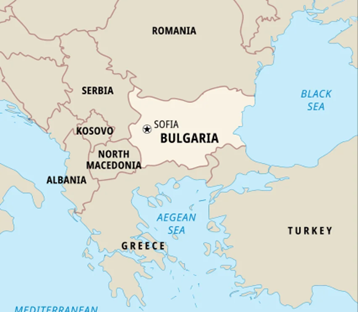
- Bulgaria’s entry makes the eurozone comprise 21 out of 27 EU members.
Which of the statements given above is/are correct?
- 1, 3 and 4 only
- 1 and 2 only
- 2, 3 and 4 only
- 1, 2, 3 and 4
Answer: A
53). With reference to the National Sports Governance Act, 2025, consider the following statements:
- The Act provides for establishing a National Olympic Committee and a National Paralympic Committee.
- These national bodies are required to have affiliation with their respective international bodies.
- The Act mandates that all sports federations must compulsorily be brought under the control of state governments.
Which of the statements given above is/are correct?
- 1 and 3 only
- 2 and 3 only
- 1 and 2 only
- 1, 2 and 3
Answer: C
54). With reference to the Sangita Kalanidhi Award, consider the following statements:
- It was instituted in 1942 by the Madras Music Academy and is regarded as the highest recognition in Carnatic music.
- The award comprises a gold medal, a birudu patra (citation), and, since 2005, the MS Subbulakshmi Award instituted by The Hindu.
- It is sometimes referred to as the “Nobel Prize” of Hindustani classical music.
- Recent recipient includes violinist R.K. Shriramkumar.
Which of the statements given above is/are correct?
- 1, 2 and 3 only
- 1, 2 and 4 only
- 2, 3 and 4 only
- 1, 2, 3 and 4
Answer: B
55). Consider the following statements about the celebration of India’s first sunrise in Dong village, Arunachal Pradesh:
- The first sunrise of the year was welcomed with a performance titled “Alo Prabhat: Dance of the Dawn.”
- The celebration was organized by the Meyor and Mishmi communities.
- The event included traditional chants, songs, and indigenous rhythms using modern instruments.
- Dong is located in the Anjaw district, India’s easternmost village.
Which of the statements given above is/are correct?
- 1, 2 and 4 only
- 1, 3 and 4 only
- 2, 3 and 4 only
- All of the above
Answer: A
56). Matching Schemes – Funding & Implementation
|
Scheme
|
Type / Funding & Implementation
|
|
a. Pradhan Mantri-Rashtriya Krishi Vikas Yojana
|
1. Central Sector Scheme – fully funded and implemented by the Centre.
|
|
b. Krishi Yantra (KY)
|
2. Centrally Sponsored Scheme – funds shared and implementation by state governments.
|
|
c. National Mission on Natural Farming
|
3. Centrally Sponsored Scheme – joint funding, state implementation.
|
|
d. National Bee and Honey Mission
|
4. Centrally Sponsored Scheme – state implementation, joint funding.
|
Options:
- a-4, b-2, c-3, d-1
- a-1, b-2, c-3, d-4
- a-3, b-2, c-4, d-1
- a-2, b-3, c-4, d-1
Answer: A
57). Which of the following correctly reflect Swami Vivekananda’s philosophical and social contributions?
- He introduced the Hindu philosophies of Yoga and Vedanta to the West.
- He propagated neo-Vedanta, integrating spirituality with material progress.
- He emphasized only spiritual liberation, discouraging social or economic reform.
- He advocated universal tolerance, acceptance of all religions, and pride in Indian traditions.
Options:
- 1, 2 and 3 only
- 1, 2 and 4 only
- 2, 3 and 4 only
- All of the above
Answer: B
58). With reference to Human Papillomavirus vaccination (HPV) in India, consider the following statements:
- HPV vaccination is included under the Universal Immunisation Programme (UIP) across all Indian states.
- Indigenous HPV vaccines have been developed to improve affordability and access.
- HPV vaccination contributes to the long-term goal of eliminating cervical cancer.
- HPV vaccination completely eliminates the need for cervical cancer screening.
Which of the statements given above is/are NOT correct?
- 1 and 4 only
- 2 and 3 only
- 1, 2 and 3 only
- All of the above
Answer: A
59). Exercise Sanjha Shakti is a joint military exercise between:
- India and China
- India and Nepal
- India and France
- India and Russia
Answer: C
60). Consider the following statements regarding India’s renewable energy profile by 2025:
- India ranks fourth globally in total renewable energy installed capacity.
- India ranks fourth in wind power installed capacity.
- India ranks third in solar power installed capacity.
- India ranks second globally in overall renewable energy generation.
Which of the statements given above is/are correct?
- 1, 2 and 3 only
- 1 and 3 only
- 2 and 4 only
- 1, 2, 3 and 4
Answer: A
61). With reference to the New Development Bank (NDB), consider the following statements:
- It was established during the Fortaleza BRICS Summit.
- Its lending is restricted only to BRICS member countries.
- It focuses on infrastructure and sustainable development projects.
- Its headquarters is located in Beijing.
Which of the statements given above is/are correct?
- 1, 2 and 3 only
- 1, 2 and 4 only
- 2 and 4 only
- 1 and 3 only
Answer: D
62). With reference to India’s first-ever open-sea Marine Fish Farming project, consider the following statements:
- It is India’s first-ever open-sea Marine Fish Farming project involving both marine finfish and seaweed cultivation.
- The project is implemented jointly by the Ministry of Earth Sciences and the National Institute of Ocean Technology.
- The project is located in the Arabian Sea to leverage existing coastal infrastructure.
- One of the objectives of the project is to reduce pressure on traditional coastal fisheries.
How many of the statements given above is/are NOT correct?
- Only One
- Only Two
- Only Three
- All are correct
Answer: A
63). Consider the following statements regarding the composition and functioning of UNECOSOC:
- ECOSOC consists of 54 member states elected by the UN General Assembly.
- Members of ECOSOC are elected for a term of three years.
- ECOSOC oversees the functioning of several specialized agencies of the UN system.
- Permanent membership in ECOSOC is restricted to Security Council members.
Which of the statements given above is/are correct?
- 2 and 3 only
- 1 and 4 only
- 1, 2 and 3 only
- 1, 2, 3 and 4
Answer: C
64). With reference to Green Aluminium, consider the following statements:
- Traditional aluminium production is energy-intensive due to the electrolytic reduction process.
- Green aluminium production relies solely on recycled aluminium scrap.
- Use of renewable energy significantly lowers the carbon footprint of aluminium smelting.
- Green aluminium production supports the objectives of a circular economy.
Which of the statements given above is/are correct?
- 1, 2 and 4 only
- 1, 3 and 4 only
- 2 and 3 only
- 1, 2, 3 and 4
Answer: B
65). Assertion (A): IMEC consists of an eastern corridor connecting India to West Asia and a northern corridor connecting West Asia to Europe.
Reason (R): The corridor aims to integrate Asia, Europe and the Middle East through alternative land–sea routes.
Choose the correct answer:
- Both A and R are true and R is the correct explanation of A
- Both A and R are true but R is not the correct explanation of A
- A is true but R is false
- A is false but R is true
Answer: A
66). With reference to child trafficking in India, consider the following statements:
- Bhartiya Nyaya Sanhita (BNS), 2023 defines trafficking as recruitment, transportation, harboring, transfer, or receipt of persons for exploitation.
- Means of trafficking include threats, coercion, abduction, fraud, abuse of power, or inducement.
- Scope of exploitation covers physical and sexual exploitation, slavery, forced labor, and forced removal of organs.
- Trafficking is only punishable if it involves cross-border transportation.
Which of the statements given above is/are correct?
- 2 and 3 only
- 1 and 4 only
- 1, 2 and 3 only
- 1, 2, 3 and 4
Answer: C
67). With reference to Bagurumba Dance, consider the following statements:
- It is a folk dance of the Bodo community of Assam and it is popularly known as the “butterfly dance.”
- Traditionally, only men perform Bagurumba Dance to invoke fertility and prosperity.
- The dance is associated with the Bwisagu festival, marking the Bodo New Year.
Which of the statements given above is/are correct?
- 1, 2 and 3 only
- 1 and 3 only
- 2 and 3 only
- 1 and 2 only
Answer: B
68). With reference to the Responsible Nations Index (RNI), consider the following statements:
- RNI shifts the focus from economic power to ethical governance, sustainability, and global responsibility.
- It evaluates countries across four dimensions: ethical governance, social well-being, environmental stewardship, and global responsibility.
- The index is developed by the United Nations Development Programme (UNDP).
- India ranks 16th globally, while Singapore, Switzerland, and Denmark top the list.
Which of the statements given above is/are correct?
- 1, 2 and 4 only
- 1 and 3 only
- 2, 3 and 4 only
- 1, 2, 3 and 4
Answer: A
69). With reference to the Environmental (Protection) Fund, consider the following statements:
- The Fund is a statutory fund created under the Environment (Protection) Act, 1986.
- Its objective is to channel monetary penalties from environmental violations into pollution control, restoration, monitoring, research, and capacity building.
- 75% of the penalty proceeds are transferred to the Consolidated Fund of the State/UT, while 25% is retained by the Centre.
- It is administered solely by the Comptroller and Auditor General of India (CAG).
Which of the statements given above is/are correct?
- 1, 2 and 4 only
- 1, 2 and 3 only
- 2 and 4 only
- 1, 2, 3 and 4
Answer: B
70). In 2025, the UK transferred sovereignty over the Chagos Islands to which country?
- Seychelles
- India
- Mauritius
- Maldives
Answer: C
71). With reference to the One Station One Product (OSOP) scheme, consider the following statements:
- OSOP was launched in 2022 to promote local, indigenous, and specialised products across India.
- The scheme is implemented by the Ministry of Culture in collaboration with the National Institute of Design (NID).
- OSOP stalls are designed to be aesthetically uniform yet locally distinct, often with NID’s design inputs.
- The scheme is a key component of the PM Gati Shakti National Master Plan to improve logistics and multi-modal connectivity.
Which of the statements given above is/are correct?
- 1, 2 and 3 only
- 1, 2, 3 and 4
- 2 and 4 only
- 1, 3 and 4 only
Answer: D
72). What is the main purpose of the EU’s Anti-Coercion Instrument?
- To provide financial aid to EU countries
- To respond to countries using trade measures to pressure an EU member state
- To regulate migration in the EU
- To promote EU cultural exchange programs
Answer: B
73). What is the full form of SARFAESI Act?
- Securitisation and Recovery of Assets and Financial Enforcement of Security Interest
- Securitisation and Reconstruction of Financial Assets and Enforcement of Security Interest
- Securities and Financial Assets Regulation Act for Enforcement of Security Interest
- Securitisation and Regulation of Financial Assets and Security Enforcement
Answer: B
74). Consider the following statements:
- Penguins are exclusively found in Antarctica and nowhere else.
- Some species of penguins are found in temperate regions, like South Africa and South America.
- Penguins are flightless but are excellent swimmers and divers.
- Penguins contribute to nutrient cycling in marine ecosystems by bringing deep-sea nutrients to surface waters.
Which of the statements given above is/are correct?
- 1, 2 and 3 only
- 1 and 3 only
- 2, 3 and 4 only
- All of the above
Answer: C
- With reference to the Board of Peace, consider the following statements:
- The Board of Peace was proposed in October 2025 and endorsed by the UN Security Council in the following month.
- It is chaired by the US President and aims to oversee the ceasefire in the Israel-Hamas conflict and Gaza’s post-war transition.
- Around 50 countries were invited to join, of which roughly 35 global leaders agreed to participate.
- Membership of the Board is permanent and cannot be renewed.
Which of the statements given above is/are correct?
- 1, 2 and 3 only
- 1, 2 and 4 only
- 2 and 3 only
- All of the above
Answer: A
- Consider the following statements:
- Atal Pension Yojana (APY) is managed under the National Pension System (NPS) architecture.
- Subscribers’ pension depends on the contribution made and is guaranteed by the government.
- APY is only for organized sector employees contributing through employers.
- Contributions are voluntary and vary based on the chosen pension amount.
Which of the statements given above is/are correct?
- 1, 2 and 4 only
- 1 and 3 only
- 2 and 3 only
- All of the above
Answer: A
77). With reference to the C-295 aircraft, consider the following statements:
- The first “Made in India” C-295 will roll out from the Airbus–Tata Vadodara assembly line before September 2026.
- The aircraft is designed and manufactured entirely in India by Hindustan Aeronautics Limited (HAL).
- The C-295 is a medium-range twin-engine turboprop tactical transport aircraft originally designed by the Spanish company CASA.
- CASA is now part of Airbus Defence and Space.
Which of the statements given above is/are correct?
- 1, 2 and 3 only
- 1, 3 and 4 only
- 2 and 3 only
- All of the above
Answer: B
78). Consider the following statements regarding the Indira Gandhi Peace Prize:
- It is awarded annually by the Indira Gandhi Memorial Trust by recognising contributions towards peace, disarmament and development.
- Recently, Graça Machel has been a recipient for promoting gender equality, human rights and democracy.
- It is restricted only to Indian citizens and the award is generally presented on Indira Gandhi’s birth anniversary.
- The prize money was recently increased from ₹25 lakh to ₹1 crore. It can be awarded to both individuals and organizations.
Which of the statements given above is/are correct?
- 1, 2 and 3 only
- 1, 2 and 4 only
- 2 and 4 only
- 1, 2, 3 and 4
Answer: B
79). Consider the following statements regarding the Turner Prize:
- It is awarded by Tate Britain which aims to promote public discussion on contemporary British art.
- It is awarded exclusively for lifetime achievements in art and it recognises outstanding exhibitions or presentations by British artists.
- Nnena Kalu became the first artist with a learning disability to receive the Turner Prize, 2025.
Which of the statements given above is/are correct?
- 1, 2 and 4 only
- 2 and 3 only
- 1 and 3 only
- 1, 2, 3 and 4
Answer: C
80). Which of the following pairs is/are correctly matched?
|
Award
|
Recipient
|
|
1. Vigyan Ratna
|
Prof. Jayant Vishnu Narlikar
|
|
2. Vigyan Team
|
Team Aroma Mission (CSIR)
|
|
3. Vigyan Shri
|
Dr. Gyanendra Pratap Singh
|
|
4. Vigyan Ratna
|
Prof. Pradeep Thalappil
|
Select the correct answer:
- 1, 2 and 3 only
- 1 and 2 only
- 2 and 4 only
- 1, 2, 3 and 4
Answer: A
81). Consider the following statements regarding the Pradhan Mantri Rashtriya Bal Puraskar (PMRBP):
- It is conferred annually to recognise exceptional achievements by children in various fields.
- It is administered by the Ministry of Women and Child Development and it is presented by the Prime Minister of India.
- It covers achievements in Bravery, Sports, Science & Technology, and Social Service.
- The date coincides with Veer Bal Diwas which commemorates the birth anniversary of Guru Gobind Singh.
Which of the statements given above is/are correct?
- 1, 2 and 4 only
- 1 and 3 only
- 2 and 3 only
- 1, 2, 3 and 4
Answer: B
82). Consider the following statements regarding the Knight of the Order of the Star of Italy:
- It is conferred by the Ministry of Foreign Affairs and International Cooperation of the Republic of Italy.
- It recognises individuals who promote friendly relations between Italy and other countries.
- It is awarded exclusively to Italian citizens.
- Shrinivas Dempo was honoured for strengthening economic and consular ties between Italy and India.
Which of the statements given above is/are correct?
- 2, 3 and 4 only
- 1, 2 and 3 only
- 1, 2 and 4 only
- 1, 3 and 4 only
Answer: C
83). Consider the following statements regarding the Kenjutsu honour conferred on Pawan Kalyan:
- He became the first Indian to be inducted into the Kenjutsu tradition under the Takeda Shingen Samurai Clan.
- He was awarded a 5th Dan Black Belt by Sogo Budo Kanri Kai.
- The title “Tiger of Martial Arts” was conferred by the Golden Dragons organization.
- The honour was conferred primarily for his political contributions.
Which of the statements given above is/are correct?
- 1, 2 and 3 only
- 1 and 4 only
- 2 and 3 only
- 1, 2, 3 and 4
Answer: A
84). Match the Following Golden Globes Awards category with its winners:
|
Category
|
Winner
|
|
a. Best Motion Picture – Drama
|
1. Paul Thomas Anderson
|
|
b. Best Motion Picture – Musical or Comedy
|
2. Hamnet
|
|
c. Best Director
|
3. One Battle After Another
|
|
d. Best Actress – Drama
|
4. Jessie Buckley
|
Select the correct answer using the code given below:
- a–2, b–3, c–1, d–4
- a–3, b–2, c–1, d–4
- a–2, b–1, c–3, d–4
- a–4, b–3, c–1, d–2
Answer: A
85). Consider the following statements regarding the Padmapani Lifetime Achievement Award:
- It is conferred by the Ajanta–Ellora International Film Festival, which includes a Padmapani Memento, a citation certificate, and a cash prize of ₹2 lakh.
- It recognises extraordinary and lasting contributions to cinema and allied arts.
- It is awarded annually by the Ministry of Information and Broadcasting.
- Recently Ilaiyaraaja, a veteran Music Composer to be honoured with this Award.
Which of the statements given above is/are correct?
- 1 and 4 only
- 1, 2 and 4 only
- 2 and 3 only
- 1, 2, 3 and 4
Answer: B
86). Consider the following statements regarding INS Sindhughosh:
- It belongs to the Sindhughosh-class, developed under Project 877EKM.
- It is a nuclear-powered attack submarine and it was built in the former Soviet Union.
- It was the first submarine of its class inducted into the Indian Navy in 1986.
- It marked India’s first indigenous submarine programme.
Which of the statements given above is/are correct?
- 1, 3 and 4 only
- 1 and 3 only
- 2 and 4 only
- 1, 2 and 4 only
Answer: B
87). Consider the following statements regarding a Regional Level Pollution Response Exercise (RPREX-2025):
- It is a Regional Level Pollution Response Exercise conducted by the Indian Coast Guard.
- It was aimed at testing preparedness against major oil spill incidents and it was conducted under the framework of the National Oil Spill Disaster Contingency Plan (NOSDCP).
- It was organised by the Ministry of Environment, Forest and Climate Change.
- It was conducted off the Mumbai coast in the Arabian Sea and the ONGC was a major partner in the exercise.
Which of the statements given above is/are correct?
- 1, 2 and 3 only
- 1, 3 and 4 only
- 1, 2 and 4 only
- 2, 3 and 4 only
Answer: C
88). Consider the following pairs of Military Exercise and Participating Countries/Forces:
|
Exercise
|
Participants
|
|
1. Desert Cyclone
|
India – UAE
|
|
2. Harimau Shakti
|
India – Malaysia
|
|
3. Sanjha Shakti
|
India – Indonesia
|
|
4. Poorvi Prachand Prahar
|
Indian Army, Indian Navy and Indian Air Force
|
|
5. MAHASAGAR
|
Indian Navy-Indonesian Navy
|
How many of the pairs given above is/are correctly matched?
- Only Two
- Only Three
- Only Four
- All Five
Answer: C
89). Match the Day with Observed date and Theme:
|
Day
|
Observed date
|
2025 Theme
|
|
a. National Mathematics Day
|
1. December 24
|
i. Prashasan Gaon Ki Ore.
|
|
b. Kisan Diwas
|
2. December 22
|
ii. Mathematics for Sustainable Development.
|
|
c. National Consumer Rights Day
|
3. December 23
|
iii. Efficient and Speedy Disposal through Digital Justice.
|
|
d. Good Governance Day
|
4. December 25
|
iv. Vikasit Bharat 2047 – The Role of FPOs in Globalising Indian Agriculture.
|
Codes:
- a-2–ii, b-3–iv, c-1–iii, d-4–i
- a-2–i, b-3–ii, c-1–iv, d-4–iii
- a-1–ii, b-2–iv, c-3–iii, d-4–i
- a-2–ii, b-4–iv, c-1–iii, d-3–i
Answer: A
90). Match the Day with Theme and Observed Date
|
Day
|
2025 Theme
|
Observed Date
|
|
a. World Braille Day
|
1. Ignite the Self, Impact the World.
|
i. January 12
|
|
b. Pravasi Bharatiya Divas
|
2. Bridging Accessibility in a Digital-First World.
|
ii. January 4
|
|
c. National Youth Day
|
3. Indian Diaspora’s Role in Viksit Bharat 2047.
|
iii. January 9
|
|
d. Indian Army Day
|
4. Year of Networking and Data Centricity.
|
iv. January 15
|
|
e. National Start-up Day
|
5. Let’s shape the future together, one innovative idea at a time.
|
V. January 16
|
Codes:
- a-2–ii, b-3–iii, c-1–i, d-4–iv, e-5–v
- a-2–iii, b-3–ii, c-1–i, d-4–v, e-5–iv
- a-1–ii, b-2–iii, c-3–i, d-4–iv, e-5–v
- a-2–ii, b-5–iii, c-1–i, d-3–iv, e-4–v
Answer: A
91). With reference to Saina Nehwal, consider the following statements:
- She was the first Indian woman to win an Olympic medal in badminton.
- She became World No.1 in women’s singles in 2015, making her the first Indian shuttler to do so.
- She was the first Indian to win a BWF Super Series title.
Which of the statements given above is/are correct?
- 1 and 2 only
- 1 and 3 only
- 3 only
- 1, 2 and 3
Answer: B
92). With reference to the FIDE World Rapid Chess Championships 2025, consider the following statements:
- The championship was held in Doha, Qatar.
- Indian chess players won medals in both Open and Women’s sections.
- Koneru Humpy won a silver medal in the Women’s Rapid category.
Which of the statements given above is/are correct?
- 1 and 2 only
- 2 only
- 1 and 3 only
- 1, 2 and 3
Answer: A
93). With reference to the National Sports Board (NSB) under the Act, consider the following statements:
- It grants affiliation to National Sports Federations.
- It decides eligibility for government funding of sports bodies.
- It acts as the appellate authority for sports-related disputes.
- It monitors the financial functioning of sports organisations.
How many of the statements given above is/are correct?
- Only One
- Only Two
- Only Three
- All Four
Answer: C
94). Which of the following cities are located in the West Bank?
- Jenin, Hebron, Bethlehem, Nablus
- Gaza City, Hebron, Ramallah, Bethlehem
- Tel Aviv, Nablus, Jenin, Ramallah
- Gaza City, Jerusalem, Hebron, Ramallah
Answer: A