‘Traveller Nooks’ in Hampi set to be ready by March 2026
News –
New “Traveller Nooks” aimed at improving visitor experience at the UNESCO World Heritage site of Hampi are expected to be ready by March 2026.
Traveller Nooks
Aim : To strengthen tourism infrastructure while ensuring that all interventions remain sensitive to Hampi’s archaeological and cultural significance, thereby supporting sustainable tourism development in Hampi.
Launched by : The initiative was launched by Prime Minister Narendra Modi in 2024 to provide essential amenities and information support to the growing number of tourists visiting the heritage town.
Ministry : “The Ministry of Tourism has sanctioned the project ‘Setting up of Traveller Nooks at Hampi’ for the cost of ₹25.64 crore under its Swadesh Darshan 2.0 scheme to develop tourist amenities.
Implementing agency : the State government has designated Karnataka Tourism Infrastructure Ltd. (KTIL) as the State Implementing Agency for the scheme,”
Benefits : The Traveller Nooks are designed to address critical gaps in visitor facilities by providing drinking water stations, hygienic toilets, ATMs, retail kiosks, and shaded resting areas.
The Union Cabinet has approved the Atomic Energy Bill, 2025, titled SHANTI
SHANTI Bill
Acronym – Sustainable Harnessing of Advancement of Nuclear Technology for India.
Mandate – The Bill seeks to create a unified and modern legal framework for India’s nuclear sector.
About
Traditionally, nuclear power plants in India have been owned and operated only by state-owned Nuclear Power Corporation of India Ltd (NPCIL) and its fully-owned subsidiary Bharatiya Nabhikiya Vidyut Nigam (BHAVINI).
To allow private sector participation government has to amend key legislations;
Atomic Energy Act, 1962, a framework for nuclear energy development and regulation.
Civil Liability for Nuclear Damage Act, 2010, ensuring compensation mechanisms for nuclear incidents.
Key Provisions of the Bill
Partial Opening of the Nuclear Value Chain: The Bill allows private and global companies to participate in atomic mineral exploration, manufacturing of nuclear equipment and components.
Core and strategic areas such as reactor operation and weapons-related activities will continue to remain under government control.
Nuclear Safety Authority: The legislation proposes the establishment of an independent nuclear safety authority.
Dedicated Nuclear Tribunal: It calls for a dedicated tribunal to handle nuclear-related disputes, intended to streamline resolution and enhance transparency in the sector.
Cabinet Approves India-Oman Free Trade Pact
Syllabus: GS2/IR
Context
The Union Cabinet has approved the proposed Free Trade Agreement between India and Oman.
Highlights of the FTA
With the Comprehensive Economic Partnership Agreement (CEPA), India will get access to 98% of its products in Oman and significant access in services.
India-Oman Ties
Diplomatic relations were formalised in 1955 and elevated to a Strategic Partnership in 2008.
Trade Relations: Oman is India’s 30th largest trading partner in FY 2023-2024 with total trade of US$ 8.947 billion.
India is among Oman’s top trading partners and Oman is the third largest export destination among the Gulf Cooperation Council (GCC) countries.
India is the 4th largest market for Oman’s crude oil exports for the year 2023 after South Korea.
Defence Cooperation: India and Oman conduct regular biennial bilateral exercises between all three services.
Army exercise: Al Najah
Air Force exercise: Eastern Bridge
Naval Exercise: Naseem Al Bahr
Maritime Cooperation: Oman is at the gateway of Strait of Hormuz through which India imports one-fifth of its oil imports.
India signed a pact with the country in 2018 to access the Duqm port of Oman.
The Port of Duqm is situated on the southeastern seaboard of Oman, overlooking the Arabian Sea and the Indian Ocean. It is strategically located, in close proximity to the Chabahar port in Iran.
Gulf Cooperation Council (GCC)
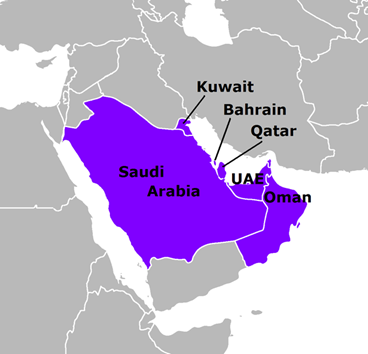
It is a political and economic union of six Arabian Peninsula countries
Members: Bahrain, Kuwait, Oman, Qatar, Saudi Arabia, and the United Arab Emirates.
Establishment: Founded on May 25, 1981, through an agreement signed in Riyadh, Saudi Arabia.
Objectives: To achieve unity and coordination among member states in all fields, including economic, security, cultural, and social cooperation.
Headquarters: Riyadh, Saudi Arabia.
India out of Pax Silica Initiative
Syllabus: GS2/IR, GS3/Economy
Context
India has been excluded from the US-led Pax Silica initiative, a new US critical mineral diversification plan.
Pax Silica Initiative
Objective – It is a US-led strategic initiative to build a secure, prosperous, and innovation-driven silicon supply chain from critical minerals.
Members – Japan, Republic of Korea, Singapore, the Netherlands, The United Kingdom, Israel, United Arab Emirates, and Australia.
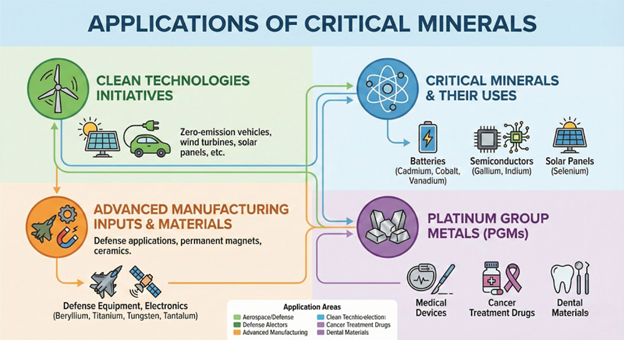
Critical minerals
Definition – Critical minerals are those minerals which are essential for economic development and national security
The government has released a list of 30 critical minerals for India.
The Karnataka State Road Transport Corporation (KSRTC) launched ‘Accident Emergency Response Vehicles’ aimed at providing swift assistance during road accidents and vehicle breakdowns involving State-run buses.
Emergency response vehicles
Initially, two vehicles will be deployed at central locations in Bengaluru and Mysuru.
The specially equipped vehicles will function as mobile workshops, enabling technical teams to quickly reach stranded buses with necessary tools, spare parts, and support to restore operations.
Prime Minister Narendra Modi paid tributes to Sardar Vallabhbhai Patel, the Iron Man of India, on his 75th death anniversary (15 December 1950).
Sardar Vallabhbhai Patel
Born on – October 31, 1875,
India’s first Deputy Prime Minister and Home Minister.
He is widely regarded as the architect of India’s national integration and a key force behind the establishment of modern civil services
He was posthumously honoured with the Bharat Ratna, the highest civilian award in the country in 1991.
Contributions in India’s Freedom Struggle
Kheda Satyagraha, 1917: As a prominent local leader in the Kheda district of Gujarat, Patel supported Mahatma Gandhi in organising the Satyagraha against unjust land revenue taxes imposed by the British.
Non-Cooperation Movement, 1920-22: Patel significantly impacted the Non-Cooperation Movement, recruiting approximately 300,000 members and raising 1.5 million rupees.
Bardoli Satyagraha, 1928: During the Bardoli Satyagraha, Patel supported the local population suffering from famine and increased land taxes.
Civil Disobedience Movement 1930-34: He actively participated in the Salt Satyagraha, a nonviolent protest against the British salt monopoly.
Quit India Movement, 1942: He organised protests and strikes against British rule, and delivered compelling and electrifying speeches throughout India, inspiring and mobilising people to join mass protests, engage in acts of civil disobedience, boycott tax payments, and stage civil service shutdowns.
Do you know?
● Since 2014, Rashtriya Ekta Diwas, also known as National Unity Day, has been celebrated every year on October 31 to commemorate the birth anniversary of Sardar Patel.
● The Statue of Unity, the world’s tallest statue, was unveiled on 31 October 2018 at Kevadia in Gujarat on the 143rd birth anniversary of Sardar Vallabhbhai Patel.
● Civil Services Day is observed on 21 April to mark Sardar Vallabhbhai Patel’s address to the first batch of civil servants of Independent India in 1947.
Bison Horn Maria Dance
Syllabus: GS1/ Culture
Context
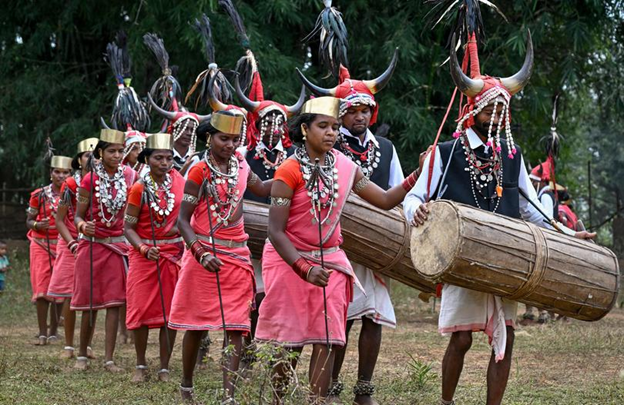
The traditional Bison Horn Maria dance was performed during a village festival at Judiya Para in Bastar, Chhattisgarh.
Bison Horn Maria Dance
Performed by: Dandami Madia (Maria /Gaur Maria) tribes of Bastar, Chhattisgarh.
Both men and women perform the dance, during village festivals and major community occasions.
Costumes: Male dancers wear horn-shaped headgear made of bamboo, decorated with bison horns, feathers, shells and bright cloth strips.
Women wear brass chaplets and heavy necklaces.
Instruments: Log drums slung around the neck provide rhythmic beats.
Performance: Men mimic bison charging and hunting, while women dance alongside, often with sticks, in a synchronized, ritualistic way.
Ritual chants invoke deities such as Budhadev and Danteshwari Mai, reinforcing spiritual continuity.
FDA Approves Two Oral Therapies to Treat Gonorrhea
Syllabus: GS2/ Health
Context
The U.S. The Food and Drug Administration recently approved two new oral medicines to treat gonorrhea.
Gonorrhoea
Pathogen – It is a preventable and curable sexually transmitted infection caused by the bacterium Neisseria gonorrhoeae.
Concern – Antimicrobial resistance to gonorrhoea is a serious and growing problem
Transmission – Gonorrhoea can be passed from a pregnant mother to her baby.
Ponduru Khadi from Srikakulam district in Andhra Pradesh has received Geographical Indication (GI) tag recognition.
Ponduru Khadi
It is a handwoven fabric primarily produced from short-staple, hill-variety, pest-resistant cotton grown locally.
This cotton enables chemical-free farming practices, promoting sustainable agriculture and eco-friendly production methods traditional to the region.
Connect with the basics – Geographical Indication or GI Tag
It is a name or a sign given to certain products related to a specific geographical location or origins like a region, town, or country.
A certification for unique products – GI Tag may be regarded as a certification for a particular product with certain specific qualities or has a specific reputation because of its geographical origin.
GI Tags can be issued for wine and spirit drinks, foodstuffs, agricultural products, handicrafts, and industrial products.
Trade-Related Aspects of Intellectual Property Rights (TRIPS) – At the International level, GI is governed by the World Trade Organisation’s (WTO’s) Agreement on Trade-Related Aspects of Intellectual Property Rights (TRIPS).
Geographical Indications of Goods (Registration and Protection) Act – In India, Geographical Indications registration is administered by the Geographical Indications of Goods (Registration and Protection) Act, 1999, which came into force in September 2003.
Darjeeling tea – The first product in India to be accorded with the GI tag was Darjeeling tea in 2004-05.
MahaCrimeOS AI
Syllabus: GS2/Governance; GS3/AI
Context
Microsoft Chairman Satya Nadella announced the statewide rollout of its AI-powered investigation platform for the Maharashtra Police “MahaCrimeOS AI”.
MahaCrimeOS
Jointly developed by – Microsoft & Maharashtra Government and its specialised AI policing initiative, MARVEL (Maharashtra Research and Vigilance for Enhanced Law Enforcement).
Key Features and Functionality
Instant Case Creation: The system enables instant digital case file creation, reducing manual effort.
Multimodal Data Extraction: It can ingest complaints in various formats, such as PDFs, audio files, handwritten notes, or images, and extract relevant data for analysis.
AI-Powered Investigation: Using AI-based Retrieval-Augmented Generation (RAG), it helps investigators link related cases and analyze digital evidence rapidly.
Legal Assistance: It provides contextual legal assistance and guidance based on India’s criminal laws, aiding officers in legal compliance and procedure.
Lunarcrete
Syllabus: GS3/Science & Technology
Context
Researchers are developing Lunarcrete, concrete produced using lunar materials for sustainable long-term habitats on the Moon.
Lunarcrete
Lunarcrete is an umbrella term for ‘concrete made on the moon’.
It is a proposed construction material made using lunar regolith (Moon soil) instead of Earth-based sand and gravel.
Purpose: It supports in-situ resource utilisation (ISRU) by enabling construction of habitats, landing pads, and roads on the Moon without transporting materials from Earth.
Karnataka State Disaster Management Authority has prepared the road map for a ‘disaster-resilient Karnataka’ to reduce mortalities, economic loss and casualties
Karnataka State Disaster Risk Reduction (KSDRR) Road Map 2025-30
According to this report 80% of the State’s geographical area is prone to drought,22% is prone to moderate earthquakes and 24% of the geographical area in the State is prone to cyclones, heavy winds, etc,.
Human-induced disasters like road and industrial accidents too are considered for risk assessment and disaster mitigation.
Additional information – Karnataka State Disaster Management Authority
Apex Body: It functions as the highest decision-making authority for disaster management in Karnataka.
Leadership: The authority is headed by the Chief Minister of Karnataka.
Facilitation & Monitoring: It facilitates, coordinates, reviews, and monitors all disaster-related activities in the state, including capacity building.
Policy Formulation: It lays down the State Disaster Management policy and guidelines for various government departments to follow.
Plan Approval: It approves the State Disaster Management Plan and individual Departmental plans, ensuring they align with guidelines from the National Disaster Management Authority (NDMA).
Objective – to distribute free menstrual pads to school and college girls between the ages of 10 and 18 years.
Launched in – 2013-14
Aim – create awareness about menstrual hygiene among girls studying in government and aided schools and colleges across the state.
Additional Information – Shuchi–Nanna Maithri
It was a pilot project launched in 2023
It distributes Menstrual Cups instead of pads to pre-university students in select districts like Dakshina Kannada and Chamarajanagar to promote eco-friendly hygiene.
The Directorate of Revenue Intelligence (DRI) successfully dismantled a clandestine Mephedrone manufacturing facility in Wardha, Maharashtra, during a strategic operation codenamed “Operation Hinterland Brew.”
Mephedrone
Known as – 4-methylmethcathinone (4-MMC) or 4-methylephedrone.
It is classified as a New Psychoactive Substance (NPS)
Mephedrone is prohibited under the NDPS Act, 1985.
National Drug Control Framework
Nasha Mukt Bharat Abhiyaan (August 15, 2020)
National Action Plan for Drug Demand Reduction (NAPDDR).
Yellow Line Defining New Gaza Border
Syllabus: GS2/ International Relations
Context
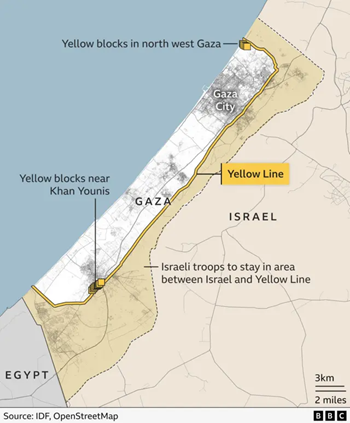
The Israeli military has described the “Yellow Line”, a temporary withdrawal line agreed during Phase-1 of the 2025 U.S.-brokered ceasefire, as a “new border”.
Yellow Line
The Yellow Line is a temporary military demarcation line inside the Gaza Strip.
Territory east of the line remains under direct Israeli operational control.
Territory Controlled by Israel: More than half of Gaza (53–58%) remains under Israeli control. It includes most agricultural land and Rafah border crossing with Egypt.
Trump Threatens Tariffs on Indian Rice
Syllabus: GS3/Economy
Context
The US President warned of new tariffs on agricultural imports, especially on rice imports from India as trade talks continue without major progress.
India’s Rice Exports
China is the largest producer of rice in the world, followed by India, Bangladesh and Indonesia.
India is the world’s largest exporter of rice, accounting for 33 percent of the world’s total rice exports during 2023.
India exports rice to 179 other countries.
Facts and Conditions
Staple Food: Rice is the primary staple food for a majority of the Indian population.
Production Leader: India is the world’s second-largest producer of rice after China and the largest exporter globally.
Climatic Conditions: It is a Kharif (monsoon) crop requiring a hot and humid climate.
Temperature: Requires high temperatures, generally above 25°C.
Rainfall: Needs high annual rainfall, typically above 100 cm (ideally 150-300 cm). It is grown with the help of irrigation in areas with less rainfall, such as Punjab and Haryana.
Soil: Thrives in fertile, clayey, or loamy soils that can retain water, common in river valleys, flood plains, deltas, and coastal plains.
Major Producing States: West Bengal, Uttar Pradesh, and Punjab are leading producer states, with Punjab, Tamil Nadu, and Haryana known for high yields.
Blue Corner Notice
Syllabus: GS2/IR/Governance
In News
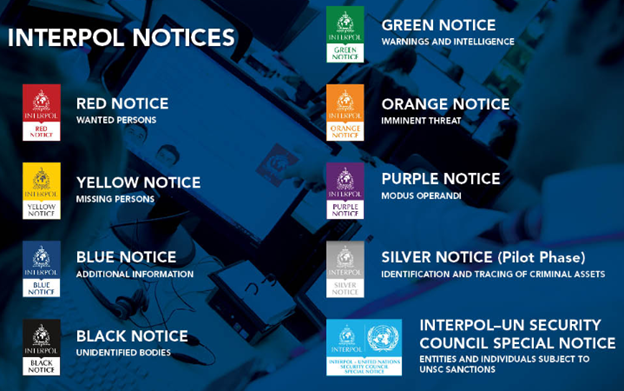
Interpol has issued a Blue Corner Notice to track owners of nightclubs in Goa, after a fire at the club killed 25 people.
The Goa Police had requested the Central Bureau of Investigation (CBI) to seek the notice from Interpol.
INTERPOL Notices
Red Notice:To seek the location and arrest of persons wanted for prosecution or to serve a sentence.
Yellow Notice: To help locate missing persons, often minors, or to help identify persons who are unable to identify themselves.
Blue Notice: To collect additional information about a person’s identity, location or activities in relation to a criminal investigation.
Black Notice:To seek information on unidentified bodies.
Green Notice: To provide warning about a person’s criminal activities, where the person is considered to be a possible threat to public safety.
Orange Notice: To warn of an event, a person, an object or a process representing a serious and imminent threat to public safety.
Purple Notice: To seek or provide information on modus operandi, objects, devices and concealment methods used by criminals.
INTERPOL–United Nations Security Council Special Notice: Issued for entities and individuals who are the targets of UN Security Council Sanctions Committees.
Bharat 6G Alliance (B6GA)
Syllabus: GS3/ Science & Technology
In News
The Union Minister of Communications, chaired the meeting of the apex council under the Bharat 6G Mission and reviewed the progress of the Bharat 6G Alliance (B6GA).
Bharat 6G Alliance (B6GA)
It functions as the implementation arm of the Bharat 6G Vision, which India unveiled in March 2023 to position the nation as a global leader in 6G technology by 2030.
About 6G Technology
6G represents the next frontier of wireless communication technology, succeeding 5G as the sixth generation of mobile networks.
6G will deliver peak data rates of 1 terabit per second (1 Tbps), approximately 100 times faster than 5G, which offers 10 Gbps.
6G will achieve ultra-low latency of 0.1 milliseconds (compared to 5G’s 1 millisecond).
African Penguins
Syllabus: GS3/Environment; Species In News
Context
A new study finds that excessive sardine fishing off southern Africa led to the deaths of over 60,000 African penguins between 2004 and 2011, especially around Dassen and Robben Islands.
African Penguins
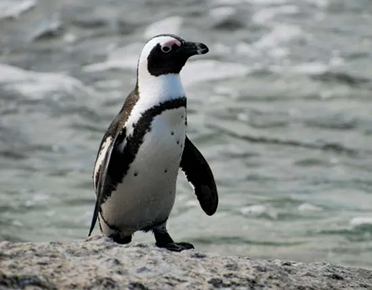
Scientific name: Spheniscus demersus
Among the smallest penguin species, fast swimmers, living along the coasts of South Africa and Namibia.
Unlike Antarctic penguins, they live on sandy beaches and rocky shores, not ice.
Appearance – Have a bare pink patch above the eyes to regulate body temperature. Each penguin has a unique chest-spot pattern, like human fingerprints.
Reclassified from “Endangered” to “Critically Endangered” (IUCN, 2024).
Do You Know?
There are 18 penguin species globally — with King, emperor and rockhopper among the most familiar.
Cantonment Railway Colony heritage site tag withdrawn
News
The state government has withdrawn the biodiversity heritage tag for the 8.61-acre wooded area near the Cantonment railway station.
Biodiversity Heritage Sites (BHS)
Definition – They are specific locations with rich, unique, and ecologically fragile ecosystems, including terrestrial, coastal, inland, or marine areas.
Notified by – These are areas notified by state governments under the Biological Diversity Act, 2002
India’s first BHS was Nallur Tamarind Grove in Karnataka in 2007.
Objective – It aims to improve local livelihoods and conserve biodiversity through community participation via Biodiversity Management Committees (BMCs).
Biodiversity Heritage Sites (BHS) of Karnataka
Biodiversity Heritage Site
Location
Year Accorded
Area/Details
Significance
Nallur Tamarind Grove
Bengaluru
2007
54 acres
India’s first BHS; ancient tamarind trees, rich flora and fauna
Hogrekan Shola Forest
Chikkamagaluru
Notified pre-2020
Part of shola forests, wildlife corridor
Connects Kudremukha and Bhadra Sanctuaries; diverse vegetation
University of Agricultural Sciences (GKVK)
Bengaluru
Notified pre-2020
Large green campus
Ecologically important urban biodiversity hotspot
Ambaragudda
Shivamogga
Notified pre-2020
Shola forest and grasslands
Important for endemic species and conservation
Mamadapura Reserve Forest
Vijayapura
2024
Approximately 1494 acres
Also called Shri Siddeshwara Swamiji BHS; deciduous forest with diverse flora and fauna
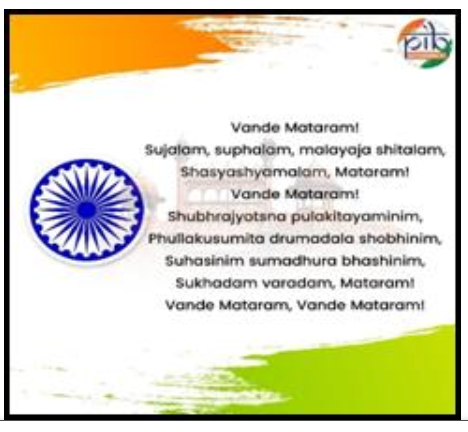
India is celebrating the 150th anniversary of its national song, Vande Mataram.
Historical Background
It was composed by Bankim Chandra Chatterjee in Sanskrit and first appeared in the novel Anandamath in 1882.
First sung by Rabindranath Tagore at the 1896 Indian National Congress session gave it national exposure.
The song celebrates the motherland as an embodiment of strength, prosperity, and divinity and provided a poetic voice to India’s awakening national consciousness.
Rise of National Consciousness
During the Swadeshi Movement of 1905, Vande Mataram emerged as the anthem of civil resistance.
Vande Mataram, as a political slogan, was first used on 7 August 1905.
For many young revolutionaries facing execution, Vande Mataram became the last chant before martyrdom, turning the song into a symbol of sacrifice.
In 1907, Madam Bhikaji Cama raised the tricolour flag for the first-time outside India in Stuttgart, Berlin. The words Vande Mataram were written on the flag.
In October 1905, a Bande Mataram Sampradaya was founded in North Calcutta to promote the idea of the Motherland as a mission and a religious passion.
In 1906, an English daily titled Bande Mataram was launched under the editorship of Bipin Chandra Pal, with Aurobindo later joining as joint editor.
National Song
After independence, the Constituent Assembly deliberated on the status of Vande Mataram.
On 24 January 1950, the first two stanzas were adopted as India’s National Song.
Bankim Chandra Chattopadhyay
Bankim Chandra Chattopadhyay was one of the architects of modern Indian literature.
As a distinguished novelist, poet, and essayist, his contributions significantly influenced the development of modern Bengali prose and the articulation of an emerging Indian nationalism.
Other works: Durgeshanandini (1865), Kapalkundala (1866), and Devi Chaudhurani (1884).
Thailand-Cambodia Conflict
Syllabus: GS2/IR
In News
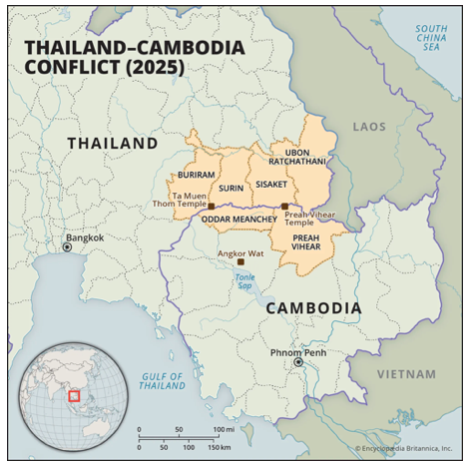
Recently, Thailand launched airstrikes on Cambodian military targets.
Background
The conflict centers on a long-standing territorial dispute dating back to colonial-era border demarcations made by France in 1907.
At the heart of the dispute is the Preah Vihear temple, a culturally significant 11th–12th century Khmer shrine claimed by both countries.
Though the International Court of Justice affirmed Cambodian sovereignty in 1962 and again in 2013, Thailand has rejected the rulings, and the area remains heavily militarized.
UPI Recognized as World’s Largest Real-Time Payment System by IMF
Syllabus: GS3/Economy
In News
The International Monetary Fund (IMF) report on ‘Growing Retail Digital Payments (The Value of Interoperability)’ dated June 2025 had recognized Unified Payments Interface (UPI) as the world’s largest retail fast-payment system (FPS) by transaction volume.
Unified Payments Interface (UPI)
Launched by – UPI was designed and launched by the National Payments Corporation of India (NPCI) in 2016.
Objective – It is a system that powers multiple bank accounts into a single mobile application (of any participating bank), merging several banking features, seamless fund routing & merchant payments into one hood.
Countries with operational or planned interoperability include: Singapore (PayNow), UAE, France, Nepal, Bhutan, Mauritius, Sri Lanka, Indonesia, and others.
Additional Information – National Payments Corporation of India (NPCI)
Established in – It serves as an umbrella body for the operation of retail payments in India.
Established by – Reserve Bank of India along with the Indian Bank’s Association.
Established under – It was set up under the provisions of the Payment and Settlement Systems Act, 2007.
Products of NPCI
RuPay
National Common Mobility Card
Bharat Interface for Money (BHIM)
Unified Payments Interface (UPI)
Bharat Bill Payment System
International Big Cat Alliance (IBCA)
Syllabus: GS3/ Environment
In News
The Union Minister for Environment, Forest and Climate Change addressed a high-level meeting of the Collaborative Initiative for Big Cat Conservation under the International Big Cat Alliance (IBCA) in New Delhi.
International Big Cat Alliance (IBCA)
Headquarters – India,
Objective – It is a multi-country, multi-agency coalition of 95 big cat range countries with an interest in big cat conservation.
Genesis: IBCA was launched by the Prime Minister of India in 2023 during the event ‘Commemorating 50 years of Project Tiger’.
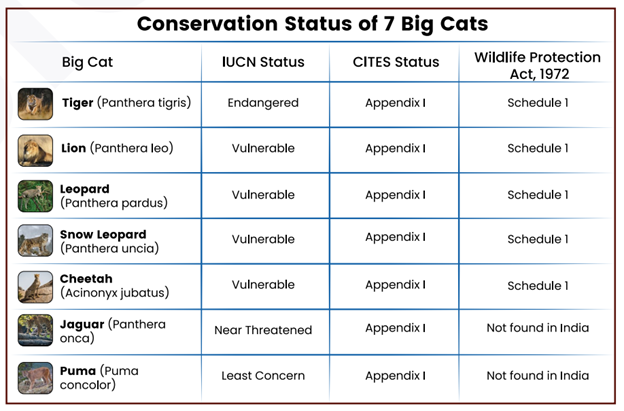
Aim:Conserving seven big cats – Tiger, Lion, Leopard, Snow Leopard, Cheetah, Jaguar, and Puma.
Members: Nicaragua, Eswatini, India, Somalia and Liberia have signed the Framework Agreement to formally become members of the IBCA.
C. Rajagopalachari
Syllabus: GS1/History
In News
Prime Minister Narendra Modi paid tribute to C. Rajagopalachari popularly known as Rajaji on his birth anniversary (10th December).
Rajagopalachari
Early Life and Education:
He was a close associate of Mahatma Gandhi.
Completed Bachelor of Law (1899) and began practicing law in Salem.
Early political consciousness was shaped by Curzon’s Partition of Bengal (1905) and Tilak’s call for Swaraj.
Contributions to Freedom’s Struggle:
He left his legal career in 1919 and went on to play a leading role in several major movements, including the protests against the Rowlatt Act, the Non-Cooperation Movement, the Vaikom Satyagraha, and the Civil Disobedience Movement.
Led the Vedaranyam Salt Satyagraha (1930) in the Madras region, parallel to Gandhi’s Dandi March.
After Quit India Movement, published “The Way Out”, proposing the C. R. Formula to resolve the constitutional deadlock with the Muslim League over Pakistan.
Post-Independence Contributions:
Appointed Governor of West Bengal and later became the first Indian Governor-General of India (1947–1950) after independence.
Worked to protect India’s secular fabric and integrate Muslims into the national mainstream.
Served as Union Home Minister after Sardar Patel’s death; contributed to national integration & early planning processes, including the First Five-Year Plan.
Legacy: He was awarded the Bharat Ratna in 1954 for his contributions to politics, literature and public service.
‘Your Money, Your Right’ Movement
Syllabus: GS2/Governance/GS3/Economy
In News
Prime Minister Narendra Modi urged citizens to participate in the ‘Your Money, Your Right’ movement.
‘Your Money, Your Right’ movement
It is an initiative, launched in October 2025
It was designed to ensure citizens can reclaim their rightful assets.
It aimed at helping people recover unclaimed deposits, insurance proceeds, dividends and other financial assets.
Significance – It offers individuals a chance to convert forgotten financial assets into usable funds.
Do you know?
● Indian banks currently hold about ₹78,000 crore in unclaimed deposits.
● Insurance companies have nearly ₹14,000 crore lying unclaimed, mutual fund companies around ₹3,000 crore, and unclaimed dividends amount to roughly ₹9,000 crore.
Various Steps
Dedicated online portals have been created to enable easy tracking and claiming of funds:
RBI UDGAM Portal for unclaimed bank deposits
IRDAI Bima Bharosa Portal for unclaimed insurance proceeds
SEBI MITRA Portal for unclaimed mutual fund amounts; and
IEPFA Portal for unpaid dividends and unclaimed shares.
Facilitation camps have been held in 477 districts across the country, with a focus on rural and remote areas.
‘Karnataka is India’s services export powerhouse, Bengaluru is the main engine’
News –
Bengaluru emerged as the leader in India’s service exports for 2024-25, contributing $78.64 billion, nearly 35% of the country’s total services exports.
As per Vishvehsvarayya-trade-promotion-centre-( VTPC) — Karnataka’s export facilitation arm, the State contributed 41% of India’s services exports in FY2021–22, valued at $254.4 billion,
Karnataka’s economy is profoundly services-driven. The Economic Survey of Karnataka records services at 68.1% of GSVA (2024–25), with Bengaluru Urban as the single largest contributor to GSDP.