State to appoint three Information Commissioners soon
News –
The State government has reportedly finalised the names of three candidates for filling vacancies in the Karnataka Information Commission.
Former IAS officer Richard Vincent D’Souza,
Journalist Venkat Singh, and
Former journalist Mahesh Valvekar.
Karnataka information commission
Established under – It is an autonomous statutory body established under the Right to Information (RTI) Act, 2005.
It comprises one State Chief Information Commissioner (SCIC) and up to 10 State Information Commissioners (SIC) who are appointed by the Governor.
Objective – to hear appeals and complaints regarding information requested from various government entities in Karnataka.
Powers and Functions
The KIC’s powers include receiving and investigating complaints about denied RTI requests, ordering public authorities to provide information, and exercising powers similar to a civil court.
The commission can also recommend disciplinary action against Public Information Officers who obstruct access to information
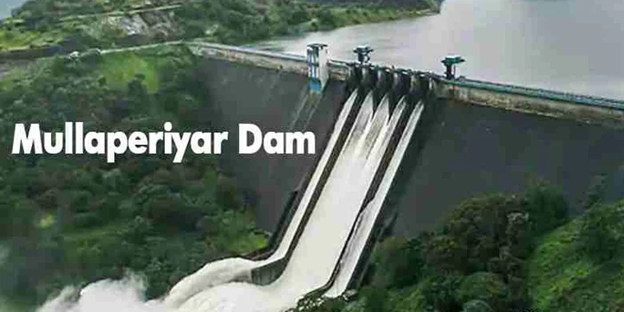
Recently, the Supreme Court of India issued notices to various stakeholders calling for urgent directions to reinforce the aging structure of the 130-year-old Mullaperiyar dam.
Mullaperiyar Dam
It is a gravity dam built on the Periyar River in the Idukki district of Kerala that was constructed between 1887 and 1895.
The dam is operated and maintained by Tamil Nadu, under a 999-year lease agreement signed in 1886 between the Maharaja of Travancore and the British government.
It diverts water to the Vaigai basin in Tamil Nadu for irrigation across 68,558 hectares.
India’s Dam Landscape – According to the National Register of Large Dams (NRLD) maintained by the Central Water Commission (CWC)
India ranks third globally — after China and the United States — in the number of large dams, with over 6,000 operational dams.
Functions of Dams – irrigation (supporting agriculture across vast regions); hydropower generation; flood control; and drinking water supply.
There are concrete gravity dams (e.g., Bhakra Dam), earthen dams (e.g., Banasura Sagar Dam), rock-fill dams, and arch dams (rare in India), based on topography, geology, and hydrological needs.
Legal and Institutional Framework
Dam Safety Act, 2021: Enacted to ensure surveillance, inspection, operation, and maintenance of dams. It mandates:
National Dam Safety Authority (NDSA): It coordinates dam safety efforts across states.
Dam Rehabilitation and Improvement Project (DRIP): It was launched by the CWC with World Bank support. It focuses on rehabilitation of aging dams; improved safety monitoring; and capacity building for dam operators and engineers;
PM Surya Ghar Muft Bijli Yojana
Syllabus: GS3/Environment
Context
A report on the performance of PM Surya Ghar Yojana has been jointly published by the Institute for Energy Economics and Financial Analysis (IEEFA) and JMK Research & Analytics.
PM Surya Ghar Muft Bijli Yojana
Launched in – 2024
Ministry: Ministry of New and Renewable Energy.
Objective: Installing rooftop solar (RTS) & providing free electricity for up to 300 monthly units for 1 Crore households.
Uniqueness – It is the world’s largest domestic rooftop solar initiative, transforming India’s energy landscape
Subsidy: The scheme offers a subsidy of up to 40% to households.
PM-Surya-Ghar-Muft-Bijli-Yojana-eligibility– Model Solar Village:
An allocation of ₹800 crore has been designated for this component, with ₹1 crore provided to each selected Model Solar Village.
To qualify as a candidate village, it must be a revenue village with a population of over 5,000 (or 2,000 in special category states).
This initiative aims to promote solar energy adoption and empower village communities to achieve energy self-reliance.
UNESCO’s new Virtual Museum of Stolen Cultural Objects
Syllabus: GS1/Culture
News
UNESCO officially launched the Virtual Museum of Stolen Cultural Objects at MONDIACULT 2025.
UNESCO’s new Virtual Museum of Stolen Cultural Objects
It offers a globally accessible digital platform to raise awareness about stolen heritage.
It currently showcases around 240 missing objects from 46 countries, with the goal of gradually “emptying itself” as items are recovered and returned to their countries of origin.
It is financially supported by Saudi Arabia and implemented with INTERPOL.
Delhi Declaration on 6G
Syllabus: GS3/Science and Technology
In News
Recently, the leading global 6G research alliance including Bharat 6G, 6G-IA, ATIS’ Next G Alliance issued a Joint Declaration to develop 6G as a global public good at the International Bharat6G Symposium 2025 in New Delhi.
Delhi Declaration on 6G
The declaration endorsed key principles to ensure that 6G networks are trusted, secure, resilient, open, inclusive, affordable, and sustainable.
6G (sixth-generation wireless)
6G (sixth-generation wireless) is the next-generation cellular technology following 5G
It is expected to offer numerous advantages including significantly higher data speeds, drastically reduced latency, and the integration of communication and sensing capabilities within the network.
The IUCN World Heritage Outlook 4 revealed a worrying global environmental trend that climate change has emerged as the greatest threat to natural World Heritage sites.
Key Points
The report finds that 43% of sites face severe climate threats, while invasive alien species affect 30%, and wildlife and plant diseases are rising sharply, now impacting 9% of sites, up from just 2% in 2020.
Note – Khangchendzonga National Park is the only site rated “Good” in conservation outlook.
Sundarbans National Park has deteriorated from “Good with Some Concerns” (2020) to “Significant Concern” (2025) due to sea-level rise, salinity, and cyclones.
Manas National Park is in significant Concern category persists due to poaching and encroachment.
Additional information – Khangchendzonga National Park (KNP)
World Heritage Site: Declared a UNESCO mixed World Heritage Site in 2016, meaning it has both natural and cultural significance.
It was also designated as part of the World Network of Biosphere Reserves in 2018.
Location: Situated in the eastern Himalayas on the border of Sikkim state and eastern Nepa
Geography and ecosystem:
Encompasses diverse landscapes from plains and valleys to mountains, glaciers, and forests.
Home to the world’s third-highest peak, Mt. Khangchendzonga.
It contains the 26 km long Zemu Glacier.
Recognized for the widest and most extensive zone of krummholz (stunted forest) in the Himalayan region.
Biodiversity:
Flora: Includes a vast number of medicinal plants, orchids, rhododendrons, and a significant portion of India’s flowering plants.
Fauna: A haven for a wide variety of species, including:
Mammals: Snow leopard, red panda, Himalayan black bear, musk deer, golden cat, clouded leopard, and Tibetan wolf.
Birds: Over 300 bird species, including the blood pheasant (Sikkim’s state bird), Himalayan monal, and satyr tragopan.
Others: Reptiles, amphibians, and various insects.
Exercise AUSTRAHIND 2025
Syllabus: GS3/Defence
In News
The 4th edition of Exercise AUSTRAHIND 2025 began in Australia.
AUSTRAHIND 2025
Launched in-2022
It is an annual bilateral military exercise, held alternately in India and Australia.
Kenton R. Miller Award
Syllabus: Miscellaneous
Context
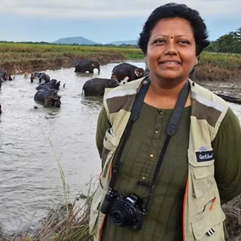
Dr Sonali Ghosh, Field Director of Kaziranga National Park became the first Indian to receive the prestigious WCPA-Kenton Miller Award at the IUCN World Conservation Congress held in Abu Dhabi, UAE.
Kenton R. Miller Award
Established in – 2006
Awarding organisation – It is presented every two years by the World Commission on Protected Areas (WCPA).
Note – WCPA is one of the six technical commissions of the International Union for Conservation of Nature (IUCN).
Objective – The award honors individuals who demonstrate innovation and leadership in conserving national parks and protected areas, particularly in ensuring their long-term sustainability.
Named after – Dr. Kenton R. Miller, a former IUCN Director General and a prominent global leader in protected area management.
Abel Prize 2025
Syllabus: Miscellaneous
Context
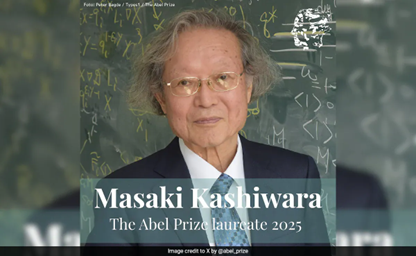
Japanese mathematician Masaki Kashiwara was awarded the Abel Prize 2025 for contributions to algebraic analysis and representation theory.
Contributions of Masaki Kashiwara
He pioneered the theory of D-modules, an algebraic framework to study systems of linear partial differential equations (PDEs).
His work on sheaf theory, deepened understanding of how local analytical data connects to global geometric structure.
Abel Prize
It is an international award recognizing outstanding scientific work in mathematics, often considered the equivalent of a Nobel Prize for mathematicians.
Named after – 19th-century Norwegian mathematician Niels Henrik Abel.
Awarded by: The Norwegian Academy of Science and Letters on behalf of the Government of Norway.
It can be awarded to mathematicians of any age and nationality.
Notable Laureates
Jean-Pierre Serre: First laureate (2003) for contributions in algebraic geometry and topology.
Srinivasa S. R. Varadhan: Indian-origin mathematician, won in 2007.
Michel Talagrand (France) For contributions to probability theory and functional analysis won in 2024.
Civil Registration System (CRS) 2023 Report
Syllabus: GS1 / Society and GS2 / Governance
Context
The Registrar General of India (RGI) released the “Vital Statistics of India Based on the Civil Registration System (CRS)”,
Key Findings of the CRS 2023 Report
Births Registered: 2.52 crore births were registered in 2023
Deaths Registered: 86.6 lakh deaths were registered in 2023
Sex Ratio at Birth (SRB):is the number of female births per 1,000 male births
Highest SRB: Arunachal Pradesh (1,085), Nagaland (1,007), Goa (973), Tripura (972), and Kerala (967).
Additional Information – Civil Registration System (CRS)
It is a unified process for the continuous, permanent, and compulsory recording of vital events such as births, deaths, and stillbirths.
It does not include registration of marriages or divorces.
The system operates under the Registration of Births and Deaths (RBD) Act, 1969, which mandates compulsory reporting of all births and deaths.
Nobel Prize 2025 Winners List
Context
The 2025 Nobel Prizes in six categories —Physics, Chemistry, Physiology or Medicine, Literature, Peace, and Economic Sciences —were awarded.
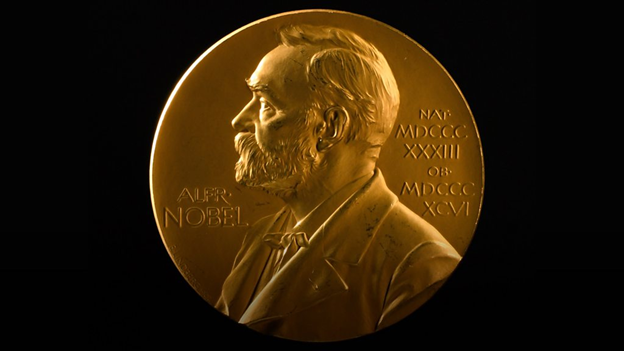
Nobel Prize
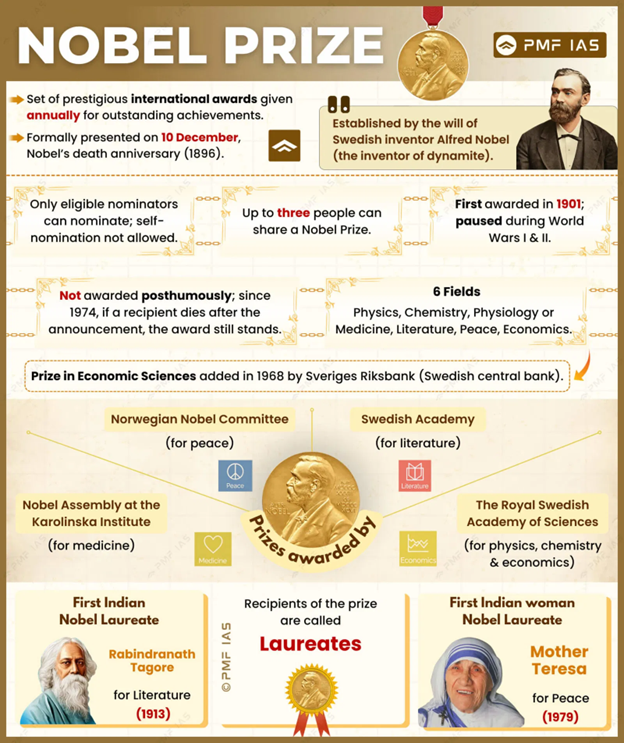
It is a set of prestigious international awards given annually for outstanding achievements.
Recipients of the prize are called
It was established by the will of Swedish inventor Alfred Nobel (the inventor of dynamite).
The first Nobel Prizes were awarded in 1901, and they have been awarded annually since then. They were not awarded during World War I (1914–1918) and II (1939–1945).
It is formally presented on December 10, the anniversary of Nobel’s death in 1896.
Given in 6 fields:Physics, Chemistry, Physiology or Medicine, Literature, Peace, and Economic Sciences.
Prize in Economic Sciences was introduced in 1968 by Sveriges Riksbank (Swedish central bank)
A Nobel Prize can be shared by up to three individual In the case of the peace prize, it can also be awarded to an organisation.
To become a Nobel Prize laureate one must be nominated for a prize by an eligible nominator. Self-nomination is not allowed.
The Nobel Prize cannot be awarded posthumously. However, since 1974, if the recipient dies after the prize has been announced, they can still be awarded it
Note
First Indian Nobel Laureate was Rabindranath Tagore, for Literature (1913).
The first Indian woman Nobel Laureate was Mother Teresa, for Peace (1979).
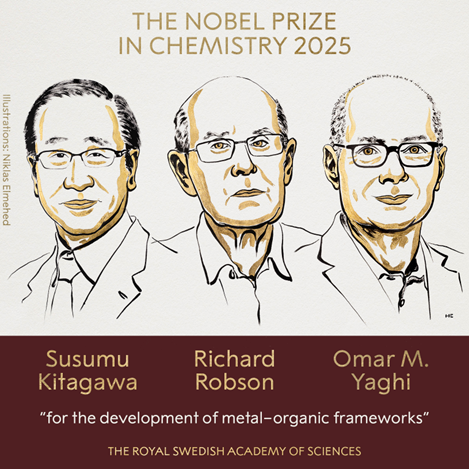
Nobel Prize in Chemistry 2025
Awarded by – Royal Swedish Academy of Sciences
Awardees – Susumu Kitagawa (Japan), Richard Robson (Australia), and Omar M. Yaghi (USA)
Achievement – for their groundbreaking development of metal-organic frameworks (MOFs).
Additional Information – Metal-Organic Frameworks (MOFs)
They are crystalline, porous materials made of metal ions as “nodes” connected by organic molecules called “linkers.”
Functionality: Their lattice structure creates large cavities that can store substances, catalyse reactions, or conduct electricity.
Nobel Prize in Physics 2025
Awarded by – Royal Swedish Academy of Sciences
Awardees – John Clarke (UK), Michel Devoret (France), and John Martinis (USA)
Achievement – for the discovery of macroscopic quantum mechanical tunnelling and energy quantisation in an electric circuit.
Their discovery confirmed that quantum phenomena, once thought limited to subatomic particles, can also manifest in macroscopic systems, expanding the boundaries of quantum mechanics.
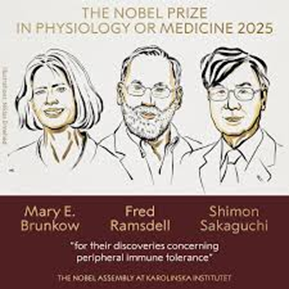
Nobel Prize in Physiology or Medicine 2025
Awarded by – Nobel Assembly at the Karolinska Institute in Stockholm, Sweden, for outstanding contributions to medical research.
Awardees –
Shimon Sakaguchi (Japan) received the award for discovering regulatory T-cells.
Mary E. Brunkow and Fred Ramsdell (USA) were honoured for identifying the Foxp3 gene, which controls immune regulation.
Significance of the discovery – groundbreaking discoveries concerning peripheral immune tolerance that prevents the immune system from harming the body.
Did you know?
● First Laureate: In 1901, Emil von Behring received it for developing serum therapy to treat diphtheria.
● Indian–Origin Laureate: In 1968, Har Gobind Khorana became the first Indian winner for decoding the genetic code guiding protein synthesis.
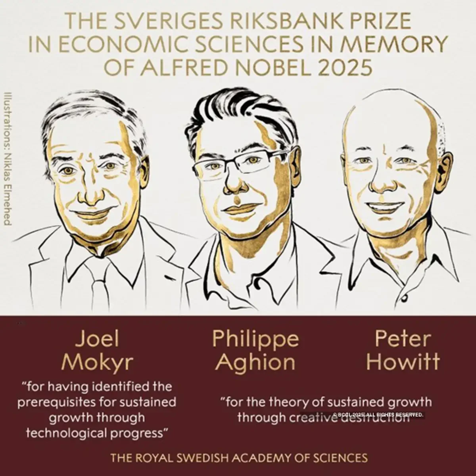
Nobel Prize in Economics 2025
Awarded by – Royal Swedish Academy of Sciences
Awardees – Joel Mokyr, Philippe Aghion and Peter Howitt “
Achievement – for having explained innovation-driven economic growth”.
The official name for the Nobel Prize in Economics is the Sveriges Riksbank Prize in Economic Sciences in Memory of Alfred Nobel.
It was established in 1968 by Sweden’s central bank (Sveriges Riksbank) in memory of Alfred Nobel, and first awarded in 1969.
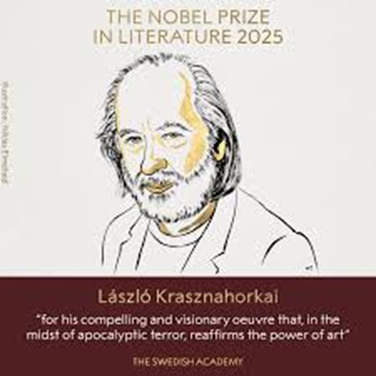
Nobel Prize in Literature 2025
Awarded by – Royal Swedish Academy of Sciences
Awardee – to Hungarian novelist and screenwriter László Krasznahorkai.
He is known for distinct long sentences that can span dozens of pages, his acclaimed works include Satantango (1985) and The Melancholy of Resistance (1989).
Nobel Peace Prize 2025
Awarded by – Norwegian Nobel Committee
Awardee – to Venezuelan opposition leader María Corina Machado.
Achievement – She was honoured for promoting democratic rights and advocating a peaceful transition from dictatorship to democracy in Venezuela.
Political Role: Machado, the leader of the Vente Venezuela party, has mobilised civic movements demanding judicial independence, electoral transparency, and human rights protection.
Karnataka Cabinet’s landmark decision to approve the Karnataka Menstrual Leave Policy-2025 that will ensure one day’s paid leave in a month across government and private sectors.
Note – Karnataka becomes the first State to cover both the government and private sectors in its menstrual leave policy.
Odisha and Bihar have a policy for government employees while Kerala has implemented the policy in universities.
Karnataka Menstrual Leave Policy-2025
Women in the state of Karnataka will be entitled to up to 12 menstrual leaves annually.
This development marks a significant step in recognising menstrual health at a workplace and rights issue.
The Dr. Sapna S committee was appointed by the Karnataka government to study and recommend menstrual leave policy
Significance – It aims to create a more inclusive and stigma-free workplace and is considered a landmark decision in India, as it covers both government and private sectors comprehensively.
Farmers in Himachal Pradesh are increasingly adopting natural farming, supported by the State’s flagship Prakritik Kheti Khushhal Kisan Yojana (PK3Y), which promotes chemical-free agriculture.
Natural Farming
It is a chemical free farming, involving livestock (preferably local breed of cow) integrated natural farming methods and diversified crop systems rooted in the Indian traditional knowledge.
It is largely based on on-farm biomass recycling with major stress on biomass mulching, use of on-farm cow dung-urine formulations; maintaining soil aeration and exclusion of all synthetic chemical inputs.
Additional Information- National Mission on Natural Farming (NMNF)
Launched in – November 2024
It is a centrally sponsored Scheme
Objective – to promote chemical-free, ecosystem-based natural farming rooted in traditional knowledge.
Pradhan Mantri Dhan-Dhaanya Krishi Yojana and Self-Reliance in Pulses Mission
Syllabus: GS3/ Agriculture
Context
PM Modi launched two new agriculture schemes, the PM Dhan Dhaanya Krishi Yojana (PMDDKY) and the Mission for Aatmanirbharta in Pulses, at a special Krishi programme in New Delhi.
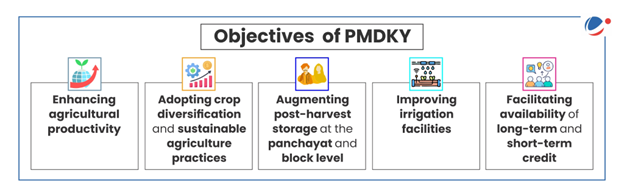
Prime Minister Dhan-Dhaanya Krishi Yojana
Launched in – The scheme will be launched in partnership with states.
Key Focus Areas:
Enhancing agricultural productivity.
Promoting crop diversification and sustainable practices.
Expanding post-harvest storage at Panchayat and Block levels.
Improving irrigation facilities.
Facilitating long-term and short-term credit access.
Building Rural Prosperity and Resilience Program
Purpose: launched in partnership with states to address under-employment in agriculture.
Key Focus Areas: Skilling, investment, and technology to invigorate rural economy.Modernizing agriculture with improved productivity and warehousing.
Target Beneficiaries: Rural women, young farmers, marginal & small farmers and landless families.
Mission for Aatmanirbharta in Pulses
The Mission was launched for 2025–26 to 2030–31 with a budgetary allocation of ₹11,440 crore.
Objective – It aims to make India self-sufficient in pulses production, reducing dependence on imports in light of rising domestic demand.
It aims to ensure 100 percent procurement of Tur, Urad, and Masoor at MSP for four years.
Additional Information- Pulses Production and Consumption in India
Global Leader: India is the largest global producer (25%), consumer (27%), & importer (14%) of pulses.
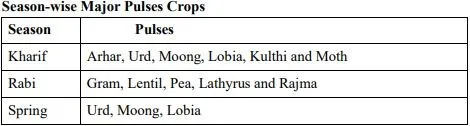
Seasonal Production: Pulses are grown in Kharif and Rabi seasons
Madhya Pradesh, Maharashtra and Rajasthan are the top three pulses producing states in the country.
Government Initiatives for Achieving Self-Sufficiency in Pulse Production
National Food Security Mission (NFSM-Pulses): Boosts area, production, and productivity through HYV seeds, improved agronomy, and demonstrations.
Minimum Support Price (MSP) for Pulses: Regularly revised MSPs (E.g., Tur ₹7000/qtl in 2023-24) ensure price security and encourage pulse cultivation.
Seed Hub Program by ICAR-IIPR: Expands availability of certified, short-duration, and high-yielding pulse seeds at the grassroots level.
PM-AASHA Scheme: Ensures MSP realisation via Price Deficiency Payment (PDP) and targeted procurement by private and public agencies.
Climate-Resilient Varieties Development (ICAR): Develops varieties resistant to drought, pests, and diseases suited to changing climates.
e-NAM Integration for Pulses: Enhances market access, reduces middlemen, and enables transparent price discovery through online pulse trading.
Durand Line
Syllabus: GS1/Geography; GS2/IR
News –
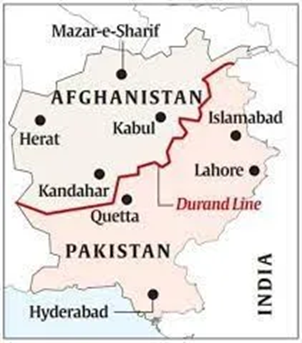
Border clashes erupted between Afghanistan and Pakistan along the Durand Line.
Durand Line
It is a 2,640 km land border established in 1893 following an agreement between Sir Mortimer Durand, then Foreign Secretary of British India, and Amir Abdur Rahman Khan, the ruler of Afghanistan.
The line was intended to define the spheres of influence between British India and Afghanistan, effectively splitting ethnic Pashtun and Baloch communities between the two sides.
Thalassemia
Syllabus: GS2/Health
News
Thalassemia patients in Kerala are facing serious health risks due to a shortage of leukocyte filter sets and iron chelation drugs.
Thalassemia
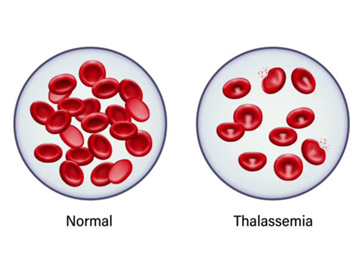
Thalassemia is an inherited blood disorder (passed from parents to children through genes) where the body cannot produce enough hemoglobin (it is the protein in red blood cells (RBCs) that carries oxygen).
Symptoms –Anemia, weak bones, delayed or slow growth, Iron overload (due to frequent transfusions), poor appetite, enlarged spleen or liver, and pale skin.
Note – India is known as the thalassemia capital of the world, with over 1,00,000 patients dying before the age of 20 due to lack of access to treatment.
In India, thalassemia, along with two other blood disorders (Hemophilia and Sickle Cell disease) are recognised under Rights of Persons with Disabilities Act, of 2016.
Every year, World Thalassemia Day is observed on May 8 to raise awareness among the public and policymakers.
Thalassemia Bal Sewa Yojana (TBSY)
Launched by – Union Health Ministry, in partnership with Coal India Limited
Objective – to Rs. 10 lakh financial aid to eligible patients for bone marrow transplants (BMT) at 17 empanelled hospitals nationwide,
Maitri II: India’s New Frontier in Antarctica
Syllabus: GS3/ Science & Technology
Context
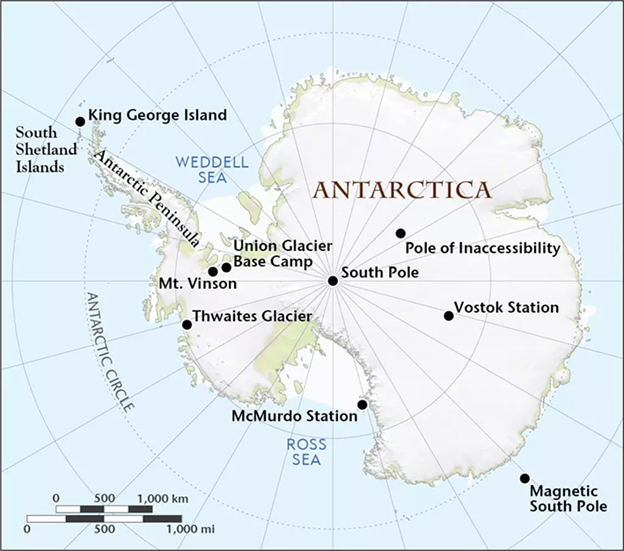
The Ministry of Finance has approved the establishment of Maitri II, India’s upcoming research station in eastern Antarctica, to be completed by January 2029.
India’s Antarctic Presence
In 1983, India established the first permanent base in Antarctica named Dakshin Gangotri. However it is no longer in operation.
India presently has two research stations at Antarctica namely ‘Maitri’ and ‘Bharati’.
Maitri II
Nodal Agency: National Centre for Polar and Ocean Research (NCPOR), Goa.
Estimated Cost: ₹2,000 crore over seven years.
Location: Eastern Antarctica, near the Schirmacher Oasis, replacing the aging Maitri station.
Green Research Base: Designed to operate on renewable energy sources, solar during summer and wind energy year-round, reducing dependence on fossil fuels.
Additional Information – Antartica
Antarctica is the world’s southernmost and fifth largest continent.
Uniqueness – It is also the world’s highest, driest, windiest, coldest, and iciest continent.
The continent is divided into East Antarctica (Greater Antarctica) and West Antarctica (Lesser Antarctica). They are separated by Transantarctic Mountains.
East Antarctica is composed of older, igneous and metamorphic rocks whereas West Antarctica, is made up of younger, volcanic and sedimentary rock.
West Antarctica, is part of the “Ring of Fire,” a tectonically active area around the Pacific Ocean.
Mount Erebus, located on Antarctica’s Ross Island, is the southernmost active volcano on Earth.
Longest River: Onyx
Largest Lake: Vostok
Conservation efforts to protect Antartica
Antarctica treaty
The Treaty covers the area south of 60°S latitude.
It was signed at Washington D.C. in 1959 with the objective of the Demilitarisation of Antarctica.
The signatories are supposed to bring laws so that no activity in contravention of the treaty takes place.
India signed the treaty in 1983.
The Convention on the Conservation of Antarctic Marine Living Resources (CCAMLR):
Signed in – Canberra in 1980
Objective – to protect and preserve the Antarctic environment and, particularly, for the preservation and conservation of marine living resources in Antarctica.
India ratified the CCAMLR in 1985.
The Protocol on the Environmental Protection to the Antarctic Treaty (Madrid Protocol)
Signed in – Madrid in 1991.
Objective – It aims to strengthen the Antarctic Treaty system and develop a comprehensive regime for the protection of the Antarctic environment and dependent and associated ecosystems.
India ratified the Madrid Protocol in 1998.
Council of Managers of the National Antarctic Programme (COMNAP)
India is also a member of the COMNAP which shows the significant position that India holds among the nations involved in Antarctic research.
Indian Antarctic Bill, 2022
Objective: To demilitarize Antarctica; use of Antarctica for peaceful purposes; promote international scientific cooperation in Antarctica.
Prohibited activities: The Bill prohibits certain activities in Antarctica including:
Nuclear explosion or disposal of radioactive wastes
Discharge of garbage, plastic or other substances into the sea which is harmful to the marine environment.
International Blue Flag Certification
Syllabus: GS3/ Environment
In News
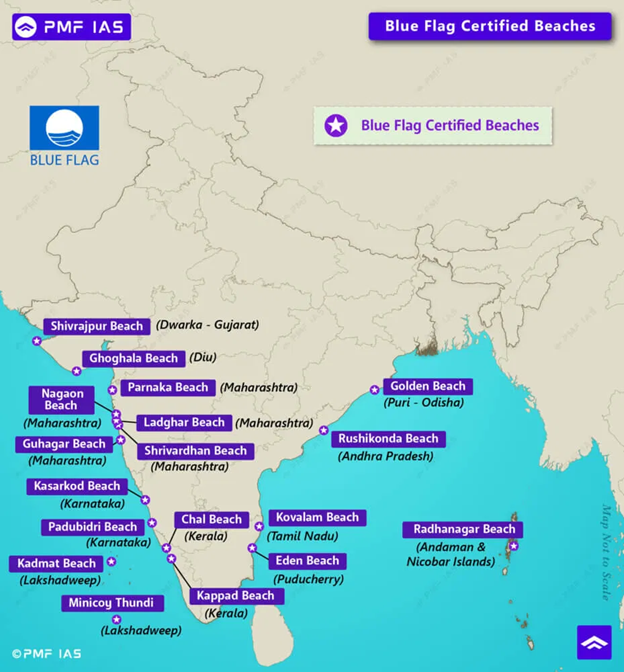
Five beaches in Maharashtra have received the international Blue Flag certification.
The list includes Shrivardhan and Nagaon beaches, Parnaka, and Guhagar and Ladghar beaches.
Blue Flag Certification
Objective – ‘Blue Flag’ is a certification that can be obtained by a beach, marine, or sustainable boating tourism operator, and serves as an eco-label.
Awarded by – The certification is awarded by the Denmark-based non-profit Foundation for Environmental Education.
Parameters – The certification is accorded based on four major parameters:
Environmental education and information
Bathing water quality
Safety and services at the beaches
Environment management and conservation
Indian Sites under Blue Flag
There are now a total of 10 sites under Blue Flag Certification.
The Union Cabinet has approved Phase III of the Biomedical Research Career Programme (BRCP).
Biomedical Research Career Programme (BRCP)
It is a strategic investment in India’s health and innovation landscape, supported by a ₹1,500 crore Indo-UK partnership that aligns global expertise with national priorities.
Aim: To build a world-class research ecosystem in biomedical sciences, clinical, and public health research
Expected Outcomes: The initiative targets training 2,000+ researchers, high-impact publications, patentable discoveries, and peer recognition.
THE World University Rankings 2026
Syllabus: Miscellaneous
Context
Oxford University has maintained its global number one ranking for the tenth consecutive year, according to the Times Higher Education (THE) World University Rankings 2026.
THE World University Rankings 2026
Published by – Times Higher Education
Objective – It evaluates 2,191 universities from 115 countries and territories across 18 performance indicators in five areas: teaching, research environment, research quality, international outlook, and industry impact.
Beyond the top 100, universities are assigned “rank bands” instead of specific positions.
University rankings 2026: Highlights
India: Ranked as the second most-represented country, behind only the U.S., with a record 128 institutions — up from 107 last year and just 19 in 2016.
The Indian Institute of Science is placed in the 201–250 rank band, followed by Saveetha Institute of Medical and Technical Sciences at 351–400.
China: Five universities are in the top 40, up from three last year. Tsinghua University, ranked 12th, remains Asia’s top university.
United States: Seven of the top 10 positions are occupied by the US.
Official Visit of the UK Prime Minister to India
Syllabus: GS2/IR
In News
The Prime Ministers of India and the UK have reaffirmed the India-UK Comprehensive Strategic Partnership during the recent official UK PM visit to India.
Key Outcomes
Economic & Trade: Strengthening of the UK-India Comprehensive Economic and Trade Agreement (CETA), expected to boost market access, reduce tariffs, and generate jobs.
Climate & Energy: Establishment of advanced R&D centres in AI and climate change, and launch of Critical Minerals Supply Chain Observatory, including a new campus at IIT-ISM Dhanbad.
Agreed to cooperate on Offshore Wind and through the Global Clean Power Alliance (GCPA).
Launched the India–UK Climate Finance Initiative.
Defence and Security: Enhanced cooperation on maritime security in the Indo-Pacific, including establishing a Regional Maritime Security Centre of Excellence (RMSCE) under India’s Indo-Pacific Oceans Initiative.
India–UK Connectivity and Innovation Centre
Appointment of District Judges
Syllabus: GS2/Polity and Governance
Context
The Supreme Court unanimously held that judicial officers who have completed seven years of practice as advocates before joining the service will be eligible for direct recruitment as District Judges under Article 233.
Eligibility Expansion for District Judges
Previously, only practising lawyers with seven years’ experience could be directly appointed; in-service judicial officers were excluded.
The Court held that Article 233(2) provides for qualification for advocates but does not specify any separate qualification for in-service candidates.
Appointment of District Judges
Authority of Appointment: District judges are appointed by the Governor of the State, but only after consulting the High Court of that state.
This ensures judicial independence, giving the High Court a significant role in selection.
Eligibility: Traditionally, appointments were made from:
Members of the State Judicial Service (subordinate judicial officers), or practising advocates with a minimum of 7 years’ experience.
Recent judicial interpretations have clarified that judicial officers with 7 years of prior Bar experience before joining the judicial service are also eligible for elevation to District Judge.
Former MLA Y.S.V. Datta has been selected for the Jayaprakash Narayan Award 2025 by Bharata Yatra Kendra.
The selection committee included Karnataka Chitrakala Parishat president B.L. Shankar and B.R. Patil, Deputy Chairperson of the Karnataka State Policy and Planning Commission.
Afghanistan’s Taliban foreign minister met external affairs minister S. Jaishankar in New Delhi.
India–Taliban Diplomatic Engagement
Assurance for Terror Concerns: Afghanistan reassured India that it would not allow any group to use its territory against another country
India’s Embassy Reopening: External Affairs Minister S. Jaishankar announced that India would reopen its full embassy in Kabul.
Diplomatic Context: Around a dozen countries — including China, Russia, Iran, Pakistan, and Turkey — already operate embassies in Kabul.
Strategic Balance: The move reflects India’s pragmatic approach to maintain influence in Afghanistan amid Pakistan and China’s growing presence.
Counterterrorism Focus: India’s emphasis on Afghan soil not being used for terrorism directly addresses concerns about groups like LeT and JeM.
National Red List Roadmap and Vision 2025–2030
Syllabus:GS3/Environment
In News
India has officially launched its National Red List Roadmap and Vision 2025–2030 at the IUCN World Conservation Congress 2025.
It marks a transformative step in species assessment and conservation planning.
National Red List Roadmap and Vision 2025–2030
Mandate – It envisions publishing Red Data Books for both flora and fauna, providing authoritative documentation of threatened species.
It is developed by the Zoological Survey of India (ZSI), Botanical Survey of India (BSI), IUCN India, and the Centre for Species Survival.
India aims to publish National Red Data Books for both flora and fauna by 2030.
Key Features
It will assess nearly 11,000 species of plants and animals by 2030, including terrestrial and marine biodiversity
It adheres to IUCN Red List protocols and supports India’s commitments under the Convention on Biological Diversity and the Kunming-Montreal Global Biodiversity Framework.
It includes a centralized digital platform for data collection, monitoring, and public access to conservation status.
Relevance for India
India, one of the world’s 17 megadiverse countries, is home to four of the 36 global biodiversity hotspots, the Himalayas, Western Ghats, Indo-Burma, and Sundaland.
It occupies just 2.4% of the world’s land area and it harbours nearly 8% of global flora and 7.5% of global fauna, with over 28% of plants and 30% of animals being endemic.
Sawalkote Hydroelectric Project
Syllabus: GS1/Geography
In News
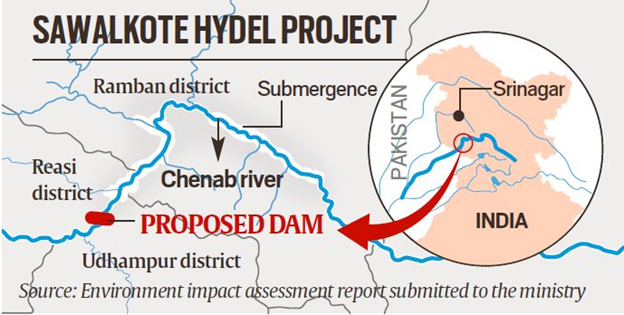
Recently, an apex committee of the Environment Ministry has accorded a fresh environmental clearance to the Sawalkote hydroelectric project.
Sawalkote Hydroelectric Project
Origin:First proposed 1984,
Location – It is a run-of-the-river hydroelectric initiative located on the Chenab River in Jammu and Kashmir.
Developed by – National Hydroelectric Power Corporation (NHPC).
Energy capacity – It is one of India’s largest hydroelectric projects in the Indus basin, with a proposed capacity of 1,856 MW.
Additional Information – Chenab river
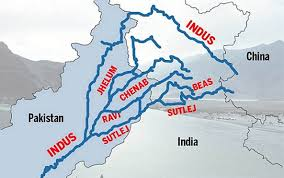
Origin: The Chenab is formed at Tandi in Himachal Pradesh by the confluence of the Chandra and Bhaga rivers.
Source: The Chandra and Bhaga rivers originate from the Barelacha Pass in the Himalayas.
Flow: It flows through Himachal Pradesh and the Jammu region of Jammu and Kashmir, India, before entering Pakistan.
Joining the Indus: In Pakistan, it joins the Sutlej River to form the Panjnad, which then merges with the Indus River.
Key facts for UPSC
Other name: It is also known as the Chandrabhaga river.
Historical name: In ancient texts, it was called
Indus Waters Treaty: As a transboundary river, it is governed by the 1960 Indus Waters Treaty. Pakistan is allocated the Chenab’s waters, but India is permitted to use the water for non-consumptive purposes like hydroelectric power generation.
Tributaries: The Marusudar is a major tributary of the Chenab.
Bharat Taxi
Syllabus: GS2/ Governance
In News
A new cooperative ride-hailing platform called “Bharat Taxi” is set to launch in December 2025.
Bharat Taxi
Launched by – The platform is being built with support from the National e-Governance Division (NeGD) and will integrate with national digital platforms like DigiLocker and UMANG.
Promotion: The initiative is jointly promoted by a number of major cooperative and financial institutions, including NCDC, IFFCO, Amul, KRIBHCO, NAFED, NABARD, NDDB, and NCEL.
Mission: It aims to create a driver-owned platform that provides higher earnings for drivers, transparent fares for riders, and an inclusive mobility ecosystem.
Significance – The service is designed to compete with private ride-hailing services like Ola and Uber, without surge pricing, by leveraging a cooperative pricing model.
CCRAS Launches SPARK 4.0
Syllabus: GS2/ Governance
In News
The Central Council for Research in Ayurvedic Sciences (CCRAS), under the Ministry of Ayush, announced the fourth edition of its flagship Studentship Program for Ayurveda Research Ken (SPARK) for 2025–26.
Studentship Program for Ayurveda Research Ken (SPARK)
Objective – It aims to promote scientific curiosity and research skills among undergraduate Ayurveda students across the country.
Features –
Under SPARK–4.0, 300 Bachelor of Ayurvedic Medicine and Surgery (BAMS) students from colleges recognised by the National Commission for Indian System of Medicine (NCISM) would be receiving a studentship of ₹50,000, disbursed as ₹25,000 per month over two months.
The student would get short-term independent research projects and a certificate on completion.
Significance – to strengthen Ayurveda’s research ecosystem.
Three Major Ports Recognised as Green Hydrogen Hubs Under The National Green Hydrogen Mission
Syllabus:GS3/Environment
In News
The Ministry of New and Renewable Energy has designated Deendayal, V.O. Chidambaranar, and Paradip ports as Green Hydrogen Hubs under the National Green Hydrogen Mission.
Green Hydrogen
Green Hydrogen: It is produced using electrolysis of water with electricity generated by renewable energy.
Benefit: It is a clean burning element that can decarbonise a range of sectors including iron and steel, chemicals, and transportation.
Hydrogen can be stored for long periods of time which can be used to produce electricity using fuel cells.
National Green Hydrogen Mission
Aim: To make India a global hub for the production of green hydrogen.
Implementing Ministry: Ministry of New and Renewable Energy(MNRE)
Additional Information – Hydrogen
Symbol and Atomic number – Hydrogen is the chemical element with the symbol H and atomic number 1.
Hydrogen is the lightest element and the most abundant chemical substance in the universe, constituting roughly 75% of all normal matter.
It is colorless, odorless, tasteless, non-toxic, and highly combustible gas.
‘The State government was investing ₹1,000 crore to build innovation clusters across Mangaluru, Mysuru, Hubballi-Dharwad, and Belagavi’
Bengaluru’s ecosystem leads globally in AI skill penetration and R&D output, ranking among the top five cities worldwide.
“3P model of People, Policy and Participation, which ensures every stakeholder, from academia to entrepreneurs, has a voice in shaping growth,’‘
Karnataka is not just an investment destination but the global knowledge and skill capital. With 40% of India’s R&D talent, 30% of all Global Capability Centres, and 48% of the country’s 110 unicorns.