Category: National and International Current Affairs

  • Biosecurity Threat in India | Ministry of Home Affairs Guidelines on Vande Mataram | Corruption Perceptions Index | India’s First Musical Road | Karnataka Information Commission (KIC)

    Biosecurity Threat in India

    Health

    Context

    • In 2025, the Gujarat ATS uncovered an alleged ricin-based bioterror plot, marking India’s first suspected ricin-linked bioterror case with possible international links.

    Biological Weapons

    • Biological weapons use pathogens (bacteria, viruses, fungi) or toxins (like ricin, botulinum toxin) to cause disease or death in humans, animals, or crop
    • They are classified as Weapons of Mass Destruction (WMDs) due to their potential for large-scale harm.

    India’s Existing Biosecurity Architecture

    • The Department of Biotechnology oversees research governance and safety frameworks for labs.
    • The Plant Quarantine Organisation of India regulates agricultural imports and exports.
    • The National Disaster Management Authority has issued detailed guidelines for the management of biological disasters.

    Key legal instruments include:

    • The Environment (Protection) Act, 1986, governing hazardous microorganisms and genetically modified organisms.
    • The Weapons of Mass Destruction and Their Delivery Systems (Prohibition of Unlawful Activities) Act, 2005, which criminalises biological weapons.
    • The Biosafety Rules, 1989, and guidelines issued in 2017 for recombinant DNA research and biocontainment.

    International Measures

    Biological Weapons Convention (BMC):

    • It entered into force in 1975
    • It prohibits the development, production, acquisition, transfer, stockpiling and use of biological and toxin weapons.
    • It was the first multilateral disarmament treaty banning an entire category of weapons of mass destruction (WMD).

    Chemical Weapons Convention

    • Mandate – It is an international treaty aimed at eliminating the production, stockpiling, and use of chemical weapons and their precursors.
    • Adoption and Enforcement – The Treaty was adopted on September 3, 1992, and entered into force on April 29, 1997.
    • Member countries – It currently has 193 member states.
    • Legally binding – It makes it mandatory to destroy old and abandoned chemical weapons.
    • India’s ratification – India signed the treaty in January 1

    Australia Group:

    • The Australia Group is an informal forum of countries that seeks to prevent the proliferation of chemical and biological weapons.

    Ministry of Home Affairs Guidelines on Vande Mataram

    Polity and Governance

    Context

    • The Ministry of Home Affairs (MHA) has issued guidelines directing that the national song Vande Mataram be sung/ played before the national anthem when both are played at official events.

    Key Guidelines

    Occasions for Playing or Singing:

    • Arrival and departure of the President at formal State functions.
    • Before and after Presidential addresses to the nation.
    • Arrival and departure of Governors/Lieutenant Governors at State functions.
    • When the National Flag is brought on parade.
    • Other occasions specified by the Government of India.
    • Protocol: The official version of approximately 3 minutes and 10 seconds shall be used.
    • All six stanzas of Vande Mataram, including the four stanzas that were set aside by the Congress Working Committee in 1937, will be played.

    Constitutional and Legal Framework

    • Status of National Symbols: On 24 January 1950, the first two stanzas of Vande Mataram were adopted as India’s National Song.
    • While the Constitution does not explicitly define “National Song,” its recognition flows from Constituent Assembly discussions and executive practice.
    • Article 51A(a) Fundamental Duties: Mandates every citizen to abide by the Constitution and respect its ideals and institutions, the National Flag and the National Anthem.
    • Vande Mataram is not explicitly protected by any constitutional provision.

    Additional information – Vande Mataram

    • Vande Mataram was composed by Bankim Chandra Chatterjee in Sanskrit and first appeared in the novel Anandamath in 1882.
    • Anandamath is set against the backdrop of the 1769–73 Bengal famine and the Sanyasi Rebellion.
    • First sung by Rabindranath Tagore at the 1896 Indian National Congress session gave it national exposure.
    • During the Swadeshi Movement of 1905, Vande Mataram emerged as the anthem of civil resistance.
    • Vande Mataram, as a political slogan, was first used on 7 August 1905.

    Corruption Perceptions Index

    Governance

    Context

    • Transparency International recently published 2025 Corruption Perception Index (CPI).

    Corruption Perceptions Index

    • Published by – Transparency International
    • Objective – It measures levels of public sector corruption in 182 countries.
    • Methodology: It uses a scale from zero (highly corrupt) to 100 (very clean).
    • Best performing countries: Denmark (89) followed by Finland (88) and Singapore (84).
    • Worst Performing Countries: South Sudan and Somalia
    • India’s Performance: In 2025, India ranked 91st globally on the Corruption Perceptions Index (CPI), scoring 39 out of 100, which is a slight improvement from the previous year.

    India’s First Musical Road

    Government Initiative

    Context

    • Mumbai’s Coastal Road has introduced India’s first musical road

    India’s First Musical Road

    • A 500-metre stretch between Nariman Point and Worli, named Sangeet Marg, plays the Oscar-winning song “Jai Ho” when vehicles travel at a speed of 60–80 km per hour.
    • The concept uses specially engineered rumble strips carved into the asphalt at precise intervals.
    • As vehicles move over these grooves, vibrations are generated due to friction between the tyres and the road surface.
    • These vibrations create sound waves that combine to reproduce the melody, which can be heard by passengers inside the vehicle.
    • The concept is based on Hungarian technology and has previously been implemented in countries such as Hungary, Japan, South Korea, and the United Arab Emirates.

    Karnataka Information Commission (KIC)

    News –

    • The Karnataka Information Commission (KIC) has claimed to be the fastest in India for disposing of second appeal petitions under the RTI Act.

    Karnataka Information Commission (KIC)

    • It is an autonomous statutory body established on March 2, 2006, under the Right to Information (RTI) Act, 2005.
    • It serves as the final appellate authority for citizens seeking information from public authorities within the state of Karnataka.

    Key Leadership & Structure

    • State Chief Information Commissioner (In-Charge): Dr. H.C. Sathyan.
    • Information Commissioners: The commission includes several State Information Commissioners (SICs), such as Shri. Raman K., Dr. Harish Kumar, Sri. Rudranna Harthikote, and Sri. Rajashekara S..
    • Benches: In addition to its main headquarters in Bengaluru, the KIC operates regional benches in Belagavi and Kalaburagi to improve accessibility.

    Core Functions & Powers

    • Adjudication: The KIC hears Second Appeals and Complaints regarding the refusal of information or delays by Public Information Officers (PIOs).
    • Penalties: The commission has the authority to impose financial penalties—up to ₹25,000—on officials who delay information.
    • Judicial Authority: It possesses the powers of a Civil Court, including the ability to summon witnesses, require oral or written evidence under oath, and inspect public records.
  • Pandit Deendayal Upadhyaya | India Records Highest-ever Tea Exports in 2025 | Network Readiness Index Report 2025 | Protest Against Ken-Betwa Linking Project

    Pandit Deendayal Upadhyaya

    Personality in News

    Context

    • The Prime Minister Narendra Modi paid tributes to Pandit Deendayal Upadhyay on his death anniversary (11 February).

    Pandit Deendayal Upadhyaya (1916–1968)

    • He was a political thinker, economist, and leader of the Bharatiya Jana Sangh.
    • He was an exceptional scholar and dedicated nationalist.
    • Ideology – He was a visionary thinker, known for his doctrine of Integral Humanism (Ekatma Manav Darshan) which emphasized a balance between spiritual and material development and promoted decentralization and self-reliant village-based economy.
    • Contributions- He contributed to ideological journalism by starting ‘Rashtra Dharma’ (monthly), ‘Panchajanya’ (weekly), and ‘Swadesh’ (daily).

    India Records Highest-ever Tea Exports in 2025

    Agriculture

    Context

    • India recorded its highest-ever tea exports in 2025, touching 280.40 million kg during January–December 2025, marking a significant increase from 256.17 million kg in 2024.

    Indian Tea Industry

    • India is the 2nd largest tea producer and largest black tea producer.
    • Export destinations Iran, Iraq, Syria, Saudi Arabia, Russia e India is the 4th largest tea exporter in the World.
    • Employment – The Indian tea Industry is employing 16 million workers directly.
    • Note – Assam grows about 55% of the teas produced in India. India’s tea production has increased by 39% in 2022 from 2008.

    Geographical Condition for Tea production

    • The tea plant grows well in tropical and subtropical climates.
    • Soil: It requires deep and fertile well-drained soil, rich in humus and organic matter.
    • Temperature: The average annual temperature for tea plants to grow well is in the range of 15-23°C.
    • Precipitation: The rainfall needed is between 150-200 cm.
    • Frequent showers evenly distributed over the year ensure continuous growth of tender leaves.
    • Major tea producing states are Assam, hills of Darjeeling and Jalpaiguri districts in West Bengal, Tamil Nadu and Kerala.
    • Apart from these, Himachal Pradesh, Uttarakhand, Meghalaya, Andhra Pradesh and Tripura are also tea-producing states in the country.

    Asia Tea Alliance

    • Member countries – It is a coalition of tea associations from major tea-producing countries in Asia like India, China, Sri Lanka, Japan etc.
    • Objective – It aims to promote the collective interests of member nations within the global tea market.

    Network Readiness Index Report 2025

    Infrastructure

    Context

    • India is placed at 45th rank (with score 54.43 out of 100) as per the Network Readiness Index 2025 report released in 2026.
    Network Readiness Index Report 2025

    • Published by – Portulans Institute, an independent, non-profit research and educational institute based in Washington DC.
    • Objective – The report maps the network-based readiness landscape of 127 economies based on their performance in four pillars: Technology, People, Governance and Impact, covering a total of 53 indicators.
    • Top Three Nations: USA, Finland, Singapore

    Protest Against Ken-Betwa Linking Project

    Geography; /Environment

    Context

    • Protests against the Ken–Betwa River Linking Project (KBLP), highlighting tensions over the implementation of the river interlinking project.

    Ken-Betwa Link Project

    • It is a project proposed to transfer excess water from the River Ken to the Betwa basin through the use of a concrete canal.
    • Objective – to provide irrigation to the Bundelkhand region of UP, which is one of the worst drought-affected areas in India.
    • Beneficiary statesMadhya Pradesh and Uttar Pradesh.
    • Significance – It will meet the irrigation purposes, drinking water, and electricity needs of 6 districts in both states.
    • Biodiversity Concerns – Nearly 8,650 hectares of forest land including part of Panna National Park in Madhya Pradesh will be submerged if the project were to become a reality.
  • Bonded Labour Abolition Act 1976: 50 years of abolition law | Seychelles | Mangrove clam (Geloina erosa)
    Bonded Labour Abolition Act 1976: 50 years of abolition law

    Governance

    Context

    • February 9, 1976, marked an important milestone in equality in Indian society with the enactment of the Bonded Labour System (Abolition) Act (BLSA).

    Bonded Labour Abolition Act 1976

    • Bonded labour (or debt bondage) is defined as a condition where money is lent in such a way that the debtor is forced to pay back through labour instead of money.
    • It was enacted to give effect to Article 23 of the Constitution (prohibition of trafficking and forced labour).
    • Bonded labour was deeply entrenched due to poverty, caste hierarchies, landlessness, and indebtedness.
    • India ratified ILO Convention No. 29 (Forced Labour) in 1954, strengthening the legal obligation.

    Objectives:

    1. Abolish the bonded labour system.
    2. Free bonded labourers and extinguish their debts.
    3. Prevent economic and social exploitation.
    4. Provide a legal framework for rehabilitation.

    Seychelles

    International Relations

    Context

    • Prime Minister Narendra Modi announced a $175 million Special Economic Package for Seychelles during the visit of Seychelles President Dr. Patrick Herminie to India.

    Seychelles

    • It is an archipelago nation of 115 islands in the western Indian Ocean, northeast of Madagascar, known as Africa’s smallest and least populous country.
    • Its capital is Victoria on Mahé island.
    • Biodiversity: It is known for rare species like the Coco de Mer, the Aldabra giant tortoise, and the rare black parrot.

    Mangrove clam (Geloina erosa)

    Environment

    In News

    • ICAR-Central Marine Fisheries Research Institute achieved a global first by inducing captive breeding of Geloina erosa (mangrove/mud clam), offering hope for restoring overexploited populations in Indian mangroves.

    About

    • Geloina erosa (also Polymesoda erosa) is a large bivalve (up to 10 cm shell width) inhabiting organic-rich, muddy intertidal zones of mangroves and estuaries across South and Southeast Asia.
    • It is known locally as “Kandal Kakka” in northern Kerala.
    • It acts as an efficient filter feeder, improving estuarine water quality through nutrient recycling.
    • Its burrowing behaviour stabilises sediments, enhances nutrient cycling, and strengthens mangrove ecosystem resilience.
  • No questions on PM CARES, relief and defence funds: PMO | Reticulated Python | Bastar Pandum Festival

    No questions on PM CARES, relief and defence funds: PMO

    Syllabus: GS2/Polity

    Context

    • The Prime Minister’s Office has informed the Lok Sabha Secretariat that parliamentary questions and discussions related to the PM CARES Fund, Prime Minister’s National Relief Fund (PMNRF), and the National Defence Fund (NDF) are not admissible under the Rules of Procedure and Conduct of Business in Lok Sabha.

    PM CARES vs. PMNRF: Key Differences

    Feature

    PM CARES Fund

    PMNRF

    Purpose

    Established to tackle emergency and distress situations (e.g., COVID-19 pandemic and future emergencies).

    Originally created to support refugees from Partition (1948); now used for disaster relief and medical assistance.

    Date of Establishment

    March 27, 2020

    January 1948

    Governance

    PM, Home Minister, Finance Minister, and Defence Minister as trustees.

    Initially managed by a committee (until 1985). Now, the Prime Minister has full control.

    Utilization of Funds

    Primarily for pandemic response, healthcare infrastructure, and disaster relief.

    Assists victims of natural disasters, accidents, riots, and medical treatments.

    Tax Benefits

    Eligible for 80G tax exemptions and CSR deductions.

    Eligible for 80G tax exemptions but not for CSR deductions.

    Foreign Donations

    Permitted under FCRA, 2010.

    Also accepts foreign contributions.

    Audit

    Audited by M/S SARC Associates Chartered Accountants, New Delhi.

    Audited by an independent auditor (currently M/S SARC Associates Chartered Accountants).

    Right to Information (RTI)

    Not covered under RTI.

    Not covered under RTI.

    Government Oversight

    Not controlled by Parliament or CAG (Comptroller and Auditor General of India).

    Not controlled by Parliament or CAG.

    Reticulated Python

    Environment

    Context

    • Guinness World Records has confirmed a 22-metre female reticulated python named Ibu Baron or “The Baroness”, from Sulawesi, Indonesia, as the longest measured snake in the world.

    Reticulated Python

    • Scientific Name: Malayopython reticulatus
    • The species is native to South and Southeast Asia, including Indonesia, Philippines, Malaysia, Thailand, and parts of India.

    Physical Characteristics:

    • It is the longest snake species in the world.
    • It is among the three heaviest snake species, after the green anaconda and Burmese python.
    • It has distinctive net-like (reticulated) patterns on its scales.
    • Human Predation: Reticulated pythons are among the few snake species known to prey on humans.
    • They kill by constriction, suffocating their prey before swallowing it whole.

    Bastar Pandum Festival

    Syllabus: GS1/Culture

    Context

    • Prime Minister Narendra Modi congratulated the people of Chhattisgarh for the special celebration of ‘Bastar Pandum’ festival.

    About the Festival

    • Celebrated in – It is a cultural festival celebrated in the Bastar region of Chhattisgarh showcasing tribal heritage and cultural traditions.
    • Significance – It has emerged as a major cultural platform highlighting Bastar’s tribal identity through art, music, dance, handicrafts, and indigenous cuisine.
  • Indian PM Visit to Malaysia | The AYUSH Sector in India | Eritrea

    Indian PM Visit to Malaysia

    IR

    Context

    • India and Malaysia vowed to expand their ties in the high-priority sectors of trade and investment, defence, energy, advanced manufacturing and semiconductors.

    Major outcomes of the meet

    • A Framework Agreement on the International Big Cats Alliance (IBCA) was also finalised, reflecting shared commitment to biodiversity and sustainable development.
    • Both sides also received the report of the 10th Malaysia-India CEO Forum, highlighting private sector perspectives on trade, investment and future collaboration.

    Additional Information – India and Malaysia Relations

    • Diplomatic Relations: The two countries established diplomatic relations in 1957, and this was elevated to a Comprehensive Strategic Partnership (CSP) in 2024.
    • Both countries are members of various international organizations, such as the United Nations, ASEAN (Association of Southeast Asian Nations), and the Non-Aligned Movement.
    • Trade and Economic Relations: Malaysia is the 13th largest trading partner for India while India stands amongst the 10 largest trading partners globally.
    • Defense and Security: Harimau Shakti is the primary bilateral training exercise between the Indian Army and the Malaysian Army.
    • ASEAN Centrality: Malaysia holds a crucial position in expanding India’s trade with ASEAN, aligning with India’s Act East Policy, advancing maritime connectivity in the Strait of Malacca and South China Sea, and supporting ASEAN’s Indo-Pacific Perspective (AOIP) and the Indo-Pacific Initiative (IPOI).
    • Tourism and diaspora: India is the 5th largest source country for inbound tourism to Malaysia.
    • Indian Community: Malaysia has the third largest Indian diaspora in the world (2.9 million).
    • Cultural Ties: Indian influence in Malaysia can be seen in various aspects of Malaysian culture, including language, religion (Hinduism and Buddhism), architecture, cuisine, and festivals.

    The AYUSH Sector in India

    Governance

    In News

    • India’s new free trade agreement (FTA) with the European Union opened the door for Indian doctors and products to enter the European market more easily.

    AYUSH Sector in India

    • AYUSH encompasses traditional systems of medicine such as Ayurveda, Yoga, Unani, Siddha, and Homeopathy.

    Key Initiatives

    • National AYUSH Mission (NAM): Core policy instrument to integrate AYUSH into public healthcare through:
    • Institutes of National Importance: All India Institute of Ayurveda (New Delhi), National Institute of Homoeopathy (Kolkata) & Dedicated national institutes for Siddha, Unani, Yoga, and Naturopathy.
    • Regulatory and Research Bodies: Central Council for Research in Ayurvedic Sciences (CCRAS), National Commission for Indian System of Medicine & National Commission for Homoeopathy.
    • Medicinal Plant Promotion: National Medicinal Plants Board (NMPB) working with 32 State Boards to support quality cultivation, value chains, and exports.
    • Flagship Schemes: AYURGYAN (Education and capacity building), Ayurswasthya Yojana (Community health and preventive care using AYUSH systems).

    Eritrea

    Syllabus: GS1/ Places in News

    In News

    • Recently, Ethiopia demanded that Eritrea immediately withdraw its troops from Ethiopian territory, highlighting renewed tensions in the Horn of Africa.

    Eritrea

    • Capital: Asmara (Declared a UNESCO World Heritage Site).
    • Location: Situated in the Horn of Africa (Northeast Africa). Lies along a crucial geostrategic corridor connecting Africa with West Asia.
    • Strategic Importance: Controls the western coast of the Bab el-Mandeb Strait, a vital global maritime chokepoint linking the Red Sea with the Gulf of Aden.
    • Geographical Features: Hot desert climate along the Red Sea coast. Temperate / Mediterranean-like climate in the central highlands.
    • Membership in International Groupings: African Union (AU) & COMESA (Common Market for Eastern and Southern Africa).
  • Jiyo Parsi Scheme | Global Teacher Prize 2026 | Supreme Court Allows Abortion of 30-week Pregnancy of a Minor | Hakki-Pikki tribe | Greater Flamingos | Sickle Cell Disease | Mountain Gorillas

    Jiyo Parsi Scheme

    Syllabus:GS2/Social Justice

    In News

    • The Jiyo Parsi Scheme has supported the birth of over 490 Parsi children and provided ₹35.05 crore in financial assistance to Parsi couples

    Parsi Community in India

    • According to the 2011 Census of India, the Parsi population in the country was 57,264.
    • This represented a significant decrease of approximately 22% from the 2001 census figure of 69,601.

    Jiyo Parsi Scheme

    • Launched in – 2013-14
    • Objective – to reverse the declining trend of Parsi population by adopting a scientific protocol and structured interventions.

    The scheme has three components:

    • Medical Assistance: Provides financial aid for infertility treatments such as IVF, ICSI, surrogacy, and post-conception care.
    • Advocacy: Provides for counselling of couples with fertility issues
    • Health of the Community: Offers monthly financial support to Parsi couples with children as well as to dependent elderly members.

    Global Teacher Prize 2026

    Miscellaneous

    Context

    • Indian teacher Rouble Nagi has won the Global Teacher Prize 2026, receiving the one million dollar award at the World Government Summit in Dubai.

    Global Teacher Prize

    • It was Launched in 2014 and is often referred to as the “Nobel Prize of Teaching”.
    • It is Presented by GEMS Education and organised by the Varkey Foundation in collaboration with UNESCO.
    • Mandate – It recognises exceptional educators for their outstanding contributions to teaching and social transformation.

    Do you know?

    • Rouble Nagi, is a pioneering educator from India, dedicated to making learning accessible to the most marginalised communities.
    • Over the past two decades, she has established more than 800 learning centres across over 100 underserved communities and villages.

    Supreme Court Allows Abortion of 30-week Pregnancy of a Minor

    Polity and Governance; Social Justice

    Context

    • The Supreme Court has permitted the medical termination of a 30-week pregnancy of a minor, emphasising that no woman can be compelled to carry a pregnancy to full term against her will.

    Medical Termination of Pregnancy (Amendment) Act, 2021

    • The Act permits abortion up to 20 weeks in the opinion of one registered medical practitioner.
    • Between 20–24 weeks, termination is allowed for specified categories of women (including minors, rape survivors, and differently-abled women) on the opinion of two doctors.
    • Beyond 24 weeks, termination is permitted only in cases of substantial fetal abnormalities as diagnosed by a Medical Board.

    Key Observations of the Supreme Court

    • The Court reiterated that reproductive autonomy is an integral part of personal liberty under Article 21 of the Constitution.
    • The Court observed that the pregnancy of a minor is “ex facie illegitimate” because she lacks legal capacity to consent to sexual relations.

    Hakki-Pikki tribe

    Society

    In News

    • The Embassy of India assisted Hakki-Pikki community members from Davangere, Shivamogga, and Chikkamagaluru districts, who were at risk of imprisonment in Chad.

    The Hakki Pikki tribe

    • It is a tribe that lives in several states in west and south India, especially near forest areas.
    • Hakki Pikkis (Hakki in Kannada means ‘bird’ and Pikki means ‘catchers’) are a semi-nomadic tribe, traditionally of bird catchers and hunters.
    • Hakki Pikki people are believed to hail originally from the bordering districts of Gujarat and Rajasthan.
    • Hakki Pikkis in Karnataka follow Hindu traditions and celebrate all Hindu festivals.
    • They are non-vegetarians. The eldest son in a family is not supposed to cut his hair so that he can be identified easily.
    • The tribe prefers cross-cousin marriages. The society is matriarchal, where the groom gives dowry to the bride’s family. Monogamy is the norm.

    Greater Flamingos

    Syllabus: GS3/Environment

    Context

    • Nearly 70 Greater Flamingos were recorded for the first time at Hope Island in the Coringa Wildlife Sanctuary, Kakinada Bay, Andhra Pradesh.

    Greater Flamingos (Phoenicopterus roseus)

    • Description: The greater flamingo is the most widespread and largest species of the flamingo family, averaging 110–150 cm tall and weighing 2–4 kg.
    • Distribution: They are found in Northern (coastal) and Sub-Saharan Africa, the Indian subcontinent (south of the Himalayas), the Middle East, the Persian Gulf, the Gulf of Aden, the Red Sea, and the Mediterranean countries of Southern Europe.
    • Greater flamingos usually migrate to India from Israel, Afghanistan, and Pakistan.
    • Diet and lifespan: Average lifespan is 30–40 years, and they feed on small fish and other aquatic organisms.
    • Threats: The primary threats to flamingo populations are bacteria, toxins, and pollution in water supplies, which is usually run-off from manufacturing companies, and encroachment on their habitat.
    • State Bird: The greater flamingo is the State bird of Gujarat.

    Types and IUCN status:

    1. The greater flamingo    –      Least Concern
    2. Chilean flamingo              –     Near Threatened
    3. American flamingo          –     Least Concern
    4. Lesser flamingo                –     Near Threatened
    5. Andean flamingo             –     Vulnerable

    James’s flamingo                     –     Near Threatened.

    Sickle Cell Disease

    GS2/Health

    Context

    • The U.S. Food and Drug Administration (U.S. FDA) has granted Orphan Drug Designation (ODD) to treat Sickle Cell Disease (SCD).

    Orphan Drug Designation

    • Orphan drugs are pharmaceutical agents developed specifically to treat rare (orphan) diseases.
    • Once designated, orphan drugs receive several incentives to encourage their development, including market exclusivity, tax credits for research and development (R&D) expenses, and fee waivers for regulatory applications.

    Sickle cell anaemia

    • Disease – It is an inherited group of blood disorders that is genetic in nature.
    • Cause – It is caused by a mutation in the hemoglobin-β gene found on chromosome 11. This mutation results in defective haemoglobin (Hb).
    • Characteristics – After giving up oxygen, these defective Hb molecules cluster together resulting in formation of rod like structures.
    • The red blood cells become stiff and assume sickle shape. (Haemoglobin (Hb) is a protein found in the red blood cells that carries oxygen in your body and gives blood its red colour)
    • Transmission – It is usually transferred from the parents to the child during birthe. both parents can be carriers of SCDs.
    • Symptoms – Babies who are born with sickle cell anaemia might not show symptoms for many months.
    • Extreme tiredness, fussiness and painfully swollen hands and feet and jaundice.
    • Effects – The misshapen cells lack plasticity and can block small blood vessels, impairing blood flow.
    • The sickle cells die prematurely, resulting in a chronic lack of red blood cells (anaemia), often called sickle-cell anaemia.
    • Treatment – Medication, blood transfusions and rarely a bone-marrow transplant are done.

    Mountain Gorillas

    Environment / Species

    Context

    • Rare twin mountain gorillas were recently born in eastern Democratic Republic of the Congo (DRC).

    Mountain gorillas (Gorilla beringei beringei)

    • They are a subspecies of the eastern gorilla, one of the two gorilla species found globally (eastern and western gorillas).
    • In the wild, gorillas can live for over 40 years, and humans share nearly 98% DNA with them.
    • Habitat and Distribution: They live at elevations of about 8,000–13,000 feet and have thicker fur than other great apes to adapt to cold mountain climates.
    • They are typically found in Rwanda, Uganda, and the Democratic Republic of the Congo in Africa.
    • Diet mainly includes leaves, shoots, and stems, along with insects, roots, bark, and decaying wood as a source of minerals.
    • Conservation Status and Population: Endangered (IUCN Red List); estimated population is around 1,063 individuals in the wild.
  • Frontier Nagaland Territorial Authority | Vizhinjam Port | International Space Station (ISS) | NDMA’s First-ever Guidelines For Identification of Disaster Victims | CAR T-cell therapy | Agni-3 Intermediate Range Ballistic Missile

    Frontier Nagaland Territorial Authority

    Governance

    In News

    • The Government of India, the Government of Nagaland, and representatives of the Eastern Nagaland Peoples’ Organisation (ENPO) have signed a historic agreement for the creation of the Frontier Nagaland Territorial Authority (FNTA).

    Frontier Nagaland Territorial Authority

    • FNTA will cover six districts Tuensang, Mon, Kiphire, Longleng, Noklak and Shamator inhabited by eight major Naga tribes.
    • Objective – The agreement provides for devolution of powers enhancing administrative and developmental autonomy.
    • Mini-Secretariat – It is headed by an Additional Chief Secretary/Principal Secretary-level officer.
    • Significance – It aims to promote balanced regional development, financial autonomy, and participatory decision-making in a historically underdeveloped region.
    • Note – However, the arrangement does not dilute Article 371(A) of the Constitution, which safeguards Naga customary practices, land rights, and social institutions.

    Vizhinjam Port

    Syllabus: GS3/Economy

    News

    • Vizhinjam International Seaport in Kerala has risen to the 83rd position globally in container handling, reflecting the rapid scale-up of India’s newest deep water transshipment hub.

    Vizhinjam Port

    • Location: Thiruvananthapuram, Kerala
    • Key Features: One of the deepest ports in India.
      • Capable of handling Ultra Large Container Vessels (ULCVs).
      • Developed under the Design, Build, Finance, Operate, and Transfer (DBFOT) model.
      • Significance: Efficient cargo movement, reduces India’s dependence on foreign ports like Colombo (Sri Lanka), Singapore, and UAE for transshipment, strengthens India’s maritime security

    International Space Station (ISS)

    (Science and Technology)

    Context

    • The International Space Station (ISS) is scheduled to be de-orbited in 2030, marking the end of nearly three decades of continuous human presence in space.

    International Space Station (ISS)

    • It is a modular, habitable, microgravity laboratory in low Earth orbit, orbiting 400 km above Earth.
    • It was launched in 1998, and has been continuously inhabited since 2000, making it one of the longest-running human space missions in history.
    • It is operated collaboratively by five major space agencies: NASA (United States), Roscosmos (Russia), ESA (Europe), JAXA (Japan) and CSA (Canada).

    Key Features:

    • It is the largest human-made structure in space, with a mass exceeding 400,000 kg, and a structure nearly 109 meters long.
    • Power is supplied by solar arrays generating tens of kilowatts of electricity.
    • The ISS plays a crucial role in studying the effects of long-term space radiation and microgravity on the human body, helping scientists understand bone loss, muscle atrophy, and immune system changes.

    NDMA’s First-ever Guidelines For Identification of Disaster Victims

    Syllabus: GS3/Disaster Management

    In News

    • Recently, the National Disaster Management Authority (NDMA) has released the country’s first-ever Standard Operating Procedure with guidelines for the identification of victims in the event of “mass fatality incidents”.

    National Disaster Management Authority (NDMA)

    • Headed by – Prime Minister of India.
    • It is the apex body for Disaster Management in India.
    • It was established under the Disaster Management Act, 2005.
    • Objective – It is responsible for formulating policies, plans, and guidelines for disaster management and promoting an ethos of prevention, mitigation, preparedness, and response.

    CAR T-cell therapy

    (Science and Tech)

    In News

    • Researchers at IIT Bombay addressed a critical challenge in CAR T-cell and other adoptive T-cell transfer (ACT) therapies.

    T-cells

    • They are white blood cells that act as the body’s frontline defenders, detecting and destroying infections or abnormal cells like cancer, and coordinating other immune cells to respond—making them crucial for immunotherapy.

    CAR T-cell therapy

    • It is an advanced treatment that modifies a patient’s T-cells to more effectively attack cancer.
    • Doctors first collect T-cells from the patient’s blood and then introduce a gene that gives them special receptors called chimeric antigen receptors (CARs).
    • These receptors function like GPS, directing the T-cells to locate and target cancer cells.
    • After engineering, the T-cells are expanded in the lab and then infused back into the patient’s body.
    • NexCAR19 is the world’s first humanised CAR-T therapy developed in India by ImmunoACT.

    Benefits

    • Targeted Precision: : CAR-T cell therapy Specifically attacks cancer cells while sparing healthy cells, reducing side effects compared to chemotherapy.
    • Personalised Treatment: CAR-T cell therapy Uses the patient’s own T-cells, engineered to target their unique cancer, enhancing effectiveness.
    • Long-Lasting Effects: Engineered T-cells can persist in the body, providing extended protection against cancer recurrence.
    • Reduced Hospitalisation & Costs: Fewer hospital stays and less supportive care needed, leading to potential cost savings.
    • Advances in Cancer Treatment: Opens new avenues in immunotherapy, expanding treatment options and research possibilities.
    • Technological Evolution: Continuous development of CAR constructs allows targeting of diverse cancers and combination therapies.
    • Affordability: Indigenous therapies like NexCAR19 in India make CAR-T treatment more accessible and cost-effective.

    Agni-3 Intermediate Range Ballistic Missile

    Syllabus:GS3/Defence

    In News

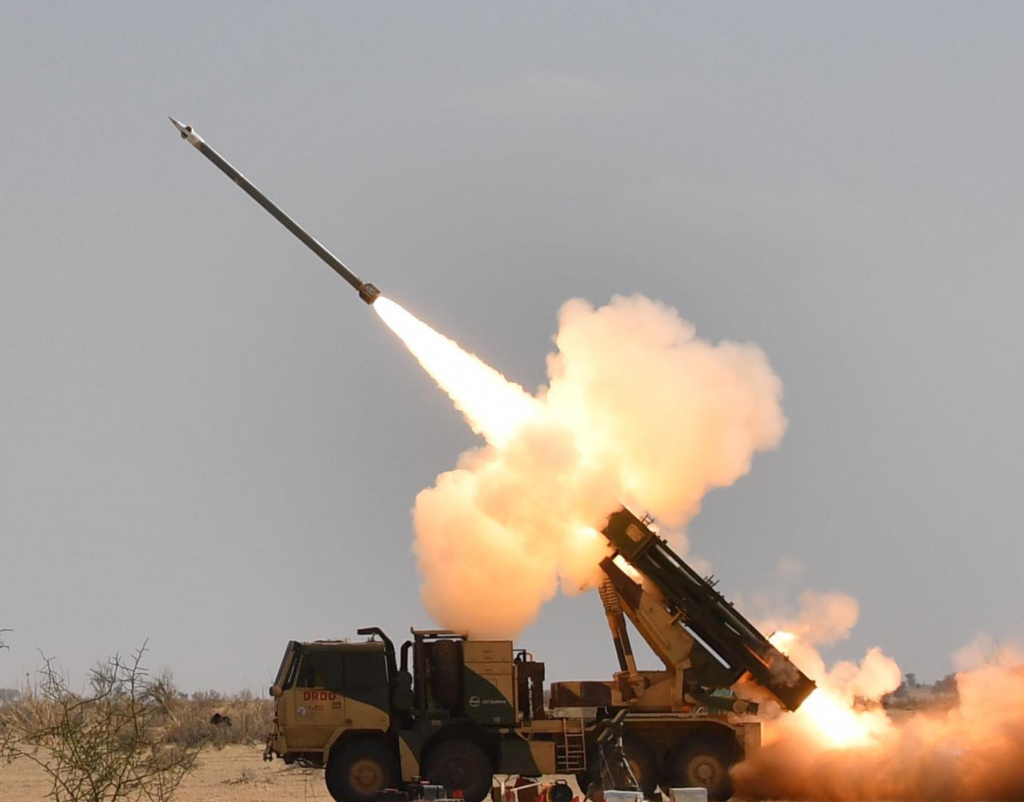
    • India successfully test-fired the nuclear-capable Agni-3 ballistic missile from Chandipur, Odisha, with a strike range exceeding 3,000 km.

    Agni-3 ballistic missile

    • Developed by – Defence Research and Development Organisation.
    • Strike range– 3,000 km.
    • Uniqueness – It is capable of carrying both conventional and nuclear warheads.

    Agni

    • It is India’s indigenously developed long-range missile system by DRDO
    • Agni-I to Agni-IV: Range 700–3,500 km, payload 12–40 kt, developed in 1990s, deployed mid-2000s.
    • Agni-V: Three-stage solid-fuel, MIRV-capable, range up to 5,000 km, potentially intercontinental (5,500+ km).
    • Agni-P: Two-stage solid-fuel, weight 11,000 kg, range 1,000–2,000 km, incorporates advanced propulsion/navigation, can carry high-explosive, thermobaric, or nuclear warheads.
  • NAMASTE Scheme | Lake Urmia | Rafah border | FORGE Initiative | Sarus Cranes Census data | Exercise KHANJAR

    NAMASTE Scheme

    (Schemes)

    In News

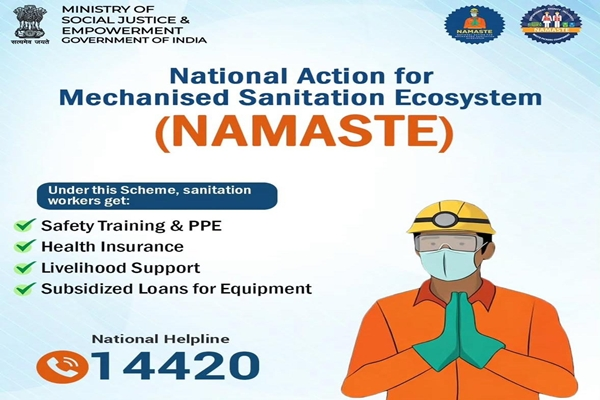
    • For the first time, the Union government has released nationwide enumeration data of waste-pickers under the NAMASTE (National Action for Mechanised Sanitation Ecosystem) scheme.

    National Action for Mechanised Sanitation Ecosystem (NAMASTE)

    • Launched in – July 2023
    • Financing – Central Sector Scheme
    • Implemented by – Ministry of Social Justice and Empowerment and the Ministry of Housing and Urban Affairs,

    Objectives:

    • Zero fatalities in sanitation work.
    • All sanitation operations to be performed by skilled workers.
    • No direct contact with human faecal matter.
    • Rehabilitation of Manual Scavengers.

    Key Interventions:

    • Profiling: Digital profiling of Sewer/Septic Tank Workers (SSWs).
    • Safety: Providing PPE kits, safety devices, and training to workers.
    • Empowerment: Capital subsidy for purchasing sanitation machinery to become “sanipreneurs”.
    • Health: Occupational safety training and health insurance.
    • Significance: Aligns with SDG 6 (Clean Water and Sanitation) and promotes the dignity and safety of sanitation workers.

    Lake Urmia

    Syllabus: GS1/Places in News

    In News

    • Iranian authorities have resorted to cloud seeding to induce artificial rainfall over the Lake Urmia basin amid Iran’s worst drought in decades.

    Lake Urmia

    • It is situated in the Azerbaijan region of northwestern Iran and lies between East Azerbaijan and West Azerbaijan provinces.
    • High evaporation rates make it extremely saline.
    • Uniqueness – It is the largest lake in the Middle East.
    • Designated a Ramsar wetland and UNESCO Biosphere Reserve, the lake has shrunk dramatically since the 1990s.

    Rafah border

    (Places in news)

    News

    • Israel has reopened the Rafah border crossing between Gaza and Egypt for limited civilian movement after months of closure.
    • The crossing has largely been closed since the Gazan side was captured by Israeli forces in May 2024.

    Why is Rafah important to Gaza?

    • Location: Rafah border is located on the Gaza–Egypt border, which was recognized by the 1979 Egypt–Israel peace treaty.
    • Significance: The Rafah Border Crossing or Rafah Crossing Point is the sole crossing point between Egypt and the Gaza Strip.

    FORGE Initiative

    Syllabus: GS2/ IR

    In News

    • India has expressed support for the FORGE Initiative at the inaugural Critical Minerals Ministerial hosted by the United States in Washington DC.

    FORGE Initiative

    • It is a multilateral international cooperation framework aimed at de-risking global critical mineral supply chains by bringing together like-minded countries.
    • It has been created as a successor to the Minerals Security Partnership (MSP).
    • Significance – to reduce over-dependence on a few dominant suppliers, build trusted, transparent and resilient critical mineral ecosystems

    Sarus Cranes Census data

    Environment

    In News

    • The population of sarus cranes in Uttar Pradesh has gone up by 634 or 3.1% in a year, as per a government census.

    Sarus crane

    • It is the tallest flying bird in the world standing 152-156 cm tall with a wingspan of 240cm.
    • Nature: It is a social creature, found mostly in pairs or small groups of three or four.
    • It is Known to mate for life with a single partner, its breeding season coincides with heavy rainfall in monsoon.
    • Habitat and Distribution: The Sarus habitat is outside protected areas, in natural wetlands with low water depth, marshy and fallow areas and agricultural fields.
    • The Sarus crane has three disjunct populations in the Indian sub-continent, south-east Asia and northern Australia.
    • In the Indian subcontinent, it is found in northern and central India, Terai Nepal and Pakistan.
    • It was once a common site in the paddy fields of Uttar Pradesh, Bihar, Rajasthan, West Bengal, Gujarat, Madhya Pradesh and Assam.
    • But now it is mainly concentrated in Uttar Pradesh.
    • Ecological Role : They play a vital role in ecological balance by controlling the population of harmful insects. Sarus is omnivorous, feeding on fish and insects, as well as roots and plants.
    • Protection status : Listed in Schedule IV of the Wildlife (Protection) Act 1972 and as Vulnerable on IUCN Red List

    Exercise KHANJAR

    Syllabus: GS3/Defence

    Context

    • The 13th edition of the India–Kyrgyzstan joint military exercise KHANJAR has begun in Sonitpur district of Assam.

    Exercise KHANJAR

    • It is an annual training event conducted alternately between India and Kyrgyzstan since 2011.
    • Objective – to enhance interoperability between the Special Forces of both nations, with a focus on joint operations in urban warfare and counter-terrorism scenarios under the United Nations mandate.
  • Members of Parliament Local Area Development Scheme (MPLADS) | Solid Waste Management (SWM) Rules, 2026 | New START Treaty | Pradhan Mantri Virasat Ka Samvardhan (PM VIKAS) | India has Entered an Elite Group of Possessing SFDR Technology | Agriculture Infrastructure Fund

    Members of Parliament Local Area Development Scheme (MPLADS)

    (Welfare Schemes)

    In Context

    • A recent controversy erupted over alleged misuse of MPLADS funds and critics demanding the scheme should be discontinued.

    Members of Parliament Local Area Development Scheme (MPLADS)

    • It is a Central Sector Scheme launched in 1993,
    • Implementation – Ministry of Statistics and Programme Implementation (MoSPI).
    • Objective: To enable Members of Parliament (MPs) to recommend works for the creation of durable community assets based on locally felt needs such as drinking water, sanitation, roads, public health infrastructure.
    • Funds alloted: Each MP is entitled to ₹5 crore per year under MPLADS.
    • It requires MPs to recommend at least 15% of funds for SC-inhabited areas and 7.5% for ST-inhabited areas annually.
    • Non Lapsable Fund: MPLADS funds are non-lapsable, meaning unutilised funds are carried forward to subsequent years, ensuring continuity of projects.
    • Geographical coverage: Lok Sabha MPs can recommend works within their constituencies, Rajya Sabha MPs within their state of election, and nominated MPs anywhere in the country.
    • Exceptions: MPs may recommend up to ₹25 lakh per year outside their constituency/state, and up to ₹1 crore for an affected district during natural calamities.

    Solid Waste Management (SWM) Rules, 2026

    Syllabus: GS3/Environment

    In News

    • The Union Ministry of Environment, Forest and Climate Change has notified the Solid Waste Management (SWM) Rules, 2026, superseding the Solid Waste Management Rules, 2016.

    Solid Waste Management (SWM) Rules, 2026

    • The rules have been notified under the Environment (Protection) Act, 1986 and will come into full effect from April 1, 2026.
    • The rules provide for the levy of environmental compensation based on the ‘Polluter Pays’ principle for non-compliance, including cases of operating without registration, false reporting, submission of forged documents or improper solid waste management practices.
    • The Central Pollution Control Board (CPCB) will prepare the relevant guidelines, while State Pollution Control Boards and Pollution Control Committees will levy the environmental compensation.

    Major Features

    • Four-stream Segregation of Solid Waste at Source has been made mandatory under the SWM Rules, 2026.
    1. Wet waste includes kitchen waste, vegetables, fruit peels, meat, flowers, etc., which shall be composted or processed through bio-methanation at the nearest facility.
    2. Dry waste comprises plastic, paper, metal, glass, wood and rubber, etc., and shall be transported to Material Recovery Facilities (MRFs) for sorting and recycling.
    3. Sanitary waste includes used diapers, sanitary towels, tampons and condoms, etc., which shall be securely wrapped and stored separately.
    4. Special care waste includes paint cans, bulbs, mercury thermometers and medicines, etc., which shall be collected by authorised agencies or deposited at designated collection centres
    • Clear definition of Bulk Waste Generators: Bulk Waste Generators include entities with a floor area of 20,000 square metres or more, or water consumption of 40,000 litres per day or more, or solid waste generation of 100 kg per day or more.
    • Faster Land Allocation for Waste Processing and Online Monitoring of Complete Solid Waste Management
    • Duties of Local Bodies and Material Recovery Facilities (MRFs): Under the revised rules, local bodies must collect, segregate, and transport solid waste in coordination with Material Recovery Facilities (MRFs).

    New START Treaty

    Syllabus: GS2/IR

    In News

    • Experts caution that the expiry of the New START Treaty would eliminate the last remaining legally binding constraint on the nuclear arsenals of the world’s two largest nuclear powers.

    New START Treaty

    • Abbreviation- Strategic Arms Reduction Treaty.

    START-I treaty –

    • It was signed between the US and the former USSR in 1991 and came into force in 1994.
    • It limited each side to 6,000 nuclear warheads and 1,600 intercontinental ballistic missiles (ICBMs) but expired in 2009.
    • It was succeeded by the Strategic Offensive Reductions Treaty (SORT, also called the Treaty of Moscow) and later by the New START treaty (signed in 2010 & entered into force in 2011).

    New START treaty

    • It caps the number of deployed strategic warheads at 1,550 on each side, with no more than 700 deployed ground- or submarine-launched missiles and bomber planes, and 800 launchers.

    Implications of Expiration

    • Without a treaty, Russia and the US could freely expand their arsenals, risking a renewed nuclear arms race amid global tensions.
    • The absence of a framework heightens nuclear risks and removes the transparency and stability that arms control agreements provide.

    Pradhan Mantri Virasat Ka Samvardhan (PM VIKAS)

    Syllabus: GS2/Governance/GS3(Economy)

    In News

    • PM VIKAS has allocated targets to train about 1.51 lakh beneficiaries through Project Implementing Agencies across States and UTs.

    Pradhan Mantri Virasat Ka Samvardhan (PM VIKAS)

    • Financing – Central Sector Scheme
    • Implementation – Ministry of Minority Affairs
    • It converges five erstwhile schemes vi ‘Seekho Aur Kamao’, ‘Nai Manzil’, ‘Nai Roshni’ and ‘USTTAD’ & ‘Hamari Dharohar’ .
    • Aim – It focuses on upliftment of six notified minority communities through skill development; entrepreneurship and leadership of minority women; and education support for school dropouts.

    Do you know?

    • Six officially recognized minority groups in India —Muslims, Christians, Sikhs, Buddhists, Jains, and Zoroastrians (Parsis)—on socio-economic fronts.

    India has Entered an Elite Group of Possessing SFDR Technology

    Syllabus: GS3/ Defence

    In News

    • DRDO successfully demonstrated Solid Fuel Ducted Ramjet (SFDR) technology from the Integrated Test Range (ITR) in Chandipur, Odisha, advancing India’s long-range air-to-air missile capabilities.

    Solid Fuel Ducted Ramjet (SFDR)

    • SFDR is a missile propulsion system that uses a ramjet engine to provide sustained thrus
    • Unlike traditional rockets, it is an air-breathing system, meaning it does not carry an onboard oxidizer, using atmospheric oxygen instead.
    • Since ramjets only function at high speeds, the missile is first launched using a nozzle-less solid booster to reach supersonic speeds (Mach 2+).

    Strategic Significance for India

    • Long-Range Air-to-Air Missiles (LRAAM): SFDR will power the Astra Mark-3, enabling it to intercept high-speed, maneuvering enemy aircraft at ranges exceeding 150–300 km.
    • Expanded “No-Escape Zone”: Because the missile stays “powered” until the very end, it can perform high-G turns near the target, making it nearly impossible for an enemy jet to out-maneuver it.
    • Surface-to-Air Application: It can be adapted for futuristic SAM systems (like the proposed SAM-X) to defend against hypersonic or highly agile cruise missiles.

    Agriculture Infrastructure Fund

    Syllabus: GS3/Economy

    In News

    • Agriculture Infrastructure Fund (AIF) has sanctioned ₹80,224.15 crore in loans for over 1.5 lakh projects, mobilising investments of ₹1.27 lakh crore since 2020.

    Agriculture Infrastructure Fund (AIF)

    • It is a central sector scheme
    • Objective – to mobilize medium and long-term debt financing for the development of post-harvest management infrastructure and community farming assets.
    • It focuses on strengthening agri-logistics, reducing post-harvest losses, promoting modern storage, processing and value-addition facilities and improving farm-gate level infrastructure for efficient supply chains.
  • 2026 Delhi Declaration | Gyan Bharatam | National Integration Council | Bharat-VISTAAR | GOBARdhan Scheme

    2026 Delhi Declaration

    Syllabus: GS2/IR

    Context

    • India hosted the second India-Arab Foreign Ministers Meeting

    India–Arab League Engagement

    • The Arab League, officially known as the League of Arab States.
    • It was established in Cairo in 194
    • Member states – 22.
    • The India–Arab Foreign Ministers’ Meeting is the highest institutional mechanism guiding India’s engagement with the Arab League.
    • India holds observer status in the Arab League, which represents countries across West Asia and North Africa.

    Highlights of the Delhi Declaration

    • The Delhi Declaration reiterates support for the sovereignty, unity and territorial integrity of Sudan, Libya and Somalia.
    • Sudan: UAE is accused of backing the Rapid Support Forces (RSF), which has fought the Sudanese state since 2023 and formed a parallel government in 2025; the Declaration aligns with Sudan and condemns civilian atrocities.
    • Somalia: Israel alone recognises Somaliland; UAE’s 2025 recognition of Somaliland passports diverges from Arab League consensus. India firmly rejected recognition and backed Somalia’s territorial integrity.
    • Yemen: India and the Arab League explicitly condemned Houthi attacks in the Red Sea, marking a shift from India’s earlier indirect language post-2023.
    • Support for Yemen’s unity aligns with Saudi actions against the UAE-backed Southern Transitional Council.

    Gyan Bharatam

    Syllabus: GS1/Culture

    In News

    • Over 7.5 lakh manuscripts have been digitized under Gyan Bharatam, of which 1.29 lakh manuscripts are accessible on the Gyan Bharatam Portal.

    Gyan Bharatam Mission

    • Purpose – The mission aims to preserve and protect manuscripts found across the country.
    • Objective: To undertake the “survey, documentation and conservation” of more than one crore manuscript heritage lying with academic institutions, museums, libraries, etc.
    • Significance of Mission: Preserving historical value, unveiling ancient Indian knowledge to the world, ensuring longevity and round-the-clock access to Manuscripts, etc.

    Basic terms – Manuscripts

    • A manuscript is a handwritten composition on paper, bark, palm leaf etc. dating back at least 75 years that has significant scientific, historical or aesthetic value.
    • g. Bakhshali manuscript (Third or fourth century A.D.), an ancient Indian mathematical text written on birch bark, is considered to be the earliest recorded example of use of zero.
    • India possesses an estimated 10 million manuscripts in 80 ancient scripts like Brahmi, Kushan, Gaudi, Lepcha, and Maithili.

    Other initiatives for manuscript conservation in India

    • National Manuscripts Mission (NMM): Launched In 2003, by the Ministry of Tourism and Culture to locate and preserve manuscripts.
    • National Library of India, Kolkata: It has about 3600 rare and historically important manuscripts.
    • Asiatic Society of Bengal: Founded on Jan. 15, 1784, by Sir William Jones, undertakes digitization of ancient manuscripts.

    National Integration Council

    Syllabus: GS2/Governance

    Context

    • Recently, there was a demand for the revival of the National Integration Council during Zero Hour in the Rajya Sabha.

    National Integration Council

    • Established in – 1961.
    • Objective: To promote national integration, communal harmony, and unity in diversity, and to address issues that threaten the country’s social cohesion.
    • Composition: Union Ministers, Chief Ministers of States and UTs, Leaders of major political parties, Eminent public figures, thinkers, and representatives of civil society.

    Key Functions:

    • Discusses and recommends measures to combat communalism, casteism, regionalism, separatism, and extremism.
    • Advises the government on policies to strengthen constitutional values, secularism, and social harmony.
    • Acts as a forum for consensus-building on sensitive national issues.
    • Nature: It is an advisory body (not statutory, not constitutional).
    • Its recommendations are non-binding.
    • Meetings: Not held regularly; convened as and when required depending on national circumstances.
    • The National Integration Council has not had a meeting since 2013.

    Bharat-VISTAAR

    Syllabus: GS2/Governance; GS3/Agriculture

    Context

    • The Union budget 2026-27 has proposed ‘Bharat-VISTAAR’ (Virtually Integrated System to Access Agricultural Resources)

    Bharat-VISTAAR

    • It is a multilingual AI tool that aims to provide information to farmers in their own language on crop planning, packages of practices and pests, weather forecasts, markets, scheme information, eligibility, application, and grievance.
    • It shall integrate the AgriStack portals and the Indian Council of Agricultural Research (ICAR) package on agricultural practices with AI systems.
    • Significance – This will enhance farm productivity, will lead to better farmer decision making and reduce risk through customized advisory support for the farmer.
    • The Finance Minister allocated Rs 150 crore for the Bharat-VISTAAR for the next financial year (2026-27).

    Additional information – AgriStack portal

    • It is a centralized digital ecosystem developed by the Government of India to streamline agricultural services.
    • It creates a unique Farmer ID (similar to Aadhaar) that links a farmer’s identity, land records, and crop data into one secure digital “passport”.

    Core Components

    • Farmer Registry: A database providing unique digital identities to farmers.
    • Crop Sown Registry: A standardized national database tracking seasonal crop patterns.
    • Geo-referenced Village Maps: Precision mapping that links land parcels with geographic coordinates.

    Key Benefits

    • Direct Benefits: Faster access to PM-KISAN subsidies, crop insurance (PMFBY), and Kisan Credit Card (KCC) loans.
    • Paperless Access: Once registered, land records are digitally verified, reducing the need for physical documents in future applications.
    • Market Connectivity: Direct links to buyers and real-time market price updates via platforms like e-NAM.

    GOBARdhan Scheme

    Syllabus: GS3/Economy

    In News

    • The GOBARdhan scheme is contributing significantly to the rural economy by creating employment opportunities, increasing farmers’ income, developing a manure and bio-energy supply chain, and supporting rural infrastructure development.

    Galvanizing Organic Bio-Agro Resources Dhan (GOBARdhan) scheme

    • It was launched in 2018 under Swachh Bharat Mission (Grameen)
    • Objective – It aims to positively impact village cleanliness and generate wealth and energy from cattle and organic wast
    • Significance – The main focus of GOBAR-Dhan is to keep villages clean, increase the income of rural households, and generate energy and organic manure from cattle waste.