Category: National and International Current Affairs

  • Carbon Capture Push in Union Budget 2026 | Thaipusam | India–US Signed Trade Agreement | Deendayal Antyodaya Yojana–National Rural Livelihoods Mission

    Carbon Capture Push in Union Budget 2026

    (Environment)

    Context

    • The Union Budget 2026–27 announced a ₹20,000 crore push for Carbon Capture, Utilisation and Storage (CCUS) over five years to support India’s climate transition.

    Carbon Capture, Utilisation and Storage (CCUS)

    • CCUS refers to technologies that capture carbon dioxide emissions from industrial processes and power generation.
    • The captured CO₂ is either stored underground in geological formations or utilised in products such as chemicals, fuels, or construction materials.

    CCUS supports India’s commitment to:

    • Achieve net-zero emissions by 2070.
    • To reduce emission from industries such as steel, aluminium, cement and fertilizers.
    • If these industries decarbonise their production processes, they may escape the tax burden under Carbon Border Adjustment Mechanism (CBAM).

    India’s Emission Reductions Commitments

    • India has launched the LiFE mission (Lifestyle for Environment) and updated its NDCs (Nationally Determined Contributions) under the Paris Agreement.
    Under its updated NDC 2022, India pledges:

    1. 45% reduction in emissions intensity (amount of CO₂ per unit of GDP) by 2030, compared to 2005 levels.
    2. 50% of installed electricity capacity will come from non-fossil fuel sources by 2030.
    3. Creating a carbon sink of 2.5 to 3 billion tonnes of CO₂ equivalent (GtCO₂e) by increasing forests and tree cover.

    Thaipusam

    Culture

    News

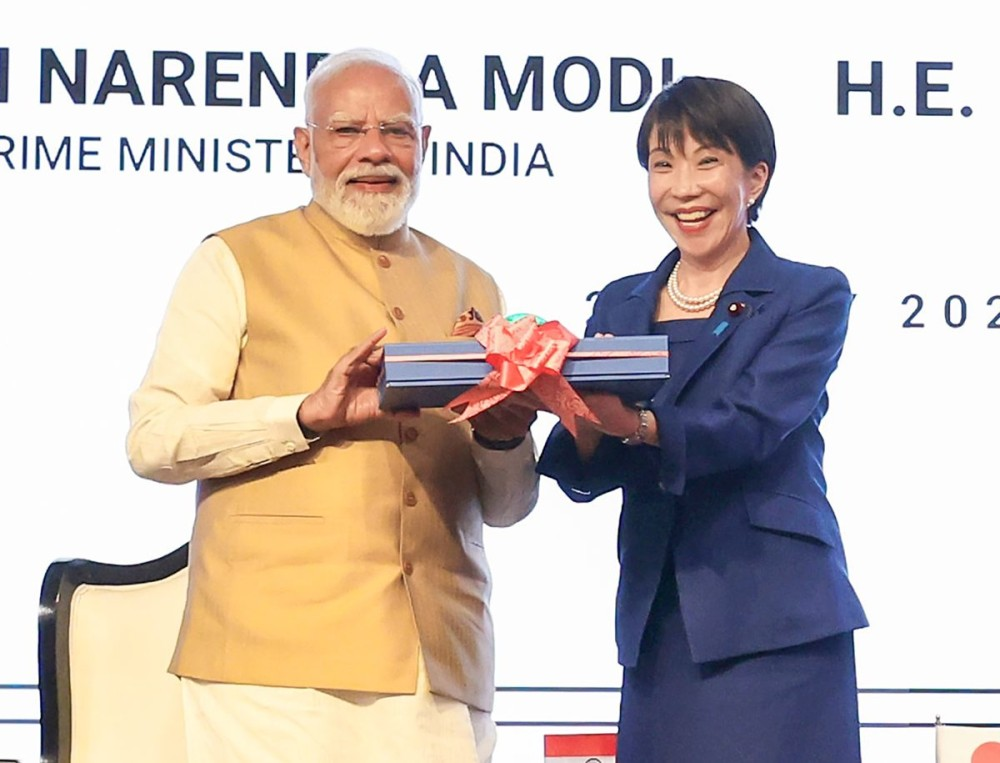
    • Prime Minister Narendra Modi greeted everyone with a blessed Thaipusam.

    Thaipusam

    • The name “Thaipusam” is a combination of “Thai” (the Tamil month) and “Poosam,” the star at its highest point during the festival.
    • It is celebrated on the full moon in the Tamil month of Thai.
    • It is a Hindu festival celebrated to honour Lord Murugan (also known as Lord Kartikeya), the Hindu god of war, victory, and wisdom, while also being a symbol of courage, determination, and spiritual growth.
    • It is widely celebrated by the Tamil community in Tamil Nadu India and across the world, especially in Sri Lanka, Singapore and Malaysia.

    India–US Signed Trade Agreement

    (IR)

    In News

    • India and the United States have announced a new trade deal, lowering tariffs and setting ambitious targets for bilateral trade.
    • In August 2025, the US had levied tariffs up to 50% (25% reciprocal + 25% additional duty) linked to India’s Russian oil imports.

    About the India–US Trade Deal

    • Tariff reduction: US reciprocal tariffs on Indian goods reduced from 25% to 18%, effective immediately.
    • Additional 25% duty withdrawn, which had earlier been imposed.
    • US claims on broader commitments: The US asserts the deal includes zero tariffs and non‑tariff barriers for US goods and that India committed to buy over $500 billion of US products across energy, tech, agriculture, coal,
    • India will progressively reduce tariffs and non-tariff barriers against US goods.

    Importance of the Deal

    • It strengthens India–US ties amid global geopolitical shifts, especially regarding China.
    • Helps counter China’s dominance in global trade and manufacturing.
    • Lower tariffs could improve competitiveness for Indian exporters (farmers, MSMEs, entrepreneurs) and attract investment.
    • This would support Make, Design and Innovate in India for the world.
    • Diversifying oil imports may reduce India’s dependence on Russia, though at higher costs.
    • It would help stabilize the rupee amid global economic uncertainty.
    • It will position India as a key partner in US-led trade and security frameworks.

    Deendayal Antyodaya Yojana–National Rural Livelihoods Mission

    Government Policy & Intervention

    Context

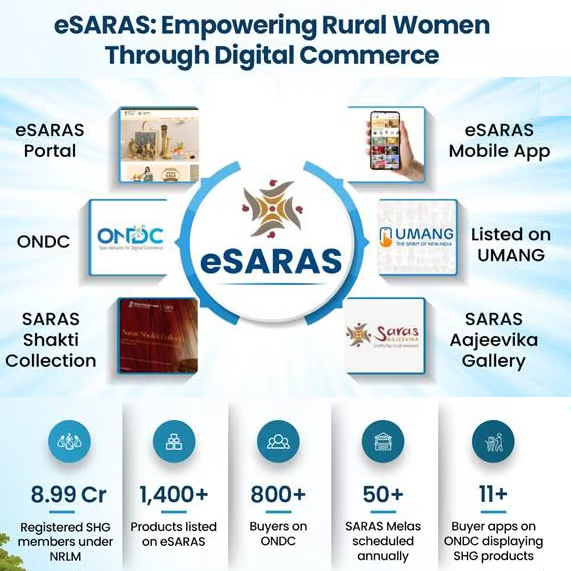
    • The Deendayal Antyodaya Yojana–National Rural Livelihoods Mission (DAY NRLM) is transitioning into a new phase, often referred to as NRLM 2.0, and prepares for the next five-year cycle (2026–27 to 2030–31).

    Deendayal Antyodaya Yojana

    • Launch: It was launched in 2010 by restructuring the earlier Swarnajayanti Gram Swarozgar Yojana (SGSY), the initiative was renamed in 2016 as Deendayal Antyodaya Yojana – National Rural Livelihood Mission (DAY-NRLM).
    • Financing – It is a centrally sponsored scheme.
    • Aimto reduce rural poverty through self-employment and skilled wage employment.
    • Women Centric Model: The mission promotes economic independence by linking women to credit, markets, and technology through SHGs and federations.
  • FM Tables 16th Finance Commission Report | Sant Guru Ravidas | Buddhist Circuits | Coconut, Chocolate, Cashew Get Special Attention in Budget 2026-27

    FM Tables 16th Finance Commission Report

    Polity

    In News

    • The 16th Finance Commission, constituted in 2023 under the chairmanship of Dr. Arvind Panagariya has had its key recommendations accepted by the Government for implementation during 2026–27 to 2030–31.

    Finance Commission

    • Constitutional Body: Established under Article 280 of the Indian Constitution.
    • Formation: Constituted by the President of India every five years (or earlier).
    • Composition: A Chairman and four other members.
    • Core Function: It serves as a balancing wheel of fiscal federalism by recommending:
    1. Vertical Devolution: The distribution of net tax proceeds between the Centre and the States.
    2. Horizontal Devolution: The allocation of these proceeds among the States themselves.
    3. Grants-in-Aid: Principles governing financial assistance to States from the Consolidated Fund of India (Article 275).
    4. Local Bodies: Measures to augment State Consolidated Funds to support Panchayats and Municipalities.
    5. Nature of Recommendations: Advisory (not legally binding), though traditionally accepted by the Government.

    Sant Guru Ravidas

    History

    Context

    • To mark the 649th birth anniversary of Sant Guru Ravidas the Adampur airport is renamed Sri Guru Ravidas Ji Airport, Adampur.

    Sant Ravidas

    • He, born in the 14th century,
    • He was a prominent figure in the Bhakti Movement, a socio-religious revolution that took place in India between the 14th and 17th centuries.
    • He was a disciple of Sant Kabir and the founder of the Ravidassia religion. Mirabai was his pupil.

    Life and Teachings

    • He was a great social reformer and messenger of peace, love, and brotherhood.
    • He worked tirelessly to remove caste and religion-based discrimination and worked for the upliftment of the downtrodden.
    • His life is a unique example of sacrifice and penance, and wrote many compositions on different social issues.
    • He gave a very broad message of ‘karma’ to society by coining in the popular Hindi saying ‘Mann Changa to Kathauti Mein Ganga’.

    Legacy

    • The Sikh scripture, Guru Granth Sahib, contains forty-one of his devotional songs and poems.
    • The Chief Architect of our Constitution, Dr. B.R. Ambedkar embodied the Constitutional principles around the values expressed by Guru Ravidasji.

    Buddhist Circuits

    History

    Context

    • The Union Budget announced a pilot scheme for upskilling 10,000 guides in 20 iconic tourist sites and setting up of a National Institute of Hospitality to train professionals in the sector.

    About

    • A National Destination Digital Knowledge Grid to digitally document all places of cultural, spiritual and historic significance would be set up.
    • The government also proposed a scheme for the development of Buddhist circuits in the region.
    • These States include Arunachal Pradesh, Sikkim, Assam, Manipur, Mizoram, and Tripura.

    Buddhist Circuits

    • In 2016, the Ministry of Tourism announced the Buddhist Circuit as the country’s first transnational tourism circuit, covering sites in Nepal and Sri Lanka alongside those in India.
    • The Buddhist Circuit seeks to help tourists and pilgrims experience first-hand the teachings of Lord Buddha and trace the footsteps of Buddha.
    • The main sites covered under the circuit span the life of Buddha from his birth to his Parinirvana and comprise Bodh Gaya, Vaishali, Rajgir, Kushinagar, Sarnath and Shravasti, along with Kapilavastu and Lumbini.

    Four Holiest Buddhist Sites (Chaturmahāsthāna):

    1. Lumbini (Nepal): Birthplace of Gautama Buddha.
    2. Bodh Gaya (Bihar): Attained Enlightenment under the Bodhi Tree.
    3. Sarnath (Uttar Pradesh): First sermon (Dhammachakra Pravartana).
    4. Kushinagar (Uttar Pradesh): Mahaparinirvana (death).

    Coconut, Chocolate, Cashew Get Special Attention in Budget 2026-27

    Economy

    Context

    • The Union Budget 2026–27 places renewed emphasis on high-value agriculture, with targeted support for coconut, cashew, cocoa, sandalwood, and select nut crops to enhance farmer incomes and export competitiveness.

    Coconut Production

    • Type of Plant: Coconut is a perennial plantation crop and a monocotyledonous palm belonging to the family Arecaceae.
    • Coconut is native to the Indo-Pacific region, with its origin commonly traced to Southeast Asia.
    • Climatic Requirements: Coconut requires a warm and humid tropical climate for optimal growth. It grows best in regions with temperatures ranging between 25°C and 30°C and requires high and evenly distributed rainfall.
    • Soil Requirements: Coconut thrives in well-drained sandy loam, alluvial, laterite, and coastal soils.
    • Distribution in India: It predominantly grows in Kerala, Tamil Nadu, Karnataka, Andhra Pradesh, Odisha, Goa, and West Bengal.

    Cocoa Production

    • Type of Plant: Cocoa is an evergreen perennial tree crop belonging to the family Malvaceae.
    • Cocoa is native to the Upper Amazon Basin of South America. It was introduced to Asia and Africa during the colonial period for commercial cultivation.
    • Climatic Requirements: Cocoa requires a warm, humid, and equatorial type of climate. It grows best in areas with temperatures between 21°C and 32°C and with well-distributed rainfall throughout the year.
    • Soil Requirements: Cocoa grows well in deep, fertile, and well-drained loamy soils rich in organic matter.
    • Cultivation Pattern in India: Major producing states include Kerala, Karnataka, Tamil Nadu, and Andhra Pradesh.

    Cashew Production

    • Type of Plant: Cashew is an evergreen tropical tree crop belonging to the family Anacardiaceae.
    • The cashew tree (Anacardium occidentale) is native to the coastal regions of northeastern Brazil in South America.
    • Portuguese explorers introduced it to India and Africa in the 16th century.
    • Climatic Requirements: Cashew requires a tropical climate with a pronounced dry season. It grows best in areas with temperatures between 20°C and 35°C and moderate to high rainfall.
    • Soil Requirements: Cashew can grow in laterite, red sandy, and coastal soils and performs well even on poor and degraded land.
    • Distribution in India: Maharashtra, Andhra Pradesh, Odisha, Kerala, Karnataka, Goa, and Tamil Nadu.
  • Lonar lake | CERT-In

    Lonar lake

    Syllabus: GS1/Geography

    Context

    • There has been a steady water rise by 20 Feet in the water levels of Lonar Lake.

    Lonar Lake

    • Location – Lonar Lake, also known as Lonar crater, is a notified National Geo-heritage Monument, saline, soda lake, located at Lonar in Buldhana district, Maharashtra.
    • Formation – It is situated inside the Deccan Plateau—a massive plain of volcanic basalt rock created by eruptions.
    • It is believed to have been created over 52,000 years ago when a meteorite hit the Earth.

    Did you know?

    Geo-heritage Monument

    ●    Geo-heritage refers to the geological features which are inherently or culturally significant offering insight to earth’s evolution or history to earth science or that can be utilized for education.

    ●    Geological Survey of India (GSI) is the parent body which is making efforts towards identification and protection of geo-heritage sites.

    Climate Change Spurs Growth in Amazon Rainforest Trees

    Syllabus: GS3/Cybersecurity

    Context

    • In 2025, the Indian Computer Emergency Response Team (CERT-In) handled over 29.44 lakh cyber incidents, reflecting large-scale national cyber response capability.

    Computer Emergency Response Team (CERT-In)

    • CERT-In is the national agency for cyber incident response in India.
    • Ministry: Ministry of Electronics and Information Technology.
    • Its mandate under section 70B of the Information Technology (IT) Act 2000
    • It includes the prevention of cyberattacks, real-time monitoring of cyber threats, and swift coordination with stakeholders to mitigate and contain cyber incidents.
  • Bactrian Camels | Congestion Index

    Bactrian Camels

    Syllabus: GS3/Environemet

    Context

    • Two majestic Bactrian camels named ‘Galwan’ and ‘Nubra’, were showcased at the Republic Day Parade on Kartavya Path.
    • ‘Galwan’ and ‘Nubra’ are named after places in the cold desert of Ladakh, the only place in India where this species is found.

    Bactrian camels (Camelus bactrianus)

    • The name “Bactrian” comes from a region (former kingdom conquered by Alexander the Great) located between Afghanistan, Iran, and Kazakhstan.
    • It is a double-humped camel, also called the Asian or Mongolian camel and is listed as Critically Endangered on the IUCN Red List.
    • It is mainly found in Northern Pakistan, Iran, Turkey, India, with the largest domestic population in China.
    • Bactrian camels are considered omnivorous; however, they are primarily herbivorous, feeding on a wide selection of vegetation, even those that other animals might refuse, such as thorny, tough, or dry plants.
    • Bactrian camels, known as the ‘Ships of the Silk Road’, were crucial for crossing the harsh trade routes of Central Asia.

    Congestion Index

    Syllabus: GS2/Governance

    Context

    • According to the latest 2025 TomTom Traffic Index, ranked India as the fifth most traffic-congested country globally and second in Asia.

    Congestion Index

    • The index evaluates cities worldwide based on average travel time, congestion levels and vehicle speeds.
    • The index is widely used to track changes in urban mobility and compare congestion trends across regions and countries.
    • Bengaluru emerged as India’s most traffic-congested city, recording an average congestion level of 74.4%
    • Bengaluru and Kolkata were both listed among the world’s five slowest cities.
    • Of the top 10 cities with the highest congestion in Asia, six were from India: Bengaluru (1), Pune (2), Mumbai (6), New Delhi (7), Kolkata (9), and Jaipur (10).
  • Shri Narayan Ramachandran Committee | Agarwood

    Shri Narayan Ramachandran Committee

    Syllabus: GS3/ Economy

    In News

    • Pension Fund Regulatory and Development Authority (PFRDA) constituted a high-level expert committee formally known as the Committee for Strategic Asset Allocation and Risk Governance (SAARG).
    • It was chaired by Shri Narayan Ramachandran,
    • Mandate – The committee is tasked with a comprehensive review to modernise the investment framework of the National Pension System (NPS).

    National Pension System (NPS)

    • It is a voluntary, market-linked retirement savings scheme regulated by PFRDA for Indian citizens aged 18-70.
    • It encourages systematic savings to provide a regular pension income post-retirement.

    Agarwood

    In News

    • The Union Minister laid the foundation stone of the ₹80 crore Agarwood Value Chain Development Scheme in Tripura.

    Agarwood

    • Agarwood is a rare, highly fragrant wood that forms inside certain trees (Aquilaria) when they get infected or wounded, and the tree produces a special dark resin as a defence.
    • This resin‑rich wood is then used to make high‑value perfume oils (oud), incense and traditional medicines, and is traded globally, especially in West Asia and East Asia.
    • It is mainly found in tropical, high‑rainfall regions of South and Southeast Asia, including Tripura and other parts of Northeast India, where the climate and soils suit Aquilaria trees.
    • Only a small share of trees naturally develop resin, and it can take decades, which is why agarwood is rare and expensive.
  • Netaji Subhas Chandra Bose | Indian Railways Deploys Humanoid Robot ‘ASC ARJUN’

    Netaji Subhas Chandra Bose

    Syllabus: GS1/History

    Context

    • The President of India, paid tribute to Netaji Subhas Chandra Bose on his birth anniversary, observed as Parakram Diwas.

    Netaji Subhas Chandra Bose

    • Early Life: He was an Indian nationalist leader who played a pivotal role in India’s struggle for independence against British rule.
    • He was born on January 23, 1897, in Cuttack, Odisha
    • He studied at the University of Calcutta and later went to England for the Indian Civil Services (ICS) exam.
    • Political career : He abandoned ICS aspirations to join the Indian National Congress (INC), advocating for complete independence rather than moderate reforms.
    • He was Elected INC President in 1938 and 1939 but resigned due to differences with Mahatma Gandhi and other leaders over non-violent strategies.
    • Contributions in Freedom struggle: Bose’s vision for India’s freedom was to leverage the support of Axis powers during World War II.
    • He escaped from house arrest in India in 1941, travelling through Afghanistan to Germany, where he sought support from Adolf Hitler.
    • In 1943, he went to Japan, where he took command of the Indian National Army (INA), which had been formed by Indian prisoners of war and expatriates.
    • The INA’s actions and post-war trials had a strong psychological impact, weakening British authority.
    • Death: He died in a plane crash in Taiwan in August 1945; circumstances remain mysterious and controversial.
    • Legacy: He is remembered as a symbol of courage and determination; numerous institutions, monuments, and awards are named after him.
    • In 2018, The Government of India, renamed three islands of the Andaman and Nicobar archipelago as a tribute to Netaji Subhas Chandra Bose. They are:
    1. Ross Island → Netaji Subhas Chandra Bose Island
    2. Neil Island → Shaheed Dweep
    3. Havelock Island → Swaraj Dweep
    4. This was done to honor Netaji, who hoisted the tricolour flag on Havelock Island in the Andaman and Nicobar archipelago and declared it as India’s first free territory.

    Indian Railways Deploys Humanoid Robot ‘ASC ARJUN’

    Syllabus: GS2/ Governance

    In Context

    • Indian Railways has deployed a humanoid robot named ‘ASC ARJUN’ at Visakhapatnam Railway Station.

    About

    • ASC ARJUN is a humanoid robot that works with the Railway Protection Force (RPF) for security, surveillance and assistance at the station.
    • It is fully designed and developed in Visakhapatnam using indigenous, home-grown technology by a dedicated technical team.

    Significance

    • Enhance safety and security of passengers at a busy station.
    • Optimise manpower by taking over routine patrolling and monitoring tasks so RPF staff can focus on critical work.
    • Use emerging technologies (AI, IoT, robotics) to improve service delivery and modernise rail operations.
  • One District One Product (ODOP) | Granth Kutir

    One District One Product (ODOP)

    Syllabus: GS3/ Economy

    Context

    • The One District One Product (ODOP) initiative has completed 8 years of transformative impact by promoting traditional industries.

    One District One Product (ODOP)

    • It is a flagship initiative of the Government of India designed to foster balanced regional development by identifying and promoting at least one unique product from each distric
    • It is inspired by Japan’s “One Village One Product” model.
    • Objective – it seeks to transform every district into an export hub and boost local economies.
    • Nationwide Scale: Spearheaded by the Department for Promotion of Industry and Internal Trade (DPIIT), the initiative has identified 1,241 products from 777 districts as of early 2026.
    • Product Diversity: Covers a wide range of sectors including agriculture (e.g., Alphonso mangoes), handicrafts (e.g., Banarasi silk), textiles, metalware, and food processing.
    • Financial Support: The PMFME Scheme provides credit-linked subsidies (up to 35% of project cost) for micro food processing units focusing on ODOP products.
    • Infrastructure: The government is establishing PM Ekta Malls (Unity Malls) in every state to provide dedicated retail space for ODOP and Geographical Indication (GI) products.

    Granth Kutir

    Syllabus: GS1/Culture

    Context

    • The President of India inaugurated Granth Kutir.

    About

    • Granth Kutir is a library at the Rashtrapati Bhawan which has the collection of around 2,300 books and about 50 manuscripts in 11 Indian classical languages: Tamil, Sanskrit, Kannada, Telugu, Malayalam, Odia, Marathi, Pali, Prakrit, Assamese, and Bengali.
    • The collection reflects India’s cultural, philosophical, literary, and intellectual heritage.
    • Subjects include epics, philosophy, linguistics, history, governance, science, devotional literature, and the Constitution of India in classical languages.
    • Several manuscripts are handwritten on traditional materials such as palm leaf, paper, bark, and cloth.
    • Granth Kutir supports the vision of the Gyan Bharatam Mission, which aims to preserve, digitise, and disseminate India’s manuscript heritage, blending tradition with modern technology.
  • India welcomes Spain joining Indo-Pacific Oceans Initiative | Long Range Anti-Ship Hypersonic Missile (LR-AShM)

    India welcomes Spain joining Indo-Pacific Oceans Initiative

    Syllabus: GS2/IR

    Context

    • India has welcomed Spain joining the Indo-Pacific Oceans Initiative (IPOI).

    Indo-Pacific Oceans Initiative (IPOI)

    • It was launched by India in November 2019 at the ASEAN-led East Asia Summit (EAS) in Bangkok.
    • It draws on existing regional cooperation architecture and mechanisms to focus on seven thematic areas, viz. :
    1. Maritime Security;
    2. Maritime Ecology;
    3. Maritime Resources;
    4. Capacity Building and Resource Sharing;
    5. Disaster Risk Reduction and Management
    6. Science, Technology and Academic Cooperation; and
    7. Trade, Connectivity and Maritime Transport.
    8. Objectives : Its objective was to promote cooperation for a free and open Indo-Pacific and the rules-based regional order, which will contribute towards strengthening safety, stability and development in the maritime domain.

    Long Range Anti-Ship Hypersonic Missile (LR-AShM)

    Syllabus: GS3/Defence

    Context

    • The DRDO will showcase the Long Range Anti-Ship Hypersonic Missile (LR-AShM) along with its launcher during the 77th Republic Day Parade at Kartavya Path.

    Long Range Anti-Ship Hypersonic Missile (LR-AShM)

    • Developed by – DRDO,
    • It is a Hypersonic Glide Missile designed to meet the coastal defence and strike requirements of the Indian Navy.
    • It is a first-of-its-kind indigenous system, equipped with indigenous avionics and high-accuracy sensor packages.
    • It achieves speeds up to Mach 10, with an average hypersonic speed of Mach 5.
    • Significance – Low-altitude flight, high speed, and manoeuvrability significantly reduce detection by enemy ground- and ship-based radars.
  • Kavach 4.0 | World Nuclear Outlook Report | Hirakud Wetland

    Kavach 4.0

    Syllabus: GS2/ Governance

    In News

    • Indian Railways commissioned 472.3 route kilometres (RKm) of Kavach Version 4.0.

    About

    • Originally known as the Train Collision Avoidance System (TCAS),
    • Developed by the RDSO,
    • Objective – it prevents train collisions by automatically applying brakes if the loco pilot fails to do so (e.g., Signal Passed at Danger – SPAD) and provides real-time speed monitoring.
    • Note – Kavach 4.0 creates a “digital shield” by integrating several high-tech components:

    World Nuclear Outlook Report

    Syllabus: GS2/IR/GS3/Science and Tech

    In News

    • According to the new World Nuclear Outlook Report , Five countries — China, France, India, Russia and the United States — could together account for nearly 980 GWe of global capacity in 2050.

    World Nuclear Outlook Report

    • It reviews national targets for nuclear capacity and assesses these against the global goal to triple nuclear capacity by 2050.

    Key Findings

    • Global nuclear capacity could reach 1,446 GWe by 2050, exceeding the tripling target of 1,200 GWe, with growth driven by reactors under construction, planned projects, and proposed or government-driven programs.
    • China, France, India, Russia, and the USA would account for most capacity, while newcomer nations aim for 157 GWe.
    • South Asia, led by India, is emerging as a key growth region due to rising electricity demand, urbanization, and industrialization.

    Hirakud Wetland

    Syllabus: GS3/ Environment

    Context

    • The Hirakud wetland in Sambalpur district of Odisha has recorded the arrival of 4.21 lakh birds during the current migratory season.

    Hirakud Wetland

    • Location: The wetland is part of the Hirakud Reservoir, one of the largest man-made reservoirs in India, built across the Mahanadi River with a total length of almost 26 kilometres.
    • The reservoir also produces around 350 megawatts of hydropower and irrigates 436,000 hectares of land.
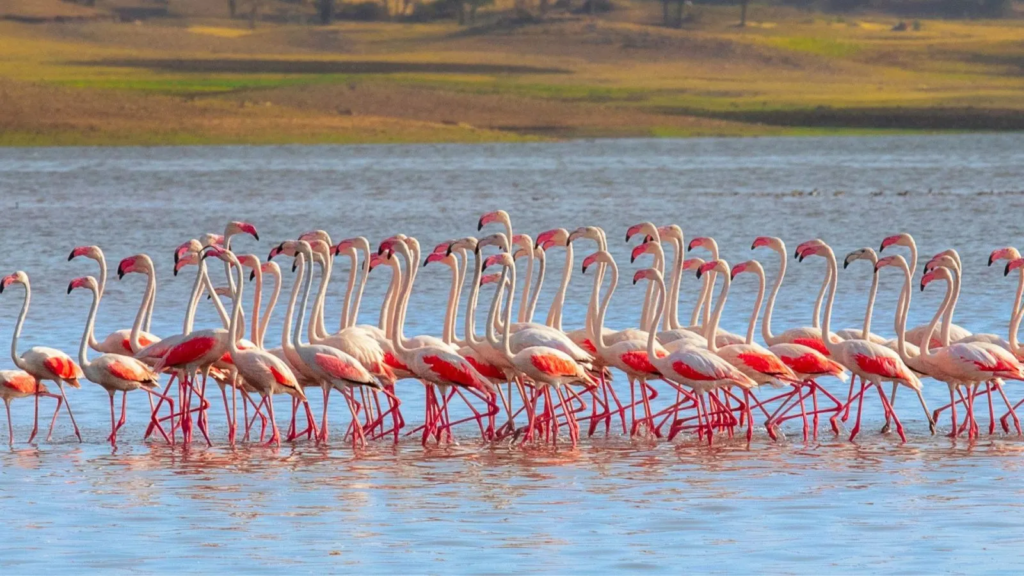
    • Biodiversity Hotspot: It is a critical stopover for birds along the Central Asian Flyway, hosting 128 species of birds.
    • Birds Species – Pintail, Shoveler, Teal, Pochard, Bar-headed Goose, and rare Eurasian species like Ruffs.
    • Ramsar Site: It was designated a Ramsar site of global ecological importance in 2021.
    • Note – As of February 2026, India has 98 Ramsar Sites, with the total rising following the addition of the Patna Bird Sanctuary (Uttar Pradesh) and Chhari-Dhand (Gujarat).
  • Sampoornata Abhiyan 2.0 | Menstrual Health Fundamental Right under Article 21: SC | Kalbelia Community

    Sampoornata Abhiyan 2.0

    Syllabus: GS2/ Governance

    Context

    • NITI Aayog launched Sampoornata Abhiyan 2.0 campaign.

    Sampoornata Abhiyan 2.0

    • It is aimed at achieving saturation of critical development indicators in Aspirational Districts and Aspirational Blocks across the country.
    • The campaign targets 112 Aspirational Districts and 513 Aspirational Blocks to achieve specific Key Performance Indicators (KPIs):

    For Aspirational Blocks (6 KPIs):

    • Nutrition: Regular supplementary nutrition for children (6 months to 6 years) under ICDS.
    • Monitoring: Monthly measurement efficiency of children at Anganwadi Centres.
    • Infrastructure: Operational Anganawadi Centres with functional toilets and drinking water.
    • Education: Adequate girls’ toilet facilities in schools.
    • Agriculture: Vaccination of bovine animals for Foot and Mouth Disease (FMD).

    For Aspirational Districts (5 KPIs):

    • Focuses on health, nutrition, and education, including increasing the number of babies weighed at birth and improving tuberculosis (TB) case

    Additional Information – Aspirational Districts Programme

    • It was launched in 2018
    • Objective – to quickly and effectively transform 112 districts across the country.
    • Focuses on five themes: Health & Nutrition, Education, Agriculture & Water Resources, Financial Inclusion & Skill Development and Infrastructure.

    Aspirational Blocks Programme

    • It was launched in 2023
    • It aims for the saturation of essential government services in 513 Blocks (329 Districts) across the country.
    • Focuses on five themes: Health & Nutrition, Education, Agriculture and Allied Services, Basic Infrastructure and Social Development.

    Menstrual Health Fundamental Right under Article 21: SC

    Syllabus: GS2/Polity and Governance

    Context

    • In Dr. Jaya Thakur v. Union of India, the Supreme Court has ruled that the right to menstrual hygiene is an integral part of the right to life under Article 21 of the Constitution.

    Key Highlights of Judicial Intervention

    • Fundamental Right: Menstrual health is now legally recognized as an essential facet of the Right to Life (Art. 21) and the Right to Education (Art. 21A).
    • Free Bio-degradable Pads: All government and private schools must provide free bio-degradable sanitary napkins to girl students (Classes 6–12).
    • Mandatory Infrastructure: Schools must have functional, gender-segregated toilets with water connectivity. Non-compliance can lead to the de-recognition of private schools.
    • Stigma Reduction: The court mandated NCERT to incorporate gender-responsive curricula to educate both boys and girls, breaking the “hushed whispers” culture.

    Article 21 of Constitution

    • Article 21 is part of the Fundamental Rights, Part III of the Constitution.
    • It is guaranteed to all persons, citizens and non-citizens
    • No person shall be deprived of his life or personal liberty except according to procedure established by law.
    • It places a restriction on the state from arbitrarily interfering with a person’s life and liberty.
    • Expanded scope through Supreme Court judgments: Over time, courts have interpreted it to also impose positive obligations on the state to ensure a dignified life.
    1. Right to live with human dignity;
    2. Right to privacy (Puttaswamy, 2017);
    3. Right to livelihood (Olga Tellis);
    4. Right to health and medical care;
    5. Right to clean environment;
    6. Right to legal aid and speedy trial;
    7. Right to education (later made explicit via Article 21A);
    8. Protection against custodial torture;
    9. Right to sleep, shelter and food.

    Menstrual Health Related Policy of Government of India

    • Menstrual Hygiene Scheme (MHS): Supported by National Health Mission (NHM). ASHAs distribute packs of 6 napkins (Freedays) at a subsidized rate of ₹6.
    • PM Bharatiya Janaushadhi Pariyojna: Over 16,000 Kendras provide ‘Suvidha’ (Oxo-biodegradable pads) at ₹1 per pad.
    • Samagra Shiksha: Funds the installation of vending machines and incinerators. States must now prioritize bio-degradable options following the 2026 SC ruling.
    • Swachh Bharat Mission (Grameen) Phase 2: Focuses on Menstrual Waste Management (MWM) using small-scale incinerators and deep burial pits to prevent environmental clogging.
    • Menstrual Hygiene Policy (2024-25): Formulated by the Ministry of Health, it streamlines access to low-cost products, prioritizes “Green” (biodegradable) initiatives, and integrates MHM into the formal school curriculum.
    • Standardization of  Products: The Department of Health Research is studying sustainable alternatives like menstrual cups and recyclable pads to evaluate their safety and feas ibility among rural women.

    Kalbelia Community

    Syllabus: GS1/Population

    In News

    • The National Human Rights Commission (NHRC) issued a notice to the Rajasthan government over protests by the Kalbelia community in Barmer, who placed a dead body on the road demanding a designated burial ground.

    Kalbeliyas

    • Kalbelia are a snake charming folk community from the region of Rajasthan, India.
    • Their traditional occupation used to be catching snakes and trading snake venom.
    • They are known for their vibrant dances and black embroidered attire.
    • In 2010, their songs and dances were added to UNESCO’s Intangible Cultural Heritage list, recognizing them as a key marker of identity as the community adapts to changing social and economic conditions.

    Do you know?

    • The Kalbelia dance, also called Sapera dance, is a folk dance central to Kalbelia culture, a nomadic tribe traditionally known as snake charmers.
    • The dance reflects their close association with snakes through movements and costumes.