
Prime Minister Held Official Talks with President of France
International
Context
- PM Modi held bilateral talks with French President Emmanuel Macron in France.
- This marked the first meeting between the two leaders since India-France ties were elevated to a “Special Global Strategic Partnership” earlier this year.
Major Highlights
- Adoption of the “Innovation Roadmap 2030”, aimed at providing long-term direction to bilateral cooperation in technology and innovation.
- The two leaders also agreed to establish a Joint India-France AI Working Group to deepen collaboration in artificial intelligence.
Additional Information – India-France Relations
-
- India–France Strategic Partnership: It was launched on 26 January 1998 and is India’s first-ever Strategic Partnership.
- Rafale Fighter Jets: India procured 36 Rafales from Dassault Aviation.
- Scorpene Submarines (Project P-75): Collaboration with France’s Naval Group, 6 submarines built in India; latest is INS Vaghsheer.
- Recently both nations formally concluded an Inter-Governmental Agreement (IGA) to procure 26 Rafale-M fighter jets for the Indian Navy.
- Joint Exercises: Shakti, Varuna, FRINJEX-23.
-
- Economic Cooperation: Within the European Union, France remains India’s fifth-largest trading partner, following the Netherlands, Belgium, Italy, and Germany.
- The process of enabling Unified Payment Interface (UPI) has been successful in France.
- Joint missions: TRISHNA (satellite mission), MDA systems, ground station support.
- International Solar Alliance (ISA): Co-founded by India and France in 2015 to promote solar energy worldwide.
Joint UNESCO Nomination for Xuanzang’s Records
Art and Culture
Context
- India and China are in advanced discussions regarding a joint UNESCO nomination for Xuanzang’s work, ‘The Great Tang Records on the Western Regions’.
Xuanzang (Hiuen Tsang)
- He was a Chinese Buddhist monk, scholar, and traveler who journeyed across India during the 7th century CE.
- He spent nearly 19 years travelling through India and studying Buddhist philosophy.
- He studied at the ancient university of Nalanda University.
- His work, The Great Tang Records on the Western Regions, provides detailed information about:
- Political conditions under Harshavardhana and other rulers.
- Social and economic life in early medieval India.
- Religious traditions and Buddhist institutions.
- Economic and geographical conditions of early medieval India.
Other Joint Nominations Under Consideration
- Panchatantra with Iran: India is exploring a joint UNESCO nomination of Panchatantra with Iran. The Panchatantra has influenced Persian literature and folklore for centuries and represents a shared literary heritage.
- Satyagraha with South Africa: The idea reflects the historical association of Mahatma Gandhi’s non-violent movement with South Africa.
Shared Civilizational Traditions:
- Ramayana traditions shared between India and Indonesia.
- Buddhist scriptures and heritage common to India and China.
Queen Pineapple
Economy
Context
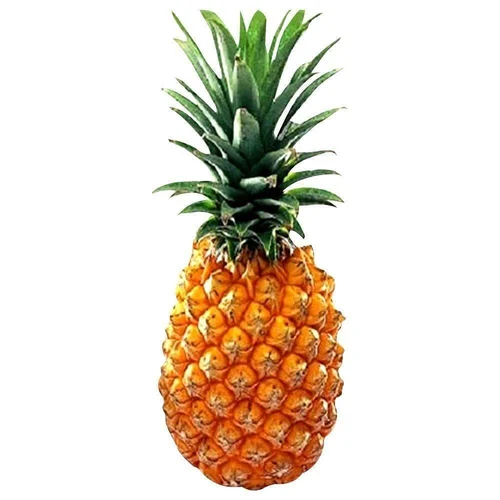
- Ahead of the pineapple festival in Delhi, Tripura eyes global status for queen pineapple.
About
- The queen pineapple was declared the state fruit of Tripura in 2018, four years after it attained the GI tag in 2014 for its golden-yellow hue and a distinct aroma.
- Cultivation: An area with 30–40% slope is generally selected for cultivation and plants require sandy soil and good drainage to prevent water logging and temperature range of 180°C to 32°C is most favorable for its cultivation.
- Tripura’s unique agro climatic condition makes it one of India’s leading pineapple-producing regions where Queen and Kew varieties are mostly cultivated by tribal growers.
- Mission Queen Pineapple: It is a three year long centrally-funded farm-to-plate programme worth Rs 236 crore launched in 2026.
- India contributes roughly 6-8% of total global pineapple production. On a regional scale, West Bengal and Assam are the top-producing states.
Do you Know?
- Cultivation of pineapple originated in South America and gradually spread to other tropical parts of the world.
- Pineapple cultivation was introduced to India by the Portuguese in 1548 AD.
- Costa Rica is the leading global producer and exporter of pineapple.
NCERT Dancing Girl Row
Art and Culture
Context
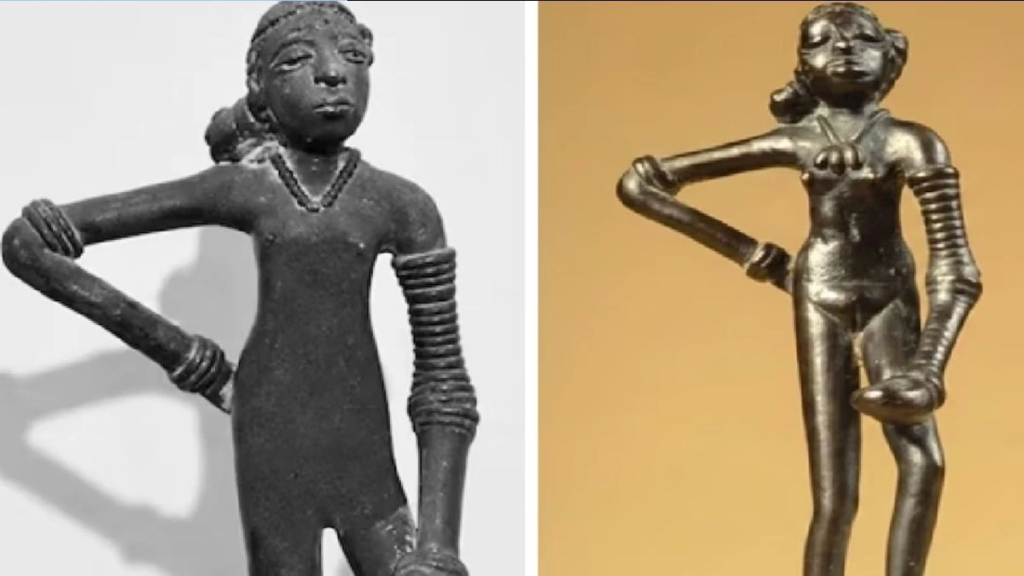
- After facing backlash, NCERT has decided to restore the original image of the Indus Valley Civilization’s iconic Dancing Girl in its Class 9 textbook, reversing its earlier decision to depict the figurine with a covered torso.
Dancing Girl
- The “Dancing Girl” is a 4,500-year-old bronze statuette unearthed in 1926 by archaeologist Ernest Mackay at Mohenjo-daro (present-day Pakistan), a major urban centre of the Indus Valley Civilization.
- The statue is around 10.5 centimetres tall and is adorned with a necklace and a large number of bangles stacked on her arms.
- Material and Technique: The bronze sculpture was created using the lost-wax technique, a metal-casting method that continues to be practiced in parts of India, including West Bengal, Jharkhand, and Chhattisgarh.
- Today, the original artefact is housed in the National Museum, New Delhi.
Additional Information – Harappan Civilization
- The Harappan civilization is believed to be one of the oldest world civilizations together with Egypt and Mesopotamia.
- It was developed along the river Indus and for that reason it is also known as the Indus Valley Civilization.
- The Harappan civilization is identified as a Bronze-age civilization because many objects have been found that are made up of copper based alloys.
Major Features of Civilization
-
- Urban Planning: Their towns were well planned and they had brick houses which were situated along the roads.
- Every house was equipped with a staircase, a kitchen and several rooms.
-
- Their courtyards had wells, bathrooms and they had proper drainage systems.
- Ornaments: The Harappans wore ornaments made of gold, silver, ivory,shell, clay, semi-precious stones and others.
- Trade and Commerce: The civilization had extensive trade networks, reaching as far as Mesopotamia, Afghanistan, and the Arabian Peninsula.
- Religion and Iconography: Harappan artifacts depict various symbols and motifs believed to be related to religious beliefs.
- These include figures such as the “Priest King” and images of animals like bulls, suggesting possible reverence for certain animals.
- Craftsmanship and Artistry: The Harappans produced intricate pottery, including the famous red pottery with black painted motifs.
- They also created jewelry, sculptures, and seals made of steatite, terracotta, and other materials.
- Agriculture: They cultivated crops such as wheat, barley, peas, and cotton.
- Social Organization: The society was likely stratified, with evidence suggesting a hierarchical structure. This is indicated by variations in housing sizes and the presence of public buildings.
- Decline and Disappearance: The reasons for the decline of the Harappan Civilization are still debated among historians and archaeologists.
- Possible factors include ecological changes, such as shifts in river courses, as well as invasions and internal conflicts.
Major Harappan Sites
|
Site |
Present Day |
|
Harappa |
Punjab, Pakistan |
|
Mohenjo-Daro |
Sindh, Pakistan |
|
Dholavira |
Kutch district of Gujarat, |
|
Kalibangan |
Rajasthan |
|
Lothal |
Gujarat |
|
Rakhigarhi |
Haryana |
|
Chanhudaro |
Sindh, Pakistan |
|
Ganweriwala |
Punjab, Pakistan |
|
Sutkagendor |
Baluchistan Province, Pakistan |
|
Alamgirpur |
Uttar Pradesh |
Dengue Vaccine Safety Concerns
Science & technology
Context
- Brazil recently suspended the administration of its dengue vaccine, Butantan-DV, after reports of severe adverse events, including two deaths, during a large-scale vaccination campaign.
Additional Information – Dengue
-
- Pathogen – Dengue is a viral infection caused by the dengue virus (DENV).
- DENV is an RNA virus of the Flaviviridae family with four serotypes (DENV-1 to 4).
- Symptoms: High fever, severe headache, pain behind the eyes, muscle and joint pains, nausea, vomiting, swollen glands, rash.
- Transmission: The virus is transmitted to humans through the bites of infected female mosquitoes, primarily the Aedes Aegypti mosquito.
- There is a possibility of maternal transmission of Dengue (from a pregnant mother to her baby), transmission via blood products, organ donation and transfusions.
- Prevention: There is no specific antiviral treatment for dengue, so prevention relies on controlling mosquito populations and raising public awareness.
- The mosquitoes that spread dengue are active during the day. The best way of protection is to protect yourself from mosquito bites.
India’s first indigenous dengue vaccine
- DengiAll is an indigenous, tetravalent, single-dose dengue vaccine candidate being developed by Panacea Biotec in collaboration with the Indian Council of Medical Research (ICMR).












Leave a Reply