
Eco Sensitive Areas
Environment
Context
- The Western Ghats may soon receive stronger legal protection in at least three states through the notification of Ecologically Sensitive Areas (ESAs).
- Once notified, these areas will face stricter curbs on mining, polluting industries, and large construction projects.
Eco Sensitive Zones
- Notified by – These are notified by the Ministry of Environment, Forest and Climate Change (MoEFCC) under the Environmental (Protection) Act, 1986.
- Definition – The land falling within 10 km of the boundaries of national parks and wildlife sanctuaries are notified as eco-fragile zones or Eco-Sensitive Zones (ESZs).
Activities in ESZs
- Prohibited Activities: Commercial mining, saw mills, industries causing pollution (air, water, soil, noise etc), establishment of major hydroelectric projects (HEP), commercial use of wood.
- Regulated Activities: Felling of trees, establishment of hotels and resorts, commercial use of natural water, erection of electrical cables, drastic change of agriculture system.
- Permitted Activities: Ongoing agricultural or horticultural practices, rainwater harvesting, organic farming.
Kheer Bhawani Mela
Culture
Context
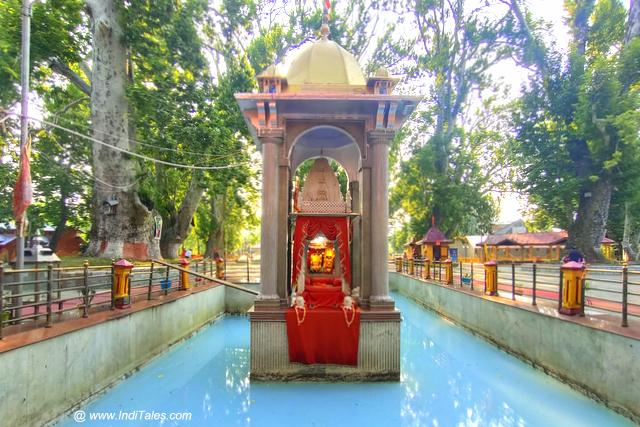
- In Kashmir Valley, the annual Mela Kheer Bhawani is being celebrated with religious fervour and gaiety on the occasion of Jyeshtha Ashtami.
About
-
- This is one of the most important festivals for the Kashmiri Pandit community during which devotees offer Kheer (rice pudding), milk, flowers, and aromatic leaves to Mata Ragnya Devi.
- The mela symbolizes faith, resilience, cultural reconnection, and communal harmony.
About Kheer Bhawani Temple
-
- It is dedicated to Goddess Ragnya Devi, who is considered an incarnation of Goddess Durga.
- The original temple was built by Maharaja Pratap Singh around 1912 in Ganderbal, Jammu and Kashmir. It was later embellished and renovated by Maharaja Hari Singh.
- A distinctive feature of the temple is a hexagonal spring located at its center, revered for its sacred water.
- Both the temple and the festival derive their name from the sweet dish ‘kheer’, which is distributed as prasad (a religious offering) to devotees.
Khurasani Imli
Economy
Context
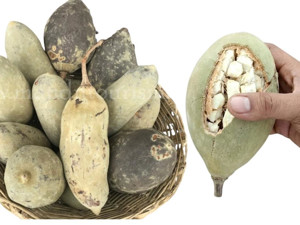
- The fruit of Mandu’s Baobab tree, known locally as Khurasani Imli, has secured a Geographical Indication (GI) tag.
About
-
- Khurasani Imli is the fruit of the Baobab tree (Adansonia digitata), a species native to Africa and Madagascar.
- It is popularly known as the “Tree of Life” because of its multiple uses and exceptional resilience.
- In India, baobabs occur in the semi-arid regions of central India and parts of the Western Ghats.
- Mandu in Madhya Pradesh is one of the few places in India where Baobab trees are found in large numbers.
- Historical accounts suggest that the seeds were brought to Mandu by Afghan rulers or Arab traders around the 14th–15th century.
- The tree is known for its distinctive bottle-shaped trunk and its ability to store large quantities of water.
- The fruit is rich in Vitamin C, antioxidants, and has traditional medicinal uses.
12th International Day of Yoga
Culture

News –
- The 12th International Day of Yoga (IDY) was celebrated globally on June 21, 2026, under the official theme “Yoga for Healthy Ageing”.
About –
- Main Venue: The national celebration was led by Prime Minister Narendra Modi at the historic Red Road in Kolkata, West Bengal.
- Nodal Ministry: The Ministry of Ayush serves as the nodal agency coordinating the celebrations and policy implementation in India.
Key 2026 Initiatives:
- Yoga Sangam Portal: A digital platform that allowed over 6 lakh organizations to synchronize and perform yoga simultaneously across the country.
- Yoga 365 Campaign: Aimed at shifting public perspective from a symbolic one-day annual celebration to daily lifestyle integration.
- Lonar Record: During the 75-day countdown event (Yoga Mahotsav-2026) at Lonar Lake, Maharashtra, a record was set in the Asia Book of Records for the largest collective performance of Trikonasana (Triangle Pose).
Background –
- Prime Minister Narendra Modi proposed the idea at the UN General Assembly (UNGA) in September 2014. UNGA Resolution 69/131 was adopted in December 2014 with a record 175 co-sponsoring nations.
- Why June 21?: The date marks the Summer Solstice, the longest day of the year in the Northern Hemisphere. In Indian mythology, this celestial transition is historically viewed as the beginning of Yogic science (the transition of Adi Yogi to Adi Guru).
- UNESCO Recognition: In December 2016, Yoga was inscribed on UNESCO’s Representative List of the Intangible Cultural Heritage of Humanity.
- Philosophical Roots: Yoga is one of the six orthodox (Astika) schools of Indian philosophy (Shad-Darshana). It was systematically compiled by Maharishi Patanjali in the Yoga Sutras, advocating the eight-fold path (Ashtanga Yoga).




















Leave a Reply