
Southwest Monsoon Ends with 12% Deficit
Geography
Context
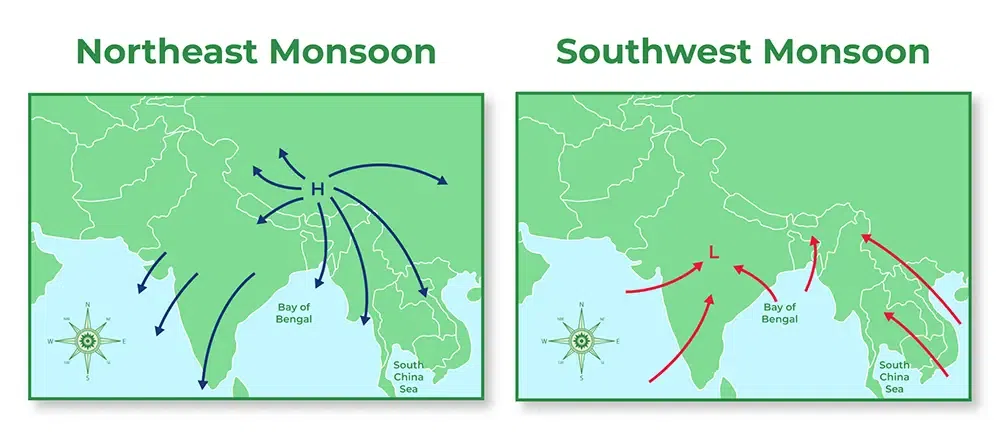
- As per the India Meteorological Department (IMD) India’s 2026 southwest monsoon ended with 759.4 mm of rain, 12.6% below the 868.6 mm normal.
Southwest Monsoon
- Onset and Retreat: The monsoon season in India generally starts in early June and lasts until September.
- The onset of the monsoon is marked by the arrival of the southwest monsoon winds, which bring moisture-laden air from the Indian Ocean.
- The withdrawal or retreat of the monsoon typically begins in October.
- The northeast monsoon, occurring from October to December, brings rainfall to parts of southern India.
- Monsoon Dynamics: Factors such as the El Niño and La Niña phenomena can influence the strength and distribution of the monsoon.
- Agricultural Impact: The success of the monsoon directly influences crop yields and, consequently, the overall economy of the country.
Connect with the basics- Difference between El Niño and La Niña
|
Feature |
El Niño (Warm Phase) |
La Niña (Cold Phase) |
|
Meaning |
Spanish for “Little Boy” |
Spanish for “Little Girl” |
|
Ocean Temp. |
Abnormal warming of eastern Pacific |
Abnormal cooling of eastern Pacific |
|
Trade Winds |
Weaken or reverse direction |
Become unusually strong |
|
Indian Monsoon |
Weakens monsoon; often leads to droughts |
Strengthens monsoon; brings heavy rainfall |
|
Winter in India |
Generally warmer/milder winters |
Severely cold winters in North India |
|
Frequency |
Occurs every 2–7 years; lasts 9–12 months |
Occurs every 2–7 years; can last 1–3 years |
Sengol
History
News
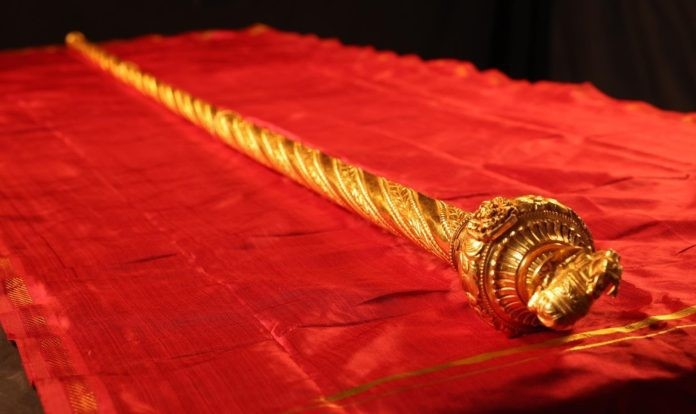
- The newly released NCERT Class 9 Social Science textbook, Understanding Society and Beyond – Part 2, shows the Sengol as a symbol of righteous governance.
Sengol (or Chenkol)
- Sengol/Chenkol: Traditional Tamil royal sceptre, symbolising righteousness (dharma), justice, legitimate authority and accountable governance.
- Origin: Tamil Nadu; associated with the ceremonial traditions of Tamil rulers.
- Historical associations: Linked with the Cholas, Madurai Nayakas (including the Meenakshi tradition) and the Sethupatis of Ramnad, who received ritually sanctified sceptres from Rameswaram temple priests.
- Symbolism: Represents the ruler’s duty, service, ethical conduct and responsibility towards the people.
- 1947 association: According to the NCERT/Union Ministry of Culture account, Shaivite Adheenam saints presented a Sengol to Jawaharlal Nehru around Independence as a symbol of the transfer of authority from British rule to independent India.
- Historical debate: Historians, including Rajmohan Gandhi, have questioned whether the Sengol was formally recognised as the official symbol of the transfer of power, noting the absence of such a record in Nehru’s and C. Rajagopalachari’s papers/writings.
- Significance: Illustrates the idea of ethical and dharmic kingship in Tamil political-cultural traditions.
Rebate of State and Central Taxes and Levies (RoSCTL) Scheme
Economy
News
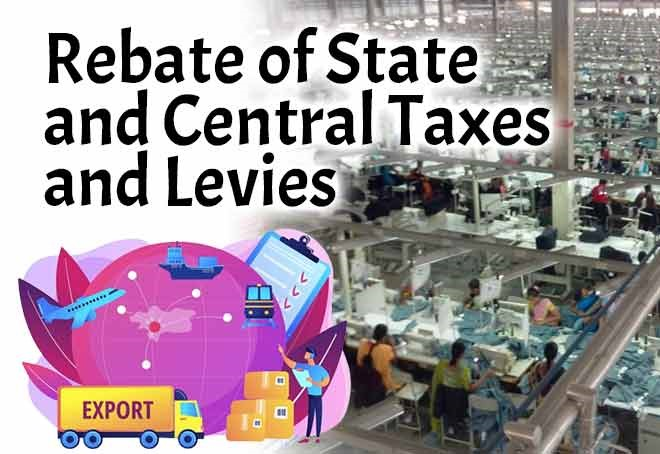
- The Ministry of Textiles has extended the RoSCTL Scheme for exports of apparel/garments and made-ups for a further term of three months, from 1st October to 31st December 2026.
Rebate of State and Central Taxes and Levies (RoSCTL) Scheme
- Launched: 2019, Ministry of Textiles.
- Objective: Rebates embedded/unrefunded State and Central taxes & levies on exported textile products that are not covered under other schemes.
- Principle: Zero-rating of exports → ensures taxes embedded in exported products are remitted/refunded.
- Focus: Supports apparel and made-up exports, particularly MSME exporters.
Importance:
- Enhances global competitiveness of India’s labour-intensive textile sector.
- Supports MSME participation in global markets.
- Promotes a dispersed manufacturing ecosystem across regions.
- Provides policy continuity and predictability to exporters.
ASEAN-India Maritime Exercise (AIME-2026)
Defence

News
- The Second Edition of the ASEAN-India Maritime Exercise (AIME-2026) commenced at Subic Bay, Philippines.
ASEAN–India Maritime Exercise
- AIME: ASEAN–India Maritime Exercise; brings together Indian Navy and ASEAN maritime forces.
- Theme: “Anchored in Trust, United at Sea.”
- Objective: Enhance mutual understanding, cooperation, operational coordination and interoperability.
- India’s Participation – INS Sahyadri and INS Kulish participated in AIME-2026.
Significance:
- Strengthens India–ASEAN maritime cooperation.
- Supports India’s Act East Policy.
- Advances MAHASAGAR — Mutual and Holistic Advancement for Security and Growth Across Regions.
- Promotes a free, open and cooperative maritime environment in the Indo-Pacific.
Increase in the Minimum Support Prices (MSP) for all mandated Rabi crops
Economy
News
- The Cabinet Committee on Economic Affairs (CCEA) has approved the increase in the Minimum Support Prices (MSP) for all mandated Rabi Crops for Marketing Season 2027-28.
Minimum Support Prices (MSPs)
- Definition – It is a form of market intervention by the Government of India to insure agricultural producers against any sharp fall in farm prices.
- Announcement and Recommendation – The Cabinet Committee of Economic
Affairs announces the MSP at the start of each sowing season, taking into account the recommendations of the Commission for Agricultural Costs and Prices (CACP)
- Significance – MSP protects the producer- farmers against distress sale during bumper production years.
Crops Covered
- The Centre announces the MSP (which is not legally guaranteed) for 22 mandated crops and Fair & Remunerative Price for sugarcane.
These include
- 14 kharif crops – paddy, jowar, bajra, maize, ragi, tur/arhar, moong, urad, groundnut, soyabean, sunflower, sesamum, niger seed, cotton,
- 6 rabi crops – wheat, barley, gram, masur/lentil, rapeseed and mustard, and safflower
- 2 commercial crops – Jute and Copra
Fair and Remunerative Price (FRP) of sugarcane
- Recommended by – Commission for Agricultural Costs and Prices (CACP)
- Objective – to assure margins on account of profit and risk to farmers, irrespective of the fact whether sugar mills generate profit or not.
SC/ST (Prevention of Atrocities) Act, 1989
Polity
Context
- The Calcutta High Court has observed that casteist abuses on social media can attract the provisions of the SC/ST (Prevention of Atrocities) Act, 1989, saying the “public view” under the Act cannot be confined to physical venues only.
SC/ST (Prevention of Atrocities) Act, 1989
- Enacted: 1989; came into force in 1990.
- Aim: Prevent atrocities against SCs/STs and provide speedy justice, relief and rehabilitation.
- Key features:
- Defines and penalises specific atrocities.
- Special/Exclusive Special Courts for speedy trials.
- Protection and rights for victims and witnesses.
- Relief and rehabilitation for victims.
- 2015 Amendment: Expanded offences and strengthened victim/witness safeguards.
- 2018 Amendment: No preliminary enquiry for FIR registration and no prior approval for arrest under the Act.
- Significance: Legal safeguard against caste-based violence and discrimination.
‘Beamline for Schools’ Competition
Science and Technology
Context
- A group of Indian school students is among the five winning teams of the 13th edition of the ‘Beamline for Schools’ competition.
Beamline for Schools Competition
- Organised by: CERN for high-school students worldwide.
- Aim: Allows students to conduct experiments using a particle beamline.
- Beamline: Facility providing high-energy beams of subatomic particles for experiments.
- Example experiment: Study pion charge exchange—conversion of charged pions into neutral pions when interacting with light atoms like lithium and beryllium.
- Pions: Subatomic particles with positive, negative or zero charge.
CERN
- Full form: European Organization for Nuclear Research.
- Location: Near Geneva, Switzerland, Franco-Swiss border.
- Established: 1954 for peaceful cooperation in fundamental research.
- Governance: Managed by Member States through the CERN Council.
- LHC: World’s largest and most powerful particle accelerator.
- Higgs boson: Major role in its 2012 discovery, supporting the Higgs mechanism of particle mass.
Bond Yield
Economy
Context
- The yield on the 30-year US Treasury bond hit the highest level in around 25 years.
About
- Meaning: Return an investor expects from holding a bond.
- Inverse relationship: Bond Price ↑ → Yield ↓; Bond Price ↓ → Yield ↑.
- Rise in yield: Usually indicates investors demand higher returns, often due to inflation concerns, higher interest-rate expectations or increased government borrowing.
Impact of higher yields:
- Increases government borrowing costs.
- Can attract capital towards bonds, affecting capital flows and exchange rates.
- Higher benchmark yields can raise borrowing costs globally.
- May put pressure on equity markets as bonds become relatively more attractive.














Leave a Reply