
Manasbal Lake
Environment
Context
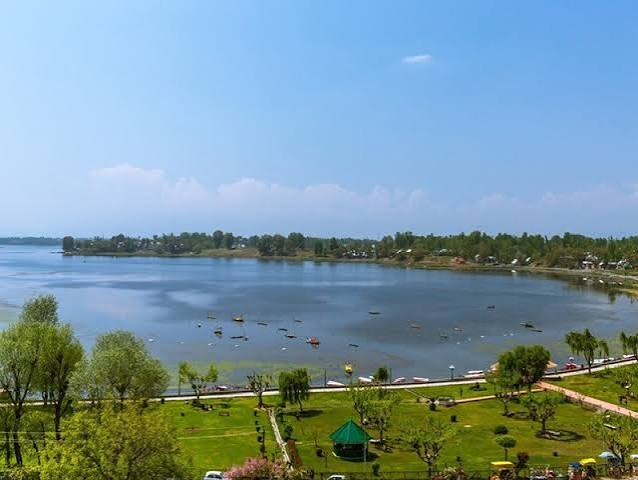
- Manasbal Lake is on the path of ecological recovery with the return of migratory birds.
About –
- Located in – Jammu and Kashmir’s Ganderbal district
- It is India’s deepest natural freshwater lake, reaching depths of 13 meters (43 feet).
- Known as – Supreme Gem of all Kashmir Lakes.
- Uniqueness – It is famous for its crystal-clear waters, extensive summer lotus blooms, and bird-watching opportunities.
Features-
- Location & Elevation: Situated in the Jhelum Valley at an altitude between 1,585 and 1,600 meters.
- Hydrology: It is a warm monomictic lake (circulates completely only once a year).
- Topography: The lake is flanked by the Baladar Mountains (east), the Karewa plateau (north), and the Ahtung Hills (south).
- Biodiversity: It is a significant natural stamping ground for migratory aquatic birds in Kashmir, supporting dozens of species including Mallards, White-headed Ducks, and Golden Eagles.
- Economic Value: It supports local livelihoods via fisheries and the harvesting of lotus rootstocks, locally known as Nadru.
World Artificial Intelligence Cooperation Organisation (WAICO)
Polity

In News
- China formally launched the World Artificial Intelligence Cooperation Organisation (WAICO) in Shanghai, at the 2026 World Artificial Intelligence Conference.
WAICO
-
- It is an intergovernmental body for AI cooperation, capacity building, and shared governance standards among developing nations,
- Headquarters – Shanghai.
-
- Uniqueness – It’s the first standing institution of its kind aimed squarely at the Global South.
- Members – 29 countries.
Significance –
- China will provide 5,000 AI training opportunities and establish joint AI cooperation centres with ASEAN, African Union, BRICS, SCO, League of Arab States.
- It will promote open-source AI models, technology sharing, and collaborative AI development.
- The platform will strengthen China’s influence in global AI governance with the Global South.
Investment Friendliness Index (IFI)
Polity
Context
- NITI Aayog has released the report titled “Investment Friendliness Index (IFI)”.
About
- Objective – It assesses how effectively States and Union Territories create, enable, and sustain an environment conducive to investments.
- Parameters – Infrastructure, Business climate, Resources, Government policy, Regulatory Ease, Institutional Environment, Financial Health; and Environmental Resilience.
- State Categorisation: States and Union Territories have been classified into four performance categories:
- Top Performers (scores above 50).
- Frontrunners (45–50).
- Emerging Performers (≥40 – <45).
- Aspiring States (below 40).
- Among the Large States, Gujarat secured the first rank, followed by Maharashtra and Tamil Nadu, which are also the top three performers in the overall Index.
- In the Hilly and North-Eastern States category, Uttarakhand emerged as the highest-ranked State, followed by Assam and Himachal Pradesh.
- Among the City States and Union Territories, Goa secured the top position, followed by Delhi and Chandigarh.
National Commission for Minorities
Polity
Context
- The Union government appointed Harjit Singh Grewal as the Chairperson of the National Commission for Minorities (NCM).
National Commission for Minorities (NCM)
-
- The Union Government set up the National Commission for Minorities (NCM) under the National Commission for Minorities Act, 1992.
- The first Statutory National Commission was set up in 1993.
- Initially five religious communities, viz., Muslims, Christians, Sikhs, Buddhists and Zoroastrians (Parsis) were notified as minority communities by the Union Government.
- In 2014, Jains were also notified as another minority community.
- Composition – The Commission consists of: A Chairperson, a Vice- Chairperson, and Five Members.
- Objective: The organisation is set-up to safeguard and protect the interests of minorities as provided in the Constitution of India and laws enacted by the Parliament and the State Legislatures.
ICMR i-DRONE Initiative
Science & Technology
News
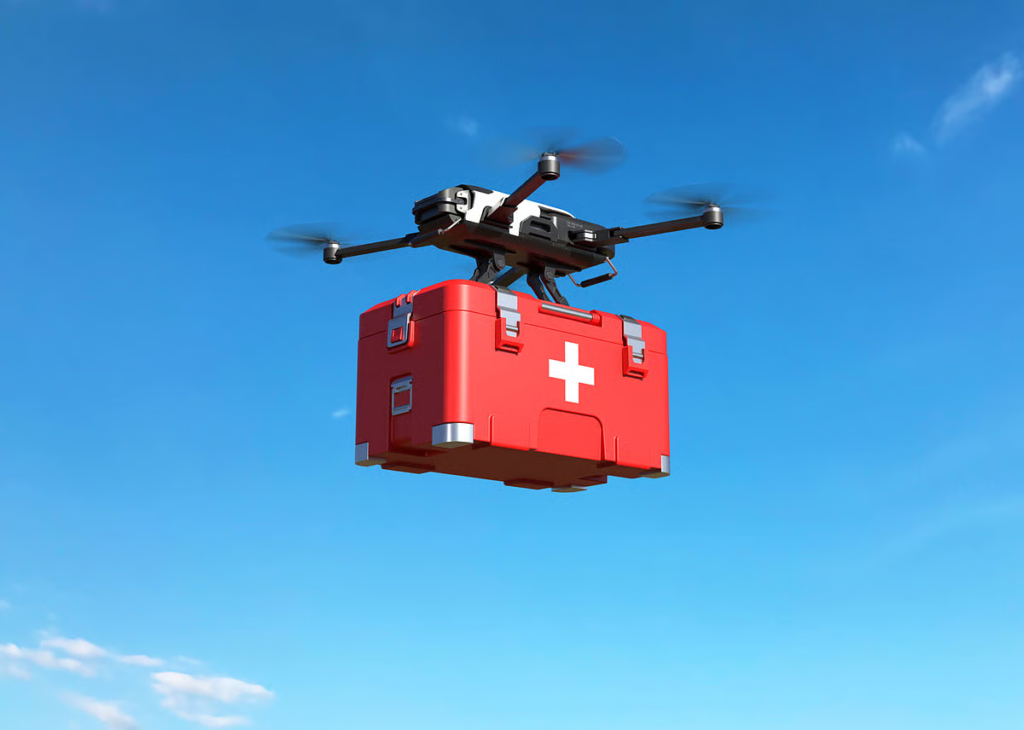
- Recently, the Indian Council of Medical Research (ICMR) under its i-DRONE initiative has successfully demonstrated the use of drone-assisted transport of TB sputum samples to improve access to tuberculosis diagnosis in remote areas.
i-DRONE initiative
- Full form – ICMR’s Drone Response and Outreach for North East (i-DRONE)
-
- It was launched in 2021.
- Objective – It aimed to evaluate the use of drones to deliver vaccines and medical supplies to remote areas of Manipur and Nagaland.
- The i-DRONE project developed a hub and spoke drone network to connect 60 sub-centres, 11 primary health centres and four TB units in Telangana to transport sputum samples for TB diagnosis.
- Outcomes: The median time to diagnosis was reduced from 15 days to 5 days.
- Average out of pocket expenditure (OOPE) dropped from ₹9,451 to about ₹91 with a large number of patients having zero travel costs.
ASW Shallow Water Craft Malvan
Science & Technology
Context
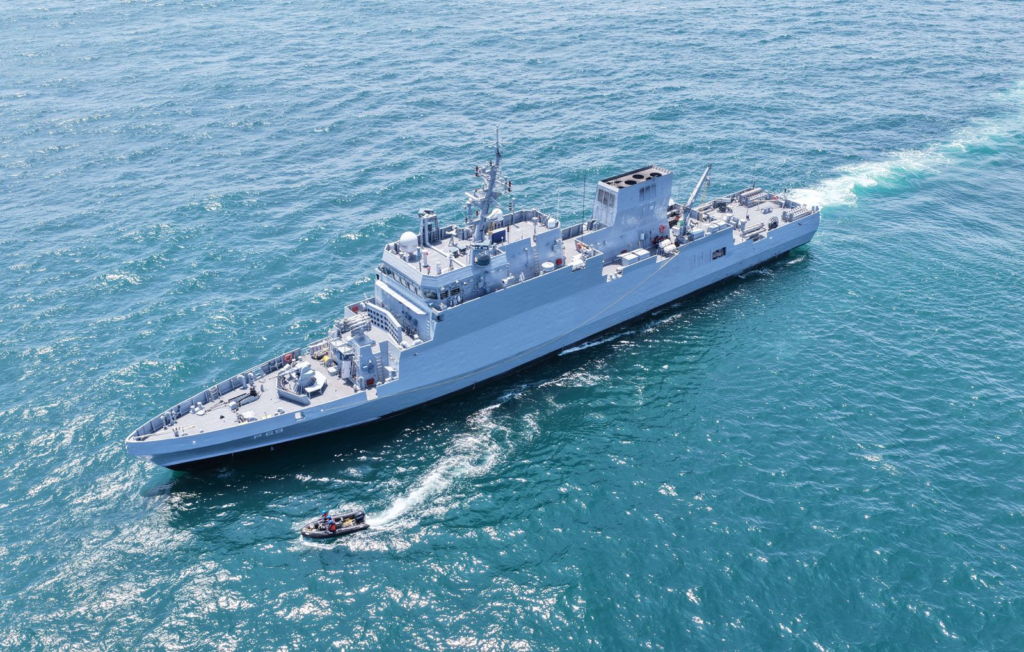
- The Indian Navy is set to commission Malvan, the second of the Mahe-class Anti-Submarine Warfare Shallow Water Craft (ASW-SWC).
About
- Built by Cochin Shipyard Limited in Kochi.
- Malvan has more than 80 per cent indigenous content.
- It reflects India’s growing self-reliance in warship design, construction and systems integration under the Aatmanirbhar Bharat initiative.
- Function – to operate effectively in coastal and shallow waters, enhancing the Navy’s anti-submarine warfare capabilities.
- The Mahe-class ASW-SWC vessels are being inducted to replace the ageing Abhay-class corvettes.







Leave a Reply