
Three Common Medicines Classified as Carcinogenic by IARC
Health
Context
- The International Agency for Research on Cancer (IARC) has classified three commonly prescribed medicines—hydrochlorothiazide, voriconazole, and tacrolimus—as Group 1 (Carcinogenic to Humans).
About
- Hydrochlorothiazide is commonly used to treat hypertension.
- Voriconazole is an antifungal medicine used to manage serious invasive fungal infections.
- Tacrolimus is an immunosuppressant that prevents rejection of transplanted organs.
International Agency for Research on Cancer (IARC)
-
- It is the specialized, intergovernmental cancer research agency of the World Health Organization (WHO).
- Established: 1965
- Headquarters: Lyon, France
- Functions – It evaluates environmental, occupational, and lifestyle factors to identify preventable causes of human cancer.
Atal Mission for Rejuvenation and Urban Transformation (AMRUT)
Government Schemes
News
- The Parliamentary Standing Committee has asked the government to accelerate the sewerage and septage management projects under AMRUT 2.0, stating that only 104 out of 594 projects (17.5%) have been completed and 67% are in progress.
Atal Mission for Rejuvenation and Urban Transformation (AMRUT)
-
- It was launched in June 2015
- Financing – It is a centrally sponsored scheme.
- Objective – It is aimed at providing basic services such as water supply, sewerage, urban transport, and parks.
- Significance – It focused on building infrastructure that delivers better services to people, especially the poor.
AMRUT 2.0
- It was launched on 1 October 2021.
- It covers all Urban Local Bodies (ULBs) and aims to make cities water secure and self-reliant.
Better Pigeonpea Varieties
Economy
News
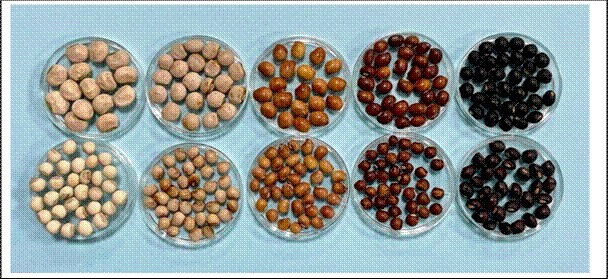
- Indian Council of Agricultural Research (ICAR) has developed India’s first fully annotated telomere-to-telomere (T2T) reference genome of pigeonpea (Cajanus cajan L. Millsp.) variety ‘Asha’.
- Significance – It will enable the development of high-yielding, climate-resilient, and nutritionally enriched pigeonpea varieties, thereby strengthening India’s food and nutritional security.
Pigeonpea
- It is a major pulse crop cultivated extensively across the tropics and subtropics
- It is predominantly grown under rainfed conditions
- It is highly sensitive to erratic rainfall, poor seedling establishment, and moisture stress during germination.
- Global producers: Myanmar, Malawi, Kenya, Uganda, Haiti, Democratic Republic of Congo, and Nepal, etc.
- Major producing states of India: Uttar Pradesh, Madhya Pradesh, West Bengal, Bihar, Karnataka, and Jharkhand.
- Importance: It is popularly known as ‘Arhar’ or ‘Tur’ and is one of India’s most important pulse crops.
- It is renowned for its rich protein content and has long been a major dietary staple across the Indian subcontinent, providing vital nutrition to millions.
Mission for ‘Aatmanirbharta in Pulses
- Launched in – 2025-26 to 2030-31
- Objective – to achieve self-sufficiency in pulse production
- Significance – It aims to reduce import dependence and enhance farmers’ income through improved seeds, area expansion, technology adoption, assured procurement, and strengthened post-harvest infrastructure.
African Swine Fever
Health
Context
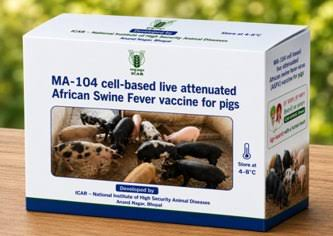
- The Indian Council of Agricultural Research (ICAR) has developed India’s first indigenous MA-104 Cell Line-Based Live Attenuated African Swine Fever (ASF) Vaccine for pigs.
African Swine Fever (ASF)
- It is a highly contagious transboundary animal disease caused by the African Swine Fever Virus (ASFV), affecting domestic pigs and wild boar.
- It does not infect humans.
- First detected in Kenya in 1909, the disease is now found across Africa, Europe and Asia.
- Since its first detection in India in 2020.
- It spreads through direct contact with infected pigs, contaminated pork products, wild boar, and soft ticks.
- The disease is characterised by high fever, haemorrhages, and mortality rates.




















Leave a Reply