
National Circular Bioenergy Scheme (GOBARdhan Scheme)
Government Scheme
Context
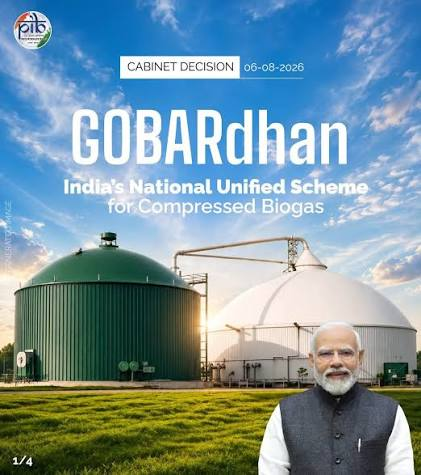
- Recently, the Union Cabinet has approved the National Circular Bioenergy Scheme (GOBARdhan – Galvanising Organic Bio-Agro Resources Dhan) with a total outlay of ₹23,731 crore.
The GOBARdhan (National Circular Bioenergy Scheme)
- It is a 10-year initiative (FY 2026–27 to 2035–36)
- Implementation – Ministry of Petroleum and Natural Gas
Key Objectives & Components
- Target: Boost Compressed Biogas (CBG) production tenfold to 5 MMSCMD.
- Unified Framework: Consolidates previous initiatives like SATAT, Market Development Assistance (MDA), and Biomass Aggregation Machinery (BAM).
Additional Information – Biofuels
-
- Definition – Biofuels are alternative fuels made from plant and plant-derived resources.
- Example: Bioethanol, Biodiesel, Green diesel, Biogas etc.
National Policy on Biofuels, 2018
- The National Policy on Biofuels 2018 (amended in 2022) provides a framework for increasing the use of biofuels in India to enhance energy security.
Government Efforts for Biofuel Expansion
- Pradhan Mantri JI-VAN Yojana (Jaiv Indhan – Vatavaran Anukool fasal awashesh Nivaran Yojana): It promotes 2G ethanol production from agricultural waste and residues.
- SATAT Scheme (Sustainable Alternative Towards Affordable Transportation): It promotes Compressed Bio-Gas (CBG) production as a fuel alternative.
Good Samaritan Scheme
Government Schemes
Context
- Only 813 people have been awarded under the Good Samaritan scheme over the past five years, from 2021-22 to 2025-26.
About
-
- It was launched in 2021
- Implementation – Ministry of Road Transport and Highways (MoRTH).
- Objective – to reduce road accident fatalities by incentivising bystanders to rush victims to the hospital within the “Golden Hour” (the first 60 minutes).
Key Features
-
- Reward: A cash prize of ₹25,000 per incident and a Certificate of Appreciation.
- Duration – 2026-27 to 2030-31 cycle
- Financing – Central sponsored scheme.
- Integration: Operates alongside the PM RAHAT Scheme, which offers cashless medical treatment up to ₹1.5 lakh for accident victims.
PM RAHAT (Road Accident Victim Hospitalization and Assured Treatment)
-
- It is a newly launched initiative by the Ministry of Road Transport and Highways.
- Objective – to provide immediate, cashless medical treatment to road accident victims across India.
- Significance – it aims to reduce fatalities during the “Golden Hour” (the critical first hour after an accident).
Key features of the scheme
- It includes cashless treatment up to ₹1.5 lakh for up to 7 days.
- It offers stabilization care for a maximum of 24 hours in cases that are not life-threatening and 48 hours in life-threatening situations.
- The scheme covers all road accident victims on all types of roads.
- Hospitals cannot ask for advance payments for emergency stabilization.
- Implementation is linked with the 112 helpline for emergency response.
- Treatment is available at hospitals empaneled under Ayushman Bharat (PM-JAY).
- A digital system connects the eDAR and TMS 2.0 for reporting and claim processing. Funding comes from the Motor Vehicle Accident Fund (MVAF).
- Grievances are handled by a Grievance Redressal Officer at the district level.
Farakka Treaty
International
Context
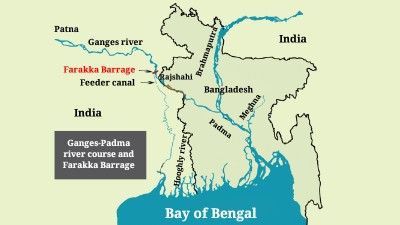
- With the 1996 Farakka Treaty set to expire on 12 December 2026, demands have been raised to review its provisions in light of Bihar’s future water requirements.
Farakka Treaty
- It is also known as the Ganga Water Treaty.
- It was signed on 12 December 1996 between Prime Minister H.D. Deve Gowda of India and Prime Minister Sheikh Hasina of Bangladesh.
- It governs the sharing of Ganga waters at the Farakka Barrage.
- The Farakka Barrage, built on the Bhagirathi River in West Bengal.
- It was constructed to improve the navigability of the Kolkata Port by diverting water into the Hooghly River.
Padma River
- The Padma River is one of the largest and most important rivers in Bangladesh.
- It is the main distributary of the Ganges River after the Ganges enters Bangladesh from India.
- The Padma flows southeast, joins the Jamuna River (the lower Brahmaputra), and later merges with the Meghna River before emptying into the Bay of Bengal.
- It is a major part of the world’s largest delta system, the Ganges–Brahmaputra–Meghna Delta.
Additional Information – Ganga River System
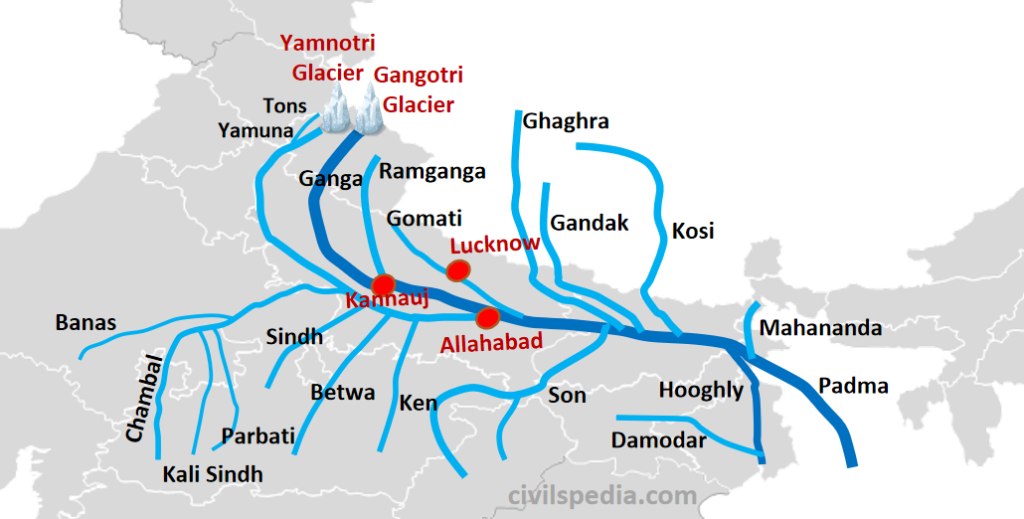
The Ganga River System is India’s largest river basin.
- Origin – The river starts as the Bhagirathi from the Gangotri Glacier.
- Name: It becomes the Ganga when it joins the Alaknanda at Devprayag.
- RiverLength: It is 2,525 km long.
- States: It flows through five states: Uttarakhand, Uttar Pradesh, Bihar, Jharkhand, and West Bengal.
- The Delta: It splits in West Bengal. One part goes to Bangladesh (called Padma). It helps form the Sundarbans Delta, the biggest delta in the world.
Important Tributaries
- Left-Bank (North): Ramganga, Gomti, Ghaghara, Gandak, Kosi.
- Right-Bank (South): Yamuna (the longest one) and Son.
Key Exam Facts
- National River: Named India’s National River in 2008.
- Ganga Dolphin: This is India’s National Aquatic Animal. It is endangered.
- Namami Gange: The main government project to clean and protect the river.
Agni-4
Defence
Context
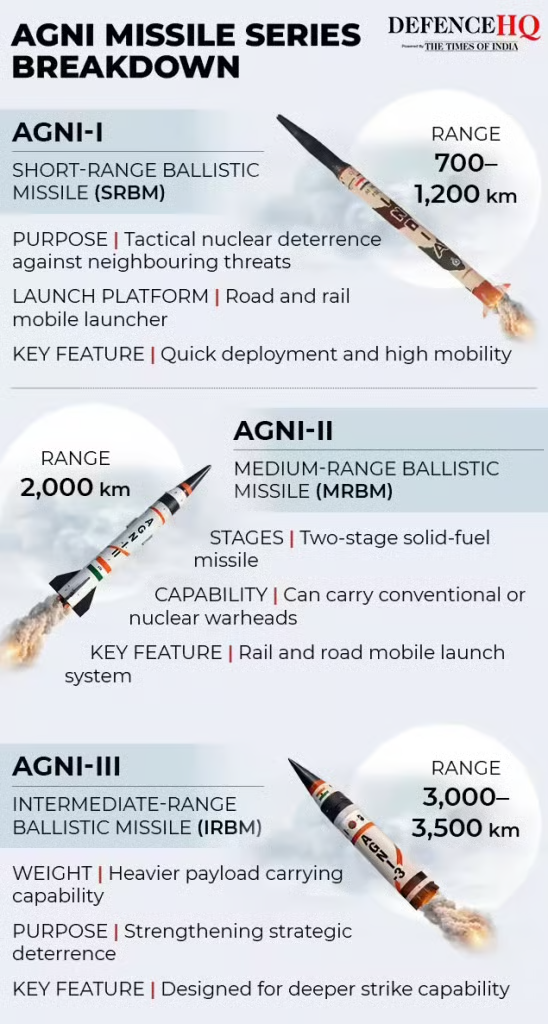
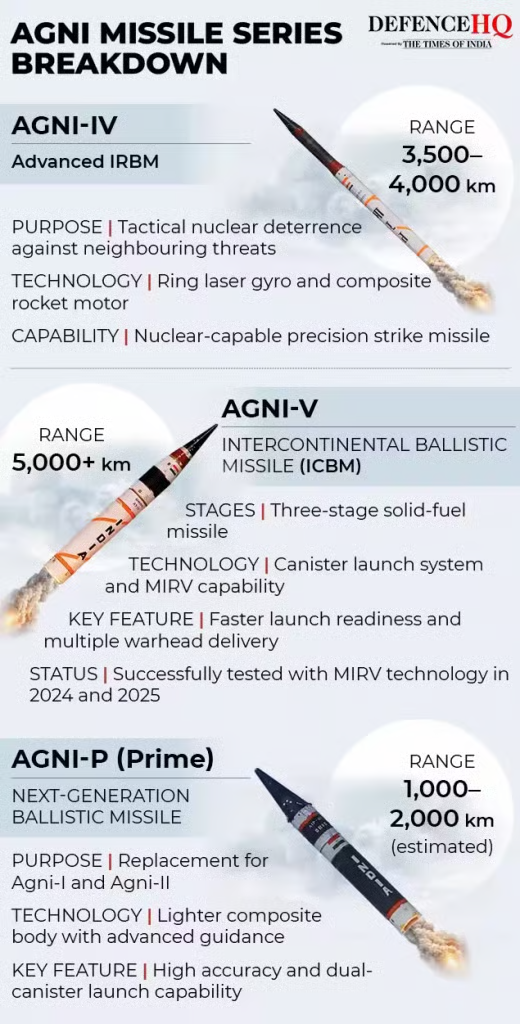
- India successfully test-fired the medium-range ballistic missile Agni-4 from the Integrated Test Range at Chandipur in Odisha.
Agni-IV
-
- It is a nuclear-capable surface-to-surface ballistic missile
- Developed by – DRDO.
- Type: Two-stage solid-fueled medium-range ballistic missile (MRBM).
- Range: Approximately 4,000 km.
- Payload: Can carry a 1,000 kg nuclear or conventional warhead.
- Mobility: Launched from a road-mobile launcher for strategic flexibility.
- Technology: Uses advanced Ring Laser Gyroscope navigation and a heat shield that resists 4,000°C re-entry temperatures.
- Significance: Operated by the Strategic Forces Command to enforce India’s Credible Minimum Deterrence and No-First-Use policy.
Dr. M. S. Swaminathan Award for Environment Protection
Awards
News
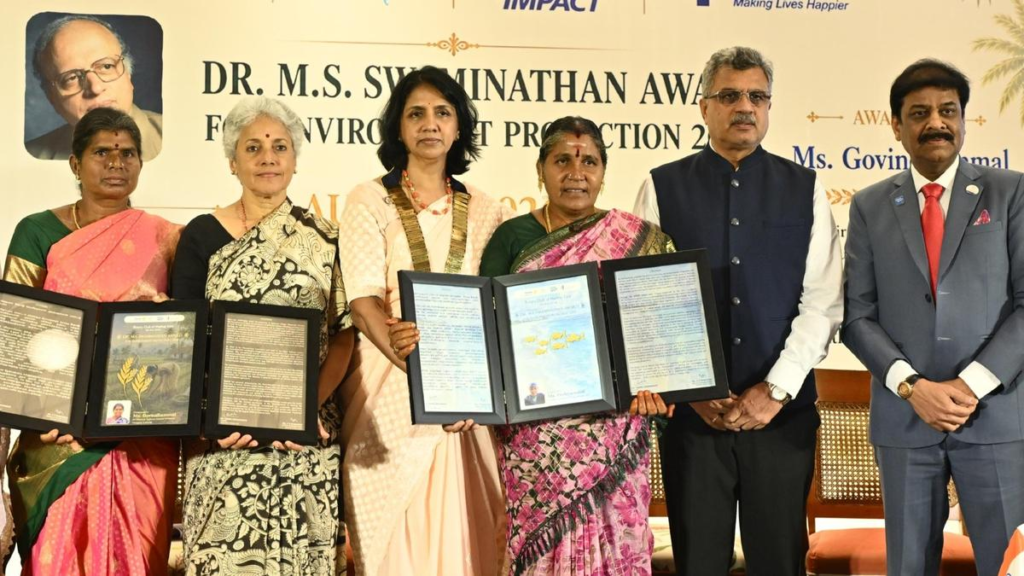
- P. Pechiyammal of Ramanathapuram and Govindhammal of Villupuram were given the Dr. M. S. Swaminathan Award for Environment Protection 2026.
- Pechiyammal was recognised for pioneering the collection of ghost fishing gear (abandoned fishing nets, nylon ropes and plastic waste) from coastal areas, a move that has helped reduce marine pollution.
- Govindhammal was recognised for her contribution toward promoting sustainable agriculture, empowering farmers with better seeds and improved farming practices.
Dr. M. S. Swaminathan Award for Environment Protection
- It was instituted by the Rotary Club of Madras East (RCME) in the name of its honorary member and agricultural scientist, the late M.S. Swaminathan.
- It is being supported by CavinKare Pvt. Ltd.
- It is presented to either an individual, a company, or an NGO that has contributed, either directly or indirectly, to enhancing environmental protection and awareness.
Additional Information – M. S. Swaminathan
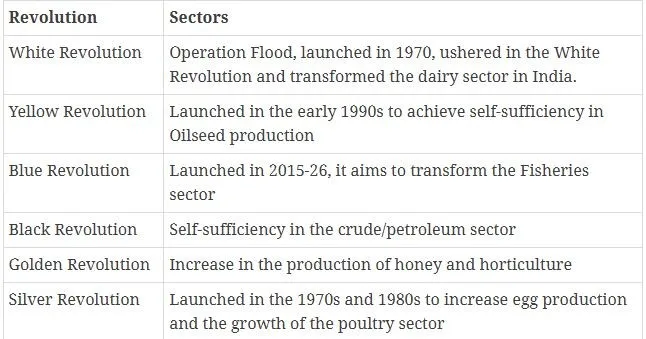
- He was known as the Father of India’s Green Revolution.
- The term ‘Green Revolution’, was coined by William S Gaud in 1968.
Awards in India:
-
- Lal Bahadur Shastri National Award
- Indira Gandhi Prize
- Padma Shri in 1967
- Padma Bhushan in 1972
- Padma Vibhushan in 1989,
- Bharat Ratna in 2024.
Green Revolution
- It refers to a period of significant increase in agricultural production resulting from the adoption of modern technology, high-yielding variety (HYV) seeds, chemical fertilizers, irrigation, and mechanization.
Leave a Reply