
India’s First Caste Enumeration in Ladakh
Polity
Context
- Ladakh will become the first place in independent India to enumerate caste as part of a regular Census in the Census 2027.
Census in India
- Definition – A census is a survey of the population of an area that includes collecting details of a country’s demographics including age, sex and occupation.
- History: Under W.C. Plowden, the Census Commissioner of India, first census was conducted in 1881.
- Independent India’s first census was held in 1951 and since then it has happened in the first year of every decade.
- The Constitution mandates that enumeration is carried out but the Census of India Act of 1948 does not specify its timing or periodicity.
- Census is conducted by – Registrar General and Census Commissioner of India which functions under the Ministry of Home Affairs.
Rabindranath Tagore
History & Culture
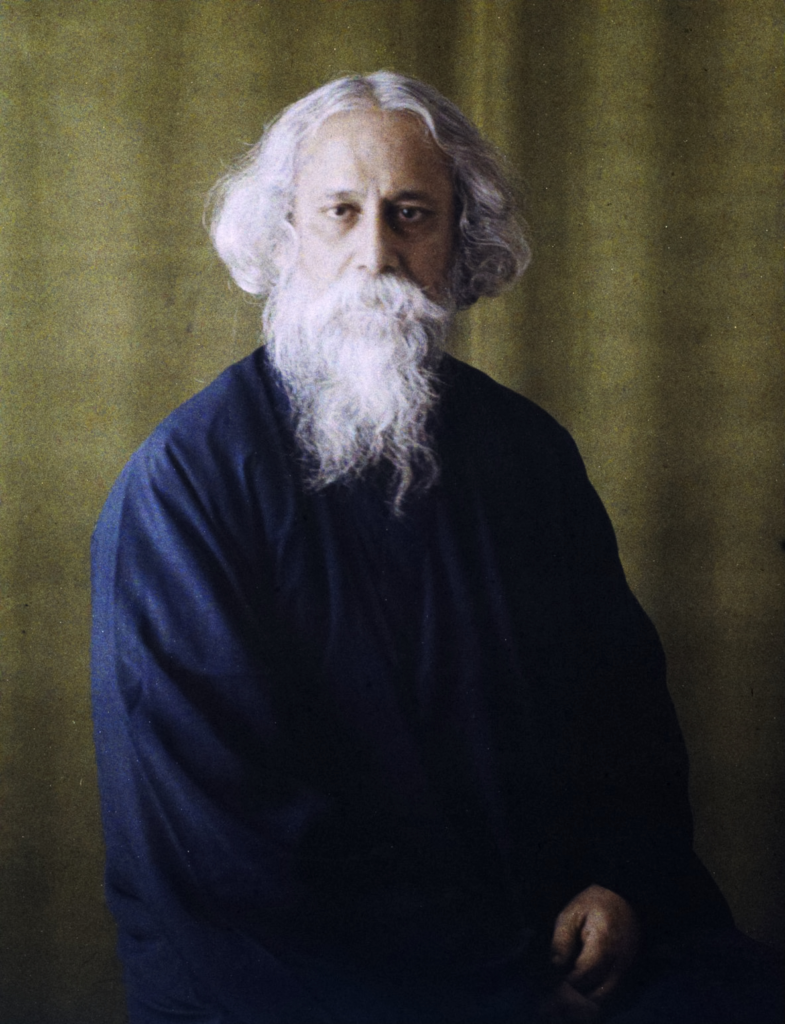
News –
- The Home Minister offered salutations to Rabindranath Tagore on his death anniversary.
Rabindranath Tagore
- He was the youngest son of Debendranath Tagore (leader of Brahmo Samaj)
- He was a Bengali poet, song composer, and painter.
- He was born in Calcutta on May 7, 1861 and died on August 7, 1941, Calcutta.
- Awards: Became the first non-European and first lyricist to receive the Nobel Prize in Literature in 1913 for his work Gitanjali (1912).
- He was awarded a knighthood in 1915, but he repudiated it in 1919 as a protest against the Amritsar (Jallianwala Bagh) Massacre.
- Contribution to Education: In 1901 Tagore founded an experimental school in rural West Bengal at Shantiniketan (“Abode of Peace”), where he sought to blend the best in the Indian and Western traditions.
- He settled permanently at the school, which became Visva-Bharati University in 1921.
- Contribution in Freedom Movement: He was a prominent leader particularly during partition of Bengal (1905), and two of his compositions became the national anthems of India (Jana Gana Mana) and Bangladesh (Amar Sonar Bangla).
- Key Literary Works: Sonar Tari (1894), Manasi (1890), Chitra (1914), The Post Office (1914), Nastanirh (1901), Chokher Bali (1903) Noukadubi (1906), Gora (1910), Ghare Baire (1916) and Shesher Kabita (1929).
Roselle (Hibiscus sabdariffa)
Environment
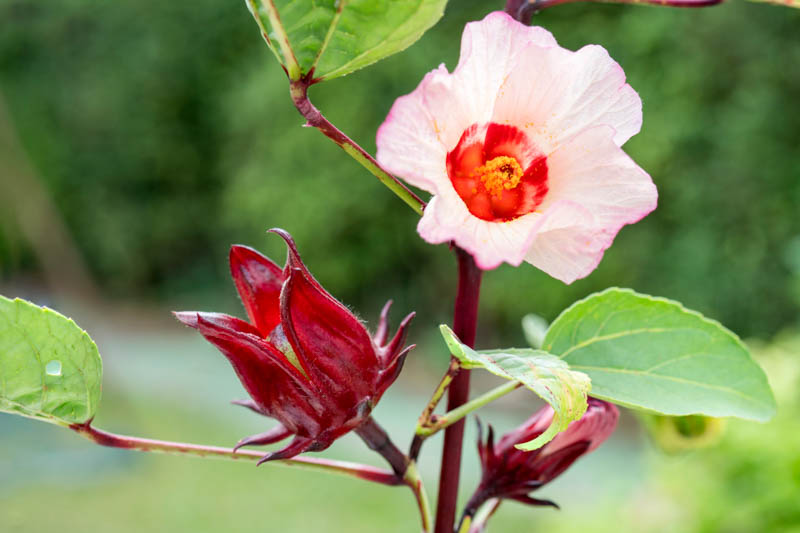
News –
- Roselle was highlighted on International Day of the World’s Indigenous Peoples (August 9) for its nutritional security and climate resilience.
About
- It is native to Africa and cultivated across tropical and subtropical Asia, Africa, and the Americas.
- In India, it’s mainly grown by indigenous and tribal communities.
- Commonly called Mesta or Chukur in India, it is also known as Bhenda Dal in Odisha’s Malkangiri, Gongura in Telugu, and Patwa in Hindi.
- Nutritional Value: Provides vitamin C, iron, and calcium; its red calyces are rich in anthocyanins, which are antioxidants and offer cardiovascular and liver benefits.
- Economic Uses: The fleshy calyces make herbal teas, jams, and pickles; stalks provide Mesta fiber for commercial use or as a raw jute substitute.
Mecca Joint Defense Agreement
International

Context (IE):
- Saudi Arabia, Türkiye, and Pakistan signed the Mecca Joint Defense Agreement, creating a trilateral mutual-security framework.
About –
- The agreement expands the 2025 Saudi Arabia-Pakistan Strategic Mutual Defense Agreement (SMDA) by incorporating Türkiye into the security framework.
- Geopolitical Drivers: Declining confidence in US security guarantees, Saudi diversification efforts beyond Western dependence, and Türkiye’s pursuit of wider regional influence.
Key Features:
- Collective Deterrence: An armed attack against any member will be treated as an attack against all three, resembling NATO’s Article 5.
- Defense-Industrial Cooperation: Expands military coordination, defense-industrial collaboration, and joint security planning to strengthen interoperable, self-reliant defense capabilities.
- Implications for India: The pact complicates India’s West Asian diplomacy by linking Saudi Arabia, a key partner, to Pakistan and Türkiye.
Grievance Redressal Assessment & Index
Polity
News –
- The Department of Administrative Reforms and Public Grievances released its 50th Centralized Public Grievance Redress and Monitoring System (CPGRAMS) report featuring the GRAI for June 2026.
Grievance Redressal Assessment & Index
- It is a periodic evaluation framework launched by the Department of Administrative Reforms and Public Grievances (DARPG) in India.
- Mandate – It ranks central ministries and departments based on how efficiently and timely they resolve public complaints submitted via CPGRAMS.
GRAI evaluates organizations using 11 key indicators spread across four main dimensions:
- Efficiency: Time taken to dispose of and clear pending grievances.
- Feedback: Citizen satisfaction levels and feedback quality.
- Domain: Performance relative to the specific sector or service area.
- Organisational Commitment: Institutional resources and top-level monitoring dedicated to fixing issues.
Centralised Public Grievance Redress and Monitoring System (CPGRAMS)
- It is India’s 24/7 online portal for citizens to lodge, track, and appeal grievances against public authorities.
- It is managed by the Department of Administrative Reforms and Public Grievances (DARPG) under the Ministry of Personnel, Public Grievances & Pensions.
Features
- Unified Portal: Links 92 Central Ministries/Departments and all States/UTs.
- Strict Timeline: Mandates grievance resolution within 21 days.
- Appeal Window: Citizens can appeal unsatisfactory closures to an Appellate Authority.
- Tech Integration: Features 22-language support via the AI-powered BHASHINI platform.
Excluded Issues- The portal does not accept complaints regarding:
- Sub-judice court matters.
- RTI queries or appeals.
- Service matters of government employees.
- Religious issues.
- National security threats.
Har Ghar Tiranga 2026
History & Culture

Context (PIB):
- The Ministry of Culture launched the nationwide Har Ghar Tiranga 2026 campaign in New Delhi, which will be observed across the country from 9 to 17 August 2026.
- The Ministry of Culture also launched SURYAPATH TIRANGA, a flagship initiative under the Har Ghar Tiranga 2026 campaign.
- The National Flag will be ceremonially hoisted in succession from east to west across Indian Missions worldwide, symbolically travelling with daylight across the globe.
- Har Ghar Tiranga 2026 is dedicated to the Spirit of Vande Mataram.
Har Ghar Tiranga
-
- Campaign that started in 2022 under the aegis of Azadi Ka Amrit Mahotsav to encourage people to bring the Tiranga home and to hoist it to mark India’s independence.
- Aim: To invoke feelings of patriotism in the hearts of citizens and promote awareness about our national flag.
- Nodal Ministry: Ministry of Culture
Cabinet Secretary
Polity
News –
- The Appointments Committee of the Cabinet (ACC), headed by the Prime Minister, approved a one-year extension for Cabinet Secretary Dr. T.V. Somanathan.
Cabinet Secretary
-
- He is the senior-most civil servant and administrative head of the Cabinet Secretariat, under the direct charge of the Prime Minister.
- He serves as ex officio Chairman of the Civil Services Board.
- He is regarded as primus inter pares (first among equals) among Union secretaries. He ranks 11th on the Indian Order of Precedence.
- Mandate: He acts as principal administrative adviser to the PM and Cabinet, ensures inter-ministerial coordination, and heads the National Crisis Management Committee (NCMC).
- Appointment: ACC appoints him for a standard 2-year tenure, extendable up to 4 years. To extend beyond 4 years, the government must relax the relevant service rules on a case-by-case basis.
- Sir Narayanan Raghavan Pillai was the first Cabinet Secretary of independent India.
Asan Wetland Conservation Reserve
Environment
Context (TH):
- The Supreme Court ruled that a 10-km mining buffer zone now applies to all wetland reserves across India, expanding the earlier safeguard for the Asan Wetland Conservation Reserve.
Asan Wetland
- Locally called Dhalipur Lake
- It is a human-made freshwater lake in Dehradun, Uttarakhand, formed by the Asan Barrage at the Asan and Yamuna Rivers confluence.
- Designated a Ramsar Site (Uttarakhand’s first) in 2020, and is listed as an Important Bird Area (IBA) by BirdLife International.
- Biodiversity: It is a vital wintering habitat and stopover along the Central Asian Flyway, supporting 330 bird species, including threatened vultures, Pallas’s Fish-eagle, and migratory waterbirds.
- It serves as a spawning ground for aquatic biodiversity, supporting the endangered Golden Mahseer.
PM-KISAN
Government Schemes
News-
- Union Cabinet extended the Pradhan Mantri Kisan Samman Nidhi (PM-KISAN)
Scheme to 2030–31, with an outlay of ₹3.15 lakh crore for the period.
Pradhan Mantri Kisan Samman Nidhi (PM-KISAN)
- Launched on – February 24 in 2019.
- Financing – Central Sector Scheme with 100% funding from the Government of India.
- Implementation – Ministry of Agriculture and Farmers Welfare.
Key feature
- Objective – The Centre transfers an amount of Rs 6,000 per year, in three equal installments, directly into the bank accounts of all landholding farmers irrespective of the size of their land holdings.
- Financial assistance – It provides financial assistance to the Small and Marginal Farmers (SMFs) in procuring various inputs to ensure proper crop health and appropriate yields.
- Identification of beneficiary – Responsibility of identification of beneficiary farmer families is entrusted with the State / UT Governments.
Phoenix Species Project
Environment
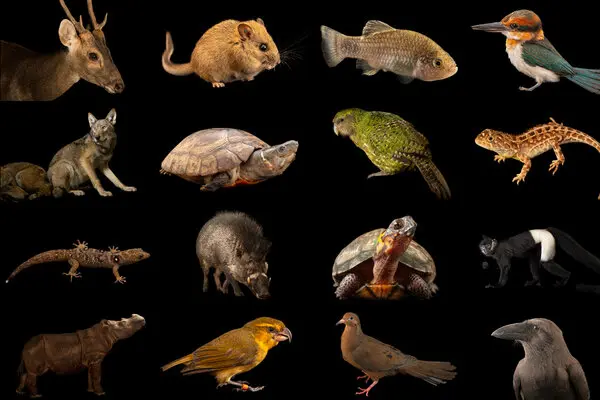
News –
- Phoenix Species Project launched a global effort to bring 100 of the world’s most threatened species back from the brink.
About the Project
- Purpose: It is a global effort to recover 100 of the world’s most threatened species by providing sustained support for local champions and offering sustained funding.
- Genesis: Launched in August 2026
Key Features:
- Founders: Bezos Earth Fund and Re:wild (Leonardo DiCaprio).]
- Target: 100 species listed as Critically Endangered or Extinct in the Wild on the IUCN Red List.
- Knowledge Partner: IUCN Species Survival Commission.
- Global Alignment: Directly supports Target 4 of the Kunming-Montreal Global Biodiversity Framework.
- Strategy: Focuses on long-term, locally and Indigenous-led habitat restoration, translocations, and invasive species control.
Appointment of the UN Secretary-General
International
News –
- The United Nations Security Council (UNSC) recently held its first straw poll to select the next UN Secretary-General (UNSG), whose five-year term will begin on 1 January 2027.
Secretary-General as the UN
- The Secretary-General is the UN’s Chief Administrative Officer, who oversees the work of the UN Secretariat and fulfills any other functions entrusted by the organisation’s principal organs.
Elections:
- Secretary-General is appointed by the General Assembly on the recommendation of the Security Council.
- This means that the Permanent Members of the Security Council – China, France, Russia, the U.K., and the U.S. have a significant say in who gets elected.
Key Principal Organs of the UNO:
-
- United Nations General Assembly (UNGA): The main deliberative, policymaking, and representative organ, where all 193 member states have equal representation.
- United Nations Security Council (UNSC): Responsible for maintaining international peace and security, with 15 members (5 permanent with veto power, 10 non-permanent).
- Economic and Social Council (ECOSOC): Coordinates economic, social, and environmental work of the UN system, overseeing specialized agencies.
- International Court of Justice (ICJ): The principal judicial organ, settling legal disputes submitted by states, located at The Hague.
- Secretariat: Carries out the day-to-day work of the UN, administered by the Secretary-General.
- Trusteeship Council: Established to supervise trust territories, it suspended operations in 1994 after Palau gained independence.
- Headquarters: New York (UNGA, UNSC, ECOSOC, Secretariat, Trusteeship Council) and The Hague (ICJ).
- Membership: 193 member states (all part of UNGA).















Leave a Reply