Author: instakas

  • Kalyana Karnataka

    Kalyana Karnataka

    News – 

    • Karnataka Economic Survey 2025-26 revealed that Kalaburagi occupies the lowest rung in the state’s per capita income (PCI) grid, underscoring the  widening regional disparity in the Kalyana Karnataka.

    Region-Specific Initiatives

    • These schemes are specifically targeted at the districts of Kalaburagi, Yadgir, Raichur, Bidar, Koppal, Vijayanagara, and Ballari: 
    • Kalyana Patha: A ₹1,000 crore project to develop 1,150 km of rural roads across 38 assembly constituencies.
    • Kalyana Karnataka Comprehensive Health Scheme: A ₹873 crore initiative that includes setting up a Cancer Diagnosis Unit in Bidar and a super-speciality hospital in Koppal.
    • ELEVATE Kalyana Karnataka: A specialized startup funding program to encourage entrepreneurship within the region.
    • Nanna Guruthu: Aimed at securing government documents for SC/ST rural residents via the DigiLocker app in 1,000 Gram Panchayats.
    • Education & Skill Training: Includes the establishment of new nursing colleges in Yalburga, Jevargi, and Yadgir, plus skill training for unemployed youth aged 18 to 35. 

    Major Welfare & State Schemes

    • Residents in this region also have access to Karnataka’s flagship “Five Guarantee” schemes and other departmental programs: 

    Five Guarantees: 

    • Gruha Lakshmi: ₹2,000 monthly for women heads of households.
    • Gruha Jyothi: Free electricity for households using up to 200 units.
    • Anna Bhagya: 10 kg of free food grains for BPL families.
    • Shakti: Free bus travel for women within the state.
    • Yuva Nidhi: Unemployment stipend for graduates and diploma holders.
    • Ganga Kalyana Scheme: Provides borewells, pumps, and electrification to small and marginal farmers from SC/ST and minority communities.
    • Udyogini Scheme: Offers up to 50% subsidy on loans for women entrepreneurs to start small businesses
  • National Shipping Board (NSB) | Black Rain in Tehran | Proton Accelerator Facility to Come up in Visakhapatnam

    National Shipping Board (NSB)

    Governance

    News

    • The government held a high-level interaction with the National Shipping Board (NSB) to address emerging challenges in India’s shipping sector amid evolving global geopolitical dynamics.

    National Shipping Board (NSB)

    • It is India’s apex advisory body on shipping and maritime matters, constituted under Section 23 of the Merchant Shipping Act, 1958.
    • It works under the Ministry of Ports, Shipping and Waterways.
    • Objective – Its primary role is to advise the central government on shipping policies and maritime development.
    • Its chairperson is appointed by the Central Government.

    Black Rain in Tehran

    Environment

    Context

    • The World Health Organization (WHO) has warned of “black rain” and toxic air pollution in Tehran, following attacks on oil facilities.

    Black Rain

    • It refers to rainfall contaminated with soot, ash, oil particles, and chemical pollutants that are released into the atmosphere after large fires or explosions.
    • Instead of clear water droplets, the rain carries dark, oily particles, giving it a black or grey appearance.
    • Such rain usually occurs when massive fires release pollutants into the air and rainfall absorbs these particles before reaching the ground.
    • Historically, similar phenomena were observed after the Atomic Bombings of Hiroshima and Nagasaki in 1945, when radioactive soot and debris mixed with rainwater.

    Proton Accelerator Facility to Come up in Visakhapatnam

    Science and Technology

    News

    • Andhra Pradesh will host a high-energy proton accelerator in Visakhapatnam as part of India’s long-term nuclear research programme.
    • A proton is a subatomic particle with a positive electrical charge. It is found in every atomic nucleus of every element.

    About the Project

    • The high-energy proton accelerator in Visakhapatnam will generate high-energy neutrons for converting thorium into uranium fuel.
    • The facility benefits from Visakhapatnam’s technological ecosystem and sea access for cooling.

    Significance – The proton accelerator is being developed as part of India’s long-term nuclear programme.

  • UDAN scheme

    UDAN scheme

    News – 

    • Karnataka’s Infrastructure Development Minister M.B. Patil recently stated that airports in tier-II cities are not financially viable after the three-year incentive period under the UDAN scheme.

    UDAN (Ude Desh ka Aam Nagrik) scheme 

    • Launched in – October 2016
      • It is India’s flagship regional connectivity program designed to make air travel affordable and accessible for the common citizen. 
    • The scheme focuses on connecting underserved and unserved airports in Tier-2 and Tier-3 cities. 

    Key Features of UDAN

    • Affordable Fares: Airfares are capped for approximately 50% of the seats on each flight. For example, a one-hour flight (~500 km) is capped at roughly ₹2,500 (subject to indexation).
    • Viability Gap Funding (VGF): To encourage airlines to fly less profitable regional routes, the government provides financial subsidies (VGF) to cover the gap between operating costs and capped fare revenue.
  • Savitribai Phule | Kurumba Painting | Fiscal Health Index 2026

    Savitribai Phule

    History / Personality in News

    Context

    • Union Home Minister Amit Shah paid tribute to Savitribai Phule on her death anniversary.

    Savitribai Phule (1831 – 1897)

    • Born in – Naigaon village of Maharashtra’s Satara district.
    • In 1840, at the age of nine, she married Jyotirao Phule, who was just 13 at the time.
    • Formally recognised as India’s first female teacher.
    • In 1848, the couple established the country’s first school for girls in Bhidewada, Pune.
    • In 1863, Jyotiba Phule and Savitribai began Balhatya Pratibandhak Griha, India’s first home dedicated to prohibiting infanticide.
    • She also advocated inter-caste marriages, widow remarriage, and eradication of child marriage, sati, and dowry systems, among other social issues.
    • In 1873, the Phule’s set up the Satyashodhak Samaj (‘Truth-seekers’ society’), a platform open to all, irrespective of their caste, religion or class hierarchies, with the sole aim of bringing social equity.
    • Literary works: Kavya Phule (Poetry’s Blossoms) in 1854 and Bavan Kashi Subodh Ratnakar (The Ocean of Pure Gems), in 1892.

    Kurumba Painting

    History/Culture

    In News

    • The Kurumba art tradition is facing the threat of extinction due to declining practitioners.

    Kurumba paintings

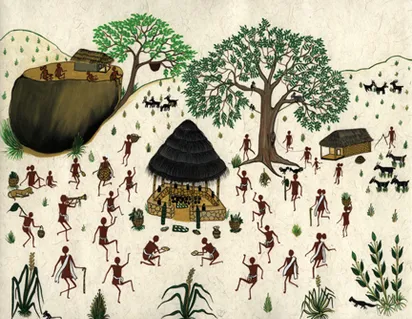
    • It traces back over 3,000 years, linked to rock art sites like Ezhuthupaarai in Tamil Nadu’s Nilgiris; they were practiced by the Kurumba tribe.
    • The Kurumba tribe is classified as a Particularly Vulnerable Tribal Group (PVTG).
    • Originally they were painted over the house walls, temple walls or during festivals and artists derive natural pigments from forest sources like tree resins.
    • These folk paintings illustrate rituals, festivals, honey hunting, nature, animals, and daily community activities using simple linear motifs, dots, lines, and geometric patterns.

    Fiscal Health Index 2026

    Polity and Governance

    Context

    • NITI Aayog has released the second annual edition of Fiscal Health Index (FHI 2026.

    Fiscal Health Index

    • Mandate – It assesses the fiscal health of states in India.
    • Parameters – Quality of Expenditure, Revenue Mobilisation, Fiscal Prudence, Debt Index, and Debt Sustainability.
    • Data for the index is sourced from the Comptroller and Auditor General of India (CAG).

    Key Highlights of FHI 2026

    Overall State Rankings:

    • Odisha remains the top-performing state, further improving its fiscal score.
    • Goa and Jharkhand also feature among the Achiever states.
    • Gujarat and Maharashtra continue to remain in the top five.
    • Haryana shows a notable improvement by gaining three ranks.

    States Showing Recovery:

    • Bihar, Karnataka, and Telangana demonstrate moderate improvement in fiscal performance.

    Low-Performing States:

    • Punjab, West Bengal, and Kerala continue to remain at the bottom of the rankings, reflecting persistent fiscal stress.

    NE and Himalayan States:

    • Evaluated separately for the first time, Arunachal Pradesh tops as Achiever (strong revenue growth), followed by Uttarakhand;
  • Eva Nammava Eva Nammava Bill

    Eva Nammava Eva Nammava Bill

    News – 

    • The Eva Nammava Eva Nammava Bill—officially titled the Karnataka Freedom of Choice in Marriage and Prevention and Prohibition of Crimes in the Name of Honour and Tradition Act, 2026—is a landmark piece of legislation passed by the Karnataka State Legislature in March 2026.  

    Eva Nammava Eva Nammava Bill

    • Mandate – It is specifically designed to prevent “honour killings” and protect the freedom of adults to choose their life partners without interference from family, caste, or community bodies. 

    Key Features of the Bill

    • Right to Choose: Guarantees that every adult has the autonomy to choose their partner. It explicitly states that no family member, caste group, or community body has the authority to interfere in this decision.
    • Broad Definition of Crimes: Beyond physical violence, the law criminalises social and economic boycotts, psychological terror (such as performing death rites for living persons), and forcing separation.

    Institutional Support:

    • Eva Nammava Vedike: A district-level platform or committee (including retired judges and police officers) to solemnise marriages and provide counselling.
    • Safe Houses & Helplines: Mandates 24/7 helplines and state-funded safe houses in every district for threatened couples.
    • Rapid Response: Police are required to provide protection within six hours of receiving a complaint.
    • Strict Penalties: Offences are classified as cognizable and non-bailable. Punishment for honour killings includes a minimum of five years in prison, while causing hurt can lead to 2–3 years of rigorous imprisonment.
  • Aravalli hills | India’s Bioeconomy Moving Towards $300 billion | RELIEF Scheme | Small Hydro Power Development Scheme | World Happiness Report 2026

    Aravalli hills

    Environment

    In News

    • The central empowered committee of the Supreme Court (SC) has assigned the task of mapping mining areas in the Aravalli hills of Rajasthan to the Forest Survey of India.

    Aravalli hills

    • Origin: Formed during the Proterozoic era (Precambrian period) by the Aravalli-Delhi Orogeny.
    • It is a Fold Mountain system, now reduced to “residual hills” due to millions of years of erosion.
    • Extent: Stretches approximately 670–800 km from Gujarat (Ahmedabad) through Rajasthan and Haryana to Delhi.
    • Highest Peak: Guru Shikhar (1,722 m) on Mount Abu, Rajasthan.
    • Major Rivers: Source of the Banas, Luni, Sabarmati, and Sahibi rivers.
    • Mineral Wealth: Rich in copper, zinc, lead, silver, marble, and granite.

    Ecological & Strategic Significance

    • Climate Regulator: Acts as a barrier guiding the South-West Monsoon towards the Himalayas, nourishing the North Indian plains.
    • “Green Wall”: Serves as a natural shield preventing the eastward expansion of the Thar Desert into fertile Indo-Gangetic plains.
    • Groundwater Recharge: A vital source of water for the National Capital Region (NCR) and surrounding areas.
    • Biodiversity: Home to 300+ bird species and wildlife like leopards, striped hyenas, and golden jackals

    Additional Information – Forest Survey of India

    • Established in – 1981
    • Functions under – Ministry of Environment and Forests
    • Function -is the premier national body for monitoring India’s forest resources.
    • Significance – Its core mandate includes publishing the biennial State of Forest Report to assess cover changes and maintaining a comprehensive inventory of tree resources in forest and non-forest areas.

    India’s Bioeconomy Moving Towards $300 billion

    Economy

    Context

    • Union Minister Dr. Jitendra Singh said India’s bioeconomy has witnessed a remarkable surge from around $10 billion in 2014 to over $195 billion in 2025.

    BioEconomy

    • It is the knowledge-based production and use of biological resources to provide products, processes and services in all economic sectors within the framework of a sustainable economic system.
    • It encompasses sectors like agriculture, forestry, fisheries, food production, biotechnology, and bioenergy.

    Subsectors of the BioEconomy in India are;

    • BioPharma or BioMedical: It includes the development and production of medical products and services, such as pharmaceuticals, medical devices, and lab-grown organoids.
    • BioAgri: It includes the development and production of genetically modified crops and animals, precision agriculture technologies, and bio-based products. EX: Bt Cotton
    • BioIndustrial: It includes the development and production of biobased chemicals and products using enzymes, biosynthetic routes, and recombinant DNA technology.

    Major Government Initiatives

    • BioE3 Policy (Biotechnology for Economy, Environment and Employment): Promotes sustainable biomanufacturing and bio-based industries.
    • The focus areas include smart proteins, precision therapeutics, and climate-resilient agriculture.
    • Research, Development and Innovation (RDI) Fund: ₹1 lakh crore corpus aimed at supporting deep-tech innovation and scaling startups.
    • Startup and Incubation Support: Strengthening biotech clusters and innovation hubs across India.
    • Inclusive Talent Development: Special focus on tier-2 and tier-3 cities, women entrepreneurs, and young researchers.

    RELIEF Scheme

    International Relations

    In News

    • The Centre has launched the RELIEF Scheme to support exporters affected by disruptions due to the West Asia crisis.

    Resilience & Logistics Intervention for Export Facilitation (RELIEF) Scheme

    • It is a ₹497-crore initiative launched by the Government of India on March 19, 2026.
    • Objective – It is designed to support Indian exporters—particularly MSMEs—facing extraordinary freight hikes, insurance premium spikes, and logistical disruptions due to geopolitical tensions in West Asia.
    • Mission: Launched under the Export Promotion Mission (EPM).
    • Nodal Agency for implementation – Export Credit Guarantee Corporation of India.
    • Target Region: Consignments destined for or transshipping through the UAE, Saudi Arabia, Kuwait, Qatar, Oman, Bahrain, Iraq, Iran, Israel, and Yemen.
    • Significance –  To mitigate financial risks, prevent order cancellations, and safeguard employment in export-linked sectors during maritime disruptions

    Small Hydro Power Development Scheme

    Schemes

    News

    • The Union Cabinet has approved the Small Hydro Power Development Scheme for 2026–31 to boost clean energy (low-emission renewable power) and rural development.

    Small Hydro Power (SHP) Development Scheme

    • It is a centrally sponsored initiative approved by the Union Cabinet in March 2026
    • Objective – to boost clean energy generation in remote and rural areas.
    • Implementation – It is managed by the Ministry of New and Renewable Energy (MNRE)
    • Target – Approximately 1,500 MW of capacity between FY 2026-27 and FY 2030-31

    World Happiness Report 2026

    Economy

    Context

    • The World Happiness Report 2026 highlights that heavy social media use is adversely affecting the well-being of young people across many countries.

    World Happiness Report 2026

    • The annual report is published by the University of Oxford’s Wellbeing Research Centre in partnership with Gallup, and the UN Sustainable Development Solutions Network.

    Six factors for evaluation of happiness ranking:

    1. GDP per capita,
    2. Life expectancy,
    3. Social support,
    4. Freedom to make life choices,
    5. Generosity,
    6. Perceptions of corruption.
    • Top 3: Finland (1st, since 2018), Iceland (2nd), and Denmark (3rd).
    • Bottom 3: Malawi (145th), Sierra Leone (146th), and Afghanistan (147th).
    • India: Ranked 116th (improved from 118th in 2025).

  • Responsible AI Committee (Kris Gopalakrishnan committee)

    Responsible AI Committee (Kris Gopalakrishnan committee)

    News –

    • The Government of Karnataka has constituted a Committee on Responsible Artificial Intelligence (AI), chaired by Kris Gopalakrishnan.

    Objectives

    • to develop a framework for safe, ethical, and transparent AI adoption in public services, according to this Facebook post. 
    • The panel, comprising industry experts and officials, met in Bengaluru to discuss AI ethics, risk classification, and data privacy to ensure accountability in AI systems. 

    Key Aspects of the Responsible AI Committee:

    • Mandate: Develop a policy and implementation roadmap within 90 days for responsible AI adoption in government.
    • Focus Areas: Establish AI principles, create risk classifications for government AI applications, and set up guidelines for data governance, privacy, and cybersecurity.
    • Committee Structure: Led by Infosys Co-founder Kris Gopalakrishnan, with the Managing Director of the Karnataka Innovation and Technology Society (KITS) serving as the Member Secretary.
    • Key Sectors: The framework will cover AI deployment in citizen-centric areas like healthcare, education, welfare delivery, and policing
  • National Vaccination Day | North Atlantic Treaty Organisation (NATO) | PM POSHAN Scheme | Bharat Audyogik Vikas Yojna (BHAVYA) | Methane Emission Hotspot

    National Vaccination Day

    Health

    Context

    • India marked National Vaccination Day (March 16) to highlight achievements in immunisation.
    • The day is observed to commemorate the first dose of the Oral Polio Vaccine administered in 1995 under the Pulse Polio Programme.

    Government Initiatives

    • The Universal Immunisation Programme: Launched in 1985 and implemented by the Ministry of Health and Family Welfare, it aims to provide free vaccines to children and pregnant women against various diseases.
    • Mission Indradhanush: It was launched in December 2014 by the Government of India to reach children and pregnant women who are unvaccinated or partially vaccinated.

    Recent Initiatives (2026)

    • HPV Vaccination Campaign: Targets ~1.15 crore girls (14 years) for cervical cancer prevention.
    • Indigenous Td Vaccine: Manufactured at CRI, Kasauli; ~55 lakh doses planned for supply.

    Digital Initiatives:

    • eVIN: Real-time vaccine stock and temperature tracking;
    • U-Win: Digital vaccination registry and tracking platform;
    • CoWIN: Enabled administration of 220+ crore COVID vaccine doses.

    North Atlantic Treaty Organisation (NATO)

    International

    Context

    • US President Donald Trump has warned of leaving the North Atlantic Treaty Organisation (NATO) after its allies declined to assist in securing the Strait of Hormuz.

    North Atlantic Treaty Organization (NATO)

    • NATO, also called the North Atlantic Alliance, is an intergovernmental military alliance.
    • Headquarters: Brussels, Belgium
    • Background: It was established by 12 countries from Europe and North America with the signing of the North Atlantic Treaty (also known as Washington Treaty) in 1949 in Washington, D.C to provide collective security against the Soviet Union attack in the aftermath of World War II.
    • Collective Defense: According to Article 5, NATO works on the principle of collective defense, where an attack on any NATO member is considered an attack on all NATO members. So far, Article 5 has been invoked once – in response to the 9/11 terrorist attacks in the United States in 2001.
    • Members: It comprises 32 member states. Sweden became the 32nd member.

    PM POSHAN Scheme

    Schemes

    News

    • A Parliamentary Standing Committee has recommended the inclusion of breakfast in the PM POSHAN Scheme & extension of coverage up to Class 12.

    PM-POSHAN

    • Earlier known as Mid-Day Meal Scheme (MDMS) and renamed as PM POSHAN (Pradhan Mantri Poshan Shakti Nirman) in 2021.
    • It operates under the Ministry of Education and is approved for the period 2021-22 to 2025-26.
    • It is a centrally sponsored scheme (jointly funded by Centre and States) providing one hot cooked meal to students in government and aided schools up to Class 8.
    • It aims to address hunger (lack of adequate food intake) and educational outcomes (attendance, retention, learning) simultaneously.

    Bharat Audyogik Vikas Yojna (BHAVYA)

    Schemes

    Context

    • The Union Cabinet approved the Bharat Audyogik Vikas Yojna (BHAVYA), with an allocation of ₹33,660 crore.

    Bharat Audyogik Vikas Yojna (BHAVYA)

    • Aim: To create 100 “future ready” industrial parks that will integrate with the PM GatiShakti programme so that they can avail of that programme’s multi-modal connectivity and last-mile access.
    • These parks will set new benchmarks in industrial infrastructure, ensuring reliability, reducing inefficiencies, and enhancing productivity across sectors.
    • Land Use: Industrial parks ranging from 100 to 1,000 acres will be taken up for the development.
    • Funding: While the Central government will provide funding of up to Rs 1 crore per acre, the scheme is meant to include the involvement of the respective State governments as well as the private sector.
    • Infrastructure: Core infrastructure like internal roads, underground utilities, drainage, common treatment facilities, ICT and administrative systems.
    • The National Industrial Corridor Development Corporation (NICDC), under the Department for Promotion of Industry and Internal Trade, will play a key role in implementing the initiative.
    • The scheme duration would be for six years starting in 2026-27.

    Additional Information –  PM GatiShakti

    • It was launched in – 2021
    • Objective – to enhance the country’s infrastructure and promote seamless connectivity across various sectors.
    • Significance – It is a transformative approach for economic growth and sustainable development which is driven by seven engines – railway, roads, ports, waterways, airports, mass transport and logistics infrastructure.
    • Implementation: PM Gati Shakti will incorporate the infrastructure schemes of various Ministries and State Governments like Bharatmala, Sagarmala, inland waterways, dry/land ports, UDAN etc.

    Methane Emission Hotspot

    Environment

    Context

    • Recent satellite-based research by the Stop Methane Project (UCLA) has revealed that a small number of oil and gas sites account for disproportionately high methane emissions.

    Connect with the basics – Methane

    • Methane (CH₄) is a colorless, odorless, and highly flammable gas, and it is the primary component of natural gas.
    • It has a relatively short atmospheric lifetime of about 12 years, compared to carbon dioxide.
    • Methane as a Greenhouse Gas: Methane is a highly potent greenhouse gas with a strong short-term warming impact.
    • It is over 80 times more effective than carbon dioxide at trapping heat over a 20-year period.
    • It is responsible for around 30% of the current global warming since the pre-industrial era.
    • Major Sources: Human-driven emissions arise mainly from oil and gas production, coal mining, livestock enteric fermentation (burps), and decomposing waste in landfills.
    • Natural sources include Wetlands, marine sediments and hydrates and geological Sources like volcanoes.
  • QpiAI Indus

    QpiAI Indus

    News – 

    • The Karnataka government has installed the QpiAI Indus, a 25-qubit superconducting quantum computing system, at the Quantum Computing Centre of Excellence (QCCE) located at IIIT-Dharwad.

    Objectives and Usage

    • Academic Integration: Used for curriculum development, faculty-led research in quantum algorithms, and hands-on student training.
    • Commercial Access: The centre offers Quantum Computing as a Service (QCaaS), allowing enterprises to experiment with use cases in logistics, finance, and pharmaceutical discovery.
    • Regional Strategy: Part of the Karnataka Quantum Roadmap, which aims to establish a $20 billion quantum economy by 2035. 

    Additional Information –  Quantum computing 

    • It is a new way for computers to process information using the strange rules of physics that govern tiny particles like atoms and electrons. 
    • While regular computers (like your phone or laptop) use bits to store information as either a 0 or a 1 (like a light switch being on or off), quantum computers use qubits
    • Quantum computers are expected to solve massive problems that would take today’s fastest supercomputers thousands of years. 

    Applications – 

    • Medicine: They can simulate how new drugs will interact with the human body at a molecular level.
    • Cybersecurity: They could potentially crack almost all current internet encryption, which is why experts are already building “quantum-proof” security.
    • Climate & Energy: They can help design better batteries or find ways to remove carbon from the air by simulating complex chemical reactions
  • India’s First National Report (NR1) on Nagoya Protocol | Nominations for Padma Awards-2027 Begins | Gajapati Inscription in Guntur | Ladakh Magmatic Arc | Adoptive Mothers Get Equal Maternity Rights

    India’s First National Report (NR1) on Nagoya Protocol

    Environment

    In News

    • India recently submitted its first National Report (NR1) on Nagoya Protocol implementation to the CBD Secretariat, marking a key milestone in biodiversity governance.

    Nagoya Protocol

    • Adopted on – October 29, 2010, in Nagoya, Japan
    • Enforced in – October 12, 2014
    • Objective – it ensures fair access to genetic resources
    • India ratified it in 2012, aligning with its Biological Diversity Act, 2002.

    Nominations for Padma Awards-2027 Begins

    Miscellaneous

    News

    • The Centre has opened nominations and recommendations for the Padma Awards 2027, one of the country’s highest civilian honours.

    Padma Awards

    • The Padma Awards are among India’s highest civilian honours instituted in 1954.
    • They are presented in three categories: Padma Vibhushan, Padma Bhushan and Padma Shri.
    1. ‘Padma Vibhushan’ is awarded for exceptional and distinguished service;
    2. ‘Padma Bhushan’ for distinguished service of high order and
    3. ‘Padma Shri’ for distinguished service in any field.
    • The awards recognise “work of distinction” and are given for exceptional achievements or service across a wide range of fields, including art, literature and education, sports, medicine, social work, science and engineering, public affairs, civil service, trade and industry.
    • All individuals are eligible for the awards regardless of race, occupation, position or gender.
    • Note – However, government servants, including employees of public sector undertakings, are generally not eligible, except for doctors and scientists.
    • The government is committed to transform Padma Awards into “People’s Padma”, encouraging citizens to nominate deserving individuals.
    • Self-nominations are also allowed.
    • The nominations must include detailed information about the nominee’s distinguished achievements in their respective fields
    • nominations will be accepted only through the online Rashtriya Puraskar Portal.
    • The awards are announced on the occasion of Republic Day every year.
    • These Awards are conferred by the President of India at ceremonial functions which are held at RashtrapatiBhawan usually around March/ April every year.

    Gajapati Inscription in Guntur

    History

    Context

    • A medieval inscription linked to the Gajapati Dynasty has been discovered at the Lakshmi Narasimha Swamy Temple in Guntur, Andhra Pradesh.
    • The inscription is engraved on a stone pillar in the temple mandapam.
    • It mentions Kumaraguru Mahapatra, an officer serving under Purushottama Deva in the 15th century CE.
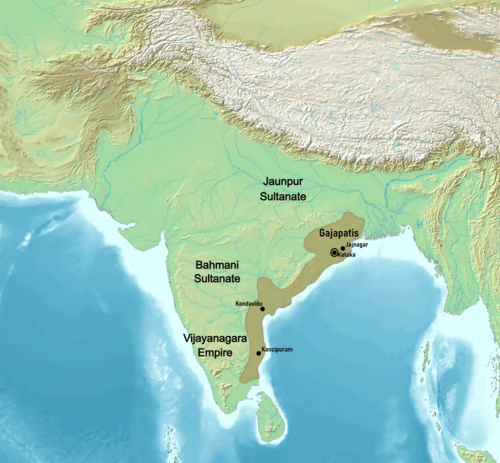
    • The record indicates that the idol of Lord Narasimha and the mandapa pillars were relocated from Kondaveedu Fort following invasions in the region.
    • The inscription was originally dedicated to Lord Mallikarjuna of Kondaveedu but was later shifted to the Guntur temple.

    Gajapati Dynasty

    • The Gajapati Dynasty was a powerful medieval kingdom that originated in Odisha and flourished during the 15th–16th centuries.
    • It was founded by Kapilendra Deva after the decline of the Eastern Ganga dynasty.
    • At its peak, the empire extended from parts of present-day West Bengal to Tiruchirappalli in Tamil Nadu, with its capital at Kataka (modern-day Cuttack).
    • The Gajapati rulers were known for their patronage of art, architecture, and literature, and they maintained continuous rivalry with the Vijayanagara Empire.

    Ladakh Magmatic Arc

    Geography

    News

    • Scientists from the Wadia Institute of Himalayan Geology have recently decoded the evolution of the Ladakh Magmatic Arc (LMA) in the North-West Himalaya.

    Ladakh Magmatic Arc

    • It is a belt of igneous rocks located in the Trans-Himalayan region of India (mainly Ladakh).
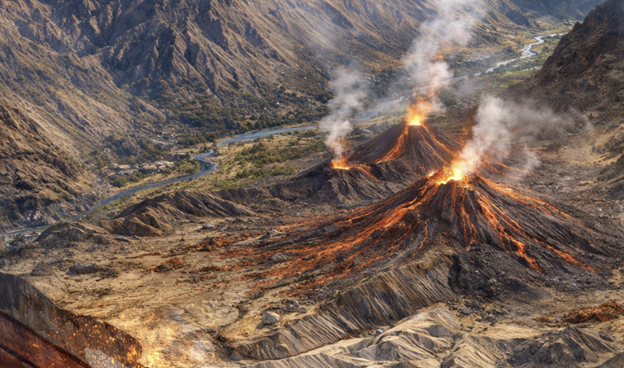
    • It represents a long-extinct volcanic arc system.
    • The present-day Ladakh region once lay above the Neo-Tethys Ocean.
    • Beneath this ocean, the oceanic crust of the Indian Plate was moving towards the Eurasian Plate.
    • The denser oceanic plate subducted (sank) beneath the Eurasian Plate.
    • This process led to melting of mantle material, formation of magma & rise of magma to form volcanic arcs.

    Adoptive Mothers Get Equal Maternity Rights

    Governance

    Context

    • The Supreme Court of India held that all female employees adopting children are entitled to 12 weeks of paid maternity leave, regardless of the child’s age.

    Background

    • The legal framework governing maternity benefits in India originates from the Maternity Benefit Act, 1961 and through the 2017 Amendment for the first time, adoptive and commissioning mothers were granted 12 weeks of maternity leave.
    • However, a restrictive condition was introduced that maternity leave was available only if the adopted child was below 3 months of age.

    Supreme court ruling

    • Concern: India’s adoption process, governed by Central Adoption Resource Authority guidelines, rarely permits adoption of children below three months.
    • As a result, most adoptive mothers were effectively denied maternity benefits, rendering the provision largely illusory.
    • The court ruled that age-based classification was discriminatory and violative of Articles 14 and 21 of the Constitution, emphasising that adoption is an equally valid pathway to parenthood and cannot be treated differently from biological childbirth.