Author: instakas

  • Yuva Sangam | Purchasing Manager’s Index (PMI) | Coal Gasification Incentive Scheme | Aditya-L1 Mission | INS Taragiri | INS Aridhaman

    Yuva Sangam

    Government Initiatives

    Context

    • Registrations for institution-led exposure tours under Yuva Sangam Phase-VI were held, covering 22 States and Union Territories.

    Yuva Sangam

    • It is an initiative by the Government of India to strengthen people-to-people connect between youth belonging to different States/UTs of India.
    • It was conceptualised by the Ministry of Education and was launched under the banner of Ek Bharat Shreshtha Bharat (EBSB).

    Ek Bharat Shreshtha Bharat (EBSB)

    • It is a landmark initiative to celebrate the country’s unity in diversity.
    • It was announced by Prime Minister Narendra Modi on 31st October 2015, coinciding with the 140th birth anniversary of Sardar Vallabhbhai Patel.

    Key Initiatives Under Ek Bharat Shreshtha Bharat

    • Yuva Sangam: A youth exchange program that allows students and off-campus youth to travel to paired states, focusing on five pillars: Paryatan (Tourism), Parampara (Tradition), Pragati (Progress), Paraspar Sampark (People-to-people connect), and Devshakti (Spiritual connection).
    • Bhasha Sangam: An initiative to encourage people to learn basic sentences in different Indian languages, promoting linguistic harmony.
    • Educational Integration: Schools and universities across the country conduct EBSB clubs, student exchange trips, and cultural festivals like Kala Utsav.
    • Special Events: Celebration of Statehood Days and integration of cultural themes in national events like Bharat Parv.
    • Implementation – The Ministry of Education serves as the nodal ministry for coordinating the program

    Purchasing Manager’s Index (PMI)

    Economy

    Context

    • The West Asia crisis has led to India’s Manufacturing PMI falling from 56.9 in February 2026 compared to 53.9 in March 2026.

    Comparison: PMI vs. IIP

    Feature

    Purchasing Managers’ Index (PMI)

    Index of Industrial Production (IIP)

    Source

    Private (S&P Global)

    Government (NSO, MoSPI)

    Basis

    Perception-based survey

    Actual physical output data

    Coverage

    Manufacturing & Services

    Broad Industrial Sector (Mining, Mfg, Elec)

    Timing

    Monthly, at the start of the month

    Monthly, with a 6-week lag

    Coal Gasification Incentive Scheme

    Economy

    In Context

    • The Union Minister has unveiled India’s roadmap to address this through domestic coal utilisation, with the Coal Gasification Incentive Scheme as a central instrument.

    Coal Gasification

    • Coal gasification is the process of converting coal into syngas (synthesis gas) — a mixture primarily of hydrogen (H₂) and carbon monoxide (CO) — through a reaction with steam and oxygen at high temperatures.

    Syngas serves as a feedstock for producing:

    • Ammonia → used in fertiliser manufacturing
    • Methanol → used as fuel and chemical feedstock
    • Hydrogenclean energy carrier
    • Synthetic natural gas → substitute for imported LNG.

    Aditya-L1 Mission

    Science and Tech

    News

    • ISRO invites proposals from the Indian solar physics community to analyse data from the Aditya-L1 mission.

    Aditya-L1 mission

    • Uniqueness – Aditya-L1 is the first space-based Indian observatory to study the Sun. It will be launched by the PSLV-C57.
    • Note – The solar mission will not see the spacecraft actually go to the sun, it will instead create a space observatory at a point from which the sun can be observed even during an eclipse.
    • The spacecraft is planned to be placed in a halo orbit around the Lagrange point 1 (L1), around 1.5 million km from the Earth, of the Sun-Earth system.

    Major objectives of the mission

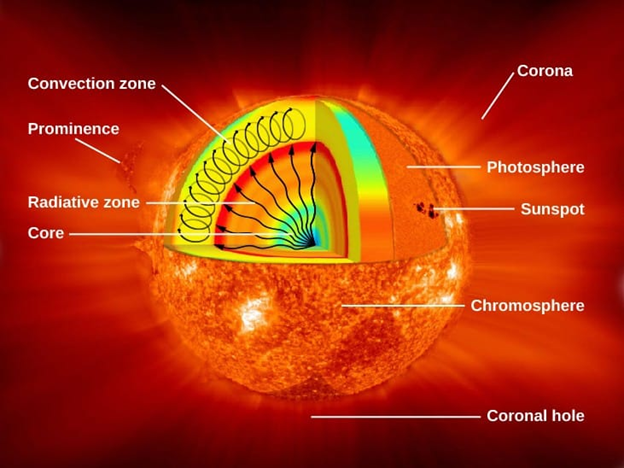
    • The mission will focus on study of the Solar upper atmospheric (chromosphere and corona) dynamics.
    • It will also identify what drives space weather, along with the origin, composition and dynamics of the solar wind.

    Additional Information – International Solar Missions

    Mission

    Space Agency

    Key Feature

    Parker Solar Probe (2018)

    NASA

    Closest mission to the Sun; first spacecraft to “touch” the corona.

    Solar Orbiter (2020)

    ESA & NASA

    Focuses on high-resolution images of the Sun’s poles.

    SOHO (1995)

    ESA & NASA

    An older observatory at L1 that has provided over two decades of solar data.

    PUNCH (2025)

    NASA

    A constellation of four small satellites studying how the corona becomes solar wind.

    ASO-S (Kuafu-1) (2022)

    CNSA (China)

    Studies the relationship between the solar magnetic field, solar flares, and CMEs.

    INS Taragiri

    Defence

    Context

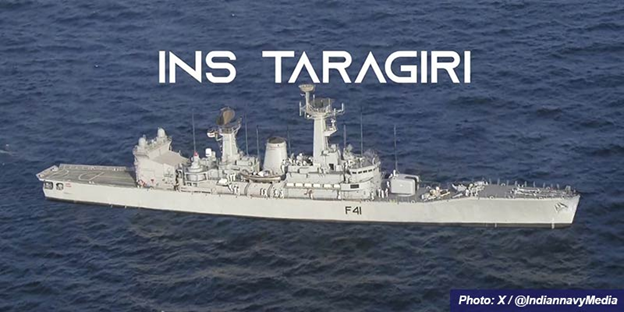
    • INS Taragiri, a Nilgiri-class stealth guided missile frigate, has been commissioned into the Indian Navy.

    INS Taragiri

    • It is the 4th of the 7 Project 17A multi-mission stealth guided missile frigates.
    • It was built by Mazagon Dock Shipbuilders Limited (MDL).
    • It is named after the Taragiri hill ranges of Uttarakhand.
    • About 75% of the ship is indigenously built.

    Key Features

    • It is designed for multi-role operations across air, surface and sub-surface warfare.
    • It is equipped with MF-STAR radar, MRSAM, Barak air defence missiles, and BrahMos missiles.

    Additional Information – Project 17A (P-17A)

    • Objective: To build seven advanced stealth guided-missile frigates for the Indian Navy.
    • Key Manufacturers: The project is split between Mazagon Dock Shipbuilders Limited (MDL) in Mumbai (4 ships) and Garden Reach Shipbuilders & Engineers (GRSE) in Kolkata (3 ships).
    • Design: Designed in-house by the Warship Design Bureau (WDB).
    • Indigenization: Approximately 75% of the content is indigenous, involving over 200 MSMEs, aligning with the Aatmanirbhar Bharat (Self-reliant India) initiative.

    List of Seven Frigates

    1. INS Nilgiri – Commissioned Jan 2025
    2. INS Himgiri – Commissioned Aug 2025
    3. INS Udaygiri – Commissioned Aug 2025
    4. INS Taragiri – Commissioned April 2026
    5. INS Dunagiri  – Delivered March/April 2026
    6. INS Vindhyagiri – Under sea trials/outfitting
    7. INS Mahendragiri – Under construction/outfitting

    INS Aridhaman

    Defence

    In News

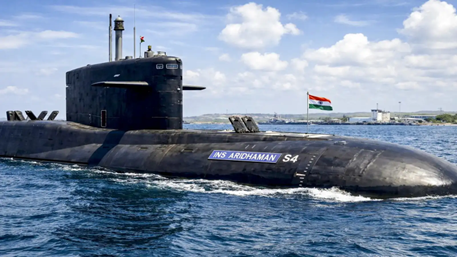
    • INS Aridaman, part of India’s Arihant-class ballistic missile submarine (SSBN) fleet, has been commissioned as a more advanced platform than its predecessors — INS Arihant (commissioned 2016) and INS Arighaat (commissioned 2024).

    Key Features

    • It is larger than INS Arihant and INS Arighaat, with a displacement of about 7,000 tonnes.
    • It can carry up to 24 K-15 Sagarika missiles, or 8 K-4 / K-5 missiles.
    • The K-4 missile has a range of about 3,500 km.
    • These are nuclear-capable submarine-launched ballistic missiles (SLBMs).
    • India’s Nuclear Submarine Programme – It was developed through collaboration between DRDO, the Department of Atomic Energy (DAE), the Navy, and private defence firms, with technical assistance from Russia in the early phases.
  • Karnataka’s First Spring Census

    Karnataka’s First Spring Census

    News –

    • The Karnataka Minor Irrigation and Groundwater Development Department, supported by the Directorate of Groundwater, has completed the state’s first-ever digital census, identifying 274 natural springs across 31 districts to enhance water conservation.

    Key Findings of the Spring Census:

    • Total Count: 274 springs documented, with the majority located in hilly districts like Belagavi, Uttara Kannada, Chamarajanagar, and Kodagu.
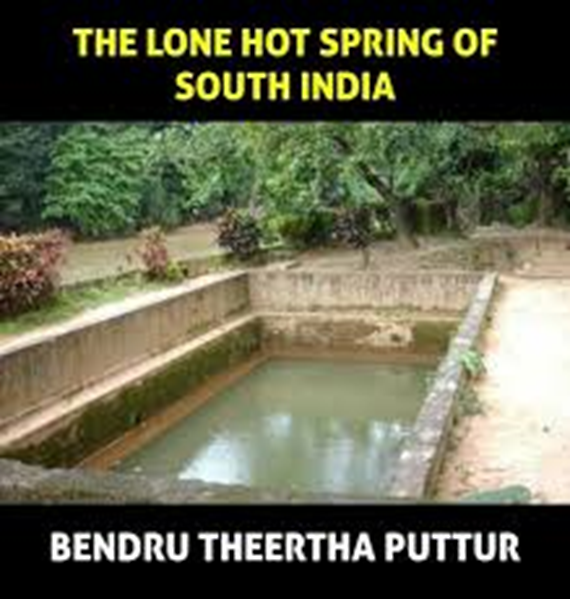
    • Unique Feature: The census identified one hot spring, “Bendru Theertha,” in the Dakshina Kannada district.
    • Data Usage: The data will be used to protect and manage spring-fed water sources, which are critical for water security in rural areas.
    • Top Districts: Belagavi reported the highest number of springs with 59, followed by Uttara Kannada (31), Chamarajanagar (23), and Kodagu (23).
    • Ecological Health: Of the 274 springs, 144 are perennial (year-round flow), 114 are seasonal, and 16 have dried up.
    • River Origins: The report specifically mapped springs that serve as the birthplaces of major rivers, including the Cauvery at Talakaveri, the Hemavati at Javali, and the Sharavati at Ambutheertha.

    Connect with the basics – Springs

    • They are natural outflows of groundwater onto the Earth’s surface, common in fractured, karst, or faulted terrains.
    • They are crucial for water security in the Himalayas, though they are drying due to climate change.

    Key Aspects

    • Types & Formation: Formed when the water table hits the surface or through fractures. They occur in permeable layers restricted by impermeable rocks (contact springs).
    • Hot Springs in India: Found along deep faults, such as in the Himalayan region (Manikaran, Puga Valley, Yumthang).
    • Significance: Provide water for irrigation, drinking, and are vital for biodiversity.
    • 1000 Springs Initiative: A Tribal Affairs Ministry project using GIS-based spring mapping to provide sustainable water and livelihoods in rural areas.
    • Threats: Climate change and over-extraction are leading to the reduction of perennial springs, particularly in the Himalayan belt.
  • Kar Saathi | E20 Petrol | India’s Push for Piped Natural Gas | India’s Multi-Hazard Early Warning Decision Support System | Indonesia | NCERT Granted Deemed University Tag

    Kar Saathi

    Economy

    Context

    • An AI-enabled digital chatbot platform launched by the Income Tax Department to provide 24×7 guidance on direct tax matters under the new Income Tax Act, 2025 framework.

    Kar Saathi

    • It provides round-the-clock assistance for queries related to ITR filing, tax provisions, forms, notices, deductions, refunds, and compliance.
    • It brings all direct tax-related resources such as forms, challans, e-payment, e-verification, and FAQs under one platform.
    • Supports taxpayer grievance resolution and compliance queries.

    Connect with the basics –

    Direct Tax

    • A direct tax is paid straight to the government by the person or business that earns the income or profit.
    • The burden of this tax cannot be shifted to anyone else; you are solely responsible for paying it.
    • Governing Body: Central Board of Direct Taxes (CBDT).

    Key Examples:

    • Income Tax: Paid by individuals on their annual earnings.
    • Corporate Tax: Paid by companies on their yearly profits.
    • Capital Gains Tax: Levied on profits from selling assets like property or stocks.
    • Securities Transaction Tax (STT): Charged on the sale and purchase of securities on stock exchanges.

    Indirect Tax

    • An indirect tax is levied on the consumption of goods and services.
    • Unlike direct taxes, the burden is transferable; a shopkeeper pays the tax to the government but recovers that cost from you through the selling price.
    • Governing Body: Central Board of Indirect Taxes and Customs (CBIC).

    Key Examples:

    • Goods and Services Tax (GST): The primary indirect tax in India that replaced multiple older taxes like VAT and service tax.
    • Customs Duty: Imposed on goods imported into or exported out of India.
    • Excise Duty: Still applicable to limited items like petroleum products and alcohol

    E20 Petrol

    Environment

    Context

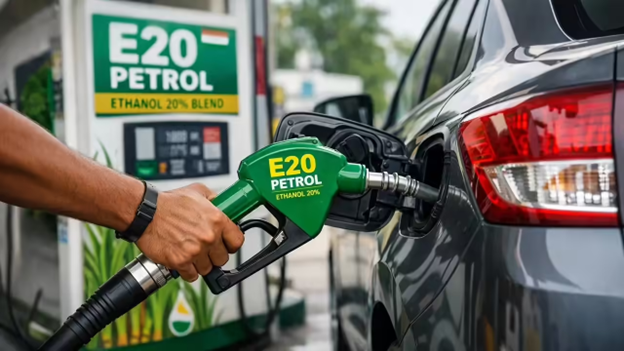
    • India has officially mandated the nationwide rollout of E20 petrol at all fuel stations from April 1, 2025.

    E20 petrol

    • It refers to a fuel blend of 20% ethanol and 80% petrol.
    • Objective – It is a critical part of India’s Ethanol Blended Petrol (EBP) Programme, which aims to reduce reliance on crude oil imports and lower vehicular emissions.
    • Target Advancement: The initial target for 20% blending was 2030, but it was advanced to 2025–26 under the amended National Policy on Biofuels (2022).

    Significance for India

    Category

    Impact

    Energy Security

    Reduces dependence on imported crude oil (~85% of India’s needs are imported).

    Economic

    Saves roughly ₹30,000–₹50,000 crore in foreign exchange annually.

    Environment

    Lowers carbon monoxide, hydrocarbons, and particulate matter emissions by 30–50%.

    Agriculture

    Boosts rural income by creating demand for crops like sugarcane, maize, and damaged food grains.

    India’s Push for Piped Natural Gas

    Science and Tech

    Context

    • India is accelerating the expansion of Piped Natural Gas (PNG) connections to reduce import dependence, improve energy security, and transition towards a cleaner fuel mix.

    Types of Gases

    Liquefied Petroleum Gas (LPG):

    • Composition: Propane and Butane.
    • State & Storage: Stored as a liquid under moderate pressure in cylinders.
    • Usage: Domestic cooking, water heating, and small-scale industrial applications.
    • Key Characteristic: Heavier than air; collects on the ground if leaked.

    Piped Natural Gas (PNG):

    • Composition: Primarily Methane.
    • State & Storage: Delivered as a gas through underground pipelines.
    • Usage: Residential kitchens, commercial cooking, and industries.
    • Key Characteristic: Continuous supply; no need for cylinder storage.

    Compressed Natural Gas (CNG):

    • Composition: Primarily Methane.
    • State & Storage: Compressed to high pressure (200-250 bar) in tanks.
    • Usage: Vehicles (cars, buses, autos) and low-pressure industrial burners.
    • Key Characteristic: Cleaner burning than petrol/diesel.

    Liquefied Natural Gas (LNG):

    • Composition: Primarily Methane.
    • State & Storage: Cooled to roughly –160°C to become a liquid for transport.
    • Usage: Transporting natural gas over long distances by sea, power generation.
    • Key Characteristic: Volume is reduced by 600 times, making it easy to store in bulk.

    India’s Shift Towards Piped Natural Gas (PNG)

    • Reducing Import Dependence: India imports nearly 60% of its LPG requirement, with a large share coming from West Asia and supply routes like Strait of Hormuz are geopolitically vulnerable.
    • Economic Efficiency: PNG eliminates logistics costs associated with cylinder transportation and storage.
    • Pricing can be more stable compared to LPG, which is sensitive to global oil prices.
    • Environmental Benefits: Natural gas burns cleaner than LPG, producing fewer pollutants and greenhouse gases.

    India’s Multi-Hazard Early Warning Decision Support System

    Environment

    Context

    • The India Meteorological Department (IMD) received the National Award for e-Governance 2025 for its indigenously developed Multi-Hazard Early Warning Decision Support System (MHEW-DSS).

    Multi-Hazard Early Warning Decision Support System (MHEW-DSS)

    • Launched in 2024, it is a digital platform that automates decision-making in critical weather forecasting processes and provides forecast and warning services to the public, government, and non-government agencies, as well as specific stakeholders.
    • Developed under Mission Mausam, the system has automated 90% of weather data processing and improved forecast accuracy by 30%, while reducing preparation time from six hours to three.
    • It integrates real-time data from satellites, radars, and ground and upper air-based sensors into a centralized GIS-enabled platform, replacing outdated manual workflows.

    India Meteorological Department (IMD)

    • It was established in 1875 and completed 150 years of service in 2025.
    • Functions under – Ministry of Earth Sciences.
    • Objective – It is a government agency responsible for meteorological observations, weather forecasting, and seismology in India.

    Mission Mausam

    • It is an ambitious multi-faceted initiative launched by Ministry of Earth Sciences (MoES)
    • Objective – to transform the country into a “weather-ready and climate-smart” nation. It aims to dramatically improve the accuracy and lead time of weather and climate forecasts.

    Indonesia

    Geography

    Context

    • A magnitude 7.4 earthquake struck the Northern Molucca Sea off Indonesia’s Ternate island.

    Indonesia

    Basic Geography:

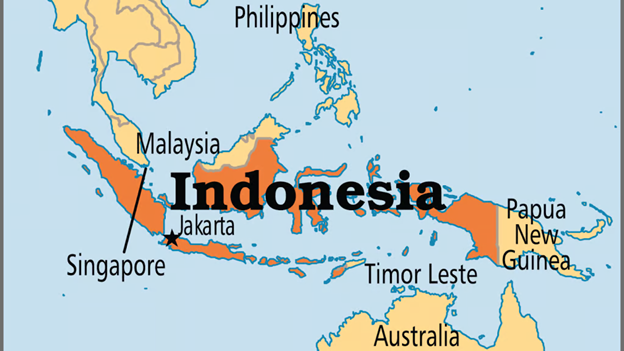
    • World’s largest archipelagic state, located between the Indian and Pacific Oceans, off mainland Southeast Asia.
    • Major islands: Sumatra, Java, Kalimantan (Borneo), Sulawesi, Papua.
    • It shares land borders with East Timor (Timor-Leste), Papua New Guinea, and Malaysia.
    • Capital: Jakarta (on the island of Java); new capital being developed — Nusantara in Kalimantan

    Tectonic Setting:

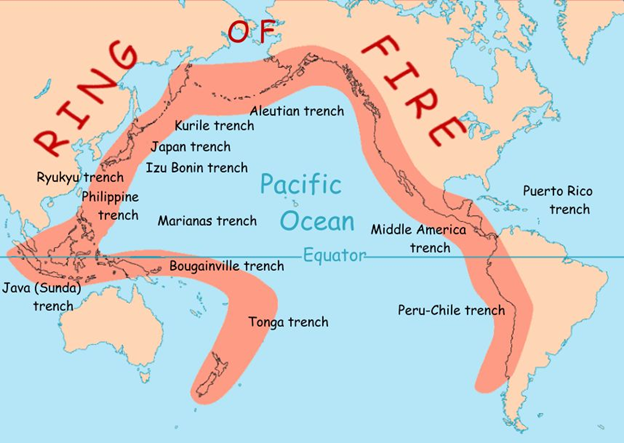
    • Located on the Pacific Ring of Fire, the seismically active belt where ~90% of the world’s earthquakes occur.
    • The Molucca Sea — where the recent earthquake originated — is a highly active tectonic zone in Indonesia’s northern region.

    Additional Information – Ring of Fire

    • Known as – The Ring of Fire also referred to as the Circum-Pacific Belt is present along the land borders of the Pacific Ocean.
    • Features – It is characterized by active volcanoes and frequent earthquakes.
    • Significance – It consists of 75% of Earth’s volcanoes i.e. more than 450 volcanoes are located along the Ring of Fire.
    • Reason for the occurrence – The abundance of volcanoes and earthquakes along the Ring of Fire is due to the frequent movement of tectonic plates in this area.

    Volcanoes in India

    • Barren Island, Andaman Islands (India’s only active volcano)
    • Narcondam, Andaman Islands
    • Baratang, Andaman Islands
    • Deccan Traps, Maharashtra

    NCERT Granted Deemed University Tag

    Government Initiatives

    In News

    • The Ministry of Education has declared the National Council of Educational Research and Training (NCERT) an Institution Deemed to be a University.

    Impact of the Decision

    • NCERT can now start courses and academic programmes and also award degrees.
    • It has also been asked to begin research programmes, doctoral programmes, and innovative academic programmes.
    • NCERT should also gradually expand into other academic domains in line with UGC norms and regulations, and the National Education Policy (NEP) 2020.

    Additional Information – The National Council of Educational Research and Training (NCERT)

    • It is an autonomous organisation established in 1961
    • Mandate – It assists and advises Central and State governments on policies and programmes aimed at improving the quality of school education.

    Key Roles and Functions

    • Curriculum Development: NCERT is the nodal agency for developing the National Curriculum Framework (NCF), which sets the standard for school education in India.
    • Textbook Publication: It publishes model textbooks for Classes I to XII in English, Hindi, and Urdu.
    • Educational Research & Training: It promotes research in school education and provides pre-service and in-service training for teachers.
    • Digital Initiatives: Through platforms like ePathshala and DIKSHA, it offers free digital access to textbooks, audio, and video resources.
  • Bannerghatta Biological Park (BBP)

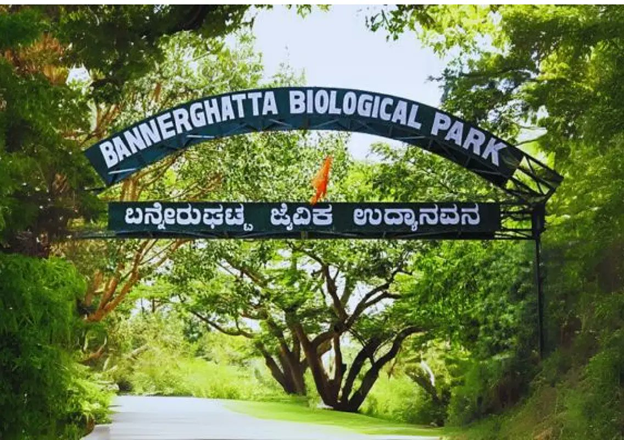
    Bannerghatta Biological Park (BBP)

    News –

    • Bannerghatta Biological Park (BBP) is constructing a 25-meter-high, eco-friendly public observation tower on Mirza Hill in collaboration with Rohini Nilekani Philanthropies

    Key Features of the New Observation Tower:

    • Location: Situated on Mirza Hill within the BBP premises.
    • Structure: A 25-meter-high tower designed to accommodate 50–70 visitors
    • Sustainability: The project will incorporate eco-conscious design elements, including solar energy systems and rainwater harvesting.
    • Views: It offers a panoramic view of the Bannerghatta National Park, the surrounding forests, and the Bengaluru city skyline.
    • Objective: To improve safety in wildlife observation and boost conservation awareness.

    Additional Information – Bannerghatta Biological Park (BBP)

    • It is a major wildlife conservation and eco-tourism hub located about 22 km south of Bengaluru, Karnataka.
    • It was carved out of the larger Bannerghatta National Park (BNP), which was declared a national park in 1974.

    Key Facts

    • Administration: BBP is governed by the Zoo Authority of Karnataka (ZAK) and follows the guidelines of the Central Zoo Authority (CZA) of India.

    Unique Features:

    • India’s first Butterfly Park: Inaugurated in 2006, it features a conservatory with a polycarbonate roof, a museum, and a research laboratory.
    • Fenced Elephant Sanctuary: It was the first biological park in India to have a dedicated, solar-fenced, forested elephant sanctuary.

    Geography & Ecology:

    • Location: Situated in the hills of the Anekal range.
    • Vegetation: Includes Dry Deciduous Scrub Forests, Southern Tropical Dry Deciduous Forests, and Southern Tropical Moist Mixed Forests.
    • Hydrology: The Suvarnamukhi stream runs through the center of the park and serves as the primary water source for wildlife.
    • Wildlife Corridor: BNP forms a vital corridor for elephants, connecting the Biligirirangan (BR) Hills and the Sathyamangalam forests.
    • Key Fauna: Home to the endangered Asian Elephant, Bengal Tiger, Indian Gaur, Leopard, Sloth Bear, and the Southern Birdwing (Karnataka’s state butterfly).
  • MCQ’s on State Issues

    MCQ’s on State Issues

    1. Consider the following statements:
    1. The Koramangala–Challaghatta (KC) Valley Project aimed at groundwater recharge and drought mitigation through reuse of treated wastewater.
    2. The project, funded entirely by the Government of Karnataka, is implemented under the Minor Irrigation Department and utilizes secondary treated wastewater from Bengaluru’s Sewage Treatment Plants.
    3. The scheme permits the direct use of treated wastewater for drinking purposes after meeting prescribed quality standards.
    4. The project involves filling over 100 interconnected minor irrigation tanks in districts such as Kolar, Chikkaballapura, and Bengaluru Rural, and has significantly improved groundwater levels in parts of Kolar.

    Which of the statements given above are correct?

    1. 1, 2 and 4 only
    2. 1 and 3 only
    3. 2, 3 and 4 only
    4. 1, 2, 3 and 4

    Answer: A


    1. Consider the following statements:
    1. Karnataka accounted for nearly 9% of India’s total ransomware cases in 2025–26, as per the Centre of Excellence for Cybersecurity (CySecK) report.
    2. Government departments, education, and healthcare sectors together faced more than 6.8 million malware attacks in the state.
    3. The DDoS attack on Kaveri 2.0 in February 2025 resulted in an estimated daily revenue loss exceeding ₹100 crore.
    4. CySecK, established in 2019, is a state initiative collaborating with government, industry, startups, and academia to enhance cybersecurity preparedness.

    Which of the statements given above are correct?

    1. 1, 2 and 3 only
    2. 2, 3 and 4 only
    3. 1, 2 and 4 only
    4. 1, 2, 3 and 4

    Answer: C


    1. Consider the following statements:
    1. The draft policy on ‘Responsible Digital Use Among Students’ has been released by the Karnataka Department of Health and Family Welfare to promote balanced digital habits among students.
    2. The policy proposes a complete legal ban on social media use for all individuals below 18 years of age.
    3. It was developed in collaboration with institutions such as NIMHANS and the Karnataka State Mental Health Authority.
    4. Schools are expected to implement preventive strategies, including digital detox programs and identification of early warning signs of mental health issues.

    How many of the statements given above is/are correct?

    1. Two only
    2. Three only
    3. One only 
    4. All Four

    Answer: B


    1. A Memorandum of Understanding (MoU) for setting new observation tower at Bannerghatta Biological Park was signed between:
    1. Karnataka Forest Department and Greater Bengaluru Authority
    2. Rohini Nilekani Philanthropies and Bannerghatta Biological Park
    3. Greater Bengaluru Authority and Karnataka Tourism Department
    4. Ministry of Environment and Karnataka Forest Department

    Answer: B


    1. Consider the following statements:
    1. Karnataka’s first-ever census of natural springs was conducted by the Karnataka Minor Irrigation and Groundwater Development Department.
    2. A total of 274 springs were identified across all districts of the state, with Belagavi reporting the highest number.
    3. The Western Ghats and Malnad region have a higher concentration of springs due to heavy rainfall and geological conditions.
    4. Karnataka has one hot spring located at Bendru Theertha in the Dakshina Kannada district.

    How many of the statements given above is/are NOT correct?

    1. Two only
    2. Three only
    3. All Four 
    4. None 

    Answer: D


    1. Consider the following statements:
    1. CALM-Brain is India’s first digital database for brain data focused on major psychiatric disorders.
    2. It has been developed by the Rohini Nilekani Centre for Brain and Mind in collaboration with NIMHANS and the National Centre for Biological Sciences.
    3. The database covers neurological disorders such as Parkinson’s disease and Alzheimer’s disease as its primary focus.
    4. The dataset is linked to a stem cell biorepository, enabling research into the biological basis of severe mental illnesses.
    5. It is initiated in 2016 as part of the ADBS project, it was funded by the Department of Biotechnology and the Pratiksha Trust.

    Which of the statements given above are correct?

    1. 1, 2, 4 and 5 only
    2. 1, 3, 4 and 5 only
    3. 2, 3  and 4 only
    4. 1, 2, 3 and 4 only 

    Answer: A


    1. Consider the following statements:
    1. The Karnataka government has provided a 60-day relaxation in the minimum age requirement for admissions to Class 1, LKG, and UKG for the 2026–27 academic year.
    2. Under the relaxed rule, children who are at least 5 years and 10 months old by June 1 are eligible for admission to Class 1.
    3. The relaxation was introduced as part of the implementation of the National Education Policy (NEP) 2020 to standardize school entry age.
    4. The earlier rule requiring a minimum age of 6 years by June 1 was introduced in 2022 in alignment with NEP 2020 and the Right to Education (RTE) Act.

    Which of the statements given above are correct?

    1. 2, 3 and 4 only
    2. 1 and 3 only
    3. 1, 2 and 4 only
    4. 1, 2, 3 and 4

    Answer: C


    1. Consider the following statements:
    1. The Karnataka State Road Transport Corporation was awarded the SKOCH National Award, 2025 in New Delhi for its “Transparent Recruitment and Training Programme.”
    2. The corporation has adopted a technology-driven recruitment system including automated driving tests and online examinations.
    3. The recruitment process under this initiative relies entirely on manual document verification to ensure authenticity.
    4. Digital document verification has been introduced to improve efficiency and security in the recruitment process.

    Which of the statements given above are correct?

    1. 1, 2 and 4 only
    2. 1 and 3 only
    3. 2, 3 and 4 only
    4. 1, 2, 3 and 4

    Answer: A


    1. Consider the following statements:
    1. Under the UDAN scheme, ₹146.89 crore has been spent to operationalize regional airports in Karnataka as of October 31, 2025.
    2. A total of seven airports, including Bidar, Mysuru, Hubballi, and Shivamogga, have been functionalized under the scheme in the state.
    3. Airports such as Vidyanagar and Bidar are among those operationalized under the scheme in Karnataka.
    4. The UDAN scheme is implemented by the Ministry of Road Transport and Highways to improve regional connectivity.

    Which of the statements given above are correct?

    1. 1, 2 and 4 only
    2. 1, 2 and 3 only
    3. 2, 3 and 4 only
    4. 1, 2, 3 and 4

    Answer: B


    1. Consider the following statements:
    1. The Karnataka government has constituted a Technical Advisory Committee (TAC) to strengthen palliative care services in the state.
    2. The committee is chaired by the Union Health Secretary and includes only government medical institutions as members.
    3. The initiative aligns with the National Programme for Palliative Care and draws inspiration from the community-based model followed in Kerala.
    4. Kidwai Memorial Institute of Oncology acts as the nodal center, and the panel includes representatives from NGOs such as Pallium India and Karunashraya Trust.

    Which of the statements given above are correct?

    1. 1, 2 and 4 only
    2. 1, 2 and 3 only
    3. 1, 3 and 4 only
    4. 1, 2, 3 and 4

    Answer: C


    1. Consider the following statements:
    1. The Karnataka Transport Department is integrating Pollution Under Control (PUC) records with the national VAHAN portal to address issues related to out-of-state fines.
    2. The integration applies to all PUC certificates issued from April 1, 2026, while older certificates cannot be linked due to technical limitations.
    3. Under the Motor Vehicles Act, 1988, driving without a valid PUC certificate attracts a penalty of ₹1,000.
    4. The initiative is expected to streamline enforcement and prevent duplication of penalties across states.

    Which of the statements given above are correct?

    1. 1, 2 and 4 only
    2. 1 and 3 only
    3. 2, 3 and 4 only
    4. 1, 2, 3 and 4

    Answer: A


    1. Consider the following statements:
    1. The Karnataka State Road Transport Corporation received the World HRD Congress Award 2026 under the “Best in Training and Organisation Development” category.
    2. The award ceremony was held in Kochi, Kerala.
    3. The training programmes of KSRTC are limited only to simulator-based driving techniques.
    4. The training initiatives include fuel efficiency, refresher courses, accident-free driving, and road safety awareness.

    Which of the statements given above are correct?

    1. 1, 3 and 4 only
    2. 1, 2 and 4 only
    3. 2, 3 and 4 only
    4. 1, 2, 3 and 4

    Answer: B


    1. Consider the following statements:
    1. Karnataka ranks second in India in terms of GST collections, following Maharashtra.
    2. The state recorded a GST collection of ₹1.58 lakh crore with an 11.6% growth over the previous financial year.
    3. GST rate rationalisation resulted in a revenue loss of ₹10,000 crore for Karnataka in 2025–26.
    4. The state anticipates further revenue loss due to GST changes in 2026–27.

    How many of the statements given above are correct?

    1. Two only
    2. Three only
    3. All Four 
    4. One only 

    Answer: C


    1. Consider the following statements:
    1. The Yettinahole Drinking Water Project aimed at diverting water from the west-flowing streams from Western Ghats to water-scarce regions of the Netravathi river basin.
    2. The project primarily seeks to provide drinking water to nearly 75 lakh people in the arid regions of Karnataka.
    3. This project benefits seven drought-prone districts such as Kolar, Chickballapur, Ramanagara, Tumakuru, Bengaluru Rural, Chikkamagaluru, and Hassan.
    4. The project is designed mainly for hydroelectric power generation in coastal Karnataka.

    How many of the statements given above is/are NOT correct?

    1. Two only
    2. Three only
    3. All Four 
    4. All are correct 

    Answer: D


    1. Consider the following statements regarding the Namo Drone Didi Yojana (NDDY):
    1. Karnataka has trained the highest number of women SHG members as drone pilots in India.
    2. Uttar Pradesh and Andhra Pradesh rank second and third respectively under the scheme.
    3. Koppal district, Kalaburagi district, and Mandya district are the top three performing districts in the state.
    4. The scheme aims to empower women SHGs, improve farming efficiency using drones, enhance crop yields, and break traditional stereotypes.

    Which of the statements given above are correct?

    1. 1 and 2 only
    2. 1, 2 and 3 only
    3. 1, 2 and 4 only
    4. 1, 2, 3 and 4

    Answer: D


    1. Consider the following statements regarding kidney paired exchange transplant guidelines in Karnataka:
    1. Transplantation of Human Organs and Tissues Act, 1994 explicitly permits multi-pair kidney swap transplants involving more than two donor-recipient pairs.
    2. Karnataka allowed multi-pair kidney swaps based on the absence of prohibition in law, supported by the 2025 Supreme Court judgment in Indian Society of Organ Transplantation vs. Union of India.
    3. Every donor in a swap must be a near relative of their original intended recipient, and incompatibility must be medically documented.
    4. Approval for multi-pair swaps is granted by hospital-level committees without involvement of any state authority.

    Which of the above statements are correct?

    1. 2 and 3 only
    2. 1, 2 and 3 only
    3. 2, 3 and 4 only
    4. 1, 3 and 4 only

    Answer: A


    1. Consider the following statements regarding Electric Vehicle (EV) charging infrastructure in India:
    1. Karnataka is the largest hub in India for EV public charging stations installed by Oil Marketing Companies (OMCs).
    2. Out of the total EV charging stations installed by OMCs in India, a majority are operational.
    3. Under the FAME-II Scheme, the amount released for EV charging infrastructure is less than the amount sanctioned.
    4. The PM E-DRIVE Scheme has allocated funds for EV charging infrastructure, but no funds have been released so far.

    Which of the above statements are correct?

    1. 1, 3 and 4 only
    2. 1 and 2 only
    3. 2, 3 and 4 only
    4. 2 and 4 only

    Answer: C


    1. Consider the following statements regarding Karnataka’s groundwater status as per the Groundwater assessment report, 2025:
    1. The overall groundwater extraction in Karnataka declined from 68.44% in 2024 to 66.49% in 2025, indicating improved sustainability.
    2. The annual groundwater recharge capacity increased from 18.74 BCM to 19.28 BCM during the same period.
    3. The reduction in domestic groundwater extraction is mainly due to improved access to surface water under the Jal Jeevan Mission.
    4. The improvement in groundwater conditions is solely due to good rainfall, with no role of policy interventions or conservation measures.

    Which of the above statements are correct?

    1. 2 and 3 only
    2. 1, 2 and 3 only
    3. 1 and 4 only
    4. 1, 2, 3 and 4

    Answer: B


    1. Consider the following statements regarding hydropower generation in Karnataka:
    1. Karnataka Power Corporation Limited recorded its highest-ever hydropower generation in 2025–26, surpassing the previous year’s output.
    2. The increase in hydropower output is solely attributed to favorable rainfall conditions.
    3. The Sharavati and Varahi valleys together contributed a major share of the total generation, with Sharavati exceeding its target output.
    4. The Varahi Hydroelectric Project not only exceeded its target but also surpassed its previous record generation.

    Which of the above statements are correct?

    1. 1, 3 and 4 only
    2. 2 and 3 only
    3. 1 and 2 only
    4. 1, 2, 3 and 4

    Answer: A


    KEY ANSWERS

    01). A

    02). C 

    03). B

    04). B

    05). D

    06). A 

    07). C

    08). A

    09). B

    10). C

    11). A

    12). B

    13). C

    14). D

    15). D

    16). A

    17). C

    18). B

    19). A


  • FCRA Amendment Bill 2026 | Parliament Passes Insolvency and Bankruptcy Code Bill, 2026 | Qdenga (TAK-003) | GLP-1 Therapy | Pradhan Mantri Awaas Yojana – Gramin (PMAY-G) Completed 10 Years

    FCRA Amendment Bill 2026

    Polity & Governance

    Context

    • Recently, the Union Government has deferred discussion on the FCRA Amendment Bill, 2026 which triggered political controversy, especially ahead of the Kerala Assembly elections.

    Foreign Contribution (Regulation) Act (FCRA)

    • Mandate– It is a key legislation that regulates the acceptance and utilisation of foreign funds by individuals, NGOs, and associations in India.
    • It is administered by the Union Ministry of Home Affairs (MHA).
    • Significance – It aims to ensure foreign contributions do not affect national interest, sovereignty, or public order.

    Provisions of FCRA Amendment Bill, 2026

    New “Designated Authority” to Take Over Assets

    • What it does: If an NGO’s registration is cancelled, surrendered, or even if it simply expires and isn’t renewed, this authority can step in and take control of all its foreign funds and assets (like buildings or equipment bought with foreign money).
    • Permanent Takeover: If the registration is not restored within a certain timeframe, the government can permanently take these assets, sell them, or transfer them to other government departments.

    Personal Liability for “Key Functionaries”

    • The Bill expands the definition of “key functionary” to include directors, partners, trustees, and anyone in a management role.

    Automatic Ending of Registration

    • How it works: Under the new rules, an FCRA registration will automatically lapse if it expires and hasn’t been renewed, or if a renewal request is rejected.
    • Strict Timelines: The Bill also sets fixed timelines for how quickly organisations must use the foreign funds they receive.

    Changes to Investigations and Penalties

    • Centralised Approval: Local police or state agencies now need prior approval from the Central Government before they can even start an investigation into an FCRA-related complaint.
    • Reduced Prison Time: The maximum jail term for breaking FCRA rules is being reduced from five years to one year, though fines still apply.

    Parliament Passes Insolvency and Bankruptcy Code Bill, 2026

    Economy

    Context

    • The Parliament has passed the Insolvency and Bankruptcy Code (Amendment) Bill, 2026.

    Insolvency and Bankruptcy Code (IBC), 2016

    • It provides a time-bound process for resolving insolvency in companies and among individuals.
    • Insolvency definition – It is a situation where individuals or companies are unable to repay their outstanding debt.
    • Bankruptcy definition – It is a situation whereby a court of competent jurisdiction has declared a person or other entity insolvent, having passed appropriate orders to resolve it and protect the rights of the creditors. It is a legal declaration of one’s inability to pay off debts.
    • Significance – It aims to remove bottlenecks, streamline the corporate insolvency resolution process and protect the last mile funding in order to boost investment in financially distressed sectors.

    Adjudicating authority

    • National Company Law Tribunal (NCLT) for companies and LLPs.
    • Debt Recovery Tribunal (DRT) for individuals and partnership firms.

    Key Features of IBC (Amendment) Bill, 2026

    • Timelines for liquidation: The Bill adds that NCLT must pass the order for liquidation within 30 days from the date of the application or intimation. 
    • It also specifies that liquidation proceedings must be completed in 180 days, extendable by up to 90 days.
    • Mandatory Admission: The bill mandates that the National Company Law Tribunal (NCLT) must admit an insolvency application within 14 days if the default is proven and the application is complete, removing judicial discretion on this timeline.
    • Cross-Border Insolvency: Introduces a framework to deal with insolvency cases involving foreign assets/creditors.

    Qdenga (TAK-003)

    Health

    Context

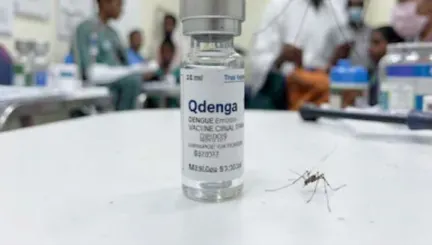
    • Qdenga, developed by Takeda Pharmaceutical Company, has received clearance from the Drugs Controller General of India for individuals aged 4–60 years.

    Qdenga (TAK-003)

    • TAK-003 is a live-attenuated, tetravalent dengue vaccine, containing weakened forms of all four dengue virus serotypes (DENV-1, DENV-2, DENV-3, and DENV-4) to stimulate immunity.

    India’s first indigenous dengue vaccine

    • DengiAll is an indigenous, tetravalent, single-dose dengue vaccine candidate being developed by Panacea Biotec in collaboration with the Indian Council of Medical Research (ICMR).
    • It is designed to fight all four serotypes and is currently in Phase III trials.

    Additional Information – Dengue

    • Pathogen – Dengue is a viral infection caused by the dengue virus (DENV).
    • DENV is an RNA virus of the Flaviviridae family with four serotypes (DENV-1 to 4).
    • Symptoms: High fever, severe headache, pain behind the eyes, muscle and joint pains, nausea, vomiting, swollen glands, rash.
    • Transmission: The virus is transmitted to humans through the bites of infected female mosquitoes, primarily the Aedes Aegypti mosquito.
    • There is a possibility of maternal transmission of Dengue (from a pregnant mother to her baby), transmission via blood products, organ donation and transfusions.
    • Prevention: There is no specific antiviral treatment for dengue, so prevention relies on controlling mosquito populations and raising public awareness.
    • The mosquitoes that spread dengue are active during the day. The best way of protection is to protect yourself from mosquito bites.

    GLP-1 Therapy

    Health

    Context

    • Multiple variants of GLP-1 drugs have been recently introduced in the Indian market, and concerns have emerged regarding their on-demand availability.
    • GLP-1 medication was approved by the United States’ Food & Drug Administration in 2005.

    GLP-1 drugs

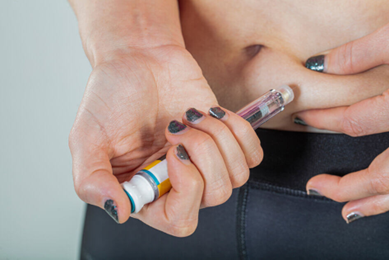
    • Glucagon-like peptide-1 receptor agonists are medications developed to treat both type 2 diabetes and obesity by correcting hormonal imbalance.
    • They slow down the gastric emptying, increasing the feeling of fullness.
    • This decreases patients’ appetites and thereby leads to their weight loss.
    • To ensure ethical pharmaceutical practices in the supply chain of GLP-1, the Drug Controller General of India has intensified its regulatory surveillance against the drug’s unauthorised sale and promotion.
    • In India, the drug can be prescribed only by endocrinologists, internal medicine specialists and cardiologists.

    Additional Information – Central Drugs Standard Control Organization (CDSCO)

    • Established under – It is the Central Drug Authority and is responsible for carrying out duties entrusted by the Drugs and Cosmetics Act,1940.
    • Responsibilities:
      • Adoption of drugs.
      • clinical trials, please.
      • establishing the criteria for drugs.
      • control over the country’s imported drugs’ quality.
      • Coordination of state drug control organizations’ effort

    Other Drug Regulatory Bodies in India

    • Drugs Controller General of India (DCGI): It is in charge of approving licenses for specific kinds of medications. He or she also serves as the head of the CDSCO department of the Indian government.
    • Drug Price Control Order (DPCO): To keep certain necessary medications in India accessible for the general people, the DPCO controls their prices.
    • Drugs and Cosmetics Act, 1940: This act regulates domestic drug use.

    Pradhan Mantri Awaas Yojana – Gramin (PMAY-G) Completed 10 Years

    Schemes

    In News

    • PMAY-G completes 10 years of implementation in 2026, marking a decade of India’s flagship rural housing mission.

    Pradhan Mantri Awaas Yojana – Gramin (PMAY-G)

    • Aim: Provide “Housing for All” in rural areas — financial assistance to eligible rural households, including houseless families and those living in zero, one, or two-room kutcha houses, to construct pucca homes with basic amenities.
    • Beneficiary Selection: Using housing deprivation parameters from the Socio-Economic and Caste Census (SECC), 2011, verified by Gram Sabhas.
    • Funding Pattern: 60:40 (Centre:State) in plain areas; 90:10 for North-Eastern and Himalayan states.
    • Nodal Ministry: Ministry of Rural Development (MoRD).

    Financial Assistance:

    • Minimum unit size of 25 sq. m.
    • ₹1.20 lakh in plain areas; ₹1.30 lakh in hilly/North-Eastern states.
    • Additional ₹12,000 for toilet construction via convergence with Swachh Bharat Mission.

    Reforms in the Scheme

    • Direct Benefit Transfer (DBT): Financial assistance released directly to beneficiaries’ bank accounts, eliminating middlemen.
    • Geo-tagging: Time and date-stamped photographs uploaded at every construction stage for real-time monitoring.
    • AI-driven monitoring: AI and Machine Learning tools for anomaly detection; Aadhaar face authentication (including eye-blink detection) to verify beneficiaries and prevent fraud.
    • Village-level Functionaries: Each sanctioned house is tagged to a local functionary who follows up with the beneficiary.
    • Social Audits: Every Gram Panchayat conducts a formal social audit at least once a year.

    Jan Vishwas (Amendment of Provisions) Bill, 2026

    Economy

    In News

    • The Jan Vishwas (Amendment of Provisions) Bill, 2026, was passed by the Parliament of India on April 2, 2026.
    • This legislation is a significant expansion of the government’s decriminalisation initiative, following the original Jan Vishwas Act of 2023.

    Key Objectives & Impact

    • Mandate – The Bill aims to enhance Ease of Doing Business and Ease of Living by transitioning from a punitive to a trust-based governance model.
    • Decriminalisation: It decriminalises 717 provisions across 79 Central Acts.
    • Scale: In total, the Bill amends 784 provisions administered by 23 different Ministries.
    • Offence Rationalisation: More than 1,000 minor offences have been rationalised, shifting from criminal imprisonment to civil penalties, administrative fines, or warnings.

    Major Provisions

    • Adjudication Mechanism: It provides for the appointment of Adjudicating Officers to handle inquiries and determine penalties, and Appellate Authorities to hear appeals, thereby reducing the burden on the court system.
    • Graduated Response: For first-time or minor lapses, the Bill introduces “warning-first” principles.
    • Dynamic Penalties: Most fines and penalties will see a 10% increment every three years to maintain their deterrent effect.
    • Key Acts Amended: Major laws affected include the Reserve Bank of India Act, 1934, Motor Vehicles Act, 1988, and the Food Safety and Standards Act, 2006.

    Ammonium Nitrate

    Science and Tech

    Context

    • Bharat Coal Gasification and Chemicals Ltd. and Mahanadi Coalfields Ltd. recently signed an agreement for a Coal to Ammonium Nitrate Project.

    Ammonium Nitrate

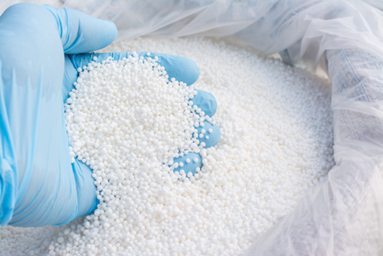
    • A white, crystalline, water-soluble solid, not found in nature; synthetically produced by reacting ammonia with nitric acid.
    • It is hygroscopic in nature and under high heat, it decomposes explosively, releasing nitrogen dioxide (NO₂).
    • Example: 2015 Tianjin (China) explosion and 2020 Beirut port explosion.
    • One of the world’s most widely used chemicals serving dual roles as a fertiliser and an industrial explosive.
    • It is listed as a hazardous chemical under Hazardous Chemicals Rules, 1989.

    E-3 Sentry AWACS

    Defence

    Context

    • Iran’s missile and drone strike on Saudi Arabia’s Prince Sultan Air Base has reportedly destroyed a US E-3 Sentry AWACS aircraft.

    E-3 Sentry (AWACS)

    • The E-3 Sentry is an airborne early warning and control aircraft developed by Boeing for advanced surveillance and battle management.
    • The aircraft is commonly known as AWACS, which stands for Airborne Warning and Control System.
    • It is equipped with a distinctive rotating radar dome mounted above its fuselage that enables long-range detection and tracking of aerial targets.

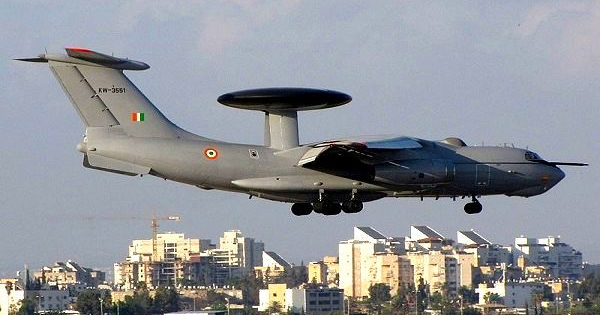
    Airborne Warning and Control System in India

    • The Indian Air Force (IAF) operates three Israeli-origin Phalcon Airborne Warning and Control Systems (AWACS) mounted on Russian Ilyushin Il-76 transport aircraft.
    • These systems, known as “eyes in the sky,” provide 360-degree radar coverage, with capabilities to detect aircraft, cruise missiles, and drones at ranges of 370–500 km.
    • The NETRA Airborne Early Warning and Control (AEW&C) system is an indigenous, multi-sensor platform developed by DRDO, primarily designed for aerial surveillance, target identification, and command-and-control capabilities.
    • It is based on the Brazilian Embraer ERJ 145 aircraft.

    Rice’s Whale

    Environment

    Context

    • The US expansion of oil and gas drilling could push the Rice Whale to extinction.

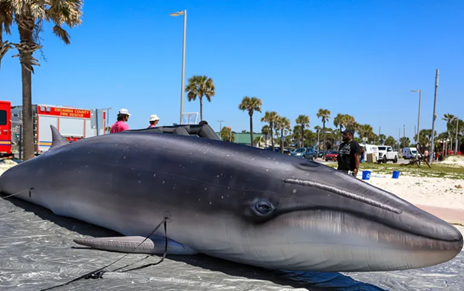
    Rice’s Whale (Balaenoptera ricei)

    • Belonging to the baleen whale family Balaenopteridae.
    • It is one of the rarest whale species, with fewer than 100 individuals remaining.
    • Range and Habitat: It is endemic to the northern Gulf of Mexico and lives year‑round within this region without undertaking long migrations.
    • Diet: Primarily feeds on small fish and squid.
    • Threat: Oil drilling, vessel strikes, and climate change.
    • Conservation status: It is listed as Critically Endangered on the IUCN Red List.

    Do you know?

    • The International Whaling Commission (IWC) was established in 1946 as the global body responsible for management of whaling and conservation of whales.
    • Currently, the IWC has more than 80 member countries, including India.
  • Karnataka Cybersecurity Policy 2024

    Karnataka Cybersecurity Policy 2024

    News – 

    • The Centre of Excellence for Cybersecurity – Karnataka (CySecK) annual compendium report confirmed that Karnataka accounted for nearly 9% of India’s total ransomware cases during 2025–26.

    Karnataka Cybersecurity Policy 2024

    • Objective – to create a secure, resilient digital ecosystem for government services (G2G, G2B, G2C). 
    • The policy, aimed at strengthening data protection, fostering startup innovation, and creating 35,000+ jobs, earmarks over ₹100 crore for implementation over five years. 

    Key pillars of the policy: 

      • Skill Development & Awareness: Partners with CISCO to train 40,000 individuals in cybersecurity, with a 50% focus on women.
      • Startup Incentives: Offers up to ₹50 lakh in matching grants for R&D projects and up to ₹1 lakh reimbursement for cybersecurity audits.
      • Infrastructure Protection: Focuses on strengthening cyber resilience of state IT assets and protecting critical infrastructure.
      • Collaboration: Engages with industry, academia, and organizations like Meta for public awareness
    • Centre of Excellence for Cybersecurity (CySecK) is a flagship initiative by the Government of Karnataka established in 2017 to strengthen the state’s digital ecosystem.

    Connect with the basics – Types of Cyber Attacks

    • Malware – It is short for malicious software, refers to any kind of software that is designed to cause damage to a single computer, server, or computer network. 

    Example – Ransomware, Spy ware, Worms, viruses, and Trojans are all varieties of malware.

    • Phishing – It is the method of trying to gather personal information using deceptive e-mails and websites.

    Types of Malware

    • Spyware – Spyware is software that spies on you, tracking your internet activities in order to send advertising (Adware) back to your system.
    • Virus – A virus is a contagious program or code that attaches itself to another piece of software, and then reproduces itself when that software is run. Most often this is spread by sharing software or files between computers.
    • Worm – A program that replicates itself and destroys data and files on the computer. Worms work to “eat” the system operating files and data files until the drive is empty.

    Recent Steps Taken in India regarding Cyber Security

    • Cyber Surakshit Bharat Initiative – It was launched in 2018 with an aim to spread awareness about cybercrime and building capacity for safety measures for IT staff across all government departments. 
    • National Cyber security Coordination Centre (NCCC) – In 2017, the NCCC was developed to scan internet traffic and communication metadata coming into the country to detect real-time cyber threats.
    • Cyber Swachhta Kendra – In 2017, this platform was introduced for internet users to clean their computers and devices by wiping out viruses and malware.
    • Computer Emergency Response Team – India (CERT-IN) – It is the nodal agency which deals with cybersecurity threats like hacking and phishing.

    Legislation

    • Information Technology Act, 2000.
    • Personal Data Protection Bill, 2019.

    International Mechanisms

    • International Telecommunication Union (ITU) – It is a specialised agency within the United Nations which plays a leading role in the standardisation and development of telecommunications and cyber security issues.

    Budapest Convention on Cybercrime 

    • It is an international treaty that seeks to address Internet and computer crime (cybercrime) by harmonizing national laws, improving investigative techniques, and increasing cooperation among nations. 
    • It came into force on 1st July 2004.
    • India is not a signatory to this convention.
  • National and International Issues

    National and International Issues MCQ’s

    1. Consider the following statements:
    1. Sanand in Gujarat is emerging as a semiconductor manufacturing hub and the facility is established by Kaynes Semicon.
    2. It is a part of the India Semiconductor Mission (ISM) launched in December 2021.
    3. It is implemented by the Ministry of Electronics and Information Technology (MeitY).
    4. It also includes development of the display manufacturing ecosystem.

    How many of the statements given above is/are NOT correct?

    1. Two only
    2. Three only
    3. All Four 
    4. All are correct 

    Answer: D

    1. Consider the following statements regarding the 97th Constitutional Amendment Act, 2011:
    1. It made the right to form cooperative societies a Fundamental Right under Article 19.
    2. It inserted Article 43B as a Directive Principle of State Policy.
    3. It added Part IX-B dealing with cooperative societies applicable to both Union and States.
    4. It mandated reservation of seats for SCs/STs and women in all cooperative societies.

    How many of the above statements is/are correct?

    1. One only
    2. Two only
    3. Three only
    4. All Four 

    Answer: C

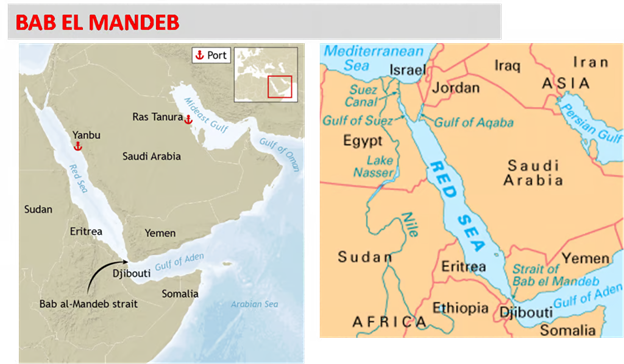
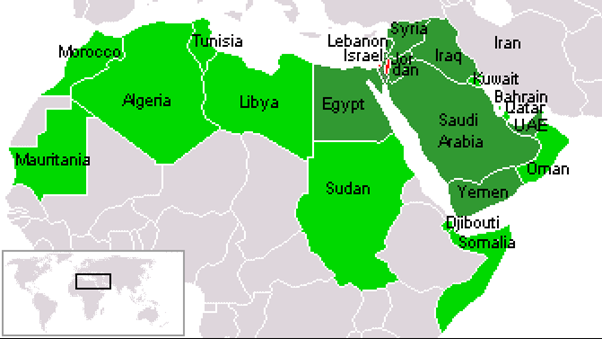
    1. Consider the following statements regarding the Bab el-Mandab Strait:
    1. It connects the Red Sea with the Arabian Sea directly.
    2. It separates the Arabian Peninsula from the Horn of Africa.
    3. It lies between Yemen and Djibouti/Eritrea.
    4. It forms a critical link in the route connecting the Mediterranean Sea with the Indian Ocean.

    Which of the above statements are correct?  

    1. 2, 3 and 4 only
    2. 1 and 2 only
    3. 1, 3 and 4 only
    4. 2 and 3 only

    Answer: A

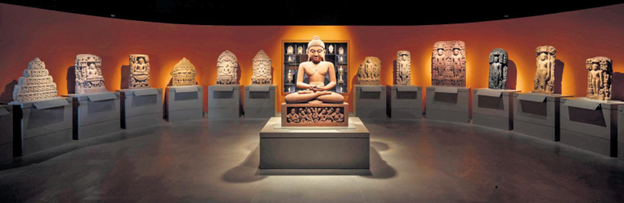
    4). Consider the following statements regarding Samrat Samprati:

    1. He was a direct successor of Emperor Ashoka in the Mauryan empire.
    2. He is regarded as a patron of Jainism and is often called the “Jain Ashoka.”
    3. His life is described in Jain texts such as Parishistaparva.
    4. He is believed to have actively promoted the principle of ahimsa.

    Which of the above statements are correct?

    1. 1 and 2 only
    2. 2, 3 and 4 only
    3. 1, 3 and 4 only
    4. 1, 2, 3 and 4

    Answer: B

    1. Consider the following statements regarding IN-SPACe:
    1. It is an autonomous agency functioning under the Department of Space and it acts as a single-window clearance agency for space-related activities.
    2. It was established to regulate and promote private sector participation in the space sector.
    3. It is working under the chairmanship of Pawan Kumar Goenka and located in Bhopal, Madhya Pradesh.
    4. It has initiatives like the Technology Adoption Fund (TAF) and the Satellite Bus as a Service (SBaaS).

    Which of the above statements are correct?

    1. 1, 2 and 4 only
    2. 1 and 3 only
    3. 2, 3 and 4 only
    4. 1, 2, 3 and 4

    Answer: A

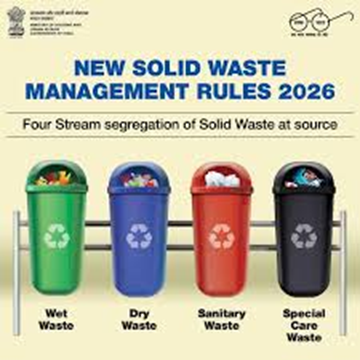
    1. Consider the following statements regarding the Solid Waste Management (SWM) Rules, 2026:
    1. These rules replace the SWM Rules, 2016 and aims to promote a circular economy and zero-waste model.
    2. They mandate segregation of waste into four distinct categories such as wet, dry, sanitary and hazardous.
    3. Bulk waste generators producing 100 kg/day must process wet waste locally and adopt Extended Producer Responsibility (EPR).
    4. Industries and cement plants are required to increase Refuse Derived Fuel (RDF) usage over time.

    How many of the above statements is/are NOT correct?

    1. Two only
    2. Three only
    3. All Four 
    4. None 

    Answer: D

    1. Consider the following statements regarding the Insolvency and Bankruptcy Code (IBC), 2016:
    1. It provides a time-bound process for resolving insolvency of companies and individuals.
    2. Insolvency and bankruptcy are interchangeable terms under the Code and the Bankruptcy involves a legal declaration by a competent authority.
    3. The Code aims to improve ease of doing business by resolving stressed assets efficiently.
    4. The National Company Law Tribunal deals with insolvency cases of companies and LLPs, while 

    The Debt Recovery Tribunal handles insolvency of individuals and partnership firms.

    Which of the above statements are correct?

    1. 1, 3 and 4 only
    2. 1 and 2 only
    3. 2 and 3 only
    4. 1, 2, 3 and 4

    Answer: A

    1. Consider the following statements regarding Qdenga (TAK-003):
    1. It is a dengue vaccine developed by Takeda Pharmaceutical Company.
    2. It is a live-attenuated tetravalent vaccine targeting all four dengue virus serotypes.
    3. It has been approved by DCGI in India for individuals of all age groups to stimulate immunity by using weakened forms of the dengue virus.
    4. DengiAll, India’s first indigenous dengue vaccine developed by Panacea Biotec in collaboration with the ICMR.

    Which of the above statements are correct?

    1. 2, 3 and 4 only
    2. 1 and 3 only
    3. 1, 2 and 4 only
    4. 1, 2, 3 and 4

    Answer: C

    9). Consider the following statements regarding PMAY-G:

    1. It aims to provide pucca houses with basic amenities by providing financial assistance to rural households.
    2. Beneficiaries are identified based on Socio-Economic and Caste Census (SECC), 2011 data and are verified by Gram Sabha.
    3. The funding ratio between Centre and State is 60:40 in plain areas and for North-Eastern and Himalayan states, the ratio is 90:10.
    4. Financial assistance is higher in hilly and North-Eastern states compared to plain areas and it is implemented by the Ministry of Housing and Urban Affairs.

    Which of the above statements are correct?

    1. 1 and 3 only
    2. 1, 2 and 4 only
    3. 2 and 3 only
    4. 1, 2, 3 and 4

    Answer: B

    10). Consider the following statements regarding applications of Ammonium Nitrate:

    1. It is widely used as a nitrogenous fertilizer in agriculture.
    2. It is a key component in ANFO explosives used in mining.
    3. It is used as a reducing agent in pyrotechnics.
    4. It is used in manufacturing nitrous oxide.

    Which of the above statements are correct?

    1. 1, 2 and 4 only
    2. 1 and 3 only
    3. 2 and 3 only
    4. 1, 2, 3 and 4

    Answer: A

    11). Consider the following statements regarding the NETRA AEW&C system:

    1. It is developed by the DRDO.
    2. It is primarily used for aerial surveillance and early warning.
    3. It is mounted on a satellite platform for space-based monitoring.
    4. It provides command-and-control capabilities during operations.

    Which of the above statements are correct?

    1. 2 and 3 only
    2. 1 and 3 only
    3. 1, 2 and 4 only
    4. 1, 2, 3 and 4

    Answer: C

    1. Consider the following passage:

    A marine mammal belonging to the baleen whale group is among the rarest whale species in the world, with fewer than 100 individuals remaining. It is endemic to a specific region in the northern Gulf of Mexico and does not undertake long-distance migrations. It primarily feeds on small fish and squid and faces threats from oil drilling, vessel strikes, and climate change. It is listed as Critically Endangered on the IUCN Red List.

    Which of the following species is best described in the above passage?

    1. Blue Whale
    2. Rice’s Whale (Balaenoptera ricei)
    3. Humpback Whale
    4. Sperm Whale

    Answer: B

    1. With reference to Kar Saathi, consider the following statements:
    1. It is an AI-enabled chatbot platform launched by the Income Tax Department of India.
    2. It provides assistance only during official working hours.
    3. It integrates services such as e-payment, e-verification, and tax-related FAQs on a single platform.
    4. It deals exclusively with indirect taxes under GST.

    How many of the statements given above is/are correct?

    1. One only
    2. Two only
    3. Three only
    4. All Four 

    Answer: B

    1. Which of the following fuel gases are primarily methane-based fuels?
    1. Piped Natural Gas (PNG)
    2. Compressed Natural Gas (CNG)
    3. Liquefied Natural Gas (LNG)
    4. Liquefied Petroleum Gas (LPG)

    Select the correct answer using the code below:

    1. 1, 2 and 3 only
    2. 1, 2 and 4 only
    3. 1, 3 and 4 only
    4. 1, 2, 3 and 4

    Answer: A

    1. With reference to the Multi-Hazard Early Warning Decision Support System (MHEW-DSS), consider the following statements:
    1. It is an indigenously developed AI-enabled digital platform by the India Meteorological Department that automates critical weather forecasting processes.
    2. It integrates real-time data from satellites, radars, and ground as well as upper-air sensors into a centralized GIS-enabled platform.
    3. It is developed under Mission Mausam, and has achieved complete automation of weather data processing and entirely eliminated manual workflows.
    4. It has improved forecast accuracy by about 30% and reduced forecast preparation time from 6 hours to 3 hours significantly.

    Which of the statements given above are correct?

    1. 1 and 3 only
    2. 2 and 3 only
    3. 1, 2  and 4 only
    4. 1, 2, 3 and 4

    Answer: C

    1. With reference to the Molucca Sea, consider the following statements:
    1. It is located in the western Pacific Ocean between the islands of Sulawesi and Halmahera.
    2. It lies along a tectonically active region associated with subduction zones and frequent earthquakes.
    3. It connects the Indian Ocean directly with the South China Sea, forming a major international shipping route.
    4. It is part of the Coral Triangle, known for exceptionally high marine biodiversity.

    Which of the statements given above are correct?

    1. 1, 2 and 4 only
    2. 1 and 3 only
    3. 2, 3 and 4 only
    4. 1, 2, 3 and 4

    Answer: A

    1. With reference to Yuva Sangam, consider the following statements:
    1. It is an initiative of the Government of India aimed at strengthening people-to-people connect among youth from different States and Union Territories.
    2. It was conceptualised by the Ministry of Education and implemented under the Ek Bharat Shreshtha Bharat programme.
    3. The Ek Bharat Shreshtha Bharat initiative was announced by Narendra Modi on 31st October 2015, marking the birth anniversary of Sardar Vallabhbhai Patel.
    4. Yuva Sangam primarily focuses on financial assistance to youth entrepreneurs across States.

    Which of the statements given above are correct?

    1. 2, 3 and 4only
    2. 1 and 4 only
    3. 1, 2 and 3 only
    4. 1, 2, 3 and 4

    Answer: C

    1. With reference to Syngas (Synthesis Gas), consider the following statements:
    1. Syngas is used as a feedstock for the production of ammonia, which is widely used in fertilizer manufacturing.
    2. Methanol produced from syngas can serve both as a fuel and as a chemical feedstock.
    3. Hydrogen derived from syngas is considered a clean energy carrier.
    4. Synthetic Natural Gas (SNG) produced from syngas can act as a substitute for imported Liquefied Natural Gas (LNG).

    How many of the statements given above is/are NOT correct?

    1. Two only
    2. Three only
    3. All Four 
    4. All are correct 

    Answer: D

    1. With reference to the Aditya-L1 mission, consider the following statements:
    1. It is India’s first space-based observatory dedicated to studying the Sun.
    2. The mission is planned to be launched using the PSLV-C57.
    3. The spacecraft will be placed in a halo orbit around the Lagrange Point L2 of the Sun–Earth system.
    4. It aims to study the dynamics of the Sun’s upper atmosphere, including the chromosphere and corona.

    Which of the statements given above are correct?

    1. 1, 2 and 4 only
    2. 1 and 3 only
    3. 2, 3 and 4 only
    4. 1, 2, 3 and 4

    Answer: A

    1. Consider the following statements:

    Statement 1: INS Taragiri is an Arihant-class nuclear-powered ballistic missile submarine (SSBN). 

    Statement 2: INS Taragiri was built by Mazagon Dock Shipbuilders Limited.

    Statement 3: INS Aridaman is a Nilgiri-class stealth guided missile frigate.

    Statement 4: INS Aridaman was built at the Ship Building Centre (SBC) in Visakhapatnam.

    Which one of the following is correct in respect of the above statements?

    1. Statement 1 is correct, Statement 2 is incorrect, Statement 3 is correct, Statement 4 is incorrect.
    2. Statement 1 is incorrect,  Statement 2 is correct, 

    Statement 3 is incorrect,  Statement 4 is correct.

    1. Both Statement 1 and Statement 2 are correct, but both Statement 3 and Statement 4 are incorrect.
    2. Both Statement 1 and Statement 2 are incorrect, but both Statement 3 and Statement 4 are correct.

    Answer: B

    1. Consider the following pairs:
    1. Deendayal Port – Gujarat
    2. Paradip Port – Odisha
    3. Syama Prasad Mookerjee Port – Andhra Pradesh
    4. Kamarajar Port – Kerala
    5. Jawaharlal Nehru Port – Maharashtra 

    How many of the pairs given above is/are correctly matched?

    1. Two only
    2. Three only
    3. Four only
    4. All Five 

    Answer: B

    1. Consider the following statements regarding Stagflation:
    1. It refers to a situation of high inflation accompanied by stagnant or negative economic growth.
    2. It is usually associated with economic growth but rising unemployment levels.
    3. It supports the traditional Phillips Curve relationship between inflation and unemployment.
    4. It was first popularized by British politician Iain Macleod in the 1960s.

    Which of the statements given above are correct?

    1. 2, 3 and 4 only
    2. 1 and 3 only
    3. 1, 2 and 4 only
    4. 1, 2, 3 and 4

    Answer: C

    1. Consider the following statements regarding Project Chetak:
    1. It is one of the largest projects of the Border Roads Organisation in terms of geographical coverage.
    2. It was raised in 1980 and operates primarily in the northeastern region of India.
    3. It plays a strategic role in maintaining feeder roads towards India’s International Borders.
    4. It contributes to both defence logistics and regional connectivity in parts of Rajasthan, Punjab and northern Gujarat.

    Which of the statements given above are correct?

    1. 1, 3 and 4 only
    2. 1 and 2 only
    3. 2, 3 and 4 only
    4. 1, 2, 3 and 4

    Answer: A

    1. Consider the following tribes:
    1. Naikda / Nayaka / Bedar
    2. Gond
    3. Jenu Kuruba
    4. Soliga
    5. Hakkipikki
    6. Koraga
    7. Yerava

    How many of the above tribes do NOT belong to Karnataka?

    1. Only three
    2. Only four
    3. None 
    4. All seven

    Answer: C

    1. Consider the following statements regarding the Namo Drone Didi Scheme:
    1. It was launched in 2023 with the objective of promoting drone technology in Indian agriculture.
    2. It aims to provide 15,000 drones to Women Self-Help Groups (SHGs) between 2024 and 2026.
    3. It is a Centrally Sponsored Scheme implemented jointly by the Union and State Governments.
    4. It is implemented by the Ministry of Agriculture & Farmers Welfare to empower rural women as agri-tech entrepreneurs.

    Which of the statements given above are correct?

    1. 1 and 3 only
    2. 1, 2 and 4 only
    3. 2, 3 and 4 only
    4. 1, 2, 3 and 4

    Answer: B

    1. Consider the following statements:
    1. He participated in both the Civil Disobedience Movement and the Quit India Movement.
    2. He founded organizations such as the Akhil Bharatiya Ravidas Mahasabha and the All India Depressed Classes League.
    3. He was instrumental in the enactment of the Protection of Civil Rights Act, 1955 aimed at eliminating untouchability.
    4. As Food & Agriculture Minister, he is credited with the Green Revolution and as Defence Minister, he played a key role during the Indo-Pak War of 1971 which led to the creation of Bangladesh.

    Which of the following personalities is best described by the above statements?

    1. B. R. Ambedkar
    2. Jagjivan Ram
    3. Ram Manohar Lohiya 
    4. Lal Bahadur Shastri

    Answer: B

    1. Consider the following statements regarding custodial deaths:
    1. It includes the death of an individual occurring in both police or judicial custody.
    2. The custodial deaths may occur before trial, during police interrogation or after conviction.
    3. It may result from torture, negligence, denial of medical care, or suspicious circumstances.
    4. Uttar Pradesh recorded the highest number of custodial deaths and Tamil Nadu recorded the highest number of custodial deaths among the southern states.

    Which of the statements given above are correct?

    1. 2 and 3 only
    2. 1, 2 and 3 only
    3. 2, 3 and 4 only
    4. 1, 2, 3 and 4

    Answer: D

    1. Consider the following statements regarding marine tar balls:
    1. They are formed due to weathering of crude oil after oil spills, leaks, or natural seepage in marine environments.
    2. They are typically light-colored and dissolve easily in seawater.
    3. They may contain toxic substances such as heavy metals and polycyclic aromatic hydrocarbons (PAHs).
    4. They are entirely harmless to marine ecosystems once formed.

    Which of the statements given above are correct?

    1. 1 and 3 only
    2. 1, 2 and 3 only
    3. 2 and 4 only
    4. 1, 2, 3 and 4

    Answer: A

    1. The Sabarimala Temple is located within which protected area?
    1. Bandipur National Park
    2. Periyar Tiger Reserve
    3. Nagarhole National Park
    4. Silent Valley National Park

    Answer: B

    1. Consider the following statements:
    1. The proposed Credit Guarantee Scheme is an expansion of the Emergency Credit Line Guarantee Scheme (ECGLS) framework.
    2. ECLGS was introduced to mitigate the economic impact of the COVID-19 pandemic.
    3. Only large corporate firms were eligible under ECLGS.
    4. The scheme provided guaranteed credit support to eligible borrowers.

    Which of the statements given above are correct?

    1. 1, 2 and 4 only
    2. 1 and 3 only
    3. 2, 3 and 4 only
    4. 1, 2, 3 and 4

    Answer: A

    1. Consider the following statements regarding United Nations Security Council:
    1. China, France, Russia, the United Kingdom, and the United States are permanent members of the UNSC.
    2. Non-permanent members are directly appointed by the UN Secretary-General.
    3. The UNSC can pass binding resolutions under international law.
    4. A resolution can pass even if one permanent member votes against it.

    How many of the statements given above is/are correct?

    1. Three only
    2. One only
    3. Two only
    4. All Four 

    Answer: C

    1. Consider the following statements regarding Mission MITRA:
    1. It stands for Mapping of Interoperable Traits and Response Assessment.
    2. It is jointly designed by ISRO and the Indian Air Force’s Institute of Aerospace Medicine.
    3. It is an actual space mission involving human spaceflight in orbit.
    4. It uses Earth-based environments to simulate space-like conditions.

    Which of the statements given above are correct?

    1. 1, 2 and 4 only
    2. 1 and 3 only
    3. 2, 3 and 4 only
    4. 1, 2, 3 and 4

    Answer: A

    1. Consider the following statements regarding the “Lunar Ring” project:
    1. It has been proposed by Japan’s Shimizu Corporation.
    2. It envisages a belt of solar power plants along the Moon’s equator.
    3. The project aims to transmit solar energy from the Moon to the Earth.
    4. It is an operational project currently generating electricity for Earth.

    Which of the statements given above are correct?

    1. 1, 2 and 4 only
    2. 1, 2 and 3 only
    3. 2, 3 and 4 only
    4. 1, 2, 3 and 4

    Answer: B

    1. With reference to the United Nations Framework Convention on Climate Change, consider the following statements:
    1. It was adopted at the Earth Summit 1992 and is one of the three Rio Conventions along with the Convention on Biological Diversity and the United Nations Convention to Combat Desertification.
    2. It imposes legally binding emission reduction targets on all member countries to stabilize greenhouse gas concentrations.

    III. It serves as the parent treaty for the Kyoto Protocol and the Paris Agreement.

    1. It manages and coordinates financial mechanisms such as the Green Climate Fund, Global Environment Facility, and Adaptation Fund to support developing countries.

    Which of the statements given above are correct?

    1. I, II and III only
    2. I, III and IV only
    3. II, III and IV only
    4. I, II, III and IV

    Answer: B

    1. With reference to the Andaman and Nicobar Islands, consider the following statements:
    1. Great Nicobar Island is the southernmost island, and the Indira point is the southernmost point of India.
    2. Saddle Peak is the highest point of the islands, while Mount Thullier is the highest peak in Great Nicobar.
    3. Pandanus is a rare fruit endemic to these islands.
    4. Barren Island hosts the only confirmed active volcano in India and the entire South Asia region.

    How many of the statements given above is/are NOT correct?

    1. Two only
    2. Three only
    3. All Four 
    4. All are correct 

    Answer: D

    1. Consider the following statements:
    1. The title “Mahatma” was conferred on him by Vithalrao Krishnaji Vandekar.
    2. He established the first school for girls in India at Bhide Wada in 1848.
    3. He founded Satyashodhak Samaj in 1873 to eradicate caste-based socio-economic inequalities.
    4. He established the Balhatya Pratibandhak Griha in 1863 to prevent infanticide and support vulnerable women.
    5. He authored works such as Gulamgiri and Shetkarayacha Asud.

    Which one of the following personalities is best described by the above statements?

    1. Raja Ram Mohan Roy
    2. Ishwar Chandra Vidyasagar
    3. Jyotirao Phule
    4. B. R. Ambedkar

    Answer: C

    1. With reference to the Sindhi language, consider the following statements:
    1. Sindhi is a Dravidian language predominantly spoken only within India.
    2. It was included in the Eighth Schedule of the Constitution by the 21st Constitutional Amendment Act 1967.
    3. Sindhi has a rich literary tradition influenced by both Vedantic and Sufi philosophies.
    4. Recently the Constitution of India has been released in Sindhi in both Devanagari and Persian scripts.

    Which of the statements given above are correct?

    1. 1, 3 and 4 only
    2. 1 and 2 only
    3. 2, 3 and 4 only
    4. 1, 2, 3 and 4

    Answer: C

    1. Consider the following species:
    1. Emperor Penguin
    2. Amphibians
    3. Canary
    4. Honeybee
    5. Polar Bear

    The above species are best categorized under which one of the following?

    1. Sentinel Species
    2. Endemic Species
    3. Keystone Species
    4. Invasive Species

    Answer: A

    1. Arrange the following events/organizations associated with Dr. BR. Ambedkar in the correct chronological order:
    1. Bahishkrit Hitkarini Sabha
    2. Mahad Satyagraha
    3. Poona Pact
    4. Independent Labour Party
    5. Scheduled Castes Federation

    Select the correct answer using the code given below:

    1. 2 – 3 – 1 – 5 – 4
    2. 2 – 1 – 3 – 4 – 5
    3. 1 – 3 – 2 – 4 – 5
    4. 1 – 2 – 3 – 4 – 5

    Answer: D

    1. With reference to the Indian Ocean Conference, consider the following statements:
    1. It was launched in 2016 by the India Foundation as an annual consultative forum.
    2. Its objective includes promoting regional cooperation, maritime security, and economic development in the Indian Ocean Region.
    3. It connects over 40 countries, including ministers and experts focused on the SAGAR (Security and Growth for All in the Region) vision. 
    4. The 9th edition of the conference was held in Mauritius in April 2026, while the 8th edition was held in Oman.

    How many of the statements given above is/are correct?

    1. Two only
    2. Three only
    3. All Four 
    4. None 

    Answer: C

    1. With reference to Project Him Sarovar, consider the following statements:
    1. It is a scientific water conservation initiative launched on April 10, 2026.
    2. It aims to create large multipurpose dams to store river water for hydroelectric power generation.
    3. The project proposes to construct around 50 small water bodies to capture snowmelt and rainwater.
    4. It seeks to ensure year-round water availability in high-altitude cold desert regions.
    5. It aligns with India’s broader goal of restoring 2.6 crore hectares of degraded land by 2030.

    Which of the statements given above are correct?

    1. 1, 3, 4 and 5 only
    2. 1, 2, 3 and 5 only
    3. 2, 3, 4 and 5 only
    4. 1, 2, 3, 4 and 5

    Answer: A

    1. With reference to National Agriculture Market (e-NAM), consider the following statements:
    1. It is a pan-India electronic trading portal launched on April 14, 2016.
    2. It operates as a centrally sponsored scheme with cost-sharing between the Centre and States.
    3. It is fully funded by the Central Government as a Central Sector Scheme through the Agri-Tech Infrastructure Fund.
    4. It aims to create a unified national market by integrating existing Agricultural Produce Market Committee mandis.

    Which of the statements given above are correct?

    1. 1, 2 and 4 only
    2. 1, 3 and 4 only
    3. 2, 3 and 4 only
    4. 1, 2, 3 and 4

    Answer: B

    1. With reference to India’s new deportation policy for illegal migrants, consider the following statements:
    1. It mandates a 30-day deadline for States/UTs to verify the credentials of suspected illegal migrants, failing which deportation may be initiated.
    2. District-level Special Task Forces (STFs) have been created exclusively under the Ministry of External Affairs to manage deportation proceedings.
    3. The policy provides for dedicated district-level units to identify and detain undocumented migrants in designated centres.
    4. It mandates biometric data digitization through the Foreigners Identification Portal with data-sharing involving the Unique Identification Authority of India and the Election Commission of India.

    Which of the statements given above are correct?

    1. 2, 3 and 4 only
    2. 1, 2 and 4 only
    3. 1, 3 and 4 only
    4. 1, 2, 3 and 4

    Answer: C

    1. Consider the following:
    1. New Development Bank (NDB)
    2. Contingent Reserve Arrangement (CRA)
    3. BRICS Payment System
    4. Customs Agreements
    5. Constellation of Remote Sensing Satellites

    How many of the above are the Initiatives of BRICS?

    1. Only two
    2. Only three
    3. Only four
    4. All five

    Answer: D

    1. The Konyak Tribe is primarily found in which of the following states?
    1. Assam
    2. Nagaland
    3. Manipur
    4. Mizoram

    Answer: B

    1. “Glufosinate-ammonium” is best described as which of the following?
    1. Insecticide used to kill insects
    2. Fungicide used to control fungal diseases
    3. Herbicide used to control a broad range of weeds
    4. Fertilizer used to enhance soil nutrients

    Answer: C

    1. With reference to the Ghaggar River, consider the following statements:
    1. It is a perennial river fed mainly by glacial sources in the Himalayas.
    2. It originates near Dagshai in the Shivalik Hills.
    3. It flows through Punjab, Haryana, and Rajasthan.
    4. Markanda River and Sarsuti River are among its tributaries.

    Which of the statements given above are correct?

    1. 1 and 2 only
    2. 2, 3 and 4 only
    3. 1, 3 and 4 only
    4. 2 and 4 only

    Answer: B

    1. With reference to the Andaman Sea, consider the following statements:
    1. It is a marginal sea of the northeastern part of the Indian Ocean.
    2. It is bordered by Myanmar to the north and east, and Thailand and Malaysia to the east.
    3. It is directly connected to the South China Sea through the Strait of Malacca.
    4. It is bordered by Andaman and Nicobar Islands to the west and Indonesia to the south.

    Which of the statements given above are correct?

    1. 1, 2 and 3 only
    2. 1, 2 and 4 only
    3. 1, 3 and 4 only
    4. 1, 2, 3 and 4

    Answer: D

    1. With reference to the Asia Zero Emission Community, consider the following statements:
    1. It is a Japan-led initiative launched in 2023 to promote decarbonisation and clean energy transition in Asia.
    2. It primarily focuses only on nuclear energy cooperation among Asian countries.
    3. AZEC Plus includes additional Asian countries and global institutions such as the Asian Development Bank and the International Energy Agency.
    4. One of its objectives is to enhance energy security in the Asian region.

    Which of the statements given above are correct?

    1. 1, 3 and 4 only
    2. 1 and 2 only
    3. 2, 3 and 4 only
    4. 1, 2, 3 and 4

    Answer: A

    1. The Carbon Border Adjustment Mechanism (CBAM) of the European Union is designed to:
    1. Provide subsidies to exporters of carbon-intensive goods.
    2. Impose a fair carbon price on imports based on emissions during production.
    3. Eliminate all trade barriers for developing countries.
    4. Promote fossil fuel consumption in Europe.

    Answer: B

    1. With reference to the Elephanta Caves, consider the following statements:
    1. They are historically known as Gharapuri, meaning “city of caves”.
    2. They were primarily patronized by the Kalachuris of Mahishmati during the 6th century CE.
    3. Cave No. 1, also known as the Great Cave, contains the famous Trimurti sculpture depicting Shiva as Creator, Preserver, and Destroyer.
    4. The Elephanta Caves are recognized as a UNESCO World Heritage Site.

    How many of the statements given above is/are correct?

    1. Two only
    2. Three only
    3. All Four 
    4. None 

    Answer: C

    1. With reference to the Soil Sakhis initiative, consider the following statements:
    1. It was launched in 2023 under the Mann Deshi Foundation’s Agriculture and Climate Action Programme.
    2. It aims to train rural women to promote soil testing and scientific farming practices.
    3. It is implemented across all states of India as a centrally sponsored scheme.
    4. Soil Sakhis collect soil samples and facilitate laboratory testing for farmers.
    5. Farmers receive reports to improve crop and nutrient management based on soil analysis.

    Which of the statements given above are correct?

    1. 1, 2, 4 and 5 only
    2. 1, 3, 4 and 5 only
    3. 2, 3, and 4 only
    4. 1, 2, 3, 4 and 5

    Answer: A

    1. With reference to the Nutrient-Based Subsidy Scheme (NBS), consider the following statements:
    1. It was introduced in 2010 by the Ministry of Chemicals and Fertilizers and it covers notified grades of Phosphatic and Potassic (P&K) fertilisers.
    2. Subsidy under the scheme is calculated based on the nutrient content of Nitrogen, Phosphorus, Potassium, and Sulphur.
    3. Urea is covered under the NBS scheme along with other fertilisers like DAP and SSP.
    4. The Union Cabinet approved a 12% increase in NBS rates for P&K fertilisers for the Kharif Season 2026.

    Which of the statements given above are correct?

    1. 1, 2 and 3 only
    2. 1, 2 and 4 only
    3. 2, 3 and 4 only
    4. 1, 2, 3 and 4

    Answer: B

    1. With reference to the Pradhan Mantri MUDRA Yojana, consider the following pairs:

    Category

    Loan Limit

    1. Shishu

    Up to ₹50,000

    2. Kishor

    ₹50,000 to ₹5 lakh

    3. Tarun

    ₹10 lakh to ₹20 lakh

    4. Tarun Plus

    ₹10 lakh to ₹20 lakh

    Which of the pairs given above are correctly matched?

    1. 1, 2 and 4 only
    2. 1 and 3 only
    3. 2, 3 and 4 only
    4. 1, 2, 3 and 4

    Answer: A

    1. With reference to the Skill Outcomes Fund, consider the following statements:
    1. It aims to create better career opportunities for youth from economically disadvantaged backgrounds.
    2. It is implemented by the National Skill Development Corporation.
    3. It follows a blended finance model involving government, CSR funds, philanthropic organizations, and development agencies.
    4. It focuses only on traditional sectors like agriculture and handicrafts.
    5. It aims to support over 2 lakh youth, with a significant focus on low-income women.

    Which of the statements given above are correct?

    1. 1, 2, 4 and 5 only
    2. 1, 3 and 4 only
    3. 1, 2, 3 and 5 only
    4. 1, 2, 3, 4 and 5

    Answer: C

    1. Match List I with List II with reference to monetary policy tools of the Reserve Bank of India:

    List I (Monetary Tools)

    List II (Description)

    a. Statutory Liquidity Ratio (SLR)

    1. Buying and selling of government securities.

    b. Open Market Operations (OMO)

    2. Emergency borrowing at a penal rate

    c. Marginal Standing Facility (MSF)

    3. Portion of deposits kept in liquid assets

    d. Liquidity Adjustment Facility (LAF)

    4. Repo and reverse repo framework

    e. Market Stabilisation Scheme (MSS)

    5. Bonds issued to absorb excess liquidity

    Select the correct answer using the code below:

    1. a-3, b-1, c-2, d-4, e-5
    2. a-1, b-3, c-2, d-5, e-4
    3. a-3, b-2, c-1, d-4, e-5
    4. a-1, b-2, c-3, d-4, e-5

    Answer: A

    1. Consider the following statements:
    1. The Montreal Protocol primarily aims to reduce substances responsible for ozone layer depletion.
    2. It mandates complete elimination of hydrofluorocarbons (HFCs) by the late 2040s.
    3. The Kigali Amendment focuses on curbing both production and consumption of HFCs.
    4. The Kigali Amendment seeks to achieve more than 80% reduction in HFC consumption by 2047.

    Which of the statements given above are correct?

    1. 1, 2 and 4 only
    2. 1, 3 and 4 only
    3. 2, 3 and 4 only
    4. 1, 2, 3 and 4

    Answer: B

    1. Consider the following statements:
    1. The Central Armed Police Forces function under the Ministry of Home Affairs and are tasked with both border and internal security duties.
    2. Their mandate explicitly includes counter-insurgency operations and infrastructure protection.
    3. They are intended to act as a substitute for state police forces in maintaining public order.
    4. All CAPF forces are uniformly responsible for both border guarding and internal security.

    Which of the statements given above are correct?

    1. 1 and 2 only
    2. 1, 2 and 4 only
    3. 2 and 3 only
    4. 1, 2, 3 and 4

    Answer: A

    59). Consider the following statements regarding the Carbon Border Adjustment Mechanism:

    1. It is a carbon tariff imposed by the European Union on imports of carbon-intensive products such as cement and electricity.
    2. It applies only to goods produced within the European Union and not to imports.
    3. It acts as a price on carbon, thereby discouraging greenhouse gas emissions.
    4. It has implications for international trade by affecting production patterns and exports.

    Which of the above statements are correct?

    1. 2, 3 and 4 only
    2. 1 and 2 only
    3. 1, 3 and 4 only
    4. 1, 2, 3 and 4

    Answer: C

    1. Consider the following statements regarding Marine Heatwaves:
    1. Marine heatwaves are primarily driven by oceans absorbing a large share of excess atmospheric heat due to climate change.
    2. Ocean currents can contribute to marine heatwaves by transporting warm water into relatively cooler regions.
    3. High-pressure atmospheric systems, such as the North Pacific High, help dissipate surface heat and reduce the intensity of marine heatwaves.
    4. El Niño events can elevate sea surface temperatures and trigger large marine heatwaves.

    Which of the above statements are correct?

    1. 1, 3 and 4 only
    2. 1, 2 and 3 only
    3. 2, 3 and 4 only
    4. 1, 2 and 4 only 

    Answer: D

    1. Which of the following best describes Memflation?
    1. A temporary rise in food prices due to seasonal demand.
    2. A structural and persistent rise in semiconductor memory prices.
    3. Inflation caused by increased government spending.
    4. A decline in prices of electronic goods over time.

    Answer: B

    1. Consider the following statements:
    1. The Amazon Rainforest extends across nine countries of South America, with the largest share located in Brazil.
    2. The forest is bounded by the Andes Mountains to the east and the Atlantic Ocean to the west.
    3. The climate of the Amazon is characterized by uniformly high temperatures and heavy rainfall throughout the year without distinct seasons.
    4. Indigenous tribes such as Yanomamo and Kayapo inhabit the Amazon region.

    Which of the above statements are correct regarding the Amazon Rainforest?

    1. 1, 3 and 4 only
    2. 1 and 2 only
    3. 2, 3 and 4 only
    4. 1, 2, 3 and 4

    Answer: A

    1. Consider the following species:
    1. Lantana camara 
    2. Water Hyacinth
    3. African Catfish
    4. Nile Tilapia

    The above species are best categorized under which one of the following?

    1. Sentinel Species
    2. Endemic Species
    3. Keystone Species
    4. Invasive Species

    Answer: D

    1. Consider the following Paragraph:

    A high-altitude mammal found in the cold arid grasslands of the Tibetan Plateau produces an extremely fine wool that is obtained only after killing the animal. Due to heavy poaching for this wool, its trade has been strictly banned in India and internationally. The species is listed under Schedule I of the Wildlife (Protection) Act, 1972, and under Appendix I of CITES, with an IUCN status of Near Threatened.

    Which of the following species is being referred to?

    1. Snow Leopard
    2. Tibetan Antelope
    3. Himalayan Tahr
    4. Kiang

    Answer: B

    1. Consider the following statements regarding India’s space activities in 2025:
    1. Indian Space Situational Awareness Report 2025 was released by ISRO during the SMOPS-2026 conference held in Bengaluru.
    2. The year 2025 recorded over 300 successful global launches, deploying more than 4,000 satellites.
    3. India conducted more than 10 launches in 2025, including a milestone 100th mission.
    4. India’s space achievements included missions such as NISAR, SpaDeX docking experiment, and continued operation of Aditya-L1, along with efforts toward a debris-free space mission by 2030.

    Which of the above statements are correct?

    1. 1, 2 and 4 only
    2. 1 and 3 only
    3. 2, 3 and 4 only
    4. 1, 2, 3 and 4

    Answer: A

    1. Consider the following statements:
    1. The report titled State of India’s Bats 2024–25 was released by the Nature Conservation Foundation in collaboration with multiple conservation organizations.
    2. India hosts more than 200 species of bats, with the highest diversity found in West Bengal.
    3. Bats belong to the order Chiroptera and are the only mammals capable of sustained powered flight.
    4. Bats play an important ecological role as pollinators, seed dispersers, and controllers of insect populations.

    Which of the above statements are correct?

    1. 1, 2 and 4 only
    2. 2, 3 and 4 only
    3. 1, 3 and 4 only
    4. 1, 2, 3 and 4

    Answer: C

    1. Consider the following statements regarding the River Basin Management Scheme:
    1. It is a Centrally Sponsored Scheme implemented jointly by the Centre and States.
    2. The scheme adopts a basin-level approach by integrating surface water, tributaries, and groundwater as a single hydrological unit.

    III. The 16th Finance Commission period allocation for the scheme has been reduced compared to the previous cycle.

    1. The scheme prioritizes the North Eastern Region and the Indus Basin for strategic and transboundary considerations.

    Which of the statements given above is/are correct?

    1. II and IV only
    2. I, II and III only
    3. II, III and IV only
    4. I and IV only

    Answer: A

    1. Consider the following statements:
    1. He is regarded as the founder of a “Lingayata” movement that emphasized equality and rejected caste-based discrimination.
    2. He served as a “finance minister” under Bijjala II of the Kalachuri dynasty.

    III. His teachings are preserved in poetic compositions known as “Vachanas”.

    1. He introduced the concept of “Ishtalinga”, promoting a direct and personal connection with the divine.
    2. He established the Anubhava Mantapa, considered the first Parliament of the world, encouraging open discussions on spiritual and social issues.

    Which one of the following medieval Indian personality is best described by the above statements?

    1. Allamaprabhu    
    2. Lord Basaveshwara
    3. Devara Daasimayya 
    4. Shankaracharya 

    Answer: B

    1. Consider the following statements regarding the “Yellow Line”:
    1. It is a military demarcation line created by Israel to distinguish areas of operational control in conflict zones.
    2. It represents a permanent international boundary recognized under international law between conflicting parties.
    3. It serves as a temporary operational limit marking the extent of troop deployment.
    4. Crossing this line is treated as a potential security threat, triggering military response protocols.
    5. It has been used in both Gaza and southern Lebanon contexts to delineate zones of control involving Hamas.

    Which of the statements given above are correct?

    1. 1, 3, 4 and 5 only
    2. 1, 2 and 5 only
    3. 2, 3, 4 and 5 only
    4. 1, 2, 3 and 4 only

    Answer: A

    1. Consider the following statements regarding the Indo–Lanka Accord:
    1. It was signed between Rajiv Gandhi and J. R. Jayewardene to address the ethnic conflict in Sri Lanka.
    2. It provided for the devolution of powers to the provinces through the 13th Amendment to the Sri Lankan Constitution.
    3. It led to the immediate disbandment of the Liberation Tigers of Tamil Eelam and complete cessation of hostilities.
    4. It resulted in the deployment of the Indian Peace Keeping Force (IPKF) in Sri Lanka to enforce the agreement.
    5. It recognized Tamil as the sole official language of Sri Lanka, replacing Sinhala.

    How many of the statements given above is/are correct?

    1. Two only
    2. Four only
    3. Three only
    4. All Five 

    Answer: C

    1. Consider the following statements:
    1. It is a statutory body established under the National Medical Commission Act, 2019, and became operational in 2020.
    2. It replaced the Medical Council of India with the aim of improving transparency and quality in medical education.
    3. It functions through four autonomous boards, including the Medical Assessment and Rating Board and the Post-Graduate Medical Education Board.
    4. The Commission consists exclusively of elected members representing State Medical Councils.

    Which of the statements regarding the National Medical Commission is/are correct?

    1. 1, 2 and 4 only
    2. 1, 2 and 3 only
    3. 2, 3 and 4 only
    4. 1, 2, 3 and 4

    Answer: B

    1. Consider the following statements:
    1. Odisha has become the first state in India to initiate a Marine Spatial Plan covering its entire coastline.
    2. The plan has been developed in collaboration with the National Centre for Coastal Research under the Union Ministry of Earth Sciences.

    III. The initiative aims to exclusively promote industrial and commercial use of coastal resources, without considering ecological conservation.

    1. The plan aligns with Sustainable Development Goal 14 focusing on conservation and sustainable use of oceans and marine resources.

    Which of the statements regarding Marine Spatial Planning in India is/are correct?

    1. I, II and IV only
    2. I and III only
    3. II, III and IV only
    4. I, II, III and IV

    Answer: A

    Key Answers

    01). D                26). B                51). C

    02). C                27). D                52). A

    03). A                28). A                53). B

    04). B                29). B                54). A

    05). A                30). A                55). C

    06). D                31). C                56). A

    07). A                32). A                57). B

    08). C                33). B                58). A

    09). B                34). B                59). C

    10). A                35). D                60). D

    11). C                36). C                61). B

    12). B                37). C                62). A

    13). B                38). A                63). D

    14). A                39). D                64). B

    15). C                40). C                65). A

    16). A                41). A                66). C

    17). C                42). B                67). A

    18). D                43). C                68). B

    19). A                44). D                69). A

    20). B                45). B                70). C

    21). B                46). C                71). B

    22). C                47). B                72). A

    23). A                48). D

    24). C                49). A

    25). B                50). B

               

  • Sanand as India’s Semiconductor Hub | Cooperatives of India | Bab el-Mandab Strait | Samrat Samprati | Indian National Space Promotion and Authorization Centre (IN-SPACe) | Solid Waste Management (SWM) Rules, 2026

    Sanand as India’s Semiconductor Hub

    Economy

    Context

    • Recently, the Prime Minister of India inaugurated a semiconductor assembly and test facility by Kaynes Semicon in Sanand, Gujarat. 
      • The project is part of the India Semiconductor Mission (ISM)
      • It marks India’s push toward becoming a global semiconductor manufacturing hub.
    • Sanand is being positioned as a critical link in the global semiconductor supply chain.

    India Semiconductor Mission (ISM) 

    • Launched in – December 2021
    • Implementation- Ministry of Electronics and Information Technology (MeitY). Launched in December 2021
    • Objective – to build a sustainable semiconductor and display ecosystem

    India-Semiconductor Mission 2.0 

    • It was unveiled in the Union Budget 2026–27, 
    • It focuses on semiconductor equipment and materials to create a “full-stack Indian semiconductor ecosystem.”

    Additional Information – Government Schemes

    • Design Linked Incentive (DLI) Scheme: Financial and infrastructure su pport for chip design startups; target of 100+ domestic semiconductor design firms.
    • PLI Scheme for Electronics Manufacturing: Boosts demand-side ecosystem, linked with mobile manufacturing growth.
    • Chips-to-Startup Programme: Access to EDA tools and fabrication support; covers 300+ institutions.
    • National Critical Minerals Mission & Rare Earth Corridor: To reduce dependence on China (rare earths) and Taiwan (fabs).

    Global Supply Chain & Strategic Positioning

    • India’s membership in Pax Silica — a U.S.-led initiative — aims to secure supply chains for critical technologies including semiconductors and AI. 

    Pax Silica Initiative

    • Objective – It is a US-led strategic initiative to build a secure, prosperous, and innovation-driven silicon supply chain from critical minerals.
    • Members – Japan, Republic of Korea, Singapore, the Netherlands, The United Kingdom, Israel, United Arab Emirates, and Australia.

    Cooperatives of India

    Economy

    Context

    • Centre has  informed Lok Sabha that only 3.49 lakh cooperatives are in profit.

    Connect with the basics – Cooperatives

    • A cooperative (or co-op) is an organization or business that is owned and operated by a group of individuals who share a common interest, goal, or need. 
    • The main purpose of a cooperative is to meet the economic, social, or cultural needs of its members, rather than to maximize profits for external shareholders.

    Benefits of Cooperatives

    • Democratic Control: Members have a voice in decision-making.
    • Economic Participation: Profits are distributed based on usage or contribution, not capital invested.
    • Community Focus: Co-ops often aim to benefit local communities by keeping resources and profits within the group.
    • Better Services/Prices: By pooling resources, cooperatives often offer better services or prices than for-profit businesses.

    97th Constitutional Amendment Act 2011

    • It established the right to form cooperative societies as a fundamental right (Article 19).
    • It included a new Directive Principle of State Policy on the Promotion of Cooperative Societies (Article 43-B).
    • It added a new Part IX-B to the Constitution titled “The Co-operative Societies” (Articles 243-ZH to 243-ZT). 
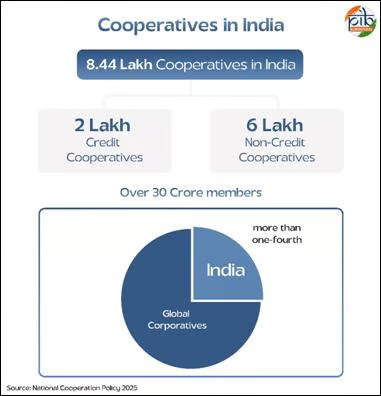
    Legal Framework and Support for Cooperatives:

    • In India, cooperatives are governed by the Cooperative Societies Act, which is implemented at both the state and national levels.
    • The Multi-State Cooperative Societies Act (2002): This law regulates cooperatives that operate in more than one state.
    • The National Cooperative Policy (2002): Aimed at creating an enabling environment for the cooperative movement, it focuses on improving governance, member participation, and financial sustainability.
    • The Ministry of Cooperation: Established in 2021, this ministry focuses on supporting the growth of cooperatives in India, including reforming their governance and providing financial support.
    • National Cooperation Policy 2025: It aims to build on the unique strengths of India’s cooperative tradition, promote economic democratization, and uplift rural economies through collective participation.

    Bab el-Mandab Strait

    Geography

    In News

    • Concerns have risen over the possible disruption of the Bab el-Mandab Strait, following the entry of the Iran-backed Houthis of Yemen into the ongoing Middle East conflict.

    Bab el-Mandab Strait

    • It is also known in Arabic as the “Gate of Tears,” is located at the southern tip of the Red Sea.
    • It lies between Yemen on one side and the Horn of Africa on the other.
    • It connects the Red Sea with the Gulf of Aden, and further with the Indian Ocean.
    • It is one of the world’s most important maritime chokepoints.

    Strategic Importance

    • The Bab el-Mandab accounts for roughly 10–12% of global oil and natural gas shipments.
    • It is strategically important because it connects with the Suez Canal, which further links it to  the Mediterranean Sea.
    • It is also linked to the SUMED pipeline, making it a vital corridor for global energy and trade flows.

    Additional Information – SUMED (Suez-Mediterranean) pipeline

    • It is a 200-mile pipeline in Egypt connecting Ain Sukhna on the Red Sea to Sidi Kerir on the Mediterranean.
    • It is a strategic alternative to the Suez Canal for transporting Persian Gulf oil to Europe and North America,

    Key Details :

    • Purpose: Key crude oil transportation route to bypass the Suez Canal, vital for energy security during congestion.
    • Route: Connects Ain Sukhna (Gulf of Suez, Red Sea) to Sidi Kerir (near Alexandria, Mediterranean).
    • Capacity: Roughly 2.5 million barrels per day.
    • Ownership: Operated by the Arab Petroleum Pipeline Company (joint venture between Egypt, Saudi Arabia, Kuwait, UAE, and Qatar).

    Samrat Samprati

    Art & Culture

    In News

    • The Prime Minister inaugurated the Samrat Samprati Sangrahalay (Jain Heritage Museum) at Koba Tirth in Gandhinagar, Gujarat.

    Samrat Samprati

      • A Mauryan emperor and grandson of emperor Ashoka.
      • Also known by the names Indrapalit, Sangat, and Vigatashok.
      • His life is described in Jain scriptures including Sampratikatha, Parishistaparva, and Prabhavakcharita.
      • Referred to as ‘Jain Ashoka’ for his pivotal role in spreading Jainism and the principle of ahimsa (non-violence) across the subcontinent.
      • PM Modi noted that Samrat Samprati expanded ahimsa from the throne and propagated Satya (Truth), Asteya (non-stealing), and Aparigraha (non-possessiveness) with detachment and selflessness — treating power as service and sadhana. Prime Minister of India
    • Known to have built and repaired many Jain temples across the subcontinent.


    Indian National Space Promotion and Authorization Centre (IN-SPACe)

    Science & Technology

    In News

    • The Indian National Space Promotion and Authorization Centre (IN-SPACe) has opened applications for the second edition of IN-SPACe’s Model Rocketry Competition.

    Indian National Space Promotion and Authorisation Centre (IN-SPACe) 

    • It is a single-window, autonomous nodal agency under the Department of Space (DOS). 
    • Established by the Government of India in June 2020, 
    • It acts as a bridge between the Indian Space Research Organisation (ISRO) and Non-Governmental Entities (NGEs), including private companies and academia. 
    • Chairman: Dr. Pawan Kumar Goenka.
    • Headquarters: Located in Bopal, Ahmedabad, Gujarat.

    Key Functions & Roles

    • IN-SPACe is responsible for promoting, enabling, authorising, and supervising the space activities of private players in India: 
    • Facilitation: Provides NGEs with access to ISRO infrastructure and technical expertise to build and launch space missions.
    • Promotion: Focuses on expanding the Indian space economy through initiatives like the ₹500 crore Technology Adoption Fund (TAF) and the Satellite Bus as a Service (SBaaS).

    Solid Waste Management (SWM) Rules, 2026

    Environment

    Context

    • The Ministry of Environment, Forest and Climate Change has notified the Solid Waste Management (SWM) Rules, 2026.

    The Solid Waste Management (SWM) Rules, 2026

    • Notified by – Ministry of Environment, Forest and Climate Change (MoEFCC)
    • It will come into full effect on April 1, 2026.
    • These rules supersede the SWM Rules, 2016 and aim to transition India toward a Circular Economy and a “Zero Waste” model.

    Key Provisions of SWM Rules, 2026

    • Source Segregation: Mandates separating waste into four streams: wet, dry, sanitary, and special care (hazardous).
    • Bulk Generators: Entities producing 100 kg/day must handle wet waste locally or adopt Extended Producer Responsibility (EPR).
    • Fuel Usage: Industries and cement plants must increase Refuse Derived Fuel (RDF) usage from 5% to 15% within six years.
    • Digital Monitoring: A centralized CPCB portal will track the entire waste life cycle.
    • Compliance: Stricter “Polluter Pays” enforcement and mandatory, time-bound remediation of legacy landfill sites.
  • Arab League | “Bhavasagara” Referral Centre | GRSE Delivers 3 Frontline Naval Platforms to Indian Navy

    Arab League

    Syllabus: GS2/Regional Groupings

    Context

    • The Council of the League of Arab States has issued a strong condemnation of Iran’s attacks on several Arab countries.

    About

    • The Arab League, officially known as the League of Arab States was established in Cairo in 1945 initially with seven members.
    • Seven founding member states: Egypt, Iraq, Jordan, Lebanon, Saudi Arabia, Syria, and Yemen.
    • Currently it has 22 member states.
    • The member nations are located in the Middle East and North Africa.
    • It has pledged to cooperate on economic and military affairs.
    • The League Council is the highest body and is composed of representatives of member states.
    • The league makes decisions on a majority basis, but there is no mechanism to compel members to comply with resolutions.
    • There are four nations that were conferred observer status: Brazil, Eritrea, India, and Venezuela.
    • Source: AIR

    “Bhavasagara” Referral Centre

    Syllabus: GS3/ Environment

    In News

    • The Ministry of Environment, Forest and Climate Change (MoEFCC) has officially designated the “Bhavasagara” Referral Centre of the Centre for Marine Living Resources & Ecology (CMLRE), Kochi, Kerala, as India’s National Repository for Deep-Sea Fauna.
    • The recognition has been granted under the Biological Diversity Act, 2002.

    About

    • The designation establishes “Bhavasagara” Referral Centre as a critical national facility for the preservation, study, and documentation of India’s deep-sea biological heritage.
    • The Centre currently houses an extensive collection of more than 3,500 taxonomically identified and geo-referenced voucher specimens.
    • Under the Biological Diversity Act, 2002, the Repository is authorised to:
    • Preserve representative biological samples (such as DNA sequences)
    • Act as the official custodian for any new deep-sea species
    • Capacity Building: Aligning with the goals of the UN Decade of Ocean Science for Sustainable Development (2021–2030).
    • Centre for Marine Living Resources & Ecology (CMLRE)
    • Established in 1998, Centre for Marine Living Resources & Ecology (CMLRE) is a premier institute under the Ministry of Earth Sciences (MoES), Government of India.
    • It is dedicated to the exploration, management, and conservation of marine living resources.
    • CMLRE works in India’s Exclusive Economic Zone (EEZ), and the adjacent deep seas.

    GRSE Delivers 3 Frontline Naval Platforms to Indian Navy

    Syllabus: GS3/ Defence

    Context

    • Garden Reach Shipbuilders and Engineers Ltd (GRSE) delivered three frontline naval platforms, INS Dunagiri, INS Sanshodhak, and INS Agray,  to the Indian Navy.
    • With this GRSE has reached the milestone of building 118 warships, including 80 delivered to the Indian Navy, strengthening India’s indigenous defence ecosystem.

    INS Dunagiri (Advanced Stealth Frigate)

    • It is the second ship under Project 17A built by GRSE. The 149-metre, 6,670-tonne frigate is equipped with:
    • BrahMos for precision strikes.
    • Advanced AESA radar and integrated combat management systems.
    • It operates on a Combined Diesel and Gas (CODAG) propulsion system.
    • It is capable of multi-dimensional warfare across air, surface, and sub-surface domains.
    • INS Sanshodhak (Survey Vessel – Large)
    • It is the fourth and final vessel in its class. It is designed for
    • Hydrographic surveys in coastal and deep waters.
    • Collection of oceanographic data.
    • It also supports Helicopter operations, Humanitarian Assistance and Disaster Relief (HADR) missions and Limited combat roles.
    • INS Agray (ASW Shallow Watercraft)
    • It is designed specifically for anti-submarine warfare (ASW) in littoral waters. It features:
    • ~88% indigenous content
    • Lightweight torpedoes and ASW rockets
    • 30 mm naval gun
    • Its shallow draught and waterjet propulsion enhance manoeuvrability in coastal areas.
    • Source: AIR