Author: instakas

  • Ambedkar Jayanti | 9th Indian Ocean Conference | India Rejects China’s Fictitious Naming of Places in Arunachal Pradesh | Project HIM SAROVAR | National Agriculture Market (e-NAM)

    Ambedkar Jayanti

    History

    Context

    • On April 14, India commemorates Ambedkar Jayanti, marking the 135th birth anniversary of Dr. BR Ambedkar.

    Dr. Bhimrao Ambedkar

    • Babasaheb Dr. Bhimrao Ambedkar was a social reformer, jurist, economist, author, polyglot (knowing or using several languages), orator, a scholar and thinker of comparative religions.
    • Birth – He was born in 1891 in Mhow, Central Province (now Madhya Pradesh).

    Brief Profile

    • He is known as the Father of the Indian Constitution and was India’s first Law Minister.
    • He was the Chairman of the Drafting Committee of the Constitution.
    • He was a well-known statesman who fought for the rights of the Dalits and other socially backward classes.

    Contributions

    • He led the Mahad Satyagraha in March 1927 against Hindus who were opposing the decision of the Municipal Board which had barred the untouchables from using water from the mahad tank.
    • In 1926, the Municipal Board of Mahad (Maharashtra) passed an order to open the tank to all communities.
    • He participated in all three Round Table Conferences.
    • In 1932, Dr. Ambedkar signed the Poona pact with Mahatma Gandhiji, which abandoned the idea of separate electorates for the depressed classes (Communal Award).
    • However, the seats reserved for the depressed classes were increased from 71 to 147 in provincial legislatures and to 18% of the total in the Central Legislature.
    • His ideas before the Hilton Young Commission served as the foundation of the Reserve Bank of India (RBI).

    Election and Designation

    • In 1937, he was elected to the Bombay Legislative Assembly as a legislator (MLA).
    • He was appointed to the Executive Council of Viceroy as a Labour member in 1942.
    • In 1947, Dr. Ambedkar accepted PM Nehru’s invitation to become Minister of Law in the first Cabinet of independent India.

    Shift to Buddhism

    • He resigned from the cabinet in 1951, over differences on the Hindu Code Bill. He converted to Buddhism in 1956.
    • He was awarded India’s highest civilian honour the Bharat Ratna in 1990.

    Important Works

    Journals

    • Mooknayak (1920), Bahishkrit Bharat (1927), Samatha (1929), Janata (1930).

    Books

    • Annihilation of Caste, Buddha or Karl Marx, The Untouchable: Who are They and Why They Have Become Untouchables
    • Buddha and His Dhamma
    • The Rise and Fall of Hindu Women

    Organizations

    • Bahishkrit Hitkarini Sabha (1923)
    • Independent Labor Party (1936)
    • Scheduled Castes Federation (1942)

    Death

    • He died on 6th December 1956.
    • Chaitya Bhoomi is a memorial to B R Ambedkar, located in Mumbai.

    Relevance of Ambedkar in Present Times

    • Caste-based inequality in India still persists. While Dalits have acquired a political identity through reservation and forming their own political parties, they lag behind in social (health and education) and economic dimension.

    9th Indian Ocean Conference

    Defence/Security

    Context

    • The External Affairs Minister addressed the 9th Indian Ocean Conference, which was centered on the theme “Collective Stewardship for Indian Ocean Governance.”

    Indian Ocean Conference

    • It is a premier annual consultative forum launched in 2016 by the India Foundation
    • Objective – to discuss regional cooperation, maritime security, and economic development in the Indian Ocean Region (IOR).
    • Significance – It connects over 40 countries—including ministers and experts—focused on the SAGAR (Security and Growth for All in the Region) vision.
    • The 9th edition was held in Mauritius (April 2026), with the 8th held in Oman.

    Additional Information – Government Initiatives

    • Sagarmala Programme-Supports port infrastructure, coastal development, and connectivity.
    • Maritime India Vision 2030 (MIV 2030): Aiming for India to become a top 10 shipbuilding nation by 2030 and create a world-class, efficient, and sustainable maritime ecosystem.
    • Sagarmanthan Dialogue: An annual maritime strategic dialogue to position India as a global center for maritime conversations.
    • Maritime Development Fund: ₹25,000 crore fund for long-term financing to modernize ports and shipping infrastructure, encouraging private investment.
    • Launch of MAHASAGAR (Mutual and Holistic Advancement for Security and Growth for All in the Region) reflects India’s strategic rebranding in the IOR.
    • Naval Modernisation and Indigenous Development: India is modernising naval capabilities:
    • Commissioning indigenous warships (e.g., INS Vikrant, INS Visakhapatnam).
    • Boosting maritime domain awareness and power projection.

    India Rejects China’s Fictitious Naming of Places in Arunachal Pradesh

    International
    In News

    • India has strongly rejected China’s attempts to assign “fictitious names” to places it considers part of its territory, calling such actions “mischievous” and harmful to bilateral relations.

    China’s actions

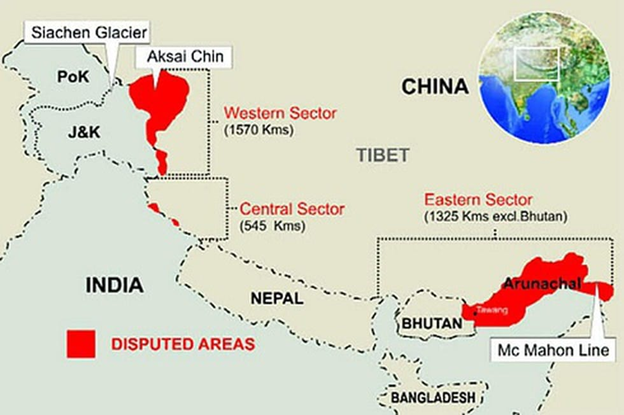
    • China claims Arunachal Pradesh as “southern Tibet” (Zangnan)
    • It has issued multiple lists of renamed locations since 2017, which India consistently rejects as invalid.
    • China is creating administrative units such as He’an and Hekang counties in areas of Ladakh, including parts of Aksai Chin, which is a long-standing border dispute region.
    • China has also reportedly created a new county, Cenling.

    Cenling

    • It is located near the Karakoram mountain range, which falls in the vicinity of Pakistan-occupied Kashmir (PoK) and Afghanistan’s Wakhan corridor.
    • He’an – It included parts of the Aksai Chin plateau, which has been in focus because of the long-running India-China border issue.
    • India’s Response The Ministry of External Affairs (MEA) reiterated that regions like Arunachal Pradesh and other disputed areas are “integral and inalienable” parts of India.

    Line of Actual Control (LAC)

    • The LAC is the demarcation that separates Indian-controlled territory from Chinese-controlled territory.
    • India considers the LAC to be 3,488 km long, while the Chinese consider it to be only around 2,000 km.
    • It is divided into three sectors: the eastern sector which spans Arunachal Pradesh and Sikkim, the middle sector in Uttarakhand and Himachal Pradesh, and the western sector in Ladakh.

    Project HIM SAROVAR

    Environment

    Context

    • Project Him Sarovar has been launched in Ladakh.

    Project Him Sarovar

    • It is a scientific water conservation initiative launched on April 10, 2026,
    • The project aims to address chronic water scarcity in the region by creating 50 small water bodies to capture and store annual snowmelt and rainwater.

    Key Objectives & Impact

    • Water Security: To provide year-round water availability for irrigation and rural needs in the high-altitude cold desert, where melting snow often goes to waste.
    • Climate Resilience: Serving as a “shield” against the visible impacts of climate change, such as receding glaciers and falling water tables.
    • Infrastructure Plan: The goal is to construct 50 reservoirs—30 in Leh and 20 in Kargil—within the next year.
    • Restoration Goals: Aligns with the national vision of restoring 2.6 crore hectares of degraded land by 2030

    National Agriculture Market (e-NAM)

    Economy

    Context

    • The e-NAM portal reflects increasing market integration, with the number of connected mandis rising from 1,389 in 2024 to 1,656 as of March 2026, spanning 23 States and 4 Union Territories.

    National Agriculture Market (e-NAM)

    • It is a pan-India electronic trading portal launched on April 14, 2016.
    • It functions as a “central sector scheme” fully funded by the Central Government via the Agri-Tech Infrastructure Fund (ATIF).
    • Its primary goal is to create a unified national market for agricultural commodities by networking existing Agricultural Produce Market Committee (APMC) mandis.

    Core Objectives

    • Unified National Market: Integrating state-level markets to facilitate pan-India trade, moving towards the vision of “One Nation, One Market”.
    • Transparent Price Discovery: Enabling real-time price discovery based on actual demand and supply through transparent online auctions.
    • Reducing Intermediaries: Minimising the role of middlemen to ensure farmers receive a larger share of the final consumer price.
    • Quality Assuring: Implementing quality assaying and grading so that prices are commensurate with produce quality.
  • Constitution of India in Sindhi Language | Justice Varma Resigns Amid Proceedings For Removal | Keytruda | Sentinel Species

    Constitution of India in Sindhi Language

    Syllabus: GS2/Governance

    In News

    • Recently, the Vice-President released the latest version of the Constitution of India in the Sindhi language in both Devanagari and Persian scripts.
    • About Sindhi
    • It is an Indo-Aryan language spoken in Pakistan and in India, with smaller communities worldwide.
    • It was officially included in the Eighth Schedule of the Constitution of India by the 21st Constitutional Amendment Act 1967.
    • It is one of the oldest and most melodious languages with a rich literary tradition blending Vedantic and Sufi philosophies that promote unity, love, and brotherhood.
    • Original Language of the Constitution
    • Drafted originally in English, a Translation Committee under Ghanshyam Das Gupta produced the official Hindi version.
    • Both English and Hindi versions were signed by Constituent Assembly members and submitted to Rajendra Prasad on 24 January 1950.
    • Source :Air

    Justice Varma Resigns Amid Proceedings For Removal

    Syllabus: GS2/Polity & Governance; Judiciary

    Context

    • Recently, Justice Yashwant Varma, an Allahabad High Court judge submitted his resignation to the President of India..
    • About Judiciary in India
    • India has a single unified judiciary (unlike the US dual system).
    • Supreme Court of India (Top level); Articles 124–147
    • High Courts (State level); Articles 214–231
    • Subordinate Courts (District & lower courts); Articles 233–237
    • This structure ensures uniform interpretation of law across the country.
    • Key Features of Indian Judiciary
    • Independence of Judiciary (basic structure doctrine)
    • Judicial Review, as it can strike down unconstitutional laws
    • Separation of Powers
    • Rule of Law
    • High Court Judges
    • High Court judges are governed mainly by:
    • Article 214: High Courts for States
    • Article 216: Constitution of High Courts
    • Article 217: Appointment & conditions of office
    • Article 218: Application of provisions of removal (same as SC judges)
    • Article 219: Oath or affirmation
    • Article 220–224: Other provisions (practice restrictions, additional judges, etc.)
    • Appointment of High Court Judges [Article 217(1)]: By the President of India, after consultation with the Chief Justice of India (CJI), Governor of the State, and Chief Justice of the High Court (for other judges).
    • Qualifications: A person must be a citizen of India. Held judicial office for 10 years, or been an advocate of a High Court for 10 years.
    • Tenure (Term of Office): Holds office until age of 62 years (Article 217(1))
    • Oath or Affirmation (Article 219): Judge must take oath before the Governor of the State; Oath includes upholding Constitution, and performing duties without fear or favour.
    • Removal of High Court Judges
    • Grounds: Proved misbehaviour & Incapacity;
    • Procedure (Impeachment-like): Motion introduced in Parliament; supported by special majority (majority of total membership, and 2/3rd of members present & voting), address sent to President and President orders removal.
    • Resignation: Judge may resign by writing to the President of India.
    • Source: News On AIR

    Keytruda

    Syllabus: GS2/Health

    Context

    • Recent investigations exposed a dangerous counterfeit market for Keytruda in India, fuelled by hospital-level supply chain breaches.
    • What is Keytruda?
    • Brand name for Pembrolizumab, a revolutionary immunotherapy / checkpoint inhibitor drug for advanced and aggressive cancers.
    • Manufactured by Merck & Co. (USA) known as MSD outside the US and Canada.
    • Unlike traditional treatments that attack tumours directly, Keytruda empowers the body’s own immune system to identify and destroy cancer cells.
    • Immunotherapy
    • Immunotherapy is a type of medical treatment that uses the body’s own immune system to fight diseases.
    • While chemo and radiotherapy directly kill cancer cells and some healthy cells along with it, immunotherapy pushes the body’s own immune system to recognise and kill cancer cells.
    • Being highly targeted, immunotherapy spares healthy cells.
    • These therapies have been shown to extend life even in patients with aggressive forms of cancer.
    • Other Types of Immunotherapy for Cancer Treatments
    • CAR-T cell therapy involves collecting a patient’s own T cells, engineering them to create chimeric receptors, multiplying these modified cells, and returning them to the patient.
    • These engineered T cells can then identify, attach to, and destroy cancer cells that would normally evade immune detection.
    • mRNA vaccines for cancer are currently under development.
    • Unlike vaccines for infections given to healthy individuals, cancer vaccines are administered to patients who already have certain cancers to prevent relapse.
    • These vaccines train the immune system to identify proteins called neoantigens found only in cancer cells.
    • Once recognised, the immune system remembers these markers for years, continuing to fight cancer and prevent recurrence.
    • Implications for India’s Cancer Fight
    • Rising Burden: India’s cancer cases projected to surge by nearly 74% by 2045 making access to drugs like Keytruda critical.
    • Affordability Crisis: Extreme cost creates a dual-tier health system, only the wealthy or specially insured can access top-tier immunotherapy.
    • Counterfeit Risk: Price-driven desperation has opened the door to fake drug markets, with hospital supply chains as weak links posing lethal risks to patients.
    • Source: IE

    Sentinel Species

    Syllabus: GS3/Environment

    Context

    • Emperor Penguin (Aptenodytes forsteri) upgraded from Near Threatened to Endangered on the IUCN Red List, driven by climate-induced sea-ice loss.
    • As a sentinel species, its decline signals broader Antarctic ecosystem stress, populations projected to halve by the 2080s.
    • What is a Sentinel Species?
    • It is a plant or animal whose health reflects the overall condition of the ecosystem it inhabits.
    • They respond quickly and visibly to environmental stressors such as pollution, disease, and climate change.
    • They act as early warning systems, allowing detection of ecological imbalance before it becomes widespread.
    • Examples of Sentinel Species
    • Amphibians (Frogs): Frogs have permeable skin, making them highly sensitive to pollutants and pathogens. Decline in frog populations is often an early indicator of ecosystem stress.
    • Canaries in Coal Mines: Historically used to detect carbon monoxide poisoning. They showed distress before humans due to faster metabolism.
    • Honeybees: Used to monitor agricultural chemicals and pesticide loads. Decline in bee populations signals ecosystem imbalance and pollination crisis.
    • Polar Bears: Indicators of Arctic ecosystem health and contaminant accumulation. Reflect impacts of climate change and ice loss.
    • About IUCN
    • Created in 1948.
    • Headquarter: Gland, Switzerland
    • It is a membership union, and works closely with international frameworks.
    • India, a State Member since 1969.
    • It is an intergovernmental and NGO network (hybrid organisation)
    • Source: TH
  • e-Swathu 2.0

    e-Swathu 2.0

    News –

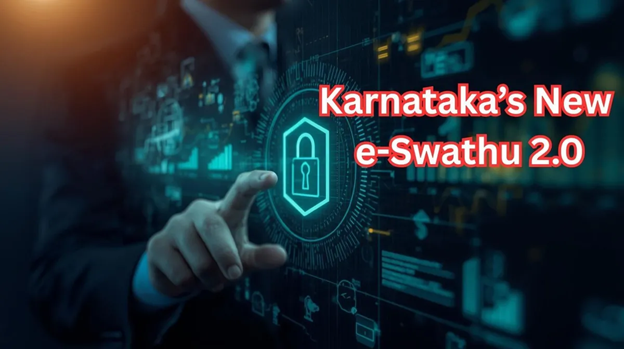
    • Minister Priyank Kharge announced crucial upgrades to the e-Swathu 2.0 platform to resolve technical glitches and improve user experience

    E-Swathu 2.0

    • It is an upgraded digital platform launched by the Karnataka government in late 2025 to manage rural property records.
    • Mandate – It aims to eliminate land fraud by mandating geo-tagging (GPS mapping) for every property before issuing essential documents like Form 9 and Form 11.

    Key Features of E-Swathu 2.0

    • Mandatory Geo-Tagging: Properties must be physically mapped with GPS coordinates to link digital records to their exact spatial location.
    • Unique PID Number: Every verified property receives a unique Property Identification (PID) number, creating a “digital fortress” against fake claims.
    • Simplified Applications: Supports Aadhaar-based verification and online tracking for property ownership and tax data.
  • Project Glasswing | Indus River Dolphin | Light Pollution: Rising Threat from Artificial Light at Night (ALAN)

    Project Glasswing

    Syllabus: GS/ Science & Technology

    Context

    • Anthropic has launched Project Glasswing, a global cybersecurity initiative linked to its advanced AI model Claude Mythos.
    • What is Project Glasswing?
    • Project Glasswing is a global cybersecurity initiative led by Anthropic.
    • It is a consortium of around 40 global technology firms and open-source contributors aimed at securing critical digital infrastructure, using advanced Artificial Intelligence.
    • The project provides early access to the Claude Mythos model to selected partners. It is backed by;
    • $100 million in AI usage credits,
    • $4 million support for open-source security.
    • Major participating firms include: Amazon Web Services, Apple, Google, Microsoft, NVIDIA etc.
    • Role of Claude Mythos
    • Claude Mythos is an advanced Large Language Model (LLM) with exceptional coding and vulnerability detection capabilities. It can;
    • Detects zero-day vulnerabilities (previously unknown flaws).
    • Identify decades-old bugs in widely used systems.
    • Combine vulnerabilities to gain system-level control.
    • Source: TH

    Indus River Dolphin

    Syllabus: GS3/Species in News

    Context

    • The dolphin is one of the world’s most endangered freshwater cetaceans and a flagship species of the Indus river system.
    • Indus River Dolphin
    • Cetaceans are aquatic mammals which include whales, dolphins and porpoises.
    • Indus River Dolphin was once distributed across the Indus and its tributaries in Pakistan and northwestern India.
    • But its range has drastically contracted due to flow regulation, loss of connectivity, pollution, climate change and entanglement in fishing gears.
    • The Indus river dolphin is functionally blind, it relies entirely on echolocation to navigate, hunt and avoid obstacles.
    • indus river dolphin
    • Source: DTE

    Light Pollution: Rising Threat from Artificial Light at Night (ALAN)

    Syllabus: GS3/Environment

    Context

    • A study published in the journal Nature has found that artificial light at night increased by 16% globally between 2014 and 2022.
    • The sharpest rise has been observed in Sub-Saharan Africa and Southeast Asia, with India and China emerging as major contributors in Asia.
    • What Is Light Pollution?
    • Light pollution is the human-made alteration of outdoor light levels from those occurring naturally. In practical terms, it refers to unwanted, inappropriate, or excessive artificial lighting, primarily caused by Artificial Light at Night (ALAN).
    • It is increasingly recognised as an anthropogenic environmental pollutant. It is estimated that:
    • Over 80% of the world’s population lives under light-polluted skies;
    • Around 23% of Earth’s land area is affected by skyglow.
    • Causes
    • Rapid urbanisation: Today, about 55% of the global population lives in urban areas, and this is projected to rise to 68% by 2050, significantly increasing the demand for outdoor lighting.
    • Unregulated outdoor lighting: In poorly regulated systems (unshielded streetlights, billboards, façade lighting), 30–50% of emitted light is wasted upward or sideways, directly contributing to skyglow.
    • Vehicle-induced light pollution: Rapid growth in vehicle numbers increases headlight glare and roadway illumination.
    • India has over 30 crore registered vehicles, contributing significantly to urban night brightness.
    • Shift-based work: Expansion of 24×7 services (IT, healthcare, transport, manufacturing) leads to continuous lighting demand.
    • Impacts
    • Human Health: Exposure to artificial light at night suppresses melatonin production, leading to insomnia and other health issues.
    • Chronic exposure to light pollution has been linked to increased stress and reduced cognitive performance.
    • Environmental and Ecological: Nocturnal animals, migratory birds, and insects rely on natural light cycles.
    • Birds living in brightly lit areas tend to sing earlier at dawn and later at dusk, disrupting their natural rhythms and negatively impacting migration, feeding, and breeding patterns.
    • Similar effects occur in species like fireflies, whose communication suffers. Artificial lighting confuses navigation and feeding patterns.
    • Astronomy and Scientific Research: Brightening of the night sky hampers astronomical observations, especially near urban centers.
    • Energy Waste: Billions of units of electricity are wasted annually due to poorly directed lighting, increasing carbon emissions.
    • Government Initiatives to Curb Light Pollution
    • Energy Conservation Building Code (2017): The ECBC is a set of standards established by India’s Bureau of Energy Efficiency (BEE) to promote sustainable design and reduce energy consumption by 25–50% in new commercial buildings.
    • Street Lighting National Programme (SLNP): Launched in 2015, to replace conventional street lights with smart and energy-efficient LED streetlights across the country.
    • Smart Cities Mission: Adaptive lighting is a core component of India’s Smart Cities Mission, designed to optimize energy consumption and reduce light pollution by dynamically adjusting street lamp intensity based on real-time traffic and time conditions.
    • Environmental Protection Act 1986: Provides umbrella power to the Central Government to regulate environmental pollution of all kinds.
    • Light pollution is not explicitly defined, but can be regulated as a form of environmental disturbance.
  • Karnataka Power Corporation Limited (KPCL)

    Karnataka Power Corporation Limited (KPCL)

    News –

    • Karnataka Power Corporation Limited (KPCL) achieved its highest-ever hydropower generation, producing 15,509 million units (MU) in the 2025–26 financial year.

    Karnataka Power Corporation Limited (KPCL)

    • It is a premier power generation company owned by the Government of Karnataka.
    • Established in July 1970, it is responsible for the investigation, design, construction, and operation of major power projects across the state.

    Power Generation Portfolio

    • KPCL operates a diversified fleet with a total installed capacity of approximately 8,846.305 MW


    Power Type

    Major Stations / Projects

    Installed Capacity (MW)

    Thermal

    Raichur (RTPS), Bellary (BTPS), Yeramarus (YTPS)

    ~5,020 MW

    Hydel

    Sharavathi, Nagjhari, Varahi, Almatti, Kadra

    ~3,600+ MW

    Renewable

    Wind (Kappatagudda), Solar (Yelesandra, Itnal, etc.)

    ~24+ MW

    Other

    Gas (Yelahanka CCCP), Waste-to-Energy (Bidadi)

    ~381.5 MW (Ongoing)

    Major Ongoing & Proposed Projects

    • Sharavathy Pumped Storage: A massive 2,000 MW project aimed at grid stabilization and energy storage.
    • Yelahanka Combined Cycle Plant: A 370 MW gas-based project in its final stages of commissioning.
    • Bidadi Waste-to-Energy: An 11.5 MW project converting municipal waste into power.
  • India Withdraws Bid to Host COP 33 in 2028 | Plan for Great Nicobar Island Projects | Mahatma Jyotirao Phule

    India Withdraws Bid to Host COP 33 in 2028

    Syllabus: GS3/ Environment

    Context

    • India has withdrawn its candidature to host COP33 (2028) under the United Nations Framework Convention on Climate Change process.
    • Possible Reasons for Withdrawal
    • Administrative Burden: Hosting a COP event requires substantial infrastructure, security, and financial expenditure.
    • Preparations for other large-scale international events, such as the proposed 2030 Commonwealth Games in Ahmedabad, will require similar administrative and financial resources.
    • Political Timing: The year 2028 falls close to the 2029 Lok Sabha elections, which is a period marked by intense administrative, political, and logistical engagements.
    • Impact of India withdrawal
    • India’s withdrawal from hosting COP33 results in the loss of an important global platform to project itself as a leader of the Global South in climate negotiations.
    • India loses an opportunity to highlight its progress in renewable energy, energy transition, and sustainable development initiatives before the global community.
    • The decision may limit global attention on the climate vulnerabilities of South Asia, which is one of the most climate-sensitive regions.
    • Hosting such global events helps in mobilising climate finance, technology transfer, and international collaborations, which may now be relatively constrained.
    • What is COP (Conference of Parties)?
    • The Conference of Parties (COP) is the annual supreme decision-making body of the United Nations Framework Convention on Climate Change (UNFCCC).
    • It brings together nearly 200 countries to negotiate global climate action, climate finance, and emission reduction commitments.
    • The first COP session was held in Berlin, Germany, in March 1995.
    • Meeting: The COP meets every year, unless the Parties decide otherwise.
    • The COP Presidency rotates among the five recognized UN regions: Africa, Asia-Pacific, Latin America and the Caribbean, Central and Eastern Europe and Western Europe and Others.
    • The COP meets in Bonn, unless a Party offers to host the session.
    • United Nations Framework Convention on Climate Change
    •  
    • UNFCCC is one of the three Rio Conventions, which were adopted at the Earth Summit 1992 alongside the Convention on Biological Diversity (CBD) and the Convention to Combat Desertification (UNCCD).
    • The convention entered into force in 1994.
    • The primary objective of the UNFCCC is to stabilize greenhouse gas concentrations in the atmosphere at a level that prevents dangerous anthropogenic interference with the climate system.
    • Secretariat: The UNFCCC secretariat is headquartered in Bonn, Germany.
    • Major Instruments: It is the parent treaty to two major legal agreements:
    • Kyoto Protocol (1997): Set the emission targets for developed countries.
    • Paris Agreement (2015): A landmark universal agreement aiming to limit global warming to well below 2°C, preferably 1.5°C, above pre-industrial levels.
    • Financial Mechanisms: Manages and coordinates funds such as the Green Climate Fund (GCF), the Global Environment Facility (GEF), and the Adaptation Fund to assist developing nations.
    • Recent COP Meetings
    •  
    • COP27: Held in Sharm El Sheikh, Egypt (2022).
    • COP28: Held in Dubai, UAE (2023), resulting in the “UAE Consensus” focused on transitioning away from fossil fuels.
    • COP 29: held in Baku, Azerbaijan (2024)
    • COP 30: Held in Belém, Brazil (2025)
    • COP 31: Scheduled for Antalya, Türkiye (2026)
    • Source: DTE

    Plan for Great Nicobar Island Projects

    Syllabus: GS3/ Infrastructure/ Environment

    Context

    • The draft master plan for developing the Great Nicobar Island (GNI) has proposed to focus on tourism as the “primary economic driver” of growth.
    • Great Nicobar Island project
    • The project received Stage-I clearance in 2022.
    • Implementing authority: The project is being implemented by the Port Blair-based Andaman and Nicobar Islands Integrated Development Corporation Ltd (ANIIDCO).
    • The Project involves developing an International Container Transshipment Terminal (ICTT), an international airport, township development, and a 450 MVA gas and solar-based power plant on the island.
    • The site for the ICTT and power plant is Galathea Bay on the southeastern corner of Great Nicobar Island, where there is no human habitation.
    • The Andaman and Nicobar Islands Integrated Development Corporation (ANIIDCO)
    • ANIIDCO is a quasi-government agency, incorporated in 1988 under the Companies Act.
    • Its objective is to develop and commercially exploit natural resources for the balanced and environment friendly development of the territory.
    • Its main activities include trading of petroleum products, Indian made foreign liquor and milk, managing tourism resorts and infrastructure development for tourism and fisheries.
    • Highlights of the Draft Plan
    • The plan has been drafted for a projected population of 3.36 lakh by 2055.
    • By that time, the master plan is expected to achieve an annual inflow of more than a million tourists.
    • It proposes a township divided into several clusters: an administrative and institutional cluster, a multi-modal logistic cluster (to include airport, port, freight and passenger terminals, defence area, and green development), and tourism clusters.
    • The development will start with “anchor projects” such as the International Container Transhipment Port (ICTP), the Great Nicobar International Airport, and the GNI gas and solar power plants from 2025 to 2029.
    • The second part of Phase 1 (2030-2035) is expected to see growth in tourism activity and upgraded infrastructure.
    • Phase 2 (2036-2041) envisages a phase of consolidation and enhanced growth of tourist traffic and the opening of opportunities for other potential economic drivers.
    • The last phase (2042-2047) has been earmarked for “future development”.
    • Concerns over the project
    • Ecological Fragility: Large-scale diversion of pristine tropical forests threatens a highly fragile island ecosystem with low carrying capacity.
    • Biodiversity Loss: Destruction of habitats may endanger endemic species.
    • Economic Viability Concerns: Experts questioned the economic feasibility of the project, given the high costs and ecological sensitivity of the region.
    • Indigenous Rights Violation: The project allegedly violates the rights of the Shompen, a Particularly Vulnerable Tribal Group (PVTG) of hunter-gatherers. The disruption of their traditional lands and lifestyle raises human rights concerns.
    • Volatile Zone: The proposed port is situated in a seismically active zone that experienced a significant geological event during the 2004 tsunami, leading to concerns about the safety and long-term stability of the infrastructure in such a location.
    • Significance of the Project
    • Strategic Maritime Location: Its proximity to the Strait of Malacca enhances India’s ability to monitor one of the world’s busiest sea lanes.
    • Strengthening National Security: Development of dual-use infrastructure (port and airport) improves India’s defence logistics, surveillance, and naval reach in the Indo-Pacific.
    • Global Trade Hub Potential: The transshipment port can reduce India’s dependence on foreign ports (like Singapore/Colombo) and position India as a major logistics hub.
    • Economic Development of Island Region: Infrastructure, connectivity, and urban development can boost investment, employment, and tourism in the Andaman & Nicobar region.
    • Blue Economy Promotion: It supports sustainable use of ocean resources such as shipping, fisheries, and marine-based industries, aligned with India’s blue economy goals.
    • Regional Connectivity and Act East Policy: Enhances connectivity with Southeast Asia, reinforcing India’s engagement under its Act East Policy and Indo-Pacific vision.
    • Andaman and Nicobar Islands
    • Location: The islands are located 1,300 km southeast of the Indian mainland in the Bay of Bengal.
    • It extends from 6° 45′ N to 13° 41′ N and from 92° 12′ E to 93° 57′ E.
    • This archipelago is composed of more than 500 big and small islands, which are divided into two distinct groups of islands – The Andaman Islands and the Nicobar Islands.
    • ‘Ten Degree Channel’ separates the Andaman Islands in the north from the Nicobar Islands in the south.
    • Facts Related to Andaman and Nicobar Islands
    • The Southernmost Island is Great Nicobar whose southernmost tip is only 150 km away from Sumatra, Indonesia.
    • The highest point is Saddle Peak in North Andaman (732 metre), Mount Thullier in Great Nicobar (642 metre).
    • Pandunus or Nicobar Breadfruit is a rare fruit found in the Andaman and Nicobar islands.
    • Barren Island of the Andaman & Nicobar Island group is the only confirmed active volcano not just in India but the whole of South Asia.
    • Indira Point in Great Nicobar is the Southern-most point of India.

    Mahatma Jyotirao Phule

    Syllabus: GS1/History and Personality in News

    Context

    • Prime Minister Narendra Modi paid tributes to Mahatma Jyotirao Phule on his birth anniversary.
    • About Jyotirao Phule
    • Birth: On 11th April, 1827 in Khatgun village which is today in the Satara district of Maharashtra.
    • Title: His family belonged to the ‘mali’ caste and their original title was ‘Gorhay’. On May 11, 1888, he was bestowed with the title of Mahatma by a Maharashtrian social activist Vithalrao Krishnaji Vandekar.
    • Ideology and influence: His ideology centered around liberty, egalitarianism, and socialism. He drew inspiration from Thomas Paine’s book The Rights of Man.
    • Marriage: He was married off when he was only 13 with Savitribai. The couple went on to establish the country’s first school for girls in Bhidewada, Pune, in 1848.
    • Balhatya Pratibandhak Griha: In 1863, Jyotirao and Savitribai began Balhatya Pratibandhak Griha, India’s first home dedicated to prohibiting infanticide and supporting pregnant Brahmin widows and rape victims.
    • Satyashodhak Samaj: Phule along with his followers formed Satyashodhak Samajin 1873 which meant ‘Seekers of Truth’ and was dedicated towards the removal of the socio-economic backwardness of Dalits.
    • It is believed that it was Phule who first used the term ‘Dalit’ for the depiction of oppressed masses often placed outside the ‘varna system’.
    • Literary works: Gulamgiri (Slavery), Shetkarayacha Aasud (Cultivator’s Whipcord), and Tritiya Ratna.
    • Source: PIB
  • Karnataka second-largest hub in India for public charging infrastructure

    Karnataka second-largest hub in India for public charging infrastructure

    News –

    • Karnataka has emerged as the second-largest hub in India for public charging infrastructure, often surpassing Maharashtra and Tamil Nadu in deployment.

    Karnataka Clean Mobility Policy 2025–2030

    • Launched in – February 2025
    • Objective – to position Karnataka as Asia’s premier hub for clean mobility innovation and manufacturing.
    • It targets ₹50,000 crore in investments and the creation of 1,00,000 new jobs by 2030.

    Key Objectives and Targets

    • Infrastructure Expansion: Aims to install 2,600 additional charging stations through public-private partnerships (PPP), bringing the state’s total to over 8,000.
    • Sectoral Transition: Encourages 100% conversion of e-commerce delivery fleets to electric or hydrogen-powered vehicles by 2030.
    • Manufacturing Clusters: Development of world-class mobility clusters in Gauribidanur, Dharwad, and Harohalli to integrate OEMs, suppliers, and R&D centers.
    • Sustainable Public Transport: Promotion of e-rickshaws for last-mile connectivity and expansion of shared bus services outside major urban centers.
  • Skills Outcomes Fund | Decline of Lakes in Jammu & Kashmir | RBI Holds Repo Rate at 5.25 per cent | Phasing Down Hydrofluorocarbons (HFCs) in India | Vinayak Damodar Savarkar | Central Armed Police Forces

    Skills Outcomes Fund

    Syllabus: GS3/ Economy

    In Context

    • The Ministry of Skill Development and Entrepreneurship (MSDE) has launched a campaign to establish the Skills Outcomes Fund.

    Skills Outcomes Fund

    • Objective – This initiative is designed to create better career opportunities for young people from economically disadvantaged backgrounds.
    • Implementing Body: It is managed by the National Skill Development Corporation (NSDC).
    • Financing Model: Uses a blended finance approach, combining government funding with capital from private sector CSR, philanthropic organizations (like the Gates Foundation), and development agencies.
    • Target Beneficiaries: Aims to support over 2 lakh youth from low-income backgrounds over four years, with a significant focus on low-income women.
    • High-Growth Sectors: Training is demand-driven and employer-led, focusing on sectors like BFSI, IT-ITeS, Green Jobs, Healthcare, Logistics, and Electronics.

    Decline of Lakes in Jammu & Kashmir

    Syllabus: GS3/Environment

    Context

    • Comptroller and Auditor General of India (CAG) finds nearly half of Jammu and Kashmir’s lakes have vanished since 1967, warns of ecological crisis.

    Major Causes

    • Unchecked human activities and encroachment;
    • Weak institutional coordination;
    • Absence of a unified regulatory framework, leading to land-use changes.

    Major Lakes of J&K, Ladakh UT

    • Dal Lake: Famous freshwater lake known for houseboats, shikaras, and floating gardens (Raad).
    • Wular Lake: Wular Lake is the largest freshwater lake in India and has been formed due to tectonic activity. It is fed by the Jhelum River and is recognized as a Ramsar site.
    • Pangong Tso: It is a high-altitude brackish water lake extending into Tibet, known for its changing colors and strategic importance.
    • Tso Moriri: It is another high-altitude brackish lake and a Ramsar site.
    • Manasbal Lake: It is considered one of the deepest freshwater lakes in the region and the Mughal garden Jaroka Bagh, built by Nur Jahan, overlooks the lake.
    • Hokersar Wetland: Often referred to as the “Queen of Wetlands”.
    • Surinsar Lake and Mansar Lake: They are twin lakes and are Ramsar sites.

    RBI Holds Repo Rate at 5.25 per cent

    Syllabus: GS3/ Economy

    Context

    • The Monetary Policy Committee of the Reserve Bank of India decided to keep the repo rate unchanged at 5.25%.

    Monetary Policy Committee (MPC)

    • Established under – The Monetary Policy Committee (MPC) constituted by the Central Government under Section 45ZB of the Reserve Bank of India (RBI) Act, 1934.
    • Meeting – The MPC is required to meet at least four times in a year.
    • Composition: The committee comprises six members.

    Out of the six members, three are internal -including the RBI governor who chairs the committee.

    • RBI’s deputy governor is the second internal member.
    • The third member is one RBI official who is nominated by the central board of RBI. Usually, it is the executive director in-charge of monetary policy.
    • The other three are external members who are appointed for four years.
    • Voting: Each member of the MPC has one vote, and in the event of an equality of votes, the Governor has a second or casting vote.
    • Significance of constituting the MPC: MPC was set up consequent to the agreement reached between Government and RBI to task RBI with the responsibility for price stability and inflation targeting.
      • The Reserve Bank of India and Government of India signed the Monetary Policy Framework Agreement.
    • Functions: The MPC determines the policy repo rate required to achieve the inflation target. It acts as a benchmark for all other interest rates in the economy.

    Monetary Policy Tools in India

    • Repo Rate: Rate at which RBI lends short-term funds to banks against collateral.
    • Reverse Repo Rate: Rate at which RBI absorbs liquidity from banks.
    • Cash Reserve Ratio (CRR): Portion of deposits banks must keep with RBI in cash.
    • Statutory Liquidity Ratio (SLR): Portion of deposits kept in liquid assets (gold, cash, securities).
    • Open Market Operations (OMO): Buying/selling of government securities to control liquidity.
    • Marginal Standing Facility (MSF): Emergency borrowing by banks at a penal rate.
    • Liquidity Adjustment Facility (LAF): Framework for repo/reverse repo operations.
    • Market Stabilisation Scheme (MSS): Bonds issued to absorb excess liquidity.

    Phasing Down Hydrofluorocarbons (HFCs) in India

    Syllabus: GS3/ Environment

    Context

    • The Government of India has directed that no new environmental clearances will be granted for hydrofluorocarbon (HFC) production projects beyond December 31, 2027.
    • It is aligned with India’s commitments under the Montreal Protocol and the Kigali Amendment.

    Montreal Protocol

    • Enforcement – It was agreed upon in 1987 in Montreal, Canada and entered into force in 1989.
    • Objective – To protect the Ozone layer by reducing the production of substances that are supposed to be responsible for Ozone layer depletion.
    • Kigali Agreement – The protocol was further strengthened with the ratification of the legally binding Kigali Agreement in 2016 in Kigali, Rwanda.
    • Significance – It seeks to phase out the production of hydrofluorocarbons (HFCs) that are potent greenhouse gases by the late 2040s.

    Kigali Amendment

    • The Kigali agreement is an amendment to the Montreal Protocol.
    • Objective – To phase down hydrofluorocarbons (HFCs) by curbing both their production and consumption.
    • Target – To achieve over 80% reduction in HFC consumption by 2047 which will curb a global increase of temperature by up to 0.5 degrees Celsius by the end of the century.

    Connect with the basics – Basics – Ozone Layer (O3)

    • It is a highly reactive molecule containing three oxygen atoms.
    • Found in – It is present between 10 and 50 km above the earth’s surface, called the stratosphere, and is present in a thin layer of ozone.
    • Function – This ozone layer serves as a natural filter for blocking deadly incoming UV radiation from the sun.
    • Significance – This ozone shield is necessary for the survival of human life on the earth.

    OZONE LAYER DEPLETION

    • Definition – The decrease in ozone concentration in the middle layers of the atmosphere – mainly in the stratosphere is referred to as the depletion of the ozone layer.
    • Caused by – It is caused by emissions of anthropogenic halogenated hydrocarbons such as CFCs, HCFCs, Halons, Carbon tetrachloride and Methyl bromide.
    • Ozone hole – Since the early 19705, the levels of stratospheric ozone have thinned markedly over certain regions of the earth, particularly over the Antarctic region.

    Vinayak Damodar Savarkar

    Syllabus: GS1/ Modern History

    Context

    • A criminal defamation case involving remarks on Vinayak Damodar Savarkar has brought attention to the origin of the title Swatantryaveer, before a Pune court.

    Vinayak Damodar Savarkar (1883–1966),

    • He was popularly known as Veer Savarkar, was a prominent freedom fighter, political thinker, and writer.
    • He is associated with the development of the Hindutva ideology and played a significant role in revolutionary nationalism during the freedom struggle.
    • Education: Savarkar studied at Fergusson College in Pune and later travelled to London to study law.
    • Role in freedom struggle: He founded the Abhinav Bharat Society in 1904, a secret organisation dedicated to armed revolution against British rule.
    • While in London, he led the India House and the Free India Society, training Indian students in methods of sabotage and assassination.
    • Hindu Mahasabha: He served as the president of the Hindu Mahasabha from 1937 to 1943, advocating for a “Hindu Rashtra” (Hindu Nation).
    • Social Reform: Savarkar was a staunch opponent of the caste system and untouchability.
    • Literary Work: He authored The Indian War of Independence, 1857, which was the first work to describe the 1857 rebellion as India’s first struggle for independence.

    Central Armed Police Forces

    Syllabus: GS3/ Internal Security

    In News

    • The Centre has notified the Central Armed Police Forces (General Administration) Act, 2026, which creates a unified legal framework to regulate the recruitment, deputation, promotion, and conditions of service for officers.

    Central Armed Police Forces (CAPF)

    • Functions under – Ministry of Home Affairs.
    • Mandate – They are responsible for border guarding, internal security, counter-insurgency, and infrastructure protection.
    • Significance – The forces include CRPF, BSF, CISF, ITBP, SSB, NSG, and Assam Rifles, designed to assist state police and maintain law and order.

    Key Components and Roles:

    • Border Guarding: Border Security Force (BSF), Indo-Tibetan Border Police (ITBP), Sashastra Seema Bal (SSB), and Assam Rifles (AR) patrol borders.
    • Internal Security: Central Reserve Police Force (CRPF) acts as the primary force for counter-naxal and counter-insurgency operations.
    • Industrial Security: Central Industrial Security Force (CISF) secures critical infrastructure and airports.
    • Special Operations: National Security Guard (NSG) serves as a specialized commando unit.
  • Yettinahole Drinking Water Project

    Yettinahole Drinking Water Project

    News –

    • The MoEFCC has granted approval to divert 111.02 hectares of forest land in Hassan and Tumakuru districts for the Yettinahole Drinking Water Project.

    Yettinahole Integrated Drinking Water Supply Project

    • Project Purpose: The project aims to supply drinking water to over 75 lakh people in Kolar, Chickballapur, Ramanagara, Tumakuru, Bengaluru Rural, and Chikkamagaluru
    • Capacity: Originally intended to divert 24.01 TMC of water, though concerns exist over actual yields.
    • Components: Involves constructing weirs, pump houses (including at Sakleshapur), and a 260 km gravity main canal.
  • Lunar Ring Project | Government Notifies Two Institutions as Repositories | Elephanta Caves | Soil Sakhis | FSSAI Cannot Regulate Animal Feed | Cabinet Clears 12% Hike in P&K Fertiliser Subsidy | 11 Years of Pradhan Mantri MUDRA Yojana (PMMY)

    Lunar Ring Project

    Science and Tech

    Context

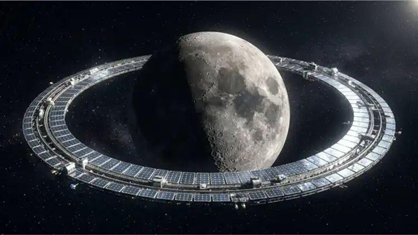
    • The Luna Ring Project, proposed by the Japan-based Shimizu Corporation.
    • It is a futuristic, conceptual infrastructure project designed to address Earth’s energy needs by creating a massive solar power ring around the Moon.

    Luna Ring Project

    • Concept: The project involves constructing 11,000 km (approx. 6,800 miles) long belt of solar panels along the Moon’s equator.
    • Mechanism: These solar panels will capture solar energy, which will be converted into microwaves or laser beams and transmitted back to Earth.
    • Construction: The project proposes using automated construction robots to process lunar soil (regolith) into concrete, bricks, and glass fibers, enabling In Situ Resource Utilization (ISRU).
    • Constant Power: Unlike Earth, the Moon has no atmosphere to block sunlight, allowing for uninterrupted power generation 24 hours a day

    Government Notifies Two Institutions as Repositories

    Governance

    Context

    • National Biodiversity Authority (NBA) officially notified two premier scientific institutions as designated repositories under Section 39 of the Biological Diversity Act, 2002

    Referral Centres

    1. ‘Bhavasagara’ (at the Centre for Marine Living Resources and Ecology (CMLRE), Kochi) – A specialized national facility dedicated to deep-sea biodiversity.
    2. MACS Collection of Microorganisms (at the Agharkar Research Institute (ARI), Pune) – An expert hub for microbial and fungal diversity, which also includes the National Fungal Culture Collection of India.

    Key Significance of the Notification

    • Expansion of National Network: This addition brings the total number of designated national repositories in India to 20.
    • Scientific Support: The notification facilitates innovation by making biological materials accessible for research under transparent and accountable scientific conditions.

    Connect with the basics – Biological Diversity Act, 2002

    • Enacted – The act was enacted in 2002
    • Objective – It aims at the conservation of biological resources, managing its sustainable use and enabling fair and equitable sharing benefits arising out of the use and knowledge of biological resources with the local communities.

    The act envisaged a three-tier structure to regulate the access to biological resources:

    1. The National Biodiversity Authority (NBA)
    2. The State Biodiversity Boards (SBBs)
    3. The Biodiversity Management Committees (BMCs) (at local level)

    National Biodiversity Authority

    • Established in – The National Biodiversity Authority (NBA) was established in 2003 by the Central Government to implement India’s Biological Diversity Act (2002).
    • Statutory body – It is a Statutory body that performs facilitative, regulatory and advisory functions for the Government of India on the issue of Conservation and sustainable use of biological resources.
    • Headquarter – The NBA has its Headquarters in Chennai, Tamil Nadu, India.

    Functions

    • Monitoring and prevention of actions prohibited under the Act.
    • Providing advice to the government on how best to conserve biodiversity in India.
    • Prepare a report on how the government can select biological heritage sites.
    • Make concrete steps to prevent the grant of intellectual property rights regarding locally used biological resources or allied traditional knowledge

    Elephanta Caves

    Syllabus: GS1/ History and Culture

    Context

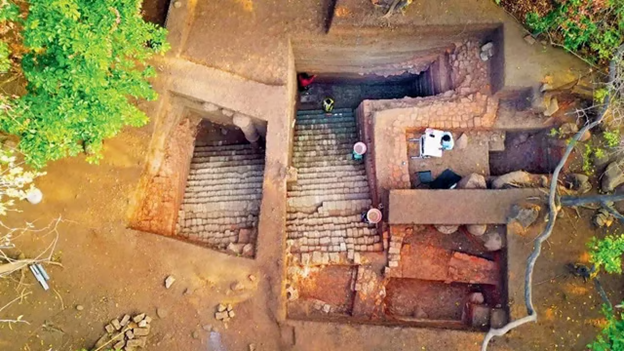
    • A major excavation by the Archaeological Survey of India (ASI) on Elephanta Island has revealed a 1,500-year-old stepped reservoir.
    • The excavated structure is a T-shaped stepped reservoir, indicating a planned architectural design.

    Additional Information – Elephanta Caves

    • The Elephanta Caves, located on Elephanta Island (historically known as Gharapuri, meaning “city of caves”), are a UNESCO World Heritage Site situated in Mumbai Harbour.
    • The name “Elephanta” was given by the Portuguese in the 16th century after they discovered a large stone elephant near the island, while the original name Gharapuri was used by local inhabitants.
    • Historically, the island was associated with multiple dynasties.
    • The Kalachuris of Mahishmati are considered the main patrons of the caves during the 6th century CE, as supported by recent coin discoveries of King Krishnaraja. Before them, the Konkan Mauryas ruled the region, followed by the Chalukyas and Rashtrakutas who maintained its importance.
    • There are seven caves, of which Cave 1 (Great Cave) is the most prominent. It houses the iconic 20-feet Trimurti sculpture.
    • A three-headed figure representing Shiva as Creator, Preserver, and Destroyer.

    Soil Sakhis

    Syllabus: GS3/Agriculture

    Context

    • The “Soil Sakhis” initiative in drought-prone districts of western Maharashtra is empowering women while improving soil health and agricultural productivity.

    Soil Sakhis

    • Launched in 2023 under the Mann Deshi Foundation’s Agriculture and Climate Action Programme.
    • Trains rural women as “Soil Sakhis” to promote soil testing and scientific farming practices.
    • Implemented in Satara, Sangli, Solapur, Kolhapur, and Pune districts.

    Key Features

    • Soil Sakhis collect samples and facilitate soil testing through laboratories.
    • Farmers receive actionable reports for improved crop and nutrient management.
    • Soil Sakhis earn about ₹8,000–₹10,000 per month (excluding petrol allowance).

    FSSAI Cannot Regulate Animal Feed

    Syllabus: GS2/Health/Governance

    Context

    • The Delhi High Court struck down a Food Safety and Standards Authority of India (FSSAI) regulation that prohibited the sale of animal feed containing meat or bone meal of bovine or porcine origin for milk-producing animals.
    • About
    • FSSAI banned the use of meat or bone meal in feed meant for milk- and meat-producing animals, except poultry, pigs and fish.
    • The Delhi High Court held that FSSAI is not empowered to prescribe standards for food meant for animal consumption and its mandate is limited to food for humans.

    Food Safety and Standards Authority of India (FSSAI)

    • It is an autonomous statutory body established under the Ministry of Health and Family Welfare.
    • It was created by the Food Safety and Standards Act, 2006.
    • Composition: Led by a Chairperson (rank of Secretary to the Government of India) and 22 members, of whom one-third must be women.
    • Structure: Headquartered in New Delhi with 6–8 regional offices (Delhi, Mumbai, Kolkata, Chennai, Guwahati, Kochi).

    Functions:

    1. Laying down science-based standards for food.
    2. Licensing and registration of Food Business Operators (FBOs).
    3. Monitoring manufacture, storage, distribution, sale, and import of food.
    4. Accrediting food testing laboratories across India.

    Cabinet Clears 12% Hike in P&K Fertiliser Subsidy

    Syllabus: GS3/ Agriculture

    In News

    • The Union Cabinet has approved a 12% increase in Nutrient-Based Subsidy (NBS) rates for Phosphatic and Potassic (P&K) fertilizers for the Kharif Season 2026.

    Nutrient-Based Subsidy (NBS) Scheme

    • Launch: Introduced in 2010 by the Ministry of Chemicals and Fertilizers.

    Objectives

    1. Encourage balanced fertilizer application across nutrients.
    2. Rationalise and contain the government’s subsidy burden.
    3. Promote efficient nutrient management in agriculture.

    Key Features:

    • Subsidy is nutrient-centric, i.e., calculated based on the content of:
    1. Nitrogen (N)
    2. Phosphorus (P)
    3. Potassium (K)
    4. Sulphur (S)
    5. Covers 28 notified grades of P&K fertilisers, including commonly used products such as DAP and SSP (Urea is not under NBS and remains under a separate subsidy regime).

    11 Years of Pradhan Mantri MUDRA Yojana (PMMY)

    Syllabus: GS3/Economy; GS2/Government Initiatives

    Context

    • The Pradhan Mantri MUDRA Yojana (PMMY) has completed 11 years.

    About

    • Launched: In 2015.
    • Aim: To support small-scale business ventures.
    • Target Group: New entrepreneurs, small shopkeepers, women entrepreneurs, street vendors, artisans, fruit/vegetable vendors, and small manufacturing units.
    • These loans are given by Commercial Banks, RRBs, Small Finance Banks, MFIs and NBFCs.

    MUDRA has created four products namely:

    • Shishu: Covering loans upto Rs. 50,000/-.
    • Kishor: Covering loans above Rs. 50,000/- and up to Rs. 5 lakhs.
    • Tarun: Covering loans above Rs.5 lakh and upto Rs.10 lakhs.
    • TarunPlus: Covering loans above Rs.10lakh and upto Rs.20 lakhs.