The Karnataka Regional Imbalances Redressal Committee, chaired by eminent economist M. Govinda Rao, submitted its final report to Chief Minister Siddaramaiah on January 31, 2026.
The 2026 report highlights a troubling trend: despite Karnataka’s robust overall economic growth, regional disparities have worsened since the landmark Nanjundappa Committee report of 2002.
Key Findings & Classification
The committee evaluated all 236 taluks in the state and found that backwardness is heavily concentrated in North Karnataka.
Most Backward: 93 taluks (primarily in the Kalaburagi and Belagavi divisions).
More Backward: 36 taluks.
Backward: 43 taluks.
Developed: 64 taluks.
Regional Concentration: Roughly 60% of all backward taluks are located in North Karnataka.
Major Recommendations
The committee proposed a major structural overhaul of how Karnataka addresses regional development:
Abolition of Boards: The panel recommended abolishing the Malnad Area Development Board and the Bayaluseeme Development Board, citing their failure to make a meaningful impact on infrastructure over three decades.
KKRDB Overhaul: It called for a complete revamp of the Kalyana Karnataka Region Development Board (KKRDB) due to operational failures and ad-hoc planning.
Funding: The committee recommended a specialized allocation of ₹29,009 crore for the KKRDB from 2026-27 to 2030-31.
Education Reform: Noting severe teacher shortages in the Kalaburagi division, it suggested rationalizing and consolidating schools with low enrollment (fewer than 25 students).
India and Malaysia vowed to expand their ties in the high-priority sectors of trade and investment, defence, energy, advanced manufacturing and semiconductors.
Major outcomes of the meet
A Framework Agreement on the International Big Cats Alliance (IBCA) was also finalised, reflecting shared commitment to biodiversity and sustainable development.
Both sides also received the report of the 10th Malaysia-India CEO Forum, highlighting private sector perspectives on trade, investment and future collaboration.
Additional Information – India and Malaysia Relations
Diplomatic Relations: The two countries established diplomatic relations in 1957, and this was elevated to a Comprehensive Strategic Partnership (CSP) in 2024.
Both countries are members of various international organizations, such as the United Nations, ASEAN (Association of Southeast Asian Nations), and the Non-Aligned Movement.
Trade and Economic Relations: Malaysia is the 13th largest trading partner for India while India stands amongst the 10 largest trading partners globally.
Defense and Security:Harimau Shakti is the primary bilateral training exercise between the Indian Army and the Malaysian Army.
ASEAN Centrality: Malaysia holds a crucial position in expanding India’s trade with ASEAN, aligning with India’s Act East Policy, advancing maritime connectivity in the Strait of Malacca and South China Sea, and supporting ASEAN’s Indo-Pacific Perspective (AOIP) and the Indo-Pacific Initiative (IPOI).
Tourism and diaspora: India is the 5th largest source country for inbound tourism to Malaysia.
Indian Community: Malaysia has the third largest Indian diaspora in the world (2.9 million).
Cultural Ties: Indian influence in Malaysia can be seen in various aspects of Malaysian culture, including language, religion (Hinduism and Buddhism), architecture, cuisine, and festivals.
The AYUSH Sector in India
Governance
In News
India’s new free trade agreement (FTA) with the European Union opened the door for Indian doctors and products to enter the European market more easily.
AYUSH Sector in India
AYUSH encompasses traditional systems of medicine such as Ayurveda, Yoga, Unani, Siddha, and Homeopathy.
Key Initiatives
National AYUSH Mission (NAM): Core policy instrument to integrate AYUSH into public healthcare through:
Institutes of National Importance: All India Institute of Ayurveda (New Delhi), National Institute of Homoeopathy (Kolkata) & Dedicated national institutes for Siddha, Unani, Yoga, and Naturopathy.
Regulatory and Research Bodies: Central Council for Research in Ayurvedic Sciences (CCRAS), National Commission for Indian System of Medicine & National Commission for Homoeopathy.
Medicinal Plant Promotion: National Medicinal Plants Board (NMPB) working with 32 State Boards to support quality cultivation, value chains, and exports.
Flagship Schemes: AYURGYAN (Education and capacity building), Ayurswasthya Yojana (Community health and preventive care using AYUSH systems).
Eritrea
Syllabus: GS1/ Places in News
In News
Recently, Ethiopia demanded that Eritrea immediately withdraw its troops from Ethiopian territory, highlighting renewed tensions in the Horn of Africa.
Eritrea
Capital:Asmara (Declared a UNESCO World Heritage Site).
Location: Situated in the Horn of Africa (Northeast Africa). Lies along a crucial geostrategic corridor connecting Africa with West Asia.
Strategic Importance: Controls the western coast of the Bab el-Mandeb Strait, a vital global maritime chokepoint linking the Red Sea with the Gulf of Aden.
Geographical Features: Hot desert climate along the Red Sea coast. Temperate / Mediterranean-like climate in the central highlands.
Membership in International Groupings: African Union (AU) & COMESA (Common Market for Eastern and Southern Africa).
The Jiyo Parsi Scheme has supported the birth of over 490 Parsi children and provided ₹35.05 crore in financial assistance to Parsi couples
Parsi Community in India
According to the 2011 Census of India, the Parsi population in the country was 57,264.
This represented a significant decrease of approximately 22% from the 2001 census figure of 69,601.
Jiyo Parsi Scheme
Launched in – 2013-14
Objective – to reverse the declining trend of Parsi population by adopting a scientific protocol and structured interventions.
The scheme has three components:
Medical Assistance: Provides financial aid for infertility treatments such as IVF, ICSI, surrogacy, and post-conception care.
Advocacy: Provides for counselling of couples with fertility issues
Health of the Community: Offers monthly financial support to Parsi couples with children as well as to dependent elderly members.
Global Teacher Prize 2026
Miscellaneous
Context
Indian teacher Rouble Nagi has won the Global Teacher Prize 2026, receiving the one million dollar award at the World Government Summit in Dubai.
Global Teacher Prize
It was Launched in 2014 and is often referred to as the “Nobel Prize of Teaching”.
It is Presented by GEMS Education and organised by the Varkey Foundation in collaboration with UNESCO.
Mandate – It recognises exceptional educators for their outstanding contributions to teaching and social transformation.
Do you know?
Rouble Nagi, is a pioneering educator from India, dedicated to making learning accessible to the most marginalised communities.
Over the past two decades, she has established more than 800 learning centres across over 100 underserved communities and villages.
Supreme Court Allows Abortion of 30-week Pregnancy of a Minor
Polity and Governance; Social Justice
Context
The Supreme Court has permitted the medical termination of a 30-week pregnancy of a minor, emphasising that no woman can be compelled to carry a pregnancy to full term against her will.
Medical Termination of Pregnancy (Amendment) Act, 2021
The Act permits abortion up to 20 weeks in the opinion of one registered medical practitioner.
Between 20–24 weeks, termination is allowed for specified categories of women (including minors, rape survivors, and differently-abled women) on the opinion of two doctors.
Beyond 24 weeks, termination is permitted only in cases of substantial fetal abnormalities as diagnosed by a Medical Board.
Key Observations of the Supreme Court
The Court reiterated that reproductive autonomy is an integral part of personal liberty under Article 21 of the Constitution.
The Court observed that the pregnancy of a minor is “ex facie illegitimate” because she lacks legal capacity to consent to sexual relations.
Hakki-Pikki tribe
Society
In News
The Embassy of India assisted Hakki-Pikki community members from Davangere, Shivamogga, and Chikkamagaluru districts, who were at risk of imprisonment in Chad.
The Hakki Pikki tribe
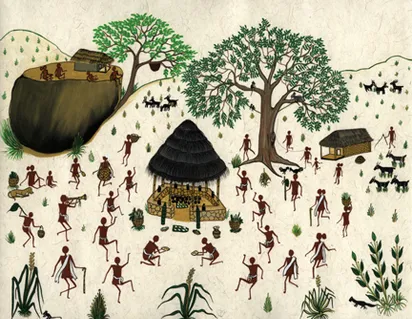
It is a tribe that lives in several states in west and south India, especially near forest areas.
Hakki Pikkis (Hakki in Kannada means ‘bird’ and Pikki means ‘catchers’) are a semi-nomadic tribe, traditionally of bird catchers and hunters.
Hakki Pikki people are believed to hail originally from the bordering districts of Gujarat and Rajasthan.
Hakki Pikkis in Karnataka follow Hindu traditions and celebrate all Hindu festivals.
They are non-vegetarians. The eldest son in a family is not supposed to cut his hair so that he can be identified easily.
The tribe prefers cross-cousin marriages. The society is matriarchal, where the groom gives dowry to the bride’s family. Monogamy is the norm.
Greater Flamingos
Syllabus: GS3/Environment
Context
Nearly 70 Greater Flamingos were recorded for the first time at Hope Island in the Coringa Wildlife Sanctuary, Kakinada Bay, Andhra Pradesh.
Greater Flamingos (Phoenicopterus roseus)
Description: The greater flamingo is the most widespread and largest species of the flamingo family, averaging 110–150 cm tall and weighing 2–4 kg.
Distribution: They are found in Northern (coastal) and Sub-Saharan Africa, the Indian subcontinent (south of the Himalayas), the Middle East, the Persian Gulf, the Gulf of Aden, the Red Sea, and the Mediterranean countries of Southern Europe.
Greater flamingos usually migrate to India from Israel, Afghanistan, and Pakistan.
Diet and lifespan: Average lifespan is 30–40 years, and they feed on small fish and other aquatic organisms.
Threats: The primary threats to flamingo populations are bacteria, toxins, and pollution in water supplies, which is usually run-off from manufacturing companies, and encroachment on their habitat.
State Bird: The greater flamingo is the State bird of Gujarat.
Types and IUCN status:
The greater flamingo – Least Concern
Chilean flamingo – Near Threatened
American flamingo – Least Concern
Lesser flamingo – Near Threatened
Andean flamingo – Vulnerable
James’s flamingo – Near Threatened.
Sickle Cell Disease
GS2/Health
Context
The U.S. Food and Drug Administration (U.S. FDA) has granted Orphan Drug Designation (ODD) to treat Sickle Cell Disease (SCD).
Orphan Drug Designation
Orphan drugs are pharmaceutical agents developed specifically to treat rare (orphan) diseases.
Once designated, orphan drugs receive several incentives to encourage their development, including market exclusivity, tax credits for research and development (R&D) expenses, and fee waivers for regulatory applications.
Sickle cell anaemia
Disease – It is an inherited group of blood disorders that is genetic in nature.
Cause – It is caused by a mutation in the hemoglobin-β gene found on chromosome 11. This mutation results in defective haemoglobin (Hb).
Characteristics – After giving up oxygen, these defective Hb molecules cluster together resulting in formation of rod like structures.
The red blood cells become stiff and assume sickle shape. (Haemoglobin (Hb) is a protein found in the red blood cells that carries oxygen in your body and gives blood its red colour)
Transmission – It is usually transferred from the parents to the child during birthe. both parents can be carriers of SCDs.
Symptoms – Babies who are born with sickle cell anaemia might not show symptoms for many months.
Extreme tiredness, fussiness and painfully swollen hands and feet and jaundice.
Effects – The misshapen cells lack plasticity and can block small blood vessels, impairing blood flow.
The sickle cells die prematurely, resulting in a chronic lack of red blood cells (anaemia), often called sickle-cell anaemia.
Treatment – Medication, blood transfusions and rarely a bone-marrow transplant are done.
Mountain Gorillas
Environment / Species
Context
Rare twin mountain gorillas were recently born in eastern Democratic Republic of the Congo (DRC).
Mountain gorillas (Gorilla beringei beringei)
They are a subspecies of the eastern gorilla, one of the two gorilla species found globally (eastern and western gorillas).
In the wild, gorillas can live for over 40 years, and humans share nearly 98% DNA with them.
Habitat and Distribution: They live at elevations of about 8,000–13,000 feet and have thicker fur than other great apes to adapt to cold mountain climates.
They are typically found in Rwanda, Uganda, and the Democratic Republic of the Congo in Africa.
Diet mainly includes leaves, shoots, and stems, along with insects, roots, bark, and decaying wood as a source of minerals.
Conservation Status and Population: Endangered (IUCN Red List); estimated population is around 1,063 individuals in the wild.
In February 2026, the Karnataka Higher Education Department officially constituted a 10-member expert committee to address the alarming decline in engineering admissions and employability.
The committee is chaired by Prof. S. Sadagopan, the founding director of IIIT-Bangalore
Key Objectives of the Reform
Curriculum Revamp: Aligning basic engineering courses (Mechanical, Civil, Electrical) with current industrial and employment requirements.
Intake Review: Assessing the surplus of seats in Computer Science and related branches, where over 9,000 seats remained vacant in the 2025-26 academic year.
Boosting Demand: Identifying strategies to attract students back to core engineering disciplines that are currently facing potential closure in some private institutions.
Employability Gap: Addressing reports that only 17% of engineering graduates in the state are successfully securing jobs.
Committee Members – The 10-member committee features a mix of high-profile academic experts from IISc and UVCE, along with key representation from VTU, industry leaders, and government officials.
Bengaluru’s emergency response system, Namma 112, reported a massive surge in usage and technological improvements, alongside a 9% reduction in crime cases.
Namma 112
It is the unified emergency helpline for Bengaluru, integrating police, fire, and ambulance services into a single point of contact.
Managed by – Bengaluru City Police.
Objective – it aims to provide rapid assistance during critical “golden hours”.
Key Services & Features
Unified Support: Replaces or integrates traditional numbers like 100 (Police), 101 (Fire), and 108 (Ambulance).
Mental Health Support: Recently integrated with Tele MANAS (14416) to handle psychiatric emergencies directly via the Namma 112 system.
Rapid Response: Hoysala patrol teams typically reach complainants within 5 to 10 minutes in urban areas.
Privacy & Anonymity: Callers can request to remain anonymous by stating, “Please keep my data anonymous” during the call.
WhatsApp Integration: Citizens can also reach the helpline via WhatsApp at 9480801000.
Multilingual Support: The system is being upgraded to include multilingual features to help diverse residents communicate in their preferred language.
The Government of India, the Government of Nagaland, and representatives of the Eastern Nagaland Peoples’ Organisation (ENPO) have signed a historic agreement for the creation of the Frontier Nagaland Territorial Authority (FNTA).
Frontier Nagaland Territorial Authority
FNTA will cover six districts — Tuensang, Mon, Kiphire, Longleng, Noklak and Shamatorinhabited by eight major Naga tribes.
Objective – The agreement provides for devolution of powers enhancing administrative and developmental autonomy.
Mini-Secretariat – It is headed by an Additional Chief Secretary/Principal Secretary-level officer.
Significance – It aims to promote balanced regional development, financial autonomy, and participatory decision-making in a historically underdeveloped region.
Note – However, the arrangement does not dilute Article 371(A) of the Constitution, which safeguards Naga customary practices, land rights, and social institutions.
Vizhinjam Port
Syllabus: GS3/Economy
News
Vizhinjam International Seaport in Kerala has risen to the 83rd position globally in container handling, reflecting the rapid scale-up of India’s newest deep water transshipment hub.
Vizhinjam Port
Location: Thiruvananthapuram, Kerala
Key Features: One of the deepest ports in India.
Capable of handling Ultra Large Container Vessels (ULCVs).
Developed under the Design, Build, Finance, Operate, and Transfer (DBFOT) model.
Significance: Efficient cargo movement, reduces India’s dependence on foreign ports like Colombo (Sri Lanka), Singapore, and UAE for transshipment, strengthens India’s maritime security
International Space Station (ISS)
(Science and Technology)
Context
The International Space Station (ISS) is scheduled to be de-orbited in 2030, marking the end of nearly three decades of continuous human presence in space.
International Space Station (ISS)
It is a modular, habitable, microgravity laboratory in low Earth orbit, orbiting 400 km above Earth.
It was launched in 1998, and has been continuously inhabited since 2000, making it one of the longest-running human space missions in history.
It is operated collaboratively by five major space agencies: NASA (United States), Roscosmos (Russia), ESA (Europe), JAXA (Japan) and CSA (Canada).
Key Features:
It is the largest human-made structure in space, with a mass exceeding 400,000 kg, and a structure nearly 109 meters long.
Power is supplied by solar arrays generating tens of kilowatts of electricity.
The ISS plays a crucial role in studying the effects of long-term space radiation and microgravity on the human body, helping scientists understand bone loss, muscle atrophy, and immune system changes.
NDMA’s First-ever Guidelines For Identification of Disaster Victims
Syllabus: GS3/Disaster Management
In News
Recently, the National Disaster Management Authority (NDMA) has released the country’s first-ever Standard Operating Procedure with guidelines for the identification of victims in the event of “mass fatality incidents”.
National Disaster Management Authority (NDMA)
Headed by – Prime Minister of India.
It is the apex body for Disaster Management in India.
It was established under the Disaster Management Act, 2005.
Objective – It is responsible for formulating policies, plans, and guidelines for disaster management and promoting an ethos of prevention, mitigation, preparedness, and response.
CAR T-cell therapy
(Science and Tech)
In News
Researchers at IIT Bombay addressed a critical challenge in CAR T-cell and other adoptive T-cell transfer (ACT) therapies.
T-cells
They are white blood cells that act as the body’s frontline defenders, detecting and destroying infections or abnormal cells like cancer, and coordinating other immune cells to respond—making them crucial for immunotherapy.
CAR T-cell therapy
It is an advanced treatment that modifies a patient’s T-cells to more effectively attack cancer.
Doctors first collect T-cells from the patient’s blood and then introduce a gene that gives them special receptors called chimeric antigen receptors (CARs).
These receptors function like GPS, directing the T-cells to locate and target cancer cells.
After engineering, the T-cells are expanded in the lab and then infused back into the patient’s body.
NexCAR19 is the world’s first humanised CAR-T therapy developed in India by ImmunoACT.
Benefits
Targeted Precision: : CAR-T cell therapy Specifically attacks cancer cells while sparing healthy cells, reducing side effects compared to chemotherapy.
Personalised Treatment: CAR-T cell therapy Uses the patient’s own T-cells, engineered to target their unique cancer, enhancing effectiveness.
Long-Lasting Effects: Engineered T-cells can persist in the body, providing extended protection against cancer recurrence.
Reduced Hospitalisation & Costs: Fewer hospital stays and less supportive care needed, leading to potential cost savings.
Advances in Cancer Treatment: Opens new avenues in immunotherapy, expanding treatment options and research possibilities.
Technological Evolution: Continuous development of CAR constructs allows targeting of diverse cancers and combination therapies.
Affordability: Indigenous therapies like NexCAR19 in India make CAR-T treatment more accessible and cost-effective.
Agni-3 Intermediate Range Ballistic Missile
Syllabus:GS3/Defence
In News
India successfully test-fired the nuclear-capable Agni-3 ballistic missile from Chandipur, Odisha, with a strike range exceeding 3,000 km.
Agni-3 ballistic missile
Developed by – Defence Research and Development Organisation.
Strike range– 3,000 km.
Uniqueness – It is capable of carrying both conventional and nuclear warheads.
Agni
It is India’s indigenously developed long-range missile system by DRDO
Agni-I to Agni-IV: Range 700–3,500 km, payload 12–40 kt, developed in 1990s, deployed mid-2000s.
Agni-V: Three-stage solid-fuel, MIRV-capable, range up to 5,000 km, potentially intercontinental (5,500+ km).
Agni-P: Two-stage solid-fuel, weight 11,000 kg, range 1,000–2,000 km, incorporates advanced propulsion/navigation, can carry high-explosive, thermobaric, or nuclear warheads.
For the first time, the Union government has released nationwide enumeration data of waste-pickers under the NAMASTE (National Action for Mechanised Sanitation Ecosystem) scheme.
National Action for Mechanised Sanitation Ecosystem (NAMASTE)
Launched in – July 2023
Financing – Central Sector Scheme
Implemented by – Ministry of Social Justice and Empowerment and the Ministry of Housing and Urban Affairs,
Objectives:
Zero fatalities in sanitation work.
All sanitation operations to be performed by skilled workers.
No direct contact with human faecal matter.
Rehabilitation of Manual Scavengers.
Key Interventions:
Profiling: Digital profiling of Sewer/Septic Tank Workers (SSWs).
Safety: Providing PPE kits, safety devices, and training to workers.
Empowerment: Capital subsidy for purchasing sanitation machinery to become “sanipreneurs”.
Health: Occupational safety training and health insurance.
Significance: Aligns with SDG 6 (Clean Water and Sanitation) and promotes the dignity and safety of sanitation workers.
Lake Urmia
Syllabus: GS1/Places in News
In News
Iranian authorities have resorted to cloud seeding to induce artificial rainfall over the Lake Urmia basin amid Iran’s worst drought in decades.
Lake Urmia
It is situated in the Azerbaijan region of northwestern Iran and lies between East Azerbaijan and West Azerbaijan provinces.
High evaporation rates make it extremely saline.
Uniqueness – It is the largest lake in the Middle East.
Designated a Ramsar wetland and UNESCO Biosphere Reserve, the lake has shrunk dramatically since the 1990s.
Rafah border
(Places in news)
News
Israel has reopened the Rafah border crossing between Gaza and Egypt for limited civilian movement after months of closure.
The crossing has largely been closed since the Gazan side was captured by Israeli forces in May 2024.
Why is Rafah important to Gaza?
Location: Rafah border is located on the Gaza–Egypt border, which was recognized by the 1979 Egypt–Israel peace treaty.
Significance: The Rafah Border Crossing or Rafah Crossing Point is the sole crossing point between Egypt and the Gaza Strip.
FORGE Initiative
Syllabus: GS2/ IR
In News
India has expressed support for the FORGE Initiative at the inaugural Critical Minerals Ministerial hosted by the United States in Washington DC.
FORGE Initiative
It is a multilateral international cooperation framework aimed at de-risking global critical mineral supply chains by bringing together like-minded countries.
It has been created as a successor to the Minerals Security Partnership (MSP).
Significance – to reduce over-dependence on a few dominant suppliers, build trusted, transparent and resilient critical mineral ecosystems
Sarus Cranes Census data
Environment
In News
The population of sarus cranes in Uttar Pradesh has gone up by 634 or 3.1% in a year, as per a government census.
Sarus crane
It is the tallest flying bird in the world standing 152-156 cm tall with a wingspan of 240cm.
Nature: It is a social creature, found mostly in pairs or small groups of three or four.
It is Known to mate for life with a single partner, its breeding season coincides with heavy rainfall in monsoon.
Habitat and Distribution: The Sarus habitat is outside protected areas, in natural wetlands with low water depth, marshy and fallow areas and agricultural fields.
The Sarus crane has three disjunct populations in the Indian sub-continent, south-east Asia and northern Australia.
In the Indian subcontinent, it is found in northern and central India, Terai Nepal and Pakistan.
It was once a common site in the paddy fields of Uttar Pradesh, Bihar, Rajasthan, West Bengal, Gujarat, Madhya Pradesh and Assam.
But now it is mainly concentrated in Uttar Pradesh.
Ecological Role : They play a vital role in ecological balance by controlling the population of harmful insects. Sarus is omnivorous, feeding on fish and insects, as well as roots and plants.
Protection status : Listed in Schedule IV of the Wildlife (Protection) Act 1972 and as Vulnerable on IUCN Red List
Exercise KHANJAR
Syllabus: GS3/Defence
Context
The 13th edition of the India–Kyrgyzstan joint military exercise KHANJAR has begun in Sonitpur district of Assam.
Exercise KHANJAR
It is an annual training event conducted alternately between India and Kyrgyzstan since 2011.
Objective – to enhance interoperability between the Special Forces of both nations, with a focus on joint operations in urban warfare and counter-terrorism scenarios under the United Nations mandate.
The Karnataka government is preparing a Heritage Impact Assessment (HIA) report to be submitted to UNESCO by February 1, 2026, regarding development at Anjanadri Hills.
UNESCO World Heritage Site (designated in 1986),
Historical Significance
Capital City: Hampi was the 14th-century capital of the Vijayanagara Empire,founded in 1336 by brothers Harihara I and Bukka Raya I.
Golden Era: It reached its peak under Krishnadevaraya (1509–1530), becoming one of the world’s largest and wealthiest medieval cities.
Decline: The city was pillaged and abandoned following the empire’s defeat by the Deccan Sultanates in the Battle of Talikota (1565).
Literary Accounts: Travellers like Domingo Paes (Portuguese) and Niccolò de’ Conti (Italian) described it as more beautiful than Rome.
Architectural Highlights
Style: Primarily Dravidian, characterized by massive enclosures, high gopurams (gateways), and ornate Kalyana Mandapas (marriage halls).
Virupaksha Temple: One of India’s oldest functioning temples (7th century), dedicated to Lord Shiva. A portion of its “Saalu Mandapa” recently required restoration after collapsing due to heavy rains.
Vittala Temple: Famous for its Stone Chariot (depicted on the ₹50 currency note) and musical pillars that produce melodic notes when tapped.
Secular Structures: Includes the Lotus Mahal, Elephant Stables, and the Queen’s Bath, showcasing Indo-Islamic influences
Members of Parliament Local Area Development Scheme (MPLADS)
(Welfare Schemes)
In Context
A recent controversy erupted over alleged misuse of MPLADS funds and critics demanding the scheme should be discontinued.
Members of Parliament Local Area Development Scheme (MPLADS)
It is a Central Sector Scheme launched in 1993,
Implementation – Ministry of Statistics and Programme Implementation (MoSPI).
Objective: To enable Members of Parliament (MPs) to recommend works for the creation of durable community assets based on locally felt needs such as drinking water, sanitation, roads, public health infrastructure.
Funds alloted: Each MP is entitled to ₹5 crore per year under MPLADS.
It requires MPs to recommend at least 15% of funds for SC-inhabited areas and 7.5% for ST-inhabited areas annually.
Non Lapsable Fund: MPLADS funds are non-lapsable, meaning unutilised funds are carried forward to subsequent years, ensuring continuity of projects.
Geographical coverage: Lok Sabha MPs can recommend works within their constituencies, Rajya Sabha MPs within their state of election, and nominated MPs anywhere in the country.
Exceptions: MPs may recommend up to ₹25 lakh per year outside their constituency/state, and up to ₹1 crore for an affected district during natural calamities.
Solid Waste Management (SWM) Rules, 2026
Syllabus: GS3/Environment
In News
The Union Ministry of Environment, Forest and Climate Change has notified the Solid Waste Management (SWM) Rules, 2026, superseding the Solid Waste Management Rules, 2016.
Solid Waste Management (SWM) Rules, 2026
The rules have been notified under the Environment (Protection) Act, 1986 and will come into full effect from April 1, 2026.
The rules provide for the levy of environmental compensation based on the ‘Polluter Pays’ principle for non-compliance, including cases of operating without registration, false reporting, submission of forged documents or improper solid waste management practices.
The Central Pollution Control Board (CPCB) will prepare the relevant guidelines, while State Pollution Control Boards and Pollution Control Committees will levy the environmental compensation.
Major Features
Four-stream Segregation of Solid Waste at Source has been made mandatory under the SWM Rules, 2026.
Wet waste includes kitchen waste, vegetables, fruit peels, meat, flowers, etc., which shall be composted or processed through bio-methanation at the nearest facility.
Dry waste comprises plastic, paper, metal, glass, wood and rubber, etc., and shall be transported to Material Recovery Facilities (MRFs) for sorting and recycling.
Sanitary waste includes used diapers, sanitary towels, tampons and condoms, etc., which shall be securely wrapped and stored separately.
Special care waste includes paint cans, bulbs, mercury thermometers and medicines, etc., which shall be collected by authorised agencies or deposited at designated collection centres
Clear definition of Bulk Waste Generators: Bulk Waste Generators include entities with a floor area of 20,000 square metres or more, or water consumption of 40,000 litres per day or more, or solid waste generation of 100 kg per day or more.
Faster Land Allocation for Waste Processing and Online Monitoring of Complete Solid Waste Management
Duties of Local Bodies and Material Recovery Facilities (MRFs): Under the revised rules, local bodies must collect, segregate, and transport solid waste in coordination with Material Recovery Facilities (MRFs).
New START Treaty
Syllabus: GS2/IR
In News
Experts caution that the expiry of the New START Treaty would eliminate the last remaining legally binding constraint on the nuclear arsenals of the world’s two largest nuclear powers.
New START Treaty
Abbreviation- Strategic Arms Reduction Treaty.
START-I treaty –
It was signed between the US and the former USSR in 1991 and came into force in 1994.
It limited each side to 6,000 nuclear warheads and 1,600 intercontinental ballistic missiles (ICBMs) but expired in 2009.
It was succeeded by the Strategic Offensive Reductions Treaty (SORT, also called the Treaty of Moscow) and later by the New START treaty (signed in 2010 & entered into force in 2011).
New START treaty
It caps the number of deployed strategic warheads at 1,550 on each side, with no more than 700 deployed ground- or submarine-launched missiles and bomber planes, and 800 launchers.
Implications of Expiration
Without a treaty, Russia and the US could freely expand their arsenals, risking a renewed nuclear arms race amid global tensions.
The absence of a framework heightens nuclear risks and removes the transparency and stability that arms control agreements provide.
Pradhan Mantri Virasat Ka Samvardhan (PM VIKAS)
Syllabus: GS2/Governance/GS3(Economy)
In News
PM VIKAS has allocated targets to train about 1.51 lakh beneficiaries through Project Implementing Agencies across States and UTs.
Pradhan Mantri Virasat Ka Samvardhan (PM VIKAS)
Financing – Central Sector Scheme
Implementation – Ministry of Minority Affairs
It converges five erstwhile schemes vi ‘Seekho Aur Kamao’, ‘Nai Manzil’, ‘Nai Roshni’ and ‘USTTAD’ & ‘Hamari Dharohar’ .
Aim – It focuses on upliftment of six notified minority communities through skill development; entrepreneurship and leadership of minority women; and education support for school dropouts.
Do you know?
Six officially recognized minority groups in India —Muslims, Christians, Sikhs, Buddhists, Jains, and Zoroastrians (Parsis)—on socio-economic fronts.
India has Entered an Elite Group of Possessing SFDR Technology
Syllabus: GS3/ Defence
In News
DRDO successfully demonstrated Solid Fuel Ducted Ramjet (SFDR) technology from the Integrated Test Range (ITR) in Chandipur, Odisha, advancing India’s long-range air-to-air missile capabilities.
Solid Fuel Ducted Ramjet (SFDR)
SFDR is a missile propulsion system that uses a ramjet engine to provide sustained thrus
Unlike traditional rockets, it is an air-breathing system, meaning it does not carry an onboard oxidizer, using atmospheric oxygen instead.
Since ramjets only function at high speeds, the missile is first launched using a nozzle-less solid booster to reach supersonic speeds (Mach 2+).
Strategic Significance for India
Long-Range Air-to-Air Missiles (LRAAM): SFDR will power the Astra Mark-3, enabling it to intercept high-speed, maneuvering enemy aircraft at ranges exceeding 150–300 km.
Expanded “No-Escape Zone”: Because the missile stays “powered” until the very end, it can perform high-G turns near the target, making it nearly impossible for an enemy jet to out-maneuver it.
Surface-to-Air Application: It can be adapted for futuristic SAM systems (like the proposed SAM-X) to defend against hypersonic or highly agile cruise missiles.
Agriculture Infrastructure Fund
Syllabus: GS3/Economy
In News
Agriculture Infrastructure Fund (AIF) has sanctioned ₹80,224.15 crore in loans for over 1.5 lakh projects, mobilising investments of ₹1.27 lakh crore since 2020.
Agriculture Infrastructure Fund (AIF)
It is a central sector scheme
Objective –to mobilize medium and long-term debt financing for the development of post-harvest management infrastructure and community farming assets.
It focuses on strengthening agri-logistics, reducing post-harvest losses, promoting modern storage, processing and value-addition facilities and improving farm-gate level infrastructure for efficient supply chains.
Karnataka’s “Orange Economy” and AVGC Sector Growth
News –
IT-BT Minister Priyank Kharge highlighted Karnataka’s decade-long leadership in the “Orange Economy” and announced the Bengaluru GAFX 2026 expo.
Basic terms – Orange Economy,
It is also known as the Creative Economy
It refers to knowledge-based economic activities where individual creativity, skill, talent, and cultural heritage are transformed into economic valuethrough Intellectual Property (IP).
Origin: Coined by Colombian economists Felipe Buitrago and Iván Duque (former President of Colombia) in their 2013 book, The Orange Economy: An Infinite Opportunity.
Symbolism: The color orange was chosen as it has historically been associated with culture, creativity, and identity.
Core Sectors: Includes film, music, gaming, animation, visual effects (AVGC), fashion, publishing, software development, and cultural tourism.
Recent developments –Karnataka’s AVGC-XR Policy 3.0 (2024–2029) is a strategic framework designed to establish the state as a global leader in Animation, Visual Effects, Gaming, Comics, and Extended Reality