Author: instakas

  • Rural Smart Village Center Project

    Rural Smart Village Center Project

    News – 

    • GNA India Private Limited, in collaboration with BSNL and Acer India, has launched high-speed Wi-Fi 7 in remote tourist spots of Uttara Kannada, including Yana, Sahasralinga, Sathodi Falls, and Magod falls. 
    • This initiative eliminates “blind spots” in forested areas, facilitating digital payments, safety, and connectivity for visitors. 
    • Goal: To enhance tourist experiences, bolster rural digital infrastructure, and support the “Rural Smart Village Center Project”. 

    Rural Smart Village Center Project

    • Objective – The project aims to improve safety and connectivity for tourists in the dense forest regions of the Western Ghats, supporting digital payments and real-time information access

    Additional Information – 

    Yana Rocks & Caves

    • It is famous for its two massive, pitch-black limestone monolithsBhairaveshwara Shikhara and Mohini Shikhara—rising sharply above the dense Sahyadri forest. 
    • Highlight: A cave temple dedicated to Lord Shiva is located at the base of the Bhairaveshwara rock.

    Sahasralinga

      • Located on the banks of the Shalmala River, this is a unique pilgrimage and heritage site where thousands of Shiva Lingas and Nandi statues are carved directly into the rocks of the riverbed. 
      • Highlight: During the low-water season, the intricate carvings are fully visible, while the monsoon makes the site look ethereal with water flowing over the lingas.
    • Vibe: Calming and spiritual, accessible via a short walk and stairs leading to the river. 

    Sathodi Falls

      • Often called the “Mini-Niagara of Karnataka,” this 15-metre-tall waterfall is formed by several unnamed streams that eventually join the backwaters of the Kodasalli Dam. 
    • Highlight: Unlike many falls, the pool at the bottom is generally safe for a dip, making it a popular picnic spot.

    Magod Falls

    • A dramatic, two-tiered waterfall where the Bedti River plunges from a height of nearly 200 metres (650 feet) into a deep, rocky valley. 
    • Highlight: The falls are viewed from well-maintained viewpoints across the valley
    • Nearby: Visit the Jenukallu Gudda viewpoint nearby for a panoramic sunset over the Western Ghats
  • India – US Defence Ties | Essential Commodities Act Invoked | US F-1 Visas for Indian Students Drop 69%

    India – US Defence Ties

    Syllabus: GS2/IR

    Context

    • India has denied reports that it assisted the United States in targeting an Iranian vessel near Sri Lankan waters.

    India – US Military Exercises:

    • Yudh Abhyas: Land forces.
    • Malabar: Naval quadrilateral with US, India, Japan, Australia.
    • Cope India: Air exercise.
    • Tiger Triumph: Tri-service HADR exercise.
    • Vajra Prahar: Special forces.

    Essential Commodities Act Invoked

    Syllabus: GS2/Governance

    News

    • The Centre invoked the Essential Commodities Act in response to the oil crisis following Israel-U.S. strikes on Iran.
    • Centre directed oil refining companies to prioritize LPG production using propane and butane streams, supply it exclusively to domestic consumers, and not use these streams for other petrochemical products.

    Essential Commodities Act, 1955

    • It has been a tool used by the government through the years to offset rising food prices, prevent hoarding and maintain food security.
    • The list of essential commodities includes drugs and medicines, fertilizers, foodstuffs (including edible oils), hank yarn, petroleum and petroleum products, raw jute and jute textiles, and various types of seeds such as those for fruits, vegetables, and cattle fodder.
    • The 2020 amendment to the Essential Commodities Act limited the Centre’s powers to regulate key food items only under extraordinary circumstances and
    • It allowed stock limits on agricultural produce only if prices rose sharply—100% for horticultural goods and 50% for non-perishable foodstuffs.

    US F-1 Visas for Indian Students Drop 69%

    Syllabus: GS2/IR

    In News

    • In 2025, F-1 visa issuances to Indian students fell by 69% in June-July (12,776 visas) compared to 41,336 in 2024.

    F-1 visa

    • The F-1 visa permits foreign students to study full-time in the U.S.
    • It has long served as a key talent pipeline for the US. Created under the Immigration and Nationality Act of 1952,
    • It allows students to remain temporarily in the US after graduation.
    • This route has helped American universities and technology firms attract global talent, particularly from India and China.

    How is the F-1 visa different  from an M visa?

    • There are two types of US study visas — F and M.
    • The ‘F’ category visa is used for university or college, high school, private elementary school, seminary, conservatory, and other academic institutions, including a language training programme.
    • The ‘M’ category visa is used for vocational or other recognised nonacademic institutions, other than a language training programme.
  • Second official language status to Tulu

    Second official language status to Tulu

    News – 

    • In March 2026, a high-level committee officially recommended that the Karnataka government grant Tulu the status of the state’s second official language
    • This move is a major step toward fulfilling a decades-old demand from the Tulu-speaking population, primarily concentrated in the coastal districts of Dakshina Kannada and Udupi. 

    Key Developments in the Recognition Process

    • Committee Recommendation: A six-member panel led by K.M. Gayatri, former Director of the Kannada and Culture Department, submitted its report to the Secretary of the Kannada and Culture Department on March 4, 2026.
    • Adoption of the Andhra Pradesh Model: The committee specifically studied the administrative and legal framework used by Andhra Pradesh to grant Urdu second official language status to ensure a smooth implementation for Tulu.
    • Constitutional Basis: The state aims to accord this status under Article 345 of the Constitution of India, which allows state legislatures to adopt one or more languages for official purposes. 

    Significance and Impact

    • The move aims to protect the linguistic heritage of Tulu, which has a documented history of over 2,500–3,000 years and its own distinct script.

    Official status would: 

    • Improve Administrative Access: Facilitate the use of Tulu in government offices, public interfaces, and education within the coastal regions.
    • Boost Cultural Preservation: Provide more institutional support for Tulu literature, research, and development.
    • Support Federal Demands: Strengthen the long-standing push to include Tulu in the Eighth Schedule of the Indian Constitution. 

    Affected Regions

    • The recognition is most significant for the “Tulu Nadu” region, which includes:
    • Dakshina Kannada District (Karnataka)
    • Udupi District (Karnataka)
    • Kasaragod District (Northern Kerala—where Tulu is also widely spoken)
  • Iranian Kurds | Raisina Dialogue 2026 | Gravity Bomb | India’s 7th National Report to the Convention on Biological Diversity | Karnataka & Andhra to Ban Social Media Use by Children | IISc launches “Moonshot” Project on Brain Co-processors

    Iranian Kurds

    International

    Context

    • S. President Donald Trump encouraged Iranian Kurdish forces to launch attacks against Iran as conflict in West Asia widened.

    Kurds

    • Kurdish people are an ethnic minority group in the Middle East without an independent state.
    • The population ranges between 25 million and 45 million worldwide, with most living in the mountainous region across parts of western Iran, eastern Turkey, northern Iraq and Syria, and Armenia.
    • They speak various Kurdish dialects, not related to Turkish or Arabic; and are mostly Sunni Muslims.
    • Turkey has the largest population of approximately 15 to 20 million people while Iran has 8-12 million Kurds.
    • Concerns of Kurds: They were promised a nation post-WWI, but never granted.
    • They faced rebellions, state suppression of language and culture.
    • Kurdistan Regional Government: Following years of conflict and the 1991 Gulf War, the Kurds established the Kurdistan Regional Government (K.R.G.) in Iraq, which is now a constitutionally recognised autonomous region.

    Raisina Dialogue 2026

    International

    Context

    • PM Modi attended the inaugural session of the Raisina Dialogue 2026 in New Delhi.
    • The theme for 2026 edition is “Samskara: Assertion, Accommodation, Advancement.”

    Raisina Dialogue

    • The Raisina Dialogue is India’s premier conference on geopolitics and geoeconomics committed to addressing the most challenging issues facing the global community.
    • It brings together global leaders, policymakers, diplomats, scholars, and strategic experts to discuss major international challenges.
    • The first session was held in 2016.
    • It is hosted by the Delhi-based Observer Research Foundation, in collaboration with the External affairs ministry of India.

    Gravity Bomb

    Science and Tech

    Context

    • US Secretary of War, Pete Hegseth announced that the US would be shifting to ‘gravity bombs’, marking a major tactical pivot in the ongoing campaign against Iran.

    Gravity Bomb

    • A gravity bomb (or free-fall bomb) is an unpowered munition dropped from an aircraft.
    • Unlike cruise missiles such as the Tomahawk cruise missile, it has no engine and falls toward the target under gravity, guided by the aircraft’s speed and altitude.
    • Modernisation: Many gravity bombs are fitted with Joint Direct Attack Munition (JDAM) kits, which use GPS and steerable fins to convert them into precision-guided munitions.
    • Key Feature: Gravity bombs are relatively cheap but require aircraft to fly close to targets, making them effective mainly when air superiority is achieved.

    India’s 7th National Report to the Convention on Biological Diversity

    Environment

    Context

    • India has submitted its 7th National Report to the Convention on Biological Diversity (CBD), assessing national progress toward biodiversity targets for 2030.
    • The report evaluates India’s performance against 23 National Biodiversity Targets (NBTs) aligned with the Kunming–Montreal Global Biodiversity Framework (KMGBF).

    Convention on Biological Diversity (CBD)

    • Origin: The Convention was opened for signature in 1992 at the United Nations Conference on Environment and Development (Rio Earth Summit).
    • The Convention on Biological Diversity (CBD) entered into force on 29 December 1993.
    • The first session of the COP was scheduled in 1994 in the Bahamas.
    • Secretariat: Montreal, Canada.
    • Ratification: The CBD has been ratified by 196 nations, making it one of the most widely adopted international treaties.
    • Note – The United States is the only UN member state that has not ratified the convention.

    It has 3 main objectives;

    1. The conservation of biological diversity
    2. The sustainable use of the components of biological diversity
    3. The fair and equitable sharing of the benefits arising out of the utilization of genetic resources.
    • The governing body is the Conference of the Parties (COP), which meets every two years.
    • The Cartagena Protocol on Biosafety and the Nagoya Protocol on Access and Benefit-Sharing are supplementary agreements to the CBD.

    Kunming-Montreal Global Biodiversity Framework

    • The Kunming-Montreal Global Biodiversity Framework was concluded at COP15 of the Convention on Biological Diversity (CBD), held in Montreal, Canada, in 2022.
    • It features 23 targets to be met by 2030 and four global goals for 2050 to preserve biodiversity for current and future generations.
    • The agreement is not binding on members.

    Karnataka & Andhra to Ban Social Media Use by Children

    Syllabus: GS2/Governance

    Context

    • Karnataka has announced a ban on social media use by children under 16 in its latest Budget, and Andhra Pradesh is moving to introduce a measure that would prohibit those under 13 to use such service.
    • Objective – to restrict social media access for minors to combat digital addiction and safeguard mental health.

    State-Wise Proposed Restrictions

    • Karnataka: The proposal aims to ban social media for children under 16 years of age.
    • Andhra Pradesh – to prohibit social media for children under 13 years of age,

    Key Objectives and Context

    • Health and Safety: The primary drivers are rising concerns over digital addiction, cyberbullying, and declining academic performance.
    • Global Precedents: These moves follow international trends, such as Australia’s world-first nationwide ban for under-16s enacted in late 2025.
    • Support Measures: Karnataka has paired its proposal with the “Mobile Bidi, Pustaka Hidi” (Leave the phone, pick a book) campaign and plans to deploy mental health counselors in educational centers.

    Additional Information – ‘Mobile Bidi Pustaka Hidi’ (Drop the Mobile, Pick up a Book)

    • It is a statewide campaign launched by the Government of Karnataka in February 2026
    • Objective – to combat mobile phone addiction and revive reading habits among schoolchildren.

    Key Details of the Campaign

    • Primary Objective: To reduce excessive screen time for children under 16 and encourage them to cultivate a love for physical books and libraries.
    • Target Audience: Approximately 50 lakh students across government, aided, and private schools in Karnataka.
    • Implementation: Overseen by the Department of School Education and Literacy (DSEL) and the Department of State Education Research and Training (DSERT).

    IISc launches “Moonshot” Project on Brain Co-processors

    Syllabus: GS3/ Science and Technology

    Context

    • The Indian Institute of Science (IISc) launched a moonshot project to develop brain co-processors that combine neuromorphic hardware and AI algorithms to enhance or restore brain function.

    Brain Co-Processors

    • Brain co-processors are advanced devices designed to interact directly with the human brain.
    • They decode neural signals, process them using AI algorithms, and re-encode them back into the brain through neural stimulation or neurofeedback.
    • They enable cognitive and motor rehabilitation, particularly for stroke survivors who lose sensorimotor abilities such as reaching and grasping objects.
  • Two integrated solid waste management parks in Bengaluru

    Two integrated solid waste management parks in Bengaluru

    News – 

    • Bengaluru Solid Waste Management Limited (BSWML) has officially identified over 100 acres of land on the city’s outskirts to establish two integrated solid waste management (ISWM) parks. 
    • These facilities are designed to scientifically process the approximately 6,000 metric tonnes of municipal waste the city generates daily. 

    Facility Locations & Specifications

    • The two parks are strategically located in the North and South corridors to streamline waste logistics: 
    • Gollahalli (Bengaluru South): Planned on government-owned land. Earlier reports indicated a processing capacity of approximately 2,999 tonnes per day (TPD).
    • Doddabelavangala (Doddaballapur/North): Earmarked near the Terra Farm area in Gundalahalli village. This facility is expected to handle approximately 3,073 TPD. 

    Key Project Details

    • Land Acquisition: For the Doddabelavangala site, 70 acres of private land are being acquired, with farmers set to receive compensation of ₹1.57 crore per acre.
    • Operational Model: The projects are being executed under a Public-Private Partnership (PPP) model. 
    • Supporting Infrastructure: To support these mega-plants, BSWML is constructing 30 modern transfer stations across the city to replace roadside waste loading.
    • Waste-to-Resource Focus: The parks will use various technologies to convert organic waste into biogas, compost, and power, while dry waste will be processed for Refuse Derived Fuel (RDF)
  • International Atomic Energy Agency (IAEA) | Project HANUMAN | Sungudi Saris

    International Atomic Energy Agency (IAEA)

    International

    News

    • The Director General of the International Atomic Energy Agency (IAEA has said that there has been no evidence of Iran building a nuclear bomb.

    International Atomic Energy Agency (IAEA)

    • It was established in 1957 as the world’s “Atoms for Peace” organisation within the UN.
    • It serves as the UN’s nuclear watchdog, promoting peaceful atomic energy use while verifying safeguards against proliferation.
    • Headquartered in Vienna, the body got the 2005 Nobel Peace Prize for non-proliferation efforts.
    • The IAEA has 178 member states, India being one of the founding members of it.

    Project HANUMAN

    Environment

    News

    • Project HANUMAN is a new initiative by the Andhra Pradesh government to mitigate human-wildlife conflicts through advanced rescue, monitoring, and community protection measures.

    Project HANUMAN

    • Acronym – Healing and Nurturing Units for Monitoring, Aid and Nursing of Wildlife.
    • Objective – It targets forest-fringe areas prone to incidents like elephant raids and snake bites, promoting coexistence via scientific tools and local involvement.

    Key Features

    • 100 GPS-enabled vehicles, 93 rapid response units and 7 wildlife ambulances for quick rescues and aid.
    • Four rescue centers in Visakhapatnam, Rajamahendravaram, Tirupati, and Birlut (or Byrluti).
    • ‘Vajra’ volunteer teams at village level for minor incidents like snake rescues.
    • AI systems for tracking animal movements and early warnings to settlements.
    • HANUMAN app for reporting conflicts and coordination.
    • Enhanced compensation like ₹10 lakh for human deaths, ₹2 lakh for injuries, market value for livestock.

    Sungudi Saris

    Art and Culture

    News

    • Sungudi sarees are gaining popularity among consumers looking for distinctive and eco-friendly fashion.

    Sungudi saris

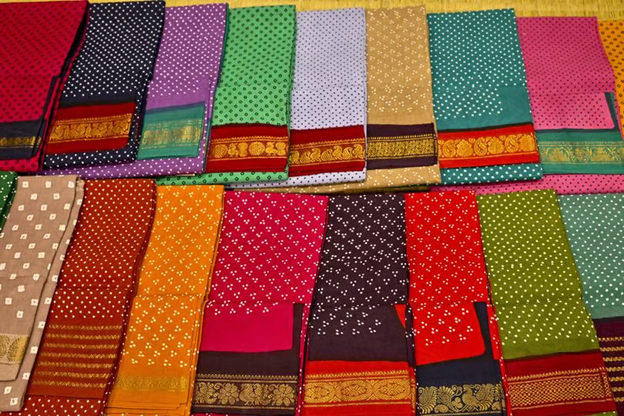
    • Sungudi saris are traditional cotton saris which are Perfected by the Saurashtrian community, who migrated from Gujarat to Madurai (Tamil Nadu) in the 17th century.
    • It features intricate tie-and-dye patterns inspired by the night sky.
    • It is hand-knotted, dyed, washed, starched, and sun-dried, often revealing over 15,000 delicate white dots.
    • The process takes more than 15 days, producing breathable, culturally rich garments prized across generations.
    • The Madurai Sungudi sari received the Geographical Indication (GI) tag in December 2005.
  • HPV vaccination drive to prevent cervical cancer

    HPV vaccination drive to prevent cervical cancer

    News – 

    • The Karnataka government, in alignment with a nationwide initiative, officially launched a major Human Papillomavirus (HPV) vaccination drive on February 28, 2026, to prevent cervical cancer among adolescent girls. 

     Key Details of the Vaccination Drive

    • Target Group: The campaign primarily targets girls who have completed 14 years of age but are below 15 years.
    • Scale of the Initiative: Approximately 6 lakh girls in Karnataka have been identified as eligible beneficiaries, contributing to a national target of nearly 1.15 crore girls.
    • Vaccine Type & Dosage: The drive uses the quadrivalent Gardasil-4 vaccine, which protects against four common HPV strains (6, 11, 16, and 18). Under the current national guidelines, it is administered as a single-dose intramuscular injection.
    • Cost: The vaccine is provided free of cost at government health facilities.
    • Duration: The initial intensive campaign is set for three months (90 days) in mission mode, after which the vaccine will be integrated into routine immunization days
  • Golestan Palace | High Chances of El Niño After July: WMO | United Nations Convention on the Law of the Sea (UNCLOS) | India renews Bilateral Swap Arrangement with Japan

    Golestan Palace

    Art & Culture

    In News

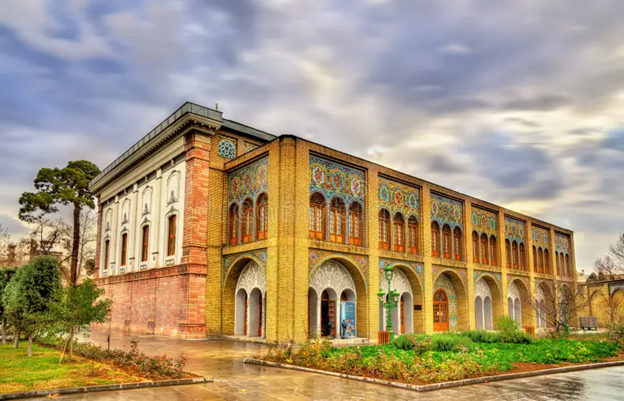
    • Tehran’s Golestan Palace, a UNESCO World Heritage Site, sustained damage from shockwaves and debris caused by US-Israel airstrikes.

    Golestan Palace

    • It is a historic royal complex that served as the official residence of the Qajar dynasty and is one of the oldest historic monuments in Tehran.
    • The origins of the complex date back to the Safavid Dynasty, when Tehran first gained importance as a political centre. Later rulers expanded and renovated the palace complex.
    • Golestan Palace reflects a blend of traditional Persian architecture and Western influences introduced during the 19th century.
    • Inscribed by UNESCO in 2013, it preserves cultural archives, early Iranian photography, and sites of historic coronations.

    Important Structures within the Complex

    • Shams-ol-Emareh (Edifice of the Sun): One of the most famous buildings in the palace complex.
    • It was built in the 1860s by Naser al-Din Shah Qajar.
    • Marble Throne Hall (Takht-e-Marmar): Used for royal coronations and official ceremonies.
    • Mirror Hall: Famous for extensive mirror mosaics and luxurious decoration.
    • Museum Buildings: The complex houses several museums displaying Qajar-era paintings & royal gifts and artefacts.

    High Chances of El Niño After July: WMO

    Geography

    In News

    • The World Meteorological Organization forecasts a high likelihood of El Niño developing in the latter half of 2026, following the fading of the current La Niña into ENSO-neutral conditions.
    • El Nino and La Nina are complex weather patterns resulting from variations in ocean temperatures in the Equatorial Pacific Region.

    Difference between El Niño and La Niña

    Feature

    El Niño (Warm Phase)

    La Niña (Cold Phase)

    Meaning

    Spanish for “Little Boy”

    Spanish for “Little Girl”

    Ocean Temp.

    Abnormal warming of eastern Pacific

    Abnormal cooling of eastern Pacific

    Trade Winds

    Weaken or reverse direction

    Become unusually strong

    Indian Monsoon

    Weakens monsoon; often leads to droughts

    Strengthens monsoon; brings heavy rainfall

    Winter in India

    Generally warmer/milder winters

    Severely cold winters in North India

    Frequency

    Occurs every 2–7 years; lasts 9–12 months

    Occurs every 2–7 years; can last 1–3 years

    United Nations Convention on the Law of the Sea (UNCLOS)

    International Relations

    Context

    • The Iranian frigate IRIS Dena was reportedly sunk off the south-western coast of Sri Lanka after a torpedo strike by a United States Navy submarine.

    United Nations Convention on the Law of the Sea (UNCLOS)

    • It is a comprehensive international treaty that establishes the legal framework for governance of oceans and seas.
    • Adopted in 1982 at Montego Bay, Jamaica and entered into force in 1994.

    It defines:

    1. Maritime boundaries of coastal states
    2. Rights and duties of states in maritime zones
    3. Rules for navigation, resource exploitation, and environmental protection
    4. Because of its extensive scope, it is commonly referred to as the “Constitution of the Oceans.”
    • Membership: 168 parties, including the European Union.
    • Countries such as India, Japan, and China are parties.
    • Note – The United States has signed but not ratified the convention.

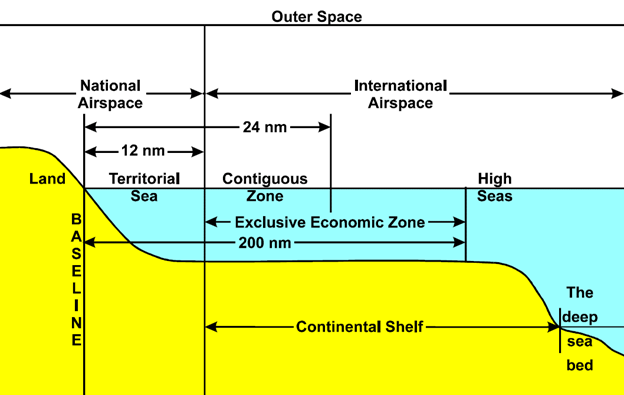
    Maritime Zones under UNCLOS

    • UNCLOS divides the oceans into several legal zones, each with different rights and responsibilities.
    • Territorial Sea: Extends up to 12 nautical miles from a coastal state’s baseline. The coastal state has full sovereignty over these waters. Foreign ships enjoy the right of innocent passage.
    • Contiguous Zone: Extends 12–24 nautical miles from the baseline. Coastal states can enforce laws relating to Customs, immigration, sanitation & security.
    • Exclusive Economic Zone (EEZ): Extends up to 200 nautical miles. The coastal state has exclusive rights over natural resources. However, other states retain freedom of navigation and overflight.
    • High Seas (International Waters): Areas beyond the EEZ of any state. No country has sovereignty over them. Governed by international law and UNCLOS principles.

    India renews Bilateral Swap Arrangement with Japan

    International Relations

    In News

    • India has renewed its Bilateral Swap Arrangement (BSA) with Japan with effect from 28th February, 2026.

    Basic terms -Currency swap

    • It is a financial agreement where two parties exchange the principal and interest of a loan in one currency for the equivalent in another.
    • These are typically medium- to long-term contracts used by multinational corporations and central banks to manage risks or reduce borrowing costs.

    Additional Information – India & Japan relations

    Defence and Security

    • Military Exercises: Malabar, Dharma Guardian, and JIMEX exercises enhance interoperability and Indo-Pacific security.
    • Trade: Bilateral trade reached approximately $23 billion in 2023-24.
    • FDI: Japan is India’s fifth-largest source of FDI
    • Bullet Train: The Mumbai-Ahmedabad High Speed Rail exemplifies flagship India-Japan transport cooperation.
    • Energy: Clean Energy Partnership (2022) expands hydrogen, renewables, and climate cooperation.
    • Quad: Quad coordination ensures Indo-Pacific stability through collective maritime commitments.
    • SCRI: Supply Chain Resilience Initiative (SCRI) reduces dependency on China for the supply of critical goods.
    • F orums: India and Japan cooperate in G20, International Solar Alliance (ISA), CDRI, and IPEF, strengthening multilateral governance.
    • Space: ISRO–JAXA LUPEX mission exemplifies frontier collaboration in space exploration.
  • Karnataka launches State Action Plan on snakebite and rabies

    Karnataka launches State Action Plan on snakebite and rabies

    News – 

    • Karnataka has launched the State Action Plan for Prevention and Control of Snakebite Envenoming (SAPSE) and the State Action Plan for Rabies Elimination (SAPRE). 
      • It is the first state in India to implement a comprehensive action plan specifically for snakebites, aiming to drastically reduce fatalities. 
    • Both plans aim for zero rabies deaths and reduced snakebite incidents by 2030. 

    Key Aspects of the Action Plans

    SAPSE (Snakebite Action Plan):

      • Notifiable Disease: Snakebite cases are now notifiable in Karnataka, ensuring mandatory reporting.
    • Treatment: Ensures availability of anti-snake venom (ASV) and free, immediate, no-advance-payment treatment at all health facilities.
    • Measures: Focuses on strengthening surveillance, training medical staff, and strengthening public awareness.

    SAPRE (Rabies Action Plan):

    • Target: Eliminate dog-mediated human rabies by 2030.
      • Rabies-Free Cities: Initiating the “Rabies-Free Cities” project in 11 major urban centres focusing on mass dog vaccinations and population management.
    • Health Initiatives: Free anti-rabies vaccines and immunoglobulin are provided at government hospitals.
    • Notifiable Disease: Rabies was declared a notifiable disease in 2022 to strengthen surveillance.
    • Significance – These initiatives are guided by a “One Health” approach, integrating human health, animal health, and environmental departments.
  • Bureau of Energy Efficiency Commemorates 25th Foundation Day | Rice fortification Scheme Suspended | World Obesity Atlas 2026

    Bureau of Energy Efficiency Commemorates 25th Foundation Day

    Environment

    Context

    • The 25th Foundation Day of the Bureau of Energy Efficiency (BEE) was celebrated at the India Habitat Centre.

    Bureau of Energy Efficiency (BEE)

    • It is an Indian statutory body under the Ministry of Power.
    • Established in 2002 under the Energy Conservation Act, 2001,
    • Objective – to reduce the energy intensity of the Indian economy through market-driven initiatives and self-regulation.

    Major Programs & Initiatives

    • Standards & Labelling (S&L) Scheme: Provides star-rating labels on appliances (e.g., refrigerators, ACs) to inform consumers about energy efficiency and savings potential.
    • Perform, Achieve & Trade (PAT): A market-based mechanism under the National Mission for Enhanced Energy Efficiency (NMEEE) that incentivizes large energy-intensive industries to meet efficiency targets.
    • Energy Conservation Building Codes (ECBC): Guidelines for efficient building design.
    • Assistance in Deploying Energy Efficient Technologies in Industries and Establishments (ADEETIE) Scheme: Assists MSMEs in adopting energy-efficient technologies with technical and financial support.
    • National Energy Conservation Awards (NECA): Annual recognition for exemplary  energy efficiency achievements.

    Rice fortification Scheme Suspended

    Economy

    In News

    • The Government of India has decided to temporarily discontinue rice fortification under the Pradhan Mantri Garib Kalyan Anna Yojana (PMGKAY) and other welfare schemes after a review of its implementation.

    Pradhan Mantri Garib Kalyan Anna Yojana (PMGKAY)

    • Launched in – It was announced as part of the relief package during the COVID-19 pandemic.
    • Aim – To ensure sufficient food for the poor and needy during the coronavirus crisis.
    • Ministry – The department of Food and Public Distribution under the Ministry of Consumer Affairs, Food and Public Distribution.
    • Beneficiaries – Under the scheme, about 80 Crore beneficiaries are eligible for foodgrains (free-of-cost).

    Additional Information – Food fortification

    • Definition – Food Fortification is the practice of increasing the content of one or more micronutrients (i.e., vitamins and minerals) in a food.
    • Significance – To improve the nutritional quality of the food and provide a public health benefit with minimal risk to health.
    • Rice fortification – It involves the addition of micronutrients (Iron, Folic Acid, Vitamin B 12).
    • Milk fortification – It involves the addition of vitamins A and D, which helps in combating deficiencies linked to these vitamins.
    • Salt fortification – It involves the addition of iodine (iodized salt) to prevent iodine deficiency disorders.

    World Obesity Atlas 2026

    Health

    Context

    • India ranks second globally in the number of children who are overweight or living with obesity, according to the World Obesity Atlas 2026 released on World Obesity Day (4 March).

    World Obesity Atlas

    • Published by – World Obesity Federation.
    • It provides global data, projections, and policy insights on obesity trends and related health risks.
    • The report highlights that the global target to halt the rise in childhood obesity by 2025 has been m issed, and the deadline has now been extended to 203

    Government Initiatives

    • POSHAN Abhiyaan (National Nutrition Mission): Focuses on improving nutritional outcomes for children, adolescents, and women through convergence of nutrition-related schemes.
    • Fit India Movement: Launched to promote physical activity, fitness culture, and behavioural change among citizens.
    • Eat Right India: Initiative by the Food Safety and Standards Authority of India to encourage healthy diets, food safety, and reduction of unhealthy food consumption.
    • School Health and Wellness Programme: Promotes health education, physical activity, and lifestyle awareness among school students.