Author: instakas

  • Tariff Threat Over Greenland May Imperil EU Trade Deal | Green Aluminium | IMEC’s Relevance to India and its Chokepoints | Child Trafficking in India

    Tariff Threat Over Greenland May Imperil EU Trade Deal

    International

    In News

    • EU lawmakers are moving to delay or block approval of the EU–US trade deal after US President Donald Trump threatened tariffs on countries supporting Greenland’s sovereignty.

    Greenland

    • It is located in the Northern Hemisphere and is surrounded by the Arctic Ocean in the north, the North Atlantic Ocean in the south, Baffin Bay in the west and the Greenland Sea in the east.
    • It lies closer to North America, but culturally and politically it is tied to Denmark.
    • Resources: It is mineral-rich with large deposits of gold, nickel, and cobalt.
    • It also has some of the biggest reserves of rare earth minerals such as dysprosium, praseodymium, neodymium, and terbium.
    • Governance : Greenland gained home rule in 1979 and expanded self-government in 2009, giving it authority over domestic affairs like healthcare and education.
    • Denmark retains control over defense, foreign policy and monetary policy.

    Major powers are eyeing Greenland

    • Greenland, part of North Atlantic Treaty Organization (NATO) through the membership of Denmark, has strategic significance for the US military and for its ballistic missile early-warning system since the shortest route from Europe to North America runs via the Arctic island.
    • China has shown strong interest in Greenland’s rare mineral resources, and infrastructural projects.

    Green Aluminium

    Geography & Environment

    In News

    • NALCO CMD said India’s aluminium sector is not yet ready for green aluminium under the EU’s CBAM due to high power costs and dependence on thermal energy.

    Do you know?

    • India is the 2nd largest Aluminium producer after China, and top-10 producer in refined copper.
    • Applications of Aluminium – It is widely used across power, transport, construction, packaging, machinery, aerospace and consumer goods, and demand is rising, especially in automobiles, housing, solar energy and power transmission.

    Green Aluminium

    • It refers to aluminium produced using methods that minimize greenhouse gas emissions and environmental impact.
    • Traditional aluminium production is energy-intensive and relies heavily on fossil fuels, contributing to carbon emissions.
    • Green aluminium is manufactured using renewable energy sources, recycled materials, and innovative technologies to reduce its environmental footprint.

    Importance

    • Green aluminium significantly cuts carbon emissions, saves energy through recycling, and supports a circular economy by reducing waste.
    • It enhances corporate sustainability credentials while retaining aluminium’s key qualities—lightweight, durable, corrosion-resistant, and versatile—without compromising performance.

    IMEC’s Relevance to India and its Chokepoints

    International

    Context

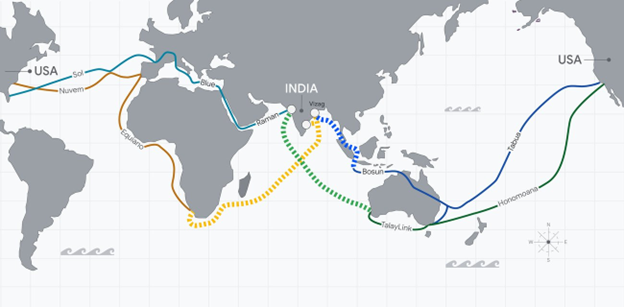
    • The current reciprocal tariff policies and protectionism by the US is a bad sign for the development of a multi-state, multimodal transport and trade corridor like the India–Middle East–Europe Economic Corridor (IMEC).

    India-Middle East EU Economic Corridor (IMEC)

    • Background: The IMEC is a proposed 4,800 km long route that was announced in 2023 on the sidelines of the G20 Summit.
    • Members: India, European Union, France, Germany, Italy, Saudi Arabia, UAE and US.
    • Aim: Integration of Asia, Europe and the Middle East.

    The IMEC will comprise of two separate corridors:

    • The east corridor connecting India to the West Asia/Middle East and
    • The northern corridor connecting West Asia/Middle East to Europe.

    IMEC’s Relevance To India and Its Chokepoints

    • Suez Canal Blockage (2021): It was blocked by the massive container ship, leaving several vessels stranded.
    • This disruption impacted nearly 12 percent of global trade until a major salvage operation successfully freed it.
    • Red Sea Crisis (2023-24): It was caused by the Houthis’ attacks on commercial shipping, exposing the fragility of over-concentrated trade routes.
    • Nearly a quarter of India’s cargo transiting the Red Sea faced delays.

    Significance of IMEC for India

    • Economic Development: By linking Asia, West Asia, the Middle East and Europe through enhanced connectivity and economic integration, the corridor aims to give a boost to economic development in the regions.
    • Enhances India’s Connectivity and Trade Access: IMEC provides India with a direct, faster, and safer trade route connecting Indian ports to Europe via the Arabian Peninsula and the Mediterranean.
    • Reduces dependence on the Suez Canal route, cutting shipping time by up to 40% and costs by 20–30%.

    Child Trafficking in India

    Polity and Governance

    Context

    • Child trafficking continues to be a grave human rights challenge in India, despite a robust constitutional framework and multiple statutory protections.

    Child Trafficking

    • Section 143 of Bhartiya Nyaya Sanhita (BNS) 2023 defines trafficking as; recruitment, transportation, harbouring, transfer or receipt of persons for exploitation.
    • The means include threats, force, coercion, abduction, fraud, deception, abuse of power, or inducement.
    • Scope of exploitation includes, physical and sexual exploitation, slavery, servitude and forced labour, forced removal of organs.

    Constitutional Safeguards in India

    • Article 21: Ensures the right to life and personal liberty, which has been interpreted to include the right to live with dignity.
    • Article 23: Prohibits trafficking in human beings and forced labor.
    • Article 24: Prohibits employment of children below 14 years in hazardous industries.
    • Article 39(e): The state should ensure that the health and strength of workers and children are not abused, and that citizens are not forced to take jobs that are not suitable for their age or strength.
    • Article 39(f): Mandates opportunities for children to develop in conditions of freedom, dignity, and protection from moral and material abandonment.

    Judicial Intervention against child trafficking

    • In Vishal Jeet versus Union of India, 1990 the court held that trafficking and child prostitution are serious socio-economic problems and hence a preventive and humanistic approach is essential to deal with them.
    • In C. Mehta versus State of Tamil Nadu, 1996, the Court issued guidelines with a view to prohibiting employment of children in hazardous industries.
    • In Bachpan Bachao Andolan versus Union of India, 2011, the Supreme court issued directions to address widespread exploitation and trafficking of children.
    • The Supreme Court in P. Kiran Kumar versus State has given strict guidelines to prevent such offences, and held that trafficking grossly violates children’s fundamental right to life as guaranteed by the Constitution.

    Laws governing anti-trafficking crimes

    • The Immoral Traffic (Prevention) Act, 1956 is targeted at stopping immoral trafficking and sex work. It went through two amendments, in 1978 and 1986.
    • The Child Labour (Prohibition and Regulation) Act, 1986, prevents children from partaking in certain employments and regulates the conditions of work for children in other fields.
    • The Bonded Labour System (Abolition) Act, 1976, prohibits systems of labour where people, including children, work under conditions of servitude to pay off debt, and also provides a framework for rehabilitating released labourers.
    • The Juvenile Justice (Care and Protection of Children) Act 2015, which governs laws relating to children alleged and found to be in conflict with law.
    • Protection of Children from Sexual Offences (POCSO) Act, 2012, which seeks to prevent commercial sexual exploitation of children.
  • Bhu Suraksha project

    Bhu Suraksha project

    Why in news :

    • Minister for Revenue Krishna Byre Gowda launched the Bhu Suraksha Project to expand the digitisation of land records to the offices of Assistant Commissioners (ACs) and Deputy Commissioners (DCs)

    About the Bhu Suraksha project

    • Aim : To curb malpractice, prevent the creation of fake entries or forged documents, and improve transparency by expanding the digitization of land records to higher administrative levels.
    • Launched by: The Revenue Department, Government of Karnataka.
    • Scope: The project expands the digitization drive from taluk offices to the offices of Assistant Commissioners (ACs) and Deputy Commissioners (DCs) across the State.
    • Mechanism: The initiative involves the systematic scanning and permanent digital preservation of original revenue records to ensure data integrity.
    • Timeline: The project aims to complete the scanning of all remaining pages within the next three to four months.
    • Current status : Karnataka holds an estimated 100 crore pages of land records, of which 62 crore pages have already been scanned. Computerization has been fully completed in 70 of the State’s 240 taluks.
  • India’s Power Sector | BRICS Plus Naval Exercise | India’s First-ever Open-sea Marine Fish Farming Project | 80 Years of Economic and Social Council (ECOSOC)

    India’s Power Sector

    Economy

    Context

    • India’s power distribution utilities have recorded a collective Profit After Tax (PAT) of ₹2,701 crore in FY 2024–25.

    India’s Power Sector

    • India is the third-largest producer and consumer of electricity in the world, with an installed capacity of 476 GW as of June 2025.
    • India ranks fourth globally in renewable energy installed capacity, fourth in wind power, and third in solar power as of 2025.
    • Electricity consumption remains led by industry at 41.8%, followed by households at 24.3%, agriculture at 17%, and commercial use at 8.3%.
    • India achieved 100% village electrification by 2018 and has since connected more than 2.8 crore households to the grid.

    Government Initiatives

    • National Solar Mission (NSM): It was launched in 2010, it has set ambitious targets for solar capacity installation, including grid-connected and off-grid solar power projects.
    • National Clean Energy Fund (NCEF): It was established to support research and innovation in clean energy technologies and projects that help in reducing greenhouse gas emissions.
    • National Wind Energy Mission: Focuses on the development and expansion of wind energy in India. The target for wind energy capacity is set at 140 GW by 2030.
    • PM-KUSUM Scheme for solarizing agricultural pumps.
    • Revamped Distribution Sector Scheme (RDSS) to strengthen DISCOMs.

    BRICS Plus Naval Exercise

    International

    In News

    • India skipped the BRICS Plus naval exercise “Will for Peace 2026” hosted by South Africa, opting out entirely despite holding the BRICS chair this year.
    • India clarified that such naval drills are not institutionalised activities of BRICS, but ad-hoc initiatives, and therefore participation is not automatic or obligatory.

    BRICS Plus Naval Exercises

    • BRICS Plus naval exercises are ad-hoc maritime drills involving BRICS members and selected non-BRICS partner countries.
    • They are not mandated under the BRICS framework and do not form part of official BRICS mechanisms.
    • Led by China, the exercise features active naval participation from Russia, Iran, the United Arab Emirates (UAE), and South Africa.

    BRICS

    • Founded in – 2009
    • HeadQuarters – Shanghai
    • It is an acronym for the grouping of the world’s leading emerging economies, namely Brazil, Russia, India, China, and South Africa (included in 2010)
    • Origin – The term “BRIC” was coined by the British Economist Jim O’Neill in 2001 to describe the four emerging economies of Brazil, Russia, India, and China.
    • Member Countries: The group includes the five original members (Brazil, Russia, India, China, and South Africa) and six members admitted during the 2024-25 expansion (Egypt, Ethiopia, Indonesia, Iran, Saudi Arabia, and the United Arab Emirates).
    • Share of BRICS – BRICS brings together five of the largest developing countries, representing 41% of the global population, 24% of the global GDP, and 16% of the global trade (By 2028, BRICS is expected to make up 35 percent of the global economy)
    • Financial Arm: The New Development Bank (NDB) acts as the group’s primary international financial organization to support infrastructure and sustainable projects.

    India’s First-ever Open-sea Marine Fish Farming Project

    Economy

    Context

    • The government launched India’s first-ever open-sea Marine Fish Farming project from the Andaman Sea.

    About

    • Implementation – The project is a collaboration between the Ministry of Earth Sciences, the National Institute of Ocean Technology (NIOT), and Andaman and Nicobar Islands.
    • The pilot initiative focuses on open-sea cultivation of marine finfish and seaweed in natural ocean conditions, integrating scientific innovation with livelihood generation.
    • The project aims to boost seafood production and reduce pressure on coastal fishing.

    Open-sea Fish Farming

    • Open-sea marine fish farming refers to the cultivation of marine fish species in offshore waters, away from the coastline.
    • It is done using cages, or submersible systems designed to withstand high waves, currents, and wind conditions.
    • Open-sea marine fish farming holds significant potential for sustainable fisheries, livelihood security, and blue economy expansion.

    80 Years of Economic and Social Council (ECOSOC)

    International

    In News

    • The United Nations Economic and Social Council (ECOSOC) completed 80 years of its functioning.

    United Nations Economic and Social Council (ECOSOC)

    • It is one of the six principal organs of the United Nations, acting as the central forum for international economic, social and environmental policy coordination.
    • It was established in 1945 under the UN Charter.
  • Command centre launched to address man-animal conflict

    Command centre launched to address man-animal conflict

    Why in news

    • Karnataka Forest Department launches tech-driven command centre to address human-animal conflict.

    Launch & Objective

    • Launched by: The Karnataka Forest Department (KFD).
    • Aim: To enhance the monitoring and management of human-animal conflict incidents through the deployment of advanced technological tools.

    Infrastructure & Technology

    • Central Hub: The initiative centers on a new Integrated Command and Control Centre (ICCC) in Bengaluru.
    • Network: The ICCC serves as a central hub connecting 11 Divisional Command and Control Centres (DCCC) across the State.
    • Mechanism: The system employs GPS-based applications to oversee ground-level patrolling and tracks problem elephants fitted with radio collars.
    • Key Functions: The centre enables real-time surveillance of sensitive and conflict-vulnerable areas while ensuring effective oversight of field operations.

    Regions Covered

    The network covers critical wildlife zones, including:

    • Divisions:M. Hills, Madikeri, Hassan, Chikkamagaluru, Mangaluru, and Bannerghatta National Park.
    • Tiger Reserves: Nagarahole, Bandipur, Bhadra, BRT, and Kali.
  • Highest-ever organ donations made in 2025

    Highest-ever organ donations made in 2025

    Why in news

    • Karnataka has recorded its highest-ever number of organ donations in a single year, with 198 donations in 2025, surpassing its previous record.

    Key Statistics

    • Record Achievement: The State recorded 198 organ donations in 2025, surpassing the previous peak of 178 donations in 2023.
    • National Standing: Karnataka ranked third in the country for organ donations in 2025, trailing only:
      • Tamil Nadu: 267 donations
      • Telangana: 205 donations
    • Nodal Agency: The State Organ and Tissue Transplant Organisation (SOTTO), Karnataka, serves as the nodal agency facilitating these cadaver organ donations.

    Drivers of Success

    • Network Expansion: The increase is primarily attributed to the empowerment of more hospitals as Non-Transplant Organ Retrieval Centres (NTORCs).
    • Tier-Two Cities: The expansion includes facilities in tier-two cities, broadening the donation network beyond major metropolitan hubs.
  • Chabahar Port Amidst US-Iran Tensions | Central Vigilance Commission | Root Wilt Disease | Elevated Wildlife Corridor in Kaziranga

    Chabahar Port Amidst US-Iran Tensions

    International

    In News

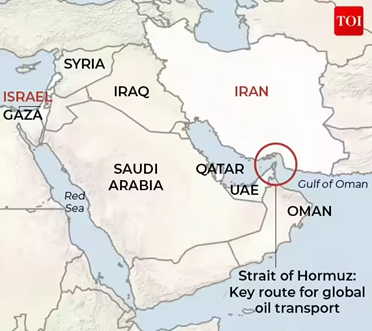
    • India has reaffirmed that it remains engaged with both the U.S. and Iran to continue operations at the strategic Chabahar port, countering reports that it plans to exit due to renewed U.S. sanctions.

    Chabahar Port

    • Location: It is a seaport in Chabahar located in southeastern Iran, on the Gulf of Oman.
    • It consists of two separate ports named Shahid Kalantari and Shahid Beheshti.
    • It is only about 170 kilometers west of the Pakistani port of Gwadar.
    • Strategic location: India needs access to iron from Afghanistan’s Hajigak mine and other natural resources from the Central Asian countries of Kazakhstan, Turkmenistan, and Uzbekistan, which is made possible by the Chabahar port.
    • INSTC: The port is also part of International North-South Transport Corridor (INSTC), a multimodal transport project to connect the Indian Ocean to Northern Europe.

    Central Vigilance Commission

    Polity and Governance

    In News

    • Praveen Vashista was appointed as Vigilance Commissioner in the Central Vigilance Commission by the President of India.

    Central Vigilance Commission (CVC)

    • It is India’s apex statutory body entrusted with ensuring integrity, transparency, and accountability in public administration.
    • It was established in 1964 following the recommendations of the Santhanam Committee on Prevention of Corruption.
    • The Central Vigilance Commission Act, 2003, provides for the appointment of a Central Vigilance Commissioner and two Vigilance Commissioners. The tenure of the Vigilance Commissioner is of four years or till the incumbent attains the age of 65 years.
    • The Central Vigilance Commissioner and the Vigilance Commissioners are appointed by the President of India on the recommendations of a High-Powered Committee (HPC) consisting of the Prime Minister, the Minister of Home Affairs and the Leader of the Opposition in the House of the People (Lok Sabha).

    Power and Functions

    • The Central Vigilance Commission (CVC) mandated under the CVC Act, 2003 to combat corruption and ensure integrity, transparency, and accountability in public administration.
    • The Commission exercises superintendence over vigilance administrations of Central Government ministries, departments, and organizations.
    • The Central Vigilance Commission acts as the apex vigilance institution by supervising and guiding anti-corruption inquiries, including cases referred by the Lokpal and whistleblower complaints under the PIDPI framework.
    • It supervises the functioning of the Central Bureau of Investigation (CBI) in cases related to offences under the Prevention of Corruption Act, 1988
    • It plays a key role in senior appointments by chairing committees that recommend appointments of senior officers in the Directorate of Enforcement and the CBI (SP level and above, excluding the CBI Director).

    Root Wilt Disease

    Economy

    In News

    • Coconut cultivation in peninsular India is facing a serious threat due to phytoplasma-induced Root Wilt Disease (RWD).

    Root Wilt Disease (RWD)

    • Root Wilt Disease of coconut is caused by phytoplasma, a cell wall–less bacterial pathogen, and is classified as a non-fatal but debilitating disease.
    • It was first reported more than 150 years ago in Erattupetta, Kerala, and despite long-term research efforts, no definitive curative treatment has been developed so far.
    • The disease is characterised by gradual yellowing and wilting of leaves, followed by a sharp decline in nut yield and eventual shedding of all nuts.
    • Root Wilt Disease spreads through insect vectors, mainly sucking pests, and its transmission is further facilitated by wind movement and large, uninterrupted coconut plantations.

    Additional Information – Coconut (Cocos nucifera)

    • It is a major perennial horticultural plantation crop of India, predominantly grown in the humid tropics and coastal regions.
    • It thrives in well-drained sandy loam soils, high humidity, and temperatures between 27–32°C. It requires plenty of sunlight.
    • India is one of the leading producers of coconut globally. Kerala, Tamil Nadu, and Karnataka together contribute about 82–83% of India’s coconut production.

    Elevated Wildlife Corridor in Kaziranga

    Geography & Environment

    Context

    • Prime Minister Narendra Modi is set to inaugurate a 34.5-km elevated wildlife corridor in Assam’s Kaziranga.

    Elevated Wildlife Corridor in Kaziranga

    • Objective- This aims to enable safe animal movement, especially during annual floods.
    • Also, this would improve connectivity between Guwahati, Kaziranga National Park, and Numaligarh.

    Kaziranga National Park

    • It is the largest undivided representative area of Brahmaputra valley floodplain grassland, where various stages of biotic succession in the grassland ecosystem are explicit.
    • The Park is the abode of more than 70% of One Horned Rhinoceros in the world.
    • It was declared a Wildlife Sanctuary in 1950, and notified as Kaziranga National Park in 1974 under the Wildlife (Protection) Act, of 1972.
    • It  was declared a World Heritage Site back in 1985. It is recognized as an Important Bird Area by BirdLife International.
  • Synthetic Cattle Breeds | 18th Japan-India Foreign Ministers’ Strategic Dialogue | UN High Seas Treaty Comes Into Effect | Seed Act 2026 and Its Impact on Farmers | Thiruvalluvar Day | Jallikattu

    Synthetic Cattle Breeds

    Economy

    Context

    • India registers two new synthetic cattle breeds Karan Fries and Vrindavani developed by the National Dairy Research Institute (NDRI).

    Karan Fries

    • It is a synthetic cow breed developed through crossbreeding Holstein Friesian, a globally recognised high-yielding breed with India’s indigenous Tharparkar zebu cattle, known for their hardiness and resilience.
    • The synthetic Karan Fries cow breed combines high productivity with resilience, delivering peak daily milk yields of up to 46.5 kg.
    • Synthetic cattle breeds are those developed through planned cross-breeding of two or more breeds usually indigenous (Bos indicus) with exotic (Bos taurus) followed by stabilisation of desired traits over generations.
    • Once stabilised, they breed true and are recognised as distinct breeds.

    Significance:

    • Higher productivity than indigenous cattle.
    • Better climate resilience than pure exotic breeds.
    • Improved economic returns for dairy farmers.
    • Lower mortality and better reproductive efficiency.

    18th Japan-India Foreign Ministers’ Strategic Dialogue

    International

    In News/Context

    • At the 18th India–Japan Strategic Dialogue, India and Japan reaffirmed the upward trajectory of their Special Strategic and Global Partnership.

    Key Highlights

    • Announced the launch of Japan–India Private-Sector Dialogue on Economic Security (B2B) in early 2026.
    • It will help in identification of five priority areas: semiconductors, critical minerals, ICT, clean energy, and pharmaceuticals.
    • Establishment of the Japan–India AI Strategic Dialogue under the Japan–India AI Cooperation Initiative (JAI).
    • Japan will invite 500 highly skilled Indian AI professionals by 2030 for joint research.

    Additional Information – India & Japan relations

    Defence and Security

    • Military Exercises: Malabar, Dharma Guardian, and JIMEX exercises enhance interoperability and Indo-Pacific security.
    • Trade: Bilateral trade reached approximately $23 billion in 2023-24.
    • FDI: Japan is India’s fifth-largest source of FDI
    • Bullet Train: The Mumbai-Ahmedabad High Speed Rail exemplifies flagship India-Japan transport cooperation.
    • Energy: Clean Energy Partnership (2022) expands hydrogen, renewables, and climate cooperation.
    • Quad: Quad coordination ensures Indo-Pacific stability through collective maritime commitments.
    • SCRI: Supply Chain Resilience Initiative (SCRI) reduces dependency on China for the supply of critical goods.
    • Forums: India and Japan cooperate in G20, International Solar Alliance (ISA), CDRI, and IPEF, strengthening multilateral governance.
    • Space: ISRO–JAXA LUPEX mission exemplifies frontier collaboration in space exploration.

    UN High Seas Treaty Comes Into Effect

    Geography & Environment

    Context

    • A UN-backed treaty on biodiversity in international waters, formally known as the Biodiversity Beyond National Jurisdiction (BBNJ) Treaty, has entered into force, creating the first legally binding global framework to conserve and sustainably use the high seas.

    What are the High Seas

    • High seas refer to ocean areas beyond national jurisdiction, i.e., beyond 200 nautical miles (Exclusive Economic Zones – EEZs).
    • They cover nearly two-thirds of the global ocean and about half of the Earth’s surface.
    • Earlier governed mainly by general principles under UNCLOS, with limited biodiversity-specific regulation.

    Biodiversity Beyond National Jurisdiction (BBNJ) Treaty

    • Adoption & Background: The Biodiversity Beyond National Jurisdiction (BBNJ) Agreement was adopted in 2023 by an Intergovernmental Conference on Marine Biodiversity of Areas Beyond National Jurisdiction, convened under the auspices of the United Nations.
    • Legal Status under UNCLOS: It is agreement under the United Nations Convention on the Law of the Sea (UNCLOS), after:
    • Objective: To ensure the conservation and sustainable use of marine biological diversity in Areas Beyond National Jurisdiction (ABNJ), commonly known as the high seas.
    • Membership Status: 83 countries have ratified the treaty so far & India has signed but not yet ratified the BBNJ Agreement.

    Seed Act 2026 and Its Impact on Farmers

    Economy

    Context

    • Recently, the Union Minister for Agriculture and Farmers’ Welfare (MoA&FW) briefed in detail about the features of the Seed Act 2026 and its impact on farmers.
    • The Seed Act 2026 is expected to be introduced in the Upcoming Budget Session of Parliament.

    Key Features of the Seed Act 2026

    • Nationwide Seed Traceability: Every packet of commercial seed sold will carry a QR code that farmers can scan.
    • Scanning reveals key information: who produced the seed, where it was sourced, and which dealer sold it.
    • It aims to eliminate anonymous seed sales and quickly detect fake or substandard seeds, enabling faster remedies for aggrieved farmers.
    • Mandatory Registration of Seed Companies and Dealers: The Act proposes compulsory registration of commercial seed producers, traders, and dealers.
    • Strong Penalties for Substandard and Fake Seeds: The new Act proposes fines up to ₹30 lakh and possible imprisonment for deliberate violations.
    • Protection of Traditional Seed Practices: Government officials have emphasised that traditional farmer practices like saving, sharing, and exchanging seeds within the community will not be restricted.
    • The new act focuses on commercial seed quality, not on traditional, non-branded seed systems.
    • Scientific Evaluation of Imported Seeds: Imported seeds will undergo rigorous scientific assessment before entering the Indian market, ensuring they meet ecological, agronomic, and quality criteria.
    • It protects local farmers from inferior foreign seeds that may not be suited to Indian growing conditions.
    • Institutional Mechanisms and Federal Cooperation: The Act may create oversight committees at the Central and State level to improve coordination in seed testing, registration, and enforcement across regions.
    • Agriculture remains a State Subject (Schedule VII of Indian Constitution), meaning states will play a key role in implementing and enforcing the Act alongside the Centre.

    Thiruvalluvar Day

    Culture

    In News

    • Prime Minister Narendra Modi paid tribute to Thiruvalluvar, acknowledging the enduring influence of his timeless works and ideals across generations.

    About

    • Thiruvalluvar Day was first celebrated on May 17 and 18 in 1935.
    • In the present time, it is usually observed either on January 15 or 16 in Tamil Nadu and is a part of Pongal celebrations.

    Thiruvalluvar

    • Great Tamil poet – Thiruvalluvar, commonly known as Valluvar, was a celebrated Tamil poet and philosopher.
    • Thirukkural – He is best known as the author of Thirukkural, a collection of couplets on ethics, politics, economy and love.

    Jallikattu

    Culture

    Context

    • Tamil Nadu Chief Minister M.K. Stalin attended the jallikattu in Alanganallur.

    Jallikattu

    • It is also known as Eruthazhuvuthal.
    • It is a bull-taming sport traditionally played in Tamil Nadu as part of the Pongal harvest
    • The history of this bullfight dates back to 400-100 BCE when it was played by the Ayars, an ethnic group in India.
    • The name is coined from two words, Jalli (silver and gold coins) and Kattu (tied).
    • In this festival, a bull is let loose among a crowd of people, and whoever tames it will get the coins tied to its horn.
    • The people who participate in the sport try to hold on to the animal’s hump to stop it. Sometimes, they run along with the bull.
    • Pulikulam or Kangayam is the breed of bulls used for the sport. This festival has been part of cultural tourism in the state.
    • Vadi manjuviraṭṭu, Vēli viraṭṭu, and Vaṭam manjuviraṭṭu are the variants of this sport

    Key Concerns:

    • Animal Cruelty & Suffering: Bulls are often provoked with alcohol, sticks, knives, and chili powder in their eyes; tail-bending and physical abuse during training and the event cause extreme stress, pain, and severe injuries.
    • Human Injuries & Fatalities: The event poses significant risks, with numerous injuries and deaths reported for both participants and bulls over the years.
    • Ethical Considerations: Animal rights groups argue that using bulls for entertainment is unethical, regardless of cultural significance, and that the practice exploits and traumatizes the animals.
    • However, in 2023, A five-judge Bench of the Supreme Court upheld the amendments made by the legislatures of Tamil Nadu, Maharashtra, and Karnataka to The Prevention of Cruelty to Animals (PCA) Act, 1960, allowing bull-taming sports like jallikattu, kambala, and bullock-cart races.
  • New 153-acre lung space proposed for Bengaluru in the name of Basavanna

    New 153-acre lung space proposed for Bengaluru in the name of Basavanna

    Why in news

    • A new 153-acre lung space has been proposed for Bengaluru, named the Vishwaguru Basavanna Biodiversity Park.

    Project Overview

    • Objective: To establish the Vishwaguru Basavanna Biodiversity Park, fulfilling a decade-and-a-half-old dream of creating a significant “lung space” in the northern part of the city.
    • Location & Scale: The park will be developed on 153 acres in North Bengaluru.

    Financial Details

    • Initial Sanction: The government has sanctioned an initial ₹50 crore for the first phase.
    • Total Cost: The total project cost is estimated at ₹250 crore, with additional funding expected from companies under Corporate Social Responsibility (CSR).

    Historical Significance

    • Legacy: This marks the first major botanical garden project in over 150 years, following the establishment of Bengaluru’s historic green spaces:
      • Lalbagh: Established in 1760 across 240 acres.
      • Cubbon Park: Started in 1870 across 194 acres.
  • A Decade of Startup India | 2025 Warmest La Nina Year on Record | Womaniya Initiative | India’s First National Capacity Building Programme for Tribal Healers | 28th Conference of Speakers and Presiding Officers of the Commonwealth (CSPOC) | India’s First State-funded BSL-4 lab for deadliest pathogens in Gujarat

    A Decade of Startup India

    Economy

    Context

    • PM Modi participated in a programme marking a decade of the Startup India initiative on National Startup Day.

    Startup India

    • Launched on – January 16, 2016.
    • Objective – to promote entrepreneurship and enable investment-driven growth.

    India’s Startup Ecosystem

    • India has rapidly evolved into one of the world’s largest startup ecosystems, with more than 2 lakh startups as of 2025 .
    • India has the 3rd largest startup ecosystem in the world.
    • Major hubs like Bengaluru, Hyderabad, Mumbai, and Delhi-NCR have been at the forefront of this transformation.
    • India has over 120 unicorns with a valuation exceeding $350 billion.
    • Global Innovation Index (GII) 2025 ranking: It provides performance metrics and ranks around 140 economies on their innovation ecosystems.
    • India has made a steady climb from 48 rank in 2020 to 38 in 2025.

    2025 Warmest La Nina Year on Record

    Geography & Environment

    In News

    • According to a new report ,2025 was the third warmest year on record and the warmest La Niña yea

    La Nina

    • It is a Pacific Ocean weather pattern where warm water and clouds shift westward.
    • This causes heavier rainfall in regions like Indonesia and Australia.
    • Conversely, areas like the southwestern United States experience drier-than-usual conditions.

    Impacts on India

    • In India, El Niño usually causes less rainfall and higher temperatures, while La Niña brings more rainfall and cooler temperatures.

    Womaniya Initiative

    Government schemes

    In News

    • Government e-Marketplace (GeM) marked seven years of the Womaniya initiative

    Womaniya initiative

    • It was launched in 2019
    • Objective – It aims to enhance access for women entrepreneurs and Self-Help Groups (SHGs) to government markets by providing a direct, transparent, and fully digital interface with buyers, removing intermediaries and entry barriers.
    • Significance– It is aimed at strengthening the participation of women-led Micro and Small Enterprises (MSEs) in public procurement.

    Additional information – Government e-Marketplace

    • Purpose – GeM is an Online Market platform that was set up in 2016 to facilitate procurement of goods and services by the government ministries, departments, public sector undertakings (PSU) etc.
    • Known as – It has been envisaged as National Procurement Portal of India.
    • Developed by – It has been developed by the Directorate General of Supplies and Disposals (Ministry of Commerce and Industry) with technical support of the National e-governance Division (Ministry of Electronic and Information Technology).
    • Functions under – It functions under the Directorate General of Supplies and Disposals (DGS&D), Ministry of Commerce and Industry.
    • Significance – GeM is a completely paperless, cashless and system driven e-market place that enables procurement of common use goods and services with minimal human interface.

    India’s First National Capacity Building Programme for Tribal Healers

    Polity and Governance

    Context

    • The Ministry of Tribal Affairs (MoTA) is organizing India’s first National Capacity Building Programme for Tribal Healers on Strengthening Health Outreach in Tribal Areas.

    India’s first National Capacity Building Programme for Tribal Healers

    • Objective – The initiative will recognize and integrate tribal and indigenous healers as trusted community-level partners within India’s public health ecosystem.
    • Healers possess deep-rooted ethnomedicinal knowledge, are accessible to the community, and often act as the first point of health contact.
    • Implementation – An MoU will be signed between ICMR–Regional Medical Research Centre (RMRC) and MoTA to establish India’s first National Tribal Health Observatory – the Bharat Tribal Health Observatory (B-THO) under Project DRISTI.

    28th Conference of Speakers and Presiding Officers of the Commonwealth (CSPOC)

    International

    In News

    • Prime Minister Narendra Modi inaugurated the 28th Conference of Speakers and Presiding Officers of the Commonwealth (CSPOC) at Samvidhan Sadan, highlighting how India has transformed its diversity into a democratic strength.

    28th Conference of Speakers and Presiding Officers of the Commonwealth (CSPOC)

    • The conference, attended by 61 Speakers and Presiding Officers from 42 Commonwealth countries.
    • It aims to promote knowledge and understanding of parliamentary democracy in its various forms and to develop parliamentary institutions.
    • Note – Lok Sabha Speaker Om Birla is the Chairperson of this Conference.

    Additional information –  Commonwealth of Nations

    • It is a voluntary association of 56 independent member states.
    • While most members are former territories of the British Empire, any nation can apply to join if it adheres to the association’s values.

    Member States by Region

    • The 56 member states are located across five regions: Africa (21), Asia (8), Caribbean and Americas (13), Europe (3), and the Pacific (11).
    • These countries collectively represent approximately 7 billion people, which is about one-third of the world’s population.

    Key Facts & Governance

    • Head of the Commonwealth: King Charles III serves as the symbolic head of the association.
    • Secretary-General: Shirley Ayorkor Botchwey is the current Secretary-General.
    • Non-British History: Four members joined without a historical link to the UK: Mozambique, Rwanda, Gabon, and Togo.
    • Largest & Smallest: India is the most populous member, while Nauru and Tuvalu are the smallest.
    • Summit: The Commonwealth Heads of Government Meeting (CHOGM) is held every two years. The next meeting will be in late 2026 in Antigua and Barbuda.

    India’s First State-funded BSL-4 lab for deadliest pathogens in Gujarat

    Science and Technology

    In News

    • The Union Home Minister laid the foundation stone for a Bio-Safety Level 4 (BSL-4) Containment Facility and laboratory in Gandhinagar, describing it as a “health shield” for India.

    BSL-4 Facility

    • Bio-Safety Level 4 (BSL-4) labs represent the highest level of biological containment.
    • It is designed to safely study the world’s most dangerous and highly infectious pathogens that often lack vaccines or treatments.
    • Scientists conduct advanced research, develop diagnostics, vaccines, and therapeutics, and carry out rapid outbreak investigation and response under strictly controlled and internationally monitored conditions.
    • Significance – The BSL-4 laboratory coming up in Gandhinagar, along with an Animal Bio-Safety Level (ABSL) facility, will be a strategic national asset where research is conducted on the deadliest pathogens known to mankind, including the Ebola virus, Marburg virus, Crimean-Congo Hemorrhagic Fever (CCHF) virus, Kyasanur Forest Disease virus, and Nipah virus, among others.
  • Kuvempu Bhasha Bharathi Pradhikara: Annual awards

    Kuvempu Bhasha Bharathi Pradhikara: Annual awards

    Why it in news :

    • Kuvempu Bhasha Bharathi Pradhikara, will hold a literary event on January 9 to present the 2025 Annual Honorary Awards and the 2024 Book Awards.

    Honorary Awards winners

    • Eminent personalities J.V. Karlo, Prof. Vanamala Viswanatha, K.R. Sandhya Reddy, Dr. Vittalarao T. Gaikwad, and Dr. J.P. Doddamani will receive the honorary awards.

    The book awards winners

    • The Book Awards will be conferred on Dr. Nataraj Honnavalli, Dr. Sadanand R, Karthik R, Dr. Malleshappa Siddarampura, and Dr. Devaraj N for their outstanding literary contributions.