Blog

  • Karnataka & Group C Current Affairs – July 4th, 2026

    Important Days

    International Day of Cooperatives 2026 

    Observed Date: July 4, 2026 (First Saturday of July) 

    Observing Organisation: United Nations / Committee for the Promotion and Advancement of Cooperatives (COPAC) 

    Objective: To raise global awareness about the contributions of cooperatives to economic and social development, promote the cooperative business model based on shared ownership and democratic decision-making, and strengthen collaboration between the United Nations and the international cooperative movement to achieve Sustainable Development Goals. 

    Theme: “Cooperatives for a Peaceful World!”

    Sports

    Vaibhav Sooryavanshi: Youngest India Debutant 

    Why in News: Vaibhav Sooryavanshi became the youngest cricketer in history to represent India in any international format at just 15 years and 99 days old during his T20I debut against England. 

    Key Highlights 

    • The Milestone Venue: Achieved at Old Trafford, Manchester on July 4, 2026, where he received his official India T20I cap. 
    • Breaking the Master’s Record: Shattered Sachin Tendulkar’s three-decade-old record, who had made his international Test debut against Pakistan in 1989 at the age of 16 years and 205 days. 
    • Global T20I Standing: Became the youngest men’s T20I debutant among full ICC member nations, surpassing Ireland’s Joshua Little (who debuted at 16 years and 309 days).
  • QUIZ on National & International, State Current Affairs and Miscellaneous – July 4th 2026

    QUIZ on National & International, State Current Affairs and Miscellaneous – July 4th 2026

  • MCQs Compilation on National & International, State Current Affairs and Miscellaneos Current Affairs

    MCQs Compilation on National & International, State Current Affairs and Miscellaneos Current Affairs

    1. Cotton is popularly known as:

    A) Golden Fibre
    B) White Gold
    C) Brown Gold
    D) Silver Fibre

    Answer: B


    2. Who has taken charge as the 31st Chief of the Army Staff (COAS)?

    A) General Upendra Dwivedi
    B) General Dhiraj Seth
    C) General Manoj Pande
    D) General Anil Chauhan

    Answer: B) General Dhiraj Seth


    3. Consider the following statements:

    1. Hydrogen is the lightest chemical element.

    2. Hydrogen can be stored for long periods.

    3. Stored hydrogen can be used for electricity generation through fuel cells.

    Which of the statements given above are correct?

    A) 1 only
    B) 1 and 2 only
    C) 2 and 3 only
    D) 1, 2 and 3

    Answer: D


    4. Which strait connects the Red Sea with the Gulf of Aden?

    A) Strait of Hormuz
    B) Strait of Malacca
    C) Bab el-Mandeb Strait
    D) Bosporus Strait

    Answer: C


    5. What was the theme of the International Day of Cooperatives 2026?

    A) Cooperatives Build a Better World
    B) Cooperatives for Sustainable Development
    C) Cooperatives for a Peaceful World!
    D) Cooperatives for Inclusive Growth

    Answer: C) Cooperatives for a Peaceful World!


    6. Whose record did Vaibhav Sooryavanshi surpass to become India’s youngest international cricket debutant?

    A) Virat Kohli
    B) Yuvraj Singh
    C) Sachin Tendulkar
    D) Kapil Dev

    Answer: C) Sachin Tendulkar

  • VB-G RAM G Act Come Into Force | eSARAS | India’s Diminishing Cotton Productivity | GAGAN (GPS Aided GEO Augmented Navigation) | 31st Chief of the Army Staff | Transcaspian marinka (Schizothorax pelzami) | Forest Owlet (Heteroglaux blewitti) | 16th India-Japan Annual Summit | Borjuli Wetland | Neurocysticercosis

    VB-G RAM G Act Come Into Force

    Polity

    In News

    • The Viksit Bharat-Guarantee for Rozgar and Ajeevika Mission (Gramin) (VB-G RAM G) Act, 2025, has come into effect from 1st July. 

    Key features

    • It replaces the MGNREGA 2005, transitioning India’s rural employment from a “relief-based” system to a “developmental and asset-creation” model under the Ministry of Rural Development. 
    • It includes increasing guaranteed work to 125 days, implementing a 60:40 Centre-State funding ratio, and moving to a supply-driven, normative budget allocation linked with PM Gati Shakti. 
    • Furthermore, the Act mandates a 60-day pause in work during agricultural seasons.

    Key Features & Implementation

    • Wages: A national base wage of ₹300 per day is set, with regional variations.
    • Projects: Focus on water security, infrastructure, and climate resilience.
    • Technology: Uses the Viksit Bharat National Rural Infrastructure Stack for AI-driven, transparent, and geo-tagged tracking.
    • Rights: Continues to provide for unemployment allowance and wage penalties

    eSARAS

    Polity

    Context

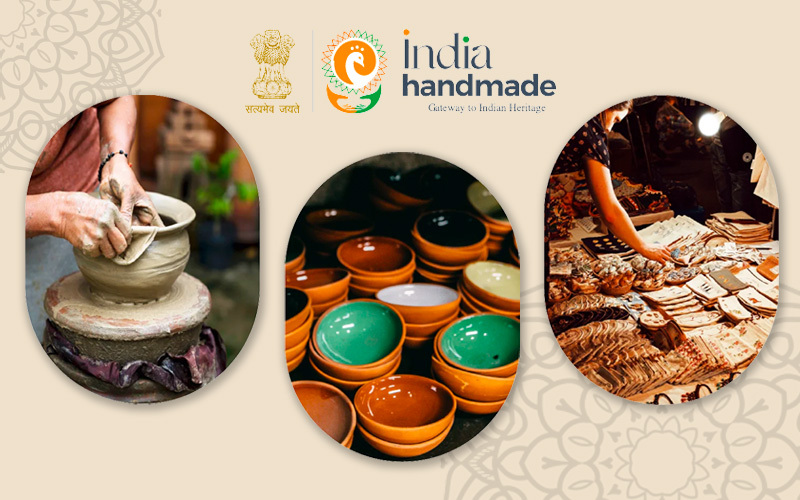
    • The Government recently emphasized the role of eSARAS (SARAS Aajeevika) in digitally empowering women-led Self-Help Groups (SHGs) by linking rural artisans to national markets and promoting inclusive growth under the Digital India mission.

    eSARAS (SARAS Aajeevika)

    • It is a digital marketplace for products created by women SHGs, rural artisans and producer collectives across India.
    • It is developed by the Ministry of Rural Development under the Deendayal Antyodaya Yojana–National Rural Livelihoods Mission (DAY-NRLM).
    • Objective – to provide SHG members with direct market access, eliminate middlemen, ensure fair remuneration and promote indigenous crafts and rural entrepreneurship.
    • Every product on eSARAS carries a story, and every purchase is a direct connection to the artisan behind it. It includes examples like:
    1. Chanderi sarees from Madhya Pradesh
    2. Marble artisans in Rajasthan
    3. Pashmina producers in the hills of Jammu & Kashmir

    Key Milestones: From Portal to e-Commerce Ecosystem

    • eSARAS Portal: e-Commerce portal launched for better and more effective marketing of Saras products
    • eSARAS Mobile App: Mobile app launched alongside the eSARAS Fulfilment Centre. It is used for processing, packaging and shipping of products.
    • ONDC (Open Network for Digital Commerce) – to democratise and unbundle the e-commerce sector. 
    • UMANG: eSARAS listed on UMANG; platform now serves 2,572 services with 796.69 crore transactions (June 2026)
    • SARAS Shakti Collection: Premium curated gift collection launched at Rashtriya Gramin Vikas Sammelan 2026 for institutional and corporate markets.
    • SARAS Aajeevika Gallery: It is a permanent retail gallery established for showcasing curated SHG products.

    India’s Diminishing Cotton Productivity

    Economy

    Context

    • The stagnation in India’s cotton productivity has led to a debate on whether new genetically modified (GM) cotton technologies alone can improve productivity or whether greater emphasis is needed on soil health and agronomic practices.

    Cotton Cultivation in India

    • It is often referred to as “White Gold,” 
    • It is a vital commercial crop that serves as the backbone of India’s textile industry and sustains millions of livelihoods.

    Geographic & Climatic Requirements- 

    • It is a subtropical Kharif crop requiring 6–8 months to mature, cotton needs a warm, sunny climate (21°C–30°C) with at least 210 frost-free days.
    • Rainfall/Soil: Requires 50–100 cm of water; best grown on moisture-retaining Black Cotton Soil (Regur), though it thrives in alluvial/red soils with proper drainage to avoid waterlogging.
    • Production: India is the world’s top producer and holds the largest acreage.
    • Major producing states – Gujarat, Maharashtra, and Madhya Pradesh
    • Key Challenges: Pink Bollworm (PBW) resistance

    Mission for Cotton Productivity 

      • It is also referred as Kapas Kranti
      • Objective – it aims to address stagnant yields and improve fibre quality to make India a self-reliant and globally competitive textile hub.
      • Focuses on high-density planting (HDPS), developing 24 climate-resilient varieties, promoting Extra Long Staple (ELS) cotton, and branding (“Kasturi Cotton Bharat”).
    • Modernization: Includes upgrading 2,000 ginning units and integrating digital tools for better market access

    GAGAN (GPS Aided GEO Augmented Navigation)

    Science and Tech

    Context

    • India has achieved a major milestone in satellite navigation with GAGAN (GPS Aided GEO Augmented Navigation) becoming the first Satellite-Based Augmentation System (SBAS) certified for the equatorial region.

    GAGAN (GPS Aided GEO Augmented Navigation)

    • GAGAN is India’s indigenous Satellite-Based Augmentation System (SBAS), jointly developed by the Indian Space Research Organisation (ISRO) and the Airports Authority of India (AAI). 
    • Operational since 2015, it enhances the accuracy, availability, and integrity of GPS signals by providing real-time correction information

    Applications 

    • Besides aviation, GAGAN supports:
    • Maritime navigation
    • Intelligent transport and fleet management
    • Railway operations
    • Disaster management
    • Defence, telecom synchronisation, and geospatial mapping.

    31st Chief of the Army Staff

    Defence

    Context 

    • General Dhiraj Seth took charge as the 31st Chief of the Army Staff from General Upendra Dwivedi, who superannuated after more than four decades of distinguished service to the nation.

    Chief of the Army Staff (COAS)

    • COAS  is the professional head and highest ranking serving officer of the Indian Army.
    • COAS is responsible for the command, training, administration, discipline and operational readiness of the Indian Army.
    • But under Article 53(2) of the Constitution, the President of India is the Supreme Commander of the Armed Forces. 
    • The COAS is appointed by the Appointments Committee of the Cabinet (ACC) for a tenure of three years or up to the age of 62 .
    • The COAS works within the civilian-led defence structure headed by the Cabinet Committee on Security (CCS) and the Ministry of Defence.

    Transcaspian marinka (Schizothorax pelzami)

    GS3/Species in News

    News

    • A clan in Arunachal Pradesh’s East Kameng district has started a conservation campaign to protect the ray-finned fish Schizothorax pelzami (Transcaspian marinka).

    Transcaspian marinka (Schizothorax pelzami)

    • Habitat type: Freshwater, benthopelagic (bottom-dwelling in rivers).
    • Distribution: It is found in rivers of Turkmenistan, Afghanistan, and northeastern Iran, thriving in temperate benthopelagic environments.
    • IUCN Red List Status : It  has been assessed as Least Concern due to its large range and the lack of widespread threats in this area.
    • Latest Conservation in India : The Sangno clan of Arunachal Pradesh’s East Kameng district has started a community-based conservation initiative with 52 fingerlings of the Transcaspian marinka (Schizothorax pelzami), locally called Ngarsing, released into a mahseer-free stretch of the Richaso stream.

    Forest Owlet (Heteroglaux blewitti)

    Ecology

    News – 

    • Forest Owlet is an endemic owl species rediscovered in 1997 after being presumed extinct for over 100 years.

    Forest Owlet

    • Appearance: It is a small owl with an unspotted crown, white throat collar, and heavily banded wings and tail.
    • Behaviour: Unlike most owls, it is diurnal and shows rapid side-to-side tail flicking while hunting.
    • Habitat Preference: The species inhabits dry deciduous forests dominated by teak with an open canopy and dense undergrowth.
    • Distribution: The owl is restricted to central India with fragmented populations in Madhya Pradesh, Maharashtra, and Gujarat.
    • Ecological Role: As an understory predator, it regulates populations of small mammals, reptiles, and large insects.
    • Key Threats: Habitat degradation from illegal logging, forest fires, and agricultural expansion.
    • Conservation Status: IUCN: Endangered; CITES: Appendix I; WPA: Schedule I

    16th India-Japan Annual Summit

    International

    Context (PIB): 

    • Japanese Prime Minister Sanae Takaichi visited India to attend the 16th India-Japan Annual Summit in New Delhi.

    India-Japan Bilateral Relations

      • India and Japan elevated their bilateral ties to a “Special Strategic and Global Partnership” in 2014,
      • FDI Source: Japan is the 5th-largest FDI source for India, accounting for 6% of total FDI between 2000 and 2026. 
      • Defence Relations: Bilateral defence cooperation is based on the 2+2 Ministerial Dialogue
    • Joint Exercise: JIMEX (Navy), Dharma Guardian (Army), Veer Guardian (Air Force), Malabar (multilateral naval exercise between US-India-Japan-Australia).
    • Space Collaboration: ISRO and JAXA are collaborating on the Lunar Polar Exploration (LUPEX) mission to investigate lunar water ice at the Moon’s south pole.
    • Nuclear Treaty: The 2016 civil nuclear agreement made Japan the first country to extend nuclear cooperation to a non-NPT state, with a clause permitting termination upon an Indian nuclear test.
    • Strategic Convergence: Free and Open Indo-Pacific (FOIP), counter maritime aggression through the Quad, and build resilient supply chains through the Supply Chain Resilience Initiative (SCRI).

    Borjuli Wetland

    Ecology

    News – 

    • The Borjuli wetland in Assam, known for harbouring a wild rice species called Oryza rufipogon, has been notified as a Biodiversity Heritage Site (BHS).
    • Oryza rufipogon, is the progenitor of present-day cultivated rice, Oryza sativa. 
    • It is resistant to pests and diseases and can tolerate flooding and saline conditions, making it a valuable genetic resource for developing climate-resilient crop varieties.

    Biodiversity Heritage Site (BHS)

    • These are well-defined areas that are unique, ecologically fragile ecosystems (terrestrial, coastal, inland water, or marine) characterized by one or more of the following:
    1. Species richness
    2. High endemism
    3. Presence of rare and threatened species, keystone species, and species of evolutionary significance
    4. Presence of wild ancestors of domestic/cultivated species
    5. Past pre-eminence of biological components represented by fossil beds
    6. Areas with significant cultural, ethical, aesthetic values important for maintenance of cultural diversity
    • Legal Status: They are notified under Section 37 of the Biological Diversity Act, 2002.
    • Notifying Authority: State Government in consultation with local bodies after recommendations from the State Biodiversity Board.
    • As per the National Biodiversity Authority, India has 54 Biodiversity Heritage Sites as of March 2026.

    Neurocysticercosis

    Science and Tech

    News –

    •  A UK woman’s discovery of 38 parasite cysts in her brain following a tapeworm infection has renewed global attention on neurocysticercosis.

    Neurocysticercosis 

    • It is a parasitic infection of the brain caused by the larval stage of the pork tapeworm (Taenia solium) and is a leading cause of acquired epilepsy in endemic regions.
    • Transmission & Symptoms: Infection occurs by ingesting tapeworm eggs through contaminated food, water, or poor hygiene
    • Larvae form cysts in the brain, which may remain asymptomatic for years before triggering seizures and other neurological symptoms due to inflammation.
    • Treatment: Management is individualised, involving antiparasitic drugs, anti-seizure medications, anti-inflammatory therapy, or surgery, depending on the number, location, and stage of the cysts.
  • QUIZ on National & International, State Current Affairs and Miscellaneous – July 3rd 2026

    QUIZ on National & International, State Current Affairs and Miscellaneous – July 3rd 2026

  • MCQs Compilation on National & International, State Current Affairs and Miscellaneos Current Affairs

    MCQs Compilation on National & International, State Current Affairs and Miscellaneos Current Affairs

    1. The full form of PM-FCT is:

    A) Prime Minister Family Care Tracker
    B) Public Monitoring Family Care Tracker
    C) Prime Monitoring Family Care Technology
    D) Public Family Care Technology

    Answer: A


    2. Baaz Battalions are primarily associated with:

    A) Missile operations
    B) Drone operations
    C) Tank warfare
    D) Cyber warfare

    Answer: B


    3. Consider the following statements regarding the VB-G RAM G Act, 2025:

    1. It came into force across rural India from 1 July 2026.

    2. It replaced the Mahatma Gandhi National Rural Employment Guarantee Act, 2005.

    3. It guarantees 125 days of wage employment in a financial year to eligible rural households.

    Which of the statements given above are correct?

    A) 1 and 2 only
    B) 2 and 3 only
    C) 1 and 3 only
    D) 1, 2 and 3

    Answer: D


    4. eSARAS is primarily a:

    A) Rural employment guarantee portal
    B) Digital marketplace for SHG and rural artisan products
    C) Agricultural credit portal
    D) Rural land records platform

    Answer: B


    5. Which tax regime replaced a complex web of cascading indirect taxes with a unified taxation framework?

    A) Income Tax
    B) Securities Transaction Tax
    C) Goods and Services Tax
    D) Wealth Tax

    Answer: C

  • QUIZ on National & International, State Current Affairs and Miscellaneous – July 2nd 2026

    QUIZ on National & International, State Current Affairs and Miscellaneous – July 2nd 2026

  • Karnataka & Group C Current Affairs – July 2nd, 2026

    Awards

    USISPF Honors Sunil Bharti Mittal 

    Context: Sunil Bharti Mittal, Founder and Chairman of Bharti Enterprises, was honoured with the 2026 Leadership Award by the US-India Strategic Partnership Forum (USISPF) during its IX Annual Leadership Summit in Washington, D.C.

    Key Highlights: 

    • Reason for Recognition: Honoured for his pivotal role in transforming India’s telecommunications landscape and his sustained contributions toward advancing economic and commercial ties between India and the United States. 
    • Fellow Awardees: He shared the award with global business leaders Christopher T. Calio (Chairman and CEO of RTX) and V. Prem Watsa (Chairman and CEO of Fairfax Financial Holdings). 
    • Key Remarks: Speaking at the “America At 250” themed summit, Mittal highlighted the 5-million-strong Indian diaspora as a crucial strategic bridge and expressed optimism for an imminent India-US bilateral trade agreement. 

    About the Award: 

    • Establishing Body: Presented by the US-India Strategic Partnership Forum (USISPF), a non-profit organization focused on deepening bilateral collaboration.
    • Objective: To recognize and honor distinguished business leaders and policymakers who play an exemplary role in promoting trade, technology, innovation, and strategic partnerships across the US-India corridor.
  • MCQs Compilation on National & International, State Current Affairs and Miscellaneos Current Affairs

    MCQs Compilation on National & International, State Current Affairs and Miscellaneos Current Affairs

    1. Which of the following flamingo species are found in India?

    1. Greater Flamingo

    2. Lesser Flamingo

    3. Chilean Flamingo

    4. Andean Flamingo

    Select the correct answer using the code below:

    A) 1 and 2 only
    B) 2 and 3 only
    C) 1, 3 and 4 only
    D) 1, 2, 3 and 4

    Answer: A


    2. Which of the following schemes provides direct cash benefits to pregnant women for nutritional support?

    A) Janani Suraksha Yojana
    B) PM Matru Vandana Yojana
    C) LaQshya
    D) SUMAN

    Answer: B


    3. The full form of ICDS is:

    A) Integrated Child Development Services
    B) Indian Child Development Scheme
    C) Integrated Children Dietary Scheme
    D) Indian Child Development Services

    Answer: A


    4. Consider the following institutions connected through the Kisan Sarathi Platform:

    1. Krishi Vigyan Kendras (KVKs)

    2. ICAR Institutes

    3. Agricultural Universities

    Select the correct answer using the code below:

    A) 1 only
    B) 1 and 2 only
    C) 2 and 3 only
    D) 1, 2 and 3

    Answer: D


    5. Who has been reappointed as the Chairman of the CBDT?

    A) Ravi Agrawal
    B) Tapan Kumar Deka
    C) Mahesh Dixit
    D) Sanjay Malhotra

    Answer: A

  • Flamingo Revolution | SUMAN Roadmap 2030 | Global Report on Food Crises 2026 (GRFC 2026) report | Kisan Sarathi Platform | ‘Shastrarth’ Tradition at Nalanda University | Project BRAHMANK Marks its 16th Raising Day | PM Family Care Tracker (PM-FCT) | Baaz Battalions

    Flamingo Revolution

    Environment

    Context

    • People in Albania have launched the “Flamingo Revolution” to oppose a proposed $1.6 billion luxury resort project. 
    • The project includes constructions on Sazan island and Vjosa-Narta, a wetland home for flamingos, seals and nesting sites for sea turtles, creating concern over the government’s negligence towards environmental degradation.

    Flamingo

    • Genus – Phoenicopteridae.
    • They are famous for their pink plumage, long necks, and uniquely curved beaks adapted for filter feeding. 
    • Distribution – There are six living species of flamingos found across Africa, Europe, Asia, and the Americas.
    1. Greater Flamingo (Phoenicopterus roseus).
    2. Lesser Flamingo (Phoeniconaias minor).
    3. American / Caribbean Flamingo (Phoenicopterus ruber).
    4. Chilean Flamingo (Phoenicopterus chilensis).
    5. Andean Flamingo (Phoenicoparrus andinus).
    6. James’s / Puna Flamingo (Phoenicoparrus jamesi).
    • In India, the Greater Flamingo and Lesser Flamingo are found, especially in coastal wetlands and salt pans.
    • Threats – habitat degradation, pollution, disturbance at breeding sites, and climate change affecting wetlands.

    Conservation status

    • Greater Flamingo (IUCN): Least Concern.
    • Lesser Flamingo (IUCN): Near Threatened.

    SUMAN Roadmap 2030

    Polity

    Context

    • Union Minister of Health and Family Welfare, launched the SUMAN Roadmap 2030 to strengthen maternal and newborn healthcare.

    SUMAN Roadmap 2030

    • It is a comprehensive national strategy to accelerate progress toward the Sustainable Development Goals (SDGs) by 2030 related to maternal and newborn health. 
    • The framework seeks to reduce the Maternal Mortality Ratio (MMR) to below 70 per 100,000 live births by 2030, while also lowering neonatal and infant mortality rates and advancing the goal of zero preventable maternal and newborn deaths.

    Maternal Mortality

      • Maternal death is the death of a woman while pregnant or within 42 days of termination of pregnancy,
    • Maternal Mortality Ratio (MMR) is the number of maternal deaths per 1,00,000 live births.
    • The Sustainable Development Goal (SDG) 3.1 targets reducing the global maternal mortality ratio to less than 70 per 1,00,000 live births by 2030.

    Additional Information- Maternal Health Initiatives

    1. Janani Suraksha Yojana (JSY): Gives cash to poor women who choose to give birth in a hospital instead of at home.
    2. Janani Shishu Suraksha Karyakram (JSSK) – Makes hospital births 100% free. Covers medicine, food, tests, and free rides to and from the hospital.
    3. Surakshit Matritva Aashwasan (SUMAN) – It Promises dignified care with zero tolerance for being turned away by a hospital.
    4. Pradhan Mantri Matru Vandana Yojana (PMMVY) – Gives direct cash (₹5,000 for the first child and ₹6,000 for a second girl child) to buy nutritious food.
    5. LaQshya: Upgrades the quality and safety of hospital delivery rooms.

    Global Report on Food Crises 2026 (GRFC 2026) report

    International

    Context

    • According to the Global Report on Food Crises 2026 (GRFC 2026) report, more than 266 million people are facing high levels of acute food insecurity across 47 countries.

    Key Findings of the Global Report on Food Crises (GRFC) 2026

    • High Acute Hunger: Around 266 million people (22.9% of the assessed population) experienced high levels of acute food insecurity in 2025.
    • Regional Distribution of Hunger Crisis: Ten countries accounted for nearly two-thirds of the global burden.
    • Catastrophic Hunger: About 1.4 million people in six countries were classified under the ‘Catastrophe’ (IPC Phase 5) category, the highest level of acute food insecurity.

    Initiatives & Efforts In India

    • National Food Security Act (NFSA), 2013: It provides subsidised food grains to nearly two-thirds of India’s population.
    • Pradhan Mantri Garib Kalyan Anna Yojana (PMGKAY): It ensures free food grains to NFSA beneficiaries.
    • POSHAN Abhiyaan and Mission POSHAN 2.0: It aims to improve nutritional outcomes among women, children and adolescent girls through convergence and technology-enabled monitoring.
    • Integrated Child Development Services (ICDS): It provides supplementary nutrition, immunisation, health check-ups and pre-school education.
    • PM-POSHAN Scheme: It provides cooked mid-day meals to school children to improve nutrition and educational outcomes.
    • Anaemia Mukt Bharat: It targets reduction of anaemia among women, adolescents and children.
    • Eat Right India Initiative: It promotes safe, healthy and sustainable dietary practices.

    Kisan Sarathi Platform

    Polity

    Context

    • Kisan Sarathi, launched in 2021, is India’s largest integrated digital agro-advisory platform.

    About

    • Launched by: Ministry of Electronics & Information Technology and the Ministry of Agriculture and Farmers Welfare.
    • Implemented by: The Indian Agricultural Statistics Research Institute and the Digital India Corporation.

    Kisan Sarathi app connects farmers with:

    • 730+ Krishi Vigyan Kendras (KVKs);
    • 100+ ICAR institutes;
    • 65+ agricultural universities.

    Features:

    • Personalized advisory based on farm and farmer profile.
    • Live interaction in 13 regional languages with domain experts.
    • Call facilities and conferencing support as per the farmer’s needs.
    • Access to the farmer’s knowledge database.

    Significance: 

    • Farmers can get region-specific, real-time advisories on weather updates, market prices, and more.
    • Helps farmers discover government schemes suitable to their specific needs. 
    • Farmers can easily access the mandi prices and district-wise market rates for major crops.
    • It improves query resolution and strengthens the transfer of technology from lab to field.

    ‘Shastrarth’ Tradition at Nalanda University

    History & Culture

    Context

    • PM Modi praised Nalanda University for reviving the ancient Indian tradition of Shastrarth (scholarly debate).

    About

    • The ancient Indian tradition of Śāstrārtha is the scholarly discourse and dialogue on scriptures and philosophical subjects.
    • Śāstrārtha served as a primary method of teaching, learning and testing knowledge through rigorous intellectual discourse at the ancient Nalanda and Vikramshila universities. 

    Nalanda 

      • It is the first residential university of the world founded at Nalanda by the Emperor Kumaragupta in 427CE in Rajgir, Bihar.
      • It flourished for over 800 years till the end in 12th century CE
      • It is believed to possess 2,000 teachers and 10,000 students. 
      • Nalanda had attracted scholars to its campus from places as distant as China, Korea, Japan, Tibet, Mongolia, Sri Lanka, and South East Asia. 
      • The most detailed accounts have come from Chinese scholars and the best known of these is Xuan Zang, who carried back many hundred scriptures which were later translated into Chinese.
      • Revival: In 2006, the former President of India, Dr. A.P.J. Abdul Kalam proposed the revival of the ancient Nalanda. 
    • The Parliament of India passed the Nalanda University Act, 2010.

    Project BRAHMANK Marks its 16th Raising Day

    Defence

    Context

    • Project BRAHMANK of Border Roads Organisation (BRO) celebrated its 16th Raising Day at Ranaghat, Arunachal Pradesh.

    About

      • The Project was raised on 29 June 2011 at Ranaghat, East Siang District, Arunachal Pradesh, and became fully functional in December 2011.
      • The Project is responsible for development and maintenance of strategic road infrastructure across the Siang, East Siang, West Siang, Upper Siang and Shi-Yomi districts of Arunachal Pradesh, as well as parts of Dhemaji district in Assam.
    • The Project is entrusted with the maintenance and development of 811 km of roads and approximately 86 bridges, ranging from culverts to major steel and arch bridges.

    PM Family Care Tracker (PM-FCT)

    Polity

    Context

    • Project BRAHMANK of Border Roads Organisation (BRO) celebrated its 16th Raising Day at Ranaghat, Arunachal Pradesh.

    About

      • The Project was raised on 29 June 2011 at Ranaghat, East Siang District, Arunachal Pradesh, and became fully functional in December 2011.
      • The Project is responsible for development and maintenance of strategic road infrastructure across the Siang, East Siang, West Siang, Upper Siang and Shi-Yomi districts of Arunachal Pradesh, as well as parts of Dhemaji district in Assam.
    • The Project is entrusted with the maintenance and development of 811 km of roads and approximately 86 bridges, ranging from culverts to major steel and arch bridges.

    Baaz Battalions

    Defence

    Context

    • The Indian Army is set to establish specialised drone units called “Baaz Battalions”.

    About

    • The battalions will build on the Army’s existing Remotely Piloted Aircraft (RPA) Flights that will provide a dedicated organisational framework for drone operations across different theatres. 
    • The specialised units will comprise trained personnel managing drone systems, strengthening intelligence, surveillance and reconnaissance capabilities while improving target acquisition and real-time battlefield awareness.
    • The decision to establish the Baaz Battalions has been driven by lessons from the LAC standoffs with China, the effective use of drones during Operation Sindoor against Pakistan, and recent global conflicts, particularly the Russia–Ukraine war.