Blog

  • 17th Bengaluru International Film Festival (BIFFes) Awards

    17th Bengaluru International Film Festival (BIFFes) Awards

    News –

    • The 17th edition of BIFFes concluded in Bengaluru, celebrating global and local cinema with a focus on women’s empowerment.

    17th edition of BIFF

    • Best Indian Film: The Marathi film Sabar Bonda, directed by Rohan Parashuram Kanawade, won the top honor in the Indian Cinema competition.
    • Best Kannada Film: Vanya, directed by Badiger Devendra, was adjudged the best film in the Kannada segment. The movie depicts a father and daughter’s struggle to protect their forest from corporate and political exploitation.
    • Lifetime Achievement Award: Renowned music composer and lyricist Hamsalekha was honored for his massive contribution to the industry.

    Other Notable Winners:

    • Indian Cinema: Malayalam films Moham and Kaadu took second and third places, respectively.
    • Kannada Cinema: Nam Saali (2nd place) and Ravana Rajyadalli Navadampatigalu (3rd place).
    • Special Mentions: Gondhal (Marathi) won the FIPRESCI Award; The Republic of Pipolipinas (Philippines) received a Special Jury Mention.

    Festival Statistics:

    • Duration: 8 days (began January 29, 2026).
    • Scale: Screened 300 films from 70 countries.
    • Attendance: Witnessed a footfall of over 1 lakh people.
    • Theme: “Stree Yendare Ashte Sake” (Is it enough to be a woman?), focusing on women’s empowerment.
  • SHANTI (Sustainable Harnessing of Advancement of Nuclear Technology for India) Act 2025 | Maharshi Dayanand Saraswati | Assam Rifles to Induct More Indigenous Dog Breeds | Kyasanur Forest Disease | Rajaji National Park | Panchsheel Pact

    SHANTI (Sustainable Harnessing of Advancement of Nuclear Technology for India) Act 2025

    Syllabus:  GS3/ Energy

    Context

    • The SHANTI (Sustainable Harnessing of Advancement of Nuclear Technology for India) Act 2025, have triggered concerns regarding safety standards, victim compensation, and long-term energy strategy.

    About

    • Traditionally, nuclear power plants in India have been owned and operated only by state-owned Nuclear Power Corporation of India Ltd (NPCIL) and its fully-owned subsidiary Bharatiya Nabhikiya Vidyut Nigam (BHAVINI).

    SHANTI Act, 2025,

    • It was passed in December 2025,
    • It represents a landmark overhaul of India’s nuclear governance.
    • Replaced – It consolidates the sector’s legal framework by repealing the Atomic Energy Act, 1962 and the Civil Liability for Nuclear Damage Act (CLNDA), 2010.

    Key Objectives & Pillars

    • 100 GW Target: The Act provides the legal foundation to reach India’s goal of 100 GW of nuclear capacity by 2047.
    • Private Sector Integration: For the first time, private Indian companies and joint ventures can build, own, and operate nuclear power plants under strict government licensing.
    • Regulatory Independence: It grants statutory recognition to the Atomic Energy Regulatory Board (AERB), making it more independent and accountable to Parliament rather than just the executive.
    • Small Modular Reactors (SMRs): The Act facilitates the deployment of Bharat Small Modular Reactors (BSMRs) to support industrial decarbonisation.

    Major Provisions

    • Dual Permit System: Entities must obtain a licence from the Central Government for construction/operation and a separate safety authorisation from the AERB for radiation-related activities.
    • Reserved Strategic Domains: The Central Government retains exclusive control over sensitive “fuel cycle” activities, including uranium enrichment, spent fuel management, and heavy water production.
    • Dispute Resolution: Establishes the Atomic Energy Redressal Advisory Council. The Appellate Tribunal for Electricity (APTEL) serves as the appellate authority, with further challenges possible in the Supreme Court.

    Concerns raised over SHANTI Act

    • The Fukushima Daiichi nuclear disaster exposed weaknesses in reactor containment design and emergency preparedness.
    • The Chernobyl disaster involved structural design flaws, including a positive power coefficient and inadequate emergency shutdown systems.
    • The Three Mile Island accident revealed significant control room design failures and communication lapses by suppliers.

    Maharshi Dayanand Saraswati

    History

    Context

    • The Prime Minister paid tributes to Maharshi Dayanand Saraswati on his birth anniversary.

    Maharshi Dayanand Saraswati

    • He was born on February 12, 1824, in Tankara, Gujarat. He later became a disciple of Swami Virajananda.
    • He founded the Arya Samaj in 1875 to counter social inequities and promote social reform.
    • He issued the slogan “Back to the Vedas” and emphasized two core ideas: the infallible authority of the Vedas and monotheism.
    • Among his major beliefs were the rejection of idolatry and overly ritualistic traditions, support for women’s education, denunciation of child marriage, and opposition to untouchability.
    • He also advocated the idea of shuddhi, supporting reconversion into the Hindu fold.
    • Publications: Satyarth Prakash, Sanskar Vidhi, and Yajurved Bhashyam.
    • Legacy: Inspired by his beliefs, teachings, and ideas, his disciples established the Dayanand Anglo Vedic College Trust and Management Society after his death in 1883.

    Assam Rifles to Induct More Indigenous Dog Breeds

    Syllabus: GS3/ Internal Security

    Context

    • The Assam Rifles is inducting two native Indian dog breeds, the Tangkhul Hui (Haofa) and the Kombai, into its specialized dog squad.
    • The induction is being managed by the Assam Rifles Dog Training Centre (ARDTC) in Jorhat, Assam.

    About the Indian Dog Breeds

    • Tangkhul Hui: It is indigenous to Ukhrul district of Manipur and known for being highly courageous, possessing unique tracking abilities, and having the stamina to track animals for up to 48 hours without food or water.
    • It is also known for disease resistance and adaptability to hilly terrain.
    • Kombai: It is native to Tamil Nadu and recognized for agility, guarding instincts, and loyalty.

    Assam Rifles

    • Established in – 1835
    • World War Participation: It is the only paramilitary force to have participated in both World Wars, as well as the 1962 Sino-Indian War.
    • Headquarters – Shillong, Meghalaya, and currently consists of 46 battalions.
    • It is one of the seven Central Armed Police Forces (CAPFs), primarily guarding India’s Indo-Myanmar border, focusing on border security, counter-insurgency, and law & order in Northeast India.

    Kyasanur Forest Disease

    Syllabus: GS2/Health

    In News

    • The Indian Council of Medical Research (ICMR) is steadily progressing towards the development of an improved vaccine against Kyasanur Forest Disease (KFD).

    Kyasanur Forest Disease

    • Origin : First identified in 1957 in Karnataka’s Kyasanur Forest, it is commonly known as Monkey Fever.
    • Type: It is a tick-borne viral hemorrhagic fever caused by the Kyasanur Forest Disease Virus (family Flaviviridae).
    • Transmission: Spread to humans via tick bites (mainly Haemaphysalis spinigera) or contact with infected animals, particularly sick or dead monkeys.
    • No person-to-person transmission exists.
    • Seasonality: Epidemics usually last from October to June, with a peak period between January and April.
    • Symptoms: Sudden high fever, headache, and vomiting; severe cases may involve bleeding (hemorrhagic) and neurological issues.
    • Mortality: The disease has a fatality rate of approximately 5% to 10%.
    • Treatment: There is no cure; management relies on supportive care (hydration, oxygen, and maintaining blood pressure).
    • Prevention: A vaccine is available and widely recommended in affected regions of India.

    Rajaji National Park

    Syllabus: GS3/Environment

    In News

    • The Supreme Court cleared the metalling of the 11.5-km Laldhang-Chillarkhal road project through Rajaji National Park.

    Rajaji National Park

    • It was established in 1983 by merging the Rajaji, Motichur, and Chilla sanctuaries.
    • It was named in honor of freedom fighter and India’s first Governor-General, C. Rajagopalachari (Rajaji).
    • Location – It is located in the Himalayan foothills near Haridwar, Rishikesh, and Dehradun.
    • Rivers – It features diverse vegetation and rich biodiversity, with the Ganga and Son rivers flowing through it.
    • It is home to elephants, tigers, leopards, deer, ghorals, and numerous bird species, making it a paradise for nature lovers.

    Panchsheel Pact

    Context

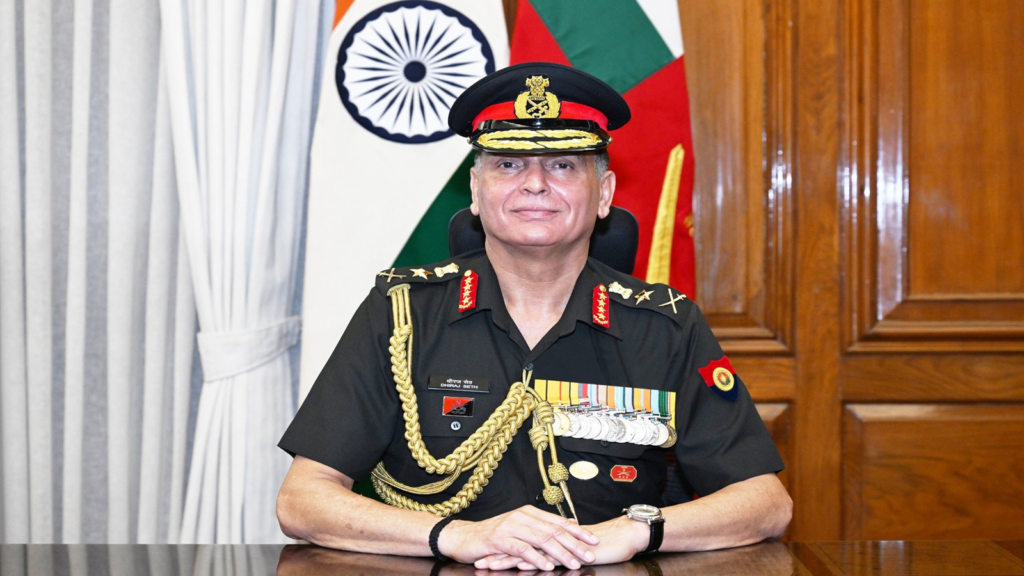
    • The Chief of Defence Staff (CDS) mentioned that India believed the 1954 Panchsheel Agreement effectively addressed the northern boundary question, even though China viewed it differently.

    Panchsheel Agreement

    • In 1954, India recognised Tibet as part of China, and both countries signed the Panchsheel Agreement.

    The Panchsheel Agreement stated the five principles as:

    1. Mutual respect for each other’s territorial integrity and sovereignty.
    2. Mutual non-aggression.
    3. Mutual non-interference in each other’s internal affairs.
    4. Equality and cooperation for mutual benefit.
    5. Peaceful co-existence.
    • It was designed to promote trade and friendly relations, forming the basis of the bilateral ties.
    • With this, India assumed that it had settled its northern border.
    • In 2025 the Chinese President underscored that Panchsheel must be cherished and promoted by the two countries.
    • It came as India and China reset their ties and PM Modi visited China after seven years.

    The India-China Borders

    • India considers the Line of Actual Control (LAC) to be 3,488 km long, while the Chinese consider it to be only around 2,000 km.
    • It is divided into three sectors: the eastern sector which spans
    1. Arunachal Pradesh and Sikkim,
    2. Middle sector in Uttarakhand and Himachal Pradesh,
    3. Western sector in Ladakh.
    • Western Sector or Aksai Chin Sector: The region is claimed by the Chinese government post-1962 war as an autonomous part of the Xinjiang region which was originally a part of the Indian state of Jammu and Kashmir.
    • Middle Sector: It is the less disputed section of the Indo-China border but the recent Doklam standoff and Nathu La Pass trading issues have brought distress at all levels.
    • Eastern Sector or Arunachal Pradesh:McMahon Line had differentiated India and China in this sector but in the 1962 war the People’s Liberation Army covered 9000 sq. km. area.
    • However, China has started to claim the whole of Arunachal Pradesh as their own.
  • AI-Powered Software to Combat Misinformation and Hate Speech

    AI-Powered Software to Combat Misinformation and Hate Speech

    News –

    • The Karnataka Cabinet has approved the deployment of advanced AI-based software to identify and track hate speech, deepfakes, and misinformation on digital platforms.
    • Project Cost: The initiative will be implemented at an estimated cost of ₹67.26 crore.
    • Primary Aim: To strengthen public safety—specifically for women and children—by detecting harmful narratives, disinformation, and Subject-Based Manipulations.
  • Biosecurity Threat in India | Ministry of Home Affairs Guidelines on Vande Mataram | Corruption Perceptions Index | India’s First Musical Road | Karnataka Information Commission (KIC)

    Biosecurity Threat in India

    Health

    Context

    • In 2025, the Gujarat ATS uncovered an alleged ricin-based bioterror plot, marking India’s first suspected ricin-linked bioterror case with possible international links.

    Biological Weapons

    • Biological weapons use pathogens (bacteria, viruses, fungi) or toxins (like ricin, botulinum toxin) to cause disease or death in humans, animals, or crop
    • They are classified as Weapons of Mass Destruction (WMDs) due to their potential for large-scale harm.

    India’s Existing Biosecurity Architecture

    • The Department of Biotechnology oversees research governance and safety frameworks for labs.
    • The Plant Quarantine Organisation of India regulates agricultural imports and exports.
    • The National Disaster Management Authority has issued detailed guidelines for the management of biological disasters.

    Key legal instruments include:

    • The Environment (Protection) Act, 1986, governing hazardous microorganisms and genetically modified organisms.
    • The Weapons of Mass Destruction and Their Delivery Systems (Prohibition of Unlawful Activities) Act, 2005, which criminalises biological weapons.
    • The Biosafety Rules, 1989, and guidelines issued in 2017 for recombinant DNA research and biocontainment.

    International Measures

    Biological Weapons Convention (BMC):

    • It entered into force in 1975
    • It prohibits the development, production, acquisition, transfer, stockpiling and use of biological and toxin weapons.
    • It was the first multilateral disarmament treaty banning an entire category of weapons of mass destruction (WMD).

    Chemical Weapons Convention

    • Mandate – It is an international treaty aimed at eliminating the production, stockpiling, and use of chemical weapons and their precursors.
    • Adoption and Enforcement – The Treaty was adopted on September 3, 1992, and entered into force on April 29, 1997.
    • Member countries – It currently has 193 member states.
    • Legally binding – It makes it mandatory to destroy old and abandoned chemical weapons.
    • India’s ratification – India signed the treaty in January 1

    Australia Group:

    • The Australia Group is an informal forum of countries that seeks to prevent the proliferation of chemical and biological weapons.

    Ministry of Home Affairs Guidelines on Vande Mataram

    Polity and Governance

    Context

    • The Ministry of Home Affairs (MHA) has issued guidelines directing that the national song Vande Mataram be sung/ played before the national anthem when both are played at official events.

    Key Guidelines

    Occasions for Playing or Singing:

    • Arrival and departure of the President at formal State functions.
    • Before and after Presidential addresses to the nation.
    • Arrival and departure of Governors/Lieutenant Governors at State functions.
    • When the National Flag is brought on parade.
    • Other occasions specified by the Government of India.
    • Protocol: The official version of approximately 3 minutes and 10 seconds shall be used.
    • All six stanzas of Vande Mataram, including the four stanzas that were set aside by the Congress Working Committee in 1937, will be played.

    Constitutional and Legal Framework

    • Status of National Symbols: On 24 January 1950, the first two stanzas of Vande Mataram were adopted as India’s National Song.
    • While the Constitution does not explicitly define “National Song,” its recognition flows from Constituent Assembly discussions and executive practice.
    • Article 51A(a) Fundamental Duties: Mandates every citizen to abide by the Constitution and respect its ideals and institutions, the National Flag and the National Anthem.
    • Vande Mataram is not explicitly protected by any constitutional provision.

    Additional information – Vande Mataram

    • Vande Mataram was composed by Bankim Chandra Chatterjee in Sanskrit and first appeared in the novel Anandamath in 1882.
    • Anandamath is set against the backdrop of the 1769–73 Bengal famine and the Sanyasi Rebellion.
    • First sung by Rabindranath Tagore at the 1896 Indian National Congress session gave it national exposure.
    • During the Swadeshi Movement of 1905, Vande Mataram emerged as the anthem of civil resistance.
    • Vande Mataram, as a political slogan, was first used on 7 August 1905.

    Corruption Perceptions Index

    Governance

    Context

    • Transparency International recently published 2025 Corruption Perception Index (CPI).

    Corruption Perceptions Index

    • Published by – Transparency International
    • Objective – It measures levels of public sector corruption in 182 countries.
    • Methodology: It uses a scale from zero (highly corrupt) to 100 (very clean).
    • Best performing countries: Denmark (89) followed by Finland (88) and Singapore (84).
    • Worst Performing Countries: South Sudan and Somalia
    • India’s Performance: In 2025, India ranked 91st globally on the Corruption Perceptions Index (CPI), scoring 39 out of 100, which is a slight improvement from the previous year.

    India’s First Musical Road

    Government Initiative

    Context

    • Mumbai’s Coastal Road has introduced India’s first musical road

    India’s First Musical Road

    • A 500-metre stretch between Nariman Point and Worli, named Sangeet Marg, plays the Oscar-winning song “Jai Ho” when vehicles travel at a speed of 60–80 km per hour.
    • The concept uses specially engineered rumble strips carved into the asphalt at precise intervals.
    • As vehicles move over these grooves, vibrations are generated due to friction between the tyres and the road surface.
    • These vibrations create sound waves that combine to reproduce the melody, which can be heard by passengers inside the vehicle.
    • The concept is based on Hungarian technology and has previously been implemented in countries such as Hungary, Japan, South Korea, and the United Arab Emirates.

    Karnataka Information Commission (KIC)

    News –

    • The Karnataka Information Commission (KIC) has claimed to be the fastest in India for disposing of second appeal petitions under the RTI Act.

    Karnataka Information Commission (KIC)

    • It is an autonomous statutory body established on March 2, 2006, under the Right to Information (RTI) Act, 2005.
    • It serves as the final appellate authority for citizens seeking information from public authorities within the state of Karnataka.

    Key Leadership & Structure

    • State Chief Information Commissioner (In-Charge): Dr. H.C. Sathyan.
    • Information Commissioners: The commission includes several State Information Commissioners (SICs), such as Shri. Raman K., Dr. Harish Kumar, Sri. Rudranna Harthikote, and Sri. Rajashekara S..
    • Benches: In addition to its main headquarters in Bengaluru, the KIC operates regional benches in Belagavi and Kalaburagi to improve accessibility.

    Core Functions & Powers

    • Adjudication: The KIC hears Second Appeals and Complaints regarding the refusal of information or delays by Public Information Officers (PIOs).
    • Penalties: The commission has the authority to impose financial penalties—up to ₹25,000—on officials who delay information.
    • Judicial Authority: It possesses the powers of a Civil Court, including the ability to summon witnesses, require oral or written evidence under oath, and inspect public records.
  • Pandit Deendayal Upadhyaya | India Records Highest-ever Tea Exports in 2025 | Network Readiness Index Report 2025 | Protest Against Ken-Betwa Linking Project

    Pandit Deendayal Upadhyaya

    Personality in News

    Context

    • The Prime Minister Narendra Modi paid tributes to Pandit Deendayal Upadhyay on his death anniversary (11 February).

    Pandit Deendayal Upadhyaya (1916–1968)

    • He was a political thinker, economist, and leader of the Bharatiya Jana Sangh.
    • He was an exceptional scholar and dedicated nationalist.
    • Ideology – He was a visionary thinker, known for his doctrine of Integral Humanism (Ekatma Manav Darshan) which emphasized a balance between spiritual and material development and promoted decentralization and self-reliant village-based economy.
    • Contributions- He contributed to ideological journalism by starting ‘Rashtra Dharma’ (monthly), ‘Panchajanya’ (weekly), and ‘Swadesh’ (daily).

    India Records Highest-ever Tea Exports in 2025

    Agriculture

    Context

    • India recorded its highest-ever tea exports in 2025, touching 280.40 million kg during January–December 2025, marking a significant increase from 256.17 million kg in 2024.

    Indian Tea Industry

    • India is the 2nd largest tea producer and largest black tea producer.
    • Export destinations Iran, Iraq, Syria, Saudi Arabia, Russia e India is the 4th largest tea exporter in the World.
    • Employment – The Indian tea Industry is employing 16 million workers directly.
    • Note – Assam grows about 55% of the teas produced in India. India’s tea production has increased by 39% in 2022 from 2008.

    Geographical Condition for Tea production

    • The tea plant grows well in tropical and subtropical climates.
    • Soil: It requires deep and fertile well-drained soil, rich in humus and organic matter.
    • Temperature: The average annual temperature for tea plants to grow well is in the range of 15-23°C.
    • Precipitation: The rainfall needed is between 150-200 cm.
    • Frequent showers evenly distributed over the year ensure continuous growth of tender leaves.
    • Major tea producing states are Assam, hills of Darjeeling and Jalpaiguri districts in West Bengal, Tamil Nadu and Kerala.
    • Apart from these, Himachal Pradesh, Uttarakhand, Meghalaya, Andhra Pradesh and Tripura are also tea-producing states in the country.

    Asia Tea Alliance

    • Member countries – It is a coalition of tea associations from major tea-producing countries in Asia like India, China, Sri Lanka, Japan etc.
    • Objective – It aims to promote the collective interests of member nations within the global tea market.

    Network Readiness Index Report 2025

    Infrastructure

    Context

    • India is placed at 45th rank (with score 54.43 out of 100) as per the Network Readiness Index 2025 report released in 2026.

    Network Readiness Index Report 2025

    • Published by – Portulans Institute, an independent, non-profit research and educational institute based in Washington DC.
    • Objective – The report maps the network-based readiness landscape of 127 economies based on their performance in four pillars: Technology, People, Governance and Impact, covering a total of 53 indicators.
    • Top Three Nations: USA, Finland, Singapore

    Protest Against Ken-Betwa Linking Project

    Geography; /Environment

    Context

    • Protests against the Ken–Betwa River Linking Project (KBLP), highlighting tensions over the implementation of the river interlinking project.

    Ken-Betwa Link Project

    • It is a project proposed to transfer excess water from the River Ken to the Betwa basin through the use of a concrete canal.
    • Objective – to provide irrigation to the Bundelkhand region of UP, which is one of the worst drought-affected areas in India.
    • Beneficiary statesMadhya Pradesh and Uttar Pradesh.
    • Significance – It will meet the irrigation purposes, drinking water, and electricity needs of 6 districts in both states.
    • Biodiversity Concerns – Nearly 8,650 hectares of forest land including part of Panna National Park in Madhya Pradesh will be submerged if the project were to become a reality.
  • Occupational Safety, Health and Working Conditions (Karnataka) Rules, 2026

    Occupational Safety, Health and Working Conditions (Karnataka) Rules, 2026

    News  –

    • The Karnataka government published the draft Occupational Safety, Health and Working Conditions (Karnataka) Rules, 2026 on January 23, 2026.
    • These rules, along with the draft Code on Wages (Karnataka) Rules, 2021, aim to operationalise central labour codes within the state.

    Key provisions and deadlines for the draft rules include:

    • Public Consultation: The government has invited objections and suggestions from stakeholders (employers, unions, and HR practitioners) within 45 days of publication.
    • Working Hours: Daily working hours are capped at 10.5 hours, with a weekly limit of 48 hours. Certain sectors may be extended to 12-hour workdays if notified.
    • Safety and Health: Mandates annual health examinations for eligible workers and the appointment of qualified Safety Officers in specified establishments.
    • Digital Compliance: Introduces a common electronic registration and licensing system through portals like Karmika Spandana to promote ease of doing business.
    • Worker Welfare: Includes special provisions for inter-state migrant workers, contract labour, and gig/platform workers.

    Additional Information – Karmika Spandana

    • It is the official online e-Services portal of the Department of Labour, Government of Karnataka.
    • It serves as a centralized platform for employers and workers to access various labour-related services, including registrations, licensing, and grievance redressal.

    Key Services and Features

    • Mandatory Registration: Factories with more than 20 workers and commercial establishments with more than 10 workers must register through the Karmika Spandana Portal or the e-Suraksha portal.
    • Licensing: The portal facilitates online registration and licensing for various sectors, including construction, plantations, and general manufacturing, under the Occupational Safety, Health and Working Conditions (Karnataka) Rules.
    • Worker Welfare Schemes: It provides access to benefits managed by the Karnataka Building and Other Construction Workers Welfare Board (KBOCWWB), such as:
    • Educational Assistance (Kalike Bhagya): Financial aid for the children of registered workers, ranging from ₹2,000 for primary school to ₹30,000 for medical courses.
    • Medical Assistance (Karmika Chikitsa Bhagya): Coverage up to ₹2,00,000 for major ailments like heart surgery, kidney transplants, and cance
    • Marriage and Maternity Benefits: Financial aid of ₹50,000 for marriage and specific assistance for maternity (Thayi Lakshmi Bond).
    • Compliance and Reporting: Employers use the portal to comply with the Karnataka Minimum Wages Rules, ensuring proper wage payments and working hour regulations.
    • Grievance Redressal: While “e-Spandana” is a broader public grievance system for districts like Ballari, Karmika Spandana specifically addresses labour-related issues and maintains a dedicated helpdesk at 1902
  • FICCI FLO Women-Led Industrial Park in Gauribidanur

    FICCI FLO Women-Led Industrial Park in Gauribidanur

    News –

    • The FICCI FLO Women-Led Industrial Park in Gauribidanur was formally inaugurated on February 4, 2026.
    • This 50-acre facility is a first-of-its-kind initiative in Karnataka, specifically designed to support women entrepreneurs in the manufacturing sector and large-scale enterprises.

    Park Details

    • Location: Situated in Gauribidanur, Chikkaballapur district, approximately 75 km from Bengaluru.
    • Scale: The park spans 50 acres of dedicated industrial land.
    • Target Audience: Exclusively for members of FLO Bangalore, with a focus on first-generation women entrepreneurs.
    • Partnerships: Developed in collaboration with the Karnataka Industrial Areas Development Board (KIADB) and Karnataka Udyog Mitra (KUM).
  • Bonded Labour Abolition Act 1976: 50 years of abolition law | Seychelles | Mangrove clam (Geloina erosa)

    Bonded Labour Abolition Act 1976: 50 years of abolition law

    Governance

    Context

    • February 9, 1976, marked an important milestone in equality in Indian society with the enactment of the Bonded Labour System (Abolition) Act (BLSA).

    Bonded Labour Abolition Act 1976

    • Bonded labour (or debt bondage) is defined as a condition where money is lent in such a way that the debtor is forced to pay back through labour instead of money.
    • It was enacted to give effect to Article 23 of the Constitution (prohibition of trafficking and forced labour).
    • Bonded labour was deeply entrenched due to poverty, caste hierarchies, landlessness, and indebtedness.
    • India ratified ILO Convention No. 29 (Forced Labour) in 1954, strengthening the legal obligation.

    Objectives:

    1. Abolish the bonded labour system.
    2. Free bonded labourers and extinguish their debts.
    3. Prevent economic and social exploitation.
    4. Provide a legal framework for rehabilitation.

    Seychelles

    International Relations

    Context

    • Prime Minister Narendra Modi announced a $175 million Special Economic Package for Seychelles during the visit of Seychelles President Dr. Patrick Herminie to India.

    Seychelles

    • It is an archipelago nation of 115 islands in the western Indian Ocean, northeast of Madagascar, known as Africa’s smallest and least populous country.
    • Its capital is Victoria on Mahé island.
    • Biodiversity: It is known for rare species like the Coco de Mer, the Aldabra giant tortoise, and the rare black parrot.

    Mangrove clam (Geloina erosa)

    Environment

    In News

    • ICAR-Central Marine Fisheries Research Institute achieved a global first by inducing captive breeding of Geloina erosa (mangrove/mud clam), offering hope for restoring overexploited populations in Indian mangroves.

    About

    • Geloina erosa (also Polymesoda erosa) is a large bivalve (up to 10 cm shell width) inhabiting organic-rich, muddy intertidal zones of mangroves and estuaries across South and Southeast Asia.
    • It is known locally as “Kandal Kakka” in northern Kerala.
    • It acts as an efficient filter feeder, improving estuarine water quality through nutrient recycling.
    • Its burrowing behaviour stabilises sediments, enhances nutrient cycling, and strengthens mangrove ecosystem resilience.
  • ‘Justice for Karnataka – Fair Share, Strong Federalism’ Campaign

    ‘Justice for Karnataka – Fair Share, Strong Federalism’ Campaign

    News –

    • Karnataka Chief Minister Siddaramaiah officially launched a public outreach campaign titled “Justice for Karnataka – Fair Share, Strong Federalism” on January 30, 202
    • It aims to inform citizens about the state’s financial demands and alleged “injustice” in tax devolution by the Union Government.

    Key Campaign Objectives

    • The campaign focuses on several critical demands placed before the 16th Finance Commission:
    • Restoration of Tax Share: Reclaiming the state’s share of central tax devolution, which fell from 4.71% to 3.64% under the previous commission, causing an estimated loss of ₹80,000 crore.
    • Revised Devolution Formula: Correcting “flawed” criteria that penalise development and population control. The state seeks a reduction in income distance weightage from 45% to 25% and a return to using 1971 population data.
    • Divisible Pool Expansion: Increasing the states’ overall share of divisible taxes to 50% and placing a 5% cap on central cesses and surcharges.
    • Infrastructure & Regional Support: Seeking ₹1.15 lakh crore for Bengaluru’s infrastructure and a ₹10,000 crore special package for the backward Kalyana Karnataka region.
  • No questions on PM CARES, relief and defence funds: PMO | Reticulated Python | Bastar Pandum Festival

    No questions on PM CARES, relief and defence funds: PMO

    Syllabus: GS2/Polity

    Context

    • The Prime Minister’s Office has informed the Lok Sabha Secretariat that parliamentary questions and discussions related to the PM CARES Fund, Prime Minister’s National Relief Fund (PMNRF), and the National Defence Fund (NDF) are not admissible under the Rules of Procedure and Conduct of Business in Lok Sabha.

    PM CARES vs. PMNRF: Key Differences

    Feature

    PM CARES Fund

    PMNRF

    Purpose

    Established to tackle emergency and distress situations (e.g., COVID-19 pandemic and future emergencies).

    Originally created to support refugees from Partition (1948); now used for disaster relief and medical assistance.

    Date of Establishment

    March 27, 2020

    January 1948

    Governance

    PM, Home Minister, Finance Minister, and Defence Minister as trustees.

    Initially managed by a committee (until 1985). Now, the Prime Minister has full control.

    Utilization of Funds

    Primarily for pandemic response, healthcare infrastructure, and disaster relief.

    Assists victims of natural disasters, accidents, riots, and medical treatments.

    Tax Benefits

    Eligible for 80G tax exemptions and CSR deductions.

    Eligible for 80G tax exemptions but not for CSR deductions.

    Foreign Donations

    Permitted under FCRA, 2010.

    Also accepts foreign contributions.

    Audit

    Audited by M/S SARC Associates Chartered Accountants, New Delhi.

    Audited by an independent auditor (currently M/S SARC Associates Chartered Accountants).

    Right to Information (RTI)

    Not covered under RTI.

    Not covered under RTI.

    Government Oversight

    Not controlled by Parliament or CAG (Comptroller and Auditor General of India).

    Not controlled by Parliament or CAG.

    Reticulated Python

    Environment

    Context

    • Guinness World Records has confirmed a 22-metre female reticulated python named Ibu Baron or “The Baroness”, from Sulawesi, Indonesia, as the longest measured snake in the world.

    Reticulated Python

    • Scientific Name: Malayopython reticulatus
    • The species is native to South and Southeast Asia, including Indonesia, Philippines, Malaysia, Thailand, and parts of India.

    Physical Characteristics:

    • It is the longest snake species in the world.
    • It is among the three heaviest snake species, after the green anaconda and Burmese python.
    • It has distinctive net-like (reticulated) patterns on its scales.
    • Human Predation: Reticulated pythons are among the few snake species known to prey on humans.
    • They kill by constriction, suffocating their prey before swallowing it whole.

    Bastar Pandum Festival

    Syllabus: GS1/Culture

    Context

    • Prime Minister Narendra Modi congratulated the people of Chhattisgarh for the special celebration of ‘Bastar Pandum’ festival.

    About the Festival

    • Celebrated in – It is a cultural festival celebrated in the Bastar region of Chhattisgarh showcasing tribal heritage and cultural traditions.
    • Significance – It has emerged as a major cultural platform highlighting Bastar’s tribal identity through art, music, dance, handicrafts, and indigenous cuisine.