Blog

  • MCQs on National & International

    MCQs on National & International

    1. SHe-Box has been developed to operationalise the provisions of which one of the following Acts?

    (A) Protection of Women from Domestic Violence Act, 2005
    (B) Sexual Harassment of Women at Workplace (Prevention, Prohibition and Redressal) Act, 2013
    (C) Maternity Benefit Act, 1961
    (D) Equal Remuneration Act, 1976

    Answer: B

    2. Consider the following statements regarding the Dark Web:

    1. It is accessible through normal search engines.
    2. Websites on the dark web often use “.onion” domains.

    Which of the statements given above is/are correct?

    1. A) 1 only
      B) 2 only
      C) Both 1 and 2
      D) Neither 1 nor 2

    Answer: B

    3. Which Ministry is responsible for implementing the Pradhan Mantri Viksit Bharat Rojgar Yojana (PM-VBRY)?

    1. A) Ministry of Skill Development and Entrepreneurship
      B) Ministry of Finance
      C) Ministry of Labour and Employment
      D) Ministry of MSME

    Answer: C

    4. Which Indian institution secured the highest rank among Indian institutions in QS World University Rankings 2027?

    1. A) IIT Bombay
      B) IIT Delhi
      C) IISc Bengaluru
      D) IIT Madras

    Answer: B

    5. With reference to PMAY-U 2.0, consider the following statements:

    1. It was launched as an upgraded and expanded version of PMAY-U.
    2. PMAY-U was originally launched in 2015.
    3. PMAY-U 2.0 aims exclusively at slum redevelopment.

    Which of the statements given above is/are correct?

    1. A) 1 and 2 only
      B) 2 only
      C) 1 and 3 only
      D) 1, 2 and 3

    Answer: A

  • 52nd G7 Summit | Telegram Ban Under Section 69A of the IT Act 2000 | Operation DRISHTI | Aadhaar ‘misuse’ | Kashmir Saffron

    52nd G7 Summit

    International

    In News

    • PM Modi addressed the 52nd G7 Summit Outreach Session at Évian-les-Bains, France, marking India’s 8th consecutive G7 invitation.

    Key Declarations adopted

    • Development Finance: Called for reforms in global development finance and debt management, including strengthening the IMF–World Bank 3-Pillar Approach and mobilizing private capital. 
    • IMF–World Bank 3-Pillar Approach helps vulnerable countries address liquidity challenges through structural reforms, external financial support, and reducing their debt servicing burdens.
    • Ebola Response: Urged coordinated international action to contain the Bundibugyo Ebola outbreak in the DRC and Uganda.
    • Cancer Action: Committed to advancing research on cancers, reducing lung cancer mortality, and improving global access to paediatric cancer data.
    • Geopolitics: Welcomed the US-Iran nuclear agreement, promoted a free and open Indo-Pacific, and expressed concern over North Korea’s nuclear programme etc.
    • Migrant Smuggling: Pledged stronger action against human trafficking and migrant smuggling networks, including cooperation with online platforms.
    • Drug Trafficking: Announced a G7+ Ports Network to combat maritime drug trafficking and disrupt related illicit financial flows.

    Group of Seven (G7)

    • Group of Seven (G7): An informal organization of seven of the world’s largest advanced economies, representing about 10% of the population and nearly 30% of global GDP.
    • Members: Canada, France, Germany, Italy, Japan, United Kingdom, and the United States.
    • Presidency: Rotates annually among member states.

    Telegram Ban Under Section 69A of the IT Act 2000

    Polity

    In News

    • MeitY temporarily blocked Telegram in India under Section 69A of the IT Act 2000, on NTA’s recommendation, after criminal networks exploited the platform’s message-editing feature to defraud NEET UG 2026 re-examination candidates.

    Section 69A of IT Act 2000

    • It is the primary legal provision that empowers the Central Government to block public access to any digital information through any computer resource.
    • Grounds for invocation – sovereignty and integrity of India, defence, security of State, friendly relations with foreign states, public order, or preventing incitement to cognisable offences.
    • The Supreme Court in Shreya Singhal v. Union of India (2015) upheld Section 69A as constitutionally valid, describing it as a “narrowly drawn provision with several safeguards.”

    Operation DRISHTI

    Government Schemes

    Context

    • The Indian Army and Indian Air Force have launched a Mega Advanced Surgical Eye Camp under Operation DRISHTI at Military Hospital Namkum, Ranchi.

    Operation DRISHTI

    • It is a flagship humanitarian outreach programme of the Armed Forces Medical Services (AFMS) that combines advanced ophthalmic expertise with social service. 
    • Objective – to deliver specialized eye care services to remote, underserved, and geographically challenging regions of the country.
    • Earlier the initiative successfully conducted eight advanced surgical eye camps across the country, including in Leh, Ladakh, Lakshadweep, Bhuj, Kutch, and Bagdogra.

    Aadhaar ‘misuse’

    Polity

    Context

    • The Supreme Court sought responses from the Centre and States on a plea alleging misuse of Aadhaar cards.

    About

    • An Aadhaar card is a 12-digit unique identification number issued by the Unique Identification Authority of India (UIDAI) to Indian residents.
    • It was introduced in 2010.
    • It serves as valid proof of identity and address and is essential for availing government welfare schemes, financial services, and digital authentication. 

    Purpose of Aadhaar

    • Unique Identification: The unique identification number serves as a universally accepted proof of identity and address.
    • Social Welfare Schemes: Aadhaar streamlines the distribution of government benefits and subsidies, reducing fraud and ensuring that benefits reach the rightful recipients.
    • Data-Driven Governance: Aadhaar assists in creating data-driven policies and governance by providing accurate population statistics and demographics.

    Related Governance Framework

    • Aadhaar Act, 2016: It is the primary law governing Aadhaar, provides the legal framework for issuance, authentication, and use of Aadhaar numbers for delivery of subsidies, benefits, and services.
    • Information Technology Act, 2000: Provides legal protection against unauthorized access, data theft, hacking, and cyber offences involving Aadhaar-related information.
    • Digital Personal Data Protection Act, 2023: Establishes safeguards for processing and protection of personal data, including Aadhaar-linked information, and recognizes individuals’ data privacy rights.
    • Justice K.S. Puttaswamy v. Union of India (2018): It upheld the constitutional validity of Aadhaar and restricted mandatory Aadhaar linkage in several private-sector services.
    • It emphasized privacy as a fundamental right and required safeguards against misuse.

    Kashmir Saffron

    Economy

    In News 

    • The West Asia conflict has disrupted Iranian saffron exports, triggering a global demand surge for Kashmiri saffron. 

    Kashmir Saffron

    • Kashmir Saffron is a premium spice grown on the Karewa lands of Jammu and Kashmir. It received a GI Tag in 2020.

    Geography and Climate

      • Soil: Grows only on Karewa soils (thick, flat beds of clay and sand from old lakes).
      • Altitude: High elevations of 1,600 to 1,800 meters above sea level.
    • Regions: Pampore is the main area, called the “Saffron Bowl of Kashmir.”

    Key Features and Types

    • Unique traits: Deep red color, thick stigmas, strong smell, and zero chemical colors.
    • Three types: Mongra (pure dark red threads; best quality), Lachha (dry threads with some yellow parts), and Guchhi (threads tied in bundles).

    Government Steps

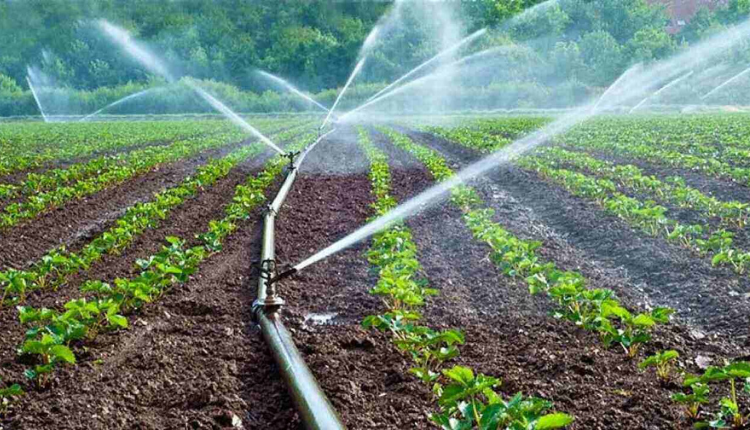
    • National Saffron Mission: Started to fix soil, give water sprinklers, and boost crop yields.
    • Saffron Bowl Project: Trying to grow saffron in Northeast India (like Sikkim and Arunachal Pradesh).
  • QUIZ on National & International Current Affairs- June 17th 2026

    QUIZ on National & International Current Affairs – June 17th 2026

  • MCQs on National & International

    MCQs on National & International

    1. With reference to the Joint Comprehensive Plan of Action (JCPOA), consider the following statements:

    1. Under the JCPOA, Iran agreed to limit uranium enrichment and accept enhanced inspections.
    2. The agreement was signed between Iran and the P5+1 countries.

    Which of the statements given above is/are correct?

    (A) 1 only
    (B) 2 only
    (C) Both 1 and 2
    (D) Neither 1 nor 2

    Answer: C

    2. The Paris Agreement was adopted during:

    (A) COP-15, Copenhagen
    (B) COP-21, Paris
    (C) COP-26, Glasgow
    (D) COP-28, Dubai

    Answer: B

    3. Consider the following statements:

    1. India imports nearly all of its bitumen requirements from Canada.
    2. Over 99% of India’s bitumen imports originate from Iraq, UAE, Iran, Oman, and Bahrain.

    Which of the statements given above is/are correct?

    (A) 1 only
    (B) 2 only
    (C) Both 1 and 2
    (D) Neither 1 nor 2

    Answer: B

    4. Consider the following statements:

    1. Cryptocurrency is a virtual currency used for financial transactions.
    2. Cryptocurrency uses blockchain technology for various transactions.

    Which of the statements given above is/are correct?

    (A) 1 only
    (B) 2 only
    (C) Both 1 and 2
    (D) Neither 1 nor 2

    Answer: C

  • GI Recognition for Jharkhand’s Traditional Heritage | India and Slovakia Elevate Ties to Comprehensive Partnership | BRICS Indore Declaration | U.S. and Iran reach Agreement to end war, re-open Hormuz Strait | Adding Cervavac to National Immunisation Programme After 2027

    GI Recognition for Jharkhand’s Traditional Heritage

    Economy

    Context

    • Eleven traditional products of Jharkhand have recently been granted the Geographical Indication (GI) Tag.

    GI-Tagged Products of Jharkhand

    • Bhagaiya Silk: Bhagaiya Silk is produced in the Bhagaiya region of Godda district. It is known for its traditional handloom weaving techniques and high-quality silk fabric.
    • Kuchai Silk: It is cultivated naturally on Asan and Arjun trees in the village of Seraikela-Kharsawan (historically known as Kuchai).
    • Kesaria Kalakand: It is a traditional sweet that forms an important part of the region’s culinary heritage.
    • Dokra Craft: It  is one of the oldest surviving metal-casting traditions in India. It employs the traditional lost-wax casting technique to produce decorative and utility items.
    • Tumka Chadar: It is a uniquely crafted shawl or bedspread sheet (chadar) woven by local tribal and artisan communities in Jharkhand.
    • Baroni Paintings: It is traditional folk paintings of Jharkhand depicting local customs, nature, and tribal cultural traditions.
    • Pancho Saree and Fabric: The traditional handwoven textiles of Jharkhand known for their distinctive patterns and cultural significance among local communities.
    • Jadopatia Painting: It is a traditional scroll-painting art practiced by the Santhal community, depicting folklore, mythology, social customs, and cultural narratives.
    • Bhoya Saree and Fabric: It is a traditional handwoven textiles of Jharkhand.
    • Munda Jewellery: It is a traditional ornament crafted by the Munda tribal community. It reflects the artistic traditions and social customs of Jharkhand’s tribal population.
    • Jharkhand Bamboo Craft: Bamboo Craft utilizes locally available bamboo to create utility and decorative products.

    Connect with the basics – Geographical Indication or GI Tag

    • It is a name or a sign given to certain products related to a specific geographical location or origins like a region, town, or country.
    • A certification for unique products – GI Tag may be regarded as a certification for a particular product with certain specific qualities or has a specific reputation because of its geographical origin.
    • GI Tags can be issued for wine and spirit drinks, foodstuffs, agricultural products, handicrafts, and industrial products.
    • Trade-Related Aspects of Intellectual Property Rights (TRIPS) – At the International level, GI is governed by the World Trade Organisation’s (WTO’s) Agreement on Trade-Related Aspects of Intellectual Property Rights (TRIPS). 
    • Geographical Indications of Goods (Registration and Protection) Act – In India, Geographical Indications registration is administered by the Geographical Indications of Goods (Registration and Protection) Act, 1999, which came into force in September 2003. 
    • Darjeeling tea  – The first product in India to be accorded with the GI tag was Darjeeling tea in 2004-05.

    India and Slovakia Elevate Ties to Comprehensive Partnership

    International

    Context

    • India and Slovakia elevated their ties to a comprehensive partnership and inked 11 agreements to expand bilateral cooperation. 

    About

    • The visit was the first by an Indian Prime Minister to Slovakia since its independence in 1993.
    • The two leaders also agreed to work towards the earliest implementation of the India-European Union free trade agreement.
    • The Slovak President presented The Order of the White Double Cross (1st Class), the highest state honour of Slovakia, to Prime Minister Narendra Modi.

    Slovakia

      • Slovakia is a landlocked country in Central Europe. 
      • It became an independent state on January 1, 1993, after the peaceful dissolution of Czechoslovakia.
      • Neighbouring countries – Slovakia is bordered by Poland to the north, Ukraine to the east, Hungary to the south, Austria to the southwest and the Czech Republic, lies to the west.
      • Capital city – Bratislava is the only national capital in the world that directly borders two separate countries i.e. Austria and Hungary.
    • Official Language: Slovak.
    • Currency: Euro (€).
    • It is a member of both the European Union and NATO (the North Atlantic Treaty Organization).

    BRICS Indore Declaration

    International

    Context

    • The BRICS Agriculture Ministers and officials-level meetings were held in Indore in which the ‘BRICS Indore Declaration’ was unanimously adopted.

    BRICS Indore Declaration – Main Focus Areas

    • Helping Small Farmers: Focuses on helping small farmers, women, and youth.
    • Food Security: Working together to feed the world.
    • New Technology: Using smart tools like AI and digital maps in farming.
    • Safe Farming: Protecting nature with organic and natural farming.

    Key Initiatives

    • Digital Agriculture Network: Led by IIT Delhi to bring digital tools to farms.
    • Natural Farming Centres: Led by ICAR-IIFSR to study safe farming methods.
    • Farmers’ Seed Rights: A forum to protect traditional seeds and farmers’ rights.

    BRICS 

      • Founded in – 2009
      • HeadQuarters – Shanghai
      • It is an acronym for the grouping of the world’s leading emerging economies, namely Brazil, Russia, India, China, and South Africa (included in 2010)
      • Origin – The term “BRIC” was coined by the British Economist Jim O’Neill in 2001 to describe the four emerging economies of Brazil, Russia, India, and China.
    • Recent Expansion (BRICS+): In 2024–2025, the bloc expanded to include Egypt, Ethiopia, Iran, the UAE, and Indonesia. Saudi Arabia has received an invitation but has not yet formalized its membership.
    • Share of BRICS – BRICS brings together five of the largest developing countries, representing 41% of the global population, 24% of the global GDP, and 16% of the global trade (By 2028, BRICS is expected to make up 35 percent of the global economy)
    • Chairmanship – The chairmanship of the forum is rotated annually among the members. 

    Initiatives of BRICS 

    1. New Development Bank (NDB) 
    2. Contingent Reserve Arrangement (CRA) 
    3. BRICS Payment System 
    4. Customs Agreements 
    5. Constellation of Remote Sensing Satellites

    New Initiative

    • BRICS is planning to launch its own “new currency” system, a major step towards de-dollarization (reducing dependence on the US dollar for trade).

    U.S. and Iran reach Agreement to end war, re-open Hormuz Strait

    International

    Context

    • The U.S. and Iran have reached a preliminary agreement to end the war.

    About

    • The pact includes an immediate halt to military action, including in Lebanon, and a 60-day negotiation period.
    • The US has announced the removal of the US naval blockade, authorizing the reopening of the Strait of Hormuz for global shipping.
    • The move would allow international maritime traffic to resume.

    Strait of Hormuz

    • Location – The Strait of Hormuz lies between Iran to the north and Oman and the United Arab Emirates to the south, linking the Persian Gulf with the Gulf of Oman and the Arabian Sea. 
    • At its narrowest point it is about 33 kilometres wide, with shipping lanes just a few kilometres across in either direction.
    • Significance- Nearly half of India’s crude oil and around 60 per cent of its natural gas imports pass through the strait.

    Adding Cervavac to National Immunisation Programme After 2027

    GS2/ Health

    In News

    • The HPV vaccine developed by the Serum Institute of India (SII), with support from the Department of Biotechnology (DBT), is likely to be included in the national vaccination programme after 2027.

    More about the news

    • Cervavac, India’s first indigenously developed HPV vaccine, is currently administered in a two-dose schedule, which limited its inclusion in the national HPV vaccination programme. 
    • Earlier this year, the Ministry of Health and Family Welfare launched a nationwide HPV vaccination campaign targeting 14-year-old girls using MSD’s Gardasil vaccine. 

    Human papillomavirus (HPV)

      • HPV is a common sexually transmitted infection. 
    • Most infections are asymptomatic and self-limiting.
    • Nature: HPV is a DNA virus from the Papillomaviridae family.

    Additional Information – Cervical Cancer

    • Cervical cancer develops in a woman’s cervix (the entrance to the uterus from the vagina).  
    • Spread: Almost all cervical cancer cases (99%) are linked to infection with high-risk human papillomaviruses (HPV), an extremely common virus transmitted through sexual contact.
    • Prevalence: Cervical cancer is the fourth most common cancer in women.
    • It is the second most common type of cancer in India for women.
    • Treatment: When diagnosed, cervical cancer is one of the most successfully treatable forms of cancer, as long as it is detected early and managed effectively.
    • Vaccination: There are, at present, two vaccines available in the country against the human papillomavirus (HPV) which causes cervical cancer, namely Merck’s Gardasil and Serum Institute of India’s Cervavac.
  • QUIZ on National & International Current Affairs – June 16th 2026

    QUIZ on National & International Current Affairs – June 16th 2026

  • MCQs on National & International

    MCQs on National & International

    1. Consider the following statements:

    1. The 52nd G7 Summit was held in France.
    2. The summit marked India’s first invitation to a G7 meeting.

    Which of the statements given above is/are correct?

    (A) 1 only
    (B) 2 only
    (C) Both 1 and 2
    (D) Neither 1 nor 2

    Answer: A

    2. Which one of the following institutions issues Aadhaar numbers?

    (A) Ministry of Home Affairs
    (B) National Informatics Centre
    (C) Unique Identification Authority of India
    (D) Election Commission of India

    Answer: C

    3. With reference to Kashmir Saffron, consider the following statements:

    1. Kashmir Saffron is primarily cultivated on Karewa soils of Jammu and Kashmir.
    2. It received the Geographical Indication (GI) tag in 2020.

    Which of the statements given above is/are correct?

    (A) 1 only
    (B) 2 only
    (C) Both 1 and 2
    (D) Neither 1 nor 2

    Answer: C

    4. Which one of the following areas is popularly known as the “Saffron Bowl of Kashmir”?

    (A) Anantnag
    (B) Baramulla
    (C) Pampore
    (D) Kupwara

    Answer: C

  • Prime Minister Held Official Talks with President of France | Joint UNESCO Nomination for Xuanzang’s Records | Queen Pineapple | NCERT Dancing Girl Row | Dengue Vaccine Safety Concerns

    Prime Minister Held Official Talks with President of France

    International

    Context

    • PM Modi held bilateral talks with French President Emmanuel Macron in France.
    • This marked the first meeting between the two leaders since India-France ties were elevated to a “Special Global Strategic Partnership” earlier this year.

    Major Highlights

    • Adoption of the “Innovation Roadmap 2030”, aimed at providing long-term direction to bilateral cooperation in technology and innovation. 
    • The two leaders also agreed to establish a Joint India-France AI Working Group to deepen collaboration in artificial intelligence.

    Additional Information – India-France Relations

      • India–France Strategic Partnership: It was launched on 26 January 1998 and is India’s first-ever Strategic Partnership.
      • Rafale Fighter Jets: India procured 36 Rafales from Dassault Aviation.
      • Scorpene Submarines (Project P-75): Collaboration with France’s Naval Group, 6 submarines built in India; latest is INS Vaghsheer.
      • Recently both nations formally concluded an Inter-Governmental Agreement (IGA) to procure 26 Rafale-M fighter jets for the Indian Navy. 
    • Joint Exercises: Shakti, Varuna, FRINJEX-23.
      • Economic Cooperation:  Within the European Union, France remains India’s fifth-largest trading partner, following the Netherlands, Belgium, Italy, and Germany.
      • The process of enabling Unified Payment Interface (UPI) has been successful in France.
      • Joint missions: TRISHNA (satellite mission), MDA systems, ground station support.
    • International Solar Alliance (ISA): Co-founded by India and France in 2015 to promote solar energy worldwide.

    Joint UNESCO Nomination for Xuanzang’s Records

    Art and Culture

    Context

    • India and China are in advanced discussions regarding a joint UNESCO nomination for Xuanzang’s work, ‘The Great Tang Records on the Western Regions’.

    Xuanzang (Hiuen Tsang) 

    • He was a Chinese Buddhist monk, scholar, and traveler who journeyed across India during the 7th century CE.
    • He spent nearly 19 years travelling through India and studying Buddhist philosophy.
    • He studied at the ancient university of Nalanda University
    • His work, The Great Tang Records on the Western Regions, provides detailed information about:
    1. Political conditions under Harshavardhana and other rulers.
    2. Social and economic life in early medieval India.
    3. Religious traditions and Buddhist institutions.
    4. Economic and geographical conditions of early medieval India.

    Other Joint Nominations Under Consideration

    • Panchatantra with Iran: India is exploring a joint UNESCO nomination of Panchatantra with Iran. The Panchatantra has influenced Persian literature and folklore for centuries and represents a shared literary heritage.
    • Satyagraha with South Africa: The idea reflects the historical association of Mahatma Gandhi’s non-violent movement with South Africa.

    Shared Civilizational Traditions:

    1. Ramayana traditions shared between India and Indonesia.
    2. Buddhist scriptures and heritage common to India and China.

    Queen Pineapple

    Economy

    Context

    • Ahead of the pineapple festival in Delhi, Tripura eyes global status for queen pineapple.

    About

    • The queen pineapple was declared the state fruit of Tripura in 2018, four years after it attained the GI tag in 2014 for its golden-yellow hue and a distinct aroma.
    • Cultivation: An area with 30–40% slope is generally selected for cultivation and plants require sandy soil and good drainage to prevent water logging and temperature range of 180°C to 32°C is most favorable for its cultivation.
    • Tripura’s unique agro climatic condition makes it one of India’s leading pineapple-producing regions where Queen and Kew varieties are mostly cultivated by tribal growers.
    • Mission Queen Pineapple: It is a three year long centrally-funded farm-to-plate programme worth Rs 236 crore launched in 2026.
    • India contributes roughly 6-8% of total global pineapple production. On a regional scale, West Bengal and Assam are the top-producing states.

    Do you Know? 

    • Cultivation of pineapple originated in South America and gradually spread to other tropical parts of the world. 
    • Pineapple cultivation was introduced to India by the Portuguese in 1548 AD.
    • Costa Rica is the leading global producer and exporter of pineapple.

    NCERT Dancing Girl Row

    Art and Culture

    Context

    • After facing backlash, NCERT has decided to restore the original image of the Indus Valley Civilization’s iconic Dancing Girl in its Class 9 textbook, reversing its earlier decision to depict the figurine with a covered torso.

    Dancing Girl

    • The “Dancing Girl” is a 4,500-year-old bronze statuette unearthed in 1926 by archaeologist Ernest Mackay at Mohenjo-daro (present-day Pakistan), a major urban centre of the Indus Valley Civilization. 
    • The statue is around 10.5 centimetres tall and  is adorned with a necklace and a large number of bangles stacked on her arms.
    • Material and Technique: The bronze sculpture was created using the lost-wax technique, a metal-casting method that continues to be practiced in parts of India, including West Bengal, Jharkhand, and Chhattisgarh.
    • Today, the original artefact is housed in the National Museum, New Delhi.

    Additional Information – Harappan Civilization

    • The Harappan civilization is believed to be one of the oldest world civilizations together with Egypt and Mesopotamia. 
    • It was developed along the river Indus and for that reason it is also known as the Indus Valley Civilization. 
    • The Harappan civilization is identified as a Bronze-age civilization because many objects have been found that are made up of copper based alloys.

    Major Features of Civilization

      • Urban Planning: Their towns were well planned and they had brick houses which were situated along the roads.
    • Every house was equipped with a staircase, a kitchen and several rooms. 
      • Their courtyards had wells, bathrooms and they had proper drainage systems. 
    • Ornaments: The Harappans wore ornaments made of gold, silver, ivory,shell, clay, semi-precious stones and others. 
    • Trade and Commerce: The civilization had extensive trade networks, reaching as far as Mesopotamia, Afghanistan, and the Arabian Peninsula. 
    • Religion and Iconography: Harappan artifacts depict various symbols and motifs believed to be related to religious beliefs.
      • These include figures such as the “Priest King” and images of animals like bulls, suggesting possible reverence for certain animals.
    • Craftsmanship and Artistry: The Harappans produced intricate pottery, including the famous red pottery with black painted motifs.
      • They also created  jewelry, sculptures, and seals made of steatite, terracotta, and other materials.
    • Agriculture: They cultivated crops such as wheat, barley, peas, and cotton.
    • Social Organization: The society was likely stratified, with evidence suggesting a hierarchical structure. This is indicated by variations in housing sizes and the presence of public buildings.
    • Decline and Disappearance: The reasons for the decline of the Harappan Civilization are still debated among historians and archaeologists.
      • Possible factors include ecological changes, such as shifts in river courses, as well as invasions and internal conflicts.

    Major Harappan Sites

    Site

    Present Day

    Harappa

    Punjab, Pakistan

    Mohenjo-Daro

    Sindh, Pakistan

    Dholavira

    Kutch district of Gujarat,

    Kalibangan

    Rajasthan

    Lothal

    Gujarat

    Rakhigarhi

    Haryana

    Chanhudaro

    Sindh, Pakistan

    Ganweriwala

    Punjab, Pakistan

    Sutkagendor

    Baluchistan Province, Pakistan

    Alamgirpur 

    Uttar Pradesh

    Dengue Vaccine Safety Concerns

    Science & technology

    Context

    • Brazil recently suspended the administration of its dengue vaccine, Butantan-DV, after reports of severe adverse events, including two deaths, during a large-scale vaccination campaign. 

    Additional Information – Dengue

      • Pathogen – Dengue is a viral infection caused by the dengue virus (DENV).
      • DENV is an RNA virus of the Flaviviridae family with four serotypes (DENV-1 to 4). 
    • Symptoms: High fever, severe headache, pain behind the eyes, muscle and joint pains, nausea, vomiting, swollen glands, rash. 
    • Transmission: The virus is transmitted to humans through the bites of infected female mosquitoes, primarily the Aedes Aegypti mosquito.
    • There is a possibility of maternal transmission of Dengue (from a pregnant mother to her baby), transmission via blood products, organ donation and transfusions.
    • Prevention: There is no specific antiviral treatment for dengue, so prevention relies on controlling mosquito populations and raising public awareness. 
    • The mosquitoes that spread dengue are active during the day. The best way of protection is to protect yourself from mosquito bites.

    India’s first indigenous dengue vaccine

    • DengiAll is an indigenous, tetravalent, single-dose dengue vaccine candidate being developed by Panacea Biotec in collaboration with the Indian Council of Medical Research (ICMR).
  • QUIZ on National & International Current Affairs – June 15th 2026

    QUIZ on National & International Current Affairs – June 15th 2026

  • MCQs on National & International

    MCQs on National & International

    1. Consider the following statements:

    1. The Harappan Civilization is identified as a Bronze Age civilization.
    2. The civilization developed exclusively along the banks of the River Ganga.

    Which of the statements given above is/are correct?

    (A) 1 only
    (B) 2 only
    (C) Both 1 and 2
    (D) Neither 1 nor 2

    Answer: A

    2. The BRICS Indore Declaration primarily emphasizes which one of the following?

    (A) Establishing a common agricultural market among BRICS countries
    (B) Enhancing cooperation in agriculture with emphasis on small farmers, food security, and sustainable farming
    (C) Replacing national agricultural policies with a common BRICS framework
    (D) Creating a BRICS-wide agricultural subsidy mechanism

    Answer: B

    3. The Strait of Hormuz lies between:

    (A) Iran and Saudi Arabia
    (B) Iran and Iraq
    (C) Iran to the north and Oman and the United Arab Emirates to the south
    (D) Oman to the north and Iran to the south

    Answer: C

    4. Which one of the following best describes Cervavac?

    (A) A recombinant vaccine developed to prevent Hepatitis B infection
    (B) India’s first indigenously developed vaccine against Human Papillomavirus (HPV)
    (C) A DNA-based vaccine used for the treatment of cervical cancer
    (D) A vaccine developed exclusively for male adolescents against sexually transmitted infections

    Answer: B