Blog
-
MCQs on National & International
MCQs on National & International
1. Consider the following statements:
- The 52nd G7 Summit was held in France.
- The summit marked India’s first invitation to a G7 meeting.
Which of the statements given above is/are correct?
(A) 1 only
(B) 2 only
(C) Both 1 and 2
(D) Neither 1 nor 2Answer: A
2. Which one of the following institutions issues Aadhaar numbers?
(A) Ministry of Home Affairs
(B) National Informatics Centre
(C) Unique Identification Authority of India
(D) Election Commission of IndiaAnswer: C
3. With reference to Kashmir Saffron, consider the following statements:
- Kashmir Saffron is primarily cultivated on Karewa soils of Jammu and Kashmir.
- It received the Geographical Indication (GI) tag in 2020.
Which of the statements given above is/are correct?
(A) 1 only
(B) 2 only
(C) Both 1 and 2
(D) Neither 1 nor 2Answer: C
4. Which one of the following areas is popularly known as the “Saffron Bowl of Kashmir”?
(A) Anantnag
(B) Baramulla
(C) Pampore
(D) KupwaraAnswer: C
-
Prime Minister Held Official Talks with President of France | Joint UNESCO Nomination for Xuanzang’s Records | Queen Pineapple | NCERT Dancing Girl Row | Dengue Vaccine Safety Concerns
Prime Minister Held Official Talks with President of France
International
Context
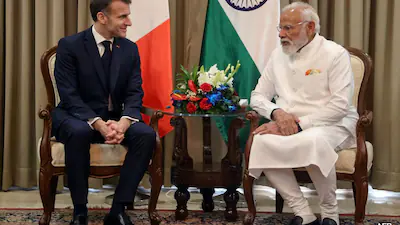
- PM Modi held bilateral talks with French President Emmanuel Macron in France.
- This marked the first meeting between the two leaders since India-France ties were elevated to a “Special Global Strategic Partnership” earlier this year.
Major Highlights
- Adoption of the “Innovation Roadmap 2030”, aimed at providing long-term direction to bilateral cooperation in technology and innovation.
- The two leaders also agreed to establish a Joint India-France AI Working Group to deepen collaboration in artificial intelligence.
Additional Information – India-France Relations
-
- India–France Strategic Partnership: It was launched on 26 January 1998 and is India’s first-ever Strategic Partnership.
- Rafale Fighter Jets: India procured 36 Rafales from Dassault Aviation.
- Scorpene Submarines (Project P-75): Collaboration with France’s Naval Group, 6 submarines built in India; latest is INS Vaghsheer.
- Recently both nations formally concluded an Inter-Governmental Agreement (IGA) to procure 26 Rafale-M fighter jets for the Indian Navy.
- Joint Exercises: Shakti, Varuna, FRINJEX-23.
-
- Economic Cooperation: Within the European Union, France remains India’s fifth-largest trading partner, following the Netherlands, Belgium, Italy, and Germany.
- The process of enabling Unified Payment Interface (UPI) has been successful in France.
- Joint missions: TRISHNA (satellite mission), MDA systems, ground station support.
- International Solar Alliance (ISA): Co-founded by India and France in 2015 to promote solar energy worldwide.
Joint UNESCO Nomination for Xuanzang’s Records
Art and Culture
Context
- India and China are in advanced discussions regarding a joint UNESCO nomination for Xuanzang’s work, ‘The Great Tang Records on the Western Regions’.
Xuanzang (Hiuen Tsang)
- He was a Chinese Buddhist monk, scholar, and traveler who journeyed across India during the 7th century CE.
- He spent nearly 19 years travelling through India and studying Buddhist philosophy.
- He studied at the ancient university of Nalanda University.
- His work, The Great Tang Records on the Western Regions, provides detailed information about:
- Political conditions under Harshavardhana and other rulers.
- Social and economic life in early medieval India.
- Religious traditions and Buddhist institutions.
- Economic and geographical conditions of early medieval India.
Other Joint Nominations Under Consideration
- Panchatantra with Iran: India is exploring a joint UNESCO nomination of Panchatantra with Iran. The Panchatantra has influenced Persian literature and folklore for centuries and represents a shared literary heritage.
- Satyagraha with South Africa: The idea reflects the historical association of Mahatma Gandhi’s non-violent movement with South Africa.
Shared Civilizational Traditions:
- Ramayana traditions shared between India and Indonesia.
- Buddhist scriptures and heritage common to India and China.
Queen Pineapple
Economy
Context
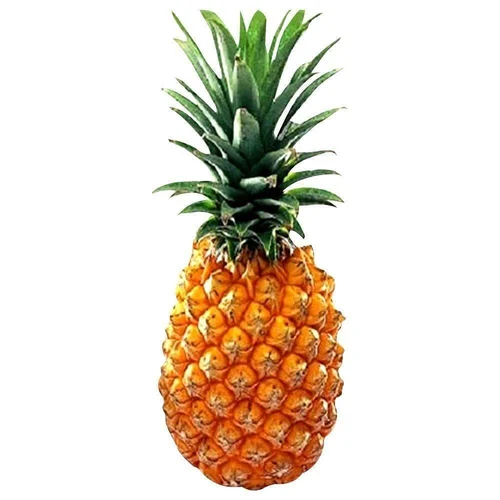
- Ahead of the pineapple festival in Delhi, Tripura eyes global status for queen pineapple.
About
- The queen pineapple was declared the state fruit of Tripura in 2018, four years after it attained the GI tag in 2014 for its golden-yellow hue and a distinct aroma.
- Cultivation: An area with 30–40% slope is generally selected for cultivation and plants require sandy soil and good drainage to prevent water logging and temperature range of 180°C to 32°C is most favorable for its cultivation.
- Tripura’s unique agro climatic condition makes it one of India’s leading pineapple-producing regions where Queen and Kew varieties are mostly cultivated by tribal growers.
- Mission Queen Pineapple: It is a three year long centrally-funded farm-to-plate programme worth Rs 236 crore launched in 2026.
- India contributes roughly 6-8% of total global pineapple production. On a regional scale, West Bengal and Assam are the top-producing states.
Do you Know?
- Cultivation of pineapple originated in South America and gradually spread to other tropical parts of the world.
- Pineapple cultivation was introduced to India by the Portuguese in 1548 AD.
- Costa Rica is the leading global producer and exporter of pineapple.
NCERT Dancing Girl Row
Art and Culture
Context
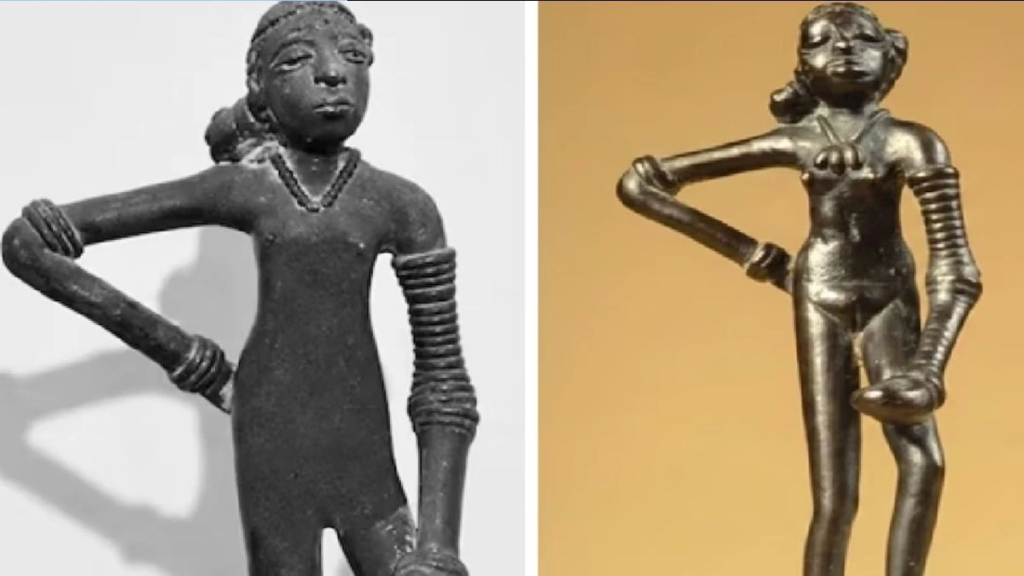
- After facing backlash, NCERT has decided to restore the original image of the Indus Valley Civilization’s iconic Dancing Girl in its Class 9 textbook, reversing its earlier decision to depict the figurine with a covered torso.
Dancing Girl
- The “Dancing Girl” is a 4,500-year-old bronze statuette unearthed in 1926 by archaeologist Ernest Mackay at Mohenjo-daro (present-day Pakistan), a major urban centre of the Indus Valley Civilization.
- The statue is around 10.5 centimetres tall and is adorned with a necklace and a large number of bangles stacked on her arms.
- Material and Technique: The bronze sculpture was created using the lost-wax technique, a metal-casting method that continues to be practiced in parts of India, including West Bengal, Jharkhand, and Chhattisgarh.
- Today, the original artefact is housed in the National Museum, New Delhi.
Additional Information – Harappan Civilization
- The Harappan civilization is believed to be one of the oldest world civilizations together with Egypt and Mesopotamia.
- It was developed along the river Indus and for that reason it is also known as the Indus Valley Civilization.
- The Harappan civilization is identified as a Bronze-age civilization because many objects have been found that are made up of copper based alloys.
Major Features of Civilization
-
- Urban Planning: Their towns were well planned and they had brick houses which were situated along the roads.
- Every house was equipped with a staircase, a kitchen and several rooms.
-
- Their courtyards had wells, bathrooms and they had proper drainage systems.
- Ornaments: The Harappans wore ornaments made of gold, silver, ivory,shell, clay, semi-precious stones and others.
- Trade and Commerce: The civilization had extensive trade networks, reaching as far as Mesopotamia, Afghanistan, and the Arabian Peninsula.
- Religion and Iconography: Harappan artifacts depict various symbols and motifs believed to be related to religious beliefs.
- These include figures such as the “Priest King” and images of animals like bulls, suggesting possible reverence for certain animals.
- Craftsmanship and Artistry: The Harappans produced intricate pottery, including the famous red pottery with black painted motifs.
- They also created jewelry, sculptures, and seals made of steatite, terracotta, and other materials.
- Agriculture: They cultivated crops such as wheat, barley, peas, and cotton.
- Social Organization: The society was likely stratified, with evidence suggesting a hierarchical structure. This is indicated by variations in housing sizes and the presence of public buildings.
- Decline and Disappearance: The reasons for the decline of the Harappan Civilization are still debated among historians and archaeologists.
- Possible factors include ecological changes, such as shifts in river courses, as well as invasions and internal conflicts.
Major Harappan Sites
Site
Present Day
Harappa
Punjab, Pakistan
Mohenjo-Daro
Sindh, Pakistan
Dholavira
Kutch district of Gujarat,
Kalibangan
Rajasthan
Lothal
Gujarat
Rakhigarhi
Haryana
Chanhudaro
Sindh, Pakistan
Ganweriwala
Punjab, Pakistan
Sutkagendor
Baluchistan Province, Pakistan
Alamgirpur
Uttar Pradesh
Dengue Vaccine Safety Concerns
Science & technology
Context
- Brazil recently suspended the administration of its dengue vaccine, Butantan-DV, after reports of severe adverse events, including two deaths, during a large-scale vaccination campaign.
Additional Information – Dengue
-
- Pathogen – Dengue is a viral infection caused by the dengue virus (DENV).
- DENV is an RNA virus of the Flaviviridae family with four serotypes (DENV-1 to 4).
- Symptoms: High fever, severe headache, pain behind the eyes, muscle and joint pains, nausea, vomiting, swollen glands, rash.
- Transmission: The virus is transmitted to humans through the bites of infected female mosquitoes, primarily the Aedes Aegypti mosquito.
- There is a possibility of maternal transmission of Dengue (from a pregnant mother to her baby), transmission via blood products, organ donation and transfusions.
- Prevention: There is no specific antiviral treatment for dengue, so prevention relies on controlling mosquito populations and raising public awareness.
- The mosquitoes that spread dengue are active during the day. The best way of protection is to protect yourself from mosquito bites.
India’s first indigenous dengue vaccine
- DengiAll is an indigenous, tetravalent, single-dose dengue vaccine candidate being developed by Panacea Biotec in collaboration with the Indian Council of Medical Research (ICMR).
-
QUIZ on National & International Current Affairs – June 15th 2026
QUIZ on National & International Current Affairs – June 15th 2026
-
MCQs on National & International
MCQs on National & International
1. Consider the following statements:
- The Harappan Civilization is identified as a Bronze Age civilization.
- The civilization developed exclusively along the banks of the River Ganga.
Which of the statements given above is/are correct?
(A) 1 only
(B) 2 only
(C) Both 1 and 2
(D) Neither 1 nor 2Answer: A
2. The BRICS Indore Declaration primarily emphasizes which one of the following?
(A) Establishing a common agricultural market among BRICS countries
(B) Enhancing cooperation in agriculture with emphasis on small farmers, food security, and sustainable farming
(C) Replacing national agricultural policies with a common BRICS framework
(D) Creating a BRICS-wide agricultural subsidy mechanismAnswer: B
3. The Strait of Hormuz lies between:
(A) Iran and Saudi Arabia
(B) Iran and Iraq
(C) Iran to the north and Oman and the United Arab Emirates to the south
(D) Oman to the north and Iran to the southAnswer: C
4. Which one of the following best describes Cervavac?
(A) A recombinant vaccine developed to prevent Hepatitis B infection
(B) India’s first indigenously developed vaccine against Human Papillomavirus (HPV)
(C) A DNA-based vaccine used for the treatment of cervical cancer
(D) A vaccine developed exclusively for male adolescents against sexually transmitted infectionsAnswer: B
-
PM Modi to Participate in 52nd G7 Summit in France | New Phase in India-Nepal Relations | Project Kusha | Indigenous AI Model Varya | Four Sites on Nicobar West Coast Identified for Coral Translocation
PM Modi to Participate in 52nd G7 Summit in France
International
Context
- Prime Minister Narendra Modi is going to participate in the 52nd G7 Summit in France.
About –
- Group of Seven (G7): An informal organization of seven of the world’s largest advanced economies, representing about 10% of the population and nearly 30% of global GDP.
- Members: Canada, France, Germany, Italy, Japan, United Kingdom, and the United States.
- Presidency: Rotates annually among member states.
Why is the G7 Summit Important?
- Economic Influence: Decisions impact global trade, financial stability, and climate policy.
- Crisis Coordination: Forum for addressing global challenges like pandemics, wars, and geopolitical tensions.
- Multilateralism: Reinforces a rules-based international order through consensus-building.
New Phase in India-Nepal Relations
International
Context
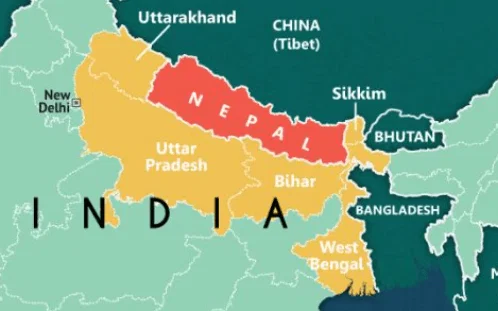
- Recent high-level exchanges between India and Nepal signal efforts by both sides to strengthen bilateral ties despite differences over boundary issues.
India- Nepal Border Disputes
- India and Nepal argue over a few specific pieces of land. The main areas are Kalapani, Limpiyadhura, Lipulekh, and Susta.
India – Nepal Relations
- India and Nepal share an approximately 1,751 km border.
- Shared Border: The country shares a border with five Indian states – Sikkim, West Bengal, Bihar, Uttar Pradesh and Uttarakhand.
- India-Nepal Treaty of Peace and Friendship – Signed in 1950, it forms the special relations that exist between India and Nepal.
- Defence Cooperation: Both countries conduct Joint Military Exercise SURYA KIRAN alternately in India and in Nepal.
- The Gorkha regiments of the Indian Army are raised partly by recruitment from hill districts of Nepal.
- Trade and Economic: India remains Nepal’s largest trade partner and Investment where Indian firms account for 33.5 % of total FDI stock in Nepal.
- Operation Maitri & post-earthquake reconstruction assistance: In the wake of the 2015 earthquake in Nepal, GoI was the first responder and carried out its largest disaster relief operation abroad (Operation Maitri).
- Cultural Ties: The leaders of the two countries have often noted the age-old ‘roti beti’ relationship, which refers to cross-border marriages between people of the two countries.
Project Kusha
GS3/Defence
Context
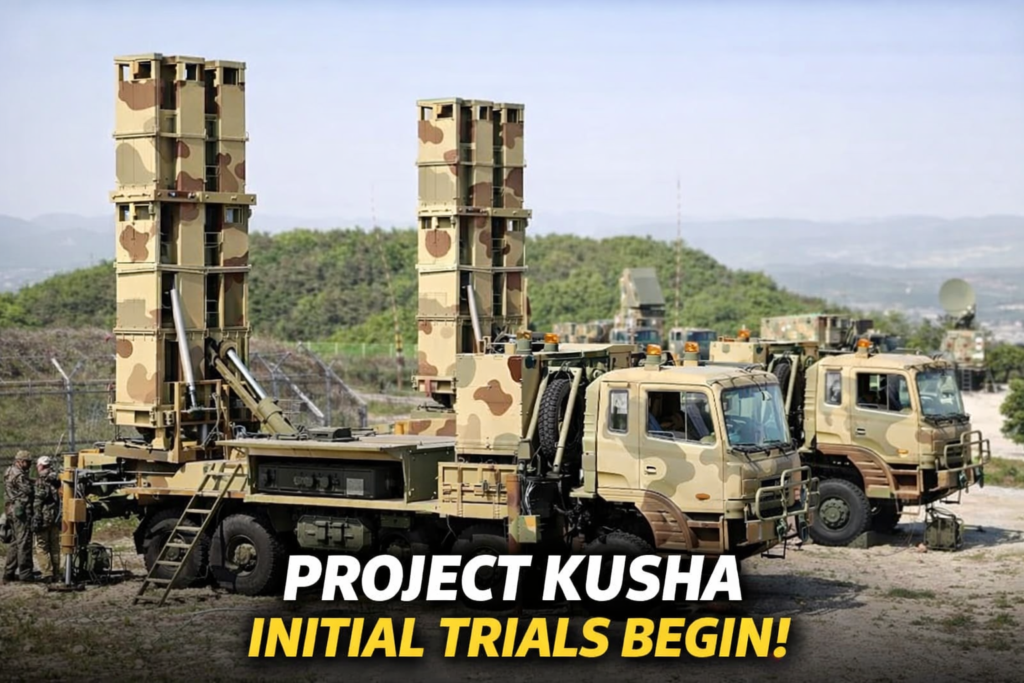
- Defence Minister Rajnath Singh has described the indigenous Project Kusha air defence system as a potential game changer for India’s security architecture.
Project Kusha
- It is an ambitious, indigenous long-range surface-to-air missile (SAM) defence system.
- It is designed to act as a powerful, multi-layered air defence shield that can detect and destroy advanced enemy targets at long distances.
- Developed by – Defence Research and Development Organisation (DRDO).
- Multi-Tier Interception: The system features three types of interceptor missiles to stop threats at different distances:
- M1 interceptor with a range of around 150 km
- M2 interceptor with a range of around 250 km
- M3 interceptor with a range of 350-400 km
Significance –
- Countering the S-400 and Global Comparisons – Project Kusha is often called India’s homegrown answer to Russia’s famous S-400 Triumf air defence system.
- The project is also linked to the broader “Mission Sudarshan Chakra”, an initiative aimed at building a multi-layered air and missile defence shield for India by 2035.
Indigenous AI Model Varya
Science and Technology

Context
- The IndiaAI Mission has supported the launch of Varya, an indigenous AI-powered video generation model developed by Avataar.
Varya
- Varya is a distilled video generation model that converts text prompts and images into videos.
- It is designed to generate culturally relevant visual content reflecting India’s regions, festivals, traditions, clothing, food, and everyday life.
- The platform follows the workflow, from Idea to Video to Story, allowing users to create and extend visual narratives through simple prompts.
Four Sites on Nicobar West Coast Identified for Coral Translocation
GS3/Environment
Context
- Coral colonies and giant clams that will be impacted due to the work on the transhipment port proposed at Galathea Bay as part of the Great Nicobar Island (GNI) mega project will be translocated to four sites on the west coast.
The Great Nicobar Island (GNI) Project
- It is conceived by NITI Aayog and launched in 2021.
- It is a ₹72,000–₹81,000 crore mega-infrastructure initiative.
- It is aimed at transforming India’s southernmost island into a major strategic and economic hub.
- Significance – The project is a centerpiece of India’s Maritime Vision 2030 and Amrit Kaal Vision 2047.
Core Components
- International Container Transshipment Terminal (ICTT): At Galathea Bay, aiming to handle 14.2 million TEUs to capture regional cargo.
- Greenfield International Airport: A dual-use facility for tourism and defense.
- Integrated Township: Planned development to accommodate a projected population of 6.5 lakh by 2050.
- Power Plant: A 450 MVA gas and solar-based facility.
Connect with the basics – CORAL REEFS
- Coral reefs are the most biologically diverse ecosystems of the planet.
Formation & Symbiotic relationship – (Coral polyps + zooxanthellae)
- They are formed when Coral polyps, the animals primarily responsible for building reefs, develop a symbiotic relationship with photosynthetic algae called zooxanthellae, which live in its tissues.
- Formation – Coral reefs begin to form when free-swimming coral larvae attach to submerged rocks or other hard surfaces along the edges of islands or continents.
- The coral provides a protected environment and the compounds zooxanthellae need for photosynthesis.
- In return, the algae produce carbohydrates that the coral uses for food, as well as oxygen. The algae also helps the coral remove waste.
FAVOURABLE CONDITIONS FOR FORMATION
- Warm tropical oceans with minimum temperature of 20 degree (30 degree north and 25 degree south latitudes)
- Oceanic water free of sedimentation
- Transparent parts of ocean bodies
- Relatively low salinity ocean bodies
TYPES OF REEF FORMATIONS
- Fringing reefs – They are the most common, projecting seaward directly from the shore, forming borders along the shoreline and surrounding islands.
- Barrier reefs – Grow at border shorelines, but at a greater distance. They are separated from their adjacent land mass by a lagoon of open, often deep water.
- Atoll – If a fringing reef forms around a volcanic island that subsides completely below sea level while the coral continues to grow upward, an atoll forms. Atolls are usually circular or oval, with a central lagoon.
DISTRIBUTION IN INDIA
- The Gulf of Kutch
- The West Coast of India
- The Lakshadweep Islands
- The Gulf of Mannar
- Palk Bay
- Andaman and Nicobar Group of Islands
THREATS
- Destructive fishing practices, Overfishing, Careless tourism, Pollution, Sedimentation, Coral mining, Climate change.
CORAL BLEACHING
- When corals face stress by changes in conditions such as temperature, light, or nutrients, they expel the symbiotic algae zooxanthellae living in their tissues, causing them to turn completely white. This phenomenon is called coral bleaching.
Causes of Coral Bleaching
- Rise in Sea Temperature
- Ocean Acidification
- Solar radiation & ultraviolet
radiation
- Infectious Diseases
- Chemical Pollution
- Increased Sedimentation
- Reducing light availability
(Turbidity)
- Human Induced Threats
CORAL REEFS
- Coral reefs are the most biologically diverse ecosystems of the planet.
Formation & Symbiotic relationship – (Coral polyps + zooxanthellae)
- They are formed when Coral polyps, the animals primarily responsible for building reefs, develop a symbiotic relationship with photosynthetic algae called zooxanthellae, which live in its tissues.
- Formation – Coral reefs begin to form when free-swimming coral larvae attach to submerged rocks or other hard surfaces along the edges of islands or continents.
- The coral provides a protected environment and the compounds zooxanthellae need for photosynthesis.
- In return, the algae produce carbohydrates that the coral uses for food, as well as oxygen. The algae also helps the coral remove waste.
FAVOURABLE CONDITIONS FOR FORMATION
- Warm tropical oceans with minimum temperature of 20 degree (30 degree north and 25 degree south latitudes)
- Oceanic water free of sedimentation
- Transparent parts of ocean bodies
- Relatively low salinity ocean bodies
TYPES OF REEF FORMATIONS
- Fringing reefs – They are the most common, projecting seaward directly from the shore, forming borders along the shoreline and surrounding islands.
- Barrier reefs – Grow at border shorelines, but at a greater distance. They are separated from their adjacent land mass by a lagoon of open, often deep water.
- Atoll – If a fringing reef forms around a volcanic island that subsides completely below sea level while the coral continues to grow upward, an atoll forms. Atolls are usually circular or oval, with a central lagoon.
DISTRIBUTION IN INDIA
- The Gulf of Kutch
- The West Coast of India
- The Lakshadweep Islands
- The Gulf of Mannar
- Palk Bay
- Andaman and Nicobar Group of Islands
THREATS
- Destructive fishing practices, Overfishing, Careless tourism, Pollution, Sedimentation, Coral mining, Climate change.
CORAL BLEACHING
- When corals face stress by changes in conditions such as temperature, light, or nutrients, they expel the symbiotic algae zooxanthellae living in their tissues, causing them to turn completely white. This phenomenon is called coral bleaching.
Causes of Coral Bleaching
- Rise in Sea Temperature
- Ocean Acidification
- Solar radiation & ultraviolet
radiation
- Infectious Diseases
- Chemical Pollution
- Increased Sedimentation
- Reducing light availability
(Turbidity)
- Human Induced Threats
-
QUIZ on National & International Current Affairs – June 13th 2026
QUIZ on National & International Current Affairs – June 13th 2026
-
MCQs on National & International
MCQs on National & International
1. Which one of the following countries is not a member of the G7?
(A) Canada
(B) Italy
(C) Russia
(D) JapanAnswer: C
2. Consider the following statements:
- Kalapani, Limpiyadhura and Lipulekh are among the major areas of border dispute between India and Nepal.
- Susta is a disputed area between India and Bhutan.
Which of the statements given above is/are correct?
(A) 1 only
(B) 2 only
(C) Both 1 and 2
(D) Neither 1 nor 2Answer: A
3. Which one of the following best describes the primary objective of the Great Nicobar Island (GNI) Project?
(A) To establish an exclusive biodiversity reserve with restricted human habitation.
(B) To transform Great Nicobar Island into a major strategic and economic hub.
(C) To develop India’s first offshore renewable energy park.
(D) To create a dedicated marine conservation zone free from commercial activities.Answer: B
4. Consider the following statements:
- Joint Exercise Varuna is conducted between the armed forces of India and France.
- FRINJEX-23 is one of the bilateral exercises conducted by India and France.
Which of the statements given above is/are correct?
(A) 1 only
(B) 2 only
(C) Both 1 and 2
(D) Neither 1 nor 2Answer: C
-
MCQs on National & International
MCQs on National & International
1. Consider the following statements:
- Pradhan Mantri Matru Vandana Yojana provides financial assistance to pregnant women and lactating mothers.
- National Health Mission focuses solely on reducing maternal mortality.
Which of the statements given above is/are correct?
(A) 1 only
(B) 2 only
(C) Both 1 and 2
(D) Neither 1 nor 2Answer: A
2. Which one of the following statements regarding the Armed Forces (Special Powers) Act (AFSPA) is not correct?
(A) AFSPA was enacted as an Act in 1958.
(B) The Governor of a State can play a role in imposing AFSPA.
(C) AFSPA currently remains operative in parts of Jammu & Kashmir.
(D) AFSPA can be imposed only by the Central Government.Answer: (D)
3. The Protection of Children from Sexual Offences (POCSO) Act, 2012, was introduced by which Ministry?
(A) Ministry of Home Affairs
(B) Ministry of Law and Justice
(C) Ministry of Women and Child Development
(D) Ministry of Social Justice and EmpowermentAnswer: C
4. Consider the following statements:
- An NGO failing to renew its FCRA registration within the stipulated period may automatically lose its registration.
- Upon such automatic lapse, the State may immediately assume control over the NGO’s property.
Which of the statements given above is/are correct?
(A) 1 only
(B) 2 only
(C) Both 1 and 2
(D) Neither 1 nor 2Answer: C
-
Pre-Conception and Pre-Natal Diagnostic Techniques (PCPNDT) Act | Armed Forces (Special Powers) Act, 1958 | SC Invokes Article 142 to Set Aside POCSO Conviction | Shigellosis Outbreak in Kerala | HIMARS | Foreign Contribution (Regulation) Amendment (FCRA)
Pre-Conception and Pre-Natal Diagnostic Techniques (PCPNDT) Act
Polity
Context
- The Supreme Court underscored the need for strict enforcement of the Pre-Conception and Pre-Natal Diagnostic Techniques (PCPNDT) Act.
About –
- Objective – It is an Indian law meant to stop female foeticide and improve the child sex ratio.
Important points –
- Bans Sex Selection: It is illegal to choose or test for the sex of a baby before or after conception.
- Regulates Ultrasounds: Scans can only check for genetic disorders. Doctors cannot tell anyone the sex of the fetus.
- Mandatory Rules: All clinics must register with the government, keep strict records (Form F), and never advertise sex selection.
- Strict Punishment: Violations are non-bailable. First-time offenders face up to 3 years in jail and a ₹10,000 fine. Doctors can also lose their license
Government Initiatives to Improve Sex Ratio
- Beti Bachao Beti Padhao (BBBP): Launched in 2015, this campaign aims to address gender-based discrimination, promote the value of the girl child, and improve access to education for girls.
- It also focuses on raising awareness about the importance of girls’ welfare and preventing female foeticide.
- Sukanya Samriddhi Yojana: This is a savings scheme for the girl child, which encourages families to save for the future education and marriage of their daughters. It promotes a positive perception of girls.
- Maternity Benefits: The government has introduced maternity benefits through schemes like the Pradhan Mantri Matru Vandana Yojana (PMMVY), which provides financial assistance to pregnant women and lactating mothers, aiming to reduce the economic burden on families and support maternal and child health.
- National Health Mission (NHM): This program focuses on improving healthcare services for women, including maternal health, to reduce the mortality rate among women and girls.
Armed Forces (Special Powers) Act, 1958
Polity
Context
- Union Home Minister Amit Shah announced that the Armed Forces (Special Powers) Act (AFSPA) is likely to be withdrawn from almost the entire Northeast by 2027, except for one or two States.
Armed Forces Special Powers Act (AFSPA)
- AFSPA was originally promulgated by the British in response to the Quit India movement in 1942.
- After Independence, India decided to retain the Act, which was first brought in as an ordinance and then notified as an Act in 1958.
Where is AFSPA currently invoked?
- Imposed by – AFSPA can be imposed by the Center or the Governor of a state on the state or parts of it after it is declared “disturbed’’ under Section 3 of AFSPA Act.
- Definition of Disturbed areas – The Act defines Disturbed as areas that are “disturbed or dangerous condition that the use of armed forces in aid of the civil power is necessary’.
Powers granted by the AFSPA Act to armed forces
- The Act gives sweeping powers to the armed forces.
- It allows them to ‘open fire’, even causing death, against any person in contravention to the law or carrying arms and ammunition.
- It gives them powers to arrest individuals without warrants, on the basis of reasonable suspicion and also search premises without warrants.
- It also provides blanket immunity to security personnel involved in such operations. There can be no prosecution or legal proceedings against them without the prior approval of the Center.
- Note – The Armed Forces (Special Powers) Act (AFSPA) is currently in effect in parts of Nagaland, Manipur, Arunachal Pradesh, Assam, and Jammu & Kashmir.
SC Invokes Article 142 to Set Aside POCSO Conviction
Polity
Context
- The Supreme Court invoked its extraordinary powers under Article 142 of the Constitution to set aside the conviction of a man under the Protection of Children from Sexual Offences Act, 2012 (POCSO Act).
Article 142 of Indian Constitution
- Article 142 of the Indian Constitution grants the Supreme Court extraordinary power to pass any decree or order necessary to do “complete justice” in any pending matter.
- Significance – It is designed to bridge statutory gaps and provide equitable relief where strict adherence to existing laws might lead to unfair outcomes.
Protection of Children from Sexual Offences (POCSO) Act, 2012
- It was introduced by the Ministry of Women and Child Development to protect children from sexual abuse and exploitation.
- The Act criminalises both penetrative and non-penetrative sexual assault, sexual harassment, and child pornography, and applies to all children below 18 years of age.
- POCSO is a gender-neutral law and states that minors cannot give valid consent for sexual activity.
- It ensures child-friendly legal procedures, including special courts, private hearings (in-camera trials), and video-recorded testimonies.
- The Act also punishes those involved in child trafficking for sexual purposes and allows strict penalties based on the seriousness of the crime.
- Source: TH
Shigellosis Outbreak in Kerala
Health
Context
- Kerala has reported 85 confirmed cases and over 70 probable cases of shigellosis (bacillary dysentery) till June 2026.
Shigellosis
- Shigellosis is a highly contagious bacterial infection caused by bacteria of the genus Shigella.
- It primarily affects the intestines and causes bacillary dysentery, characterized by severe diarrhoea.
- Symptoms: Fever, diarrhoea (often with blood or mucus), vomiting and nausea, abdominal cramps etc.
- Transmission: Consumption of contaminated food and water, person-to-person contact through the fecal-oral route.
HIMARS
Science & Technology
Context
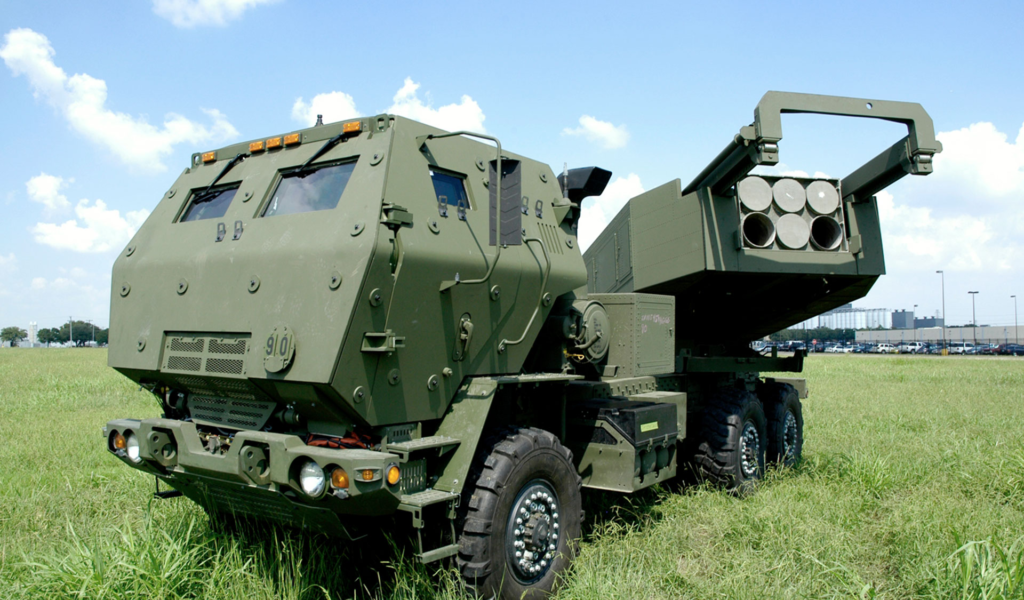
- Taiwan recently conducted its first-ever live-fire exercise using the High Mobility Artillery Rocket System (HIMARS) in the Taiwan Strait, simulating a defence scenario against a potential Chinese military threat.
HIMARS
- It is a US-supplied mobile rocket artillery system manufactured by Lockheed Martin.
- It is mounted on a six-wheeled truck, enabling rapid movement across roads and rough terrain.
- The system is known for its “shoot-and-scoot” capability, allowing it to fire rockets and quickly relocate to avoid enemy counterattacks.
- With a range of around 300 km, HIMARS can strike targets across the Taiwan Strait, including coastal areas in China’s Fujian Province.
- Note – HIMARS has been extensively used by Ukraine during its conflict with Russia and has emerged as one of its key long-range strike systems.
Foreign Contribution (Regulation) Amendment (FCRA)
Polity
Context
- The introduction of the Foreign Contribution (Regulation) Amendment (FCRA) Bill, 2026, in the Lok Sabha has posed significant disruption risks to civil society.
Foreign Contribution (Regulation) Act
- Enacted in – It is an act of Parliament enacted in 1976 and amended in 2010.
- Objective – To regulate foreign donations and to ensure that such contributions do not adversely affect the internal security of the country.
- Applicability – The Act is applicable to all associations, groups and non-governmental organizations (NGOs) who intend to receive foreign donations.
- Restrictions – The members of legislatures, political parties, government officials, judges and media persons are prohibited from receiving any foreign contributions.
Key Provisions of the 2026 Amendment Bill
- Asset Seizure: The government can take over and sell physical assets (like hospitals or schools) built with foreign funds if an NGO’s license is cancelled or expires.
- Automatic Expiry: If an NGO does not renew its registration in time, it lapses automatically. The state can step in to control its property right away.
- Personal Liability: Key heads, directors, and trustees are held personally liable for any rules broken by the NGO.
- Central Approval: Local police or agencies cannot investigate an NGO under this law without prior approval from the Central Government.
- Lower Jail Time: The maximum jail term for breaking the law drops from 5 years to 1 year, shifting the focus to financial penalties.