
India–Venezuela
International
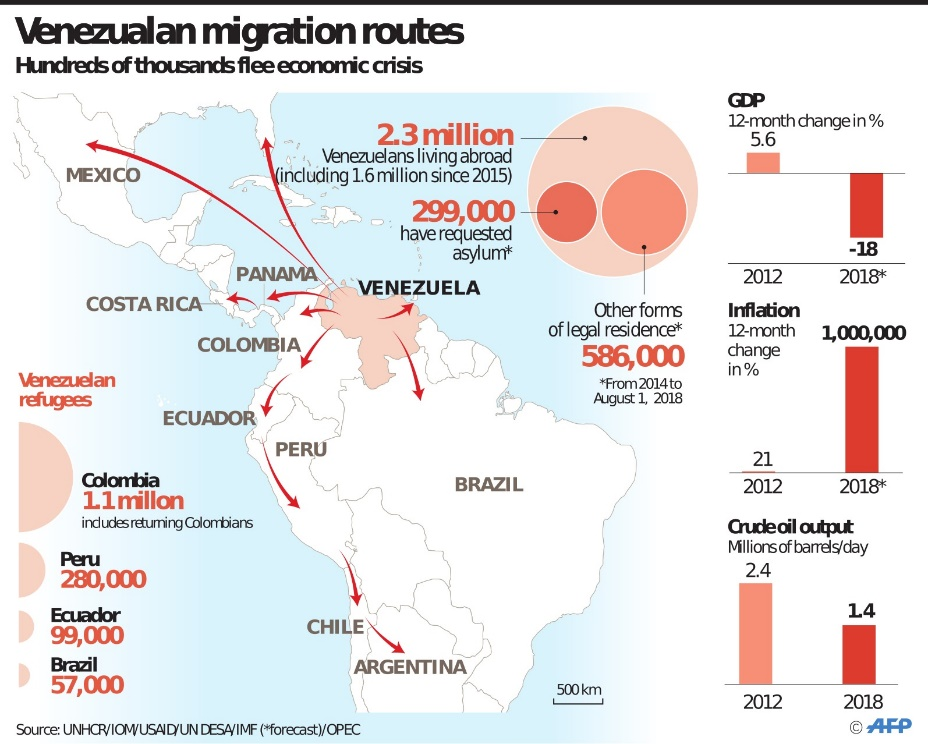
Context
- Acting President of Venezuela, Delcy Rodríguez, visited India and held talks with PM Modi.
Key Outcomes of the Visit
- Towards a Long-Term Energy Partnership: Both sides discussed moving from spot purchases to long-term crude oil supply contracts.
- Cooperation in Critical Minerals: Discussions covered critical minerals, gold, and diamond mining.
- Cooperation in Other Sectors: Agriculture and farm mechanization, Animal husbandry, Transportation and logistics, Automotive manufacturing, Science and technology.
Significance of Venezuela for India
- Energy Security: Venezuela possesses the world’s largest proven crude oil reserves.
- India is the world’s third-largest consumer of crude oil and imports more than 85% of its oil requirements.
- Indian refineries are well-equipped to process Venezuela’s heavy crude oil.
- Stronger ties can deepen India’s engagement with the Latin American region and reduce overdependence on traditional energy suppliers.
- Securing Critical Minerals for Future Industries: Venezuela possesses significant reserves of critical minerals, including rare earth elements, nickel, and other strategic resources.
- India’s Latin America Outreach: Venezuela serves as an important gateway for expanding India’s economic and diplomatic engagement in Latin America.
Venezuela
-
- Location: Venezuela is located on the northern coast of South America.
- It is bordered by Colombia to the west, Brazil to the south, Guyana to the east, and the Caribbean Sea lies to the north.
- Capital: Caracas.
Major Physiographic Regions:
- Northwestern Venezuela is traversed by the northeastern extension of the Andes.
- The Lake Maracaibo Basin is a major geological and geographical region in northwestern Venezuela.
- Llanos the vast, tropical savanna plains occupying over 250,000 square kilometers of central Venezuela.
Prime Minister Research Chair (PMRC) Scheme, 2026
Government Schemes
Context
- The Department of Higher Education has invited applications for the Prime Minister Research Chair (PMRC) Scheme 2026.
About
- Launched in – 2026
-
- Implementation- It is a flagship national initiative by the Department of Higher Education, Ministry of Education.
- Objective- : To bring Indian-origin researchers working abroad to leading Indian institutions for high-impact research in priority sectors.
Key DetailsGoal:
- Aim – Bring top global Indian talent back to India.
- Target – Select 120 researchers over 5 years.
- Funding – Up to ₹5 crore in grants (and up to ₹14 crore total package).
Who Can Apply?
- Indian nationals, OCIs, and PIOs working abroad fit into three tracks:
- Young Research Fellows: Up to 5 years after PhD.
- Senior Fellows: 5 to 10 years after PhD.
- Research Chairs: 10 or more years after PhD.
Focus Areas & Locations
- Sectors: 13 fields like AI, Semiconductors, Space, Health, and Green Energy.
- Host Places: Top institutes like IISc, major IITs, and national labs.
Neelkanth Mishra Appointed as World Bank Executive Director
International
Context
- The Appointments Committee of the Cabinet has approved the appointment of Neelkanth Mishra as Executive Director, World Bank Headquarters, Washington, DC, for a tenure of three years.
- He succeeds Parameswaran Iyer, who has held the position since February 2023.
- The Executive Director is part of the World Bank’s board, which oversees policies, lending decisions and development priorities.
World Bank
- It was founded in 1944.
- The World Bank is like a cooperative, made up of 189 member countries.
- It provides financial and technical assistance to developing countries to reduce poverty and promote economic development.
Main Institutions of the World Bank Group:
- IBRD (International Bank for Reconstruction and Development): It lends to middle-income and creditworthy low-income countries.
- IDA (International Development Association): It provides low-interest loans and grants to the poorest countries.
- IFC (International Finance Corporation): It supports private-sector development.
- MIGA (Multilateral Investment Guarantee Agency): It encourages foreign investment by providing guarantees.
- ICSID (International Centre for Settlement of Investment Disputes): It resolves investment disputes.
Flagship Reports by World Bank –
- World Development Report (WDR): The premier annual report focusing on a specific, critical aspect of development economics (e.g., jobs, digital dividends, or climate change).
- Global Economic Prospects (GEP): Examines global economic trends and prospects, with a specific focus on emerging markets and developing economies.
- Poverty and Shared Prosperity Report: Tracks the World Bank’s goals of ending extreme poverty and boosting shared prosperity.
- Human Capital Index (HCI): Measures the contributions of health and education to the productivity of the next generation of workers.
India–UK Critical Minerals Global Supply Chain Observatory (GSCO)
International
In News
- The India–UK Critical Minerals Global Supply Chain Observatory (GSCO) has been formally launched.
About
- It is a joint digital platform launched in New Delhi on June 4, 2026.
- Launched by – IIT-ISM Dhanbad (through its TEXMiN foundation) & University of Cambridge.
- Objective – It tracks minerals like lithium, cobalt, and nickel across the globe. It warns of risks like war, export blocks, or price changes.
Significance –
- It helps governments plan trade and build mineral stockpiles.
- These minerals power electric vehicles, solar panels, and defense tools.
- The project helps both nations secure raw materials and reduce their dependence on single countries like China.
National Critical Mineral Mission (NCMM)
- Launch: The NCMM was approved by the Union Cabinet of India in January 2025, with a total outlay of approximately ₹16,300 crore over a period of 7 years (up to 2030–31).
- It is anchored under the Ministry of Mines.
- Objectives: Ensure a reliable and sustainable domestic supply of critical minerals such as lithium, cobalt, nickel, graphite, rare earth elements (REEs), titanium, and others.
- Reduce India’s import dependence for minerals vital to the energy transition (EVs, solar panels, wind turbines, batteries) and defence/electronics sectors.











Leave a Reply