
Indira Point
Geography
Context
- The Environment Ministry is seeking approval for protection and development work at Indira Point.
Indira Point
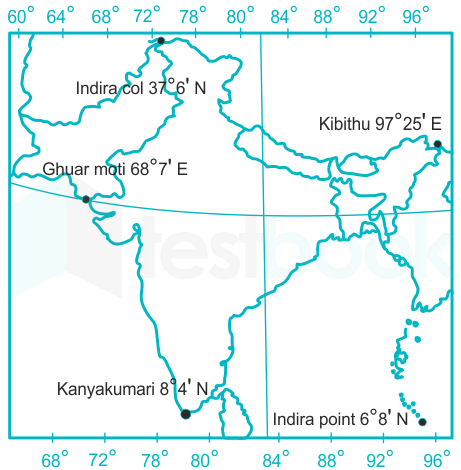
- Indira Point is India’s southernmost point of territory, located on Great Nicobar Island (Andaman and Nicobar Islands).
- Formerly called Pygmalion Point, it was renamed in 1985.
- It is strategically situated near the Six Degree Channel and Indonesia.
- It is crucial for maritime security but experienced severe land subsidence during the 2004 Tsunami.
Geographic & Strategic
- Location: Lies in the Nicobar district at 6°45′ N latitude and 93°49′ E longitude.
- Proximity: It is located only about 145-163 km from Indonesia’s Rondo Island (Sumatra).
- Mainland vs. Territory: It is the southernmost point of the Indian Union.
- In contrast, Kanyakumari is the southernmost point of the Indian mainland.
- Ecological Importance: Situated south of Galathea Bay, the region is a globally recognized nesting site for Leatherback Sea Turtles and houses the endemic Nicobar megapode.
Additional Information – The Great Nicobar Island (GNI) Project
- It is conceived by NITI Aayog and launched in 2021.
- It is a ₹72,000–₹81,000 crore mega-infrastructure initiative.
- It is aimed at transforming India’s southernmost island into a major strategic and economic hub.
- Significance – The project is a centerpiece of India’s Maritime Vision 2030 and Amrit Kaal Vision 2047.
Indiahandmade
Polity

Context
- Indiahandmade is a dedicated digital marketplace that brings India’s handloom and handicraft traditions into the online economy.
Indiahandmade
- It was launched in 2023
- Objective – to strengthen the visibility of handmade products and open wider market opportunities for sellers.
- Developed By: Digital India Corporation under the Ministry of Textiles.
Salient Features:
-
- Specialised Online Marketplace: It enables weavers and artisans to sell their handloom and handicraft products online.
- Direct Buyer Access: Artisans and weavers are directly connected with buyers, helping reduce intermediaries and support fair compensation.
- Digital Empowerment: Artisans and weavers are provided with digital tools and visibility to participate more effectively in online commerce.
- It offers a wide range of products, including apparel, home décor, furnishings, paintings, furniture, religious items, stationery, musical instruments, jewellery, bags and footwear.
- It also highlights special product categories such as GI-tagged and ODOP products.
Vikram-1
Science and Technology
Context
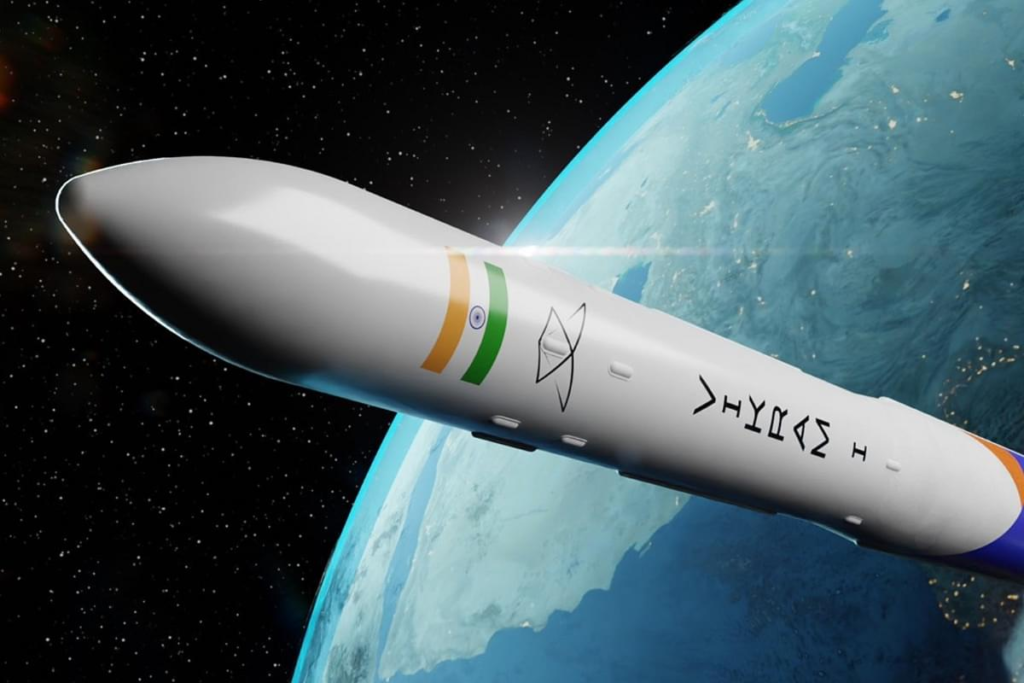
- Skyroot Aerospace has announced that Vikram-1, will carry six payloads during Mission Aagaman.
Vikram-1
- Vikram-1 is a four-stage orbital launch vehicle developed by Skyroot Aerospace, an Indian space-tech start-up.
- It is India’s first privately developed orbital-class rocket.
- Vikram-I can deploy up to 350 kg into low Earth orbit (LEO) and 260 kg into a sun-synchronous orbit (SSO).
- Mission Aagaman is the first orbital test flight of the Vikram-1 rocket, making it India’s first private orbital launch.
- Developed by Skyroot Aerospace, it is scheduled to launch from Sriharikota between July 12 and August 4, 2026.
Oldest Quasars Found
Science & technology

Context
- The Euclid space telescope has spotted the oldest quasars ever discovered, deepening a cosmic mystery that has been puzzling scientists.
About
- A quasar (short for Quasi-Stellar Radio Source) is an extremely active and luminous type of Active Galactic Nucleus (AGN).
- It is not a star, but the glowing, energetic core of a distant galaxy powered by a supermassive black hole
Additional Information – Quasars vs. Blazars
Both are sub-classes of Active Galactic Nuclei (AGNs) powered by supermassive black holes, but they differ in how we observe them from Earth
|
Feature |
Quasar |
Blazar |
|
Observation Angle |
Observed at larger, tilted angles relative to the accretion disk. |
A relativistic jet is pointed directly or almost end-on toward Earth. |
|
Luminosity Variance |
Changes steadily over longer periods. |
Highly variable, changing significantly over very short timescales. |
|
Visual Feature |
Appears like a point-of-light star with visible thermal spectra. |
Dominated by high-energy, faster-than-light particle jets. |
INS Mahendragiri
Defence

Context
- The Indian Navy is set to commission INS Mahendragiri (F38), the sixth indigenous stealth frigate under Project 17A, at Visakhapatnam.
About
- It is named after the majestic Mahendragiri mountain range in the Eastern Ghats.
- The stealth frigate was designed by the Indian Navy’s Warship Design Bureau and built by Mazagon Dock Shipbuilders Limited, Mumbai.
- The frigate is equipped with an advanced suite of indigenous and state-of-the-art weapons and sensors, including surface-to-surface and surface-to-air missile systems, sophisticated electronic warfare capabilities, comprehensive anti-submarine warfare systems, and an integrated Combat Management System.
Additional Information – Project 17A (P-17A)
- Objective: To build seven advanced stealth guided-missile frigates for the Indian Navy.
- Key Manufacturers: The project is split between Mazagon Dock Shipbuilders Limited (MDL) in Mumbai (4 ships) and Garden Reach Shipbuilders & Engineers (GRSE) in Kolkata (3 ships).
- Design: Designed in-house by the Warship Design Bureau (WDB).
- Indigenization: Approximately 75% of the content is indigenous, involving over 200 MSMEs, aligning with the Aatmanirbhar Bharat (Self-reliant India) initiative.
List of Seven Frigates
- INS Nilgiri – Commissioned Jan 2025
- INS Himgiri – Commissioned Aug 2025
- INS Udaygiri – Commissioned Aug 2025
- INS Taragiri – Commissioned April 2026
- INS Dunagiri – Delivered March/April 2026
- INS Vindhyagiri – Under sea trials/outfitting
- INS Mahendragiri – Under construction/outfitting
India-Indonesia Relations
International Relations
News –
- The Prime Minister of India undertook a State Visit to Indonesia from 6-8 July 2026.
Outcomes of the visit
- Defence: Elevation of defence cooperation through cooperation on BrahMos Missile System, and Astra Air-to-Air Missile.
- Culture: Inauguration of India-supported project towards restoration and conservation of UNESCO World Heritage Prambanan Temple Compounds by Archaeological Survey of India (ASI).
- Prambanan Temple Compounds, located in Yogyakarta on Indonesia’s Java Island, is the country’s largest Hindu temple complex dating 9th century AD, dedicated to Hindu Trinity – Lord Shiva, Vishnu and Brahma.
- Commemorate 2026–2027 as “Tagore–Dewantara Year of India–Indonesia Cultural and Educational Diplomacy” marking centenary of Rabindranath Tagore’s visit to Indonesia in 1927.
- Setting up of Indian Institute of Management, Bangalore branch campus at Singhasari SEZ, Indonesia
India-Indonesia Relations
- Background: 2024 marked 75 years of establishment of diplomatic relations. Signed Comprehensive Strategic Partnership in 2018.
- Bilateral Trade: Indonesia is the second largest trading partner of India in the ASEAN region.
- Defence: Participate in several exercises like
- IND-INDO CORPAT,
- Multilateral Naval Exercises – Komodo and Milan,
- Bilateral Army Exercise – Garuda Shakti,
- Bilateral Naval Exercise – Samudra Shakti,Ex Elang Shakti, Ex Super Garuda Shield 2025, etc.
Natural History Museum (NHM) at Mizoram : 21st Designated Repository
Environment
News –
- The Ministry of Environment, Forest and Climate Change (MoEFCC) notified the Natural History Museum (NHM) at Mizoram University, Aizawl, as India’s 21st Designated Repository.
Natural History Museum (NHM)
- It is located in the Indo-Burma Biodiversity Hotspot.
- It specialises in lesser-studied taxa (like pteridophytes and macrofungi), and documents rare endemic species from Northeast India.
Designated Repository
- It is notified under Section 39 of the Biological Diversity Act, 2002,
- It is a scientific institution authorised to receive, preserve, and maintain biological specimens in safe custody.
- MoEFCC notifies these repositories in consultation with the National Biodiversity Authority (NBA).
Kamarajar Port
Economy
News –
- Kamarajar Port became the second Major Port of India, after Visakhapatnam Port, to offer a draft capability of 18 metres.
Kamarajar Port
- It is a deep-water port with cargo carrying capacity of up to 1,70,000 deadweight tonnage (DWT).
- Formerly Known as Ennore Port
- Major Ports: There are 14 major ports (12 Operational) under administrative control of the Ministry of Ports, Shipping and Waterways.
Additional Information – India has 14 major ports, out of which 12 are fully operational.
Western Coast (6 Operational Ports)
- Deendayal Port (Kandla) Gujarat
- Mumbai Port, Maharashtra
- Jawaharlal Nehru Port Authority (JNPA/Nhava Sheva), Maharashtra
- Mormugao Port, Goa
- New Mangalore Port, Karnataka
- Cochin Port, Kerala
Eastern Coast (6 Operational Ports)
- Syama Prasad Mookerjee Port (Kolkata/Haldia), West Bengal
- Paradip Port, Odisha
- Visakhapatnam Port, Andhra Pradesh
- Kamarajar Port (Ennore), Tamil Nadu
- Chennai Port, Tamil Nadu
- V.O. Chidambaranar Port (Tuticorin), Tamil Nadu
Non-Operational / Under-Development (2 Ports)
- Vadhvan Port: An upcoming mega satellite port located in Palghar, Maharashtra.
- Galathea Bay Port: An international transshipment port being developed at Great Nicobar Island.
Akash Tarang
Science & Technology
Context
- The Defence Acquisition Council (DAC) approved the procurement of Akash Tarang
Akash Tarang
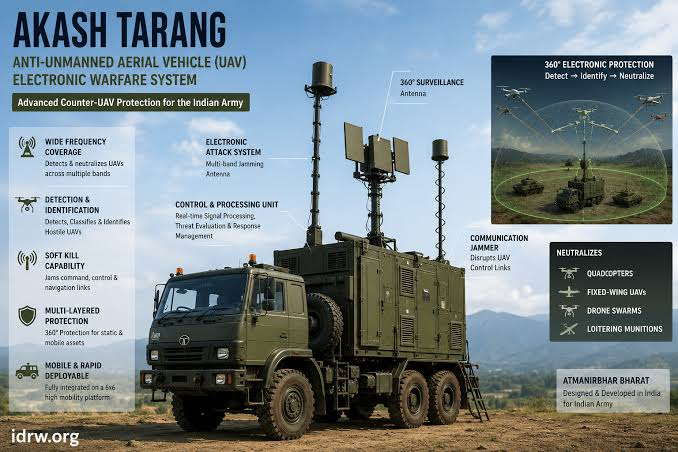
- It is an indigenous Anti-Unmanned Aerial Vehicle Electronic Warfare System, designed to provide effective protection against hostile drones.
- Akash Tarang neutralises drones by targeting their radio frequencies.
- The platform works by detecting, tracking, and jamming the essential control signals of invading drones.
- Akash Tarang functions as a key digital pillar in India’s broader “Sudarshan Chakra”.
Additional Information – Mission Sudarshan Chakra.
- During Operation Sindoor, India faced drone and missile threats from Pakistan.
- To strengthen national security, the Sudarshan Chakra missile shield—planned for 2035 under Make in India.
- Mandate – It aims to integrate advanced defensive systems like Iron Dome, Iron Beam, Arrow, David’s Sling, along with existing S-400, Barak, and Akash systems, covering India’s borders and coastline.
Sudarshan Chakra
- It is a multi-layered, home-grown air defence initiative.
- It is named after Lord Krishna’s divine disc, designed to protect key sites from missiles, rockets, drones, and swarms.
- It combines long-range systems like S-400 and Project Kusha, medium-range MRSAM/Barak-8, short-range Iron Dome, and future laser-based weapons like Iron Beam and DURGA-II for cost-effective drone and low-altitude threat interception.



















Leave a Reply