
Prambanan Temple complex
History and Culture
Context
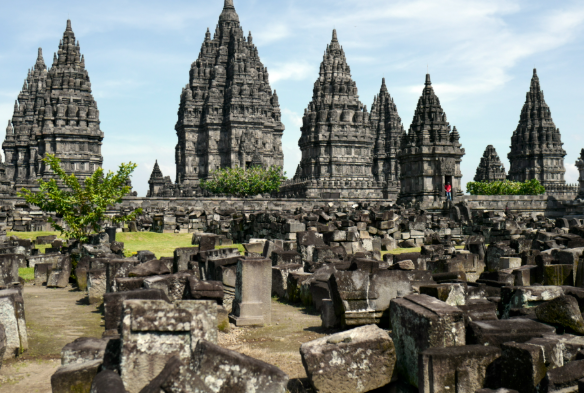
- PM Modi visited the majestic Prambanan Temple complex, a UNESCO World Heritage Site, in Yogyakarta, Indonesia,
Prambanan Temple Complex
- Timeline: Built 9th century CE (c. 856 CE) during the Sanjaya Dynasty (Mataram Kingdom).
- Patronage: Commissioned by King Rakai Pikatan.
- Motive: Hindu response to Buddhist Borobudur, marking a Shaivite revival in Central Java.
- Decline: Abandoned in 10th century due to power shifts and Mount Merapi eruptions.
Architecture & Religion
-
- Layout: Three concentric squares mapping Hindu cosmology (Bhurloka, Bhuvarloka, Svarloka).
- Trimurti: Main soaring towers for Shiva (47m), Brahma, and Vishnu.
- Vahanas: Facing temples for Nandi (bull), Hamsa (swan), and Garuda (eagle).
- Deities: Shiva temple houses Shiva, Ganesha, Agastya, and Durga (Roro Jonggrang).
- Reliefs: Walls depict narrative panels of the Ramayana and Bhagavata Purana.
- UNESCO: Inscribed as a World Heritage Site in 1991.
Unified District Information System for Education Plus (UDISE+) 2025-26
Governance
Context
- The Union Ministry of Education released a Report on Unified District Information System for Education Plus (UDISE+) 2025-26 on School Education in India.
Major Highlights
- Coverage: 14.67 lakh schools, 1.02 crore teachers, 24.72 crore students.
- Nodal Body: Department of School Education & Literacy, Ministry of Education.
Structural Shift:
- NEP 2020 FrameworkThe 2025-26 report drops the traditional 10+2 system.
- It marks the first time data is entirely structured around the NEP 5+3+3+4 framework
- Foundational Stage (5 yrs): 22% of total enrolment.
- Preparatory Stage (3 yrs): 25% of total enrolment.
- Middle Stage (3 yrs): 26% of total enrolment.
- Secondary Stage (4 yrs): 27% of total enrolment.
Enrolment & Retention
- Secondary GER: Rose to 71.7% (up from 68.5%).
- Dropouts: Fell to 1.8% at preparatory and 7.0% at secondary levels.
- Retention: Reached 83.7% (middle) and 51.9% (secondary).
- Migration: Government schools lost 86 lakh students; private schools gained 88 lakh.
Teaching Workforce
- Volume: Crossed 1.02 crore teachers (8.3% increase since 2022-23).
- Gender: Women comprise 54.9% of the workforce.
White Gut Disease
Health & Society
Context
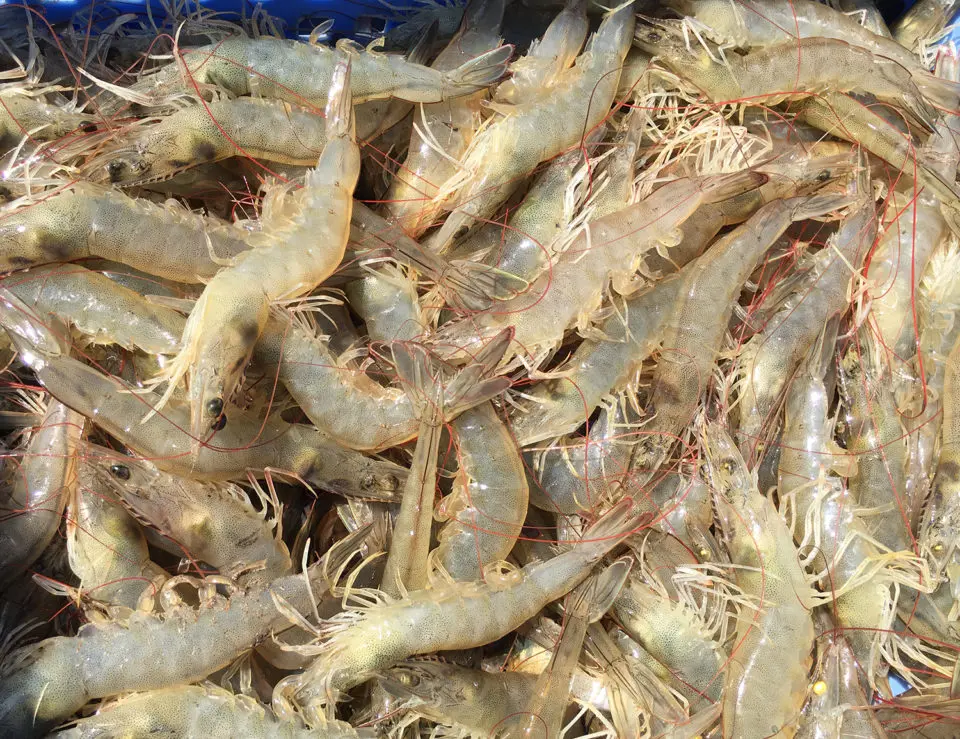
- The Fisheries department sounded an alarm about the outbreak of White Gut Disease (WDG), also known as White Feces Disease (WFD), in shrimp ponds in West Godavari district.
White Gut Disease
- It is a disease affecting farmed shrimp, particularly Pacific white shrimp (Litopenaeus vannamei), which is widely cultivated in India.
- Symptoms: It is characterized by the appearance of floating white fecal strings in shrimp ponds and discoloration of the shrimp intestine.
- Causes: It is not caused by a single pathogen but is considered a multifactorial disease, resulting from interactions among pathogens, poor water quality, environmental stress, and management practices.
- Microsporidian parasite: Enterocytozoon hepatopenaei (EHP) (commonly associated).
- Bacterial infections: Mainly Vibrio species.
- Poor pond hygiene and accumulation of organic waste.
- Deterioration in water quality (high ammonia, nitrite, low dissolved oxygen).
Zebra Finches
Environment

Context
- An American scientist, Dr Julie Elie at the University of California has won the the Coller Dolittle Challenge award for her work on how zebra finches communicate with each other.
Zebra Finches
- Scientific Name: Taeniopygia guttata.
- Family: Estrildidae (Waxbills and Grass Finches).
- Habitat: Grasslands, scrublands, and areas near water sources.
- The Zebra Finch is a small, colorful songbird native to Australia.
- They can also be found natively in parts of Indonesia and East Timor.
- It is one of the most widely studied bird species in the world because of its simple care requirements, social behavior, and vocal learning abilities.
- IUCN Status: Least Concern (LC).
Israel-Palestine Two-State Solution
International Relations
News –
- During his visit to Indonesia, PM Modi reaffirmed India’s support for a negotiated two-state solution, envisaging a sovereign, independent Palestine coexisting peacefully with Israel.
Two-State Solution
- Two-state solution is a proposed diplomatic framework to establish two independent, sovereign states: Israel for the Jewish people and Palestine for the Palestinian people.
- Proposed Territory: The Palestinian state would encompass the West Bank and the Gaza Strip, based on the 1949 Armistice Lines (Green Line), with mutually agreed land swaps.
- East Jerusalem, site of the Temple Mount (holiest in Judaism) and Haram al-Sharif (third holiest in Islam), is claimed by Palestine as its future capital.
- Palestinian Demands: Fully independent state on the 1967 borders, with East Jerusalem as its sovereign capital and the Right of Return for refugees displaced in the 1948 Arab-Israeli War.
- Israeli Demands: Demilitarisation of any Palestinian state, Jerusalem as its undivided and permanent capital, rejection of the Right of Return, and land swaps to annex major settlement blocs in the West Bank.
Historical Background
- UN Partition Plan (1947): Recommended dividing British-mandated Palestine into separate Arab and Jewish states, but the Arab side rejected the proposal.
- UNSC Resolution 242 (1967): Established the land-for-peace principle, calling for Israel’s withdrawal from territories occupied during the Six-Day War.
- Oslo Accords (1993): Established the Palestinian Authority as an interim self-governing body in the West Bank and Gaza, but left final-status issues unresolved.
- Arab Peace Initiative (2002): Offered Israel full normalisation with Arab states in exchange for a complete withdrawal from occupied territories and an independent Palestinian state.
International Standing
- Oslo II Accord (1995): West Bank is divided into three zones: Area A (18%, under Palestinian control), Area B (22%, under shared control), and Area C (60%, under Israeli control).
- UNSC Resolutions: Israeli settlements in the West Bank and East Jerusalem are declared illegal under the Fourth Geneva Convention by UNSC Resolutions 446 and 465.
Performance Grading Index 2.0
Governence
News –
- The Union Ministry of Education released the Performance Grading Index 2.0 for States/UTs 2025-26.
Key Findings
- All States and UTs scored over 50% in their assessments, but none achieved the top ‘Utkarsh’ grade.
- Top Performers: Chandigarh became the first territory to reach the ‘Uttam-3’ performance band. Punjab, Kerala, Delhi, Dadra & Nagar Haveli and Daman & Diu secured 2nd spot within the Prachesta-1 band.
- Lowest Performer: Meghalaya remained the lowest performer but made progress over the past year.
PGI 2.0
- Developed by – Department of School Education and Literacy
- Objective – It is an evidence-based framework to assess the school education system.
- It aligns with NEP 2020 and SDG 4 on quality education.
- It uses data from UDISE+, PARAKH Rashtriya Sarvekshan, PM POSHAN, and the PRABANDH portal.
- Grading Categories: Consist of 10 classification levels, ranging from Utkarsh (highest, for scores >90%) to Akanshi-3 (lowest, for scores up to 10%).
World Investment Report 2026
Economy
News –
- The UN Trade and Development (UNCTAD) released the World Investment Report (WIR) 2026, titled “International Investment in a Turbulent Era.”
World Investment Report 2026
- It is UNCTAD’s annual flagship publication, published since 1991
- It provides a comprehensive assessment of global FDI trends, investment policies, multinational enterprises, and emerging investment issues.
Key Findings
- Global FDI Showed Resilience In 2025: Flows rose by 6% to $1.6 trillion. Europe attracted most of the increase in global foreign investment.
- FDI Inflow : The U.S. retained its position as the largest recipient of FDI. Other major recipients included Singapore, Hong Kong (China) and China.
- FDI Outflow: The US was the largest source of FDI, followed by Japan and China. The top five source economies accounted for almost half of global outflows.
United Nations Conference on Trade and Development (UNCTAD),
-
- It is a permanent intergovernmental body established by the UN General Assembly in 1964.
- Headquartered in Geneva, Switzerland
- It acts as the UN’s key entity for trade, finance, technology, and investment in developing nations.
Guwahati Declaration
International Relations
News –
- The BRICS nations adopted the Guwahati Declaration, at the conclusion of the BRICS Heads of Anti-Drug Agencies meeting held in Guwahati, Assam.
- The meeting was hosted by India’s Narcotics Control Bureau (NCB) under India’s 2026 BRICS Chairship, guided by the theme, “Building for Resilience, Innovation, Cooperation and Sustainability“.
Key Highlights of Declaration
- It reaffirms the commitment of BRICS nations to strengthen cooperation in preventing and combating illicit drug trafficking and related transnational organised crime.
- It calls for timely exchange of information, intelligence, and best practices among member countries, consistent with national laws and international obligations.
- Technology: It emphasises the use of innovative technologies, digital tools, AI, and data-driven approaches to strengthen law enforcement and regulatory mechanisms against drug trafficking.
Additional Information – Efforts by India to combat drug menace
- Narcotic Drugs and Psychotropic Substances (NDPS) Act 1985: Central law criminalizing drug trafficking while mandating treatment for addicts.
- Narcotics Control Bureau (NCB) & Anti-Narcotics Task Forces (ANTF) : The Narcotics Control Bureau coordinates national enforcement, aided by state-level Anti-Narcotics Task Forces.
- Narco-Coordination Centre – A four-tier coordination system unifying central and state intelligence agencies.
Supply & Intelligence Control
- Geopolitical Challenge: Securing borders against the Golden Crescent (West) and Golden Triangle (East).
- Seizure Information Management System (SIMS) and the NIDAAN platform: Integrated digital portals used for real-time tracking of drug seizures and offenders.
- Darknet Monitoring: Special task forces targeting cryptocurrency-funded drug sales on the dark web.
Demand Reduction & Rehab
- National Action Plan for Drug Demand Reduction: National action plan funding awareness, counseling, and hospital-based Addiction Treatment Facilities (ATFs).
- Nasha Mukt Bharat Abhiyaan: A massive, community-led awareness campaign targeting youth in high-risk districts.















Leave a Reply