Author: Ramvilas
-
MCQs Compilation on National & International, State Current Affairs and Misscelanious Current Affairs
MCQs Compilation on National & International, State Current Affairs and Miscellaneos Current Affairs
1. UMANG Portal is a flagship initiative under which programme?
A) Make in India
B) Startup India
C) BharatNet
D) Digital India ProgrammeAnswer: D) Digital India Programme
2. Which committee first recommended the introduction of the Standing Deposit Facility (SDF)?
A) Narasimham Committee
B) Rangarajan Committee
C) Kelkar Committee
D) Urjit Patel CommitteeAnswer: D) Urjit Patel Committee
3. Sulphur dioxide (SO₂) is primarily emitted from:
A) Solar power plants
B) Hydroelectric projects
C) Coal-fired thermal power plants
D) Wind energy plantsAnswer: C) Coal-fired thermal power plants
4. The Global Liveability Index is published annually by:
A) World Economic Forum (WEF)
B) United Nations Development Programme (UNDP)
C) Mercer
D) Economist Intelligence Unit (EIU)Answer: D) Economist Intelligence Unit (EIU)
-
Karnataka & Group C Current Affairs – July 14th, 2026
Defence
Indian Navy’s Drishti-10 UAV Crashes in Gujarat
Why in News: The Indian Navy’s Drishti-10 Uncrewed Aerial Vehicle (UAV) crashed during a routine operational sortie in Gujarat.
Key Highlights:
- UAV Platform:- Categorized as a Medium-Altitude Long-Endurance (MALE) UAV, engineered specifically for long-endurance intelligence, surveillance, and reconnaissance (ISR) operations.
- Origin & Variant:- It is the customized Indian variant of Israel’s combat-proven Hermes 900 drone architecture.
- Indigenous Manufacturing:- Manufactured in India by Adani Defence and Aerospace, highlighting private sector participation in strategic defense manufacturing under indigenization initiatives.
-
UMANG Portal | Standing Deposit Facility (SDF) | Sulphur dioxide (SO2) | Global Liveability Index 2026 | Version 2026-1 of the IUCN Red List
UMANG Portal
Government Schemes

Context
- Researchers have identified security vulnerabilities in India’s UMANG Portal, raising concerns about personal data.
UMANG (Unified Mobile Application for New-age Governance)
-
- It was launched in November 2017.
- It is a flagship initiative under the Digital India Programme.
- It offers a single window access to a wide range of services delivered by the Central Government, State Governments and local bodies through a unified mobile application.
- Significance – It enables citizens to access services such as EPFO, healthcare, pensions, LPG bookings, certificates, and several other citizen-centric services through a single platform.
- As of February 2026, UMANG offers 2,446 services from 240 government departments, including 80 Central Government Departments and 160 departments across 30 States and Union Territories.
- UMANG supports 23 Indian languages, including Hindi, English, Nepali, and Sanskrit.
Standing Deposit Facility (SDF)
Economy
News
- The Reserve Bank of India(RBI) absorbed 1.67 lakh crore rupees through the Standing Deposit Facility (SDF).
Standing Deposit Facility (SDF)
- It is a collateral-free RBI tool used to absorb excess liquidity from banks.
Core Features
- No collateral: Banks park funds without RBI giving government securities.
- Corridor floor: It forms the lower bound of the LAF corridor.
- Urjit Patel Committee: First recommended the tool in 2014.
- April 2022: Officially implemented to manage pandemic-induced liquidity.
Other Monetary Policy Tools in India
- Repo Rate: Rate at which RBI lends short-term funds to banks against collateral.
- Reverse Repo Rate: Rate at which RBI absorbs liquidity from banks.
- Cash Reserve Ratio (CRR): Portion of deposits banks must keep with RBI in cash.
- Statutory Liquidity Ratio (SLR): Portion of deposits kept in liquid assets (gold, cash, securities).
- Open Market Operations (OMO): Buying/selling of government securities to control liquidity.
- Marginal Standing Facility (MSF): Emergency borrowing by banks at a penal rate.
- Liquidity Adjustment Facility (LAF): Framework for repo/reverse repo operations.
- Market Stabilisation Scheme (MSS): Bonds issued to absorb excess liquidity.
Sulphur dioxide (SO2)
Environment
Context
- As per the study, nearly 81 per cent of sulphur dioxide (SO2) emissions from coal plants within a 300-km radius of Delhi-NCR originate from facilities exempted from installing pollution control systems.
Sulfur dioxide (SO₂)
- It is a colorless, pungent, and toxic gas.
- Primary Source: Coal-fired thermal power plants.
- Natural Source: Volcanic eruptions and geothermal activity.
- India Status: Top global anthropogenic SO₂ emitter.
- Health Impact: Causes severe respiratory diseases (asthma).
- Environment: Precursor to acid rain.
- Note – Sulfur dioxide is not a greenhouse gas. While it is a major air pollutant with significant environmental impacts, it actually has a cooling effect on the Earth’s climate rather than a warming one
Global Liveability Index 2026
Miscellaneous
Context
- The Economist Intelligence Unit has released the Global Liveability Index 2026.
Major Highlights
-
- Published by – The index is compiled annually by the Economist Intelligence Unit, the research and analysis arm of The Economist Group,
- It evaluated 173 cities across 30 indicators
- Five categories: Stability, healthcare, culture and environment, education, and infrastructure.
- Copenhagen (Denmark) remains the world’s most liveable city, edging out Vienna (Austria) and Melbourne (Australia), which are in second and third place.
- New Delhi is ranked 120, followed by Mumbai (121), Chennai (123), and Bengaluru (127).
- Karachi stayed pinned at 170th place two years consecutively, Dhaka held at 171st, Damascus (Syria) remains the world’s least liveable city for a second consecutive year.
Version 2026-1 of the IUCN Red List
Environment
News –
- The International Union for Conservation of Nature (IUCN) released the updated version 2026-1 of its Red List of Threatened Species.
About-
- IUCN Red List now covers 175,909 species, of which 49,505 (approximately 28%) are classified as threatened with extinction.
IUCN Red List
- IUCN Red List is the most comprehensive inventory of the global extinction risk of animal, plant, and fungal species, maintained by the Species Survival Commission.
- Species are placed in nine categories: Not Evaluated, Data Deficient, Least Concern, Near Threatened, Vulnerable, Endangered, Critically Endangered, Extinct in the Wild, and Extinct.
International Union of Conservation of Nature
- Establishment – 1948.
- Set up in – Gland, Switzerland.
- Objective – To promote international cooperation and to provide scientific knowledge and tools to aid conservation action.
- IUCN Red List – It established the IUCN Red List of Threatened Species in 1964.
IUCN Red List
-
-
It is a list compiled by the IUCN, which contains the world’s most comprehensive information on the conservation status of plants, animals, and fungus species.
-
Species in the IUCN Red List – There are 143000 species on the Red List.
-
-
India’s membership in IUCN – India became a member in 1969
-
The IUCN classification – The IUCN classification of species is based on their extinction/conservation status.
They are as follows
-
Extinct (EX)
-
Extinct in the Wild (EW)
-
Critically Endangered (CR)
-
Endangered (EN), Vulnerable (VU)
-
Near Threatened (NT)
-
Least Concern (LC)
-
Data Deficient (DD)
-
Not Evaluated (NE)
-
PM-UDAY Scheme | Parrot Bornavirus 4 | Direct Seeded Rice (DSR) | Long March 10B Rocket | India-New Zealand ‘Strategic Partnership’ | India’s Textile Sector | Pinaka Long Range Guided Rocket | Oxytocin
PM-UDAY Scheme
Government Schemes
In News
- Recently Delhi CM has sought ₹100 crore as a first phase central government financial assistance to implement the revised Pradhan Mantri Unauthorised Colonies in Delhi Awas Adhikar Yojana (PM-UDAY) in the national capital.
Pradhan Mantri –Unauthorised Colonies in Delhi Awas Adhikar Yojana (PM-UDAY)
- Financing – It is a central sector initiative
- Launched in- October 2019
- Objective – to grant legal ownership, transfer, and mortgage rights to residents living in Delhi’s unauthorised colonies.
- Administered by – Delhi Development Authority (DDA) under the Ministry of Housing and Urban Affairs (MoHUA)
Parrot Bornavirus 4
Science & technology
Context
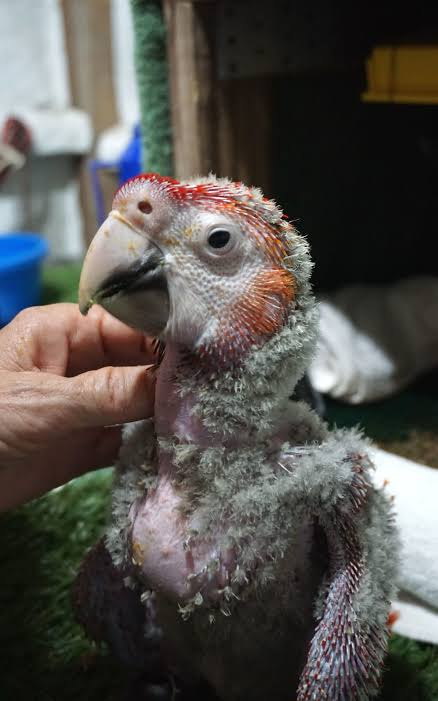
- Deadly bird virus PaBV-4 has been identified for the first time in India.
Parrot Bornavirus 4 (PaBV-4)
-
- It is an avian virus recently detected for the first time in India (Assam, Karnataka, West Bengal) among captive parrot species.
- The Virus: Enveloped, negative-sense, single-stranded RNA virus (Bornaviridae family).
- Zoonotic Status: Not zoonotic (does not infect humans).
- Target: Psittacine birds (macaws, cockatoos, parakeets, budgerigars).
Associated Disease
- It causes Proventricular Dilatation Disease (PDD), also called “Macaw Wasting Disease.”
- Gastrointestinal: Destroys nerves in the digestive tract, causing an enlarged stomach, weight loss, and undigested seeds in droppings.
- Neurological: Causes tremors, loss of coordination, seizures, and paralysis.
Transmission & Management
- Spread: Contact with infected feces, saliva, feather dust, or vertically from parent to egg.
- Challenge: Infected birds can stay asymptomatic while actively shedding the virus.
- Control: No vaccine or cure exists. Diagnosis is via RT-PCR; management relies on isolation and supportive care.
Direct Seeded Rice (DSR)
Economy
In News
- Recently, the Chhattisgarh government issued an advisory to focus on prioritising Direct Seeded Rice (DSR) over the traditional transplanting method against the backdrop of the uncertainty of rainfall due to El Niño.
Direct Seeding of Rice
- It is a resource-efficient cultivation technique where paddy seeds are sown directly into the main field, completely bypassing the traditional, water-intensive stages of nursery raising, manual transplanting, and field puddling.
- Also locally called the ‘tar-wattar’ technique (sowing in moist soil).
- It has gained immense policy traction across states like Punjab and Haryana to counter severe groundwater depletion and El Niño-induced monsoon deficits.
Additional Information – DSR vs. Traditional Puddled Transplanted Rice (PTR)
Feature
Traditional Method (PTR)
Direct Seeding of Rice (DSR)
Nursery Phase
Seeds grown in nurseries for 25–35 days.
Skipped entirely; seeds sown directly.
Field Preparation
Puddling (ploughing flooded fields to create mud).
Laser land levelling and dry/moist sowing.
Water Usage
Flooded conditions; requires ~3,600–4,125 litres per kg.
Saves 15% to 35% water; no continuous submergence.
Labour Need
Highly intensive (manual uprooting & planting).
Mechanised; slashes labour costs by over 30%.
Methane Profile
High (anaerobic decomposition in flooded fields).
Low (soil remains moist, not flooded).
Long March 10B Rocket
Science & Technology
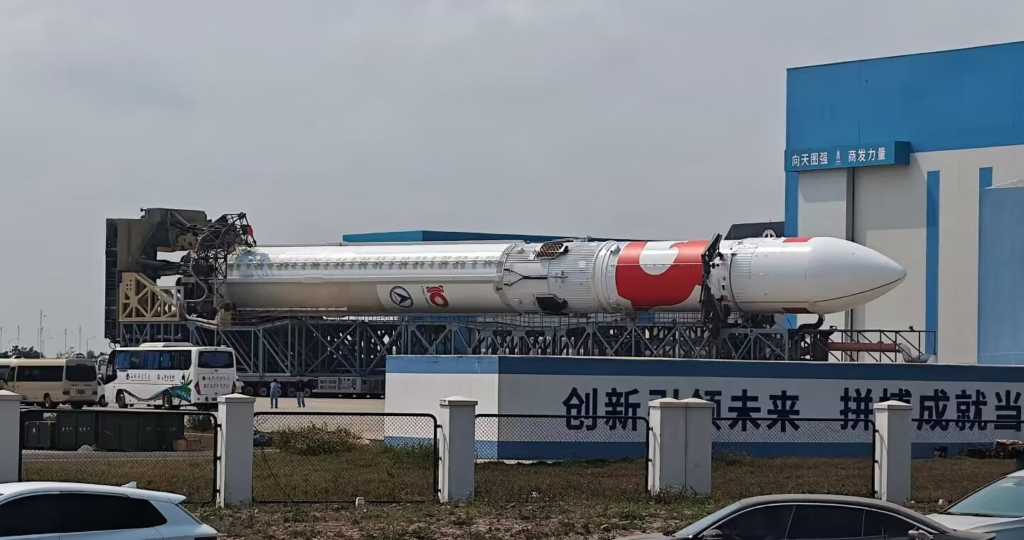
In News
- China successfully achieved its first reusable rocket landing at the Wenchang Commercial Space Launch Site, making a precise sea-based recovery after separation.
Long March 10B
- It is also called Changzheng 10B.
- It is designed to support next-generation space exploration.
- Developer: China Academy of Launch Vehicle Technology (CALT).
- Primary Mission: Launching the Mengzhou (crewed spacecraft) and Lanyue (lunar lander) for China’s manned lunar missions.
- Timeline: The first test flight is projected around 2027, aiming for a crewed moon landing by 2030.
India-New Zealand ‘Strategic Partnership’
International
News –
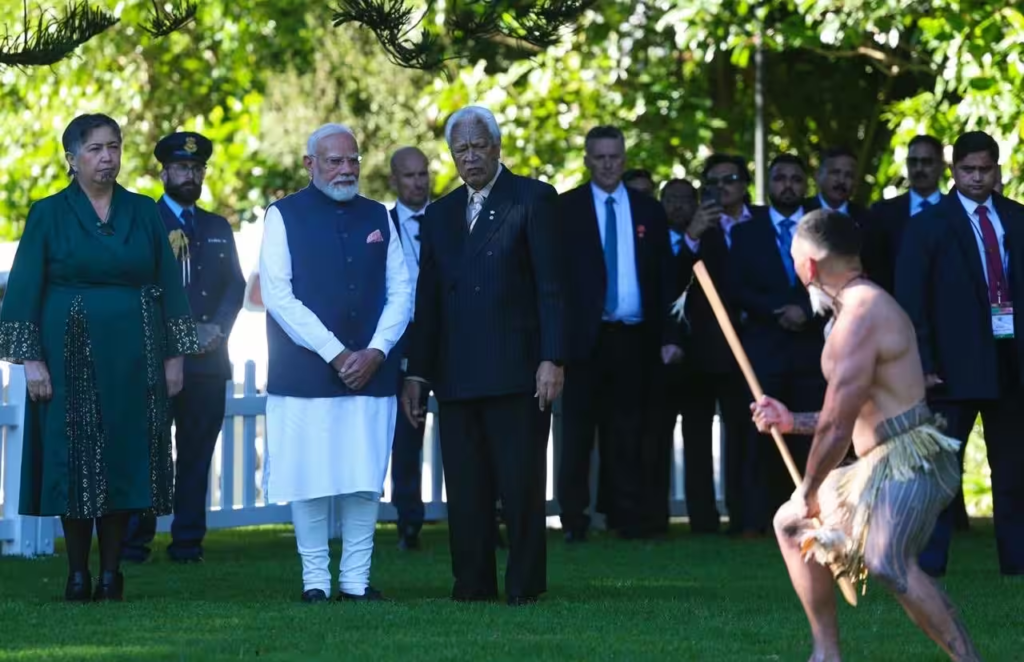
- The Prime Minister’s visit to Auckland was the first visit by an Indian Prime Minister to New Zealand in four decades.
- PM Modi was honoured with a Māori Pōwhiri, a formal welcome ceremony of the Māori (the indigenous Polynesian people of New Zealand), featuring the ‘Haka’ dance.
Outcomes of the Visit
- Roadmap to 2030: Elevated bilateral relations to a ‘Strategic Partnership’.
- Indo-Pacific Oceans Initiative: New Zealand adopted Maritime Security as its priority pillar within the seven-pillar IPOI framework.
- Climate and Energy Platforms: New Zealand joined the Global Biofuels Alliance and reaffirmed its cooperation under the Coalition for Disaster Resilient Infrastructure (CDRI).
- Civilisational Ties: Established cultural and traditional medicine cooperation alongside a framework between the New Zealand Maritime Museum and India’s National Maritime Heritage Complex at Lothal.
New Zealand
- Island Nation: New Zealand is a remote island country in the South Pacific Ocean, consisting of two main islands (North and South) and several smaller islands.
- No Land Borders, and Australia is its nearest neighbour, located over 1,600 km to the northwest.
- Geopolitical Position: It lies in Australasia with Australia and marks the southwestern boundary of Polynesia, bordered by the Tasman Sea and the Pacific Ocean.
India’s Textile Sector
Economy
Context –
- The Ministry of Textiles released a report on India’s Textile Future, emphasising the need to adopt circular economy principles across the textile value chain.
Significance of the Textile Sector
- It is also called the “spinning wheel” of India’s industrial growth,
- The textile and apparel sector contributes ~2% to GDP and ~11% of manufacturing GVA.
- It is India’s 2nd largest employer after agriculture, providing livelihoods to over 45 million people.
- India is the 6th largest textile and apparel exporter, with a 4% global market share.
Government Initiatives
- PM MITRA Parks: Massive textile parks with sustainable infrastructure, featuring Common Effluent Treatment Plants (CETPs) to optimize water reuse.
- Indian Carbon Market (ICM) Integration: The government has added the carbon-heavy textile sector to the requirements for disclosing Scope 1 and 2 GHG emissions.
- RAMP Programme: Introduced MSE-SPICE with a 25% capital subsidy for circular methods and MSE-GIFT with a 2% interest subsidy for green technology upgrades to finance small businesses.
- National Technical Textiles Mission (NTTM): Funds scientific research to chemically and mechanically convert tough textile waste into industrial advanced materials.
- Eco Mark Scheme: Establishes national eco-labelling standards for textile products, easing the transition into markets with strict environmental standards.
- Mission LiFE: Promotes clothing reuse, swapping, circular economies, and less fast-fashion consumption through lifestyle change.
- Industrial Innovation: The SURE Initiative, led by CMAI and the UN in India, is India’s largest voluntary fashion-sector sustainability commitment.
Pinaka Long Range Guided Rocket
Science & technology

News –
- DRDO conducted a successful flight test of the Pinaka Long Range Guided Rocket (LRGR) at the Integrated Test Range (ITR), Chandipur.
Pinaka Long Range Guided Rocket (LRGR)
- It is an indigenously developed, precision-guided rocket for the Pinaka multi-barrel rocket launcher (MBRL) system.
- It is designed to replace Russian-origin BM-21 Grad systems.
- Range: Up to 120 km
- Guidance System: It combines an Inertial Navigation System (INS) with India’s NavIC (IRNSS) satellite network for precision navigation.
Oxytocin
Science & technology
Context –
- WHO has sought information from India regarding reports linking suspected spurious oxytocin to maternal deaths.
Oxytocin
- It is a neuropeptide hormone synthesised in the hypothalamus and released into the bloodstream by the posterior pituitary gland.
- Often called the “love hormone.
- Function – It acts as a chemical messenger in the central nervous system, aiding childbirth, lactation, and social bonding.
- Regulation – Administering oxytocin to cattle is a cognizable offence under Section 12 of Prevention of Cruelty to Animals Act; unauthorised manufacture or sale is prohibited under Section 18(a) of Drugs and Cosmetics Act, 1940.
-
MCQs Compilation on National & International, State Current Affairs and Misscelanious Current Affairs
MCQs Compilation on National & International, State Current Affairs and Miscellaneos Current Affairs
1. Which of the following best describes the primary objective of the PM-UDAY Scheme?
A) To provide affordable rental housing to migrant workers in Delhi
B) To grant legal ownership, transfer, and mortgage rights to residents of unauthorised colonies in Delhi
C) To redevelop all slums in Delhi into smart cities
D) To construct new housing colonies for economically weaker sectionsAnswer: B
2. What is the primary feature of Direct Seeded Rice (DSR) cultivation?
A) Rice seedlings are first raised in nurseries and then transplanted.
B) Paddy seeds are directly sown in the main field without nursery raising and transplanting.
C) Paddy is cultivated only under flooded field conditions.
D) Seeds are sown only after complete field puddling.Answer: B
3. Consider the following statements about New Zealand:
- It consists mainly of the North Island and South Island.
- It shares a land border with Australia.
- It lies in the South Pacific Ocean.
Which of the statements given above is/are correct?
A) 1 and 3 only
B) 2 only
C) 1 and 2 only
D) 1, 2 and 3Answer: A
4. India ranks as the ______ largest textile and apparel exporter globally.
A) 3rd
B) 4th
C) 6th
D) 10thAnswer: C
5. Oxytocin is primarily synthesised in which part of the human brain?
A) Cerebellum
B) Hypothalamus
C) Medulla Oblongata
D) Pineal GlandAnswer: B
-
MCQs Compilation on National & International, State Current Affairs and Misscelanious Current Affairs
MCQs Compilation on National & International, State Current Affairs and Miscellaneos Current Affairs
1. Consider the following statements:
-
The Ganges River Dolphin is India’s National Aquatic Animal.
-
The Indus River Dolphin is the State Aquatic Animal of Punjab.
-
The Ganges River Dolphin is the State Aquatic Animal of Assam.
Which of the statements given above are correct?
A) 1 and 2 only
B) 2 and 3 only
C) 1 and 3 only
D) 1, 2 and 3Answer: D) 1, 2 and 3
2. Insulin is a hormone produced by the:
A) Liver
B) Kidney
C) Pancreas
D) Thyroid glandAnswer: C) Pancreas
3. Operation Amistad was launched following:
A) Floods in Bangladesh
B) Earthquakes in Venezuela
C) Cyclone in Madagascar
D) Earthquake in NepalAnswer: B) Earthquakes in Venezuela
4. Which was the first product in India to receive a GI Tag?
A) Mysore Silk
B) Banarasi Saree
C) Darjeeling Tea
D) Basmati RiceAnswer: C) Darjeeling Tea
-