Author: Ramvilas

  • PM Modi to Participate in 52nd G7 Summit in France | New Phase in India-Nepal Relations | Project Kusha | Indigenous AI Model Varya | Four Sites on Nicobar West Coast Identified for Coral Translocation

    PM Modi to Participate in 52nd G7 Summit in France

    International

    Context

    • Prime Minister Narendra Modi is going to participate in the 52nd G7 Summit in France. 

    About – 

    • Group of Seven (G7): An informal organization of seven of the world’s largest advanced economies, representing about 10% of the population and nearly 30% of global GDP.
    • Members: Canada, France, Germany, Italy, Japan, United Kingdom, and the United States.
    • Presidency: Rotates annually among member states.

    Why is the G7 Summit Important?

    • Economic Influence: Decisions impact global trade, financial stability, and climate policy.
    • Crisis Coordination: Forum for addressing global challenges like pandemics, wars, and geopolitical tensions.
    • Multilateralism: Reinforces a rules-based international order through consensus-building.

    New Phase in India-Nepal Relations

    International

    Context

    • Recent high-level exchanges between India and Nepal signal efforts by both sides to strengthen bilateral ties despite differences over boundary issues. 

    India- Nepal Border Disputes

    • India and Nepal argue over a few specific pieces of land. The main areas are Kalapani, Limpiyadhura, Lipulekh, and Susta.

    India – Nepal Relations

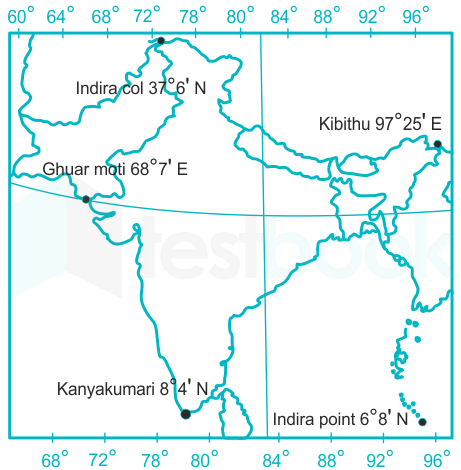
    • India and Nepal share an approximately 1,751 km border.
    • Shared Border: The country shares a border with five Indian states – Sikkim, West Bengal, Bihar, Uttar Pradesh and Uttarakhand.
    • India-Nepal Treaty of Peace and FriendshipSigned in 1950, it forms the special relations that exist between India and Nepal. 
    • Defence Cooperation: Both countries conduct Joint Military Exercise SURYA KIRAN alternately in India and in Nepal.  
    • The Gorkha regiments of the Indian Army are raised partly by recruitment from hill districts of Nepal. 
    • Trade and Economic: India remains Nepal’s largest trade partner and Investment where Indian firms account for 33.5 % of total FDI stock in Nepal.
    • Operation Maitri & post-earthquake reconstruction assistance: In the wake of the 2015 earthquake in Nepal, GoI was the first responder and carried out its largest disaster relief operation abroad (Operation Maitri). 
    • Cultural Ties: The leaders of the two countries have often noted the age-old ‘roti beti’ relationship, which refers to cross-border marriages between people of the two countries.

    Project Kusha

    GS3/Defence

    Context

    • Defence Minister Rajnath Singh has described the indigenous Project Kusha air defence system as a potential game changer for India’s security architecture. 

    Project Kusha

    • It is an ambitious, indigenous long-range surface-to-air missile (SAM) defence system.
    • It is designed to act as a powerful, multi-layered air defence shield that can detect and destroy advanced enemy targets at long distances.
    • Developed by – Defence Research and Development Organisation (DRDO). 
    • Multi-Tier Interception: The system features three types of interceptor missiles to stop threats at different distances:
    1. M1 interceptor with a range of around 150 km
    2. M2 interceptor with a range of around 250 km
    3. M3 interceptor with a range of 350-400 km

    Significance – 

    • Countering the S-400 and Global Comparisons – Project Kusha is often called India’s homegrown answer to Russia’s famous S-400 Triumf air defence system.
    • The project is also linked to the broader “Mission Sudarshan Chakra”, an initiative aimed at building a multi-layered air and missile defence shield for India by 2035.

    Indigenous AI Model Varya

    Science and Technology

    Context

    • The IndiaAI Mission has supported the launch of Varya, an indigenous AI-powered video generation model developed by Avataar.

    Varya

    • Varya is a distilled video generation model that converts text prompts and images into videos.
    • It is designed to generate culturally relevant visual content reflecting India’s regions, festivals, traditions, clothing, food, and everyday life.
    • The platform follows the workflow, from Idea to Video to Story, allowing users to create and extend visual narratives through simple prompts.

    Four Sites on Nicobar West Coast Identified for Coral Translocation

    GS3/Environment

    Context

    • Coral colonies and giant clams that will be impacted due to the work on the transhipment port proposed at Galathea Bay as part of the Great Nicobar Island (GNI) mega project will be translocated to four sites on the west coast.

    The Great Nicobar Island (GNI) Project 

    • It is conceived by NITI Aayog and launched in 2021.
    • It is a ₹72,000–₹81,000 crore mega-infrastructure initiative. 
    • It is aimed at transforming India’s southernmost island into a major strategic  and economic hub. 
    • Significance – The project is a centerpiece of India’s Maritime Vision 2030 and Amrit Kaal Vision 2047. 

    Core Components

    • International Container Transshipment Terminal (ICTT): At Galathea Bay, aiming to handle 14.2 million TEUs to capture regional cargo.
    • Greenfield International Airport: A dual-use facility for tourism and defense.
    • Integrated Township: Planned development to accommodate a projected population of 6.5 lakh by 2050.
    • Power Plant: A 450 MVA gas and solar-based facility. 

    Connect with the basics – CORAL REEFS 

    • Coral reefs are the most biologically diverse ecosystems of the planet.

    Formation & Symbiotic relationship – (Coral polyps + zooxanthellae)

    • They are formed when Coral polyps, the animals primarily responsible for building reefs, develop a symbiotic relationship with photosynthetic algae called zooxanthellae, which live in its tissues. 
    • Formation – Coral reefs begin to form when free-swimming coral larvae attach to submerged rocks or other hard surfaces along the edges of islands or continents. 
    • The coral provides a protected environment and the compounds zooxanthellae need for photosynthesis. 
    • In return, the algae produce carbohydrates that the coral uses for food, as well as oxygen. The algae also helps the coral remove waste. 

    FAVOURABLE CONDITIONS FOR FORMATION

    • Warm tropical oceans with minimum temperature of 20 degree (30 degree north and 25 degree south latitudes)
    • Oceanic water free of sedimentation
    • Transparent parts of ocean bodies 
    • Relatively low salinity ocean bodies

    TYPES OF REEF FORMATIONS

    • Fringing reefs – They are the most common, projecting seaward directly from the shore, forming borders along the shoreline and surrounding islands. 
    • Barrier reefs – Grow at border shorelines, but at a greater distance. They are separated from their adjacent land mass by a lagoon of open, often deep water. 
    • Atoll – If a fringing reef forms around a volcanic island that subsides completely below sea level while the coral continues to grow upward, an atoll forms. Atolls are usually circular or oval, with a central lagoon. 

    DISTRIBUTION IN INDIA 

    • The Gulf of Kutch  
    1. The West Coast of India 
    2. The Lakshadweep Islands 
    3. The Gulf of Mannar 
    4. Palk Bay
    5. Andaman and Nicobar Group of Islands 

    THREATS 

    • Destructive fishing practices, Overfishing, Careless tourism, Pollution, Sedimentation, Coral mining, Climate change. 

    CORAL BLEACHING

    • When corals face stress by changes in conditions such as temperature, light, or nutrients, they expel the symbiotic algae zooxanthellae living in their tissues, causing them to turn completely white. This phenomenon is called coral bleaching.

    Causes of Coral Bleaching

    • Rise in Sea Temperature
    • Ocean Acidification
    • Solar radiation & ultraviolet 

    radiation

    • Infectious Diseases
    • Chemical Pollution
    • Increased Sedimentation
    • Reducing light availability 

    (Turbidity) 

    • Human Induced Threats

    CORAL REEFS 

    • Coral reefs are the most biologically diverse ecosystems of the planet.

    Formation & Symbiotic relationship – (Coral polyps + zooxanthellae)

    • They are formed when Coral polyps, the animals primarily responsible for building reefs, develop a symbiotic relationship with photosynthetic algae called zooxanthellae, which live in its tissues. 
    • Formation – Coral reefs begin to form when free-swimming coral larvae attach to submerged rocks or other hard surfaces along the edges of islands or continents. 
    • The coral provides a protected environment and the compounds zooxanthellae need for photosynthesis. 
    • In return, the algae produce carbohydrates that the coral uses for food, as well as oxygen. The algae also helps the coral remove waste. 

    FAVOURABLE CONDITIONS FOR FORMATION

    • Warm tropical oceans with minimum temperature of 20 degree (30 degree north and 25 degree south latitudes)
    • Oceanic water free of sedimentation
    • Transparent parts of ocean bodies 
    • Relatively low salinity ocean bodies

    TYPES OF REEF FORMATIONS

    • Fringing reefs – They are the most common, projecting seaward directly from the shore, forming borders along the shoreline and surrounding islands. 
    • Barrier reefs – Grow at border shorelines, but at a greater distance. They are separated from their adjacent land mass by a lagoon of open, often deep water. 
    • Atoll – If a fringing reef forms around a volcanic island that subsides completely below sea level while the coral continues to grow upward, an atoll forms. Atolls are usually circular or oval, with a central lagoon. 

    DISTRIBUTION IN INDIA 

    • The Gulf of Kutch  
    1. The West Coast of India 
    2. The Lakshadweep Islands 
    3. The Gulf of Mannar 
    4. Palk Bay
    5. Andaman and Nicobar Group of Islands 

    THREATS 

    • Destructive fishing practices, Overfishing, Careless tourism, Pollution, Sedimentation, Coral mining, Climate change. 

    CORAL BLEACHING

    • When corals face stress by changes in conditions such as temperature, light, or nutrients, they expel the symbiotic algae zooxanthellae living in their tissues, causing them to turn completely white. This phenomenon is called coral bleaching.

    Causes of Coral Bleaching

    • Rise in Sea Temperature
    • Ocean Acidification
    • Solar radiation & ultraviolet 

    radiation

    • Infectious Diseases
    • Chemical Pollution
    • Increased Sedimentation
    • Reducing light availability 

    (Turbidity) 

    • Human Induced Threats
  • QUIZ on National & International Current Affairs – June 13th 2026

    QUIZ on National & International Current Affairs – June 13th 2026

  • MCQs on National & International

    MCQs on National & International

    1. Which one of the following countries is not a member of the G7?

    (A) Canada
    (B) Italy
    (C) Russia
    (D) Japan

    Answer: C

    2. Consider the following statements:

    1. Kalapani, Limpiyadhura and Lipulekh are among the major areas of border dispute between India and Nepal.
    2. Susta is a disputed area between India and Bhutan.

    Which of the statements given above is/are correct?

    (A) 1 only
    (B) 2 only
    (C) Both 1 and 2
    (D) Neither 1 nor 2

    Answer: A

    3. Which one of the following best describes the primary objective of the Great Nicobar Island (GNI) Project?

    (A) To establish an exclusive biodiversity reserve with restricted human habitation.
    (B) To transform Great Nicobar Island into a major strategic and economic hub.
    (C) To develop India’s first offshore renewable energy park.
    (D) To create a dedicated marine conservation zone free from commercial activities.

    Answer: B

    4. Consider the following statements:

    1. Joint Exercise Varuna is conducted between the armed forces of India and France.
    2. FRINJEX-23 is one of the bilateral exercises conducted by India and France.

    Which of the statements given above is/are correct?

    (A) 1 only
    (B) 2 only
    (C) Both 1 and 2
    (D) Neither 1 nor 2

    Answer: C

  • Pre-Conception and Pre-Natal Diagnostic Techniques (PCPNDT) Act | Armed Forces (Special Powers) Act, 1958 | SC Invokes Article 142 to Set Aside POCSO Conviction | Shigellosis Outbreak in Kerala | HIMARS | Foreign Contribution (Regulation) Amendment (FCRA)

    Pre-Conception and Pre-Natal Diagnostic Techniques (PCPNDT) Act

    Polity

    Context

    • The Supreme Court underscored the need for strict enforcement of the Pre-Conception and Pre-Natal Diagnostic Techniques (PCPNDT) Act.

    About – 

    • Objective – It is an Indian law meant to stop female foeticide and improve the child sex ratio.

    Important points – 

    • Bans Sex Selection: It is illegal to choose or test for the sex of a baby before or after conception.
    • Regulates Ultrasounds: Scans can only check for genetic disorders. Doctors cannot tell anyone the sex of the fetus.
    • Mandatory Rules: All clinics must register with the government, keep strict records (Form F), and never advertise sex selection.
    • Strict Punishment: Violations are non-bailable. First-time offenders face up to 3 years in jail and a ₹10,000 fine. Doctors can also lose their license

    Government Initiatives to Improve Sex Ratio

    • Beti Bachao Beti Padhao (BBBP): Launched in 2015, this campaign aims to address gender-based discrimination, promote the value of the girl child, and improve access to education for girls.
    • It also focuses on raising awareness about the importance of girls’ welfare and preventing female foeticide.
    • Sukanya Samriddhi Yojana: This is a savings scheme for the girl child, which encourages families to save for the future education and marriage of their daughters. It promotes a positive perception of girls.
    • Maternity Benefits: The government has introduced maternity benefits through schemes like the Pradhan Mantri Matru Vandana Yojana (PMMVY), which provides financial assistance to pregnant women and lactating mothers, aiming to reduce the economic burden on families and support maternal and child health.
    • National Health Mission (NHM): This program focuses on improving healthcare services for women, including maternal health, to reduce the mortality rate among women and girls.

    Armed Forces (Special Powers) Act, 1958

    Polity

    Context

    • Union Home Minister Amit Shah announced that the Armed Forces (Special Powers) Act (AFSPA) is likely to be withdrawn from almost the entire Northeast by 2027, except for one or two States.

    Armed Forces Special Powers Act (AFSPA)

    • AFSPA was originally promulgated by the British in response to the Quit India movement in 1942. 
    • After Independence, India decided to retain the Act, which was first brought in as an ordinance and then notified as an Act in 1958.

    Where is AFSPA currently invoked?

    • Imposed by – AFSPA can be imposed by the Center or the Governor of a state on the state or parts of it after it is declared “disturbed’’ under Section 3 of AFSPA Act.
    • Definition of Disturbed areas – The Act defines Disturbed as areas that are “disturbed or dangerous condition that the use of armed forces in aid of the civil power is necessary’.

    Powers granted by the AFSPA Act to armed forces

    • The Act gives sweeping powers to the armed forces.
    • It allows them to ‘open fire’, even causing death, against any person in contravention to the law or carrying arms and ammunition.
    • It gives them powers to arrest individuals without warrants, on the basis of reasonable suspicion and also search premises without warrants.
    • It also provides blanket immunity to security personnel involved in such operations. There can be no prosecution or legal proceedings against them without the prior approval of the Center.
    • Note – The Armed Forces (Special Powers) Act (AFSPA) is currently in effect in parts of Nagaland, Manipur, Arunachal Pradesh, Assam, and Jammu & Kashmir.

    SC Invokes Article 142 to Set Aside POCSO Conviction

    Polity

    Context

    • The Supreme Court invoked its extraordinary powers under Article 142 of the Constitution to set aside the conviction of a man under the Protection of Children from Sexual Offences Act, 2012 (POCSO Act).

    Article 142 of Indian Constitution

    • Article 142 of the Indian Constitution grants the Supreme Court extraordinary power to pass any decree or order necessary to do “complete justice” in any pending matter. 
    • Significance – It is designed to bridge statutory gaps and provide equitable relief where strict adherence to existing laws might lead to unfair outcomes.

    Protection of Children from Sexual Offences (POCSO) Act, 2012

    • It was introduced by the Ministry of Women and Child Development to protect children from sexual abuse and exploitation. 
    • The Act criminalises both penetrative and non-penetrative sexual assault, sexual harassment, and child pornography, and applies to all children below 18 years of age.
    • POCSO is a gender-neutral law and states that minors cannot give valid consent for sexual activity. 
    • It ensures child-friendly legal procedures, including special courts, private hearings (in-camera trials), and video-recorded testimonies.
    • The Act also punishes those involved in child trafficking for sexual purposes and allows strict penalties based on the seriousness of the crime.
    • Source: TH

    Shigellosis Outbreak in Kerala

    Health

    Context

    • Kerala has reported 85 confirmed cases and over 70 probable cases of shigellosis (bacillary dysentery) till June 2026.

    Shigellosis

    • Shigellosis is a highly contagious bacterial infection caused by bacteria of the genus Shigella.
    • It primarily affects the intestines and causes bacillary dysentery, characterized by severe diarrhoea.
    • Symptoms: Fever, diarrhoea (often with blood or mucus), vomiting and nausea, abdominal cramps etc.
    • Transmission: Consumption of contaminated food and water, person-to-person contact through the fecal-oral route.

    HIMARS

    Science & Technology

    Context

    • Taiwan recently conducted its first-ever live-fire exercise using the High Mobility Artillery Rocket System (HIMARS) in the Taiwan Strait, simulating a defence scenario against a potential Chinese military threat.

    HIMARS

    • It is a US-supplied mobile rocket artillery system manufactured by Lockheed Martin.
    • It is mounted on a six-wheeled truck, enabling rapid movement across roads and rough terrain. 
    • The system is known for its “shoot-and-scoot” capability, allowing it to fire rockets and quickly relocate to avoid enemy counterattacks. 
    • With a range of around 300 km, HIMARS can strike targets across the Taiwan Strait, including coastal areas in China’s Fujian Province. 
    • Note – HIMARS has been extensively used by Ukraine during its conflict with Russia and has emerged as one of its key long-range strike systems.

    Foreign Contribution (Regulation) Amendment (FCRA)

    Polity

    Context

    • The introduction of the Foreign Contribution (Regulation) Amendment (FCRA) Bill, 2026, in the Lok Sabha has posed significant disruption risks to civil society.

    Foreign Contribution (Regulation) Act

    • Enacted in – It is an act of Parliament enacted in 1976 and amended in 2010. 
    • Objective – To regulate foreign donations and to ensure that such contributions do not adversely affect the internal security of the country.
    • Applicability – The Act is applicable to all associations, groups and non-governmental organizations (NGOs) who intend to receive foreign donations.
    • Restrictions – The members of legislatures, political parties, government officials, judges and media persons are prohibited from receiving any foreign contributions.

    Key Provisions of the 2026 Amendment Bill

    • Asset Seizure: The government can take over and sell physical assets (like hospitals or schools) built with foreign funds if an NGO’s license is cancelled or expires.
    • Automatic Expiry: If an NGO does not renew its registration in time, it lapses automatically. The state can step in to control its property right away.
    • Personal Liability: Key heads, directors, and trustees are held personally liable for any rules broken by the NGO.
    • Central Approval: Local police or agencies cannot investigate an NGO under this law without prior approval from the Central Government.
    • Lower Jail Time: The maximum jail term for breaking the law drops from 5 years to 1 year, shifting the focus to financial penalties.
  • QUIZ on National & International Current Affairs – June 12th 2026

    QUIZ on National & International Current Affairs – June 12th 2026

  • MCQs on National & International

    MCQs on National & International

    1. Consider the following statements:

    1. Pradhan Mantri Matru Vandana Yojana provides financial assistance to pregnant women and lactating mothers.
    2. National Health Mission focuses solely on reducing maternal mortality.

    Which of the statements given above is/are correct?

    (A) 1 only
    (B) 2 only
    (C) Both 1 and 2
    (D) Neither 1 nor 2

    Answer: A

    2. Which one of the following statements regarding the Armed Forces (Special Powers) Act (AFSPA) is not correct?

    (A) AFSPA was enacted as an Act in 1958.
    (B) The Governor of a State can play a role in imposing AFSPA.
    (C) AFSPA currently remains operative in parts of Jammu & Kashmir.
    (D) AFSPA can be imposed only by the Central Government.

    Answer: (D)

    3. The Protection of Children from Sexual Offences (POCSO) Act, 2012, was introduced by which Ministry?

    (A) Ministry of Home Affairs
    (B) Ministry of Law and Justice
    (C) Ministry of Women and Child Development
    (D) Ministry of Social Justice and Empowerment

    Answer: C

    4. Consider the following statements:

    1. An NGO failing to renew its FCRA registration within the stipulated period may automatically lose its registration.
    2. Upon such automatic lapse, the State may immediately assume control over the NGO’s property.

    Which of the statements given above is/are correct?

    (A) 1 only
    (B) 2 only
    (C) Both 1 and 2
    (D) Neither 1 nor 2

    Answer: C

  • MCQs on National & International

    MCQs on National & International

    1. Consider the following statements regarding Janjatiya Gaurav Divas:

    1. It is observed on November 15 every year.
    2. The date marks the birth anniversary of Birsa Munda.

               Which of the statements given above is/are correct?

               A. 1 only
               B. 2 only
               C. Both 1 and 2
               D. Neither 1 nor 2

    Answer: C


    2. Consider the following statements regarding the Hindu Kush Himalaya (HKH) region:

    1. It extends across eight countries of Asia.
    2. It is the source region of both the Indus and Mekong river systems.
    3. It provides freshwater resources to nearly one-fourth of the world’s population.

               Which of the statements given above are correct?

               A. 1 and 2 only
               B. 2 and 3 only
               C. 1 and 3 only
               D. 1, 2 and 3

    Answer: D


    3. India is the:

         A. Largest producer and consumer of coal in the world
         B. Second-largest producer and consumer of coal in the world
         C. Third-largest producer and consumer of coal in the world
         D. Fifth-largest producer and consumer of coal in the world

    Answer: B


    4. With reference to India’s legal framework relating to Dark Patterns, consider the following:

    1. Consumer Protection Act, 2019
    2. Consumer Protection (E-Commerce) Rules, 2020
    3. Digital Personal Data Protection Act, 2023

               Which of the above contain provisions that can help address concerns arising from Dark Patterns?

               A. 1 only
               B. 1 and 2 only
               C. 2 and 3 only
               D. 1, 2 and 3

    Answer: D


    5. Which one of the following events officially marks the beginning of the monsoon season in India?

         A. Withdrawal of western disturbances
         B. Arrival of southwest monsoon winds over Kerala
         C. Formation of tropical cyclones in the Bay of Bengal
         D. Onset of the northeast monsoon over Tamil Nadu

    Answer: B

  • QUIZ on National & International Current Affairs – June 11th 2026

    QUIZ on National & International Current Affairs – June 11th 2026

  • Birsa Munda | Hindu Kush Himalaya | Coal Exchange Rules, 2026 | Dark Patterns | Summer Air Pollution and Ground-Level Ozone | Southwest Monsoon | Navachar Mantra Initiative | Price Stabilisation Fund | E85 Fuel Adoption in India

    Birsa Munda

    Art & Culture

    Context

    • PM Modi paid tributes to Dharti Aaba Bhagwan Birsa Munda Ji on his martyrdom day.

    Birsa Munda

    • He was born in 1874 in Ulihatu village, Jharkhand and was a spiritual reformer and freedom fighter.
    • He is Known as Dharti Aaba (“Father of the Earth”).
    • He led the Ulgulan or “Great Tumult” (1899–1900) (also called Munda Rebellion (1895–1900)) which was a fierce movement for tribal self-rule and the restoration of Khuntkatti (community land rights).
    • He united the Munda tribes against British land laws and feudal exploitation.
    • He envisioned a moral, self-governed society free from colonial influence.
    • He was captured and martyred in Ranchi Jail at the age of 25.

    Janjatiya Gaurav Divas

    • Janjatiya Gaurav Divas is dedicated to remembering the contributions of tribal freedom fighters for the country.
    • This day will now be celebrated every year.
    • It would recognize the efforts of the tribals for the preservation of cultural heritage and would help the coming generations know about the sacrifices made by the tribals for the country.
    • November 15th chosen for Janjatiya Gaurav Divas – The date is the birth anniversary of Sri Birsa Munda who is revered as Bhagwan by tribal communities across the country.

    PM Janjati Adivasi Nyaya Maha Abhiyan

    • Objective – To ensure last-mile welfare scheme delivery and protection for Particularly Vulnerable Tribal Groups (PVTGs).
    • Viksit Bharat Sankalp Yatra – It is a nationwide programme to reach out to all villages and include those eligible for various central schemes.

    Hindu Kush Himalaya

    Geography

    Context

    • The HKH Monsoon Outlook 2026, projects below-normal rainfall and above-normal temperatures across the Hindu Kush Himalaya (HKH) region during the 2026 monsoon season.

    Hindu Kush Himalaya (HKH)

    • The HKH mountains extend around 3,500 km over eight countries — Afghanistan, Bangladesh, Bhutan, China, India, Nepal, Myanmar, and Pakistan.
    • These mountains are also called the “water towers of Asia” because they are the origins of 10 crucial river systems on the continent — Amu Darya, Indus, Ganga, Brahmaputra, Irrawaddy, Salween, Mekong, Yangtse, Yellow river, and Tarim.
    • These river basins provide water to almost one-fourth of the world’s population and are a significant freshwater source for 240 million people in the HKH region.

    Coal Exchange Rules, 2026

    Economy

    Context

    • The Ministry of Coal has notified the Coal Exchange Rules, 2026, paving the way for the establishment of Coal Exchanges in the country to enable transparent and market-driven coal trading.

    Coal Exchange

    • A Coal Exchange is an electronic marketplace where coal producers, consumers, traders, and other participants can buy and sell coal through transparent trading mechanisms.
    • Significance – It facilitates efficient price discovery based on market demand and supply conditions.

    Coal Sector in India

    • India is the world’s second-largest producer and consumer of coal.
    • India has the fifth-largest coal reserves globally.
    • Coal accounts for around 55% of India’s primary commercial energy requirement and about 70% of electricity generation.
    • Major coal-producing regions are concentrated in states such as Odisha, Jharkhand, Chhattisgarh, Madhya Pradesh, and West Bengal

    Dark Patterns

    Science and Technology

    Context

    • According to a report, Indian consumers are losing an estimated ₹25,000 crore to ₹28,000 crore annually due to dark patterns, across online marketplaces.

    About

    • Definition – Dark patterns are user interface or user experience designs that manipulate, pressure, or mislead people into making choices they might not otherwise make.
    • The term ‘dark patterns’ was coined by Harry Brignull in 2010.
    • It encompasses a wide range of manipulative practices such as drip pricing, disguised advertising, bait and click, choice manipulation, false urgency and privacy concerns.

    Dark patterns can:

    1. Undermine informed consent.
    2. Reduce user autonomy.
    3. Lead to unintended purchases or data sharing.
    4. Erode trust in products and companies.

    India’s Laws Related to Dark Patterns

    • Consumer Protection Act, 2019 & CCPA Guidelines, 2023: The Consumer Protection Act empowers the Central Consumer Protection Authority (CCPA) to curb unfair trade practices.
    • The CCPA’s Guidelines for Prevention and Regulation of Dark Patterns, 2023 explicitly prohibit deceptive practices such as false urgency, basket sneaking, confirm shaming, and subscription traps.
    • Consumer Protection (E-Commerce) Rules, 2020: Require transparency in pricing, advertisements, and terms of sale, and prohibit misleading practices on e-commerce platforms.
    • Digital Personal Data Protection Act, 2023: Mandates free, informed, and unambiguous user consent for data processing, thereby discouraging dark patterns that manipulate users into sharing personal data.

    Summer Air Pollution and Ground-Level Ozone

    Environment

    Context

    • Several Indian cities witnessed severe summer air pollution in 2026, leading to the reimposition of Stage-I restrictions under GRAP in Delhi.

    Summer Causes Ground-Level Ozone

    • Ground-level ozone is a secondary pollutant and is not released directly into the air.
    • Formation – It forms when Nitrogen Oxides (NOx) from vehicles and Volatile Organic Compounds (VOCs) from industries, paints, solvents, and fuel emissions react under strong sunligh
    • Hot summer conditions and heatwaves accelerate this reaction, causing high ozone levels during daytime.
    • Ozone and particulate matter can cause serious respiratory illnesses, especially among children, the elderly, and people with lung diseases.

    Graded Response Action Plan (GRAP)

    • Objective – It is a set of emergency measures implemented in Delhi-NCR to control air pollution based on the Air Quality Index (AQI) levels.
    • Implementation – It was formulated by the Environment Pollution (Prevention & Control) Authority (EPCA) and enforced by CAQM from 2021.

    GRAP is divided into four stages corresponding to AQI levels:

    • Stage I – Poor (AQI 201–300)
    • Stage II – Very Poor (AQI 301–400)
    • Stage III – Severe (AQI 401–450)
    • Stage IV – Severe+ (AQI >450)

    Additional Information – Commission for Air Quality Management

    • Constituted under: The Commission for Air Quality Management in NCR and Adjoining Areas Act, 2021.
    • Jurisdiction: Delhi, Haryana, Punjab, Rajasthan, and Uttar Pradesh.
    • Purpose: To coordinate and implement region-wide measures for air quality improvement, replacing the earlier EPCA.

    Southwest Monsoon

    Geography

    Context

    • The India Meteorological Department (IMD) confirmed the arrival of the southwest monsoon in Kerala (June 4, 2026).
    • This marks the official start of the rainy season in India.

    Southwest Monsoon

    • Onset and Retreat: The monsoon season in India generally starts in early June and lasts until September.
    • The onset of the monsoon is marked by the arrival of the southwest monsoon winds, which bring moisture-laden air from the Indian Ocean.
    • The withdrawal or retreat of the monsoon typically begins in October.
    • The northeast monsoon, occurring from October to December, brings rainfall to parts of southern India.
    • Monsoon Dynamics: Factors such as the El Niño and La Niña phenomena can influence the strength and distribution of the monsoon.
    • Agricultural Impact: The success of the monsoon directly influences crop yields and, consequently, the overall economy of the country.

    Connect with the basics- Difference between El Niño and La Niña

    Feature

    El Niño (Warm Phase)

    La Niña (Cold Phase)

    Meaning

    Spanish for “Little Boy”

    Spanish for “Little Girl”

    Ocean Temp.

    Abnormal warming of eastern Pacific

    Abnormal cooling of eastern Pacific

    Trade Winds

    Weaken or reverse direction

    Become unusually strong

    Indian Monsoon

    Weakens monsoon; often leads to droughts

    Strengthens monsoon; brings heavy rainfall

    Winter in India

    Generally warmer/milder winters

    Severely cold winters in North India

    Frequency

    Occurs every 2–7 years; lasts 9–12 months

    Occurs every 2–7 years; can last 1–3 years

    Connect with the basics- Difference between El Niño and La Niña

    Navachar Mantra Initiative

    Economy

    News

    • Navachar Mantra is a national initiative launched by the Union Minister at IIT Delhi.

    Navachar Mantra Initiative

    • Launched by – Ministry of Skill Development and Entrepreneurship (MSDE)
    • Objective – to identify, mentor, and scale grassroots innovations originating from Tier-2, Tier-3, and rural India

    Key Features

    • Target Demographic: Open to Indian citizens aged 18 to 55 residing in aspirational districts and underserved rural or semi-urban geographies.
    • Eligibility: Flexible criteria allow individuals with ideas in the validation or early prototype stages to apply; a registered corporate entity or finished market product is not required.
    • Focus Sectors: Prioritizes high-impact verticals including Agritech, HealthTech & Wellness, EdTech, Climate Action, Rural Commerce, and MSME Enablement.

    Price Stabilisation Fund

    Economy

    Context

    • The Union Cabinet has approved a one-time budgetary support of up to ₹10,000 crore for Oil Marketing Companies (OMCs) to provide Aviation Turbine Fuel (ATF) price stabilisation support to Scheduled Indian Airlines.

    Aviation Turbine Fuel (ATF) Price Stabilisation Fund

    • Financial outlay – ₹10,000 crore
    • Objective – It protects Indian airlines from sudden jumps in fuel prices.

    How It Works

    • Fixed Price: The fund pays oil companies to keep jet fuel prices steady for local airlines.
    • The Buffer: When global oil prices go up, the fund covers the extra cost. When prices go down, the money goes back into the fund.
    • Rules: Airlines must sign a 36-month deal to buy fuel only from participating oil companies. Foreign airlines cannot use this fund

    E85 Fuel Adoption in India

    Environment

    Context

    • The Union Government is considering a policy framework to support the affordable adoption of E85 fuel in India.

    E85 Fuel

    • E85 is a fuel blend containing 85% ethanol and 15% petrol.
    • It can be used in specially designed flex-fuel vehicles (FFVs) that can operate on varying ethanol-petrol blends.
    • These vehicles are equipped with modified engines and fuel systems that can automatically adjust to different fuel compositions.

    Why is India Promoting E85?

    • Enhancing Energy Security: Greater ethanol use can reduce India’s dependence on imported crude oil.
    • Reducing Import Bill: If just 1% of annual petrol vehicle sales shift to E85 during the 2026–27 ethanol supply year, India could save around ₹195 crore in foreign exchange.
    • Supporting Farmers and Rural Economy: Increased adoption of E85 could generate demand for more than 4 crore litres of ethanol.
    • Environmental Benefits: E85 adoption at the projected level could result in a net reduction of nearly 0.86 LMT of CO₂ emissions.

    Ethanol

    • Ethanol is9% pure alcohol that can be blended with petrol. It can be produced from sugarcane, maize, wheat, etc which are having high starch content.

    Ethanol Blending

    • Ethanol blending refers to the practice of mixing ethanol with gasoline to create a fuel mixture that can be used in internal combustion engines.

    There are a few common blends:

    • E10: This is a mixture of 10% ethanol and 90% gasoline. It is the most common blend and is used widely in many countries.
    • E15: This blend contains 15% ethanol and 85% gasoline.
    • E85: This is a high-ethanol blend, consisting of 85% ethanol and 15% gasoline. It’s used in flex-fuel vehicles designed to run on higher ethanol content.
  • MCQs on National & International

    MCQs on National & International

    1. Election symbols in India are governed by:

         A. Representation of the People Act, 1951
         B. Election Symbols (Reservation and Allotment) Order, 1968
         C. Election Commission Rules, 1971
         D. Political Parties Registration Act, 1989

    Answer: B


    2. Consider the following statements:

    1. Article 74 provides for a Council of Ministers to aid and advise the President.
    2. The Prime Minister is the leader of the Council of Ministers.

               Which of the statements given above is/are correct?

               A. 1 only
               B. 2 only
               C. Both 1 and 2
               D. Neither 1 nor 2

    Answer: C


    3. Consider the following statements:

    1. Ayushman Arogya Mandirs provide maternal and child healthcare services.
    2. They also cover non-communicable diseases and provide free essential drugs and diagnostics.

               Which of the statements given above is/are correct?

               A. 1 only
               B. 2 only
               C. Both 1 and 2
               D. Neither 1 nor 2

    Correct Answer: C


    4. Consider the following statements:

    1. MGNREGA guarantees at least 100 days of work per year.
    2. VB-G RAM G guarantees at least 125 days of work per year.

               Which of the statements given above is/are correct?

               A. 1 only
               B. 2 only
               C. Both 1 and 2
               D. Neither 1 nor 2

    Answer: C


    5. Shiv Shakti Point refers to:

         A. The location where Chandrayaan-2 crashed on the Moon
         B. The official name of the Chandrayaan-3 landing site on the Moon
         C. The launch site of Chandrayaan-3
         D. The location of India’s first satellite tracking station

    Answer: B


    6. Which one of the following is identified as the most mature large-scale energy storage technology globally?

         A. Sodium-ion batteries
         B. Flow batteries
         C. Pumped Storage Hydropower (PSH)
         D. Solid-state batteries

    Answer: C