Author: Ramvilas

  • Flamingo Revolution | SUMAN Roadmap 2030 | Global Report on Food Crises 2026 (GRFC 2026) report | Kisan Sarathi Platform | ‘Shastrarth’ Tradition at Nalanda University | Project BRAHMANK Marks its 16th Raising Day | PM Family Care Tracker (PM-FCT) | Baaz Battalions

    Flamingo Revolution

    Environment
    Context

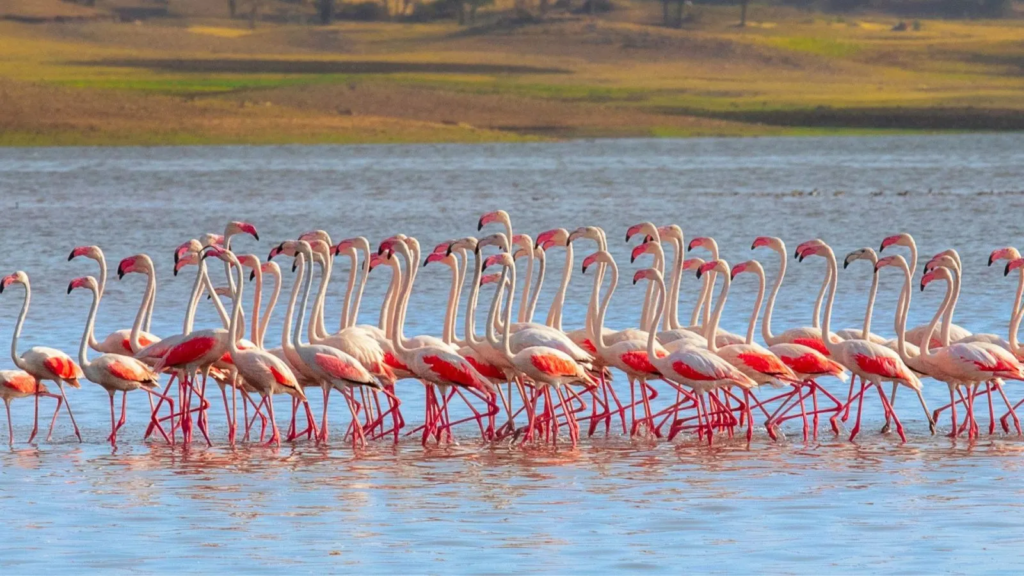
    • People in Albania have launched the “Flamingo Revolution” to oppose a proposed $1.6 billion luxury resort project. 
    • The project includes constructions on Sazan island and Vjosa-Narta, a wetland home for flamingos, seals and nesting sites for sea turtles, creating concern over the government’s negligence towards environmental degradation.

    Flamingo

    • Genus – Phoenicopteridae.
    • They are famous for their pink plumage, long necks, and uniquely curved beaks adapted for filter feeding. 
    • Distribution – There are six living species of flamingos found across Africa, Europe, Asia, and the Americas.
    1. Greater Flamingo (Phoenicopterus roseus).
    2. Lesser Flamingo (Phoeniconaias minor).
    3. American / Caribbean Flamingo (Phoenicopterus ruber).
    4. Chilean Flamingo (Phoenicopterus chilensis).
    5. Andean Flamingo (Phoenicoparrus andinus).
    6. James’s / Puna Flamingo (Phoenicoparrus jamesi).
    • In India, the Greater Flamingo and Lesser Flamingo are found, especially in coastal wetlands and salt pans.
    • Threats – habitat degradation, pollution, disturbance at breeding sites, and climate change affecting wetlands.

    Conservation status

    • Greater Flamingo (IUCN): Least Concern.
    • Lesser Flamingo (IUCN): Near Threatened.

    SUMAN Roadmap 2030

    Polity

    Context

    • Union Minister of Health and Family Welfare, launched the SUMAN Roadmap 2030 to strengthen maternal and newborn healthcare.

    SUMAN Roadmap 2030

    • It is a comprehensive national strategy to accelerate progress toward the Sustainable Development Goals (SDGs) by 2030 related to maternal and newborn health. 
    • The framework seeks to reduce the Maternal Mortality Ratio (MMR) to below 70 per 100,000 live births by 2030, while also lowering neonatal and infant mortality rates and advancing the goal of zero preventable maternal and newborn deaths.

    Maternal Mortality

      • Maternal death is the death of a woman while pregnant or within 42 days of termination of pregnancy,
    • Maternal Mortality Ratio (MMR) is the number of maternal deaths per 1,00,000 live births.
    • The Sustainable Development Goal (SDG) 3.1 targets reducing the global maternal mortality ratio to less than 70 per 1,00,000 live births by 2030.

    Additional Information- Maternal Health Initiatives

    1. Janani Suraksha Yojana (JSY): Gives cash to poor women who choose to give birth in a hospital instead of at home.
    2. Janani Shishu Suraksha Karyakram (JSSK) – Makes hospital births 100% free. Covers medicine, food, tests, and free rides to and from the hospital.
    3. Surakshit Matritva Aashwasan (SUMAN) – It Promises dignified care with zero tolerance for being turned away by a hospital.
    4. Pradhan Mantri Matru Vandana Yojana (PMMVY) – Gives direct cash (₹5,000 for the first child and ₹6,000 for a second girl child) to buy nutritious food.
    5. LaQshya: Upgrades the quality and safety of hospital delivery rooms.

    Global Report on Food Crises 2026 (GRFC 2026) report

    International

    Context

    • According to the Global Report on Food Crises 2026 (GRFC 2026) report, more than 266 million people are facing high levels of acute food insecurity across 47 countries.

    Key Findings of the Global Report on Food Crises (GRFC) 2026

    • High Acute Hunger: Around 266 million people (22.9% of the assessed population) experienced high levels of acute food insecurity in 2025.
    • Regional Distribution of Hunger Crisis: Ten countries accounted for nearly two-thirds of the global burden.
    • Catastrophic Hunger: About 1.4 million people in six countries were classified under the ‘Catastrophe’ (IPC Phase 5) category, the highest level of acute food insecurity.

    Initiatives & Efforts In India

    • National Food Security Act (NFSA), 2013: It provides subsidised food grains to nearly two-thirds of India’s population.
    • Pradhan Mantri Garib Kalyan Anna Yojana (PMGKAY): It ensures free food grains to NFSA beneficiaries.
    • POSHAN Abhiyaan and Mission POSHAN 2.0: It aims to improve nutritional outcomes among women, children and adolescent girls through convergence and technology-enabled monitoring.
    • Integrated Child Development Services (ICDS): It provides supplementary nutrition, immunisation, health check-ups and pre-school education.
    • PM-POSHAN Scheme: It provides cooked mid-day meals to school children to improve nutrition and educational outcomes.
    • Anaemia Mukt Bharat: It targets reduction of anaemia among women, adolescents and children.
    • Eat Right India Initiative: It promotes safe, healthy and sustainable dietary practices.

    Kisan Sarathi Platform

    Polity

    Context

    • Kisan Sarathi, launched in 2021, is India’s largest integrated digital agro-advisory platform.

    About

    • Launched by: Ministry of Electronics & Information Technology and the Ministry of Agriculture and Farmers Welfare.
    • Implemented by: The Indian Agricultural Statistics Research Institute and the Digital India Corporation.

    Kisan Sarathi app connects farmers with:

    • 730+ Krishi Vigyan Kendras (KVKs);
    • 100+ ICAR institutes;
    • 65+ agricultural universities.

    Features:

    • Personalized advisory based on farm and farmer profile.
    • Live interaction in 13 regional languages with domain experts.
    • Call facilities and conferencing support as per the farmer’s needs.
    • Access to the farmer’s knowledge database.

    Significance: 

    • Farmers can get region-specific, real-time advisories on weather updates, market prices, and more.
    • Helps farmers discover government schemes suitable to their specific needs. 
    • Farmers can easily access the mandi prices and district-wise market rates for major crops.
    • It improves query resolution and strengthens the transfer of technology from lab to field.

    ‘Shastrarth’ Tradition at Nalanda University

    History & Culture

    Context

    • PM Modi praised Nalanda University for reviving the ancient Indian tradition of Shastrarth (scholarly debate).

    About

    • The ancient Indian tradition of Śāstrārtha is the scholarly discourse and dialogue on scriptures and philosophical subjects.
    • Śāstrārtha served as a primary method of teaching, learning and testing knowledge through rigorous intellectual discourse at the ancient Nalanda and Vikramshila universities. 

    Nalanda 

      • It is the first residential university of the world founded at Nalanda by the Emperor Kumaragupta in 427CE in Rajgir, Bihar.
      • It flourished for over 800 years till the end in 12th century CE. 
      • It is believed to possess 2,000 teachers and 10,000 students. 
      • Nalanda had attracted scholars to its campus from places as distant as China, Korea, Japan, Tibet, Mongolia, Sri Lanka, and South East Asia. 
      • The most detailed accounts have come from Chinese scholars and the best known of these is Xuan Zang, who carried back many hundred scriptures which were later translated into Chinese.
      • Revival: In 2006, the former President of India, Dr. A.P.J. Abdul Kalam proposed the revival of the ancient Nalanda. 
    • The Parliament of India passed the Nalanda University Act, 2010.

    Project BRAHMANK Marks its 16th Raising Day

    Defence

    Context

    • Project BRAHMANK of Border Roads Organisation (BRO) celebrated its 16th Raising Day at Ranaghat, Arunachal Pradesh.

    About

      • The Project was raised on 29 June 2011 at Ranaghat, East Siang District, Arunachal Pradesh, and became fully functional in December 2011.
      • The Project is responsible for development and maintenance of strategic road infrastructure across the Siang, East Siang, West Siang, Upper Siang and Shi-Yomi districts of Arunachal Pradesh, as well as parts of Dhemaji district in Assam.
    • The Project is entrusted with the maintenance and development of 811 km of roads and approximately 86 bridges, ranging from culverts to major steel and arch bridges.

    PM Family Care Tracker (PM-FCT)

    Polity

    Context

    • Project BRAHMANK of Border Roads Organisation (BRO) celebrated its 16th Raising Day at Ranaghat, Arunachal Pradesh.

    About

      • The Project was raised on 29 June 2011 at Ranaghat, East Siang District, Arunachal Pradesh, and became fully functional in December 2011.
      • The Project is responsible for development and maintenance of strategic road infrastructure across the Siang, East Siang, West Siang, Upper Siang and Shi-Yomi districts of Arunachal Pradesh, as well as parts of Dhemaji district in Assam.
    • The Project is entrusted with the maintenance and development of 811 km of roads and approximately 86 bridges, ranging from culverts to major steel and arch bridges.

    Baaz Battalions

    Defence

    Context

    • The Indian Army is set to establish specialised drone units called “Baaz Battalions”.

    About

    • The battalions will build on the Army’s existing Remotely Piloted Aircraft (RPA) Flights that will provide a dedicated organisational framework for drone operations across different theatres. 
    • The specialised units will comprise trained personnel managing drone systems, strengthening intelligence, surveillance and reconnaissance capabilities while improving target acquisition and real-time battlefield awareness.
    • The decision to establish the Baaz Battalions has been driven by lessons from the LAC standoffs with China, the effective use of drones during Operation Sindoor against Pakistan, and recent global conflicts, particularly the Russia–Ukraine war.
  • QUIZ on National & International, State Current Affairs and Miscellaneous – July 2nd 2026

    QUIZ on National & International, State Current Affairs and Miscellaneous – July 2nd 2026

  • MCQs Compilation on National & International, State Current Affairs and Miscellaneos Current Affairs

    MCQs Compilation on National & International, State Current Affairs and Miscellaneos Current Affairs

    1. Which of the following flamingo species are found in India?

    1. Greater Flamingo

    2. Lesser Flamingo

    3. Chilean Flamingo

    4. Andean Flamingo

    Select the correct answer using the code below:

    A) 1 and 2 only
    B) 2 and 3 only
    C) 1, 3 and 4 only
    D) 1, 2, 3 and 4

    Answer: A


    2. Which of the following schemes provides direct cash benefits to pregnant women for nutritional support?

    A) Janani Suraksha Yojana
    B) PM Matru Vandana Yojana
    C) LaQshya
    D) SUMAN

    Answer: B


    3. The full form of ICDS is:

    A) Integrated Child Development Services
    B) Indian Child Development Scheme
    C) Integrated Children Dietary Scheme
    D) Indian Child Development Services

    Answer: A


    4. Consider the following institutions connected through the Kisan Sarathi Platform:

    1. Krishi Vigyan Kendras (KVKs)

    2. ICAR Institutes

    3. Agricultural Universities

    Select the correct answer using the code below:

    A) 1 only
    B) 1 and 2 only
    C) 2 and 3 only
    D) 1, 2 and 3

    Answer: D


    5. Who has been reappointed as the Chairman of the CBDT?

    A) Ravi Agrawal
    B) Tapan Kumar Deka
    C) Mahesh Dixit
    D) Sanjay Malhotra

    Answer: A

  • Karnataka & Group C Current Affairs – July 2nd, 2026

    Awards

    USISPF Honors Sunil Bharti Mittal 

    Context: Sunil Bharti Mittal, Founder and Chairman of Bharti Enterprises, was honoured with the 2026 Leadership Award by the US-India Strategic Partnership Forum (USISPF) during its IX Annual Leadership Summit in Washington, D.C.

    Key Highlights: 

    • Reason for Recognition: Honoured for his pivotal role in transforming India’s telecommunications landscape and his sustained contributions toward advancing economic and commercial ties between India and the United States. 
    • Fellow Awardees: He shared the award with global business leaders Christopher T. Calio (Chairman and CEO of RTX) and V. Prem Watsa (Chairman and CEO of Fairfax Financial Holdings). 
    • Key Remarks: Speaking at the “America At 250” themed summit, Mittal highlighted the 5-million-strong Indian diaspora as a crucial strategic bridge and expressed optimism for an imminent India-US bilateral trade agreement. 

    About the Award: 

    • Establishing Body: Presented by the US-India Strategic Partnership Forum (USISPF), a non-profit organization focused on deepening bilateral collaboration.
    • Objective: To recognize and honor distinguished business leaders and policymakers who play an exemplary role in promoting trade, technology, innovation, and strategic partnerships across the US-India corridor.
  • 10 Years of Pradhan Mantri Krishi Sinchayee Yojana (PMKSY) | Nine Years of GST | Hul Diwas | FCRA 2.0 Portal and e-OCI Card | Academic Bank of Credits | Climate Tipping Points

    10 Years of Pradhan Mantri Krishi Sinchayee Yojana (PMKSY)

    Government Schemes

    Context

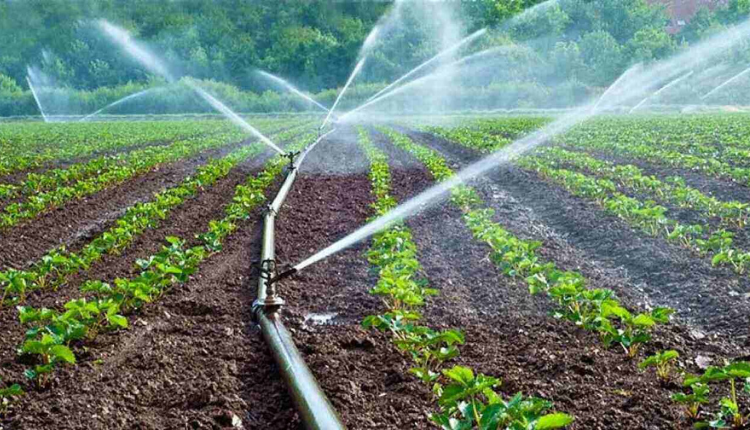
    • The Pradhan Mantri Krishi Sinchayee Yojana (PMKSY) has completed more than 10 years of advancing irrigation-led agricultural transformation through sustainable water management and the expansion of irrigation coverage.

    Pradhan Mantri Krishi Sinchayee Yojana (PMKSY)

    • It is a flagship irrigation scheme launched in 2015 
    • Vision- ‘Har Khet Ko Pani’ (Water to Every Field) and ‘Per Drop More Crop’.
    • Objective – It aims to provide for the integrated development and efficient management of water resources from source creation to its application at the farm level.

    Components of PMKSY

    • Accelerated Irrigation Benefit Programme (AIBP) – It improves irrigation infrastructure and availability of water.
    • Har Khet Ko Pani (HKKP) – It expands assured irrigation through minor irrigation and groundwater development.
    • Watershed Development Component – It promotes integrated watershed management in rainfed and degraded areas.
    • Per Drop More Crop (PDMC) – It promotes micro-irrigation technologies like drip and sprinkler irrigation.

    Nine Years of GST

    Economy

    Context

    • On 1 July 2026, the Goods and Services Tax (GST) completed nine years since its rollout under the 101st Constitutional Amendment. 

    Goods and Service Tax (GST)

    • Goods and Services Tax is an indirect tax used in India on the supply of goods and services.
    • It is a value-added tax levied on most goods and services sold for domestic consumption.
    • It was launched in India in 2017 as a comprehensive indirect tax for the entire country.

    It is of three types i.e. 

    1. CGST to be levied by the Centre, 
    2. SGST to be levied by the States and 
    3. IGST a tax levied on all Inter-State supplies of goods and/or services.  

    GST Council

      • Legal status – It is a Constitutional body under Article 279A, introduced by the Constitution (One Hundred and First Amendment) Act, 2016.
      • Mandate – It is empowered to modify, reconcile or to procure any law or regulation based on the context of GST in India.
      • Federal body – It is also considered as a federal body where both the centre and the states get due representation.
      • Functions: It makes recommendations to the Union and State Government on issues related to GST.
    • Composition
      • Chairperson: Union Finance Minister.
      • Members: Union State Minister of Revenue or Finance and Ministers in-charge of Finance or Taxation of all the States.

    Hul Diwas

    History & Culture

    Context

    • June 30 is observed as Hul Diwas, marking the anniversary of the 1855 Santhal rebellion/ Santhal Hul, one of the earliest peasant and tribal uprisings against the British.

    Santhal Hul

    • Santhal Hul of 1855 was a revolt against imperialism led by four brothers, Sidho, Kanho, Chand, and Bhairav Murmu, along with sisters Phulo and Jhano. 
    • Background: In 1832, the British demarcated a region in present-day Jharkhand, called Damin-i-Koh, as a settlement area for the Santhal tribe.
    • While initially intended for peaceful settlement and agricultural development, the region eventually experienced exploitation by outsiders (dikus), leading to land alienation among the Santhals.
    • Santhal Hul: The Murmu brothers led around 60,000 Santhals against the East India Company and engaged in guerrilla warfare.
    • The Santhals also fought against the upper castes, zamindars, darogas, and moneylenders, described by the umbrella term ‘diku’.
    • The British hanged Sidhu in 1855, followed by Kanhu in 1856. 
    • Significance: The rebellion led to the enactment of the Santhal Parganas Tenancy Act of 1876 and the Chotanagpur Tenancy Act of 1908, which aimed to safeguard tribal land rights and cultural autonomy.

    FCRA 2.0 Portal and e-OCI Card

    Polity

    Context

    • The Union Home Minister launched the Foreign Contribution (Regulation) Act (FCRA) 2.0 Portal and the Electronic Overseas Citizen of India (e-OCI) Card.

    FCRA 2.0 Portal

    • The Portal has been developed to simplify compliance under the Foreign Contribution (Regulation) Act and to strengthen the monitoring and enforcement mechanism.
    • All major processes related to applications, renewals, annual returns, and other services have now been made fully digital.
    • This portal, hosted on the National Government Cloud (MeghRaj), includes features such as process re-engineering, an integrated dashboard, Aadhaar-based authentication, e-Sign facility, and OCR-based document analysis. 
    • The portal is integrated with major government databases and banks, including PAN, Aadhaar, OCI, NGO Darpan, and the ICAI’s UDIN system.

    Electronic Overseas Citizen of India (e-OCI) Card

    • It is a citizen-centric initiative aimed at transforming OCI services for the global Indian diaspora through a fully digital system.
    • Under this system, applicants can complete the entire OCI process online – from submitting the application and uploading supporting documents to downloading the digitally generated card after approval.

    OCI (Overseas Citizen of India) 

    • Status: Foreign citizens of Indian origin. It is not dual citizenship.
    • Eligible: Anyone who was an Indian citizen on/after Jan 26, 1950, or their descendants. Foreign spouses qualify after 2 years of marriage.
    • Barred: Anyone with ties to Pakistan or Bangladesh. Foreign military personnel are also excluded.

    Privileges (What They CAN Do)

    • Lifelong Visa: Multiple-entry, multi-purpose visa.
    • No Foreigners Regional Registration Office: No police reporting required, regardless of stay duration.
    • NRI Parity: Same rights as NRIs in economic, financial, and educational fields.
    • Work: Can practice as doctors, dentists, lawyers, and chartered accountants in India.

    Restrictions (What They CANNOT Do)

    • No Voting: Cannot vote in any Indian elections.
    • No Public Office: Barred from government jobs and constitutional posts (e.g., President, Judge).
    • No Farm Land: Cannot buy agricultural or plantation property.Permissions Needed: Requires prior approval for journalism, research, missionary work, or visiting restricted areas.

    Academic Bank of Credits

    Economy

    Context

    • The Academic Bank of Credits (ABC) is a revolutionary digital platform by the Ministry of Education and is regulated by the University Grants Commission (UGC). 

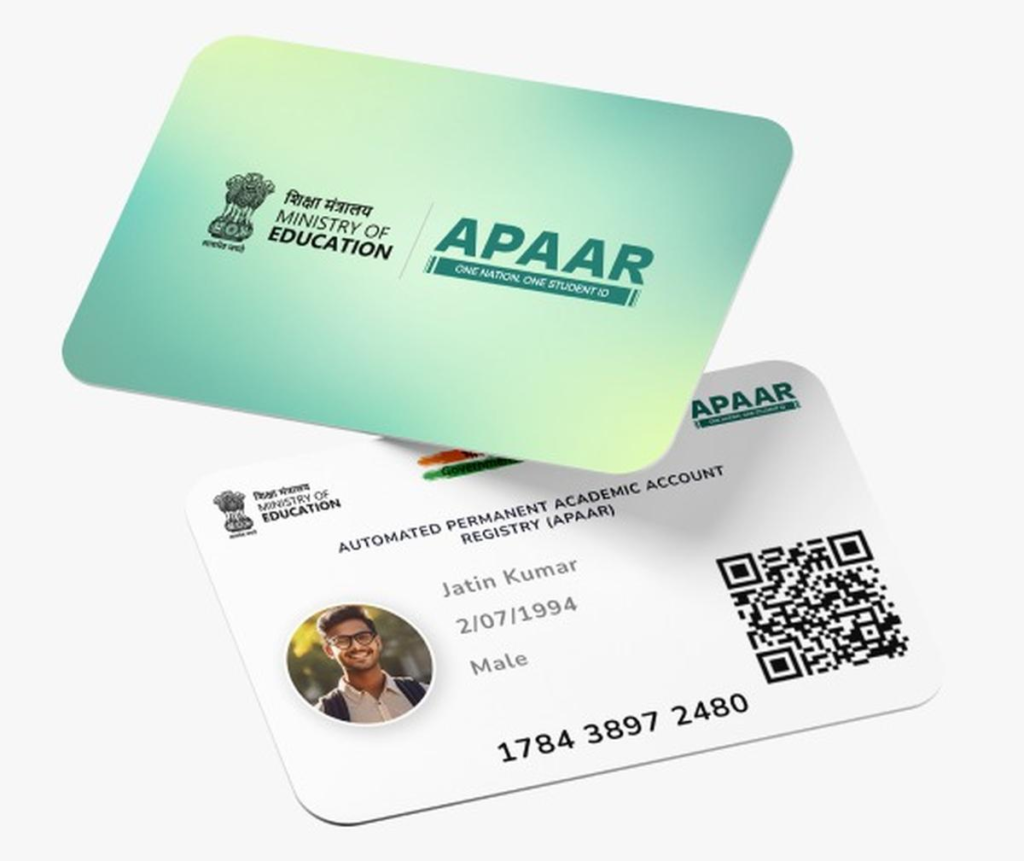
    APAAR (Automated Permanent Academic Account Registry) ID 

    • It is a unique 12-digit student identification number linked to the ABC system.
    • It was introduced as part of the “One Nation, One Student ID” initiative, and creates a single academic identity for every learner. 
    • Objective – It aimed to create a flexible, learner-friendly education system in which learning achievements can be recognised, stored, and used throughout a person’s life. 
    • It supports the vision of the National Education Policy (NEP) 2020 and the National Credit Framework (NCrF) by enabling credit transfer, multiple entry and exit options, and recognition of learning across different institutions and disciplines.


    Climate Tipping Points

    Environment and Ecology

    Context

    • Climate tipping points emerged as a major area of debate during the Bonn Climate Change Conference held in Germany.

    Climate Tipping Points

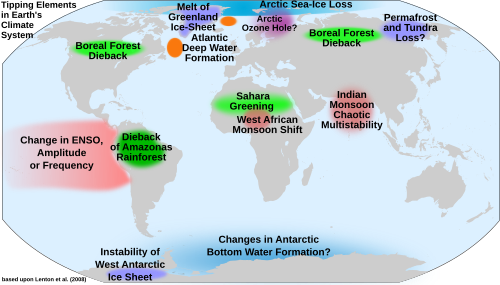
    • Definition – It is a critical threshold in the Earth’s climate system beyond which small incremental temperature increases trigger abrupt, self-reinforcing, and irreversible changes

    Major Potential Climate Tipping Points

    • Arctic Sea Ice Loss: Continued melting reduces the Earth’s reflectivity (albedo), leading to faster global warming.
    • Amazon Rainforest Dieback: Rising temperatures, deforestation and declining rainfall can transform large parts of the Amazon into savannah, reducing one of the world’s largest carbon sinks.
    • Atlantic Meridional Overturning Circulation (AMOC): Weakening of this major ocean current can disrupt rainfall patterns, agriculture and weather systems across Europe, Africa and Asia.
    • Greenland Ice Sheet Melting: Accelerated ice-sheet loss could contribute substantially to long-term global sea-level rise.
    • Coral Reef Collapse: Increasing ocean temperatures and acidification can lead to irreversible coral bleaching and biodiversity loss.
  • Karnataka & Group C Current Affairs – July 1st, 2026

    Appointments

    1. Mahesh Dixit Appointed Director of Intelligence Bureau

    Senior IPS officer Mahesh Dixit (1993-batch, Andhra Pradesh cadre) has been appointed as the new Director of the Intelligence Bureau (IB) by the Appointments Committee of the Cabinet (ACC) for a two-year tenure. He succeeds incumbent chief Tapan Kumar Deka on June 30, 2026, bringing extensive operational experience in counter-terrorism and internal security, notably having headed the Kashmir Subsidiary Intelligence Bureau following the revocation of Article 370.

    Important Days

    1. International Day Against Drug Abuse and Illicit Trafficking

    Observed Date: June 26, 2026

    Observing Organisation: United Nations / UN Office on Drugs and Crime (UNODC)

    Objective: To raise global awareness about how drug abuse and illegal trafficking destroy lives, communities, and national progress, and to encourage international cooperation and community action to achieve a drug-free world.

    Theme: “World Drug Problem: Persisting Issues, New Challenges, Innovative Responses”

    2. Samvidhan Hatya Diwas

    Observed Date: June 25, 2026

    Observing Organisation: Ministry of Culture, Government of India

    Objective: To honor the unsung heroes of freedom, pay homage to those who suffered during the 1975 National Emergency, and remind citizens of the enduring value of democracy and constitutional rights.

    Theme: “Long Live Democracy”

    3. World MSME Day

    Observed Date: June 27, 2026

    Observing Organisation: United Nations General Assembly (UNGA)

    Objective: To recognize the vital contribution of Micro, Small and Medium-sized Enterprises (MSMEs) in generating employment, promoting entrepreneurship, driving innovation, and supporting sustainable economic development globally.

    Theme: “Empowering MSMEs through Innovation and Sustainable Industrial Development”

    4. National Statistics Day

    Observed Date: June 29, 2026

    Observing Organisation: Ministry of Statistics and Programme Implementation (MoSPI), Government of India

    Objective: To popularize the use of statistics in daily life, sensitize the public on its role in policy-making, and honor the monumental contributions of legendary statistician Professor Prasanta Chandra Mahalanobis on his birth anniversary.

    Theme: “Use of Administrative Data for Socio-Economic Indicator Monitoring”

    5. International Asteroid Day

    Observed Date: June 30, 2026

    Observing Organisation: United Nations General Assembly (UNGA) / Association of Space Explorers (ASE)

    Objective: To raise public awareness about the asteroid impact hazard, inform the public about crisis communication actions at the global level in case of a credible near-Earth object threat, and commemorate the anniversary of the 1908 Tunguska impact.

    Theme: “Protecting Earth: Advanced Technologies and Coordinated Global Responses to Near-Earth Objects”

    6. National Doctor’s Day

    Observed Date: July 1, 2026

    Observing Organisation: Indian Medical Association (IMA) / Government of India

    Objective: To honour and express gratitude to the entire medical fraternity for their selfless service and daily sacrifices, and to commemorate the birth and death anniversary of the legendary physician, freedom fighter, and Bharat Ratna awardee Dr. Bidhan Chandra Roy.

    Theme: “Empowering Doctors, Resilient Healthcare: Celebrating Medical Excellence and Patient Trust”

    7. GST Day 

    Observed Date: July 1, 2026

    Observing Organisation: Central Board of Indirect Taxes and Customs (CBIC), Ministry of Finance, Government of India

    Objective: To commemorate the implementation of the landmark Goods and Services Tax (GST) regime, which replaced a complex web of cascading indirect taxes with a unified, technology-driven taxation framework across the nation.

    Theme: “GST @ 9: Fostering Growth, Simplifying Compliance, Transforming India”

    Sports

    1. Ancy Sojan Breaks Anju Bobby George’s 22-Year-Old National Record

    Why in news: Kerala’s long jump sensation Ancy Sojan created history by shattering Anju Bobby George’s 22-year-old national record with a phenomenal leap of 6.88 metres during the National Inter-State Senior Athletics Championships at the Kalinga Stadium in Bhubaneswar on June 27, 2026.

    Key Highlights

    • The Record Jump: The 25-year-old athlete, who serves as a Chief Petty Officer in the Indian Navy, registered the massive 6.88m mark on her fifth attempt, easily clearing the Asian Games qualification mark (6.48m) set by the Athletics Federation of India.
    • Overcoming a Legend: Her jump eclipsed the legendary Anju Bobby George’s previous national mark of 6.83m, which had remained unbroken since the 2004 Athens Olympics. This makes Ancy’s jump the 8th best all-time mark in women’s long jump in Asian history.
    • Other Major Feats: At the same Bhubaneswar event, another long-standing national record fell when Maharashtra’s Sarvesh Kushare cleared 2.31 metres in the men’s high jump, surpassing Tejaswin Shankar’s previous national record of 2.29m.
  • QUIZ on National & International, State Current Affairs and Miscellaneous – July 1st 2026

    QUIZ on National & International, State Current Affairs and Miscellaneous – July 1st 2026

  • MCQs Compilation on National & International, State Current Affairs and Miscellaneos Current Affairs

    MCQs Compilation on National & International, State Current Affairs and Miscellaneos Current Affairs

    1. Which of the following components under PMKSY specifically promotes micro-irrigation technologies such as drip and sprinkler irrigation?

    A) Accelerated Irrigation Benefit Programme (AIBP)
    B) Har Khet Ko Pani (HKKP)
    C) Per Drop More Crop (PDMC)
    D) Watershed Development Component

    Answer: C


    2. Which one of the following statements regarding the GST Council is NOT correct?

    A) It is a constitutional body established under Article 279A.
    B) It was introduced through the Constitution (101st Amendment) Act, 2016.
    C) It has the power to make recommendations on GST-related issues.
    D) The Prime Minister of India is the Chairperson of the GST Council.

    Answer: D

    3. The Santhals primarily fought against:

    1. East India Company

    2. Zamindars

    3. Moneylenders

    4. Darogas

    Select the correct answer using the code below:

    A) 1 and 2 only
    B) 1, 2 and 3 only
    C) 2, 3 and 4 only
    D) 1, 2, 3 and 4

    Answer: D

    4. The FCRA 2.0 Portal is related to the regulation of:

    A) Foreign trade
    B) Foreign contribution
    C) Foreign investment
    D) Foreign exchange

    Answer: B


    5. National Doctor’s Day in India is celebrated in honour of:

    A) Dr. M. Visvesvaraya
    B) Dr. Homi J. Bhabha
    C) Dr. Bidhan Chandra Roy
    D) Dr. A. P. J. Abdul Kalam

    Answer: C


    6. ‘Samvidhan Hatya Diwas’ is observed on:

    A) June 21
    B) June 25
    C) June 26
    D) June 29

    Answer: B


    7. National Statistics Day in India is observed to commemorate the birth anniversary of:

    A) C. Rangarajan
    B) P. C. Mahalanobis
    C) V. K. R. V. Rao
    D) M. S. Swaminathan

    Answer: B

  • QUIZ on National & International Current Affairs – June 30th 2026

    QUIZ on National & International Current Affairs – June 30th 2026

  • MCQs on National & International

    MCQs on National & International

    1. The “One Nation, One Student ID” initiative is associated with:

    A) DigiLocker
    B) SWAYAM
    C) APAAR ID
    D) NAD

    Answer: C

    2. Which among the following acts as one of the world’s largest carbon sinks?

    A) Sahara Desert
    B) Greenland Ice Sheet
    C) Amazon Rainforest
    D) Arctic Sea Ice

    Answer: C


    3. With reference to Nalanda University, consider the following statements:

    1. It was founded by Emperor Kumaragupta in 427 CE.
    2. It is regarded as the world’s first residential university.
    3. It flourished for more than eight centuries.

    Which of the statements given above are correct?

    A) 1 and 2 only
    B) 2 and 3 only
    C) 1 and 3 only
    D) 1, 2 and 3

    Answer: D


    4. Project BRAHMANK functions under which organisation?

    A) Indian Army
    B) Border Security Force
    C) Border Roads Organisation
    D) Indo-Tibetan Border Police

    Answer: C