Lavender Cultivation
Economy
News-
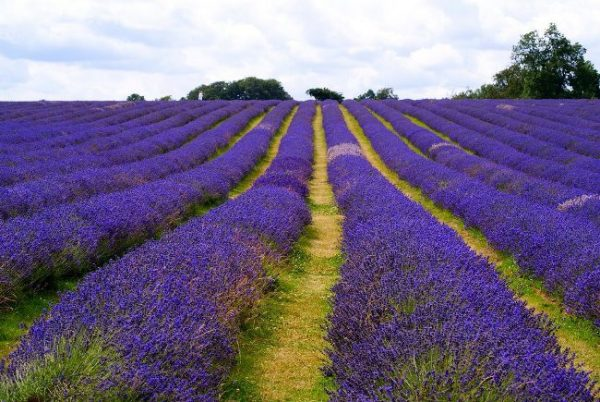
- Lavender cultivation is expanding in Jammu and Kashmir as farmers look for crops better suited to warmer winters, erratic rainfall and shrinking irrigation sources.
The Purple Revolution
- launched in 2016 under the CSIR-Aroma Mission
- Objective – to promote lavender cultivation in India.
- Nodal Agency: Ministry of Science & Technology via CSIR.
- Primary Hub: Bhaderwah (Doda district), Jammu & Kashmir.
- Key Climatic Conditions: Cool, sunny climates; well-drained, sandy soil; highly sensitive to waterlogging.
- Economic Value: High-value aromatic oil used in cosmetics and therapeutics, boosting rural incomes.
Registration of Births and Deaths (Amendment) Bill, 2026
Government Schemes
News –
- The Lok Sabha passed the Registration of Births and Deaths (Amendment) Bill, 2026.
About –
- Objective: To deter fraudulent delayed entries, protect certificate credibility and strengthen demographic data for public-service planning.
- It amends the Registration of Births and Deaths Act, 1969, last amended in 2023. The 2023 Amendment mandated centralised digital registration via the Civil Registration System (CRS) portal under the Registrar General of India (RGI).
Key Provisions
- Standard Registration Timeline: Births and deaths must be reported to local registrars within 21 days.
Delayed Registration Mandates:
- Delays of 1 to 2 years need approval from DM, SDM, or authorised Executive Magistrate (per Section 14(1) of the BNSS, 2023).
- Delays exceeding 2 years require an order from a Judicial Magistrate of the First Class (JMFC).
- Verification: Designated authority must verify the event’s correctness and receive the prescribed fee before authorising registration.
Pradhan Mantri Viksit Bharat Rojgar Yojana (PM-VBRY)
Government Schemes
News –
- PMVBRY completed one year of implementation, marking an important milestone in India’s efforts to expand formal employment and social security coverage.
About PM-VBRY
- It is a flagship government program launched in 2025
- Implementation – Ministry of Labour & Employment.
- Aim: To promote employment generation, enhance employability, and strengthen social security across all sectors with a particular focus on the manufacturing sector.
Features:
- First-time employees are eligible for incentives of up to ₹15,000.
- For the employer’s side, the government offers a reward of up to ₹3,000 per new employee after six months of stable employment.
- The initiative is expected to encourage greater participation in the formal workforce and contribute to sustained long-term economic growth.
Pradhan Mantri Surya Sarovar Yojana (PM-SSY)
Government Schemes
News –
- The Union Cabinet approved Pradhan Mantri Surya Sarovar Yojana (PM-SSY) with a ₹5,070 crore outlay to strengthen floating solar capacity and energy security.
PM-SSY
-
- Financing – It is a Central Sector Scheme
- Objective – to promote Floating Solar Photovoltaic (FSPV) projects integrated with Energy Storage Systems (ESS).
- Target: 5 GW of Floating Solar Photovoltaic (FSPV) by FY 2030-31
- Implementing Agency: Solar Energy Corporation of India (SECI), Ministry of New and Renewable Energy.
- Significance: It supports India’s 500 GW non-fossil electricity goal by 2030, aligns with Atmanirbhar Bharat, and can cut 10 million tonnes of CO2 emissions annually.
- Note – The Omkareshwar Floating Solar Park on the Narmada River in Madhya Pradesh is India’s largest operational project with a capacity of 278 MW (planned capacity is 600 MW).
Samudra Manthan (National Offshore Exploration Scheme)
Givernment Scheme
News –
- The Union Cabinet approved ‘Samudra Manthan’ (National Offshore Exploration Scheme) with an outlay of ₹84,084 crore for implementation through FY 2030–31.
About –
- Financing – Central Sector Scheme.
- Implementation – Ministry of Petroleum and Natural Gas.
- Objective: To map untapped offshore sedimentary basins and de-risk deepwater exploration to reduce India’s reliance on crude oil (~88%) and natural gas (~50%) imports.
Features –
- Boost Production: Aims to raise annual production from 62 to 80 MMTOE (Million Metric Tonnes of Oil Equivalent).
- Unlock Reserves: Targets over 600 MMTOE in new hydrocarbon reserves.
- Economic Impact: Seeks to reduce annual import bills by ₹1 lakh crore.
Dhimsa Dance
Art and Culture
News –
- A recent performance of Dhimsa dance by 13, 000 tribal women and girl students at Alluri Sitarama Raju International Airport was recognised by Guinness World Records as largest Dhimsa dance.
Dhimsa
- It is a traditional tribal folk dance performed by indigenous communities (including Bagata, Gadaba, Kondadora, Poraja, and Valmiki) of the Araku Valley and Alluri Sitharama Raju (ASR) district, Andhra Pradesh;
- Performance: Performed mainly by 15–20 women in colourful traditional attire, moving in synchronised circles to the rhythm of indigenous instruments such as dappu, tudumu, mori, kidgi, gilka, and jodukommulu.
- Themes & Occasions: Depicts tribal mythology, folklore, livelihood, kinship, and social life and is performed during Chaitrapurab (Eetela Panduga), marriages, festivals, and religious ceremonies.