Blog

  • Eva Nammava Eva Nammava Bill

    Eva Nammava Eva Nammava Bill

    News – 

    • The Eva Nammava Eva Nammava Bill—officially titled the Karnataka Freedom of Choice in Marriage and Prevention and Prohibition of Crimes in the Name of Honour and Tradition Act, 2026—is a landmark piece of legislation passed by the Karnataka State Legislature in March 2026.  

    Eva Nammava Eva Nammava Bill

    • Mandate – It is specifically designed to prevent “honour killings” and protect the freedom of adults to choose their life partners without interference from family, caste, or community bodies. 

    Key Features of the Bill

    • Right to Choose: Guarantees that every adult has the autonomy to choose their partner. It explicitly states that no family member, caste group, or community body has the authority to interfere in this decision.
    • Broad Definition of Crimes: Beyond physical violence, the law criminalises social and economic boycotts, psychological terror (such as performing death rites for living persons), and forcing separation.

    Institutional Support:

    • Eva Nammava Vedike: A district-level platform or committee (including retired judges and police officers) to solemnise marriages and provide counselling.
    • Safe Houses & Helplines: Mandates 24/7 helplines and state-funded safe houses in every district for threatened couples.
    • Rapid Response: Police are required to provide protection within six hours of receiving a complaint.
    • Strict Penalties: Offences are classified as cognizable and non-bailable. Punishment for honour killings includes a minimum of five years in prison, while causing hurt can lead to 2–3 years of rigorous imprisonment.
  • Aravalli hills | India’s Bioeconomy Moving Towards $300 billion | RELIEF Scheme | Small Hydro Power Development Scheme | World Happiness Report 2026
    Aravalli hills

    Environment

    In News

    • The central empowered committee of the Supreme Court (SC) has assigned the task of mapping mining areas in the Aravalli hills of Rajasthan to the Forest Survey of India.

    Aravalli hills

    • Origin: Formed during the Proterozoic era (Precambrian period) by the Aravalli-Delhi Orogeny.
    • It is a Fold Mountain system, now reduced to “residual hills” due to millions of years of erosion.
    • Extent: Stretches approximately 670–800 km from Gujarat (Ahmedabad) through Rajasthan and Haryana to Delhi.
    • Highest Peak: Guru Shikhar (1,722 m) on Mount Abu, Rajasthan.
    • Major Rivers: Source of the Banas, Luni, Sabarmati, and Sahibi rivers.
    • Mineral Wealth: Rich in copper, zinc, lead, silver, marble, and granite.

    Ecological & Strategic Significance

    • Climate Regulator: Acts as a barrier guiding the South-West Monsoon towards the Himalayas, nourishing the North Indian plains.
    • “Green Wall”: Serves as a natural shield preventing the eastward expansion of the Thar Desert into fertile Indo-Gangetic plains.
    • Groundwater Recharge: A vital source of water for the National Capital Region (NCR) and surrounding areas.
    • Biodiversity: Home to 300+ bird species and wildlife like leopards, striped hyenas, and golden jackals

    Additional Information – Forest Survey of India

    • Established in – 1981
    • Functions under – Ministry of Environment and Forests
    • Function -is the premier national body for monitoring India’s forest resources.
    • Significance – Its core mandate includes publishing the biennial State of Forest Report to assess cover changes and maintaining a comprehensive inventory of tree resources in forest and non-forest areas.

    India’s Bioeconomy Moving Towards $300 billion

    Economy

    Context

    • Union Minister Dr. Jitendra Singh said India’s bioeconomy has witnessed a remarkable surge from around $10 billion in 2014 to over $195 billion in 2025.

    BioEconomy

    • It is the knowledge-based production and use of biological resources to provide products, processes and services in all economic sectors within the framework of a sustainable economic system.
    • It encompasses sectors like agriculture, forestry, fisheries, food production, biotechnology, and bioenergy.

    Subsectors of the BioEconomy in India are;

    • BioPharma or BioMedical: It includes the development and production of medical products and services, such as pharmaceuticals, medical devices, and lab-grown organoids.
    • BioAgri: It includes the development and production of genetically modified crops and animals, precision agriculture technologies, and bio-based products. EX: Bt Cotton
    • BioIndustrial: It includes the development and production of biobased chemicals and products using enzymes, biosynthetic routes, and recombinant DNA technology.

    Major Government Initiatives

    • BioE3 Policy (Biotechnology for Economy, Environment and Employment): Promotes sustainable biomanufacturing and bio-based industries.
    • The focus areas include smart proteins, precision therapeutics, and climate-resilient agriculture.
    • Research, Development and Innovation (RDI) Fund: ₹1 lakh crore corpus aimed at supporting deep-tech innovation and scaling startups.
    • Startup and Incubation Support: Strengthening biotech clusters and innovation hubs across India.
    • Inclusive Talent Development: Special focus on tier-2 and tier-3 cities, women entrepreneurs, and young researchers.

    RELIEF Scheme

    International Relations

    In News

    • The Centre has launched the RELIEF Scheme to support exporters affected by disruptions due to the West Asia crisis.

    Resilience & Logistics Intervention for Export Facilitation (RELIEF) Scheme

    • It is a ₹497-crore initiative launched by the Government of India on March 19, 2026.
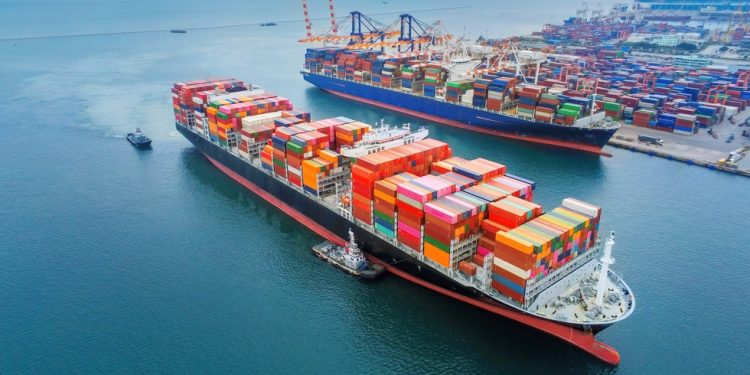
    • Objective – It is designed to support Indian exporters—particularly MSMEs—facing extraordinary freight hikes, insurance premium spikes, and logistical disruptions due to geopolitical tensions in West Asia.
    • Mission: Launched under the Export Promotion Mission (EPM).
    • Nodal Agency for implementation – Export Credit Guarantee Corporation of India.
    • Target Region: Consignments destined for or transshipping through the UAE, Saudi Arabia, Kuwait, Qatar, Oman, Bahrain, Iraq, Iran, Israel, and Yemen.
    • Significance –  To mitigate financial risks, prevent order cancellations, and safeguard employment in export-linked sectors during maritime disruptions

    Small Hydro Power Development Scheme

    Schemes

    News

    • The Union Cabinet has approved the Small Hydro Power Development Scheme for 2026–31 to boost clean energy (low-emission renewable power) and rural development.

    Small Hydro Power (SHP) Development Scheme

    • It is a centrally sponsored initiative approved by the Union Cabinet in March 2026
    • Objective – to boost clean energy generation in remote and rural areas.
    • Implementation – It is managed by the Ministry of New and Renewable Energy (MNRE)
    • Target – Approximately 1,500 MW of capacity between FY 2026-27 and FY 2030-31

    World Happiness Report 2026

    Economy

    Context

    • The World Happiness Report 2026 highlights that heavy social media use is adversely affecting the well-being of young people across many countries.

    World Happiness Report 2026

    • The annual report is published by the University of Oxford’s Wellbeing Research Centre in partnership with Gallup, and the UN Sustainable Development Solutions Network.

    Six factors for evaluation of happiness ranking:

    1. GDP per capita,
    2. Life expectancy,
    3. Social support,
    4. Freedom to make life choices,
    5. Generosity,
    6. Perceptions of corruption.
    • Top 3: Finland (1st, since 2018), Iceland (2nd), and Denmark (3rd).
    • Bottom 3: Malawi (145th), Sierra Leone (146th), and Afghanistan (147th).
    • India: Ranked 116th (improved from 118th in 2025).
  • Responsible AI Committee (Kris Gopalakrishnan committee)

    Responsible AI Committee (Kris Gopalakrishnan committee)

    News –

    • The Government of Karnataka has constituted a Committee on Responsible Artificial Intelligence (AI), chaired by Kris Gopalakrishnan.

    Objectives

    • to develop a framework for safe, ethical, and transparent AI adoption in public services, according to this Facebook post. 
    • The panel, comprising industry experts and officials, met in Bengaluru to discuss AI ethics, risk classification, and data privacy to ensure accountability in AI systems. 

    Key Aspects of the Responsible AI Committee:

    • Mandate: Develop a policy and implementation roadmap within 90 days for responsible AI adoption in government.
    • Focus Areas: Establish AI principles, create risk classifications for government AI applications, and set up guidelines for data governance, privacy, and cybersecurity.
    • Committee Structure: Led by Infosys Co-founder Kris Gopalakrishnan, with the Managing Director of the Karnataka Innovation and Technology Society (KITS) serving as the Member Secretary.
    • Key Sectors: The framework will cover AI deployment in citizen-centric areas like healthcare, education, welfare delivery, and policing
  • National Vaccination Day | North Atlantic Treaty Organisation (NATO) | PM POSHAN Scheme | Bharat Audyogik Vikas Yojna (BHAVYA) | Methane Emission Hotspot

    National Vaccination Day

    Health

    Context

    • India marked National Vaccination Day (March 16) to highlight achievements in immunisation.
    • The day is observed to commemorate the first dose of the Oral Polio Vaccine administered in 1995 under the Pulse Polio Programme.

    Government Initiatives

    • The Universal Immunisation Programme: Launched in 1985 and implemented by the Ministry of Health and Family Welfare, it aims to provide free vaccines to children and pregnant women against various diseases.
    • Mission Indradhanush: It was launched in December 2014 by the Government of India to reach children and pregnant women who are unvaccinated or partially vaccinated.

    Recent Initiatives (2026)

    • HPV Vaccination Campaign: Targets ~1.15 crore girls (14 years) for cervical cancer prevention.
    • Indigenous Td Vaccine: Manufactured at CRI, Kasauli; ~55 lakh doses planned for supply.

    Digital Initiatives:

    • eVIN: Real-time vaccine stock and temperature tracking;
    • U-Win: Digital vaccination registry and tracking platform;
    • CoWIN: Enabled administration of 220+ crore COVID vaccine doses.

    North Atlantic Treaty Organisation (NATO)

    International

    Context

    • US President Donald Trump has warned of leaving the North Atlantic Treaty Organisation (NATO) after its allies declined to assist in securing the Strait of Hormuz.

    North Atlantic Treaty Organization (NATO)

    • NATO, also called the North Atlantic Alliance, is an intergovernmental military alliance.
    • Headquarters: Brussels, Belgium
    • Background: It was established by 12 countries from Europe and North America with the signing of the North Atlantic Treaty (also known as Washington Treaty) in 1949 in Washington, D.C to provide collective security against the Soviet Union attack in the aftermath of World War II.
    • Collective Defense: According to Article 5, NATO works on the principle of collective defense, where an attack on any NATO member is considered an attack on all NATO members. So far, Article 5 has been invoked once – in response to the 9/11 terrorist attacks in the United States in 2001.
    • Members: It comprises 32 member states. Sweden became the 32nd member.

    PM POSHAN Scheme

    Schemes

    News

    • A Parliamentary Standing Committee has recommended the inclusion of breakfast in the PM POSHAN Scheme & extension of coverage up to Class 12.

    PM-POSHAN

    • Earlier known as Mid-Day Meal Scheme (MDMS) and renamed as PM POSHAN (Pradhan Mantri Poshan Shakti Nirman) in 2021.
    • It operates under the Ministry of Education and is approved for the period 2021-22 to 2025-26.
    • It is a centrally sponsored scheme (jointly funded by Centre and States) providing one hot cooked meal to students in government and aided schools up to Class 8.
    • It aims to address hunger (lack of adequate food intake) and educational outcomes (attendance, retention, learning) simultaneously.

    Bharat Audyogik Vikas Yojna (BHAVYA)

    Schemes

    Context

    • The Union Cabinet approved the Bharat Audyogik Vikas Yojna (BHAVYA), with an allocation of ₹33,660 crore.

    Bharat Audyogik Vikas Yojna (BHAVYA)

    • Aim: To create 100 “future ready” industrial parks that will integrate with the PM GatiShakti programme so that they can avail of that programme’s multi-modal connectivity and last-mile access.
    • These parks will set new benchmarks in industrial infrastructure, ensuring reliability, reducing inefficiencies, and enhancing productivity across sectors.
    • Land Use: Industrial parks ranging from 100 to 1,000 acres will be taken up for the development.
    • Funding: While the Central government will provide funding of up to Rs 1 crore per acre, the scheme is meant to include the involvement of the respective State governments as well as the private sector.
    • Infrastructure: Core infrastructure like internal roads, underground utilities, drainage, common treatment facilities, ICT and administrative systems.
    • The National Industrial Corridor Development Corporation (NICDC), under the Department for Promotion of Industry and Internal Trade, will play a key role in implementing the initiative.
    • The scheme duration would be for six years starting in 2026-27.

    Additional Information –  PM GatiShakti

    • It was launched in – 2021
    • Objective – to enhance the country’s infrastructure and promote seamless connectivity across various sectors.
    • Significance – It is a transformative approach for economic growth and sustainable development which is driven by seven engines – railway, roads, ports, waterways, airports, mass transport and logistics infrastructure.
    • Implementation: PM Gati Shakti will incorporate the infrastructure schemes of various Ministries and State Governments like Bharatmala, Sagarmala, inland waterways, dry/land ports, UDAN etc.

    Methane Emission Hotspot

    Environment

    Context

    • Recent satellite-based research by the Stop Methane Project (UCLA) has revealed that a small number of oil and gas sites account for disproportionately high methane emissions.

    Connect with the basics – Methane

    • Methane (CH₄) is a colorless, odorless, and highly flammable gas, and it is the primary component of natural gas.
    • It has a relatively short atmospheric lifetime of about 12 years, compared to carbon dioxide.
    • Methane as a Greenhouse Gas: Methane is a highly potent greenhouse gas with a strong short-term warming impact.
    • It is over 80 times more effective than carbon dioxide at trapping heat over a 20-year period.
    • It is responsible for around 30% of the current global warming since the pre-industrial era.
    • Major Sources: Human-driven emissions arise mainly from oil and gas production, coal mining, livestock enteric fermentation (burps), and decomposing waste in landfills.
    • Natural sources include Wetlands, marine sediments and hydrates and geological Sources like volcanoes.
  • QpiAI Indus

    QpiAI Indus

    News – 

    • The Karnataka government has installed the QpiAI Indus, a 25-qubit superconducting quantum computing system, at the Quantum Computing Centre of Excellence (QCCE) located at IIIT-Dharwad.

    Objectives and Usage

    • Academic Integration: Used for curriculum development, faculty-led research in quantum algorithms, and hands-on student training.
    • Commercial Access: The centre offers Quantum Computing as a Service (QCaaS), allowing enterprises to experiment with use cases in logistics, finance, and pharmaceutical discovery.
    • Regional Strategy: Part of the Karnataka Quantum Roadmap, which aims to establish a $20 billion quantum economy by 2035. 

    Additional Information –  Quantum computing 

    • It is a new way for computers to process information using the strange rules of physics that govern tiny particles like atoms and electrons. 
    • While regular computers (like your phone or laptop) use bits to store information as either a 0 or a 1 (like a light switch being on or off), quantum computers use qubits
    • Quantum computers are expected to solve massive problems that would take today’s fastest supercomputers thousands of years. 

    Applications – 

    • Medicine: They can simulate how new drugs will interact with the human body at a molecular level.
    • Cybersecurity: They could potentially crack almost all current internet encryption, which is why experts are already building “quantum-proof” security.
    • Climate & Energy: They can help design better batteries or find ways to remove carbon from the air by simulating complex chemical reactions
  • India’s First National Report (NR1) on Nagoya Protocol | Nominations for Padma Awards-2027 Begins | Gajapati Inscription in Guntur | Ladakh Magmatic Arc | Adoptive Mothers Get Equal Maternity Rights

    India’s First National Report (NR1) on Nagoya Protocol

    Environment

    In News

    • India recently submitted its first National Report (NR1) on Nagoya Protocol implementation to the CBD Secretariat, marking a key milestone in biodiversity governance.

    Nagoya Protocol

    • Adopted on – October 29, 2010, in Nagoya, Japan
    • Enforced in – October 12, 2014
    • Objective – it ensures fair access to genetic resources
    • India ratified it in 2012, aligning with its Biological Diversity Act, 2002.

    Nominations for Padma Awards-2027 Begins

    Miscellaneous

    News

    • The Centre has opened nominations and recommendations for the Padma Awards 2027, one of the country’s highest civilian honours.

    Padma Awards

    • The Padma Awards are among India’s highest civilian honours instituted in 1954.
    • They are presented in three categories: Padma Vibhushan, Padma Bhushan and Padma Shri.
    1. ‘Padma Vibhushan’ is awarded for exceptional and distinguished service;
    2. ‘Padma Bhushan’ for distinguished service of high order and
    3. ‘Padma Shri’ for distinguished service in any field.
    • The awards recognise “work of distinction” and are given for exceptional achievements or service across a wide range of fields, including art, literature and education, sports, medicine, social work, science and engineering, public affairs, civil service, trade and industry.
    • All individuals are eligible for the awards regardless of race, occupation, position or gender.
    • Note – However, government servants, including employees of public sector undertakings, are generally not eligible, except for doctors and scientists.
    • The government is committed to transform Padma Awards into “People’s Padma”, encouraging citizens to nominate deserving individuals.
    • Self-nominations are also allowed.
    • The nominations must include detailed information about the nominee’s distinguished achievements in their respective fields
    • nominations will be accepted only through the online Rashtriya Puraskar Portal.
    • The awards are announced on the occasion of Republic Day every year.
    • These Awards are conferred by the President of India at ceremonial functions which are held at RashtrapatiBhawan usually around March/ April every year.

    Gajapati Inscription in Guntur

    History

    Context

    • A medieval inscription linked to the Gajapati Dynasty has been discovered at the Lakshmi Narasimha Swamy Temple in Guntur, Andhra Pradesh.
    • The inscription is engraved on a stone pillar in the temple mandapam.
    • It mentions Kumaraguru Mahapatra, an officer serving under Purushottama Deva in the 15th century CE.
    • The record indicates that the idol of Lord Narasimha and the mandapa pillars were relocated from Kondaveedu Fort following invasions in the region.
    • The inscription was originally dedicated to Lord Mallikarjuna of Kondaveedu but was later shifted to the Guntur temple.

    Gajapati Dynasty

    • The Gajapati Dynasty was a powerful medieval kingdom that originated in Odisha and flourished during the 15th–16th centuries.
    • It was founded by Kapilendra Deva after the decline of the Eastern Ganga dynasty.
    • At its peak, the empire extended from parts of present-day West Bengal to Tiruchirappalli in Tamil Nadu, with its capital at Kataka (modern-day Cuttack).
    • The Gajapati rulers were known for their patronage of art, architecture, and literature, and they maintained continuous rivalry with the Vijayanagara Empire.

    Ladakh Magmatic Arc

    Geography

    News

    • Scientists from the Wadia Institute of Himalayan Geology have recently decoded the evolution of the Ladakh Magmatic Arc (LMA) in the North-West Himalaya.

    Ladakh Magmatic Arc

    • It is a belt of igneous rocks located in the Trans-Himalayan region of India (mainly Ladakh).
    • It represents a long-extinct volcanic arc system.
    • The present-day Ladakh region once lay above the Neo-Tethys Ocean.
    • Beneath this ocean, the oceanic crust of the Indian Plate was moving towards the Eurasian Plate.
    • The denser oceanic plate subducted (sank) beneath the Eurasian Plate.
    • This process led to melting of mantle material, formation of magma & rise of magma to form volcanic arcs.

    Adoptive Mothers Get Equal Maternity Rights

    Governance

    Context

    • The Supreme Court of India held that all female employees adopting children are entitled to 12 weeks of paid maternity leave, regardless of the child’s age.

    Background

    • The legal framework governing maternity benefits in India originates from the Maternity Benefit Act, 1961 and through the 2017 Amendment for the first time, adoptive and commissioning mothers were granted 12 weeks of maternity leave.
    • However, a restrictive condition was introduced that maternity leave was available only if the adopted child was below 3 months of age.

    Supreme court ruling

    • Concern: India’s adoption process, governed by Central Adoption Resource Authority guidelines, rarely permits adoption of children below three months.
    • As a result, most adoptive mothers were effectively denied maternity benefits, rendering the provision largely illusory.
    • The court ruled that age-based classification was discriminatory and violative of Articles 14 and 21 of the Constitution, emphasising that adoption is an equally valid pathway to parenthood and cannot be treated differently from biological childbirth.
  • Shakuntala Grants on International Women’s Day 2026

    Shakuntala Grants on International Women’s Day 2026

    News – 

    • On International Women’s Day 2026, Bengaluru-based Pixxel launched the Shakuntala Grants under its new Shakuntala Initiative, 
    • It provides micro-grants for women researchers focused on climate resilience and environmental studies
    • The program supports field studies, data collection, and equipment purchases for early-career researchers. 

    Key details of the Shakuntala Grants and Initiative:

    • Purpose: To address funding gaps for women researchers and foster long-term STEM community building.
    • Partnership: The program is in collaboration with Escape Velocity Grants.
    • Target Areas: Research projects related to climate change, environment, and earth observation.
    • Inspiration: The initiative honors the first Pixxel Pathfinder satellite (Shakuntala) and the famous female mathematician, Shakuntala Devi
  • India to Begin Mapping Its Manuscript Heritage | Tropical Forest Forever Facility (TFFF) | Tribal Arts in Conversation | NMDC Iron Ore Production

    India to Begin Mapping Its Manuscript Heritage

    Culture

    Context

    • The Ministry of Culture has launched a first-of-its-kind, three-month nationwide survey to map India’s vast manuscript heritage.
    • The initiative is part of the Gyan Bharatam Mission, announced in the Union Budget 2025–26.

    Significance of the initiative

    • Preservation of Heritage: Digitisation and documentation will protect fragile manuscripts from deterioration and loss.
    • Research Accessibility: A centralised repository will enable easier access for scholars and the public.
    • Curbing Intellectual Piracy: Proper records and metadata will help establish authenticity and prevent misuse.
    • Cultural Revival: Greater visibility will promote India’s literary and knowledge traditions.

    Additional information – Gyan Bharatam Mission

    • Purpose – The mission aims to preserve and protect manuscripts found across the country.
    • Objective: To undertake the “survey, documentation and conservation” of more than one crore manuscript heritage lying with academic institutions, museums, libraries, etc.
    • Significance of Mission: Preserving historical value, unveiling ancient Indian knowledge to the world, ensuring longevity and round-the-clock access to Manuscripts, etc.

    Manuscripts

    • A manuscript is a handwritten composition on paper, bark, palm leaf etc. dating back at least 75 years that has significant scientific, historical or aesthetic value.
    • g. Bakhshali manuscript (Third or fourth century A.D.), an ancient Indian mathematical text written on birch bark, is considered to be the earliest recorded example of use of zero.
    • India possesses an estimated 10 million manuscripts in 80 ancient scripts like Brahmi, Kushan, Gaudi, Lepcha, and Maithili.

    Other initiatives for manuscript conservation in India

    • National Manuscripts Mission (NMM): Launched In 2003, by the Ministry of Tourism and Culture to locate and preserve manuscripts.
    • National Library of India, Kolkata: It has about 3600 rare and historically important manuscripts.
    • Asiatic Society of Bengal: Founded on Jan. 15, 1784, by Sir William Jones, undertakes digitization of ancient manuscripts.
    • Abhilekh Patal is an initiative of the National Archives of India to provide online access to over a million files, including a significant collection of manuscripts, oriental records, and private papers.
    • Gyan-Setu: It was launched as a national challenge to source AI-led solutions for manuscript preservation, decipherment, restoration and access.
    • Antiquities and Art Treasures Act, 1972: It seeks to prevent the illegal export and smuggling of India’s cultural heritage, including valuable manuscripts.

    Tropical Forest Forever Facility (TFFF)

    Environment

    Context

    • The COP30 held in Belém brought global attention that effective forest conservation requires not only financial commitments but also a redistribution of decision-making power.
    • Brazil introduced the Tropical Forest Forever Facility (TFFF) as a new model of forest finance aimed at transforming conservation efforts.

    Tropical Forest Forever Facility (TFFF)

    • It is a performance-based financial mechanism that seeks to reward countries for maintaining standing forests rather than merely reducing deforestation rates.
    • It is designed to generate financial returns while supporting long-term forest conservation.
    • The fund has already secured more than $5.5 billion in initial commitments, including a significant contribution of $3 billion from Norway.

    Tribal Arts in Conversation

    Culture

    Context

    • The Tribes Art Fest 2026, held at Travancore Palace in New Delhi, showcased India’s rich tribal artistic heritage.

    Major Tribal Art Forms Highlighted

    Warli Painting

    • It originates from Maharashtra and is practised by the Warli tribe.
    • It has roots possibly dating back to the Neolithic period (2500–3000 BC). Key features are;
    • Use of white pigment made from rice paste on mud walls.
    • Representation through basic geometric shapes (circles, triangles, squares).
    • Themes include agriculture, rituals, hunting, and Tarpa dance.
    • Rabha and Tamang Masks: Mask-making is central to the Rabha tribe of Assam and North Bengal. Masks are made using wood, bamboo, gourd, or clay, and painted in vibrant colours.
    • They depict gods, spirits, animals, and mythological beings, used in ritual dances and folk theatre.

    Gond Art

    • Gond painting originates from central India, especially Madhya Prades It has received a GI tag, ensuring legal protection and recognition.

    Key features are;

    • Use of dots and lines to create intricate patterns.
    • Themes rooted in folklore, animals, forests, and ecology.

    Bhil Painting:

    • It is practised by the Bhil tribe, one of India’s largest indigenous groups mainly from Madhya Pradesh, Maharashtra, Gujarat, and Rajasthan. It is considered among the oldest tribal art traditions.

    Key features are:

    • Use of thousands of coloured dots, symbolising seeds and nature’s rhythm.
    • Themes include deities, animals, forests, and daily life.

    NMDC Iron Ore Production

    Economy

    Context

    • NMDC Limited has become India’s first mining company to achieve 50 million tonnes (MT) of iron ore production in a single financial year (FY 2025–26).

    Iron Ore

    • Iron ore refers to rocks and minerals from which metallic iron is extracted.
    • Iron ore is categorized into four main types based on iron content and quality:
    1. Magnetite (best quality, >70% iron)
    2. Hematite (most important industrial ore, 60-70% iron)
    3. Limonite (lower grade, 40-60% iron)
    4. Siderite (poor quality, <40% iron).
    • India is the 4th largest producer, after Australia, Brazil, and China.
    • Odisha leads in production, followed by Chhattisgarh and Karnataka.

    About NMDC

    • Established in 1958 to develop India’s iron ore resources.
    • India’s largest iron ore producer and a Navratna CPSE under the Ministry of Steel.
    • It Supports India’s target of 300 MT steel production capacity by 2030.

    Gynandromorphy

    Environment

    Context

    • A rare case of gynandromorphy has been reported in a freshwater crab species Vela carli from Silent Valley National Park in the Western Ghats.

    Gynandromorphy

    • Gynandromorphy refers to the presence of both male and female characteristics in a single organism.

    It occurs due to;

    • Errors in cell division (mitosis/meiosis).
    • Chromosomal anomalies during early development.

    It is different from;

    • Hermaphroditism: Organism has functional reproductive organs of both sexes.
    • Intersex conditions: Mixed sexual characteristics but not distinct male/female halves.

    Additional Information – Silent Valley National Park

    • It is located in the Nilgiri hills, Kerala.
    • Silent Valley was declared as a National Park in 1984 and formally inaugurated in the year 1985.
    • Rivers – The Bhavani River, a tributary of the Kaveri River, and Kunthipuzha River, a tributary of Bharathapuzha river, originate in the vicinity of Silent Valley.
    • Tribals – The indigenous tribal groups that live within park boundaries includeIrulas, Kurumbas, Mudugas and Kattunaikkars.
  • Multi-purpose indoor sports complex at V.C. Farm in Mandya

    Multi-purpose indoor sports complex at V.C. Farm in Mandya

    News – 

    • Union Minister H.D. Kumaraswamy, laid the foundation stone for a ₹14-crore multi-purpose indoor sports complex at V.C. Farm in Mandya, Karnataka, on March 14, 2026. 

    Project Details

    • Location: The facility is being constructed within the campus of the University of Agricultural Sciences at V.C. Farm.
    • Funding: Sanctioned under the Government of India’s Khelo India scheme to strengthen grassroots sports infrastructure.

    Additional Information – Khelo India programme.

    • Launched in 2018, 
    • Financing – Central Sector Scheme
    • It is aimed at reviving the sports culture at the grassroots level. 
    • It is implemented by the Ministry of Youth Affairs and Sports. 

    Core Objectives & Features

    • Twin Goals: To achieve mass participation and promote excellence in sports.
    • Talent Identification: Promising athletes are identified and provided with an annual financial assistance of ₹5 lakh for 8 years.
    • Structure: It merged previous schemes like the Rajiv Gandhi Khel Abhiyan (RGKA), Urban Sports Infrastructure Scheme (USIS), and National Sports Talent Search Scheme (NSTSS).
  • SWAMIH | National Chambal Sanctuary | International Solar Alliance | KC-135 Stratotanker | Global Pandemic Agreement

    SWAMIH

    Syllabus: GS2/Government Initiatives

    Context

    • The Special Window for Affordable and Mid-Income Housing Investment Fund (SWAMIH) has emerged as a key policy initiative for India’s Housing Sector.

    Special Window for Affordable and Mid-Income Housing Investment Fund (SWAMIH)

    • Launched in 2019,
    • It provides last-mile financing to housing projects affected by financial constraints.
    • The fund is sponsored by the Ministry of Finance, Government of India, and is managed by SBICAP Ventures Ltd., a State Bank Group company.
    • Impact and Outcomes: Over 58,596 homes completed so far under SWAMIH, with more than 1 lakh homes expected, benefiting over 2.38 lakh people.

    National Chambal Sanctuary

    Syllabus: GS3/Environment

    In News

    • Recently, the Supreme Court of India took suo motu cognisance to protect the National Chambal Sanctuary from rampant illegal sand mining that threatens the habitat of Gharial.

    National Chambal Sanctuary

    • Location- It is situated in a large arc of the Chambal River, covering nearly 1800 km across Rajasthan, Madhya Pradesh and Uttar Pradesh.
    • It is the first and only tri-state riverine protected area in India.
    • It is a major habitat of the critically endangered Gharial.
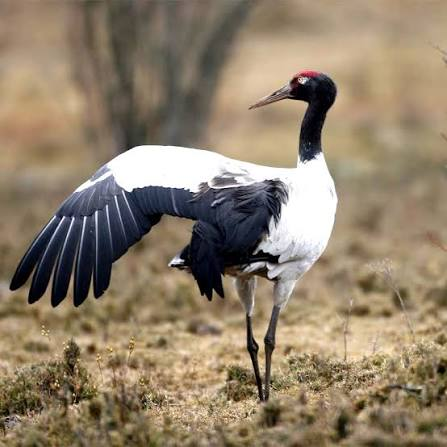
    • Species – Besides Gharials, the sanctuary hosts a rich biodiversity of Marsh Crocodile Muggers, several species of freshwater turtles, including the endangered Red Crowned Roof Turtle, Smoothcoated Otters, Gangetic River Dolphins, Indian Skimmer, Black-bellied Tern, Sarus Crane and Black-necked Storks.

    Additional Information – Gharials

    Characteristics:

    • They show Sexual Dimorphism means males and females differ significantly in size and appearance.
    • Unlike crocodiles, gharials feed exclusively on warm-blooded species and are not man-eaters.

    Habitat Distribution:

    • Gharials are strictly riverine species, requiring deep, clear, fast-flowing waters with steep, sandy riverbanks.
    • Mainly found in Chambal River, Girwa River, Ken River, Yamuna River, Brahmaputra River, Ghaghara River, Bhagirathi-Hooghly River.

    Conservation Status:

    • IUCN Status: Critically Endangered
    • It is listed under Schedule 1 of the Wild Life (Protection) Act, 1972.

    Conservation programmes

    • Project Crocodile (1975): Initiative of United Nations Development Programme (UNDP) and the Food and Agriculture Organization (FAO) and focused on captive breeding.

    International Solar Alliance

    Syllabus: GS3/Environment

    News

    • Recently, the Government highlighted the growing global momentum behind solar energy and ISA’s role in advancing the clean energy transition.

    International Solar Alliance

    • Started – The ISA, is an Indian initiative that was launched by the Prime Minister of India and the President of France on 30th November 2015 in Paris.
    • Solar powered countries – It is an initiative with 124 solar resource rich countries lying fully or partially between the tropic of Cancer and the tropic of Capricorn.
    • Objective – To collectively address key common challenges to the scaling up of solar energy in ISA member countries.
    • HeadquarterNational Institute of Solar Energy (NISE) campus, Gurugram.
    • Members: As of March 2026, the International Solar Alliance (ISA) has expanded to include 125 member and signatory countries. Of these, approximately 107 countries have officially ratified the ISA Framework Agreement to become full members.

    KC-135 Stratotanker

    Syllabus: GS3/Defence

    Context

    • A KC-135 Stratotanker refuelling aircraft crashed in western Iraq during an ongoing military mission Operation Epic Fury (code name mission against Iran).

    KC-135 Stratotanker

    • The KC-135 Stratotanker was built by Boeing in the 1950s and early 1960s.
    • It has been a backbone to the US military’s air refuelling fleet, and critical in allowing aircraft to carry out missions without having to land.
    • They were used extensively in the first Gulf War to extend the range of fighter jets and bombers.
    • It has a speed of 530 miles per hour at 30,000 feet (9,144 meters).

    Global Pandemic Agreement

    Syllabus: GS2/Health

    News

    • India is pushing for a fair benefit-sharing framework for developing countries in the upcoming pandemic agreement negotiations in Geneva.

    Global Pandemic Agreement

    • It was adopted by the World Health Assembly in May 2025.
    • It seeks to establish a legally binding international framework to address global gaps and inequalities in pandemic prevention, preparedness, and respons
    • Its Pathogen Access and Benefit-Sharing (PABS) system is being negotiated to regulate how biological samples and genetic data are shared internationally.
    • It is expected to be adopted by May 2026, will then be open for countries to sign and ratify, and will enter into force 30 days after 60 ratifications.