
Indus Water Treaty
International Relations
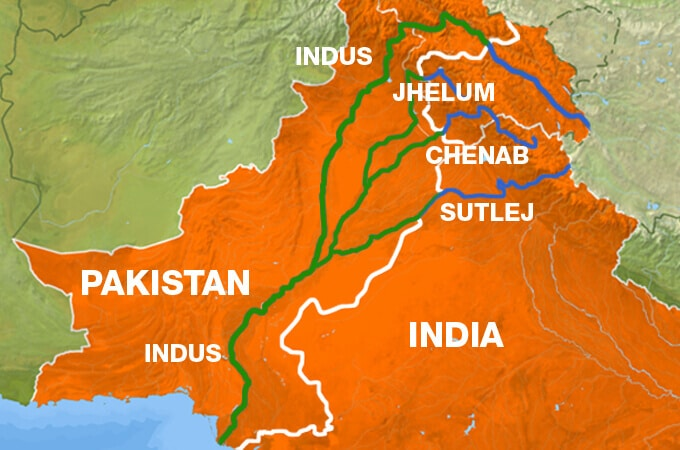
Context
- India has rejected the Permanent Court of Arbitration (PCA), The Hague’s ruling on the Indus Waters Treaty (IWT), asserting that the arbitral body was illegally constituted and lacks jurisdiction over India.
Indus Waters Treaty
-
- Background – In 1947, the partition had cut the Indus river system into two between India and Pakistan.
- Mediated by – The World Bank
- Signed in – it was signed in 1960 by former PM Jawaharlal Nehru and then President of Pakistan, Ayub Khan.
- Transboundary river – The Indus River is a transboundary river that flows through Pakistan (47%), India (39%), Tibet (8%), and Afghanistan (6%). It is the longest river in Pakistan.
- Note – In India, the Indus basin spreads over J&K, HP, Punjab, Rajasthan, Haryana, and Chandigarh.
Major tributaries of the Indus River are:
|
River |
Source |
Joins |
|
Jhelum |
Spring at Verinag, Kashmir Valley |
Chenab at Trimmu, Pakistan |
|
Chenab |
Chandra and Bhaga streams near Bara Lacha Pass |
Satluj after receiving Jhelum and Ravi |
|
Ravi |
Kullu hills near Rohtang Pass |
Chenab near Rangpur, Pakistan |
|
Beas |
Near Rohtang Pass |
Satluj at Harike Barrage, India |
|
Satluj |
Manasarovar-Rakas Lakes, Tibet |
Indus a few kilometres above Mithankot, Pakistan |
Provisions of Indus Water Treaty
- It allocated the three western rivers (i.e., Indus, Chenab, and Jhelum) to Pakistan for unrestricted use, barring certain non-consumptive, agricultural and domestic uses by India.
- It allocated the three eastern rivers, (i.e., Ravi, Beas and Sutlej) to India for unrestricted usage.
- This meant that 80% of the share of water went to Pakistan, leaving 20% of water for use by India.
Annexure C and D
- Though Pakistan has rights over waters of Jhelum, Chenab and Indus, but:
- Annexure C of the IWT allows India certain agricultural uses
- Annexure D allows India to build ‘run of the river’ hydropower projects (projects not requiring live storage of water).
Permanent Indus Commission
-
- The treaty also required that both countries should establish a Permanent Indus Commission constituted by permanent commissioners of both sides.
- It functions as the first stop for resolution of conflicts.
- It should meet at least once a year.
Ramon Magsaysay Award 2026
Miscellaneous

Context
- Tommy Koh (Singapore), Runa Khan (Bangladesh), and Bo Kyi (Myanmar) have been honoured with the Ramon Magsaysay Award 2026.
Ramon Magsaysay
-
- Established: 1958, in memory of Ramon Magsaysay, the 7th President of the Philippines, known for his integrity, courage, and democratic leadership.
- Instituted by: The Rockefeller Brothers Fund (RBF), in partnership with the Philippine government.
- Administered by: The Ramon Magsaysay Award Foundation (RMAF), Manila.
- Nature: Recognizes individuals or organizations in Asia who show selfless service and transformative leadership.
- Prestige: Considered Asia’s highest honour, equivalent in stature to the Nobel Prize in Asia.
26th Shanghai Cooperation Organisation (SCO) Summit
International
Context
- The 26th Shanghai Cooperation Organisation (SCO) Summit has been concluded in Kyrgyzstan.
Major Highlights
-
- It is being held to mark the 25th anniversary of the Shanghai Cooperation Organisation.
- 2026 theme – ‘25 Years of the SCO: Together Towards Sustainable Peace, Development and Prosperity’.
-
- Bishkek Declaration: The summit adopted the historic Bishkek Declaration.
- English has been adopted as an official SCO language.
- Pakistan will take over the SCO chairmanship from Kyrgyzstan and host the next meeting of the Council of Heads of State in 2027.
Shanghai Cooperation Organisation (SCO)
- Founded in – The SCO is an intergovernmental organization founded in 2001 with six members.
- Objective: To enhance regional cooperation for efforts to curb terrorism, separatism, and extremism in the Central Asian region.
- Members: China, Russia, India, Pakistan, Iran, Belarus and the four Central Asian countries of Kazakhstan, Kyrgyzstan, Tajikistan, Uzbekistan.
- Secretariat: Beijing
- Official languages: Russian and Chinese
- Observer status: Afghanistan, Belarus and Mongolia
- The SCO has been an observer in the UN General Assembly since 2005.
Areas of Concern
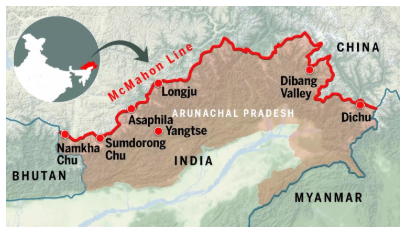
- Ongoing Border Tensions – Incidents in Doklam (2017), Galwan Valley (2020), and northeastern states (Sikkim, Arunachal Pradesh).
- Belt and Road Initiative (BRI): India has expressed reservations about China’s Belt and Road Initiative, especially regarding the China-Pakistan Economic Corridor (CPEC), which passes through the territory of India.
Article 142 of the Constitution
Polity and Governance
Context
- The Supreme Court of India took a rare and extraordinary step under Article 142 to quash FIRs registered against Gen Z NEET-UG protesters.
Article 142 of the Constitution
- Article 142 is a special rule in the Indian Constitution that gives the Supreme Court of India extraordinary power to do “complete justice.”
Landmark judgments under Article 142
- Ayodhya Case (2019): The Supreme Court directed the Union government to establish a trust for the construction of the Ram Temple and awarded the disputed 2.77-acre site for the temple.
- Bhopal Gas Tragedy Case (1991): The Supreme Court ordered Union Carbide Corporation (UCC) to pay $470 million in compensation for the victims of the tragedy.
- Highway Liquor Case (2016): The Supreme Court restricted the sale of liquor within 500 metres of national and state highways to curb accidents caused by drunk driving.
- Chandigarh Mayor Election Case (2024): The Supreme Court invoked Article 142 to declare AAP candidate Kuldeep Kumar as the winner, after finding that the presiding officer had deliberately invalidated eight ballots.
India is Reviving Sandalwood Cultivation
Environment
In News
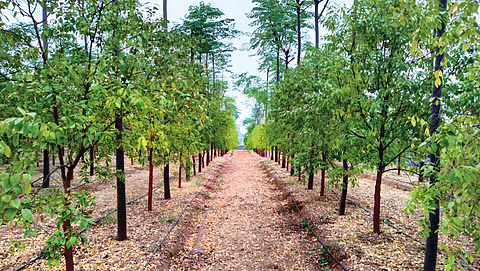
- India is witnessing a renewed push to revive sandalwood (Santalum album) cultivation, with the Union Budget 2026-27 highlighting its cultural and economic importance.
Revival plan of sandlewood
- Objective: To restore the “glory of the Indian sandalwood ecosystem” by focusing on large-scale cultivation and addressing supply shortages.
- Current Supply Crisis: Karnataka Soaps and Detergents Ltd. (KSDL) requires 7,000–8,000 tonnes of sandalwood annually, but domestic production currently meets only 30% of this demand.
- Import Paradox: To cover the shortfall, Karnataka currently imports sandalwood oil from Australia. Ironically, Australia is producing this oil from native Indian sandalwood species they began cultivating 25 years ago.
Additional Information – Indian Sandalwood (Santalum album)
-
- Known as “Liquid Gold” or Chandan, this is one of India’s most valuable commercial crops.
- Forest Type: It is primarily found in Tropical Deciduous Forests (Monsoon Forests).
- Biological Nature: It is a hemi-parasite (partial root parasite), meaning it derives some nutrients from the roots of host plants.
- Distribution: Found mainly in the Western Ghats, Deccan Plateau, and states like Karnataka, Tamil Nadu, Andhra Pradesh, and Kerala.
- Conservation Status: Classified as Vulnerable on the IUCN Red List.
- Key Threats: Sandalwood Spike Disease (SSD), caused by phytoplasmas, is a major threat with no known cure.


















Leave a Reply