
Rani Avantibai Lodhi
History
Context
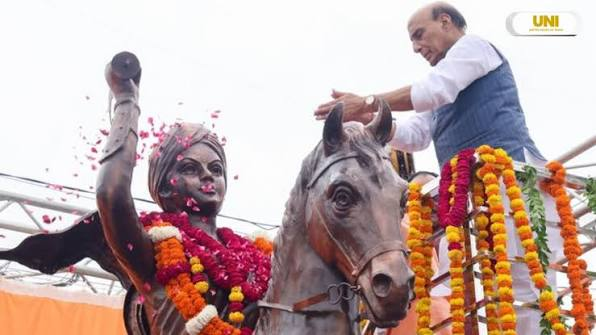
- The Defence Minister of India unveiled the statue of Veerangana Rani Avantibai Lodhi in Lucknow and paid tribute to the legendary freedom fighter.
Rani Avantibai Lodhi
-
- She was the queen of the Ramgarh princely state in present-day Madhya Pradesh and a prominent woman leader of the Revolt of 1857.
- Early life: She was born in 1831 in the present-day Seoni district, Madhya Pradesh. She married Vikramaditya Singh, the ruler of Ramgarh.
- Resistance to British annexation: The British attempted to take control of Ramgarh by placing it under the Court of Wards, disregarding Avantibai’s authority.
- Role in the Revolt of 1857: She mobilised local rulers, landlords and peasants against British rule and is associated with raising a force of about 4,000 soldiers.
- Martyrdom: In March 1858, when surrounded by British troops, Rani Avantibai Lodhi took her life with her sword rather than surrender.
Districts as Export Hubs
Economy
In News
- The Government is strengthening its district-led export strategy with the Districts as Export Hubs (DEH) Initiative.
Districts as Export Hubs (DEH) program
-
- Launched: August 2019, following the PM’s 2019 Independence Day call to make districts centres of export and trade.
- Nodal Ministry: Ministry of Commerce & Industry; implemented mainly through DGFT.
- Objective: Make each district an export hub by identifying products/services with export potential and addressing local export bottlenecks.
- Focus: MSMEs, farmers, artisans, handicrafts, handlooms and local industries → global markets.
- Institutional mechanism:
- SEPC: State Export Promotion Committee
- DEPC: District Export Promotion Committee, generally headed by the District Collector/DM/DC and co-chaired by the DGFT Regional Authority.
- District Export Action Plan (DEAP): Identifies high-potential products/services and tackles infrastructure, logistics, quality, supply-chain and market-access constraints.
- ODOP linkage: The One District One Product (ODOP) initiative has been operationally merged with DEH, creating a stronger district-level export ecosystem.
Additional Information – One District One Product of Karnataka
|
District |
ODOP Product Covered |
|
Bagalkote |
Jaggery |
|
Ballari (Bellary) |
Fig |
|
Belagavi |
Jaggery |
|
Bengaluru Rural |
Poultry Products |
|
Bengaluru Urban |
Bakery Products |
|
Bidar |
Ginger |
|
Chamarajanagar |
Turmeric |
|
Chikkaballapura |
Tomato |
|
Chikkamagaluru |
Spices / Coffee |
|
Chitradurga |
Groundnut Products |
|
Dakshina Kannada |
Marine Products |
|
Davanagere |
Millets |
|
Dharwad |
Mango |
|
Gadag |
Byadagi Chillies |
|
Hassan |
Coconut Products |
|
Haveri |
Mango |
|
Kalaburagi |
Red Gram (Tur Dal) products |
|
Kodagu |
Coffee / Spices |
|
Kolar |
Tomato / Milk Products |
|
Koppal |
Guava |
|
Mandya |
Jaggery |
|
Mysuru |
Banana / Milk Products |
|
Raichur |
Chillies |
|
Shivamogga |
Pineapple |
|
Tumakuru |
Coconut Products |
|
Udupi |
Marine Products |
|
Uttara Kannada |
Pineapple / Spices |
|
Vijayapura |
Lemon / Grapes |
|
Yadgir |
Groundnut |
Universal Vaccine Against pneumonia, meningitis
Health
Context
- Scientists are looking for a universal pneumococcal vaccine that can target all the hundred or so forms of Streptococcus pneumonia bacteria.
Pneumonia
-
- It is an acute respiratory infection causing inflammation in lung air sacs (alveoli).
- Mechanism: Alveoli fill with fluid/pus, restricting oxygen intake.
- Transmission: Airborne droplets, surface contact, or blood during childbirth.
- Vulnerable groups: Children under 5 and adults over 65.
Causative Agents
- Bacteria: Streptococcus pneumoniae (most common), Haemophilus influenzae type b (Hib).
- Viruses: RSV, Influenza, Coronaviruses.
- Fungi: Pneumocystis jirovecii (targets HIV/immunocompromised patients).
- Atypical: Mycoplasma pneumoniae (causes mild “walking pneumonia”).
India’s Schemes & Initiatives
- PCV Vaccine: Rolled out under the Universal Immunization Programme (UIP). Protects against pneumonia, meningitis, and sepsis.
- SAANS Campaign: Social Awareness and Action to Neutralise Pneumonia Successfully. Drives early identification in under-5 children.
- Integrated Action Plan for Prevention and Control of Pneumonia and Diarrhea – Integrated strategy targeting India’s two highest under-5 child killers: pneumonia and diarrhea.
Global Frameworks
-
- Global Action Plan for the Prevention and Control of Pneumonia and Diarrhoea (GAPPD) : WHO/UNICEF plan aiming for fewer than 3 child pneumonia deaths per 1,000 live births.
- World Pneumonia Day: Observed every year on November 12.
Police Modernisation Mission (PMM)
Governance
Context
- The Union government told the Supreme Court that it has begun implementing a ₹24,000-crore umbrella scheme called the Police Modernisation Mission (PMM) over the next five years.
About –
-
- Aim: Modernise police forces by improving technology, infrastructure, mobility, communication and operational capabilities.
- Nodal Ministry: Ministry of Home Affairs (MHA).
- Focus areas:
- Modern weapons and equipment
- Police communication & surveillance systems
- Cybercrime capabilities
- Police infrastructure and mobility
- Training and forensic facilities
- Approach: Strengthens State/UT police forces through Central assistance and promotes technology-enabled policing.
- Importance: Improves internal security, crime investigation, emergency response and police efficiency.
- Key linkage: Supports SMART Policing — Sensitive, Modern, Alert, Responsive and Techno-savvy.
Visit of the Prime Minister of Belgium to India
International
Context
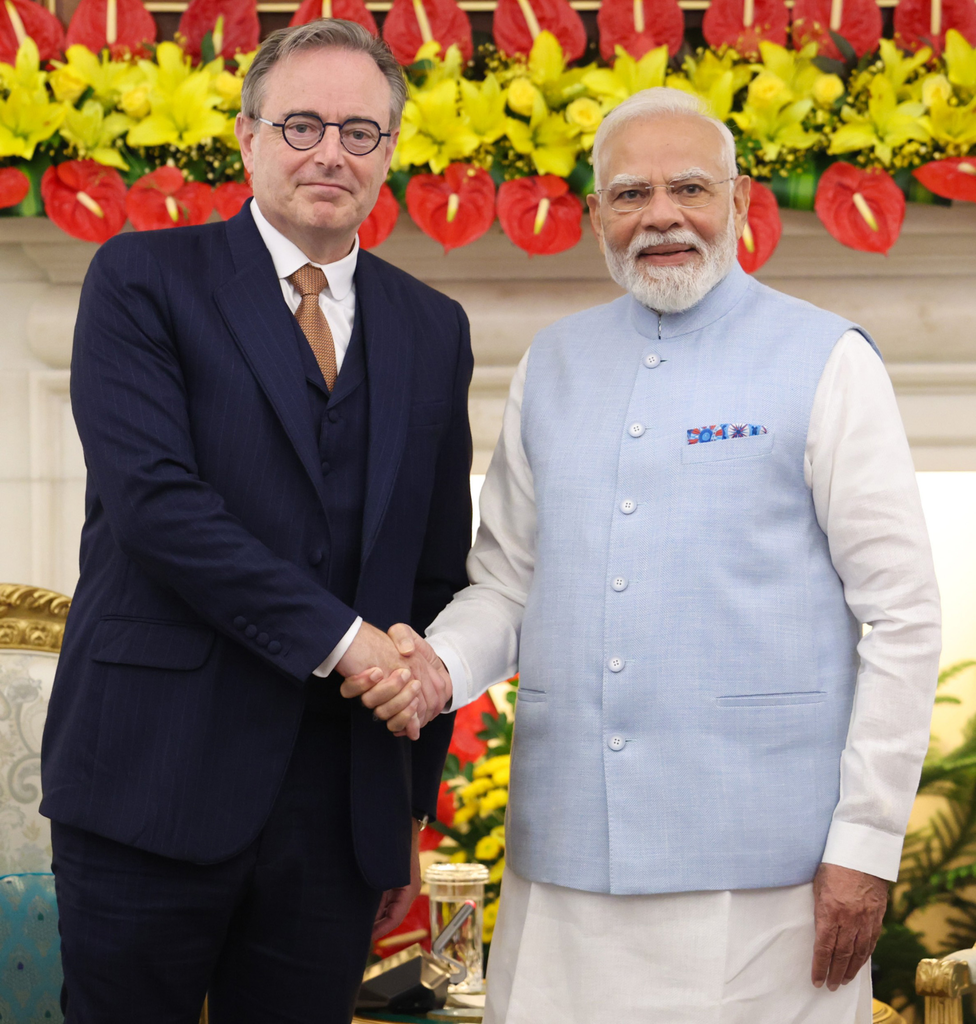
- Recently the Belgian Prime Minister visited India, marking the first official visit by a Belgian Prime Minister in two decades.
India–Belgium Relations
- Diplomatic ties: Established in 1948; 75 years completed in 2023.
- Trade: Major sectors include diamonds, pharmaceuticals, chemicals, machinery and IT.
- Strategic Dialogue: Institutionalised bilateral strategic engagement.
- Defence: Cooperation in maritime security, autonomous systems and counter-drone technology.
- Strategic importance: Belgium is a key gateway to the EU, hosting EU institutions and NATO headquarters.
- Emerging areas: Critical minerals, semiconductors, clean energy and technology.
Strengthening India’s Fight Against Corruption
Polity
Context
- The Central Vigilance Commission (CVC) highlighted delays in the disposal of corruption cases investigated by the Central Bureau of Investigation (CBI), with 7,229 cases under the Prevention of Corruption Act, 1988, pending trial as of December 31, 2025.
The Prevention of Corruption (PC) Act, 1988
- It is a federal law enforced in Karnataka primarily by the Karnataka Lokayukta.
Core Offences & Penalties
- Taking Bribes (Section 7): Public servants face 3 to 7 years in prison plus a fine.
- Giving Bribes (Section 8): Bribe-givers or companies face up to 7 years in prison.
- Criminal Misconduct (Section 13): Misappropriation of property or illicit enrichment carries 4 to 10 years in prison.
Strict Legal Conditions
- Demand & Acceptance: The Karnataka High Court rules that prosecutors must prove both a demand was made and a bribe was accepted; missing either invalidates the case.
- Prior Sanction (Section 17A): Police cannot investigate a public servant’s official decisions without prior approval from the government.
Key Enforcement Authority
- Karnataka Lokayukta: The state’s independent anti-corruption ombudsman handling traps, raids, and prosecutions.
Additional Information – Central Vigilance Commission (CVC)
- It is India’s apex statutory body entrusted with ensuring integrity, transparency, and accountability in public administration.
- It was established in 1964 following the recommendations of the Santhanam Committee on Prevention of Corruption.
- The Central Vigilance Commission Act, 2003, provides for the appointment of a Central Vigilance Commissioner and two Vigilance Commissioners. The tenure of the Vigilance Commissioner is of four years or till the incumbent attains the age of 65 years.
- The Central Vigilance Commissioner and the Vigilance Commissioners are appointed by the President of India on the recommendations of a High-Powered Committee (HPC) consisting of the Prime Minister, the Minister of Home Affairs and the Leader of the Opposition in the House of the People (Lok Sabha).
Power and Functions
- The Central Vigilance Commission (CVC) mandated under the CVC Act, 2003 to combat corruption and ensure integrity, transparency, and accountability in public administration.
- The Commission exercises superintendence over vigilance administrations of Central Government ministries, departments, and organizations.
- The Central Vigilance Commission acts as the apex vigilance institution by supervising and guiding anti-corruption inquiries, including cases referred by the Lokpal and whistleblower complaints under the PIDPI framework.
- It supervises the functioning of the Central Bureau of Investigation (CBI) in cases related to offences under the Prevention of Corruption Act, 1988
- It plays a key role in senior appointments by chairing committees that recommend appointments of senior officers in the Directorate of Enforcement and the CBI (SP level and above, excluding the CBI Director).
Tenzing Norgay National Adventure Awards 2024
Miscellaneous

Context (PIB):
- The Ministry of Youth Affairs and Sports announced four recipients of the Tenzing Norgay National Adventure Awards 2024.
About-
- Instituted in 1993
- The award is the nation’s top honor for adventure sports and holds a status equivalent to the Arjuna Awards.
- It is named after Tenzing Norgay, one of the first two climbers to summit Mount Everest with Edmund Hillary in 1953.
- Categories: Land Adventure, Water Adventure, Air Adventure, and Lifetime Achievement.
2024 Awardees:
- Land Adventure: Baljeet Kaur won as the first Indian to scale five 8,000m peaks in a season; Skalzang Rigzin as the first Indian civilian to summit Everest without supplemental oxygen or Sherpa support.
- Water Adventure: Rimo Saha, for his record in para-swimming and open-water sea competitions.
- Lifetime Achievement: Shiv Prasad Chamoli, for lifelong contributions to winter games and adventure sports administration.
Leave a Reply