
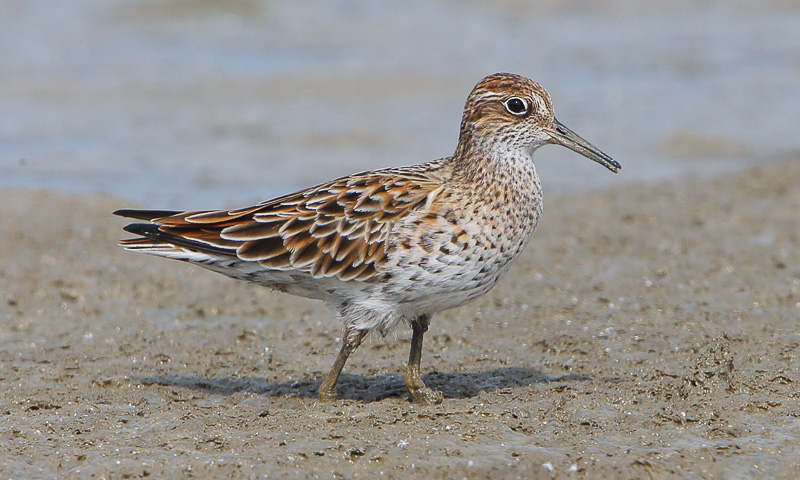
Sharp-tailed Sandpiper (Calidris acuminata)
Environment
News –
- A rare sharp-tailed sandpiper was spotted near Najafgarh Jheel in Gurugram, Haryana.
About
-
- It is a small-to-medium-sized migratory wader (shorebird) known for long-distance annual migrations between Arctic Siberia and Australasia.
- Habitat: Shallow freshwater wetlands, coastal estuaries, flooded pastures, and saltmarshes.
- Distribution: Breeds in the boggy tundra of northern Siberia during the short summer, wintering mainly in Australia, New Zealand, and Melanesia. It is a rare vagrant visitor to India and Western Europe.
- Ecological role: Biological indicator for the health of the East Asian-Australasian Flyway.
- IUCN: Vulnerable
RAKSHA’ Defence Diplomacy Document
Defence
News –
- The Defence Minister unveiled ‘RAKSHA’, a strategic document outlining India’s 10-year roadmap for global defence partnerships.
- It marks a shift towards proactive global defence cooperation, aligning national security objectives with long-term partnerships, stability and mutual growth.
Key pillars of RAKSHA
- Strategic Partnerships: Deepening bilateral and multilateral security cooperation.
- Capacity Building: Enhancing joint military exercises, training programmes, and sharing best practices with friendly nations.
- Indigenous Exports: Promoting Make-in-India defence platforms to establish the nation as a reliable global defence manufacturing hub.
- Maritime security: Strengthening India’s role as a Net Security Provider and First Responder in the Indian Ocean Region.
Earth Observation Satellite EOS-05
Science & Technology
News –
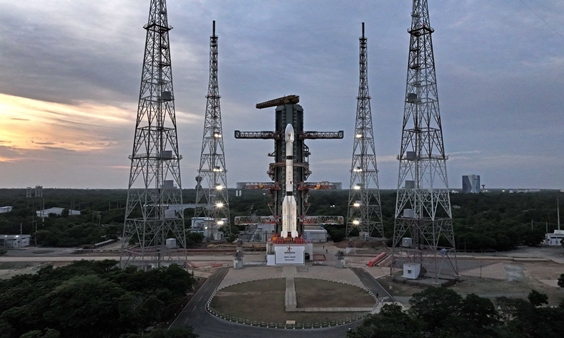
- The Indian Space Research Organization (ISRO) launched EOS-05 (formerly GISAT-1A) aboard the GSLV-F17 rocket.
EOS-05
- It is India’s first Earth observation imaging satellite to operate from Geosynchronous Orbit (GEO).
- It is designed to provide near real-time imaging of priority targets every 5 minutes and the whole Indian landmass every 30 minutes.
- Significance: Supports agricultural assessment, resource management, environmental monitoring for natural disasters, and continuous surveillance for national security.
- GEO is a circular geosynchronous orbit at ~36,000 km, where a satellite’s orbital period matches Earth’s rotation, enabling continuous surveillance over a fixed region.
Status of the World’s Soil Resources 2026
International
News –
- The Food and Agriculture Organization (FAO) published the Status of the World’s Soil Resources 2026 report
- Soil biodiversity refers to the variety of life belowground, ranging from genes and species to communities and soil ecosystems.
- Major Organisms include bacteria, fungi, archaea, protozoa, nematodes, earthworms and arthropods.
Key Findings
- Loss of Soil Biodiversity: It ranks 4th among seven major threats to soil function, after soil erosion, loss of soil organic carbon and nutrient mismanagement.
- Major Threat – Habitat Loss: Intensive irrigation, heavy machinery, fertilisers and pesticides can significantly alter soil habitats and reduce soil biodiversity.
- Global Implementation Gap: Sustainable soil-management practices are deteriorating in 58% of regional and sub-regional assessments, while improving in only around 10%.
Pichavaram Mangrove Ecosystem
Environment
News –
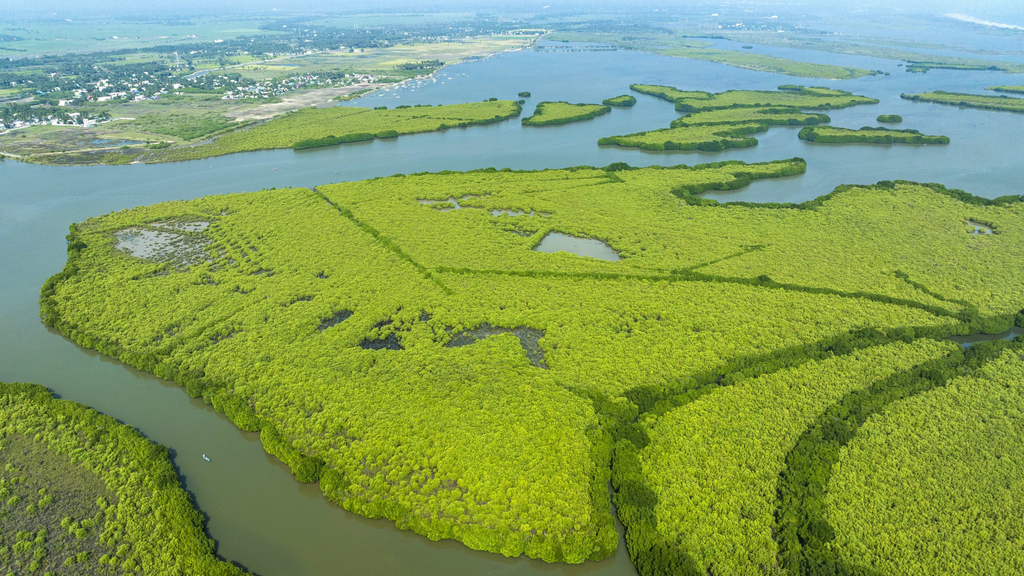
- A recent study valued the Pichavaram mangrove ecosystem’s Total Economic Value (TEV) at ₹2,485.38 crore, highlighting its immense blue carbon stock.
Pichavaram Mangrove Forest
- Location – Cuddalore, Tamil Nadu
-
- Uniqueness – It is one of India’s largest mangroves, situated in a coastal estuary between the Vellar and Coleroon Rivers.
- It encompasses the Killai backwaters and connects to the Bay of Bengal through a shallow littoral passage.
- Dominant Species: Avicennia marina and Rhizophora.
- Environmental Status: It is a Ramsar Site designated in 2022 and an Important Bird Area (IBA).
- Its South Indian mangrove region is classified as Critically Endangered on the IUCN Red List of Ecosystems.
- Protection: Categorized as CRZ-IA (Ecologically Sensitive Area), it receives the highest legal protection.
-
- Ecological Significance: Acts as a bio-shield, protecting inland coastal communities from cyclones, tsunamis, and erosion, while supporting marine nurseries, fisheries, and coastal livelihoods.
- Key Threats: Microplastic infiltration, unregulated shrimp farming expansion, and land conversion.
Syria
International
News –
-
- A UN report confirmed that Syria was building a nuclear reactor in Deir el-Zour under former President Assad.
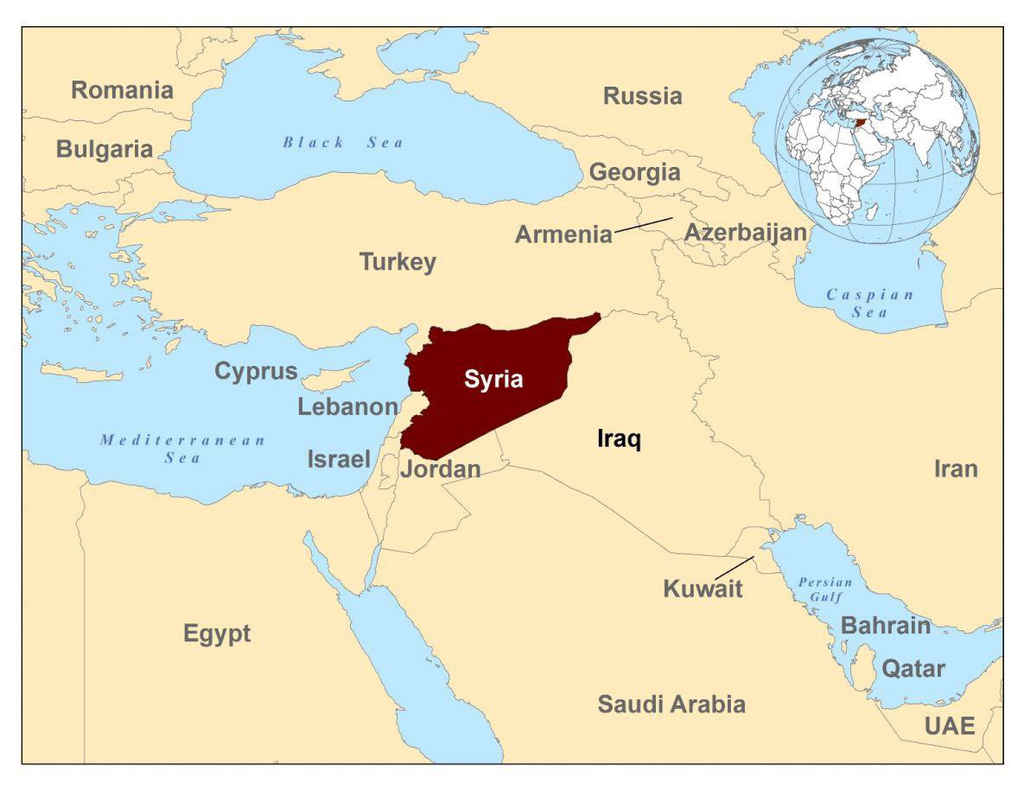
- Location: East coast of Mediterranean Sea in southwestern Asia.
- Capital: Damascus.
-
- Borders: Turkey (north), Iraq (east), Jordan (south), Lebanon (west) and Israel (southwest).
- Major Landforms: Syrian Coastal Mountains, Anti-Lebanon Mountains and the Syrian/Syro-Arabian Desert.
- The Golan Heights: A major territorial and geopolitical issue involving Syria and Israel.
- Syria is a member of the UN and the League of Arab States (Arab League).
Belgium
International
News –
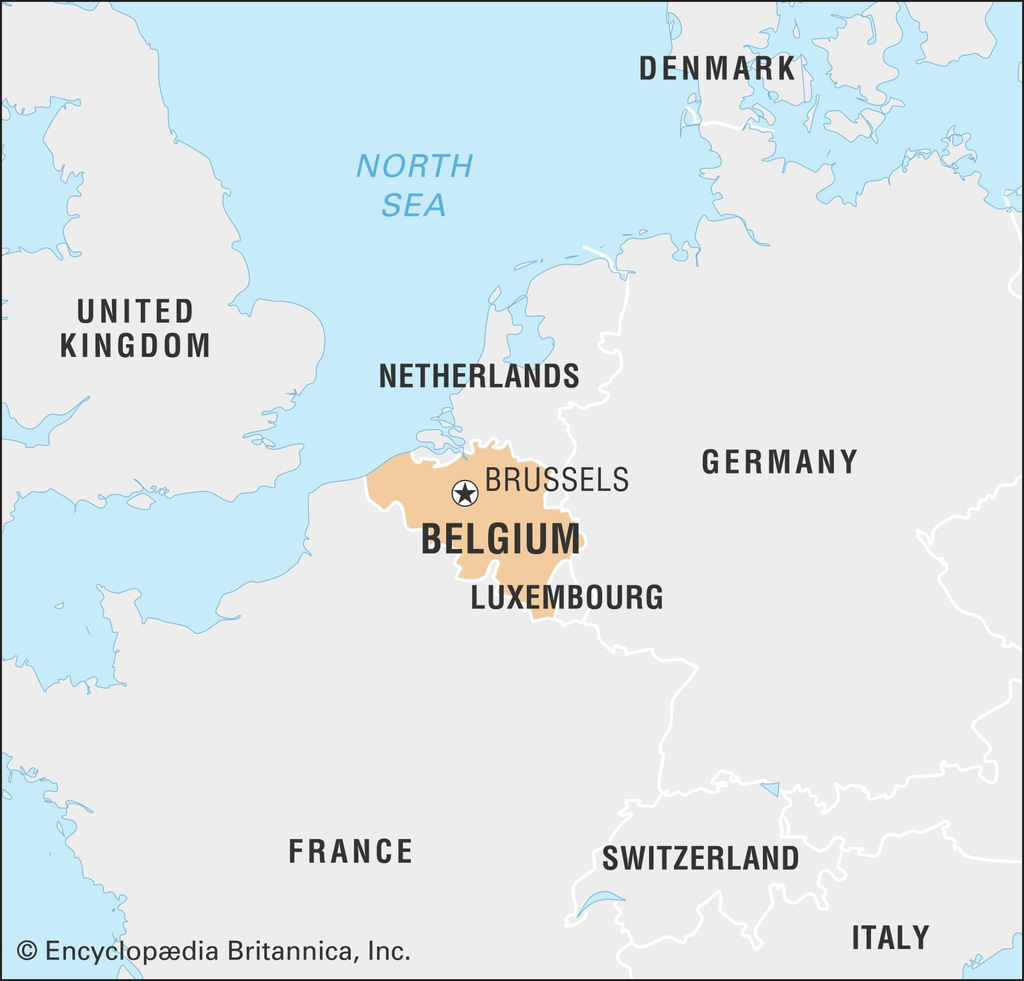
- The Belgian Prime Minister arrived in New Delhi for a three-day official visit to India.
About
- Located in – Northwestern Europe, it is one of the smallest and most densely populated European countries.
- Capital: Brussels (also hosts NATO Headquarters)
- Borders: France (South), Germany (East), Luxembourg (Southeast) and the Netherlands (North).
- Founding member of the EU and NATO.
- Has a coastline along the North Sea, giving it strategic importance for European maritime trade.


















Leave a Reply