
Public Examinations (Prevention of Unfair Means) Act, 2024
Polity
Context
- The Union Cabinet cleared a proposal to introduce amendments to the Public Examinations (Prevention of Unfair Means) Act, 2024.
Public Examination (Prevention of Unfair Means ) Act, 2024
- It was passed in 2024 and is aimed at curbing leaks, malpractices in recruitment examinations like UPSC, SSC etc and entrance tests such as NEET, JEE, and CUET.
- The Act broadly defines “unfair means” to include various malpractices, such as:
- Leaking question papers or answer keys,
- Assisting candidates during exams (unauthorized communication, providing solutions),
- Tampering with computer networks or resources,
- Impersonating candidates,
- Conducting fake examinations or issuing fake documents,
- Tampering with documents for merit lists or ranks.
Penalties and Punishments:
Individuals:
- Imprisonment ranges from 3 to 10 years depending on the offense’s severity.
- Fines up to Rs. 1 crore for organized crimes.
- Service providers:
- Fines up to Rs. 1 crore for involvement in malpractices.
- Barring from conducting public examinations for 4 years.
- Personal liability for directors/management involved.
Organized crimes:
- Harsher penalties, with imprisonment between 5 and 10 years and a minimum fine of Rs. 1 crore
- The institution involved can face property attachment and forfeiture
Investigation:
- All offences under the Act are cognisable, non-bailable, and non-compoundable.
- An officer not below the rank Deputy Superintendent or Assistant Commissioner of Police will investigate the offences under the Act.
- The Central Government may transfer the investigation to any Central Investigating Agency.
Radhakrishnan Panel
- Following the NEET-UG 2024 controversy, the Ministry of Education formed a high-level committee headed by former ISRO chairman K. Radhakrishnan.
NATO’s Ankara Summit
International
Context
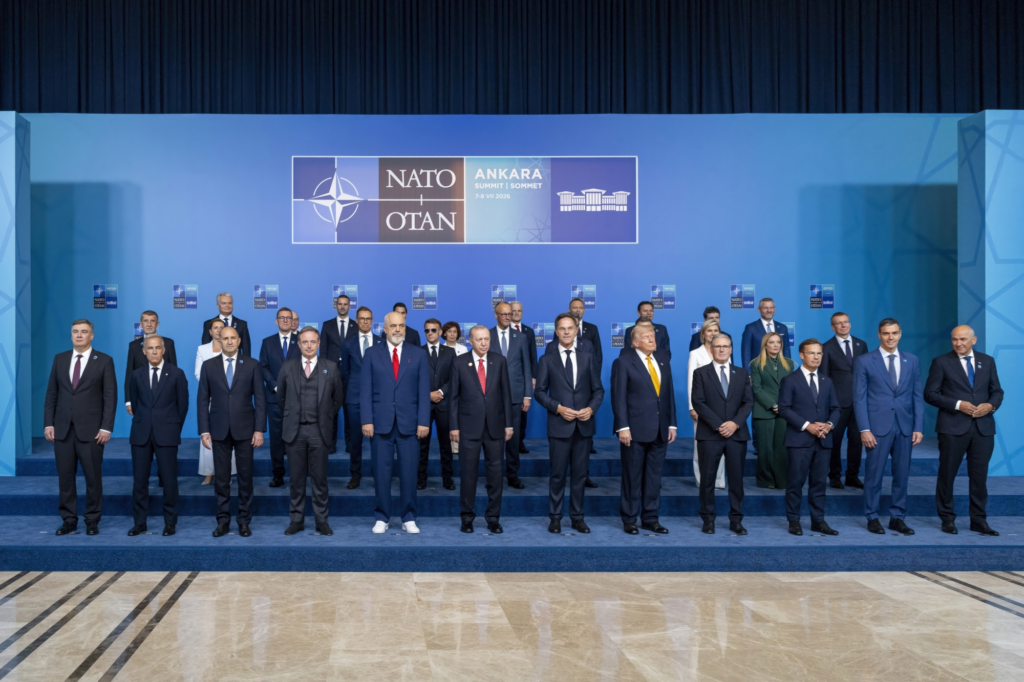
- The 2026 NATO Summit, held in Ankara, Türkiye, reaffirmed the Alliance’s commitment to collective defence and strengthening Europe’s defence industrial base.
North Atlantic Treaty Organization (NATO)
- NATO, also called the North Atlantic Alliance, is an intergovernmental military alliance.
- Headquarters: Brussels, Belgium
- Background: It was established by 12 countries from Europe and North America with the signing of the North Atlantic Treaty (also known as Washington Treaty) in 1949 in Washington, D.C to provide collective security against the Soviet Union attack in the aftermath of World War II.
- Collective Defense: According to Article 5, NATO works on the principle of collective defense, where an attack on any NATO member is considered an attack on all NATO members. So far, Article 5 has been invoked once – in response to the 9/11 terrorist attacks in the United States in 2001.
- Members: It comprises 32 member states. Sweden became the 32nd member.
UNESCO Adds West Bank, Lebanon Sites to Danger List
History & Culture
Context
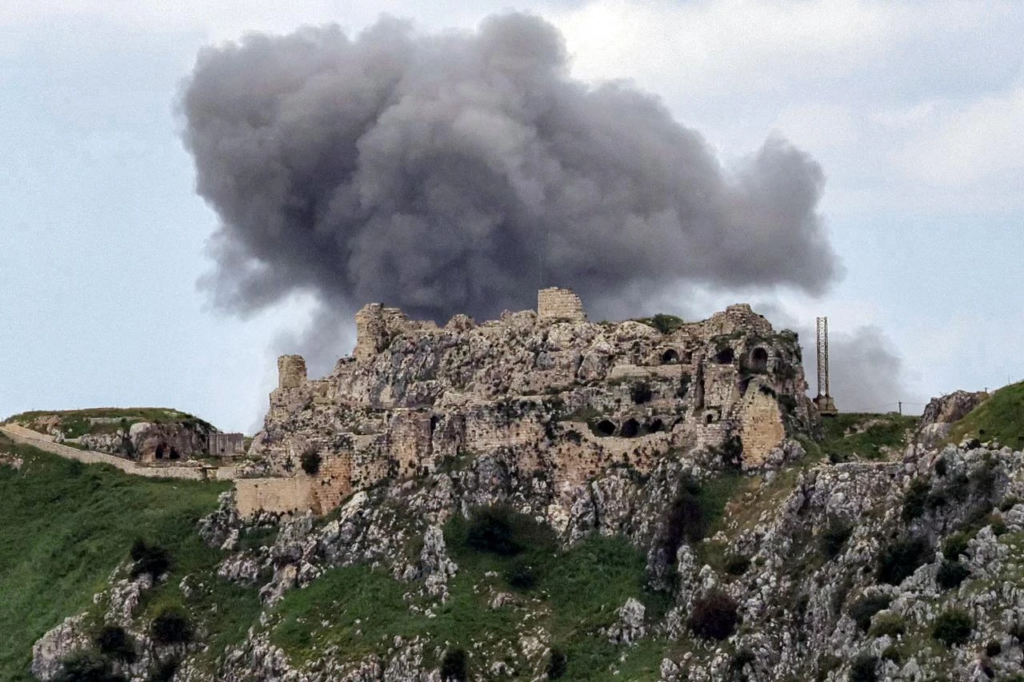
- UNESCO has added Sebastia in the West Bank and five castles in Lebanon’s Mount Amel region, including Beaufort Castle, to both the World Heritage List and the List of World Heritage in Danger.
About
-
- The World Heritage List recognises cultural, natural and mixed heritage sites of Outstanding Universal Value.
- The List of World Heritage in Danger includes sites threatened by armed conflict, natural disasters, uncontrolled urbanisation, pollution, climate change or neglect. Its objective is to mobilise international attention and conservation support.
- The emergency inscription of these sites reflects concerns over the impact of the ongoing conflict in the Middle East on their conservation.
Sebastia
- Sebastia, located near Nablus in the West Bank, is identified with the ancient city of Samaria, the capital of the biblical Kingdom of Israel.
- Its archaeological remains span the Iron Age, Roman, Byzantine and Islamic periods, reflecting its long historical significance.
Mount Amel Castles
- The inscription covers five historic castles in Lebanon’s Mount Amel (Jabal Amel) region, including Beaufort Castle.
- These fortifications showcase a blend of Crusader, Ayyubid, Mamluk and local architectural traditions, illustrating nearly nine centuries of military and cultural history.
United Nations Commission on International Trade Law (UNCITRAL)
International
In News
- The 60th anniversary of the United Nations Commission on International Trade Law (UNCITRAL) was observed.
United Nations Commission on International Trade Law (UNCITRAL)
- Established in – 1966.
-
- Objective –It is a subsidiary body of the UN General Assembly and works to modernise and harmonise international trade law.
- It convenes annually in New York and Vienna in turn to promote its work in the field of international trade law.
- Membership – It has 70 member States
- India is a member of the United Nations Commission on International Trade Law(UNCITRAL)
- Functions – It develops legal instruments such as conventions, model laws and legislative guides to ease international trade and business by setting common legal standards.
- UNCITRAL is not a WTO body. The WTO is an autonomous intergovernmental organization, whereas it is a subsidiary organ of the UN General Assembly.
SCO Council of Foreign Ministers meeting 2026
International
Context
- India urged the Shanghai Cooperation Organisation (SCO) to adopt a firm and principled approach against terrorism during the SCO Council of Foreign Ministers meeting in Cholpan Ata, Kyrgyz Republic.
Shanghai Cooperation Organisation (SCO)
- Founded in – The SCO is an intergovernmental organization founded in 2001 with six members.
- Objective: To enhance regional cooperation for efforts to curb terrorism, separatism, and extremism in the Central Asian region.
- Members: China, Russia, India, Pakistan, Iran, Belarus and the four Central Asian countries of Kazakhstan, Kyrgyzstan, Tajikistan, Uzbekistan.
- Secretariat: Beijing
- Official languages: Russian and Chinese
- Observer status: Afghanistan, Belarus and Mongolia
- The SCO has been an observer in the UN General Assembly since 2005.



















Leave a Reply