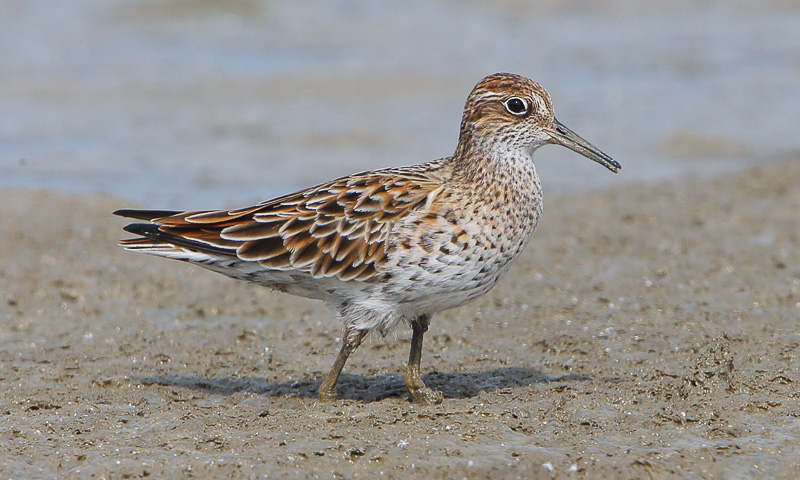
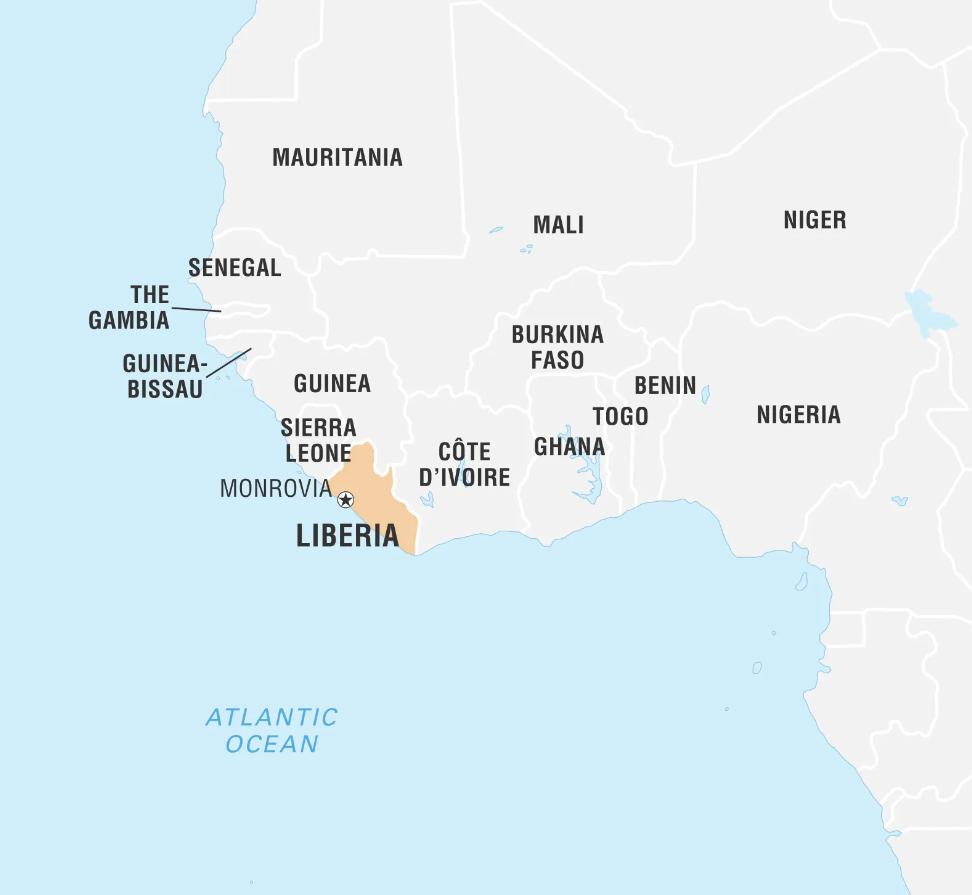
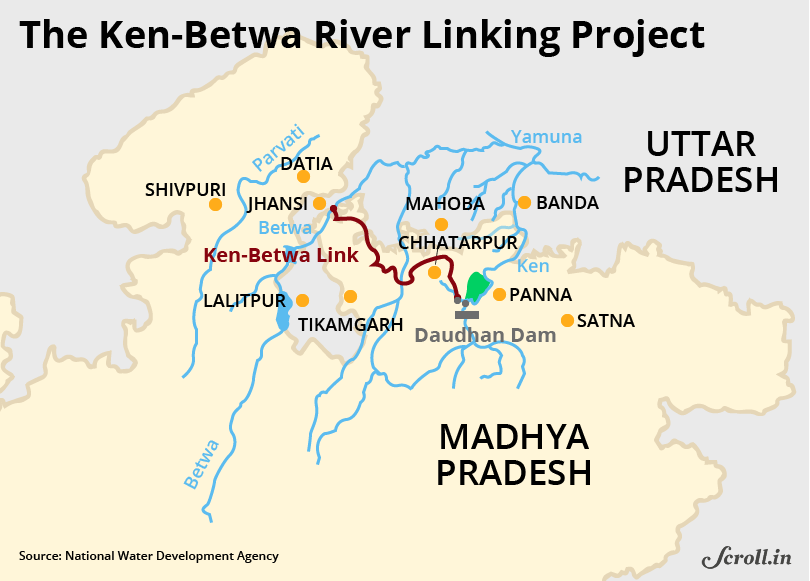
A rare sharp-tailed sandpiper was spotted near Najafgarh Jheel in Gurugram, Haryana.
About
It is a small-to-medium-sized migratory wader (shorebird) known for long-distance annual migrations between Arctic Siberia and Australasia.
Habitat: Shallow freshwater wetlands, coastal estuaries, flooded pastures, and saltmarshes.
Distribution: Breeds in the boggy tundra of northern Siberia during the short summer, wintering mainly in Australia, New Zealand, and Melanesia. It is a rare vagrant visitor to India and Western Europe.
Ecological role: Biological indicator for the health of the East Asian-Australasian Flyway.
IUCN: Vulnerable
RAKSHA’ Defence Diplomacy Document
Defence
News –
The Defence Minister unveiled ‘RAKSHA’, a strategic document outlining India’s 10-year roadmap for global defence partnerships.
It marks a shift towards proactive global defence cooperation, aligning national security objectives with long-term partnerships, stability and mutual growth.
Key pillars of RAKSHA
Strategic Partnerships: Deepening bilateral and multilateral security cooperation.
Capacity Building: Enhancing joint military exercises, training programmes, and sharing best practices with friendly nations.
Indigenous Exports: Promoting Make-in-India defence platforms to establish the nation as a reliable global defence manufacturing hub.
Maritime security: Strengthening India’s role as a Net Security Provider and First Responder in the Indian Ocean Region.
Earth Observation Satellite EOS-05
Science & Technology
News –
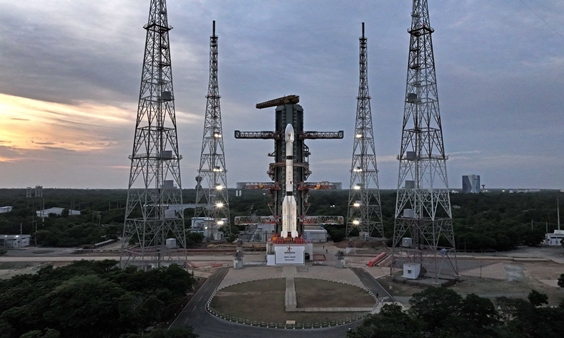
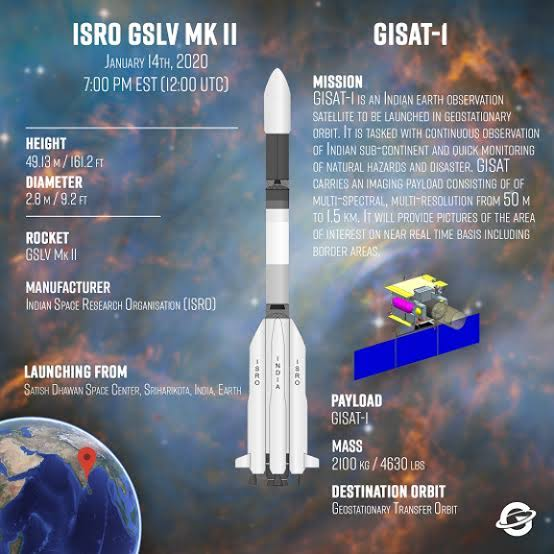
The Indian Space Research Organization (ISRO) launched EOS-05 (formerly GISAT-1A) aboard the GSLV-F17 rocket.
EOS-05
It is India’s first Earth observation imaging satellite to operate from Geosynchronous Orbit (GEO).
It is designed to provide near real-time imaging of priority targets every 5 minutes and the whole Indian landmass every 30 minutes.
Significance: Supports agricultural assessment, resource management, environmental monitoring for natural disasters, and continuous surveillance for national security.
GEO is a circular geosynchronous orbit at ~36,000 km, where a satellite’s orbital period matches Earth’s rotation, enabling continuous surveillance over a fixed region.
Status of the World’s Soil Resources 2026
International
News –
The Food and Agriculture Organization (FAO) published the Status of the World’s Soil Resources 2026 report
Soil biodiversity refers to the variety of life belowground, ranging from genes and species to communities and soil ecosystems.
Major Organisms include bacteria, fungi, archaea, protozoa, nematodes, earthworms and arthropods.
Key Findings
Loss of Soil Biodiversity: It ranks 4th among seven major threats to soil function, after soil erosion, loss of soil organic carbon and nutrient mismanagement.
Major Threat – Habitat Loss: Intensive irrigation, heavy machinery, fertilisers and pesticides can significantly alter soil habitats and reduce soil biodiversity.
Global Implementation Gap: Sustainable soil-management practices are deteriorating in 58% of regional and sub-regional assessments, while improving in only around 10%.
Pichavaram Mangrove Ecosystem
Environment
News –
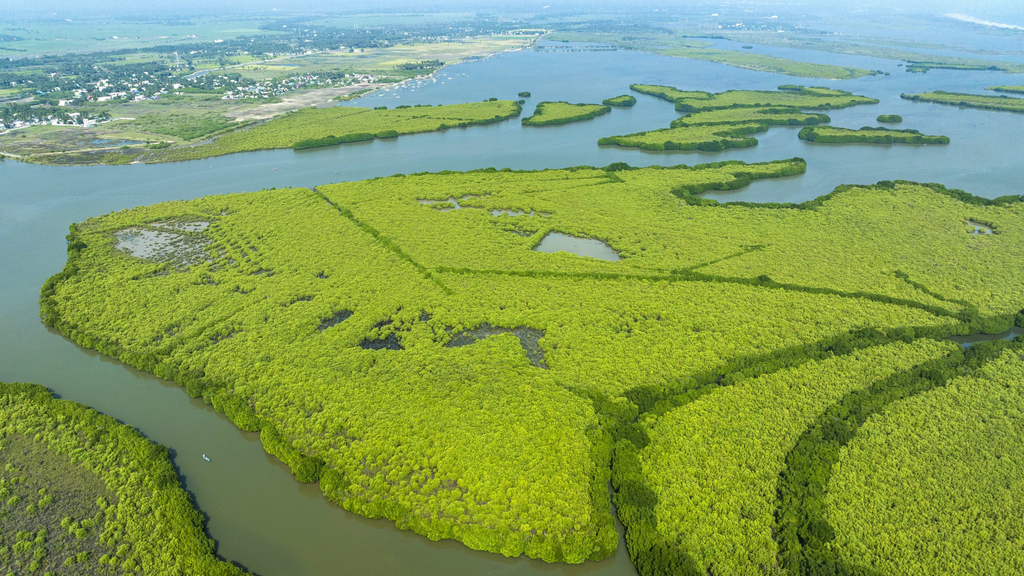
A recent study valued the Pichavaram mangrove ecosystem’s Total Economic Value (TEV) at ₹2,485.38 crore, highlighting its immense blue carbon stock.
Pichavaram Mangrove Forest
Location – Cuddalore, Tamil Nadu
Uniqueness – It is one of India’s largest mangroves, situated in a coastal estuary between the Vellar and Coleroon Rivers.
It encompasses the Killai backwaters and connects to the Bay of Bengal through a shallow littoral passage.
Dominant Species: Avicennia marina and Rhizophora.
Environmental Status: It is a Ramsar Site designated in 2022 and an Important Bird Area (IBA).
Its South Indian mangrove region is classified as Critically Endangered on the IUCN Red List of Ecosystems.
Protection: Categorized as CRZ-IA (Ecologically Sensitive Area), it receives the highest legal protection.
Ecological Significance: Acts as a bio-shield, protecting inland coastal communities from cyclones, tsunamis, and erosion, while supporting marine nurseries, fisheries, and coastal livelihoods.
Key Threats: Microplastic infiltration, unregulated shrimp farming expansion, and land conversion.
Syria
International
News –
A UN report confirmed that Syria was building a nuclear reactor in Deir el-Zour under former President Assad.
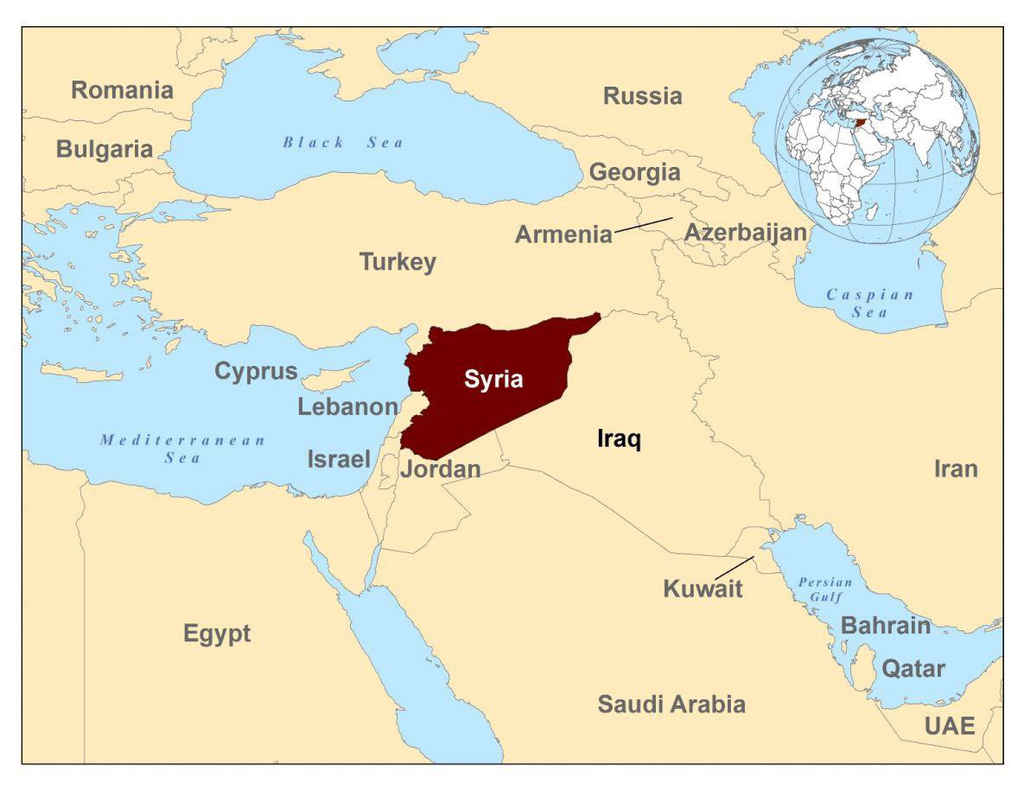
Location: East coast of Mediterranean Sea in southwestern Asia.
Capital: Damascus.
Borders: Turkey (north), Iraq (east), Jordan (south), Lebanon (west) and Israel (southwest).
Major Landforms: Syrian Coastal Mountains, Anti-Lebanon Mountains and the Syrian/Syro-Arabian Desert.
The Golan Heights: A major territorial and geopolitical issue involving Syria and Israel.
Syria is a member of the UN and the League of Arab States (Arab League).
Belgium
International
News –
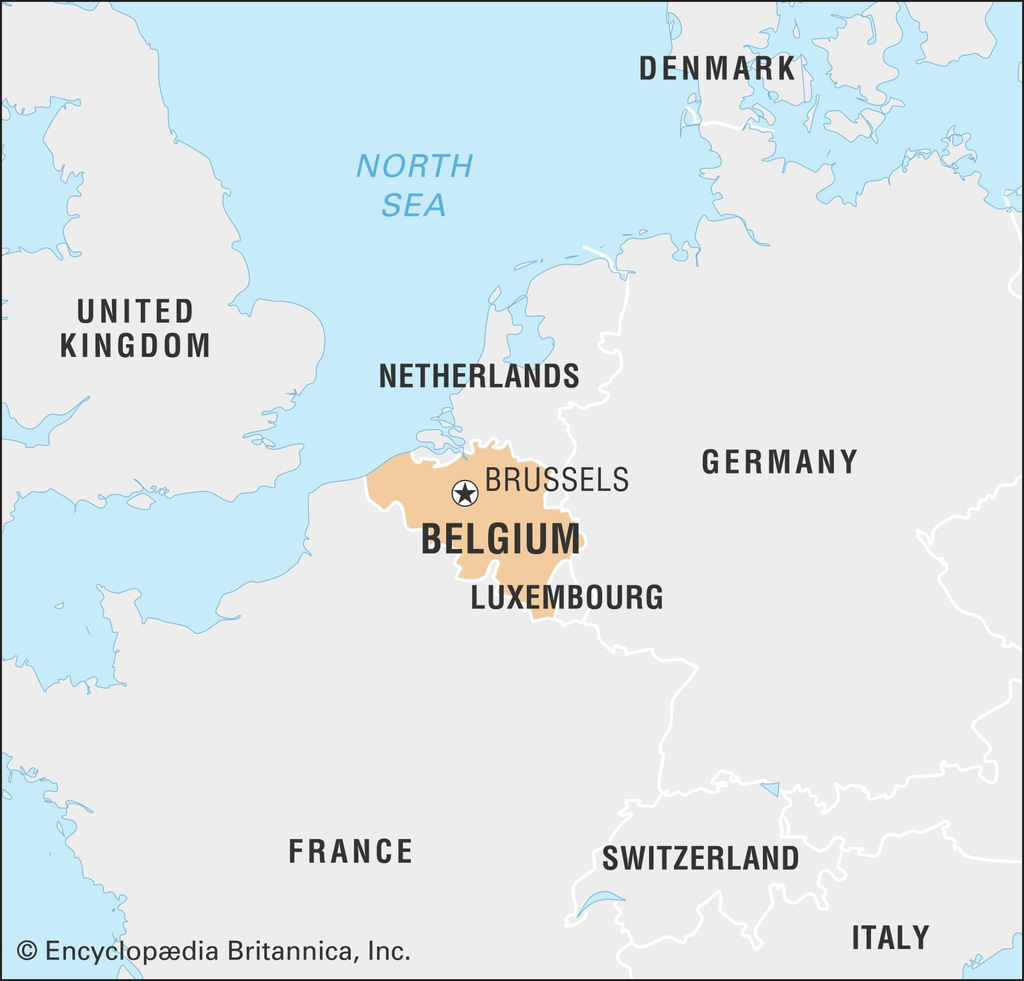
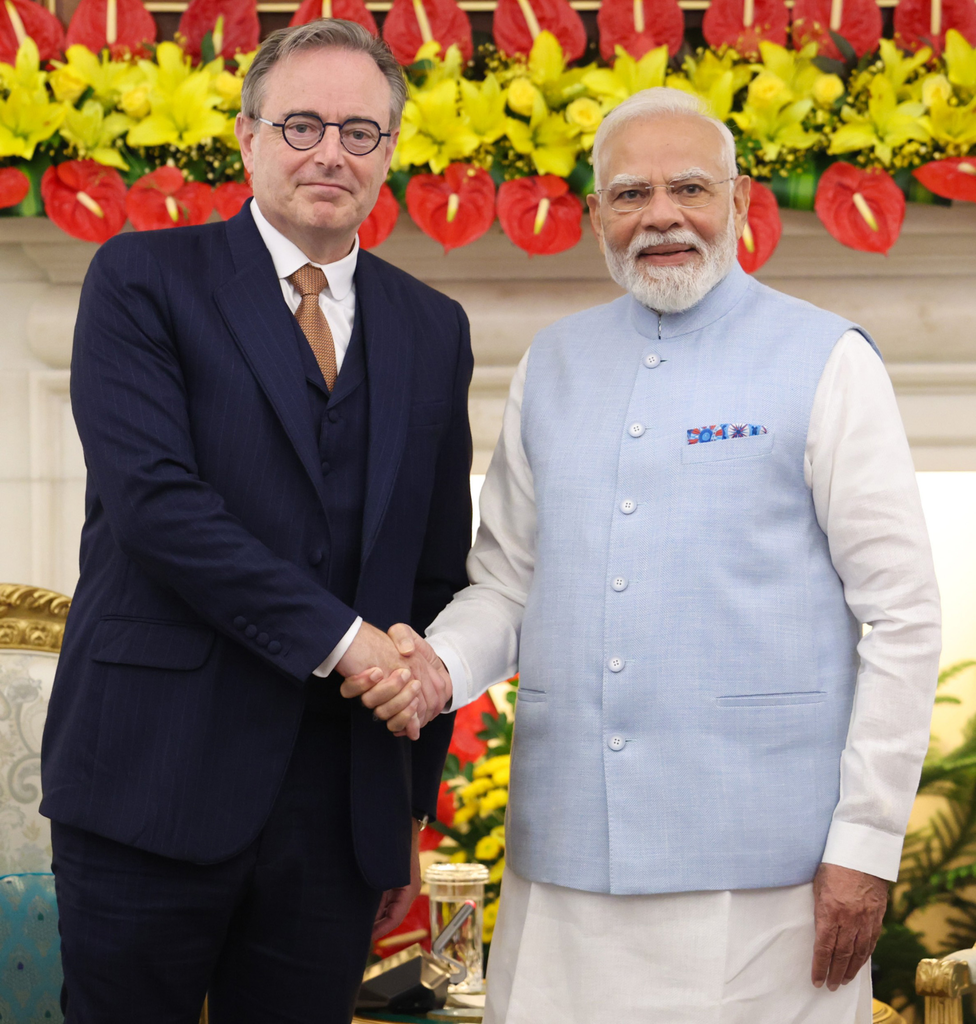
The Belgian Prime Minister arrived in New Delhi for a three-day official visit to India.
About
Located in – Northwestern Europe, it is one of the smallest and most densely populated European countries.
Capital: Brussels (also hosts NATO Headquarters)
Borders: France (South), Germany (East), Luxembourg (Southeast) and the Netherlands (North).
Founding member of the EU and NATO.
Has a coastline along the North Sea, giving it strategic importance for European maritime trade.
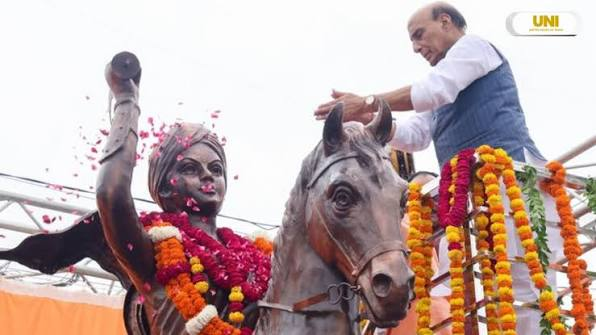
The Defence Minister of India unveiled the statue of Veerangana Rani Avantibai Lodhi in Lucknow and paid tribute to the legendary freedom fighter.
Rani Avantibai Lodhi
She was the queen of the Ramgarh princely state in present-day Madhya Pradesh and a prominent woman leader of the Revolt of 1857.
Early life: She was born in 1831 in the present-day Seoni district, Madhya Pradesh.She married Vikramaditya Singh, the ruler of Ramgarh.
Resistance to British annexation: The British attempted to take control of Ramgarh by placing it under the Court of Wards, disregarding Avantibai’s authority.
Role in the Revolt of 1857: She mobilised local rulers, landlords and peasants against British rule and is associated with raising a force of about 4,000 soldiers.
Martyrdom: In March 1858, when surrounded by British troops, Rani Avantibai Lodhi took her life with her sword rather than surrender.
Districts as Export Hubs
Economy
In News
The Government is strengthening its district-led export strategy with the Districts as Export Hubs (DEH) Initiative.
Districts as Export Hubs (DEH) program
Launched:August 2019, following the PM’s 2019 Independence Day call to make districts centres of export and trade.
Nodal Ministry: Ministry of Commerce & Industry; implemented mainly through DGFT.
Objective: Make each district an export hub by identifying products/services with export potential and addressing local export bottlenecks.
Focus:MSMEs, farmers, artisans, handicrafts, handlooms and local industries → global markets.
Institutional mechanism:
SEPC: State Export Promotion Committee
DEPC: District Export Promotion Committee, generally headed by the District Collector/DM/DC and co-chaired by the DGFT Regional Authority.
District Export Action Plan (DEAP): Identifies high-potential products/services and tackles infrastructure, logistics, quality, supply-chain and market-access constraints.
ODOP linkage: The One District One Product (ODOP) initiative has been operationally merged with DEH, creating a stronger district-level export ecosystem.
Additional Information – One District One Product of Karnataka
District
ODOP Product Covered
Bagalkote
Jaggery
Ballari (Bellary)
Fig
Belagavi
Jaggery
Bengaluru Rural
Poultry Products
Bengaluru Urban
Bakery Products
Bidar
Ginger
Chamarajanagar
Turmeric
Chikkaballapura
Tomato
Chikkamagaluru
Spices / Coffee
Chitradurga
Groundnut Products
Dakshina Kannada
Marine Products
Davanagere
Millets
Dharwad
Mango
Gadag
Byadagi Chillies
Hassan
Coconut Products
Haveri
Mango
Kalaburagi
Red Gram (Tur Dal) products
Kodagu
Coffee / Spices
Kolar
Tomato / Milk Products
Koppal
Guava
Mandya
Jaggery
Mysuru
Banana / Milk Products
Raichur
Chillies
Shivamogga
Pineapple
Tumakuru
Coconut Products
Udupi
Marine Products
Uttara Kannada
Pineapple / Spices
Vijayapura
Lemon / Grapes
Yadgir
Groundnut
Universal Vaccine Against pneumonia, meningitis
Health
Context
Scientists are looking for a universal pneumococcal vaccine that can target all the hundred or so forms of Streptococcus pneumonia bacteria.
Pneumonia
It is an acute respiratory infection causing inflammation in lung air sacs (alveoli).
Mechanism: Alveoli fill with fluid/pus, restricting oxygen intake.
Transmission: Airborne droplets, surface contact, or blood during childbirth.
Vulnerable groups: Children under 5 and adults over 65.
Causative Agents
Bacteria: Streptococcus pneumoniae (most common), Haemophilus influenzae type b (Hib).
PCV Vaccine: Rolled out under the Universal Immunization Programme (UIP). Protects against pneumonia, meningitis, and sepsis.
SAANS Campaign: Social Awareness and Action to Neutralise Pneumonia Successfully. Drives early identification in under-5 children.
Integrated Action Plan for Prevention and Control of Pneumonia and Diarrhea – Integrated strategy targeting India’s two highest under-5 child killers: pneumonia and diarrhea.
Global Frameworks
Global Action Plan for the Prevention and Control of Pneumonia and Diarrhoea (GAPPD) : WHO/UNICEF plan aiming for fewer than 3 child pneumonia deaths per 1,000 live births.
World Pneumonia Day: Observed every year on November 12.
Police Modernisation Mission (PMM)
Governance
Context
The Union government told the Supreme Court that it has begun implementing a ₹24,000-crore umbrella scheme called the Police Modernisation Mission (PMM) over the next five years.
About –
Aim: Modernise police forces by improving technology, infrastructure, mobility, communication and operational capabilities.
Nodal Ministry:Ministry of Home Affairs (MHA).
Focus areas:
Modern weapons and equipment
Police communication & surveillance systems
Cybercrime capabilities
Police infrastructure and mobility
Training and forensic facilities
Approach: Strengthens State/UT police forces through Central assistance and promotes technology-enabled policing.
Defence: Cooperation in maritime security, autonomous systems and counter-drone technology.
Strategic importance: Belgium is a key gateway to the EU, hosting EU institutions and NATO headquarters.
Emerging areas:Critical minerals, semiconductors, clean energy and technology.
Strengthening India’s Fight Against Corruption
Polity
Context
The Central Vigilance Commission (CVC) highlighted delays in the disposal of corruption cases investigated by the Central Bureau of Investigation (CBI), with 7,229 cases under the Prevention of Corruption Act, 1988, pending trial as of December 31, 2025.
The Prevention of Corruption (PC) Act, 1988
It is a federal law enforced in Karnataka primarily by the Karnataka Lokayukta.
Core Offences & Penalties
Taking Bribes (Section 7): Public servants face 3 to 7 years in prison plus a fine.
Giving Bribes (Section 8): Bribe-givers or companies face up to 7 years in prison.
Criminal Misconduct (Section 13): Misappropriation of property or illicit enrichment carries 4 to 10 years in prison.
Strict Legal Conditions
Demand & Acceptance: The Karnataka High Court rules that prosecutors must prove both a demand was made and a bribe was accepted; missing either invalidates the case.
Prior Sanction (Section 17A): Police cannot investigate a public servant’s official decisions without prior approval from the government.
Key Enforcement Authority
Karnataka Lokayukta: The state’s independent anti-corruption ombudsman handling traps, raids, and prosecutions.
Additional Information – Central Vigilance Commission (CVC)
It is India’s apex statutory body entrusted with ensuring integrity, transparency, and accountability in public administration.
It was established in 1964 following the recommendations of the Santhanam Committee on Prevention of Corruption.
The Central Vigilance Commission Act, 2003, provides for the appointment of a Central Vigilance Commissioner and two Vigilance Commissioners. The tenure of the Vigilance Commissioner is of four years or till the incumbent attains the age of 65 years.
The Central Vigilance Commissioner and the Vigilance Commissioners are appointed by the President of India on the recommendations of a High-Powered Committee (HPC) consisting of the Prime Minister, the Minister of Home Affairs and the Leader of the Opposition in the House of the People (Lok Sabha).
Power and Functions
The Central Vigilance Commission (CVC) mandated under the CVC Act, 2003 to combat corruption and ensure integrity, transparency, and accountability in public administration.
The Commission exercises superintendence over vigilance administrations of Central Government ministries, departments, and organizations.
The Central Vigilance Commission acts as the apex vigilance institution by supervising and guiding anti-corruption inquiries, including cases referred by the Lokpal and whistleblower complaints under the PIDPI framework.
It supervises the functioning of the Central Bureau of Investigation (CBI) in cases related to offences under the Prevention of Corruption Act, 1988
It plays a key role in senior appointments by chairing committees that recommend appointments of senior officers in the Directorate of Enforcement and the CBI (SP level and above, excluding the CBI Director).
Tenzing Norgay National Adventure Awards 2024
Miscellaneous
Context (PIB):
The Ministry of Youth Affairs and Sports announced four recipients of the Tenzing Norgay National Adventure Awards 2024.
About-
Instituted in 1993
The award is the nation’s top honor for adventure sports and holds a status equivalent to the Arjuna Awards.
It is named after Tenzing Norgay, one of the first two climbers to summit Mount Everest with Edmund Hillary in 1953.
Categories: Land Adventure, Water Adventure, Air Adventure, and Lifetime Achievement.
2024 Awardees:
Land Adventure: Baljeet Kaur won as the first Indian to scale five 8,000m peaks in a season; Skalzang Rigzin as the first Indian civilian to summit Everest without supplemental oxygen or Sherpa support.
Water Adventure: Rimo Saha, for his record in para-swimming and open-water sea competitions.
Lifetime Achievement:Shiv Prasad Chamoli, for lifelong contributions to winter games and adventure sports administration.
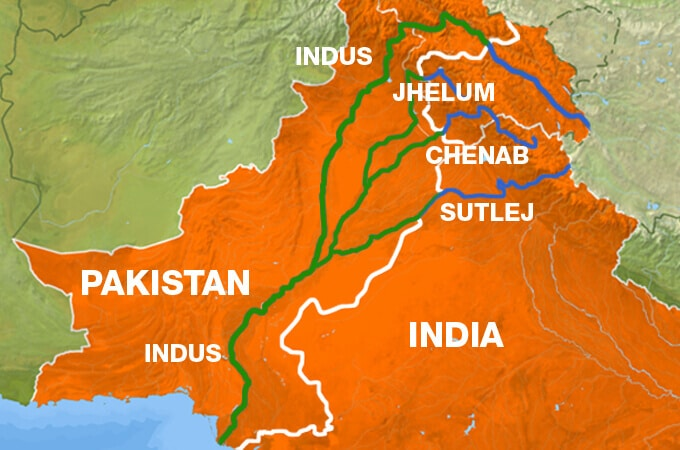
India has rejected the Permanent Court of Arbitration (PCA), The Hague’s ruling on the Indus Waters Treaty (IWT), asserting that the arbitral body was illegally constituted and lacks jurisdiction over India.
Indus Waters Treaty
Background – In 1947, the partition had cut the Indus river system into two between India and Pakistan.
Mediated by – The World Bank
Signed in – it was signed in 1960 by former PM Jawaharlal Nehru and then President of Pakistan, Ayub Khan.
Transboundary river – The Indus River is a transboundary river that flows through Pakistan (47%), India (39%), Tibet (8%), and Afghanistan (6%). It is the longest river in Pakistan.
Note – In India, the Indus basin spreads over J&K, HP, Punjab, Rajasthan, Haryana, and Chandigarh.
Major tributaries of the Indus River are:
River
Source
Joins
Jhelum
Spring at Verinag, Kashmir Valley
Chenab at Trimmu, Pakistan
Chenab
Chandra and Bhaga streams near Bara Lacha Pass
Satluj after receiving Jhelum and Ravi
Ravi
Kullu hills near Rohtang Pass
Chenab near Rangpur, Pakistan
Beas
Near Rohtang Pass
Satluj at Harike Barrage, India
Satluj
Manasarovar-Rakas Lakes, Tibet
Indus a few kilometres above Mithankot, Pakistan
Provisions of Indus Water Treaty
It allocated the three western rivers (i.e., Indus, Chenab, and Jhelum) to Pakistan for unrestricted use, barring certain non-consumptive, agricultural and domestic uses by India.
It allocated the three eastern rivers, (i.e., Ravi, Beas and Sutlej) to India for unrestricted usage.
This meant that 80% of the share of water went to Pakistan, leaving 20% of water for use by India.
Annexure C and D
Though Pakistan has rights over waters of Jhelum, Chenab and Indus, but:
Annexure C of the IWT allows India certain agricultural uses
Annexure D allows India to build ‘run of the river’ hydropower projects (projects not requiring live storage of water).
Permanent Indus Commission
The treaty also required that both countries should establish a Permanent Indus Commission constituted by permanent commissioners of both sides.
It functions as the first stop for resolution of conflicts.
It should meet at least once a year.
Ramon Magsaysay Award 2026
Miscellaneous
Context
Tommy Koh (Singapore), Runa Khan (Bangladesh), and Bo Kyi (Myanmar) have been honoured with the Ramon Magsaysay Award 2026.
Ramon Magsaysay
Established: 1958, in memory of Ramon Magsaysay, the 7th President of the Philippines, known for his integrity, courage, and democratic leadership.
Instituted by: The Rockefeller Brothers Fund (RBF), in partnership with the Philippine government.
Administered by: The Ramon Magsaysay Award Foundation (RMAF), Manila.
Nature: Recognizes individuals or organizations in Asia who show selfless service and transformative leadership.
Prestige: Considered Asia’s highest honour, equivalent in stature to the Nobel Prize in Asia.
The 26th Shanghai Cooperation Organisation (SCO) Summit has been concluded in Kyrgyzstan.
Major Highlights
It is being held to mark the 25th anniversary of the Shanghai Cooperation Organisation.
2026 theme – ‘25 Years of the SCO: Together Towards Sustainable Peace, Development and Prosperity’.
Bishkek Declaration: The summit adopted the historic Bishkek Declaration.
English has been adopted as an official SCO language.
Pakistan will take over the SCO chairmanship from Kyrgyzstan and host the next meeting of the Council of Heads of State in 2027.
Shanghai Cooperation Organisation (SCO)
Founded in – The SCO is an intergovernmental organization founded in 2001 with six members.
Objective: To enhance regional cooperation for efforts to curb terrorism, separatism, and extremism in the Central Asian region.
Members: China, Russia, India, Pakistan, Iran, Belarus and the four Central Asian countries of Kazakhstan, Kyrgyzstan, Tajikistan, Uzbekistan.
Secretariat: Beijing
Official languages: Russian and Chinese
Observer status: Afghanistan, Belarus and Mongolia
The SCO has been an observer in the UN General Assembly since 2005.
Areas of Concern
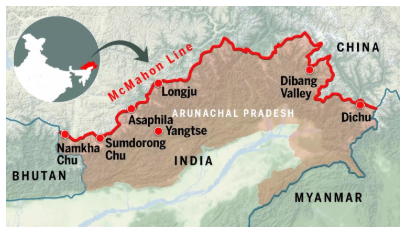
Ongoing Border Tensions – Incidents in Doklam (2017), Galwan Valley (2020), and northeastern states (Sikkim, Arunachal Pradesh).
Belt and Road Initiative (BRI): India has expressed reservations about China’s Belt and Road Initiative, especially regarding the China-Pakistan Economic Corridor (CPEC), which passes through the territory of India.
Article 142 of the Constitution
Polity and Governance
Context
The Supreme Court of India took a rare and extraordinary step under Article 142 to quash FIRs registered against Gen Z NEET-UG protesters.
Article 142 of the Constitution
Article 142 is a special rule in the Indian Constitution that gives the Supreme Court of India extraordinary power to do “complete justice.”
Landmark judgments under Article 142
Ayodhya Case (2019): The Supreme Court directed the Union government to establish a trust for the construction of the Ram Temple and awarded the disputed 2.77-acre site for the temple.
Bhopal Gas Tragedy Case (1991): The Supreme Court ordered Union Carbide Corporation (UCC) to pay $470 million in compensation for the victims of the tragedy.
Highway Liquor Case (2016): The Supreme Court restricted the sale of liquor within 500 metres of national and state highways to curb accidents caused by drunk driving.
Chandigarh Mayor Election Case (2024): The Supreme Court invoked Article 142 to declare AAP candidate Kuldeep Kumar as the winner, after finding that the presiding officer had deliberately invalidated eight ballots.
India is Reviving Sandalwood Cultivation
Environment
In News
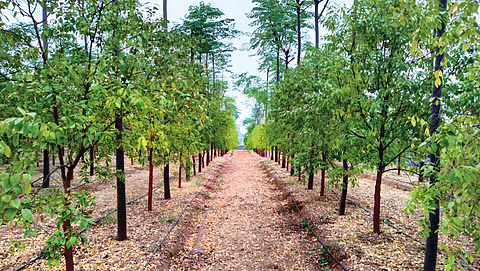
India is witnessing a renewed push to revive sandalwood (Santalum album) cultivation, with the Union Budget 2026-27 highlighting its cultural and economic importance.
Revival plan of sandlewood
Objective:To restore the “glory of the Indian sandalwood ecosystem” by focusing on large-scale cultivation and addressing supply shortages.
Current Supply Crisis:Karnataka Soaps and Detergents Ltd. (KSDL) requires 7,000–8,000 tonnes of sandalwood annually, but domestic production currently meets only 30% of this demand.
Import Paradox: To cover the shortfall, Karnataka currently imports sandalwood oil from Australia. Ironically, Australia is producing this oil from native Indian sandalwood species they began cultivating 25 years ago.
Additional Information – Indian Sandalwood (Santalum album)
Known as “Liquid Gold” or Chandan, this is one of India’s most valuable commercial crops.
Forest Type: It is primarily found in Tropical Deciduous Forests (Monsoon Forests).
Biological Nature: It is a hemi-parasite (partial root parasite), meaning it derives some nutrients from the roots of host plants.
Distribution: Found mainly in the Western Ghats, Deccan Plateau, and states like Karnataka, Tamil Nadu, Andhra Pradesh, and Kerala.
Conservation Status: Classified as Vulnerable on the IUCN Red List.
Key Threats: Sandalwood Spike Disease (SSD), caused by phytoplasmas, is a major threat with no known cure.
Chalking out plans for nanotech’s quick growth in Karnataka
Why in News
The Government of Karnataka has announced plans to establish a Nanotechnology Mission and a Nanotechnology Manufacturing Corridor to accelerate the state’s nanotechnology sector, focusing heavily on talent creation and advanced infrastructure.
Key Highlights
Event Context: The announcements were made during the curtain raiser for Bengaluru India Nano 2026, the 14th edition of Karnataka’s flagship nanotech exposition.
Event Theme: The 2026 exposition is themed ‘Nanotech’s Next Frontier: AI & Beyond: Conceive, Converge and Commercialise’, scheduled for August 3-5 at The LaLiT, Bengaluru.
Key Interventions Planned: The state aims to set up a dedicated Nanotechnology Mission in association with industry partners and is considering a specialized Nanotechnology Manufacturing Corridor.
Talent Development: The government is committing to collaborative talent creation with IITs, research organisations, academia, and industry to meet the demands of this highly interdisciplinary sector.
Strategic Applications Mentioned: Nanotech will be leveraged for enhanced safety (sensitive sensors, ultra-strong protective materials, chemical neutralisers), healthcare (nano-robots to kill cancer cells), and low-electricity AI devices.
Energy Efficiency Paradigm: Experts highlighted that while a modern data centre GPU consumes 35 to 50 times more electricity than the human brain, nanoscale manipulation can create fundamentally faster and more resilient, energy-efficient systems.
National Context: India is witnessing a paradigm shift in its semiconductor aspirations, expecting rapid progress in advanced manufacturing, nano-fabrication, and lithography to build a self-reliant electronics ecosystem.
Additional Information
Nano Mission (National Mission on Nano Science and Technology)
Launch Year:2007 (Launched as an umbrella capacity-building programme).
Objectives: To foster, promote, and develop all aspects of Nanoscience and Nanotechnology in India, translating basic research into useful products and processes for national development.
Beneficiaries:Scientific community, academic institutions, startups, and technology-driven industries in India.
Nodal Ministry:Ministry of Science and Technology (Implemented by the Department of Science and Technology – DST).
Component Breakdown:
Basic Research Promotion: Funding individual and group research projects.
Infrastructure Development: Establishing centers of excellence and shared major facilities (e.g., Nano Science and Technology Institutes).
Nano Applications and Technology Development: Supporting industry-academia partnerships for commercializing nanotech.
Human Resource Development: Offering specialized fellowships and supporting postgraduate programs in nanotechnology.
International Collaborations: Facilitating joint research with global nanotech hubs.
Karnataka’s Shilpa wins bronze at Commonwealth Games
Why in News
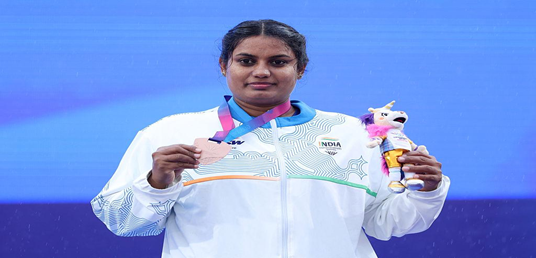
Para-athlete Shilpa K.S. from Mysuru made history by securing a bronze medal in the women’s F57 shotput event at the 2026 Commonwealth Games in Glasgow.
Key Highlights
Historic Achievement:Shilpa, 37, is the first para-athlete from Karnataka to win a medal at the quadrennial multi-sport event since its inception.
Event Details: The medal was secured in the women’s F57 shotput event on Monday at the 2026 Commonwealth Games in Glasgow.
Classification Criteria: The F57 is a para-athletics classification event specifically designed for seated athletes with lower limb impairments.
Personal Background: The athlete tragically lost her left leg at the age of four due to a road accident.
‘Soligas an example against fortress conservation approach’
Why in News
A recent study in the journal Ecosystems and People highlights the Soliga tribe of the Biligiri Rangaswamy Temple Wildlife Sanctuary (BRTWS) as a successful model of community-led conservation, countering the exclusionary “fortress conservation” model.
Key Highlights
Research Publication: The article, titled ‘Fortress conservation versus traditional forest management’, was co-authored by researchers from Charles Darwin University, the Institute for Social and Economic Change, and the Ashoka Trust for Research in Ecology and the Environment.
Fortress Conservation Critique: The traditional conservation approach, which focuses on evacuating or alienating indigenous rights, has led to widespread uprooting and distress worldwide.
Traditional Management Practices: Historically, Soligas managed the Biligiri landscape using mosaic litter burning and small-scale swidden agriculture.
Invasive Species Control: These traditional methods naturally controlled noxious invasive weeds like Lantana camara.
Ecological Synergies: Traditional cultivation cleared lands that later enabled the colonization of palatable grasses, serving as food for herbivores and subsequently supporting carnivores like tigers.
Demographic Context: The Western Ghats region hosts approximately 5,000,000 Adivasi people across Kerala and Karnataka, according to the 2011 Census.
Cultural Integration: The Biligiri landscape is deeply embedded with hundreds of sacred and cultural sites, forming an integral part of the Soligas’ ceremonies and norms.
Policy Recommendation: Collaborative, community-based conservation acts as a win-win by reducing government management costs, protecting wildlife, and helping meet Sustainable Development Goals (SDGs).
Additional Information
Soliga Tribe
An indigenous community residing primarily in the Biligiri Rangan Hills (BR Hills) and associated ranges in Chamarajanagar district, Karnataka, known for their deep ecological knowledge and non-timber forest product (NTFP) collection.
The Soligas made history by becoming the first tribal community living inside the core area of a tiger reserve in India to have their forest rights officially recognized under the Forest Rights Act (FRA), 2006, setting a legal precedent for community-led conservation.
Biligiri Rangaswamy Temple (BRT) Tiger Reserve
Location: Situated in Chamarajanagar district, Karnataka, at the confluence of the Western Ghats and Eastern Ghats.
Protected Area History: It was declared a Wildlife Sanctuary in 1974 and became a Tiger Reserve in 2011 under Project Tiger.
Landscape: The reserve consists of dry deciduous, moist deciduous, scrub and evergreen/semievergreen forests, varying with altitude.
Biodiversity: It supports tigers, leopards, Asian elephants, gaur, sambar, chital, wild dogs (dhole) and sloth bears.
Ecological Corridor: BRT is an important wildlife corridor between the Western and Eastern Ghats, allowing movement of elephants and other wildlife and supporting genetic exchange.
Tribal Communities: The Soliga (Solega) tribal community has a close traditional association with the forest and its resources.
Unique Feature: The reserve derives its name from Biligiri Rangaswamy Temple, dedicated to Lord Ranganatha, located on the Biligiri Rangaswamy Hills.
River System: The Cauvery River and its tributaries influence the broader landscape around the reserve
Bescom launches PM-E DRIVE portal for private Charge Point Operators
Why in News
The Bangalore Electricity Supply Company Limited (Bescom) has launched a dedicated online portal under the PM E-DRIVE Scheme. This portal facilitates the establishment of public EV charging stations by private Charge Point Operators (CPOs) in Karnataka.
Key Highlights
Ministry: The Ministry of Heavy Industries launched the PM E-DRIVE scheme
Charging Infrastructure Allocation:₹2,000 crore has been earmarked specifically for establishing public EV charging stations nationwide until March 2028.
Bescom’s Role:Bescom serves as the State nodal agency for implementing the PM E-DRIVE scheme in Karnataka.
Category-A & B: These categories involve government-owned or managed locations, such as State/Central offices, hospitals, railway stations, airports, and metro stations, where Bescom will directly implement charging stations.
Category-C: This category allows private Charge Point Operators (CPOs) to participate and develop charging infrastructure.
Two-Stage EoI Process: The newly introduced portal features a two-stage Expression of Interest (EoI): the first stage verifies technical and operational capabilities, while the second stage accepts eligible proposals.
Proposal Processing: Bescom will aggregate and submit eligible Category-C proposals to the Ministry of Heavy Industries for approval on a first-come, first-served basis (up to 800 locations).
Standardization: Bescom has standardized charging station configurations for both urban and highway locations to simplify implementation and subsidy assessment.
Additional Information
PM E-DRIVE Scheme
Launch Year: 2024
Objectives: To accelerate the adoption of electric vehicles, establish robust charging infrastructure, and promote cleaner and more sustainable transportation solutions across India.
Beneficiaries: Electric Vehicle buyers, Private Charge Point Operators, State Transport Undertakings (STUs), and public transport agencies.
Nodal Ministry: Ministry of Heavy Industries
Component Breakdown: Demand incentives for EVs (e-2W, e-3W, e-Ambulances, e-Trucks), grants for capital assets (e-buses via State Transport Undertakings), establishment of a public charging station network, and modernization of vehicle testing agencies.
JanAI opens first ‘AI cafe’ at H.D. Kote in Mysuru district
Why in News
Head Held High Foundation has launched the world’s first JanAI Café in H.D. Kote, Mysuru district, aiming to drive grassroots Artificial Intelligence (AI) adoption and digital empowerment in rural communities.
Key Highlights
Implementing Organization: The JanAI initiative is spearheaded by the Head Held High Foundation in partnership with the Swami Vivekananda Youth Movement (SVYM).
Location & Community Hosting: The AI café is established inside a Millet Café operated by women belonging to the indigenous Jenu Kuruba community in H.D. Kote, Mysuru.
Core Objective: Designed as a community AI adoption centre, enabling rural residents to discover, learn, and build tailored AI solutions for local, day-to-day challenges.
Women-Centric Approach: The pilot facility primarily focuses on developing grassroots technology and livelihood solutions for women, by women.
AI Ambassadors: A cohort of 18 local youth has been trained as ‘AI Ambassadors’ in H.D. Kote to identify community issues and deploy AI tools.
Impact Tracking with Wipro: JanAI has partnered with Wipro to develop an AI Index that measures usage metrics and economic value generation across farming, healthcare, tourism, education, and women entrepreneurship.
Expansion Plans: The initiative plans to pilot five AI cafés across Mysuru district, with the next centre scheduled to open in T. Narsipur.
Additional Information
Jenu Kuruba Tribe
A designated Particularly Vulnerable Tribal Group (PVTG) residing mainly in the forested regions of the Western Ghats across Mysuru, Kodagu, and Chamarajanagar districts of Karnataka.
Traditionally known as forest gatherers and honey collectors (‘Jenu’ means honey in Kannada), they possess rich traditional ecological knowledge and have been key stakeholders in forest rights struggles under the Forest Rights Act (FRA), 2006.
IndiaAI Mission
Launch Year:2024
Objectives: To build a comprehensive, sovereign AI ecosystem, democratize high-performance AI computing access, foster indigenous foundation models, and bridge the digital divide in rural and semi-urban India.
Beneficiaries:Startups, researchers, students, rural innovators, academia, and industry.
Nodal Ministry:Ministry of Electronics and Information Technology (MeitY)
Component Breakdown:IndiaAI Compute Capacity, IndiaAI Innovation Centre (IAIC), IndiaAI Datasets Platform, IndiaAI Application Development Initiative, IndiaAI FutureSkills, IndiaAI Startup Financing, and Safe & Trusted AI.
Sky show honours India’s first satellite
Why in News
The Jawaharlal Nehru Planetarium in Bengaluru has launched a commemorative sky show titled The Inspiring Legacy of Aryabhata to mark nearly 50 years of India’s maiden satellite mission, Aryabhata.
Key Highlights
Special Screening: A dedicated four-minute sky show titled The Inspiring Legacy of Aryabhata was unveiled beneath the dome of the Jawaharlal Nehru Planetarium in Bengaluru.
Key Dignitaries: The presentation was inaugurated by M. Sankaran (Director, U.R. Rao Satellite Centre) and presided over by A.S. Kiran Kumar (former ISRO Chairman).
Welcome Address: Delivered by B.R. Guruprasad, Director of the Jawaharlal Nehru Planetarium.
Core Theme: The show documents the foundational role played by Aryabhata in building indigenous capability for major contemporary missions like Chandrayaan, Mangalyaan, and Aditya-L1.
Public Outreach: The sky show is integrated into the planetarium’s daily presentations to educate school children, educators, and the public on India’s early space achievements.
Additional Information
Aryabhata Satellite
Launched on April 19, 1975, from the Soviet Union via a Kosmos-3M rocket, marking India’s historic entry into space.
Named after the 5th-century astronomer, this indigenously built satellite conducted vital experiments in X-ray astronomy, aeronomy, and solar physics, establishing core telemetry capabilities for ISRO.
U.R. Rao Satellite Centre (URSC)
Located in Bengaluru, this is ISRO’s lead facility for designing, assembling, and testing all Indian satellites.
Originally known as the ISRO Satellite Centre (ISAC), it was renamed in 2018 to honor Prof. U.R. Rao, the architect of India’s early satellite program.
Karnataka govt. to upgrade Aadhaar authentication security infrastructure
Why in News
The Karnataka government has initiated an upgrade of the Hardware Security Module (HSM) powering its Aadhaar authentication services to enhance cybersecurity, system performance, and digital governance.
Key Highlights
Nodal Ministry & Purpose: Announced by Minister for IT, BT, and e-Governance as a preventive technology enhancement to ensure resilient and secure public services.
Authentication Load: Karnataka processes approximately 10 to 12 lakh Aadhaar authentication requests daily across various government departments.
Statutory Compliance: Under the Aadhaar Act, Aadhaar numbers cannot be stored in local databases; they must reside in an encrypted Aadhaar Data Vault (ADV) with encryption keys secured inside a Hardware Security Module (HSM).
Hardware Security Module (HSM): A specialized, tamper-resistant hardware device designed to manage cryptographic keys and prevent unauthorized access.
Upgrade Components: Involves installing the latest security patches, bug fixes, and OEM-supported enhancements to resolve existing setup issues.
Mullayyanagiri Hills: HC notice to State
Why in News
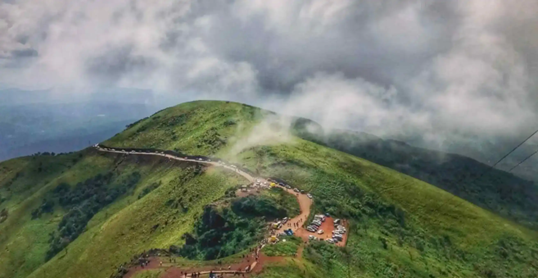
The High Court of Karnataka has issued a notice to the State government regarding a PIL seeking the declaration of the ecologically fragile Mullayyanagiri Hills in Chikkamagaluru as a “conservation reserve”.
Key Highlights
Petition Details: The order was passed by a Division Bench (comprising Chief Justice Vibhu Bakhru and Justice K.S. Hemalekha) following a petition by the Bhadra Wildlife Conservation Trust and the Wildlife Conservation Action Team.
Previous Judicial Directives: The inaction continues despite a prior High Court direction in July 2019, issued during litigation concerning road widening works between Mullayyanagiri and Seethalayanagiri.
Ecological Vulnerability: The petitioners assert that the delay has left the region legally unprotected, allowing authorities to permit extensive construction and tourism activities that are actively compounding ecological damage.
Additional Information
Mullayyanagiri Peak
Location: Chikkamagaluru district, Karnataka, in the Chandra Drona (Baba Budangiri) Hills of the Western Ghats.
Elevation: Approximately 1,930 metres above sea level; it is the highest peak in Karnataka.
Western Ghats: It forms part of the ecologically significant Western Ghats, a global biodiversity hotspot.
Ecosystem: The higher elevations support shola-grassland vegetation, with grasslands interspersed with patches of evergreen forest.
Nearby places:Baba Budangiri, Jhari Falls and Bhadra Wildlife Sanctuary are important geographical features/attractions in the surrounding region.
Religious significance: The summit has a small shrine dedicated to Mullappa Swamy, contributing to its cultural importance.
Lung cancer makes up 6% of State’s cancer cases
Why in News
Ahead of World Lung Cancer Day, data released by the Kidwai Memorial Institute of Oncology (KMIO) reveals that lung cancer accounts for over 6% of all new cancer cases in Karnataka.
Key Highlights
State-wide Burden (2025): Karnataka is projected to record 89,215 new cancer cases, of which 5,503 (6.1%) will be lung cancer.
State-wide Mortality: Lung cancer is estimated to cause 2,048 deaths in the State, comprising 1,377 males and 671 females.
Gender Disparity: Lung cancer constitutes 9.6% of all cancers in men (3,787 cases) and 3.5% in women (1,716 cases) across Karnataka.
KMIO Projections: At the institute level, 836 out of 13,576 new cases in 2025 are projected to be lung cancer.
Bengaluru Metrics: The city mirrors state trends with a projected 15,693 new cancer cases (including 1,028 lung cancer cases) and 363 deaths.
Global & National Context: Globally (2022 estimates), there were 2.48 million new cases and 1.86 million deaths. India projects 1,12,659 new cases and 98,687 deaths for 2024.
Risk Factors:Tobacco use is the single most important preventable risk factor; other environmental and occupational causes include air pollution, carcinogen exposure, asbestos, and radon.
Additional Information
National Programme for Prevention and Control of Non-Communicable Diseases (NP-NCD)
Launch Year:2010 (Originally launched as NPCDCS, officially renamed to NP-NCD in 2023).
Objectives: To manage chronic lifestyle diseases through health promotion, early diagnosis, and management of NCDs like cancer, diabetes, and cardiovascular issues.
Beneficiaries: The general population, with population-based screening targeting individuals above the age of 30 years.
Nodal Ministry:Ministry of Health and Family Welfare.
Component Breakdown: Infrastructure strengthening, human resource development, health promotion, early diagnosis, and palliative care.
Govt. sets up panel for recruitment reforms
Why in News
The Government of Karnataka has constituted the Competitive Examinations and Recruitment Reform Committee, headed by former Chief Secretary S.V. Ranganath, to overhaul exam procedures and ensure transparency in public service recruitments.
Key Highlights
Committee Composition: Headed by former Chief Secretary S.V. Ranganath, the panel includes former Chief Secretaries T.M. Vijayabhaskar and Vandita Sharma, along with Financial Adviser to the Chief Minister L.K. Atheeq.
Primary Mandate: Recommend comprehensive reforms for competitive examinations, streamline state recruitment frameworks, and adopt UPSC best practices.
Upcoming Recruitment Scale: The state government is initiating recruitment to fill over 70,000 vacant posts across departments.
Scheduled Examinations: The Karnataka Public Service Commission (KPSC) and Karnataka Examination Authority (KEA) have scheduled exams for 36,773 posts within the next six months.
Candidate Volume: Approximately 35 lakh candidates are expected to appear for these upcoming recruitment drives.
Additional Information
State Public Service Commission (SPSC)
Mandated under Articles 315 to 323 in Part XIV of the Constitution of India as an autonomous constitutional recruiting agency for the States.
The Chairman and members are appointed by the Governor, but can only be removed by the President of India following an inquiry by the Supreme Court under Article 317.
Hota Committee on Civil Services Reforms
Constituted in 2004 to recommend measures for making civil services responsive, transparent, and technology-driven.
Recommended the integration of aptitude testing, interview reforms, strict timelines for competitive examinations, and reducing bureaucratic delays in recruitment
Neelam, Totapuri mangoes exported to Maldives
Why in News
For the first time, a consignment of Neelam and Totapuri mangoes from Karnataka’s Kolar district was successfully exported to the Maldives by APEDA to help local farmers recover from severe domestic price crashes.
Key Highlights
Exporting Body: The shipment was flagged off by the Agricultural and Processed Food Products Export Development Authority (APEDA), operating under the Union Ministry of Commerce and Industry.
Volume & Varieties: Around one tonne of Neelam and Totapuri mangoes was exported.
Farmer Distress: Farmers in Kolar district have been incurring massive financial losses due to a sharp drop in local prices, particularly for the Totapuri variety.
Regional Shift: Previously, these specific varieties were primarily exported from Andhra Pradesh and Chittoor; this marks the first direct consignment from Karnataka to the Maldives.
Key Facilitator: The export was executed by Ahalya Devi Ventures, a company directed by entrepreneur Ashwini A.
Additional Information
Totapuri Mango
A prominent commercial mango variety primarily cultivated in Karnataka, Andhra Pradesh, and Tamil Nadu, easily identified by its oblong shape and prominent beak-like pointed tip.
Known for its thick skin, unique tartness, and excellent shelf life, it is heavily favored by the food processing industry for manufacturing mango pulp, juices, and concentrates.
Agricultural and Processed Food Products Export Development Authority (APEDA)
Established in 1986 under the APEDA Act of 1985 as a statutory body responsible for the export promotion and development of scheduled agricultural commodities.
Operating under the Ministry of Commerce and Industry, it plays a critical role in providing financial assistance, setting packaging standards, and functioning as the secretariat for the National Programme for Organic Production (NPOP).
Panel formed to revise crèche norms
Why in News
The Karnataka State Commission for Protection of Child Rights (KSCPCR) has formed an expert committee to draft revised monitoring guidelines for private crèches and daycare centres following a recent child abuse incident in Bengaluru.
Key Highlights
Committee Leadership: The expert panel is headed by Sripad S., former Joint Commissioner of the Labour Department, and includes KSCPCR members and officials from various stakeholder departments.
Draft Submission: The finalized draft guidelines will be submitted to the Department of Women and Child Development for implementation.
Current Regulatory Gap: Under the existing 2015 guidelines, there is no designated nodal department or agency at the State government level responsible for monitoring these facilities.
Proposed Monitoring Framework: The revised norms will officially designate a State-level nodal department and mandate the formation of district-level inspection committees.
DCPO Integration: Child rights activists recommend appointing District Child Protection Officers (DCPOs) as member-secretaries of these inspection panels to ensure strict compliance with the Right to Education (RTE) Act, 2009 and the Juvenile Justice Act, 2015.
Additional Information
Commissions for Protection of Child Rights (CPCR) Act, 2005
Enacted to provide a statutory framework for constituting the National Commission for Protection of Child Rights (NCPCR) and corresponding State Commissions (SCPCR) to safeguard child rights.
Empowers the Commissions to act as civil courts to inquire into complaints regarding the violation of child rights, non-implementation of protective laws, and to recommend remedial measures to the government.
Palna Scheme
Launch Year: 2022 (restructured from the erstwhile National Crèche Scheme)
Objectives: To provide safe, secure, and high-quality day-care facilities for children, ensuring their cognitive development, health check-ups, and nutritional support.
Beneficiaries: Children aged 6 months to 6 years of working mothers.
Nodal Ministry:Ministry of Women and Child Development (implemented under the Samarthya vertical of Mission Shakti)
Component Breakdown: Establishment of Standalone Crèches and Anganwadi-cum-Crèches (AWCCs) providing day-care services, early stimulation, supplementary nutrition, and growth monitoring.
Karnataka Creche / Childcare Schemes
Scheme
Key points
Koosina Mane
Karnataka’s community-based childcare/crèche initiative, intended to support working women, particularly in rural areas. Childcare facilities were envisaged through Gram Panchayats.
Anganwadi-cum-Crèches (AWCCs)
Under Palna, existing Anganwadi Centres are strengthened to provide childcare along with Anganwadi services. Karnataka had 248 AWCCs approved and 164 established as of October 2024.
Saksham Anganwadi & Pre-school Education
The Survey notes 17,732 Anganwadi Centres upgraded as Saksham Anganwadi Centres. These provide improved infrastructure and support early childhood care and pre-school education.
Koosina Mane + MGNREGA convergence
The childcare model was particularly intended to help women participating in MGNREGA, with childcare for children in the 6-month to 6-year age group.
Govt. mulls police powers for Anti-Narcotics Task Force
Why in News
The Karnataka government is considering granting police station powers to its Anti-Narcotics Task Force (ANTF), enabling the specialized unit to register FIRs, make arrests, and independently investigate drug networks.
Key Highlights
Core Proposal: Granting police station powers will allow the ANTF to independently book cases, arrest offenders, and conduct end-to-end criminal investigations rather than functioning merely as a review body.
MHA Directive: Formed under the mandate of the Union Ministry of Home Affairs (MHA), which requires all States and Union Territories to set up ANTFs headed by an officer of ADGP rank.
Current Status in Karnataka: The force lacks an independent head, with the ADGP (Law and Order) holding additional charge while its role remains limited to monthly probe reviews and jurisdictional coordination.
Inter-State Comparison: Specialized units such as Telangana’s EAGLE force, Delhi Police’s ANTF, and Kerala’s Anti-Narcotics Special Action Force (leading Operation Toofan) already exercise full investigative and statutory powers.
Investigation Gaps: Current state investigations frequently stall at local peddlers; across Karnataka, arrests of producers were limited to 90 ganja growers, failing to track illicit manufacturing chains.
Jurisdictional Lapses: Highlighting intelligence gaps, the Maharashtra police tracked supply chains to bust three synthetic drug labs in Bengaluru and one in Mysuru.
Additional Information
Narcotic Drugs and Psychotropic Substances (NDPS) Act, 1985
Serves as India’s primary statutory framework prohibiting and regulating operations relating to narcotic drugs, psychotropic substances, and precursor chemicals.
Imposes stringent bail provisions under Section 37 and empowers designated enforcement agencies to carry out searches, seizures, and property attachments derived from illicit drug trafficking.
KEA named recruiting authority
Why in News
The Karnataka government has officially designated the Karnataka Examinations Authority (KEA) as a full-fledged recruiting agency for state civil services, granting it statutory powers on par with the KPSC to manage the end-to-end recruitment process.
Key Highlights
Expanded Powers:KEA is now authorized not only to conduct competitive exams, but also to oversee document verification, formulate merit lists, and publish final selection lists.
Rationale: The decision comes amid repeated delays and corruption allegations surrounding the Karnataka Public Service Commission (KPSC).
Operational Scale (FY 2024-25): KEA conducted recruitment exams for 11 departments covering 6,116 posts, processing over 18 lakh candidates.
Addressing Duplication: Resolves inefficiencies under the Karnataka Civil Services (Direct Recruitment) (General) Rules, 2021, which previously led to multiple distinct notifications and exams for posts sharing identical cadres and syllabi.
Single Common Exam: KEA will administer a unified examination across multiple departments for identical cadres, preventing multi-department seat blocking and redundant merit list revisions.
Right to be forgotten: Karnataka HC lets name of acquitted woman be masked in online sources
Why in News
The High Court of Karnataka has upheld the “right to be forgotten”, directing search engines and judicial repositories to mask the name of an acquitted Iranian national from online records to prevent lasting civil and professional harm.
Key Highlights
Judicial Directives: Justice M. Nagaprasanna ordered the registrars of the High Court of Karnataka, Bengaluru City Civil Court, State Police, Google, and the Indian Kanoon portal to mask the petitioner’s name in their digital databases.
Case Background: The petitioner, who came to India on a student visa, was prosecuted during 2013–14 under the Immoral Traffic (Prevention) Act, 1956, and was acquitted in 2019 due to lack of evidence and delayed FIR filing.
Current Status: Post-acquittal, the petitioner secured refugee status from the United Nations and currently holds permanent residence in Sweden.
The “Digital Spectre”: Obsolete digital records continued to surface during routine background checks, causing severe prejudice and undermining the legal vindication granted by the court.
Significance of Acquittal: The court emphasized that an acquittal is a solemn judicial declaration of innocence, warning that persistent online visibility can make judicial exoneration a mere paper declaration.
Rejection of “Floodgates” Argument: The court dismissed procedural registry concerns, affirming that constitutional guarantees of fundamental rights cannot be rationed out of fear that other citizens might invoke them.
Additional Information
Right to be Forgotten (RTBF)
Recognized as an intrinsic component of the Right to Privacy under Article 21 of the Constitution by the Supreme Court in the landmark K.S. Puttaswamy v. Union of India (2017) verdict.
Empowers individuals to request the deletion, de-linking, or masking of personal data from internet search engines and digital databases when such information becomes outdated, irrelevant, or legally resolved.
Bengaluru to host Aero India show in February
Why in News
The 16th edition of the biennial Aero India show will be hosted at the Air Force Station, Yelahanka in Bengaluru in February 2027, effectively putting to rest speculations about the mega event being relocated to another city.
Key Highlights
Official Confirmation: A high-level meeting between senior Indian Air Force (IAF) officers and Chief Minister D.K. Shivakumar confirmed Bengaluru’s continuation as the host city.
Delegation Lead: The IAF delegation was spearheaded by Air Marshal S. Shrinivas, Air Officer Commanding-in-Chief of the Training Command.
State Assurance: The Chief Minister pledged full cooperation from the State administration and its various departments to ensure the smooth and safe execution of the air show.
Venue Legacy: The event will be held at the Air Force Station, Yelahanka, which has served as the official venue for the show since 1993.
Schedule: While the month is confirmed as February 2027, the exact dates for the five-day event will be formally announced by the Defence Ministry.
Previous Edition (2025) Metrics: The last edition saw massive global participation, hosting 930 exhibitors from over 90 countries.
2025 Highlight: A major attraction of the 2025 edition was the participation and display of two advanced fifth-generation fighter aircraft (FGFA).
Karnataka government to release draft AI policy soon
Why in News
The Government of Karnataka is set to release its draft policy on “Responsible AI”, formulated by an expert committee chaired by Infosys co-founder Kris Gopalakrishnan, to govern the safe, ethical, and transparent adoption of artificial intelligence in public administration.
Key Highlights
Policy Formulation: The draft policy on Responsible AI was drafted by a dedicated state committee chaired by Kris Gopalakrishnan, comprising experts from industry, academia, law, and public policy.
Official Announcement: Announced by Shreevyas H.M., Project Director of the Artificial Intelligence (AI) Cell under the Centre for e-Governance (CeG), during the ‘Karnataka AI Mantana’ dialogue series.
Focus Areas: The policy addresses key operational dimensions, including AI governance, safe handling of sensitive government data, and safeguarding AI model security.
‘Kayaka’ AI Tool: An internal productivity tool currently under testing to assist state personnel with drafting official letters, Kannada-English translation, and OCR-based document digitization on a secured platform.
AI Capacity Building: Structured training programmes are being conducted for KAS officers and Deputy Secretaries to improve AI literacy and prevent data leaks on public commercial platforms.
Existing Digital Footprint: The AI Cell currently supports platforms such as Kartavya (used by 3.6 lakh government employees for daily attendance) and Nirantara (capturing attendance for 30 lakh government school students).
International Collaboration: Minister for IT-BT & e-Governance inaugurated an international conference on ‘Leveraging AI to Advance SDGs’, organized in partnership with the University of Wolverhampton (UK) and Dr. Manmohan Singh Bengaluru City University (MSBCU).
Veeragallu in Arsikere taluk throws light on Vishnuvardhana’s last day
Why in News
The discovery of a centuries-old veeragallu (hero stone) in Arsikere taluk has unearthed a Kannada inscription that potentially resolves the long-standing historical debate over the exact death date of the celebrated Hoysala ruler Vishnuvardhana.
Key Highlights
Discovery Site: Unearthed during the restoration of the Lakshmi Narayana Swamy temple in Neeragunda village, Arsikere taluk.
The Artifact: Two stone slabs were identified as veeragallus (memorial stones for warriors), one of which carries a highly significant old Kannada inscription.
Historical Context: The text reveals the stone was installed by Maravve in memory of her husband Boppa, a soldier who sacrificed his life shortly after King Vishnuvardhana’s death at Bankapura (present-day Haveri district).
Decoded Timeline: The inscription specifies the date as the Ekadashi of Pushya Masa of Durmathi Samvatsara, year 1064, corresponding precisely to December 11, 1141, in the Gregorian calendar.
Settling the Debate: Prior to this epigraphical evidence, scholars were heavily divided, estimating the king’s death to be either in 1149 or 1152.
Dynastic Footprint: The Hoysala dynasty ruled vast parts of present-day Karnataka and Tamil Nadu from the 11th to 14th centuries, with Belur and Halebid (in Hassan district) serving as their capitals.
Authentication: The text was decoded by researcher Shashidhar H.G. and the findings are being shared with the Karnataka Itihasa Academy for formal academic integration.
Karnataka explores partnership with Anthropic; AI-powered digital crop survey launched
Why in News
The Government of Karnataka has initiated strategic discussions with AI firm Anthropic to integrate secure AI solutions across administration, while simultaneously launching a pilot for the Composite Digital Crop Survey (CDCS) using advanced spatial technologies.
Key Highlights
Strategic Collaboration: Chief Minister and IT/BT Minister engaged with an Anthropic delegation led by Michael Sellitto to deploy applied AI solutions for public governance.
Data Sovereignty & Security: The framework emphasizes data residency on sovereign state servers, prioritizing the use of AI to prevent systemic fraud and ensure the absolute confidentiality of setting examination question papers.
Skilling via NIPUNA: The State plans to integrate Claude certification under its NIPUNA initiative to build a massive pool of AI-certified talent and support its ecosystem of over 20,000 startups.
Academic Integration: The government proposed subsidizing access to Anthropic’s Claude AI platform for higher education institutions like Visvesvaraya Technological University (VTU), alongside collaborative research with the Indian Institute of Science (IISc).
CDCS Pilot Launch: The state launched the Composite Digital Crop Survey (CDCS) on a pilot basis across five selected hoblis, covering all geographic divisions of Karnataka.
Agricultural Tech Stack: The CDCS upgrades the state’s existing 2018 GIS-based crop survey by integrating high-resolution satellite imagery, Synthetic Aperture Radar (SAR), drone surveys, and Machine Learning (ML) for scientific validation of plot-level data.
International Gay Games medallists from Karnataka urge State govt. to create inclusive sporting spaces
Why in News
Karnataka-based medallists from the International Gay Games 2026 in Valencia, Spain, have urged the State government to establish inclusive sporting spaces and officially introduce a third-gender category in athletics.
Key Highlights
Event Venue: The Gay Games 2026, the world’s largest quadrennial international LGBTQIA+ sporting and cultural event, concluded in Valencia, Spain.
Indian Representation: Out of approximately 10,000-odd international participants, only three Indian athletes took part in the games.
Goaty’s Medal Tally: Won four gold medals (High Jump, 5K Run, 10,000m Indoor Run, and Marathon in the Women’s 25–29 category) alongside three silver medals (10K Run, overall women’s marathon, and Mixed 4×400m Relay).
Sumit Pawar’s Achievement: Clinched the gold medal in Javelin Throw.
Local Representation: Both medallists represent the Bengaluru Front Runners (BRF), an inclusive athletic collective based in Karnataka.
Policy Demand: The athletes advocated for moving beyond the rigid binary structure in Indian sports by introducing institutional infrastructure and categories for third gender and non-binary athletes.
Additional Information
The Gay Games
Founded in 1982 in San Francisco by Olympic decathlete Tom Waddell, it is a quadrennial international sporting and cultural festival dedicated to promoting inclusivity and diversity.
Unlike conventional international competitions that rely on strict qualifying times, the event operates on principles of participation, inclusion, and personal best, welcoming athletes regardless of sexual orientation, gender identity, or skill level.
‘Work completed in only 12 out of 61 stations identified under Amrit Bharat Station scheme’
Why in News
Railway Minister Ashwini Vaishnaw informed the Rajya Sabha that only 12 out of 61 identified stations in Karnataka have seen completed redevelopment under the Amrit Bharat Station Scheme (ABSS), highlighting a slow implementation pace.
Key Highlights
State Completion Rate: Works have been completed in only 12 out of 61 stations in Karnataka, translating to an approximate completion rate of 19% over the last three-and-a-half years.
National Completion Rate: Across India, work has concluded at 261 out of 1,340 identified stations under the scheme.
Parliamentary Inquiry: This data was revealed in a written reply to an unstarred question raised in the Rajya Sabha by Karnataka Member of Parliament Mansoor Ali Khan.
Completed Stations (Karnataka): The finished list includes Alnavar, Badami, Bagalkot, Bantwal, Dharwad, Gadag, Gokak Road, Hosapete, Koppal, Munirabad, Ranibennur, and Subrahmanya Road.
Transparency Concerns: The MP noted that the Ministry did not furnish specific details regarding station-wise project costs, contract award dates, or year-wise progress, making independent evaluation difficult.
Causes for Delay: The Minister attributed the slow pace to the complexities of executing brownfield projects while keeping stations operational.
Specific Hurdles: Key challenges include shifting of utilities, removing infringements, securing statutory clearances, and executing high-voltage electrical works without disrupting train operations or passenger safety.
Additional Information
Amrit Bharat Station Scheme (ABSS)
Launch Year:2022
Objectives: To redevelop and modernize over 1,300 railway stations across India, transforming them into passenger-centric transit hubs and integrated city centres through continuous, long-term master planning.
Beneficiaries: Millions of daily railway passengers, local artisans, local MSMEs, and persons with disabilities (Divyangjan).
Nodal Ministry:Ministry of Railways
Component Breakdown: Phased execution of master plans, upgraded waiting halls, beautifully landscaped roof plazas, seamless multi-modal urban connectivity, fully accessible Divyangjan-friendly amenities, sustainable green building designs, and One Station One Product (OSOP) kiosks.
State takes cautious first step to introduce digital evaluation of SSLC and II PU exams
Why in News
The Karnataka School Examination and Assessment Board (KSEAB) is planning to introduce a digital evaluation system for SSLC and II PU answer scripts in a phased manner to expedite the declaration of results.
Key Highlights
Phased Rollout: To avoid controversies and discrepancies similar to those faced by the Central Board of Secondary Education (CBSE), KSEAB will initially test the system on smaller examinations with an enrollment of fewer than 5,000 candidates.
Pilot Examinations: The first phase of digital evaluation is being considered for the Karnataka State Open School Examination, Drawing Grade Examination, and Computer Education Examination.
Current Digital Initiatives: The board already issues digital mark sheets and digital transfer certificates (TCs) to successful candidates.
Operational Scale: Annually, approximately 8 lakh students register for the SSLC examination, while around 6.50 lakh students register for the II PU examination across Karnataka.
Digital Evaluation Workflow: Under this system, physical answer sheets are scanned and uploaded to a central computer. Evaluators are provided with a secure login ID and password to access allotted scripts, evaluate them, and enter the marks directly on the computer.
Additional Information
PARAKH (Performance Assessment, Review, and Analysis of Knowledge for Holistic Development)
Constituted under the National Council of Educational Research and Training (NCERT) in alignment with the National Education Policy (NEP) 2020 as India’s first national assessment regulator.
Functions as an advisory and standard-setting body designed to formulate norms, guidelines, and benchmarks for student assessment, aiming to eliminate evaluation disparities across all recognized state and central school boards in India.
‘Water security is seventh guarantee’
Why in News
Karnataka Chief Minister D.K. Shivakumar announced “water security” as the State’s seventh guarantee scheme, promising water from the Yettinahole project to the parched Kolar and Chickballapur districts by 2027.
Key Highlights
New Guarantee: The State government has designated water security as its seventh guarantee scheme for the people of Karnataka.
Target Timeline: Residents of the drought-prone Kolar and Chickballapur districts are slated to receive water from the Yettinahole project by the end of 2027.
Project Route: The government is pushing to divert water from the Western Ghats through Hassan to Kolar and Chickballapur, having already brought water up to Tumakuru.
Lake Rejuvenation:104 lakes in Kolar and Chickballapur have been successfully filled via the K.C. Valley project, with work currently underway to fill another 65 lakes through the H.N. Valley project.
Groundwater Recharge Strategy: The state has decided to fill more than 700 lakes with treated water to systematically recharge depleting groundwater reserves.
Agricultural Resilience: Farmers in Kolar were lauded as a state model for successfully producing milk, vegetables, silk, and flowers even when groundwater levels plummeted below 2,000 feet.
Additional Information
Yettinahole Integrated Drinking Water Project
An inter-basin water transfer project aimed at mitigating the severe drinking water crisis in drought-prone eastern districts of Karnataka, including Kolar, Chickballapur, Bengaluru Rural, and Tumakuru.
The scheme involves lifting seasonal floodwater from Yettinahole and other west-flowing tributaries of the Netravati river basin in the Western Ghats during the monsoon months.
Koramangala-Challaghatta (K.C.) Valley Project
A pioneering wastewater reuse initiative that treats urban sewage water from Bengaluru to secondary levels and pumps it to fill a cascade of dry lakes in parched neighboring districts.
Its primary objective is indirect groundwater recharge, aimed at naturally raising the water table and enabling farmers to sustain agriculture and dairying in semi-arid regions without using the treated water directly for drinking.
Health Dept. to launch Ruthu Thare, a State-wide campaign to deal with perimenopause, menopause
Why in News
The Karnataka Health and Family Welfare Department is launching ‘Ruthu Thare’, a pioneering state-wide grassroots campaign designed to help women safely navigate the health complexities associated with perimenopause and menopause.
Key Highlights
Implementation Strategy: The campaign utilizes a door-to-door approach, deploying trained ASHA workers across Karnataka to identify and assist women in their 40s.
Expert Committee: The campaign’s policy is being finalized by a dedicated committee of gynaecologists, mental health experts, and nutritionists, headed by women’s health expert Dr. Jyotsna Mirlay.
Phase 1 Operations:ASHA workers will identify menopausal women, collect health data via specialized questionnaires, and distribute pictorial pamphlets detailing symptoms, required nutrition, and physical exercises.
Phase 2 Focus: Operations will shift to identifying women experiencing perimenopause and those at severe risk of surgical menopause (the surgical removal of the uterus and ovaries due to heavy bleeding).
Preventive Care: The campaign aims to educate women on the long-term implications of surgical menopause, which can include a higher risk of coronary heart diseases and osteoporosis fractures, while offering alternative treatments.
Scheme Integration: Screening for perimenopause and menopause will now be officially integrated into Karnataka’s Gruha Arogya health scheme to ensure systematic follow-ups.
Broader Policy Umbrella: This initiative is part of Karnataka’s upcoming comprehensive Women’s Health Policy, which recently named actress Divya Spandana as its brand ambassador.
Additional Information
Gruha Arogya Scheme
Launch Year:2024
Objectives: To conduct comprehensive, door-to-door preventive health check-ups and ensure early detection and management of non-communicable diseases (NCDs) at the grassroots level.
Beneficiaries: Citizens of Karnataka, specifically targeting individuals aged 30 years and above.
Nodal Ministry:Department of Health and Family Welfare, Government of Karnataka
Component Breakdown: Door-to-door health screening for diabetes, hypertension, and oral/breast/cervical cancers; free distribution of prescribed medicines at the doorstep; and systematic data collection linked to local Primary Health Centres (PHCs) for continuous monitoring.
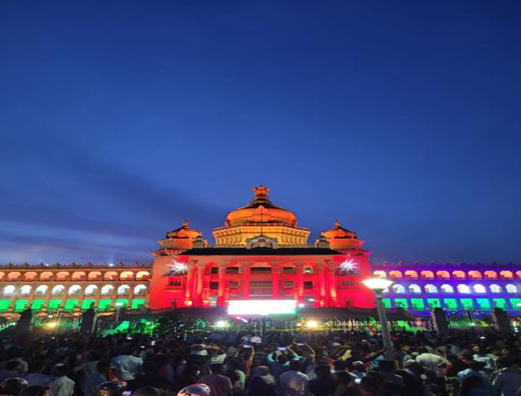
Freedom Habba: Vidhana Soudha’s grand steps to turn into a concert stage on I-Day
Why in News
The State government is organizing Freedom Habba, a grand musical concert on the steps of the iconic Vidhana Soudha in Bengaluru to celebrate Independence Day.
Key Highlights
Event Name: The concert is officially titled Freedom Habba’s Music Collective.
Venue & Timing: Held on the grand steps of the Vidhana Soudha in Bengaluru on Independence Day evening starting at 6 p.m..
Key Dignitary: Announced by the Greater Bengaluru Development Minister Krishna Byre Gowda, who emphasized experiencing Independence Day as a collective community celebration.
Featured Artists: Brings together 10 prominent musical voices of the city, including Raghu Dixit, Praveen D. Rao, M.D. Pallavi, Bruce Lee Mani, Sanjith Hegde, Brodha V., Siddhartha Belamannu, Varijashree Venugopal, Harish Sivaramakrishnan, and Nakul Abhyankar.
Entry Requirements: While entry is free, attendees must complete mandatory pre-registration by scanning a provided QR code and must carry a valid government ID card to access the venue premises.
Exhibition to spotlight forgotten chapters of State’s role in freedom struggle
Why in News
An exhibition titled Bengaluru ’47: Forgotten Stories of Freedom is being organized in Bengaluru to highlight the lesser-known contributions of ordinary citizens and prominent local figures to the Indian freedom movement.
Key Highlights
Event Schedule & Venue: The exhibition runs from August 14 to 23 at RBANM’s High School, organized by INTACH Bengaluru Chapter, RBANM’s Educational Charities, #ReclaimConstitution, and 1Shanthiroad.
N.V. Krishnamachari’s Legacy: Features a photograph of his bloodstained Swaraj Flag (the original is housed at the Vidhana Soudha) from when he defied British lathi charges, alongside his Tamra Patra and charkhas.
S.K. Kareem Khan: Displays an autobiographical note by this Sakleshpur-born freedom fighter and folklorist, who mobilized rural masses using folk songs and participated in the 1938 Shivapura Dhwaja Satyagraha.
Midnight Flag Hoisting: The #SatyamevaJayate collective will host the fourth edition of the midnight flag hoisting on August 15, reviving a 1947 tradition previously observed at Sajjan Rao Circle and Mysore Bank Circle.
Key Sessions: Includes a spinning workshop by The Art of Spinning, storytelling by Vikram Sridhar, a talk by historian Ramachandra Guha, and a musical evening by T.M. Krishna.
Bengaluru’s Grassroots Role: The exhibition uses archival materials to showcase massive local protests, the promotion of khadi, and campaigns advocating for the entry of all castes into temples.
Additional Information
1. Swaraj Flag (1931)
Adopted by leaders of the Indian freedom movement in 1931, this flag centrally featured the charkha (spinning wheel).
It became a powerful symbol of defiance after the colonial government strictly banned carrying and hoisting it, leading freedom fighters across the country to hoist it in protest.
2. Shivapura Dhwaja Satyagraha (1938)
A landmark resistance event in Karnataka’s freedom struggle that occurred in 1938, where activists openly defied British orders by hoisting the National Flag.
The movement saw extensive grassroots participation, with figures like S.K. Kareem Khan utilizing regional folklore and folk songs to effectively mobilize the rural masses for the cause of freedom.
State targets higher coal stocks, extra rakes to increase thermal power output
Why in News
To offset a shortfall in hydropower generation caused by inadequate rainfall, the Karnataka Power Corporation Limited (KPCL) is aggressively increasing its thermal power output to 100 million units (MU) per day by securing higher coal stocks and additional railway rakes.
Key Highlights
Surging Demand: Karnataka’s daily power demand has spiked to between 310 MU and 350 MU, significantly up from approximately 200 MU in August 2025.
Thermal Generation Targets:KPCL has set an annual target of 29,500 MU of thermal power, aiming to sustain a daily generation of 100 MU.
Installed Capacity: The combined capacity of Raichur Thermal Power Station (RTPS), Yermarus Thermal Power Station (YTPS), and Ballari Thermal Power Station (BTPS) is 5,020 MW, with 3,910 MW currently available.
Unit Restorations: An 800 MW unit at YTPS and a 210 MW unit at RTPS are slated to resume generation by late August, pushing available capacity to approximately 4,810 MW.
Hydropower Status: The current equivalent energy potential from reservoir storage stands at 4,585 MU, with a total potential of 8,065 MU (which could reach 10,000 MU with favorable August-September rainfall).
Coal Inventory: Thermal stations currently maintain a 15-day coal buffer comprising approximately 6.5 lakh metric tonnes.
Supply Metrics: The state requires roughly 44,000 metric tonnes of coal daily and is currently receiving 50,000 metric tonnes daily to build reserves.
Strategic Logistics:Coal India Limited and the Indian Railways have committed to supplying the required coal and allocating empty rakes respectively to streamline transport logistics.
Captive Mine Utilization: KPCL plans to scale up production from its Baranj Captive Coal Mine located in Nagpur, Maharashtra, to strengthen long-term fuel security.
Additional Information
KPCL Thermal Power Infrastructure
KPCL operates the primary thermal power baseload stations in the state: RTPS (Raichur), BTPS (Kudatini, Ballari), and YTPS (Yermarus, Raichur).
These stations play a critical role in maintaining grid stability and meeting energy demands, particularly when monsoon deficits severely impact the state’s predominantly hydro-dependent energy mix.
CM announces Udyoga Sankalpa and Udyoga Nidhi schemes
Why in News
During the 80th Independence Day celebrations, Karnataka Chief Minister D.K. Shivakumar announced the Udyoga Sankalpa and Udyoga Nidhi schemes to accelerate job creation, alongside sweeping initiatives for Artificial Intelligence, agriculture, and urban infrastructure.
Key Highlights
Employment Targets: Under the ‘Young Karnataka-New India’ vision, the government is focusing on creating one lakh new private sector jobs while initiating recruitment to fill 72,000 government vacancies within the next six months.
Udyoga Nidhi Scheme: Entrepreneurs operating in 10 economically backward districts will receive a government incentive of ₹2,500 per month for every new job they create.
AI in Education: Artificial Intelligence will be introduced in government schools starting from Class 6, supported by the newly proposed AI Akshara Abhiyana and Coding Gurukula programmes.
Tech Infrastructure:Bengaluru will establish India’s first government-owned AI university, with additional technology hubs planned across the State to strengthen the startup ecosystem.
Economic Milestones: Karnataka’s per capita income has reached ₹4.33 lakh, retaining its second rank in national GST and income-tax collections. The State targets a $3 trillion economy (₹320 lakh crore) by 2047.
Agricultural Tech & Support: The Chief Minister Raitha Chaitanya scheme will integrate drones and satellite imagery for crop surveys. Additionally, the Raitha Mitra scheme will provide a 50% subsidy on agricultural machinery rentals for farmers owning three acres or less.
State Highway & Rural Roads: Beyond the recently constructed 1,663 km of State highways, the Pragathi Patha scheme will develop 7,100 km of rural roads with an investment of ₹5,200 crore.
Bengaluru Development: Urban infrastructure projects worth ₹1.50 lakh crore are underway. Post-Phase III, the Namma Metro network will expand to 220 km, and a 117-km ring road will be built under the Bengaluru Business Corridor at a cost of ₹26,000 crore.
Additional Information
Udyoga Nidhi & Regional Imbalance
By targeting employment incentives specifically in 10 economically backward districts, this scheme directly addresses the recommendations of the Dr. D.M. Nanjundappa Committee Report, aiming to decentralize industrial growth away from the saturated Bengaluru region.
The monthly wage subsidy acts as a targeted fiscal intervention to reduce initial operational overheads for MSMEs, encouraging the formalization of rural and semi-urban job markets.
Karnataka leads the charge in EV infrastructure in the South
Why in News
According to recent data from the Ministry of Heavy Industries, Karnataka has emerged as a national leader in electric mobility, ranking second in India with 6,805 electric vehicle (EV) charging stations installed as of July 2026.
Key Highlights
National Standing:Karnataka holds the second-highest number of EV charging stations in the country, marginally behind Maharashtra, which leads with 6,985 stations.
National Share: The State accounts for nearly 12.9% (approximately 13%) of the 52,718 total EV charging stations installed across India.
Parliamentary Disclosure: The statistics were revealed in response to an unstarred question in the Rajya Sabha on August 7, 2026, citing data up to July 29, 2026.
Southern States Comparison: Karnataka’s infrastructure vastly outpaces its neighbors, followed by Tamil Nadu (3,839), Telangana (3,739), Kerala (3,399), and Andhra Pradesh (1,976).
De-licensed Operation: Under the Ministry of Power’s guidelines, setting up EV charging stations is an unlicensed activity, enabling private players to freely establish and operate charging infrastructure.
PM E-DRIVE Integration: The scheme allows Central ministries, State governments, and their PSUs to submit proposals to independently establish public charging stations or engage private Charge Point Operators (CPOs).
Policy Catalyst: Transport experts attribute this rapid growth to the State’s proactive 2017 EV policy, which successfully built early consumer confidence in Bengaluru.
Future Focus Areas: Experts stress that the next phase must prioritize interoperability, standardized charging tariffs, real-time charger availability, and expansion along inter-city highways to eliminate range anxiety.
Additional Information
Karnataka Electric Vehicle and Energy Storage Policy (2017)
Karnataka was the first state in India to introduce a dedicated electric vehicle policy, aggressively aiming to position Bengaluru as the EV capital of the country.
By offering extensive capital subsidies, stamp duty exemptions, and power tariff concessions, the proactive policy framework successfully catalyzed early private investments in both EV manufacturing and widespread charging networks.
SC/ST Commission has no power to adjudicate land disputes or direct mutation of Revenue records: HC
Why in News
The Karnataka High Court ruled that the Karnataka State Commission for Scheduled Castes and Scheduled Tribes (KSC-SC&ST) is strictly an investigating and recommending body, lacking the jurisdiction to adjudicate land disputes or order the mutation of revenue records.
Key Highlights
Judicial Pronouncement: Justice Suraj Govindaraj clarified that the KSC-SC&ST cannot function as a parallel court and is not empowered to issue binding directions to Revenue or Forest authorities regarding land titles.
Statutory Limitation: While the Commission can examine constitutional safeguards under the KSC-SC&ST Act, 2002, it cannot legally declare notified forest land as non-forest land or order the transfer of khata.
Case Background: The ruling stemmed from a writ petition filed by State Revenue and Forest authorities challenging a 2023 directive issued by the Commission.
Contested Directive: The Commission had illegally directed the Forest Department to delete specific land entries in Sira taluk, Tumakuru district, and mutate them in favor of private individuals who claimed inheritance based on alleged 1937 land grants.
Section 8(b) Clarification: The Court explicitly stated that the Commission’s power under Section 8(b) to inquire into the denial of SC/ST safeguards does not extend to deciding land grants, property titles, or the forest status of a land.
Additional Information
Karnataka State Commission for SCs and STs
A statutory body constituted under the Karnataka State Commission for SCs and STs Act, 2002, functioning as a watchdog to protect the socio-economic and educational interests of marginalized communities in the state.
While it holds the powers of a civil court for specific procedural matters (like summoning witnesses or demanding documents), it is bound by the limitation that its findings are advisory and it cannot issue binding judicial decrees or injunctions.
Government launches ‘Eat Right’ campaign
Why in News
To offset a shortfall in hydropower generation caused by inadequate rainfall, the Karnataka Power Corporation Limited (KPCL) is aggressively increasing its thermal power output to 100 million units (MU) per day by securing higher coal stocks and additional railway rakes.
Key Highlights
Surging Demand: Karnataka’s daily power demand has spiked to between 310 MU and 350 MU, significantly up from approximately 200 MU in August 2025.
Thermal Generation Targets:KPCL has set an annual target of 29,500 MU of thermal power, aiming to sustain a daily generation of 100 MU.
Installed Capacity: The combined capacity of Raichur Thermal Power Station (RTPS), Yermarus Thermal Power Station (YTPS), and Ballari Thermal Power Station (BTPS) is 5,020 MW, with 3,910 MW currently available.
Unit Restorations: An 800 MW unit at YTPS and a 210 MW unit at RTPS are slated to resume generation by late August, pushing available capacity to approximately 4,810 MW.
Hydropower Status: The current equivalent energy potential from reservoir storage stands at 4,585 MU, with a total potential of 8,065 MU (which could reach 10,000 MU with favorable August-September rainfall).
Coal Inventory: Thermal stations currently maintain a 15-day coal buffer comprising approximately 6.5 lakh metric tonnes.
Supply Metrics: The state requires roughly 44,000 metric tonnes of coal daily and is currently receiving 50,000 metric tonnes daily to build reserves.
Strategic Logistics:Coal India Limited and the Indian Railways have committed to supplying the required coal and allocating empty rakes respectively to streamline transport logistics.
Captive Mine Utilization: KPCL plans to scale up production from its Baranj Captive Coal Mine located in Nagpur, Maharashtra, to strengthen long-term fuel security.
Additional Information
KPCL Thermal Power Infrastructure
KPCL operates the primary thermal power baseload stations in the state: RTPS (Raichur), BTPS (Kudatini, Ballari), and YTPS (Yermarus, Raichur).
These stations play a critical role in maintaining grid stability and meeting energy demands, particularly when monsoon deficits severely impact the state’s predominantly hydro-dependent energy mix.
Karnataka third-highest contributor to pollution among southern States
Why in News
A CSTEP study titled ‘Governance Framework for Airshed-Level Air Quality Management in South India’ revealed that Karnataka (47%) is the third-highest contributor to interstate pollution among five southern States.
Key Highlights
Pollution Share: Locally originating pollution is highest in Kerala (65%) and Tamil Nadu (61%), followed by Karnataka (47%), Andhra Pradesh (44%), and Telangana (38%).
Exporters vs. Receivers:Tamil Nadu and Andhra Pradesh are net exporters of pollution, whereas Kerala and Telangana are net receivers.
Karnataka’s Role: Due to its central geographic location, Karnataka moderately receives and exports air pollution.
Major Emission Sources: The top local sources are domestic, industrial, and open burning, while domestic, energy, and industrial sectors drive transported PM2.5.
Airshed Dynamics: Unlike the Indo-Gangetic Plain, South India has no single pollution hotspot as levels shift with meteorology and geography.
Non-Attainment Cities: The NCAP classifies 25 cities in South India as non-attainment for failing to meet ambient PM10 standards.
Key Recommendations: The study recommends creating a regional statutory body like the CAQM, adopting an approved fuel framework, and setting uniform EV targets.
Additional Information
National Clean Air Programme (NCAP)
Launched in 2019 by the MoEFCC to achieve a targeted 40% reduction in particulate matter (PM10 and PM2.5) concentrations by 2026.
Focuses on city-specific action plans, expanding air monitoring networks, and improving cross-sectoral coordination to reduce urban pollution.
KEO to take AI computing to every govt. school in State
Why in News
The Karnataka government has rolled out KEO, India’s first home-made AI personal computer, to provide affordable AI access to government schools and the general public.
Key Highlights
Affordable Access: Unveiled by Chief Minister D.K. Shivakumar, the KEO device is priced at ₹18,999 to democratize artificial intelligence.
Target Audience: Aimed at students, teachers, farmers, and entrepreneurs who cannot afford expensive AI computing.
Development Partners: Co-developed by the IT/BT Department, State-owned KEONICS, semiconductor partners, and system integrators.
Key Features: KEO integrates open-source RISC-V processor architecture and on-device AI in a compact desktop platform.
Initial Deployment: KEONICS is releasing an initial batch of 2,222 units across 239 taluks in the State.
Distribution Strategy: Select government schools in 31 districts will receive 10 devices each to boost grassroots learning.
Future Variants: KEONICS is also building a broader computing portfolio by planning to launch the KEO Lite and KEO Pro.
State govt. prohibits sale of non-dairy paneer for one year
Why in News
The Karnataka government has prohibited the manufacture, storage, distribution, and sale of analogue (non-dairy) paneer marketed as “paneer” across the State for one year.
Key Highlights
Statutory Action: Issued under Sections 30(2)(a), 18, and 29 of the Food Safety and Standards Act, 2006.
Analogue Paneer Defined: Paneer-like products where milk fat or milk solids are wholly or partly replaced with vegetable oil, fat, or non-dairy ingredients.
Scope of Ban: Covers the manufacture, processing, packaging, storage, transport, display, wholesale, and retail supply of such items.
Standardization Norms: Under safety regulations, genuine paneer is a standardized milk product with milk fat as an essential constituent.
Preventive Step: Imposed as a preventive measure to safeguard public health and prevent misbranding and consumer deception.
Exempted Products: The order does not impact separately standardized items such as frozen desserts, processed cheese, and mixed fat spreads.
Additional Information
1Food Safety and Standards Act (FSSA), 2006
Consolidates various food laws into a single statute to lay down science-based standards for articles of food and regulate their manufacture.
Section 30(2)(a) empowers the State Commissioner of Food Safety to prohibit the distribution or sale of any food article for up to one year in the interest of public health.
Three from State chosen for National Teachers’ Awards
Why in News
Three teachers from Karnataka have been selected for the National Teachers’ Awards 2026 for their exemplary contributions to education, to be honoured at Vigyan Bhavan, New Delhi.
Key Highlights
Award Overview: The award carries a cash prize of ₹50,000 and a silver medal, conferred annually on September 5.
National Selection: Conferred on 21 faculty members in Higher Education and 48 teachers in School Education nationwide.
Prof. Shivani V. (Karnataka Samskrit University, Bengaluru):
Head of Vyakarana Department; bridges traditional knowledge systems with modern technology.
Collaborated with IITs in machine translation and developed the Sambhasha website for Shastric studies.
Context: On the eve of India’s 80th Independence Day, President Droupadi Murmu, the Supreme Commander of the Armed Forces, approved 78 gallantry awards and 89 Mention-in-Despatches for personnel of the Armed Forces and Central Armed Police Forces (CAPF).
Salient Features & Key Exam Facts:
Total Gallantry Awards:78 (including 13 posthumous honours).
Total Mention-in-Despatches:89 (recognising distinguished service across operations including Rakshak, Snow Leopard, and Meghdoot).
Highest Peacetime Award Conferred:Kirti Chakra (India’s 2nd-highest peacetime gallantry award), awarded to 9 personnel (7 posthumously).
Notable Kirti Chakra Awardees: Personnel from 2 Para (Special Forces) such as Havildar Gajendra Singh (posthumous), along with members of the Jammu and Kashmir Police/CAPF.
Mention-in-Despatches Breakdown: Comprises 75 from the Army, 4 from the Navy, 10 from the Air Force, and an Army dog named ‘Tyson’ from the Remount Veterinary Corps.
Breakdown of the 78 Gallantry Awards:
Award Category
Number Conferred
Posthumous
Kirti Chakra
9
7
Shaurya Chakra
19
1
Bar to Shaurya Chakra
1
—
Sena Medal (Gallantry)
36
5
Bar to Sena Medal (Gallantry)
5
—
Nao Sena Medal (Gallantry)
3
—
Vayu Sena Medal (Gallantry)
5
—
2. National Sports Awards 2025
Context: The Ministry of Youth Affairs and Sports officially announced the National Sports Awards 2025 to honour standout achievers across the Indian sporting ecosystem.
Salient Features & Key Exam Facts:
Khel Ratna Status: No sportsperson was selected for India’s highest sporting honour for 2025 (the first time since 2014).
Arjuna Awardees: Conferred to 17 athletes for outstanding performance over a four-year period.
Prize Money Structure: Khel Ratna (₹25 lakh), Arjuna Award & Dronacharya Lifetime (₹15 lakh), and Dronacharya Regular (₹10 lakh).
Context: An eminent Odia poet and former CSIR scientist was selected for Odisha’s premier literary honour in recognition of his distinguished contribution to modern Odia poetry.
Key Highlights:
Award: 47th Sarala Puraskar (2026).
Awardee: Dr. Ashutosh Parida (Odia poet, essayist, and former scientist at CSIR-IMMT).
Issuing Authority: Indian Metals Public Charitable Trust (IMPaCT), the charitable wing of IMFA.
Presenter: Annual investiture ceremony organised by IMPaCT.
Key Achievement: Conferred for his acclaimed poetry collection ‘Bishwas De Pruthwi’ (published in 2024); carries a cash prize of ₹7 lakh, a copper plaque, and a citation.
About the Award:
Instituted in 1979 by prominent industrialist Dr. Bansidhar Panda and Mrs. Ila Panda under the aegis of IMPaCT.
Regarded as the foremost and most prestigious non-governmental literary honour in Odia literature, named after the legendary 15th-century poet Sarala Das.
Important Days
1. Partition Horrors Remembrance Day
Observed Date: August 14
Observing Organisation: Government of India
Objective: To honour the victims of the 1947 partition of India, remember the unprecedented human suffering, loss of lives, and mass displacement endured during one of the largest migrations in history, and reinforce the values of social harmony, communal unity, and national integration.
2. Subhas Chandra Bose Death Anniversary
Observed Date: August 18
Observing Organisation: Government of India / National Observance
Objective: To commemorate the 81st death anniversary of the great revolutionary leader Netaji Subhas Chandra Bose, honour his supreme sacrifices for India’s independence, and remember his pivotal role in forming the Forward Bloc and leading the Indian National Army (INA) against British colonial rule.
3. Sadbhavana Diwas
Observed Date: August 20
Observing Organisation: Government of India / National Observance
Objective: To commemorate the birth anniversary of former Prime Minister Rajiv Gandhi, and to promote national integration, communal harmony, peace, and goodwill among citizens of all religions, languages, and regions.
4. Indian Akshay Urja Day
Observed Date: August 20
Observing Organisation: Ministry of New and Renewable Energy (MNRE), Government of India
Objective: To raise public awareness about the development and adoption of renewable energy sources (such as solar, wind, hydro, and biomass), reduce dependence on traditional fossil fuels, and promote sustainable energy practices across India.
5. National Space Day
Observed Date: August 23
Observing Organisation: Government of India / Indian Space Research Organisation (ISRO)
Objective: To commemorate the historic soft landing of the Chandrayaan-3 ‘Vikram’ lander near the Moon’s south pole on August 23, 2023, honour India’s achievements in space exploration, and inspire the next generation to pursue science, technology, and innovation.
Theme: “Towards Viksit Bharat: Innovating, Collaborating and Aspiring Global Space Leadership”
Obituaries
1. Veteran Bengali Filmmaker Raja Sen Passes Away
Three-time National Award-winning director Raja Sen passed away at the age of 70 in Kolkata on August 21, 2026, leaving behind a rich legacy in regional cinema and television.
Notable Works & Achievements:
Category
Details / Titles
Acclaimed Feature Films
Damu (1996), Atmiyo Swajan (1999), Desh (2002), Debipaksha (2004)
Iconic TV Serials
Subarnalata, Adarsha Hindu Hotel, Arogyo Niketan
Major Accolades
3 National Film Awards (including Best Film on Family Welfare for Atmiyo Swajan)
2. Veteran Actress Sowcar Janaki Passes Away
Legendary South Indian actress and Padma Shri awardee Sankaramanchi Janaki, popularly known as ‘Sowcar’ Janaki, passed away due to age-related health issues at the age of 94 in Chennai on August 21, 2026. A pioneering figure in Indian cinema, she enjoyed an illustrious acting career spanning over seven decades and more than 400 films across the Telugu, Tamil, Kannada, and Malayalam film industries.
Notable Works & Achievements:
Category
Details / Titles
Cinematic Milestones
Made her breakthrough with the 1950 Telugu film Shavukaru (from which she earned her iconic moniker) and starred in Mahishasura Mardini (1959), regarded as the first pan-India Kannada film.
Recent Appearances
Her final cinematic roles included Biskoth (Tamil, 2020) and Anni Manchi Sakunamule (Telugu, 2023).
Major Accolades
Padma Shri (2022) for her contribution to Indian cinema, Tamil Nadu’s Kalaimamani Award (1969), and Andhra Pradesh’s Nandi Awards.
Sports
1. Asian Junior Blitz Chess Championship 2026
Why in News: Indian chess players Vignesh Advaith Vemula and Saranya Devi Narahari won gold medals in their respective categories at the Asian Junior Blitz Chess Championship 2026 in Mumbai.
Key Highlights:
Open Section Gold:– Vignesh Vermula secured the Open title on superior tie-break scores after finishing level on points, marking an impressive victory after starting as the 23rd seed.
Girls Section Gold:– Saranya Devi Narahari, seeded 9th, scored an unbeaten 6.5/7 to clinch the Girls title with a half-point lead.
Indian Dominance:– India made a strong start on the opening day by sweeping all three podium spots in the Open category and securing the top and third spots in the Girls category.
Asian Junior Blitz Chess Championship 2026: Key Indian Performers
Section
Medal / Placement
Player
Open Blitz
Gold
Vignesh Vermula
Silver
Viresh Sharnarthi
Bronze
Nandish V S
Girls Blitz
Gold
Saranya Devi Narahari
Bronze
Bhat Sannidhi Ramakrishna
2. Mitchell Starc Becomes Leading Wicket-Taker in WTC History
Why in News: Australian fast bowler Mitchell Starc created a major record in international cricket by becoming the highest wicket-taker in the history of the ICC World Test Championship (WTC).
Key Highlights:
Record Milestone:- Achieved a total of 234 wickets in WTC matches, surpassing Australian teammates Pat Cummins and Nathan Lyon (both tied at 228 wickets).
Venue & Match:- Reached the landmark during Australia’s second Test against Bangladesh at Mackay, Queensland.
Match Performance:- Starc claimed a match-winning 10-wicket haul (including exceptional first-innings figures of 6/12) to help Australia win by an innings and 51 runs.
Historic Test Wicket Tally:- His performance also elevated him to the top 10 all-time wicket-takers in Test cricket history, surpassing South African legend Dale Steyn to reach 445 career Test wickets.
WTC History: Leading Wicket-Takers
Rank
Bowler (Country)
Total WTC Wickets
1.
Mitchell Starc (Australia)
234
2.
Pat Cummins (Australia)
228
2.
Nathan Lyon (Australia)
228
Miscellaneous
Izmail Port: Ukraine’s Danube Grain Corridor Under Attack
Context: A recent Russian military strike targeted vital port infrastructure in Ukraine’s Izmail district, located in the southern Odessa region. Izmail is strategically positioned near the Romanian border and hosts Ukraine’s largest port on the Danube River.
Course of the Danube River. Source: Britannica
Geographical & Ecological Significance of the Danube River:
Global Standing: The Danube is a major international inland waterway connecting Central and Eastern Europe to the Black Sea. It is the second-longest river in Europe (after the Volga in Russia), stretching approximately 2,850 kilometers.
Origin: The river originates in the Black Forest mountains of southwestern Germany.
Transnational Course: It holds the record for passing through or bordering the most countries in the world—flowing through ten nations: Germany, Austria, Slovakia, Hungary, Croatia, Serbia, Bulgaria, Romania, Moldova, and Ukraine.
Ecological Importance: The Danube basin is recognized for its unique and rich biodiversity. It serves as a critical habitat for numerous endangered species and is a vital route and nesting ground for migratory birds.
Military Exercise
India to Host 2030 Centenary Commonwealth Games
Context: India has been officially awarded the hosting rights for the 2030 Centenary Commonwealth Games (CWG), which will be held in Ahmedabad. This historic milestone makes India the first Asian nation to host the prestigious multi-sport event twice.
Salient Features & Key Exam Facts:
Historical Genesis: The Games were first held in 1930 in Hamilton, Canada, originally known as the “British Empire Games”. The event is held every four years.
The 2030 Centenary Edition: The Ahmedabad games will mark exactly 100 years since the inaugural edition.
India’s CWG Journey: India made its debut at the 2nd edition in 1934 (London). India previously hosted the event in 2010 in New Delhi.
The Commonwealth Origins: The political association traces its roots to the 1926 Balfour Declaration and was formally established by the 1949 London Declaration.
CWG & Commonwealth Structural Overview:
Parameter
Key Details & Exam Facts
Governing Body
Commonwealth Sport (formerly Commonwealth Games Federation)
Headquarters
London, United Kingdom
CWG Participation
74 Commonwealth Games Associations (CGAs), including independent members and territories
Commonwealth of Nations
A voluntary political association of 56 independent and equal countries (including India) spanning Africa, Asia, the Americas, Europe, and the Pacific
Miscellaneous
Exercise MAITREE-XV
Context: The Indian Army contingent departed for Thailand to participate in the joint military exercise MAITREE-XV, aimed at enhancing bilateral defence cooperation and tactical interoperability between the two nations.
Salient Features & Tactical Focus:
Operational Mandate: Focuses on combined Counter-Insurgency and Counter-Terrorist (CI/CT) operations in jungle and semi-urban environments under Chapter VII of the United Nations Charter.
Tactical Drills: Encompasses joint planning, tactical combat casualty care, weapon handling, and the sharing of standard operating procedures (SOPs) developed during modern counter-terror scenarios.
Strategic Significance: Serves as a vital component of India’s ‘Act East’ Policy, fostering regional security architecture and sustained military diplomacy in Southeast Asia.
Background: Recommended by Nag Committee (1970) and Rustamji Committee (1974).
Head:Director General, headquartered in New Delhi.
Jurisdiction: Territorial waters, Contiguous Zone and EEZ (~2.01 million sq km).
Mandate – It is Responsible for maritime law enforcement, search & rescue, pollution control and coastal security.
One Day, One University
Polity
Context (TH):
The Union Cabinet has proposed a nationwide initiative called “One Day, One University”, after a period of heightened student mobilisation over NEET paper leak issue, including protests in Delhi.
One Day, One University
Initiative of:UGC.
Aim: Promote academic collaboration and knowledge sharing among universities.
Concept: Each participating university gets a dedicated day to showcase its achievements, research, innovations, best practices and programmes.
Focus: Strengthening industry–academia linkages, research collaboration and institutional networking.
Significance: Supports the goals of NEP 2020 by encouraging collaboration, innovation and internationalisation in higher education.
U.S. Sanctions International Criminal Court (ICC)
International
News –
The United States sanctioned ICC President Tomoko Akane and senior prosecutor Abdoulaye Seye over investigations targeting officials from non-member nations.
International Criminal Court – ICC
Founded by – The ICC was established by the Rome Statute.
Founded in – It was founded in 1998 and it began sittings on July 1, 2002, after 60 countries had ratified the Rome Statute.
Headquarters – The Hague, Netherlands.
Functions – The ICC is the first and only permanent international court with jurisdiction to prosecute individuals for the international crimes of genocide, crimes against humanity, war crimes and the crime of aggression.
Principle of complementarity – It is intended to complement existing national judicial systems and it may therefore exercise its jurisdiction only when national courts are unwilling or unable to prosecute criminals.
Enforcement Challenges:
Lacks universal territorial jurisdiction – The ICC may only investigate and prosecute crimes committed within member states.
The ICC does not have its own police force and relies on state cooperation for arrests and extraditions.
Non-member states have no obligation to cooperate (e.g., Israel, the US, Russia, China, and India).
Difference between International Criminal Court (ICC) and International Court of Justice (ICJ) –
Features
International Criminal Court (ICC)
International Court of Justice (ICJ)
Establishment
2002 (Rome Statute, 1998)
1945 (UN Charter)
Location
The Hague, Netherlands
The Hague, Netherlands
Jurisdiction
Individuals accused of serious crimes
Disputes between states
Crimes Covered
Genocide, War Crimes, Crimes Against Humanity, Crime of Aggression
Legal disputes (sovereignty, borders, treaty violations) and advisory opinions
Binding Nature
ICC rulings are legally binding but rely on state cooperation for enforcement
ICJ rulings are binding but can be ignored (enforcement through UN Security Council)
Membership
125 States Parties (Rome Statute)
All 193 UN Member States
Cases Heard
Criminal cases against individuals
Civil cases between states
Appeal
Has an appeals mechanism
No formal appeals process
Madan Lal Dhingra
History & Culture
News –
India observed the martyrdom anniversary of Madan Lal Dhingra on August 17.
Madan Lal Dhingra
Born: 1883, Amritsar; Indian revolutionary associated with the India House in London.
Influenced by:V.D. Savarkar and the revolutionary nationalist movement.
Key Event: Assassinated Sir William Hutt Curzon Wyllie in London in 1909.
Trial: Refused to seek mercy and defended his action as an act of patriotism.
Death:Executed on 17 August 1909 at Pentonville Prison, London.
Significance: Became a symbol of revolutionary nationalism and resistance to British rule.
Voyager Missions
Science & technology
News-
NASA engineers have successfully implemented a new power-saving upgrade on Voyager 2, extending the spacecraft’s science mission by at least another year.
Voyager Missions
Launched:1977 by NASA – Voyager 1 & Voyager 2.
Purpose: Explore the outer planets and later interstellar space.
Major achievements:
Voyager 1: Jupiter, Saturn; first human-made object to enter interstellar space (2012).
Voyager 2: Jupiter, Saturn, Uranus & Neptune – only spacecraft to fly past both Uranus and Neptune.
Golden Record: Both carry the Golden Record containing sounds/images representing Earth and humanity.
Significance: Among the most distant and long-operating spacecraft ever built.
SASCI Scheme
Government Scheme
News –
The Ministry of Tourism issued operational guidelines and a detailed project report (DPR) template under the SASCI-Development of Iconic Tourist Centers to Global Scale scheme.
SASCI Scheme
SASCI = Special Assistance to States for Capital Investment
Launched: 2022–23 by the Ministry of Finance.
Aim: Encourage capital investment by providing long-term financial assistance to States.
Nature:100% interest-free loans to States, generally repayable over 50 years.
Purpose: Create quality infrastructure, boost economic growth and generate employment.
Focus: Transport, water supply, health, education, tourism, urban infrastructure and other capital projects.
Significance: Promotes State-level capital expenditure and supports India’s infrastructure-led growth.
The e-Shram Portal completed five years, marking a significant milestone in strengthening social security for India’s unorganised workforce.
e-Shram Portal
Launched: 2021 by Ministry of Labour & Employment; developed by NIC.
Purpose: First Aadhaar-seeded National Database of Unorganised Workers (NDUW).
UAN: Provides a unique 12-digit Universal Account Number.
Coverage: Construction, migrant, gig/platform, domestic, agricultural workers, street vendors, etc.
Eligibility:16+ years, unorganised-sector workers; generally excludes income-tax payers and EPFO/ESIC members.
Objectives:
Convergence of social-security schemes.
Portability of welfare benefits, especially for migrant workers.
Data-driven policymaking and better delivery of services.
Support during emergencies/disasters.
UN Initiative to Protect Victims of Terrorism from Online Harm
International
News-
A new victim-led initiative to protect victims of terrorist attacks from online harm and re-traumatisation by the Victims of Terrorism Associations Network (VoTAN).
It was launched on the International Day of Remembrance of and Tribute to the Victims of Terrorism.
VoTAN
VoTAN:Victims of Terrorism Associations Network.
Established:2025 by the UN Counter-Terrorism Office (UNOCT).
Aim: Promote collective action for the rights and needs of victims and survivors of terrorism.
New initiative: Victim-led effort to protect survivors from online harm, fake/misleading content, misuse of stories and re-traumatisation.
International Day:21 August – International Day of Remembrance and Tribute to the Victims of Terrorism.
Established by:UN General Assembly in 2017.
Significance: Strengthens a victim-centric approach to counter-terrorism and digital safety.
GENESIS EIR 3.0
Science & Technology
Context (PIB):
The Ministry of Electronics and Information Technology (MeitY) launched the third cohort of the GENESIS Entrepreneur-in-Residence (EIR) programme.
GENESIS EIR 3.0
Scheme: Part of GENESIS (Gen-Next Support for Innovative Startups) under MeitY.
Aim: Accelerate early-stage tech startups, especially in Tier-II & Tier-III cities.
Nodal Agency:MeitY Startup Hub (MSH).
Eligibility: Indian citizens with TRL 1–4 innovations; startups <2 years old with prior funding below ₹10 lakh.
Support: Grants up to ₹10 lakh, incubation, mentorship, prototyping, industry linkages and IP/patent support.
The 17th Conference of the Parties (COP17) to the United Nations Convention to Combat Desertification (UNCCD) is being held in Ulaanbaatar, Mongolia.
Theme: “Restoring Land. Restoring Hope.” aligns with the UN International Year of Rangelands and Pastoralists (IYRP 2026).
Key Outcomes of COP17 of the UNCCD
Drought Resilience: Launched a new global architecture, including the Drought Resilience Investment Facility (DRIF) and the first Drought Resilience Index (DRI).
Rangelands: Launched the Rangelands Flagship Initiative, mobilising about US$1.2 billion across 45 projects to support rangeland restoration and pastoralist livelihoods.
Steppe Action Agenda: Promotes nature-based infrastructure, sustainable rangeland management and the land–water nexus.
Finance: More than US$1.3 billion was pledged across 23 countries for land restoration and drought resilience.
Restoration Flagships: Three new World Restoration Flagships were recognised in Brazil, the Sahel and Saudi Arabia.
Pastoralists: Global Pastoralist Declaration highlighted land-tenure rights and protection of pastoralist livelihoods.
Future COP:Egypt will host COP18 in 2028
Additional information – United Nations Convention to combat Desertification (UNCCD)
Established in – 1994
Objective – To combat desertification and It is the sole legally binding international agreement linking environment to sustainable land management.
Significance – To maintain and restore the land and soil reproductively.
June 17 – It is observed as the World Day to Combat Desertification and Drought (WDCDD).
UNCCD COP16 (2024, Riyadh, Saudi Arabia): $12 billion was pledged for land restoration; India showcased the Aravalli Green Wall initiative.
Theme (2026): ‘Restoring Land, Restoring Hope’.
Ervebo Ebola Vaccine
Science & technology
Context (IT):
Democratic Republic of the Congo (DRC) is receiving 70,000 doses of the Ervebo Ebola vaccine amid a rapidly worsening Ebola outbreak.
Ervebo (rVSV-ZEBOV) is a single-dose vaccine used to protect against Ebola virus disease (EVD). It is a live, replication-competent recombinant viral vector vaccine.
Ebola virus disease (EVD)
It is formerly known as Ebola haemorrhagic fever. It is a rare but severe, often fatal illness in humans.
First found in – Guinea in December 2013..
Transmission – The virus is transmitted to people from wild animals and spreads in the human population(Zoonotic nature).
Host – fruit bats of the Pteropodidae family are natural Ebola virus hosts.
vomiting, diarrhoea, rash, symptoms of impaired kidney and liver function.
Treatment – The Ervebo vaccine has been shown to be effective in protecting people from the species Zaire ebolavirus. Remdesivir was also tested as an Ebola treatment
Global Digital Capacity Building Alliance (GBDCA)
Science & technology
Context (PIB):
GDCBA, an initiative of the Capacity Building Commission (CBC), has completed six months and is entering its next phase
Global Digital Capacity Building Alliance (GBDCA)
Launched: 20 Feb 2026 at India AI Impact Summit, New Delhi.
Initiative of:Capacity Building Commission (CBC) under Mission Karmayogi.
Aim: Global cooperation in public-sector capacity building through knowledge and experience sharing.
Goals: Institutional capacity, evidence-based decisions, global governance community and knowledge repository.
Reach: Partnerships across 10 countries and multiple global institutions.
Scheme for Economic Empowerment of DNTs (SEED)
Launched:2022 by Ministry of Social Justice & Empowerment.
Banaras Hindu University (BHU) recently opened 22 boxes containing over 10,000 artefacts excavated from Rajghat, Varanasi, in 1957 under the supervision of archaeologist T.N. Roy.
Findings:
Painted Black Ware, sculptures, coins, tools, seals and objects of copper, ivory and bone; some seals bear Brahmi script.
Location: Rajghat lies near the Ganga–Varuna confluence in Varanasi.
Significance: Important archaeological site of the Middle Ganga Valley, linked to ancient Varanasi/Kashi Mahajanapada.
Evidence: Seals bearing the name ‘Varanasi’ establish its association with ancient Varanasi.
First identified:1939, during expansion of Kashi railway station.
Additional Information – Rajghat, Varanasi
Location: On the north-eastern edge of Varanasi, near the Ganga–Varuna confluence.
Archaeological site: Important site of the Middle Ganga Valley, associated with ancient Varanasi/Kashi Mahajanapada.
Excavation: Major excavation in 1957 under archaeologist T.N. Roy.
Findings:Painted Black Ware, coins, sculptures, tools, copper/ivory/bone objects and Brahmi-inscribed seals.
Key evidence: Seals bearing the name ‘Varanasi’ establish its link with ancient Varanasi.
First identified:1939, during expansion of Kashi railway station.
Liberia
Places in News
Context
A 12-member delegation of Liberian lawmakers visited India to study women’s political participation and gender-responsive governance under the framework of South-South cooperation.
Coverage: Urban, peri-urban, satellite towns and rural areas.
Footpath audits: Prioritises 15–20 pedestrian black spots; 20% of roads to be surveyed within one year.
Legal provision:Section 198A, Motor Vehicles Act, 1988 → ₹1 lakh fine on officials/contractors/consultants for infrastructure or design failures causing pedestrian death/disability.
Pedestrian deaths (2024):36,526 out of 1.77 lakh road-accident deaths.
Right to Walk
SC: Recognised safe, well-maintained and demarcated footpaths as a Fundamental Right in Maniyar Iliyaz @ Shaik Riyaz v. P. Ayyappan & Ors.
Derived from Article 19(1)(d) – freedom of movement + Article 21 – life and personal liberty.
Garbhini Mitra Course
Government schemes
News
The All India Institute of Ayurveda (AIIA) has introduced the Garbhini Mitra Course for the 2026–2027 academic session.
Garbhini Mitra Course
Offered by: All India Institute of Ayurveda (AIIA), Sarita Vihar, New Delhi.
Aim: Train personnel to provide pregnancy and postnatal health education and community support.
Skills: Trimester-wise diet, lifestyle, pregnancy-safe yoga, emotional support, newborn care and basic life support.
Eligibility:18+ years + 10+2 pass from a recognised board.
Polysilicon Manufacturing in India
Science & Technology
Context
The government is considering a new Production-Linked Incentive (PLI) scheme for polysilicon manufacturing to develop an integrated domestic solar PV supply chain.
India’s Solar Manufacturing Position
Installed solar capacity: ~163 GW, the largest renewable energy source in India.
Manufacturing: ~173 GW solar module and ~25–30 GW solar cell capacity.
Key gap: India remains dependent on imports of polysilicon, ingots and wafers.
China: Accounts for 85%+ of global PV supply capacity with an integrated solar manufacturing chain.
Polysilicon
Highly purified silicon used to manufacture crystalline-silicon solar cells.
Produced from quartz/silica through energy-intensive purification.
High purity is essential for efficient solar-cell performance.
Adivasi people in Madhya Pradesh are protesting against the Ken-Betwa river-linking project for fear of mass displacement, degradation of their ancestral woods, and loss of their traditional identity.
Ken-Betwa Link Project
It is a project proposed to transfer excess water from the River Ken to the Betwa basin through the use of a concrete canal.
Objective – to provide irrigation to the Bundelkhand region of UP, which is one of the worst drought-affected areas in India.
Beneficiary states – Madhya Pradesh and Uttar Pradesh.
Significance – It will meet the irrigation purposes, drinking water, and electricity needs of 6 districts in both states.
Biodiversity Concerns – Nearly 8,650 hectares of forest land including part of Panna National Park in Madhya Pradesh will be submerged if the project were to become a reality.
India-Brazil Relations
International
Context
India and Brazil reaffirmed their commitment to deepening bilateral cooperation in telecommunications and Information and Communication Technologies (ICTs).
India–Brazil Relations
Diplomatic: Relations since 1948; Strategic Partnership since 2006.
Trade: Brazil is India’s largest trade partner in South America; bilateral trade $12.2 bn (2024–25).
PM-AASHA has emerged as a strong and structured mechanism to support farmers through assured procurement, price stabilization, and effective market interventions.
The Pradhan Mantri Janjatiya Vikas Mission (PMJVM) is unlocking India’s tribal forest economy.
About PMJVM
Launched in 2021-22,
Financing- It is a Central Sector Scheme of the Ministry of Tribal Affairs.
Nodal agency – Tribal Co-operative Marketing Development Federation of India (TRIFED)
Objectives
Promote tribal entrepreneurship, livelihood and income generation.
Focuses on Minor Forest Produce (MFP), tribal products and value addition.
Supports tribal producer enterprises, SHGs and Van Dhan Vikas Kendras.
Aims to strengthen tribal value chains, market linkages and access to finance.
It also provides Minimum Support Price (MSP) for identified Minor Forest Produce (MFP) through direct procurement from tribal gatherers.
Key focus:From collection → value addition → branding → marketing of tribal products.
Citizenship Amendment Act (CAA)
Polity and Governance
Context
The Union Ministry of Home Affairs (MHA) has transferred the processing of pending citizenship applications under the Citizenship Amendment Act (CAA) to District Collectors in eight States and Union Territories (UTs).
District Collectors in Gujarat, Rajasthan, Punjab, West Bengal, Assam, Tripura, Jammu and Kashmir, and Ladakh have been authorised.
Citizenship Amendment Act (CAA), 2019
Amends: Citizenship Act, 1955; received Presidential assent on 12 December 2019 and came into force on 10 January 2020.
Eligibility: Provides a pathway to Indian citizenship for Hindus, Sikhs, Buddhists, Jains, Parsis and Christians from Afghanistan, Bangladesh and Pakistan who entered India on or before 31 December 2014.
Exclusion:Muslims are not included in this specific category.
Naturalisation period: Reduced from 11 years to 5 years for eligible persons.
CAA Rules, 2024: Notified on 11 March 2024, enabling implementation of the Act.
Exemptions: Does not apply to Sixth Schedule tribal areas of Assam, Meghalaya, Mizoram and Tripura, and areas covered by the Inner Line Permit (ILP) system.
Key debate: Concerns relate to Article 14 (equality), secularism and the exclusion of Muslims, while the government describes it as a measure for persecuted minorities from the three specified countries.
GISAT-1A
Science and Tech
In News
The Indian Space Research Organisation (ISRO) is preparing to launch the GISAT-1A Satellite.
GISAT-1A (Geo Imaging Satellite )
It is also referred to as EOS-05 under the new nomenclature .
It is a replacement satellite for the 2021-launched GISAT-1 (or EOS-03), which missed the orbit after the final propulsive segment of the rocket failed to ignite.
It is scheduled to launch aboard the Geosynchronous Satellite Launch Vehicle (GSLV).
The mission will be Isro’s first launch since the PSLV-C62/EOS-N1 mission failed in January 2026.
Purpose : GISAT-1A is designed for high-frequency imaging of large areas of the Indian landmass.
Its applications include monitoring natural disasters, agriculture, forestry and other changes on the ground.
The satellite has a planned 10-year mission life.
Satkosia Tiger Reserve
Environment
Context
The Odisha government has formed a high-level inquiry committee to look into the displacement of villages from the Satkosia Tiger Reserve (STR) amid allegations that the villagers were forcibly evicted.
Satkosia Tiger Reserve
Location: Odisha, at the meeting point of the Deccan Peninsula and the Eastern Ghats.
Established: In 2007 under Project Tiger.
Area: The reserve includes the Satkosia Gorge Wildlife Sanctuary and Baisipalli Wildlife Sanctuary, which together span an area of around 1,000 sq km.
The Mahanadi River flows through the reserve and forms the spectacular Satkosia Gorge.
Flora: Mixture of deciduous forests including Sal (Shorea robusta) and riverine forest.
Additional Information – Tiger Reserves Facts
Legal basis: Declared under the Wildlife (Protection) Act, 1972, through the Project Tiger framework.
Project Tiger: Launched in 1973 with 9 tiger reserves.
Nodal authority:National Tiger Conservation Authority (NTCA), established under the Wildlife (Protection) Act.
Core + Buffer: Tiger Reserves have a Core/Critical Tiger Habitat and a Buffer area.
Tiger census: Conducted every 4 years under the All India Tiger Estimation (AITE).
Latest estimate: India had 3,682 tigers in 2022, according to the fifth AITE.
India’s share: India supports around 75% of the world’s wild tiger population.
Largest Tiger Reserve:Nagarjunsagar-Srisailam (Andhra Pradesh/Telangana).
Smallest Tiger Reserve:Bohr(Maharashtra)
First Tiger Reserve:Jim Corbett Tiger Reserve, Uttarakhand (among the original 9).
State with most tiger reserves:Madhya Pradesh.
Important point: A Tiger Reserve is not a separate category of protected area like a National Park or Wildlife Sanctuary; it can include one or more such protected areas.
International initiative:Global Tiger Initiative / TX2 aims to double wild tiger numbers.