Author: Ramvilas

  • Kaziranga Records First Yellow-throated Marten | Padma Barrage | Zimbabwe | National Awards for e-Governance (NAeG) 2026 | Pradhan Mantri Kaushal Vikas Yojana (PMKVY)

    Kaziranga Records First Yellow-throated Marten

    Environment

    Context

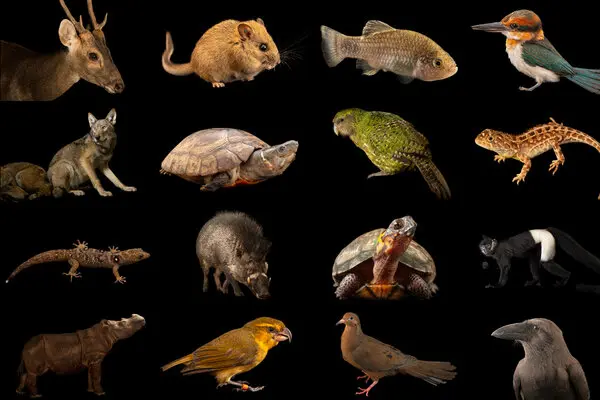
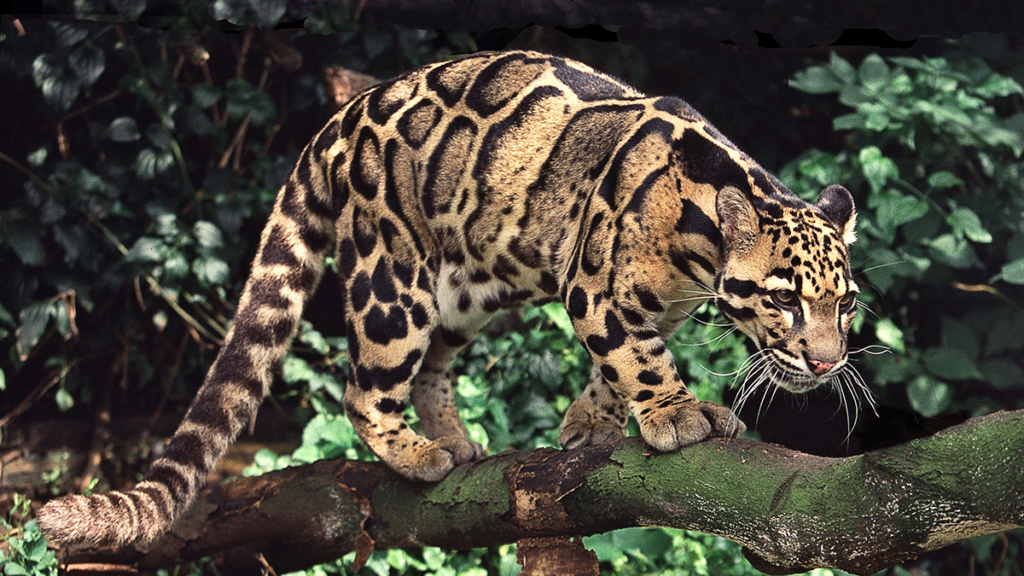
    • Kaziranga National Park has confirmed the presence of a yellow-throated marten for the first time.

    Yellow-throated Marten

      • Scientific name: Martes flavigula.
      • It belongs to the weasel family (Mustelidae), which also includes otters, badgers, and wolverines.
      • It is a diurnal (active during the day), tree‑climbing mustelid that assists seed dispersal, a role that supports healthy forest regeneration and ecosystem balance. 
      • Distribution – It is found across the Himalayas, South Asia, Southeast Asia, China, Korea, and parts of Russia. 
      • In India, the yellow-throated marten is found across the Himalayan region and in other parts of the northeastern region, including Assam. 
    • IUCN Status: Least Concern.
    • It is protected as a Schedule II animal under India’s Wildlife Protection Act.

    Additional Information- Kaziranga National Park

    • It is located in the northeastern state of Assam.
      • It was established in 1908 as a reserve forest and became a national park in 1974.
      • It was declared a UNESCO world heritage site in 1985.
    • It is the largest habitat of theIndian rhinoceros (Rhinoceros unicornis).

    Padma Barrage

    Geography & Environment

    Context

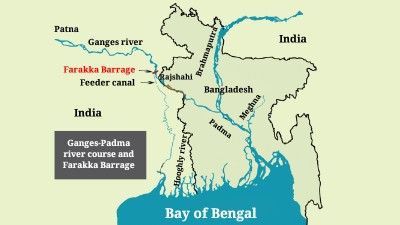
    • Bangladesh has approved a large river engineering project called the Padma barrage, on the Padma river, which is Bangladesh’s stretch of the Ganga, in Rajbari district. 

    Padma River

    • The Padma River is one of the largest and most important rivers in Bangladesh. 
    • It is the main distributary of the Ganges River after the Ganges enters Bangladesh from India. 
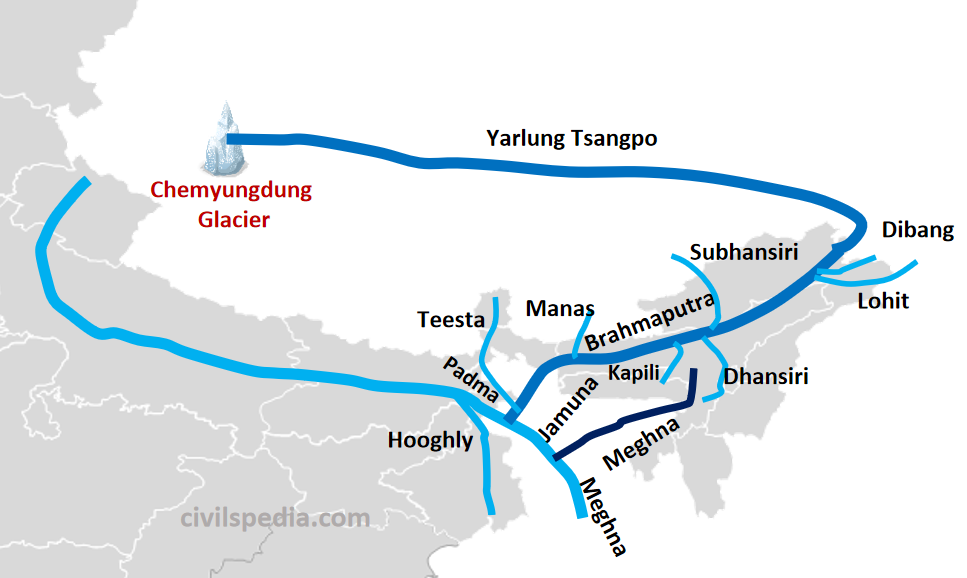
    • The Padma flows southeast, joins the Jamuna River (the lower Brahmaputra), and later merges with the Meghna River before emptying into the Bay of Bengal.
    • It is a major part of the world’s largest delta system, the Ganges–Brahmaputra–Meghna Delta. 

    Additional Information – Ganga River System

    The Ganga River System is India’s largest river basin. 

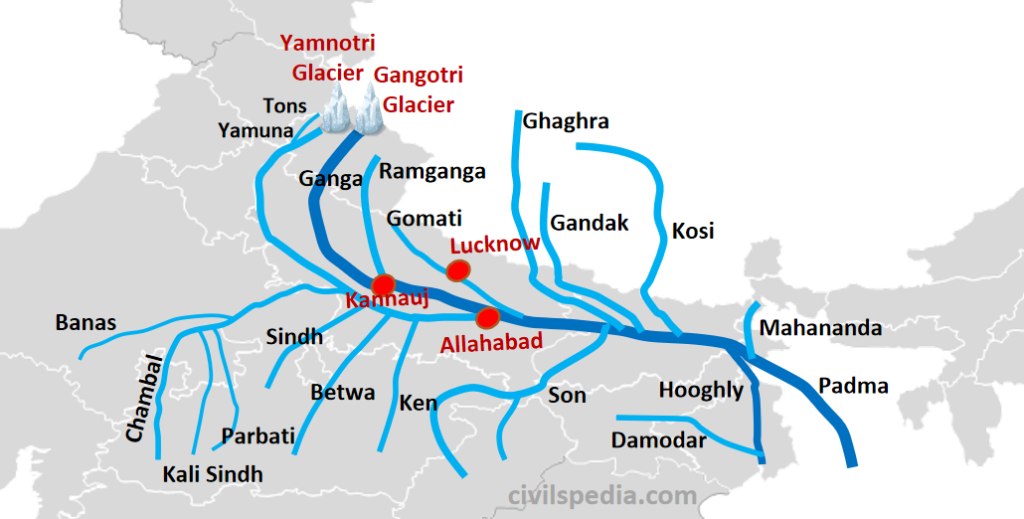
    • Origin – The river starts as the Bhagirathi from the Gangotri Glacier.
    • Name: It becomes the Ganga when it joins the Alaknanda at Devprayag.
    • RiverLength: It is 2,525 km long.
    • States: It flows through five states: Uttarakhand, Uttar Pradesh, Bihar, Jharkhand, and West Bengal.
    • The Delta: It splits in West Bengal. One part goes to Bangladesh (called Padma). It helps form the Sundarbans Delta, the biggest delta in the world.

    Important Tributaries

    • Left-Bank (North): Ramganga, Gomti, Ghaghara, Gandak, Kosi.
    • Right-Bank (South): Yamuna (the longest one) and Son.

    Key Exam Facts

    • National River: Named India’s National River in 2008.
    • Ganga Dolphin: This is India’s National Aquatic Animal. It is endangered.
    • Namami Gange: The main government project to clean and protect the river.

    Zimbabwe

    Geography

    Context

    • India and Zimbabwe agreed to enhance bilateral defence ties by expanding existing cooperation.

    About

    • Zimbabwe is a landlocked country situated in south-central Africa between the Limpopo and Zambezi rivers, covering an area of over 390,000 sq km.
    • It is bounded by Zambia to the north and northwest, South Africa to the south, Mozambique to the east and northeast, and Botswana to the southwest.
    • Zimbabwe lies entirely north of the Tropic of Capricorn and forms part of the southern African plateau.
    • The Victoria Falls, located on the border between Zimbabwe and Zambia, is the world’s largest sheet of falling water.

    National Awards for e-Governance (NAeG) 2026

    Polity

    Context

    • The Government of India has announced the winners of the National Awards for e-Governance (NAeG) 2026.
    • A total of 17 initiatives were selected across seven award categories, comprising 10 Gold Awards, 6 Silver Awards, and 1 Jury Award.

    National Awards for e-Governance (NAeG)

    • Mandate- The awards are presented annually to promote excellence in e-governance and digital public service delivery.
    • They recognize innovative use of technology to improve governance, transparency, accountability, and citizen-centric services.
    • It is instituted by the Department of Administrative Reforms and Public Grievances (DARPG).
    • The awards cover initiatives implemented by Ministries, Departments, States, UTs, Districts, Urban Local Bodies, and Gram Panchayats.

    Major Award-Winning Initiatives (Gold and Silver Awardees)

      • Agri Stack: Developed by the Ministry of Agriculture and Farmers Welfare.
      • Creates a digital ecosystem for farmers through unique farmer identities and land-linked databases. 
      • It facilitates targeted delivery of subsidies, crop insurance, credit, advisories, and government schemes.
      • e-Jagriti: It is a digital platform for filing and tracking consumer complaints, and developed by the Ministry of Consumer Affairs.
    • Mahakumbh 2025 Digital Governance Model: Implemented by the Prayagraj Mela Authority.
    • It demonstrated large-scale use of technology in managing one of the world’s largest religious gatherings.
    • Blood Bag Traceability and Citizen Interaction Portal: It is developed by Kerala Development and Innovation Strategic Council (K-DISC) and enables end-to-end tracking of blood units from donation to transfusion.
    • AI-enabled Clinical Decision Support system in eSanjeevani telemedicine service: It is developed by the Ministry of Health and Family Welfare.

    Pradhan Mantri Kaushal Vikas Yojana (PMKVY)

    Government Schemes

    News

    • The Public Accounts Committee (PAC) of Parliament recently raised serious concerns about the implementation of the Pradhan Mantri Kaushal Vikas Yojana (PMKVY) as the scheme appears to have been training people for industries that aren’t necessarily hiring.

    Pradhan Mantri Kaushal Vikas Yojana (PMKVY)

    • Objective – It is a government scheme to train youth in useful job skills. 
    • It started in 2015 under the Skill India Mission.
    • Implementation – Ministry of Skill Development and Entrepreneurship (MSDE).
    • Targeted beneficiary – School dropouts and unemployed youth.

    Key features – 

    • Short-Term Training (STT): Free training in digital skills, life skills, and trade work.
    • Recognition of Prior Learning (RPL): Exams and certificates for people who already have skills but no official degree.
    • Special Projects: Custom training for unique jobs or tough areas like tribal regions

    PMKVY 4.0?

    • Modern Skills: Focuses on new tech like AI, robotics, drones, and 5G.
    • Real Work Experience: Includes on-the-job training.
    • Skill India Digital Hub: Uses a digital app for easy signup and tracking.
  • Obituaries

    Obituaries

    1. Veteran Urdu Poet Bashir Badr Passes Away

    Padma Shri-winning Urdu literary icon Dr. Bashir Badr, celebrated for making classical ghazals accessible through emotional simplicity, passed away at 91 in Bhopal on May 28, 2026, leaving behind acclaimed collections such as Aas, Aahat, and Kulliyate Bashir Badr.

    2. Veteran Playback Singer Suman Kalyanpur Passes Away

    Legendary 1960s-70s playback singer Suman Kalyanpur, renowned for timeless Hindi classics like Aajkal Tere Mere Pyar Ke Charche alongside an expansive multi-lingual regional repertoire, passed away from age-related ailments at 89 in Mumbai on May 31, 2026.

    3. Veteran Filmmaker Bharathi Rajaa Passes Away

    Six-time National Award-winning Tamil filmmaker Bharathi Rajaa, celebrated for pioneering realistic rural storytelling in South Indian cinema alongside legendary composer Ilaiyaraaja, passed away at 84 in Chennai on June 10, 2026.

    4. Shooting Legend Jaspal Rana Passes Away
    Asian Games gold medallist and Dronacharya Award-winning coach Jaspal Rana, a pioneer of Indian pistol shooting who mentored Olympic medallist Manu Bhaker, passed away at 49 on June 11, 2026. A recipient of the Arjuna Award (1994) and Padma Shri (1997), he played a pivotal role in establishing India’s modern shooting ecosystem through his disciplined coaching and high-performance technical mentorship.
    5. François Englert Passes Away

    Belgian theoretical physicist and 2013 Nobel laureate François Englert, who co-discovered the Brout-Englert-Higgs mechanism explaining how fundamental particles acquire mass, passed away at 93 on June 18, 2026. A recipient of the Wolf Prize in Physics (2004) and the J.J. Sakurai Prize (2010), his pioneering 1964 theoretical work laid the foundation for the Standard Model of particle physics, which was experimentally validated by CERN’s discovery of the Higgs boson in 2012.

  • Jal Sanchay Jan Bhagidari (JSJB) Initiative | Mission Senehjori | Right to be Forgotten | Meteor Explosion | RudraM-II

    Jal Sanchay Jan Bhagidari (JSJB) Initiative

    Governance

    Context

    • Union Jal Shakti Minister said that the creation of over 1.5 crore artificial groundwater recharge and storage works have been reported across the country under the Centre’s Jal Sanchay Jan Bhagidari (JSJB) initiative.

    Jal Sanchay Jan Bhagidari (JSJB) initiative

    • It is a nationwide community-driven water conservation initiative launched by the Ministry of Jal Shakti in 2024 under the umbrella of the Jal Shakti Abhiyan: Catch the Rain (JSA: CTR) campaign.
    • Aim: To transform water conservation into a mass movement through active public participation, local institutions, industries, and government agencies.
    • It is driven by the 3Cs mantra—Community, corporate social responsibility (CSR), and cost.
    • Significance – it adopts an inclusive model that promotes long-term water security and resilience against water stress.
    • Under this initiative, States are encouraged to construct a minimum of 10,000 artificial recharge and storage structures.

    Mission Senehjori

    Government schemes

    Context

    • Union Minister for Development of North Eastern Region (MDoNER) has launched Mission Senehjori,
    • It is a flagship initiative to transform Assam’s Muga silk sector into a globally competitive luxury textile ecosystem.

    About

    • The mission aims to strengthen host-plant cultivation, modernise reeling infrastructure, promoting Farmer Producer Organisations (FPOs) & expanding global market access under the unified “Senehjori” brand.
    • Implementation – Government of Assam, the Central Silk Board, the Ministry of Textiles, and other central agencies.

    Central Silk Board

    • It is a statutory body under the Union Ministry of Textiles, established by the Central Silk Board Act, 1948 (later amended as Central Silk Board (Amendment) Act, 2006).
    • Mandate – It is responsible for formulating policies and implementing programs for the development of sericulture and silk industry.
    • Headquarter: Bengaluru, Karnataka

    Sericulture Basics

    • Sericulture involves cultivating silkworms (primarily Bombyx mori for mulberry silk) that feed on leaves like mulberry, oak, castor, and arjun to spin cocoons.
    • These are processed into yarn and fabric, blending agriculture and industry.
    • Note – India is the only country that produces all 4 major varieties of natural silk.
    1. Mulberry Silk (70% of India’s total output);
    2. Tasar (Tussar) Silk (Derived from wild silkworms);
    3. Eri Silk (aka ‘Ahimsa Silk’);
    4. Muga Silk (A Geographical Indication (GI) product).
    • Assam produces around 90% of the world’s Muga silk
    • India is today the second-largest producer of silk globally, accounting for nearly 25% of global silk output, next only to China.

    Right to be Forgotten

    Syllabus: GS2/ Governance

    Context

    • The Delhi High Court held that the Right to be Forgotten is an important part of the fundamental right to privacy under Article 21 of the Constitution.

    Right to be Forgotten

    • It is the right to ask organizations to remove your personal data from the internet, search engines, and public databases under specific conditions.
    • It helps people protect their online reputation and privacy so they are not permanently judged by past mistakes or outdated information

    How It Works

    • The right to be forgotten is also called the right to erasure.
    • It allows you to ask a company or search engine (like Google) to delete or hide links about you.
    • You can usually ask for your data to be removed if the information is outdated, incorrect, or irrelevant.

    Position of the Right to be Forgotten in India

    • India does not yet have a specific law on the Right to be Forgotten.
    • However, the Personal Data Protection Bill, 2019 and several court judgments have recognised this right.
    • The Supreme Court’s K.S. Puttaswamy judgment (2017) recognised informational privacy as part of the right to privacy.

    Meteor Explosion

    Science & technology

    Context

    • NASA has confirmed that a bright fireball meteor exploded in the sky

    Asteroid vs. Meteoroid vs. Meteorite:

    • Asteroid: Small rocky body orbiting the Sun.
    • Meteoroid: Smaller particle from an asteroid or comet orbiting the Sun.
    • Meteor: A meteoroid that enters Earth’s atmosphere, creating a streak of light (shooting star).
    • Meteorite: A meteor that survives its passage through the atmosphere and lands on Earth’s surface

    Additional information – Global Asteroid Missions

    • DART Mission (NASA, 2022): The first planetary defense test aimed at changing an asteroid’s trajectory by crashing a probe into it, specifically targeting the binary asteroid Didymos.
    • OSIRIS-REx (NASA, 2016-2023): Sample return mission to asteroid Bennu, providing insights into the solar system’s formation.
    • Hayabusa2 (JAXA, 2014-2020): Successfully collected samples from asteroid Ryugu, including essential ingredients for life.
    • Lucy Mission (NASA, 2021-Present): A 12-year journey to study multiple Jupiter Trojan asteroids.
    • Hera Mission (ESA, 2024 Launch): Will study the impact crater produced by DART to analyze its deflection success.
    • Tianwen-2 (China, 2025 Planned): A mission to sample the near-Earth asteroid Kamo’oalewa

    RudraM-II

    Science & technology

    Context

    • India successfully flight-tested the indigenous RudraM-II Air-to-Surface Missile, strengthening its indigenous defence and precision-strike capabilities.

    RudraM-II

    • Type – It is an air-to-surface missile
    • Developed by – Research Centre Imarat (RCI), Hyderabad, the nodal DRDO laboratory.
    • Speed – Mach 5.5,
    • Range – 300 km
    • Payload capacity – 200 kg.
    • Significance – It can be deployed from aircraft like Sukhois flying at altitudes ranging from 3 to 15 km.
    • The new missile will eventually replace the older Russian-origin Kh-31 anti-radiation missiles currently in service.

    Do You Know?

    • RudraM-I, the earlier variant in the RudraM series, has a range of 100–250 km and can attain speeds of up to Mach 2.

  • Important Days

    Important Days

    1. Rash Behari Bose Birth Anniversary

    • Observed Date: May 25 
    • Observing Organisation: Government of India 
    • Objective: To commemorate the revolutionary leader for internationalizing India’s freedom struggle, executing the 1912 Delhi Conspiracy Case, and leading the Ghadar Movement and Indian Independence League.

    2. World Thyroid Day

    • Observed Date: May 25 
    • Observing Organisation: Thyroid Federation International (TFI) and global partner associations 
    • Objective: To raise international awareness regarding the rising global burden of thyroid disorders, promote early diagnostic screening, and advocate for the effective clinical management of thyroid-related illnesses. 
    • Theme: “Thyroid and Nutrition”

    3. World Football Day

    • Observed Date: May 25 
    • Observing Organisation: United Nations General Assembly (UNGA) 
    • Objective: The United Nations commemorated the 1924 Olympic football tournament to highlight the sport’s universal power to unite cultures, empower youth, and advance sustainable global peace. 

    4. International Day of UN Peacekeepers

    • Observed Date: May 29 
    • Observing Organisation: United Nations General Assembly (UNGA) 
    • Objective: To recognize the professionalism, dedication, and courage of military, police, and civilian personnel serving in UN peacekeeping missions, and to honor those who have sacrificed their lives for global peace. 

    5. World No Tobacco Day

    • Observed Date: May 31 
    • Observing Organisation: World Health Organization (WHO) 
    • Objective: To highlight the global health burden of tobacco-related diseases, expose deceptive industry marketing tactics, and strengthen international policy interventions to protect youth from nicotine addiction. 
    • Theme: “Unmasking the Appeal: Countering Nicotine and Tobacco Addiction”

    6. World Bicycle Day

    • Observed Date: June 3 
    • Observing Organisation: United Nations General Assembly (UNGA) 
    • Objective: To recognize the bicycle as a reliable, clean, and affordable means of transportation, highlighting its role in reducing urban pollution, promoting public health, and advancing sustainable economic development. 
    • Theme: “Cycling for a Greener Future”

    7. World Environment Day

    • Observed Date: June 5 
    • Observing Organisation: United Nations Environment Programme (UNEP) 
    • Objective: A global environmental platform was established to advocate for immediate nature-based climate solutions and cross-border cooperation to combat greenhouse gas emissions and biodiversity loss. 
    • Theme: “Inspired by Nature: For Climate. For Our Future.”

    8. World Oceans Day

    • Observed Date: June 8 
    • Observing Organisation: United Nations General Assembly (UNGA) 
    • Objective: To raise awareness about the critical role of oceans in sustaining planetary life, regulating global climate systems, and advancing sustainable marine conservation in alignment with SDG 14. 
    • Theme: “Reimagine: Beyond the World We Know, a New Relationship with Our Ocean”

    9. World Day Against Child Labour

    • Observed Date: June 12 
    • Observing Organisation: International Labour Organization (ILO) 
    • Objective: To accelerate global efforts to eliminate child exploitation by advocating for universal social protection, access to quality education for children, and the enforcement of strong labor laws to secure decent employment for adults. 
    • Theme: “Red Card to Child Labour: Fair Play for Children, Decent Work for Adults”

    10. Global Wind Day

    • Observed Date: June 15 
    • Observing Organisation: Ministry of New and Renewable Energy (MNRE), Government of India 
    • Objective: A global campaign championed wind energy awareness to accelerate domestic expansion, offshore development, and international partnerships for a clean energy transition. 
    • Theme: “Wind Energy: From Ambition to Acceleration”

    11. World Crocodile Day

    • Observed Date: June 17, 2026 
    • Observing Organisation: Globally observed (with key initiatives by India’s Crocodile Conservation Project) 
    • Objective: To raise awareness about the ecological importance of crocodiles as apex predators, highlight threats like habitat fragmentation and poaching, and promote aquatic wetland conservation. 
    • Theme: “Legacy in Every Scale”

    12. World Day to Combat Desertification and Drought

    • Observed Date: June 17, 2026
    • Observing Organisation: United Nations Convention to Combat Desertification (UNCCD)
    • Objective: To raise global awareness about land degradation and drought, promote sustainable land management, and highlight the critical need to protect and restore rangeland ecosystems.
    • Theme: “Rangelands: Recognize. Respect. Restore.”

    13. Autistic Pride Day

    • Observed Date: June 18, 2026
    • Observing Organisation: Globally observed (originally initiated by Aspies For Freedom)
    • Objective: To celebrate neurodiversity, challenge negative societal perceptions of autism, and promote the acceptance and inclusion of autistic individuals as a natural variation of human diversity.
    • Theme: “Empowerment Through Inclusion”

    14. World Sickle Cell Day

    • Observed Date: June 19, 2026
    • Observing Organisation: United Nations General Assembly (UNGA)
    • Objective: To raise global awareness about sickle cell disease (SCD) as a major public health challenge, promote early diagnosis and large-scale screening, and improve long-term healthcare access and support for affected patients.
    • Theme: “Closing the Survival Gap: Equity in Sickle Cell Disease”

    15. World Refugee Day

    • Observed Date: June 20, 2026
    • Observing Organisation: United Nations High Commissioner for Refugees (UNHCR)
    • Objective: To honor the courage, strength, and resilience of millions of people forced to flee their home countries to escape conflict or persecution, and to defend their fundamental right to seek safety, dignity, and long-term inclusion.
    • Theme: “Until Everyone Is Safe”

    16. International Yoga Day

    • Observed Date: June 21, 2026
    • Observing Organisation: United Nations (UN)
    • Objective: To raise global awareness about the multifaceted physical, mental, and spiritual benefits of practicing yoga, and to promote holistic health, active longevity, and global harmony.
    • Theme: “Yoga for Healthy Ageing”

    17. Father’s Day

    • Observed Date: June 21, 2026
    • Observing Organisation: Globally observed across 110+ countries
    • Objective: To honor fathers, grandfathers, and father figures for their unconditional love, daily sacrifices, lifelong guidance, and critical role in providing stability and building future generations.
    • Theme: “Fathers: Guiding Strength and Building Futures”

    18. Olympic Day

    • Observed Date: June 23, 2026

    • Observing Organisation: International Olympic Committee (IOC)

    • Objective: To promote the Olympic values of excellence, friendship, and respect, commemorate the foundation of the IOC in 1894, and encourage people globally to engage in sports, fitness activities, and community events under the pillars of Move, Learn, and Discover.

    • Theme: “You Can Do This: Let’s Move”

  • QUIZ on National & International Current Affairs – June 3rd 2026

    QUIZ on National & International Current Affairs – June 3rd 2026

  • MCQs on National & International

    MCQs on National & International

    1. The headquarters of the Central Silk Board is located in:

         A. Chennai
         B. Hyderabad
         C. Bengaluru
         D. Guwahati

    Answer: C


    2. Consider the following statements regarding the Right to be Forgotten:

    1. The Right to be Forgotten is also known as the Right to Erasure.
    2. India currently has a specific law exclusively dealing with the Right to be Forgotten.

               Which of the statements given above is/are correct?

                A.1 only
                B. 2 only
                C. Both 1 and 2
                D. Neither 1 nor 2

    Answer: A


    3. Consider the following statements:

    1. Hera Mission will study the impact crater created by the DART Mission.
    2. Tianwen-2 is planned to collect samples from asteroid Bennu.

                Which of the statements given above is/are correct?

                 A. 1 only
                 B. 2 only
                 C. Both 1 and 2
                 D. Neither 1 nor 2

    Answer: A


    4. With reference to RudraM-II, which one of the following statements is correct?

           A. It is a surface-to-air missile developed by ISRO.
           B. It is an air-to-surface missile developed by DRDO’s Research Centre Imarat.
           C. It is an anti-tank guided missile developed by HAL.
           D. It is a submarine-launched cruise missile developed by DRDO.

    Answer: B

  • Banni Grasslands | Majuli Island | AUKUS Alliance | Forest Rights Act and PESA | Base Year Revision of Wholesale Price Index (WPI)

    Banni Grasslands

    Environment

    Context

    • The proposed solar project by NTPC Renewable Energy Limited in Gujarat’s Banni grasslands has raised concerns over its impact on local communities, biodiversity, and wetlands.

    Banni Grassland

    • Location – The Banni grasslands in Kachchh
    • UniquenessAsia’s largest natural grasslands
    • Pastoral communities – Fakirani Jat.
    • The region contains over 70 species of nutritious grasses and supports grazing of camels, buffaloes, sheep, and goats.
    • Nearby – Chhari Dhand Wetland Conservation Reserve is a Ramsar site important for migratory birds and local biodiversity.

    Concerns

    • Local communities fear loss of grazing land, cultural spaces, graveyards, and traditional livelihoods.
    • Conservationists warn that solar infrastructure, light pollution, and human activity may disturb bird habitats and migratory routes.

    Majuli Island

    Geography

    Context

    • A recent study by scientists from the Birbal Sahni Institute of Palaeosciences has reconstructed nearly 4,000 years of climate, vegetation, and river dynamics of Majuli Island.

    Majuli Island

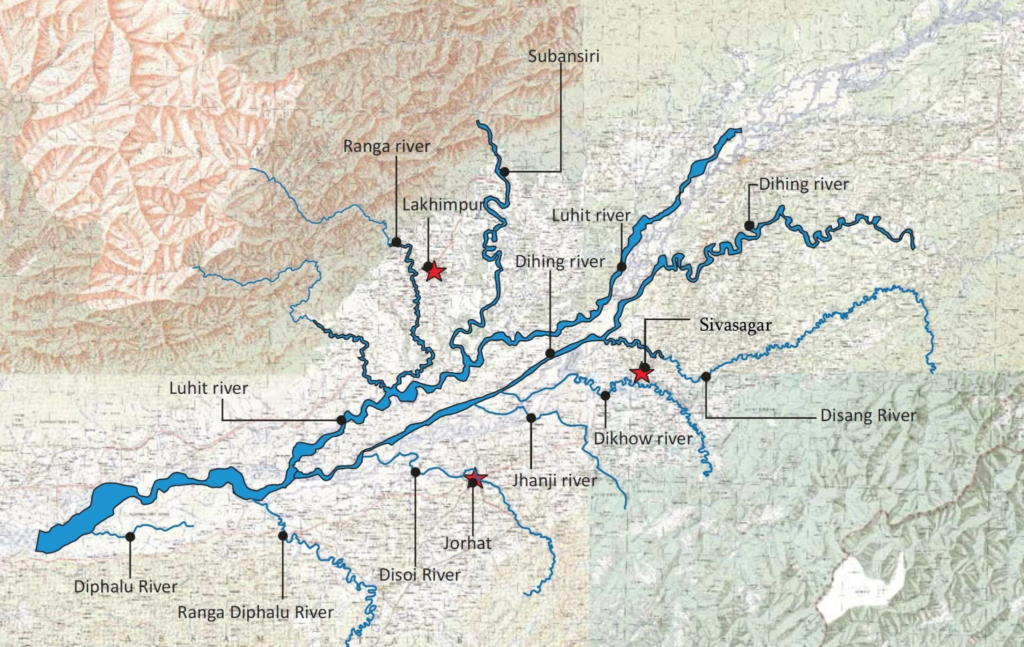
    • Majuli is located in the Brahmaputra River system in Assam.
    • Uniqueness – world’s largest inhabited river island.
    • Majuli is a unique fluvial island formed by the Brahmaputra River and its tributaries, covering about 875 sq. km.
    • It is bounded by the Subansiri River in the north, Kherkatia Suti in the northeast, and the Brahmaputra River in the south.
    • Geographical features – Its landscape consists of alluvial plains, braided channels, wetlands (Beels), and riverine sandbars known as Chaporis.
    • The island is an important centre of Neo-Vaishnavite culture established by Srimanta Sankardeva.
    • It hosts around 30 Sattras (Vaishnavite monasteries), which serve as centres of religion, culture, education, and community governance.
    • It is home to several indigenous tribal communities, including the Mising, Deori, and Sonowal Kachari tribes.
    • Threats- The island faces recurrent floods, riverbank erosion, deforestation, and land loss.

    Additional Information- Brahmaputra River

    • The Brahmaputra is a major transboundary river in Asia.
    • It originates from the Chemayungdung Glacier near Lake Manasarovar (Mapam Yumco) in Tibet.
    • It is known variably as Yarlung Tsangpo in Tibet (its longest upper stretch), Siang or Dihang in Arunachal Pradesh, Brahmaputra in Assam & Jamuna in Bangladesh.
    • It flows east through Tibet’s plateau, enters India via Arunachal Pradesh, widens in Assam’s plains, and merges with the Ganges in Bangladesh before reaching the Bay of Bengal.

    AUKUS Alliance

    International Relations

    Context

    • The AUKUS alliance between Australia, the United Kingdom, and the United States has completed five years and recently expanded cooperation in maritime defence and advanced technologies.

    AUKUS

    • It was launched in September 2021
    • It is a trilateral strategic security partnership.
    • Objective – to strengthen defence capabilities, technological cooperation, and strategic stability in the Indo-Pacific region.

    Two Pillars of AUKUS

    Pillar I:

    • Focuses on helping Australia acquire conventionally armed nuclear-powered submarines (SSNs).
    • It will make Australia the seventh country to operate nuclear-powered submarines.

    Pillar II:

    Focuses on cooperation in advanced technologies such as artificial intelligence, quantum computing, cyber capabilities, undersea technologies, and advanced weapon systems.

    Forest Rights Act and PESA

    Polity and Governance

    Context

    • The constitution of a task force in Chhattisgarh to fast-track the implementation of laws such as the Forest Rights Act, 2006 and the Panchayats (Extension to the Scheduled Areas) Act, 1996, has led to controversy.

    Forest Rights Act

    • It is also called The Scheduled Tribes and Other Traditional Forest Dwellers (Recognition of Forest Rights) Act, 2006
    • Mandate – to recognize the rights of forest-dwelling communities, including Scheduled Tribes, over forest resources
    • Nodal Ministry: Ministry of Tribal Affairs (MoTA).

    Four Main Rights

    1. Title Rights: Ownership of cultivated forest land up to 4 hectares.
    2. Use Rights: Right to collect, use, and sell Minor Forest Produce (MFP) like bamboo and honey.
    3. Development Rights: Right to use land for local schools, clinics, and roads.
    4. Forest Management: Power to protect and manage their traditional forests.

    PESA Act, 1996

    • PESA Act, 1996 stands for the Provisions of the Panchayats (Extension to Scheduled Areas) Act, 1996.

    The PESA Act (1996) grants self-governance to tribal areas across 10 Indian states.

    • Gram Sabha Power: Village assemblies protect tribal culture and approve all local development plans.
    • Land Protection: Must give permission before land is taken or mined for sand and stone.
    • Resource Ownership: Full rights over minor forest items (fruits, honey) and small water bodies.
    • Economic Control: Regulates local markets, stops bad money lenders, and can ban alcohol.
    • Tribal Leadership: Scheduled Tribes must hold at least 50% of seats and all chairperson roles.

    Base Year Revision of Wholesale Price Index (WPI)

    GS3/ Economy

    Context

    • The Government of India has approved the revision of the base year of the Wholesale Price Index (WPI) from 2011–12 to 2022–23.

    Wholesale Price Index (WPI)

    • Objective – It tracks the price of goods sold in bulk by wholesale businesses.
    • Published by – The Office of the Economic Adviser, Ministry of Commerce and Industry.
    • It covers goods only. It does not track services.
    • Base Year: 2022–23 (Updated in 2026 from 2011–12).
    • Note – WPI will be phased out by 2031. India is moving to a new Producer Price Index (PPI).

    Additional Information – Core Differences Between WPI and CPI

    Feature

    Wholesale Price Index (WPI)

    Consumer Price Index (CPI)

    Stage of Transaction

    Tracks prices when goods are traded in bulk between businesses.

    Tracks prices at the final retail stage when bought by households.

    Commodity Coverage

    Only Goods. It completely excludes the service sector.

    Both Goods and Services (e.g., education, medical care, housing).

    Published By

    Office of Economic Adviser, Ministry of Commerce and Industry.

    National Statistical Office (NSO), Ministry of Statistics and Programme Implementation (MoSPI).

    Base Year

    2011-12 (An official panel transition to 2022-23 / PPI is underway).

    2024 (Updated from 2012 by MoSPI to reflect modern spending).

    Policy Target

    Used mostly to monitor macroeconomic producer-level price trends.

    Used by the RBI as the headline metric for inflation targeting

  • Awards

    Awards

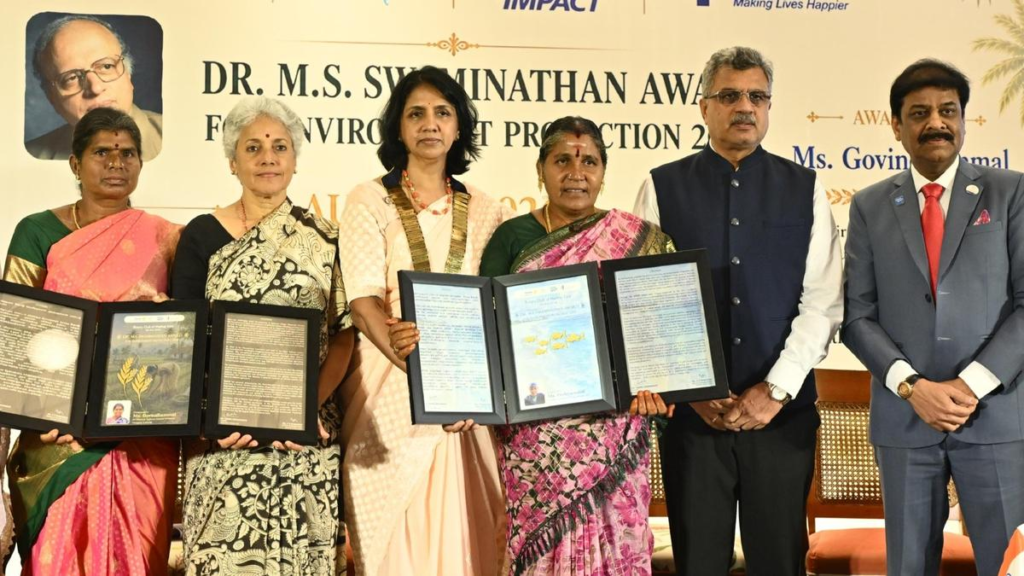
    1. Major Abhilasha Barak Receives UN Peacekeeping Honour

    Context : An Indian Army officer was globally recognized for championing women’s empowerment and inclusive peacekeeping during her West Asia deployment

    Key Highlights:

    • Award: 2025 United Nations Military Gender Advocate of the Year.
    • Awardee: Major Abhilasha Barak (the first woman combat helicopter pilot of the Indian Army).
    • Issuing Authority: United Nations Department of Peace Operations.
    • Presenter: UN Secretary-General António Guterres at the UN Headquarters in New York.
    • Key Achievement: Conducted 539 gender-focused field activities supporting over 5,000 local women and launched an AI-driven platform for reporting gender-based violence.

    About the Award:

    • Established in 2016 by the UN Office of Military Affairs.
    • Recognizes individual military personnel actively advancing the principles of UN Security Council Resolution 1325 on Women, Peace, and Security.

    2. Twelve Lawmakers Selected for Sansad Ratna Awards

    Context: Civil society awards were announced honoring top-performing lawmakers and parliamentary panels for outstanding legislative transparency, accountability, and active performance. 

    Key Highlights:

    • Award: Sansad Ratna Awards 
    • Awardees: 12 Members of Parliament (10 Lok Sabha and 2 Rajya Sabha) along with 4 Parliamentary Standing Committees.
    • Issuing Authority: Prime Point Foundation (Chennai-based NGO) alongside Pre-Legislative Research (PRS).
    • Core Parameters: Judged on house attendance, total questions raised, active debates joined, and private member bills introduced.
    • State Performance: Maharashtra dominated the individual honors with five separate MPs receiving the distinction.

    About the Award:

    • Instituted in 2010 based on a structural recommendation from former President Dr. A.P.J. Abdul Kalam.
    • Commemorates outstanding democratic representation and legislative oversight from individual parliamentarians.
    • The upcoming 2026 ceremony scheduled in New Delhi will mark the presentation of its 150th cumulative honor.

    3. President Confers First Phase of 2026 Padma Awards

    Context: The President presented the nation’s highest civilian honors at the Civil Investiture Ceremony, recognizing individuals for exceptional lifetime contributions across public affairs, science, sports, and social work. 

    Key Highlights:

    • Award: Padma Awards 2026 (First Investiture Phase).
    • Presenter: President Droupadi Murmu at the Rashtrapati Bhavan in New Delhi.
    • Volume Presented: 66 out of 131 approved total honors (comprising 2 Padma Vibhushan, 6 Padma Bhushan, and 58 Padma Shri).

    About:

    • Initially instituted in 1954 by the Government of India.
    • Formally announced annually on the eve of Republic Day.
    • Structurally classified into three hierarchical tiers based on the degree of distinguished service rendered.

    Key Recipients

    Padma Vibhushan Recipients (2026)

    S.No.

    Recipient

    Field

    State / Country

    1

    Shri Dharmendra Singh Deol (Posthumous)

    Art

    Maharashtra

    2

    Shri K. T. Thomas

    Public Affairs

    Kerala

    3

    Ms. N. Rajam

    Art

    Uttar Pradesh

    4

    Shri P. Narayanan

    Literature and Education

    Kerala

    5

    Shri V. S. Achuthanandhan (Posthumous)

    Public Affairs

    Kerala

    Padma Bhushan Recipients (2026)

    S.No.

    Recipient

    Field

    State / Country

    1

    Ms. Alka Yagnik

    Art

    Maharashtra

    2

    Shri Bhagat Singh Koshyari

    Public Affairs

    Uttarakhand

    3

    Shri K. R. Palaniswamy

    Medicine

    Tamil Nadu

    4

    Shri Mammootty

    Art

    Kerala

    5

    Dr. Nori Dattatreyudu

    Medicine

    United States of America (NRI)

    6

    Shri Piyush Pandey (Posthumous)

    Art

    Maharashtra

    7

    Shri S. K. M. Maeilanandhan

    Social Work

    Tamil Nadu

    8

    Shri Shatavadhani R. Ganesh

    Art

    Karnataka

    9

    Shri Shibu Soren (Posthumous)

    Public Affairs

    Jharkhand

    10

    Shri Uday Kotak

    Trade and Industry

    Maharashtra

    11

    Shri V. K. Malhotra (Posthumous)

    Public Affairs

    Delhi

    12

    Shri Vellappally Natesan

    Public Affairs

    Kerala

    13

    Shri Vijay Amritraj

    Sports

    United States of America (NRI)

    Karnataka Recipients (Padma Awards 2026)

    Recipient

    Award Category

    Field

    Shatavadhani Dr. R. Ganesh

    Padma Bhushan

    Art (Avadhana Scholar)

    Anke Gowda M.

    Padma Shri

    Social Work (Library Preservation)

    Dr. S.G. Susheelamma

    Padma Shri

    Social Work (Women and Child Welfare)

    Dr. Suresh Hanagavadi

    Padma Shri

    Medicine

    Shubha Venkatesha Iyengar

    Padma Shri

    Science and Engineering

    Dr. Prabhakar Basavprabhu Kore

    Padma Shri

    Literature and Education

    Shashi Shekhar Vempati

    Padma Shri

    Literature and Education (Media)

    T.T. Jagannathan

    Padma Shri

    Trade and Industry

    Key Padma Shri Recipients

    Recipient

    Field

    Key Exam Fact / Focus

    Rohit Sharma

    Sports

    Former Indian Cricket Captain

    R. Madhavan

    Art

    Acclaimed Actor & Filmmaker

    Savita Punia

    Sports

    Indian Hockey Player

    Satish Shah (Posthumous)

    Art

    Veteran Actor

    Chandramouli Gaddamanugu

    Science and Engineering

    Aerospace Scientist (DRDL, Akash Missile System)

    Guru Sangyusang Pongener

    Art

    Folk Artist & Cultural Guardian from Nagaland

    Ashok Khade

    Trade and Industry

    Self-made Entrepreneur

    Asok Kumar Haldar

    Literature and Education

    Dalit Author & Railway Guard

    Anil Kumar Rastogi

    Art

    Famous Actor

    Mahendra Nath Roy

    Science and Engineering

    Chemistry Professor

    Ranjani and Gayatri

    Art

    Carnatic Music Duo (Counted as one award)

    R.V.S. Mani

    Public Affairs

    Former MHA Under Secretary

    4. UN Posthumously Honours Two Indian Peacekeepers

    Context: The United Nations posthumously honored two fallen Indian peacekeepers for their ultimate sacrifice, highlighting India’s role as the second-largest troop contributor to global peacekeeping. 

    Key Highlights:

    • Award: Dag Hammarskjöld Medal, presented globally during the International Day of UN Peacekeepers ceremony.
    • Awardees: Lance Havildar Harbhajan Singh and Naib Subedar Sujit Kumar Pradhan (both awarded posthumously).
    • Issuing Authority: United Nations, with the physical medals formally presented by UN Secretary-General António Guterres.
    • Service Deployments: Harbhajan Singh served with MONUSCO in the Democratic Republic of the Congo, while Sujit Kumar Pradhan served with UNMISS in South Sudan.

    5. Indian Institutions Win WHO Tobacco Control Awards

    Context: The WHO has honored Indian institutions for exceptional policy interventions and legislative efforts in tobacco control, recognizing their strategic success in reducing consumption and promoting cessation services. 

    Key Highlights:

    • Award mechanism : World No Tobacco Day Awards 2026, formally categorized across six global operational regions.
    • Issuing Authority: The World Health Organization (WHO).
    • Director-General Special Award: Conferred upon Dr. Shaya Mohsin Zindani, the Prime Minister and Minister of Foreign Affairs of the Republic of Yemen.
    • Indian Awardee (State Level): The Principal Health Secretary of the Medical and Health Department, Government of Rajasthan (Jaipur).
    • Indian Awardees (Central Level): The ICMR-National Institute of Cancer Prevention and Research, alongside the national Department of Health Research.

    6. Indian Students Win Earth Prize for Microplastic Innovation

    Context: A youth-led, low-cost water filtration technology using agricultural waste has been recognized for its effectiveness in removing microplastics, providing a scalable solution for underserved rural populations. 

    Key Highlights:

    • Award: The Earth Prize 2026 (Global Winners Category).
    • Awardees: Indian teenage innovators Vivaan Chhawchharia, Ariana Agarwal, and Avyana Mehta.
    • Key Achievement: Developed “Plas-Stick,” a sustainable and biodegradable filtration material derived from tamarind seed powder.

    About the Award:

    • The Earth Prize is an international environmental sustainability competition exclusively designed to empower teenage students and young innovators.
    • It provides crucial mentorship, global recognition, and operational support to scale practical solutions combating climate change and ecological pollution.

    7. Indian Farmer Valluvan Honoured as UN Soil Farmer Hero

    Context: A grassroots Indian agroforestry model was globally recognized for reversing soil degradation and boosting smallholder livelihoods through climate-resilient crop diversification. 

    Key Highlights:

    • Award: Soil Farmer Hero recognition.
    • Issuing Authority: United Nations Food and Agriculture Organization (UN FAO).
    • Awardee: Valluvan, an agriculturalist from the Pollachi district of Tamil Nadu.
    • Key Achievement: Successfully transitioned a single-crop farm into a diverse 14-crop agroforestry enterprise, increasing soil organic carbon levels from 0.5 percent to 1.56 percent.

    8. PAI and e-Jagriti Win National e-Governance Awards

    Context: The Union government recognized two pioneering digital frameworks for modernizing public administration through AI integration, data-driven rural governance, and accelerated consumer dispute resolution. 

    Key Highlights:

    • Event & Authority: Conferred by the DARPG at the 29th National Conference on e-Governance in Jaipur, Rajasthan.
    • Gold Awardee: Panchayat Advancement Index (PAI), developed by the Ministry of Panchayati Raj.
    • PAI Achievement: Successfully evaluated the structural governance performance of over 2.6 lakh Gram Panchayats utilizing comprehensive data analytics.
    • Silver Awardee: e-Jagriti Platform, developed by the Department of Consumer Affairs.
    • e-Jagriti Achievement: Integrated four legacy grievance systems using AI, achieving a 90.75 percent disposal rate by resolving over 2.07 lakh consumer disputes.

    National e-Governance Awards 2026: Platform Comparison

    Award Tier

    Recognized Digital Platform

    Nodal Ministry

    Core Public Function

    Gold

    Panchayat Advancement Index (PAI)

    Ministry of Panchayati Raj

    Rural Governance Data Analytics

    Silver

    e-Jagriti Platform

    Ministry of Consumer Affairs

    AI-Driven Dispute Redressal

    About the Framework:

    • The awards are conferred annually to encourage the innovative application of digital technology in delivering citizen-centric public services.
    • The 2026 summit operated under the central theme: “Viksit Bharat 2047: AI-Enabled, Data-Driven and Secure Digital Governance.”

    9. Lionel Messi Wins Princess of Asturias Sports Award

    Context: The Spanish crown has honored a global athlete for combining athletic excellence with impactful philanthropy, specifically for leveraging their platform to champion educational access and pediatric healthcare. 

    Key Highlights:

    • Award: 2026 Princess of Asturias Award for Sports, marking the first time an individual footballer received this honor.
    • Awardee: Argentine national football team captain and eight-time Ballon d’Or winner Lionel Messi.
    • Issuing Authority: The Princess of Asturias Foundation, with the formal presentation scheduled in Oviedo, Spain.
    • Key Achievement: Recognized for his historic 47-title athletic career alongside extensive charitable work through the Leo Messi Foundation.

    10. Sudarsan Pattnaik Wins Russia Grand Sand Master Cup

    Context: The international artistic community has honored an Indian sculptor for using visual art to advocate for environmental conservation, showcasing indigenous talent on a major global platform for climate awareness. 

    Key Highlights:

    • Award: Russia Grand Sand Master Cup 2026.
    • Awardee: Padma Shri recipient and renowned sand artist Sudarsan Pattnaik (Odisha).
    • Venue: II International Festival of Sand Sculpture, Russia.
    • Presenter: Festival General Director Alena Aleksandrovna.
    • Key Achievement: Became the first Indian to secure this title, recognized for crafting a three-metre-high sculpture depicting the dual themes of environmental degradation and afforestation to highlight Global Warming.

    11. PM Modi Receives Slovakia’s Highest National Award

    Context: Slovakia has conferred its highest state decoration, the Order of the White Double Cross, First Class, upon Prime Minister Narendra Modi during a special ceremony in Bratislava.

    Key Highlights

    • The Presenter: Presented by Slovak President Peter Pellegrini during PM Modi’s historic visit (the first by an Indian Prime Minister since Slovakia’s independence).
    • Global Tally: This marks the 33rd international honor bestowed upon PM Modi by a foreign nation.
    • Diplomatic Dedication: PM Modi dedicated the prestigious recognition to the 1.4 billion citizens of India and the enduring friendship between the two nations.

    About the Award

    • Premier State Honor: Established in 1993 following the nation’s independence, it is the premier civilian decoration awarded by the Slovak Republic.
    • Core Symbolism: Takes its name from the white double cross, a historic symbol that forms the centerpiece of Slovakia’s national emblem.
    • Eligibility: Conferred primarily upon foreign citizens and global dignitaries for exceptional contributions to developing friendly bilateral relations and advancing international cooperation with Slovakia.

    12. Jainendra K. Jain Wins Wolf Prize in Physics

    Context: Indian-American physicist Jainendra K. Jain has been awarded the prestigious 2026 Wolf Prize in Physics, making him the first scientist of Indian origin to win the honor.

    Key Highlights

    • The Breakthrough: Recognized for his seminal discovery of composite fermions, a fundamental breakthrough that successfully explained the fractional quantum Hall effect in condensed matter physics.
    • Academic Affiliation: He currently serves as the Evan Pugh University Professor and Eberly Chair in Physics at Pennsylvania State University.
    • Global Distinction: Joins an elite roster of past physics laureates that includes monumental figures like Stephen Hawking and Albert Einstein.

    About the Award

    • Prestige Level: Established in 1978 by the Israel-based Wolf Foundation, it is widely regarded as the most prestigious award in physics after the Nobel Prize.
    • Core Mandate: Awarded annually to living scientists and artists for outstanding achievements that advance humanity across six fields: Agriculture, Chemistry, Mathematics, Medicine, Physics, and the Arts.

    The Prize: Laureates receive a certificate and a monetary award of $100,000, presented during an official ceremony at the Knesset (Israel’s Parliament) in Jerusalem.

    13. Two Indian Women Win Whitley Awards (Green Oscars) 2026

    Context: Two trailblazing Indian conservationists, Parveen Shaikh and Dr. Barkha Subba, have been honoured with the prestigious 2026 Whitley Awards—popularly known as the ‘Green Oscars’—during a special ceremony at the Royal Geographical Society in London.

    Key Highlights

    • Parveen Shaikh: A scientist with the Bombay Natural History Society (BNHS), she was recognized for her ‘Guardians of the Skimmer’ initiative. Her community-led project along the Chambal River has trained locals to protect vulnerable nesting colonies, helping the endangered Indian Skimmer bird population rebound from 400 to nearly 1,000.

    • Barkha Subba: Working with the Federation of Societies for Environmental Protection (FOSEP), she was awarded for her efforts to conserve the rare Himalayan Salamander (often called a “living fossil”) in the Darjeeling Himalayas. Her work involves restoring drying wetlands, engaging tea estate workers, and screening for deadly amphibian fungal diseases.

    • The Prize: Presented by Princess Anne, the award provides each winner with international visibility and a crucial project funding grant of £50,000 to scale up their grassroots conservation operations.

    About the Award

    • Establishing Body: Administered and funded by the UK-based Whitley Fund for Nature (WFN).
    • Core Mandate: The ‘Green Oscars’ are designed to champion grassroots conservation leaders across the Global South who successfully combine scientific research with local community engagement to bring about ecological healing.
    • Global Recognition: Alongside the two Indians, four other conservationists from Indonesia (Gold Award), Zimbabwe, Ghana, and Cameroon were also celebrated for their ecological impact this year.
  • QUIZ on National & International Current Affairs – June 2nd 2026

    QUIZ on National & International Current Affairs – June 2nd 2026

  • MCQs on National & International

    MCQs on National & International

    1. Consider the following statements regarding Majuli Island:

    1. It is an important centre of Neo-Vaishnavite culture established by Srimanta Sankardeva.
    2. The island hosts around 30 Sattras that function as centres of religion, culture, education, and community governance.

               Which of the statements given above is/are correct?

               A. 1 only
               B. 2 only
               C. Both 1 and 2
               D. Neither 1 nor 2

    Answer: C


    2. Which one of the following countries is NOT a member of AUKUS?

         A. Australia
         B. United Kingdom
         C. United States
         D. Canada

    Answer: D


    3. With reference to the Forest Rights Act, 2006, consider the following statements:

    1. It is officially known as the Scheduled Tribes and Other Traditional Forest Dwellers (Recognition of Forest Rights) Act, 2006.
    2. Its objective is to recognize the rights of forest-dwelling communities over forest resources.
    3. The Ministry of Environment, Forest and Climate Change is its nodal ministry.

                Which of the above statements are correct?

                A. 1 and 2 only
                B. 2 and 3 only
                C. 1 and 3 only
                D. 1, 2 and 3

    Answer: A


    4. Consider the following statements:

    1. WPI completely excludes the service sector.
    2. CPI includes both goods and services such as education, medical care, and housing.

               Which of the statements given above is/are correct?

               A. 1 only
               B. 2 only
               C. Both 1 and 2
               D. Neither 1 nor 2

    Answer: C


    5. The primary aim of the Jal Sanchay Jan Bhagidari initiative is to:

        A. Establish river interlinking projects across India
        B. Transform water conservation into a mass movement through public participation
        C. Promote desalination technologies in coastal states
        D. Regulate groundwater extraction through licensing

    Answer: B