Author: Ramvilas

  • QUIZ on National & International, State Current Affairs and Miscellaneous – July 14th 2026

    QUIZ on National & International, State Current Affairs and Miscellaneous – July 14th 2026

  • PM-UDAY Scheme | Parrot Bornavirus 4 | Direct Seeded Rice (DSR) | Long March 10B Rocket | India-New Zealand ‘Strategic Partnership’ | India’s Textile Sector | Pinaka Long Range Guided Rocket | Oxytocin

    PM-UDAY Scheme

    Government Schemes

    In News

    • Recently Delhi CM has sought ₹100 crore as a first phase central government financial assistance to implement the revised Pradhan Mantri Unauthorised Colonies in Delhi Awas Adhikar Yojana (PM-UDAY) in the national capital.

    Pradhan Mantri –Unauthorised Colonies in Delhi Awas Adhikar Yojana (PM-UDAY)

    • Financing – It is a central sector initiative 
    • Launched in- October 2019 
    • Objective – to grant legal ownership, transfer, and mortgage rights to residents living in Delhi’s unauthorised colonies. 
    • Administered by – Delhi Development Authority (DDA) under the Ministry of Housing and Urban Affairs (MoHUA)

    Parrot Bornavirus 4

    Science & technology

    Context

    • Deadly bird virus PaBV-4 has been identified for the first time in India.

    Parrot Bornavirus 4 (PaBV-4)

      • It is an avian virus recently detected for the first time in India (Assam, Karnataka, West Bengal) among captive parrot species.
      • The Virus: Enveloped, negative-sense, single-stranded RNA virus (Bornaviridae family).
    • Zoonotic Status: Not zoonotic (does not infect humans).
    • Target: Psittacine birds (macaws, cockatoos, parakeets, budgerigars).

    Associated Disease

    • It causes Proventricular Dilatation Disease (PDD), also called “Macaw Wasting Disease.”
    • Gastrointestinal: Destroys nerves in the digestive tract, causing an enlarged stomach, weight loss, and undigested seeds in droppings.
    • Neurological: Causes tremors, loss of coordination, seizures, and paralysis.

    Transmission & Management

    • Spread: Contact with infected feces, saliva, feather dust, or vertically from parent to egg.
    • Challenge: Infected birds can stay asymptomatic while actively shedding the virus.
    • Control: No vaccine or cure exists. Diagnosis is via RT-PCR; management relies on isolation and supportive care.

    Direct Seeded Rice (DSR)

    Economy

    In News

    • Recently, the Chhattisgarh government issued an advisory to focus  on prioritising Direct Seeded Rice (DSR) over the traditional transplanting method against the backdrop of the uncertainty of rainfall due to El Niño.

    Direct Seeding of Rice 

    • It is a resource-efficient cultivation technique where paddy seeds are sown directly into the main field, completely bypassing the traditional, water-intensive stages of nursery raising, manual transplanting, and field puddling.
    • Also locally called the ‘tar-wattar’ technique (sowing in moist soil).
    • It has gained immense policy traction across states like Punjab and Haryana to counter severe groundwater depletion and El Niño-induced monsoon deficits.

    Additional Information – DSR vs. Traditional Puddled Transplanted Rice (PTR)

    Feature

    Traditional Method (PTR)

    Direct Seeding of Rice (DSR)

    Nursery Phase

    Seeds grown in nurseries for 25–35 days.

    Skipped entirely; seeds sown directly.

    Field Preparation

    Puddling (ploughing flooded fields to create mud).

    Laser land levelling and dry/moist sowing.

    Water Usage

    Flooded conditions; requires ~3,600–4,125 litres per kg.

    Saves 15% to 35% water; no continuous submergence.

    Labour Need

    Highly intensive (manual uprooting & planting).

    Mechanised; slashes labour costs by over 30%.

    Methane Profile

    High (anaerobic decomposition in flooded fields).

    Low (soil remains moist, not flooded).

    Long March 10B Rocket

    Science & Technology

    In News

    • China successfully achieved its first reusable rocket landing at the Wenchang Commercial Space Launch Site, making a precise sea-based recovery after separation.

    Long March 10B

    • It is also called Changzheng 10B.
    • It is designed to support next-generation space exploration.
    • Developer: China Academy of Launch Vehicle Technology (CALT).
    • Primary Mission: Launching the Mengzhou (crewed spacecraft) and Lanyue (lunar lander) for China’s manned lunar missions.
    • Timeline: The first test flight is projected around 2027, aiming for a crewed moon landing by 2030.

    India-New Zealand ‘Strategic Partnership’

    International

    News – 

    • The Prime Minister’s visit to Auckland was the first visit by an Indian Prime Minister to New Zealand in four decades.
    • PM Modi was honoured with a Māori Pōwhiri, a formal welcome ceremony of the Māori (the indigenous Polynesian people of New Zealand), featuring the ‘Haka’ dance.

    Outcomes of the Visit

    • Roadmap to 2030: Elevated bilateral relations to a ‘Strategic Partnership’.
    • Indo-Pacific Oceans Initiative: New Zealand adopted Maritime Security as its priority pillar within the seven-pillar IPOI framework.
    • Climate and Energy Platforms: New Zealand joined the Global Biofuels Alliance and reaffirmed its cooperation under the Coalition for Disaster Resilient Infrastructure (CDRI).
    • Civilisational Ties: Established cultural and traditional medicine cooperation alongside a framework between the New Zealand Maritime Museum and India’s National Maritime Heritage Complex at Lothal.

    New Zealand

    • Island Nation: New Zealand is a remote island country in the South Pacific Ocean, consisting of two main islands (North and South) and several smaller islands.

    • No Land Borders, and Australia is its nearest neighbour, located over 1,600 km to the northwest.
    • Geopolitical Position: It lies in Australasia with Australia and marks the southwestern boundary of Polynesia, bordered by the Tasman Sea and the Pacific Ocean.

    India’s Textile Sector

    Economy

    Context – 

    • The Ministry of Textiles released a report on India’s Textile Future, emphasising the need to adopt circular economy principles across the textile value chain.

    Significance of the Textile Sector

    • It is also called the “spinning wheel” of India’s industrial growth
    • The textile and apparel sector contributes ~2% to GDP and ~11% of manufacturing GVA.
    • It is India’s 2nd largest employer after agriculture, providing livelihoods to over 45 million people.
    • India is the 6th largest textile and apparel exporter, with a 4% global market share.

    Government Initiatives

    • PM MITRA Parks: Massive textile parks with sustainable infrastructure, featuring Common Effluent Treatment Plants (CETPs) to optimize water reuse.
    • Indian Carbon Market (ICM) Integration: The government has added the carbon-heavy textile sector to the requirements for disclosing Scope 1 and 2 GHG emissions.
    • RAMP Programme: Introduced MSE-SPICE with a 25% capital subsidy for circular methods and MSE-GIFT with a 2% interest subsidy for green technology upgrades to finance small businesses.
    • National Technical Textiles Mission (NTTM): Funds scientific research to chemically and mechanically convert tough textile waste into industrial advanced materials.
    • Eco Mark Scheme: Establishes national eco-labelling standards for textile products, easing the transition into markets with strict environmental standards.
    • Mission LiFE: Promotes clothing reuse, swapping, circular economies, and less fast-fashion consumption through lifestyle change.
    • Industrial Innovation: The SURE Initiative, led by CMAI and the UN in India, is India’s largest voluntary fashion-sector sustainability commitment.

    Pinaka Long Range Guided Rocket

    Science & technology

    News – 

    • DRDO conducted a successful flight test of the Pinaka Long Range Guided Rocket (LRGR) at the Integrated Test Range (ITR), Chandipur.

    Pinaka Long Range Guided Rocket (LRGR)

    • It is an indigenously developed, precision-guided rocket for the Pinaka multi-barrel rocket launcher (MBRL) system.
    • It is designed to replace Russian-origin BM-21 Grad systems.
    • Range: Up to 120 km
    • Guidance System: It combines an Inertial Navigation System (INS) with India’s NavIC (IRNSS) satellite network for precision navigation.

    Oxytocin

    Science & technology

    Context – 

    • WHO has sought information from India regarding reports linking suspected spurious oxytocin to maternal deaths.

    Oxytocin 

    • It is a neuropeptide hormone synthesised in the hypothalamus and released into the bloodstream by the posterior pituitary gland. 
    • Often called the “love hormone.
    • Function – It acts as a chemical messenger in the central nervous system, aiding childbirth, lactation, and social bonding.
    • Regulation – Administering oxytocin to cattle is a cognizable offence under Section 12 of Prevention of Cruelty to Animals Act; unauthorised manufacture or sale is prohibited under Section 18(a) of Drugs and Cosmetics Act, 1940.
  • MCQs Compilation on National & International, State Current Affairs and Misscelanious Current Affairs

    MCQs Compilation on National & International, State Current Affairs and Miscellaneos Current Affairs

    1. Which of the following best describes the primary objective of the PM-UDAY Scheme?

    A) To provide affordable rental housing to migrant workers in Delhi
    B) To grant legal ownership, transfer, and mortgage rights to residents of unauthorised colonies in Delhi
    C) To redevelop all slums in Delhi into smart cities
    D) To construct new housing colonies for economically weaker sections

    Answer: B


    2. What is the primary feature of Direct Seeded Rice (DSR) cultivation?

    A) Rice seedlings are first raised in nurseries and then transplanted.
    B) Paddy seeds are directly sown in the main field without nursery raising and transplanting.
    C) Paddy is cultivated only under flooded field conditions.
    D) Seeds are sown only after complete field puddling.

    Answer: B


    3. Consider the following statements about New Zealand:

    1. It consists mainly of the North Island and South Island.
    2. It shares a land border with Australia.
    3. It lies in the South Pacific Ocean.

    Which of the statements given above is/are correct?

    A) 1 and 3 only
    B) 2 only
    C) 1 and 2 only
    D) 1, 2 and 3

    Answer: A


    4. India ranks as the ______ largest textile and apparel exporter globally.

    A) 3rd
    B) 4th
    C) 6th
    D) 10th

    Answer: C


    5. Oxytocin is primarily synthesised in which part of the human brain?

    A) Cerebellum
    B) Hypothalamus
    C) Medulla Oblongata
    D) Pineal Gland

    Answer: B

  • QUIZ on National & International, State Current Affairs and Miscellaneous – July 13th 2026

    QUIZ on National & International, State Current Affairs and Miscellaneous – July 13th 2026

  • QUIZ on National & International, State Current Affairs and Miscellaneous – July 11th 2026

    QUIZ on National & International, State Current Affairs and Miscellaneous – July 11th 2026

  • MCQs Compilation on National & International, State Current Affairs and Misscelanious Current Affairs

    MCQs Compilation on National & International, State Current Affairs and Miscellaneos Current Affairs

    1. Consider the following statements:

    1. The Ganges River Dolphin is India’s National Aquatic Animal.

    2. The Indus River Dolphin is the State Aquatic Animal of Punjab.

    3. The Ganges River Dolphin is the State Aquatic Animal of Assam.

    Which of the statements given above are correct?

    A) 1 and 2 only
    B) 2 and 3 only
    C) 1 and 3 only
    D) 1, 2 and 3

    Answer: D) 1, 2 and 3


    2. Insulin is a hormone produced by the:

    A) Liver
    B) Kidney
    C) Pancreas
    D) Thyroid gland

    Answer: C) Pancreas


    3. Operation Amistad was launched following:

    A) Floods in Bangladesh
    B) Earthquakes in Venezuela
    C) Cyclone in Madagascar
    D) Earthquake in Nepal

    Answer: B) Earthquakes in Venezuela


    4. Which was the first product in India to receive a GI Tag?

    A) Mysore Silk
    B) Banarasi Saree
    C) Darjeeling Tea
    D) Basmati Rice

    Answer: C) Darjeeling Tea

  • Awiqli drug | Operation Amistad | GI Tag to Jodhpur Mojari | India’s First Hydrogen Train | Ken-Betwa River Linking Project | Conservation Projects for River Dolphins & Snow Leopards 

    Awiqli drug

    Science & technology

    In News 

    • Danish pharmaceutical giant Novo Nordisk launched its weekly insulin shot (icodec) in India , making blood sugar control easier and more convenient for Indian diabetics.

    Icodec/Awiqli drug

    • Uniqueness – The world’s first once-weekly basal insulin injection.
    • Developer: Engineered and manufactured by Danish multinational Novo Nordisk.
    • Target Diseases: Indicated for adults with Type 2 Diabetes (and Type 1 in specific jurisdictions like India).
    • Impact Metric: Drastically reduces the treatment burden from 365 daily injections to just 52 injections per year.

    Additional Information – Diabetes

    • Diabetes is a chronic metabolic disorder in which the body either does not produce enough insulin or cannot effectively use the insulin it produces.
    • This leads to high levels of glucose (sugar) in the blood.
    • Insulin: Insulin is a hormone produced by the pancreas.
    • It helps glucose (from food) enter cells, where it is used for energy.

    Types of Diabetes

    • It is an autoimmune disease where the body’s immune system destroys insulin-producing cells. The body produces little or no insulin.
    • It usually begins in childhood or adolescence.
    • It requires lifelong insulin injections.

    Type 2 Diabetes

      • This is the most common type of diabetes. The body doesn’t produce enough insulin.
      • It is usually linked to obesity, sedentary lifestyle, unhealthy diet and family history.
    • It can be managed with diet, exercise, oral medications, and sometimes insulin.

    Gestational Diabetes: 

    • This occurs during pregnancy and usually disappears after delivery, but increases the risk of type 2 diabetes later in life.

    Operation Amistad

    Defence

    In News

    • Operation Amistad has concluded successfully with the return of the Indian contingent to New Delhi.

    Operation Amistad

    • It is  India’s Humanitarian Assistance and Disaster Relief (HADR) mission following the devastating earthquakes in Venezuela.

    Major International HADR Operations/Evacuation / Relief Operations

    • India has emerged as a dependable first responder in the Indian Ocean Region and beyond, guided by the principles of “Vasudhaiva Kutumbakam” and SAGAR (Security and Growth for All in the Region).
    • India provides humanitarian assistance, disaster relief, evacuation, medical aid and reconstruction support to the global community through the joint efforts of the Army, Navy and Air Force. 
    • The induction of INS Sunayna as IOS SAGAR (2025) with personnel from Indian Ocean countries is a reflection of India’s commitment towards collective maritime security, regional cooperation and capacity building.

    India’s major HADR operations include

    • Operation Maitri (Nepal, 2015) for rapid rescue, relief, and $2 billion commitment for reconstruction after the earthquake;
    • Operation Devi Shakti (Afghanistan, 2021) for the evacuation of 669 people and humanitarian aid; 
    • Mission SAGAR (2020 onwards) where the Indian Navy provided food, medical oxygen and relief materials to 15 Indian Ocean countries during the COVID-19 pandemic; and
    • Operation Samudra Setu (2020) to repatriate 3,992 Indians by sea.
    • Operation Ganga (Ukraine, 2022) to evacuate more than 18,000 Indian citizens during the conflict,
    • Operation Dost (Türkiye and Syria, 2023) to send medical teams, field hospitals, rescue teams and more than 135 tonnes of relief material after the deadly earthquakes,
    • Operation Kaveri (Sudan, 2023) to ensure the safe evacuation of Indian nationals during civil conflict
    • Operation Brahma (Myanmar, 2025) to provide approximately 750 tonnes of humanitarian assistance, field hospital for  earthquake-hit Myanmar.

    GI Tag to Jodhpur Mojari

    Economy

    Context

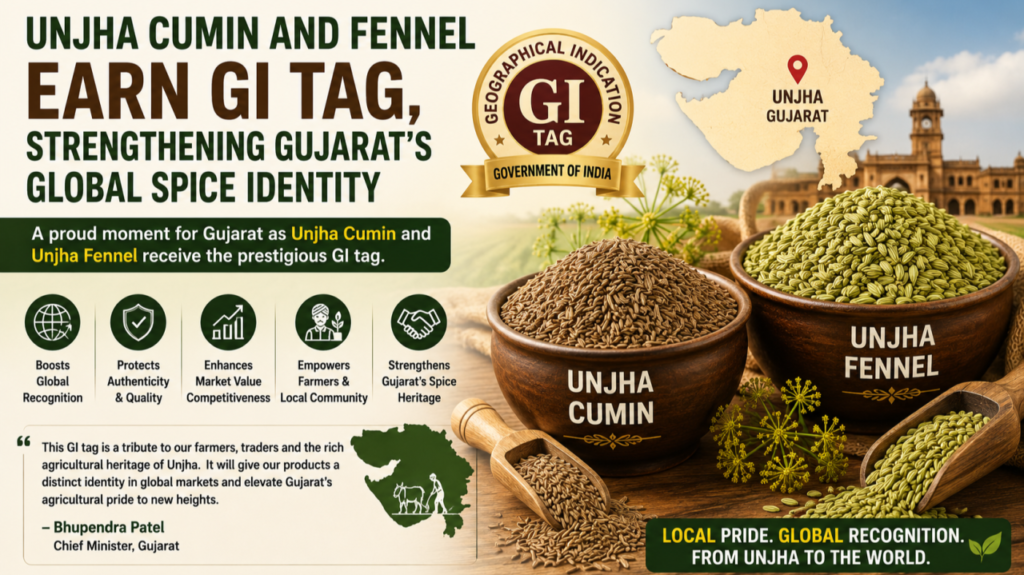
    • The iconic Jodhpur Mojari, a handcrafted footwear tradition from Rajasthan, has been awarded the Geographical Indication (GI) tag.

    Jodhpur Mojari

    • It is a leather boot known for its high craftsmanship, delicate embroidery and timeless style. 
    • It is predominantly created by the Jinagar community who were traditionally engaged in saddle manufacture.

    Connect with the basics – Geographical Indication or GI Tag

    • It is a name or a sign given to certain products related to a specific geographical location or origins like a region, town, or country.
    • A certification for unique products – GI Tag may be regarded as a certification for a particular product with certain specific qualities or has a specific reputation because of its geographical origin.
    • GI Tags can be issued for wine and spirit drinks, foodstuffs, agricultural products, handicrafts, and industrial products.
    • Trade-Related Aspects of Intellectual Property Rights (TRIPS) – At the International level, GI is governed by the World Trade Organisation’s (WTO’s) Agreement on Trade-Related Aspects of Intellectual Property Rights (TRIPS). 
    • Geographical Indications of Goods (Registration and Protection) Act – In India, Geographical Indications registration is administered by the Geographical Indications of Goods (Registration and Protection) Act, 1999, which came into force in September 2003. 
    • Darjeeling tea  – The first product in India to be accorded with the GI tag was Darjeeling tea in 2004-05.

    GI tags of 2026

    Product Name

    State / UT

    Category / Description

    Assam Bihu Pepa

    Assam

    Traditional musical instrument made of buffalo horn

    Assam Bamboo Crafts

    Assam

    Handcrafted furniture and home decor items

    Karbi Anglong Handloom Products

    Assam

    Intricately woven tribal textiles and garments

    Deuri Handloom Products

    Assam

    Traditional ethnic apparel of the Deuri community

    Chandannagar’s Jolbhora Sandesh

    West Bengal

    Iconic heritage sweet filled with liquid jaggery

    Janai’s Manohara

    West Bengal

    Traditional historic sweet with a distinct texture

    Balagarh Wooden Boats

    West Bengal

    Hand-built heritage wooden river vessels

    Khurasani Imli of Mandu

    Madhya Pradesh

    Nutritious, sweet-sour fruit from local Baobab trees

    Ponduru Khadi

    Andhra Pradesh

    Hand-spun cotton fabric using indigenous cotton varieties

    Woraiyur Cotton Saree

    Tamil Nadu

    Fine, lightweight traditional handloom sarees

    Kavindapadi Nattu Sakkarai

    Tamil Nadu

    Naturally processed, unrefined organic country sugar

    Thooyamalli Rice

    Tamil Nadu

    Traditional white rice variety shaped like jasmine buds

    Mathura Zari Dress

    Uttar Pradesh

    Ornate garments featuring intricate zari-zardosi embroidery

    Bhagaiya & Kuchai Silk

    Jharkhand

    Premium, organic tribal silks

    Munda Jewellery

    Jharkhand

    Traditional cultural ornaments of the Munda tribe

    India’s First Hydrogen Train

    Science and Tech

    Context

    • Indian Railways has notified India’s first hydrogen-powered train, which is expected to be flagged off by Prime Minister Narendra Modi on 17 July. 

    India’s first hydrogen-powered train

    • Launch Date: Scheduled for July 17, 2026.
    • Route: Jind to Sonipat (89 km) in Haryana.
    • Global Status: Puts India in an elite club (with Germany, Sweden, China, US, Japan).
    • Maker: Integral Coach Factory (ICF), Chennai, under RDSO supervision.
    • Specs: 10-car Broad Gauge trainset (longest broad-gauge hydrogen train globally).
    • Speed & Power: Max speed 75 kmph; capacity of 2400 kW.
    • Fuel Station: Dedicated 3,000-kg storage and refueling hub set up at Jind.

    Ken-Betwa River Linking Project

    Economy

    Context

    • Residents of several villages who are being impacted by the Ken-Betwa river linking project, have restarted their agitation over their demands of better compensation and rehabilitation.

    Ken-Betwa Link Project 

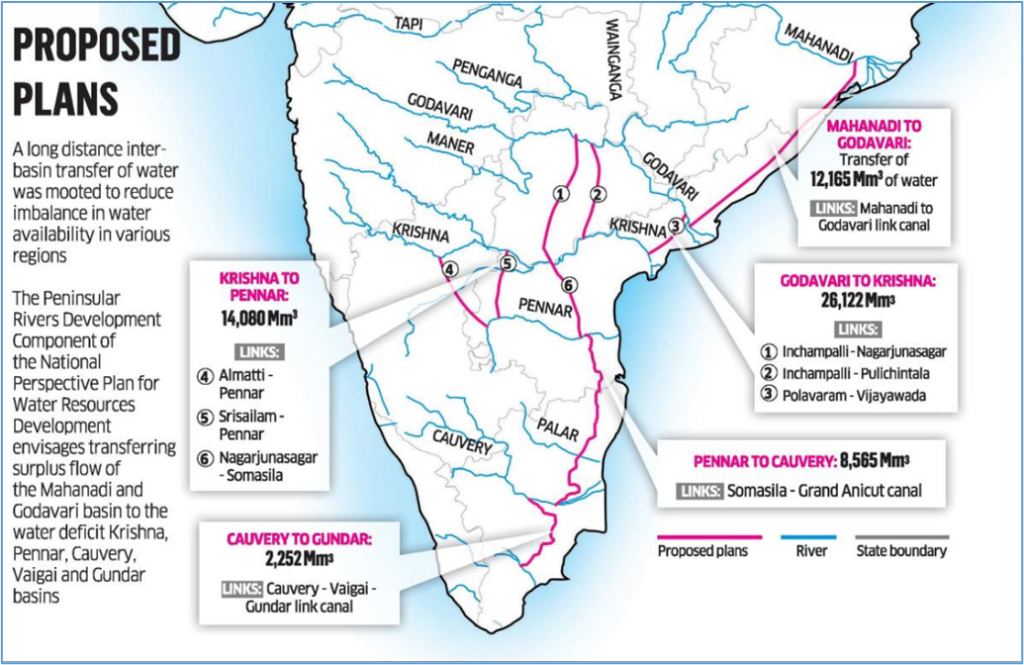
    • It is a project proposed to transfer excess water from the River Ken to the Betwa basin through the use of a concrete canal. 
    • Objective – to provide irrigation to the Bundelkhand region of UP, which is one of the worst drought-affected areas in India.
    • Beneficiary states –  Madhya Pradesh and Uttar Pradesh.
    • Significance – It will meet the irrigation purposes, drinking water, and electricity needs of 6 districts in both states.
    • Biodiversity Concerns – Nearly 8,650 hectares of forest land including part of Panna National Park in Madhya Pradesh will be submerged if the project were to become a reality.

    Conservation Projects for River Dolphins & Snow Leopards 

    Environment

    Context

    • The governing body of the National Compensatory Afforestation Fund Management and Planning Authority (CAMPA) gave the nod to four new conservation projects for river dolphins, snow leopards, wild water buffalo, and Indian rhinoceros along with continued support for the conservation of Manipur’s brow-antlered deer, Sangai.

    Snow Leopard

    • Scientific name – Panthera uncia
    • Habitats – The Snow Leopard lives at high altitudes in the steep mountains of Central and Southern Asia, and in an extremely cold climate.
    • Range states – Jammu and Kashmir, Himachal Pradesh, Uttarakhand, Sikkim
    • Ghost of the mountains – The Snow Leopard is also known as Ghost of the mountains 
    • Bio indicator – It acts as an indicator of the health of the mountain ecosystem
    • Snow Leopard capital of the world – Hemis, Ladakh.
    • International Snow Leopard Day – It is observed on 23rd October.

    Conservation status  

    • IUCN Red List- Vulnerable
    • CITES convention – Appendix I
    • Indian Wildlife (Protection) Act 1972– Schedule I

    Conservation Efforts Launched by India

    1. Project Snow Leopard (PSL) 
    • Launched in  – 2009 
    • Objective – To promote an inclusive and participatory approach to conserve snow leopards and their habitat.
    1. Species recovery programme – Snow Leopard is in the list of 21 critically endangered species for the recovery programme of the Ministry of Environment Forest & Climate Change.
    2. Snow Leopard conservation breeding programme – It is undertaken at Padmaja Naidu Himalayan Zoological Park, Darjeeling, West Bengal.
    3. HimalSanrakshak – It is a community volunteer programme, to protect snow leopards, launched on 23rd October 2020.
    4. First National Protocol –  was also launched In 2019.
    5. SECURE Himalaya – Global Environment Facility (GEF) , United Nations Development Programme (UNDP) funded the project on conservation of high altitude biodiversity and reducing the dependency of local communities on the natural ecosystem.

    International Conservation Efforts

    • SNOW LEOPARD ECOSYSTEM PROTECTION PROGRAM – It seeks to address high-mountain development issues using the conservation of the endangered snow leopard as a flagship program.
    • Bishkek Declaration – In 2013, the 12 snow leopard range countries signed and agreed to secure at least 20 snow leopard landscapes across by 2020 
    • International Year of the Snow Leopard – Year ‘2015’ was designated as International Year of the Snow Leopard 

    Recent Census – 

    • The exercise reported 718 snow leopards in India
    • It was conducted from 2019 to 2023.
    • Conducted by – The program was conducted by the Wildlife Institute of India (WII) with the help of all snow leopard range states and two conservation partners – the Nature Conservation Foundation, Mysuru (Karnataka), and WWF (World Wildlife Fund)-India. 
    • Based on data analysis, the estimated population of 718 snow leopards in different states/UTs are as follows – Ladakh (477), Uttarakhand (124), Himachal Pradesh (51), Arunachal Pradesh (36), Sikkim (21), and J & K (9).

    Wild Water Buffalo (Bubalus Arnee)

    • It is also called Asiatic buffalo.
    • It is a large bovine native to the Indian subcontinent and Southeast Asia.
    • Habitat: The wild water buffalo occurs in India, Nepal, Bhutan, Thailand, and Cambodia
    • Indian distribution – Kaziranga, Manas and Dibru-Saikhowa National Parks, Laokhowa Wildlife Sanctuary and Bura Chapori Wildlife Sanctuary and in a few scattered pockets in Assam,
    • IUCN status: Endangered.

    Indian rhinoceros (Greater One-Horned Rhino)

    • Scientific name – Rhinocerotidae
    • Habitats – Rhinos’ habitats include tropical and subtropical grasslands, savannas and shrublands, tropical moist forests, deserts and shrublands.
    • In India, it is found in Assam – Kaziranga National Park, Manas National Park, Pobitora Reserve Forest, Orang National Park, and Laokhowa Reserve Forest.
    • Three species of rhino – There are three species of rhino in Asia — Greater one-horned, Javan, and Sumatran.
    • Rhino range countriesIndia, Nepal, Bhutan, Indonesia, and Malaysia. These countries are also known as Asian Rhino Range Countries.
    • Great one-horned rhino –  The Indian state of Assam is home to the largest population of greater-one horned rhinos, with more than 90% in Kaziranga National Park.
    • World Rhino Day – It is celebrated on September 22nd of every year.

    Conservation status 

    • IUCN – Vulnerable
    • Wildlife (Protection) Act 1972 – Schedule I

    River Dolphins

    • India is home to two species of freshwater dolphins: Ganges (Platanista gangetica) and Indus (Platanista minor).

    Ganges River Dolphin (Platanista Gangetica)

    Characteristics

    • Functionally blind; relies on echolocation for hunting.
    • Known as Susu due to the sound it makes while breathing.
    • Exclusively freshwater species, inhabiting Ganga and Brahmaputra river basins in India, Nepal, and Bangladesh.
    • Threats: Habitat destruction, pollution and hunting. 

    conservation Status

    • Indian Wildlife (Protection) Act, 1972: Schedule I
    • CITES (Convention on International Trade in Endangered Species): Appendix I
    • CMS (Convention on Migratory Species): Appendix I
    • IUCN Red List: Endangered

    National & State Recognition

    • Declared India’s National Aquatic Animal in 2009.
    • Recognized as the State Aquatic Animal of Assam.

    Indus River Dolphin (Platanista minor)

    Characteristics:

    • Functionally blind, navigates using echolocation.
    • Locally called Bhulan in the region.
    • Found mainly in the Indus River System (Pakistan) with a small population in India’s Beas River.
    • Threats: Habitat fragmentation, Restricted range, leading to population isolation.

    Conservation Status:

      • Indian Wildlife (Protection) Act, 1972: Schedule I
      • CITES: Appendix I
      • IUCN Red List: Endangered.
    • State Recognition:Declared the State Aquatic Animal of Punjab.

    Do You Know?

      • One more species of Dolphin i.e. Irrawaddy dolphin found in India in Chilika Lake (Asia’s largest brackish water lagoon) in Odisha.
      • Unlike the other two species, Irrawaddy dolphins are not blind and have a bulbous head with no beak.
    • IUCN Red List Conservation status: Critically Endangered.

    Brow-antlered deer

    • The Sangai, also known as the Manipur brow-antlered deer.
    • It is a deer species found exclusively in Manipur, within the Keibul Lamjao National Park, India. 
    • It serves as the official state animal of Manipur and is famously nicknamed the “dancing deer” due to its unique, delicate gait over its marshy habitat.
  • Karnataka & Group C Current Affairs – July 11th, 2026

    Sports

    Wimbledon Championships 2026 Concludes

    Why in News: The 138th edition of the prestigious Wimbledon Championships 2026 concluded at the historic All England Lawn Tennis and Croquet Club in London.

    Key Highlights:

    Men’s Singles:- Italy’s Jannik Sinner successfully defended his title by defeating Germany’s Alexander Zverev in a four-set final, becoming only the 10th man in Open Era history to retain the Gentlemen’s Singles trophy and securing his 5th career Grand Slam.

    Women’s Singles:- Czech Republic’s Linda Nosková clinched her maiden Grand Slam title by defeating compatriot Karolina Muchová in an all-Czech final, becoming the youngest Wimbledon women’s champion (at 21 years old) since 2011.

    Historical Background:- Established in 1877, Wimbledon is the world’s oldest tennis tournament and the only one of the four Grand Slam events still played on traditional natural grass courts.

    Men’s All-Time Record (1968–2026):- Switzerland’s Roger Federer holds the all-time record for the most Men’s Singles titles with 8 victories, followed by Novak Djokovic and Pete Sampras (7 titles each).

    Women’s All-Time Record (1968–2026):- USA’s Martina Navratilova holds the all-time record for the most Women’s Singles titles with 9 victories, followed by Serena Williams and Steffi Graf (7 titles each in the Open Era).

    Wimbledon Championships 2026: Complete Winners List

    Category

    Winner(s)

    Nationality

    Men’s Singles

    Jannik Sinner

    Italy

    Women’s Singles

    Linda Nosková

    Czech Republic

    Men’s Doubles

    Harri Heliövaara & Henry Patten

    Finland / Great Britain

    Women’s Doubles

    Guo Hanyu & Kristina Mladenovic

    China / France

    Mixed Doubles

    Marcelo Arévalo & Jeļena Ostapenko

    El Salvador / Latvia

    Science and Tech

    ISRO Tests Three Critical Gaganyaan Systems

    Why in News: The Indian Space Research Organisation (ISRO) successfully completed qualification tests for three critical sub-systems of the Gaganyaan human spaceflight mission.

    Key Highlights: 

    • Crew Module Up-righting System (CMUS):- Tested the float inflation mechanism that ensures the crew capsule automatically flips back to a stable upright position upon sea splashdown to safeguard the astronauts. 
    • Module Disconnect System (CS-CDS):- Verified the umbilical separation system that structurally splits the Crew Module from the Service Module right before the spacecraft re-enters the Earth’s atmosphere. 
    • Apex Cover Separation:- Conducted structural load testing to ensure the module can safely withstand the heavy force generated when the apex cover is jettisoned to deploy the landing parachutes.

    Gaganyaan Mission Background:- Gaganyaan is India’s maiden human spaceflight programme, designed to launch a crew of 2 to 3 astronauts into a 400 km Low Earth Orbit (LEO) for a 3-day mission and return them safely to Indian sea waters aboard a Human-Rated LVM3 (HLVM3) launch vehicle.

  • Karnataka & Group C Current Affairs – July 10th, 2026

    Awards

    DoT’s ‘Samriddh Gram’ Wins Global WSIS Prize 2026 

    Context: A flagship digital initiative of the Department of Telecommunications was recognized globally for driving grassroots socio-economic transformation across rural India. 

    Key Highlights: 

    • Award: World Summit on the Information Society (WSIS) Prizes 2026. 
    • Awardee: ‘Samriddh Gram’ project (Department of Telecommunications). 
    • Issuing Authority: International Telecommunication Union (ITU). 
    • Category: Action Line C6 – Enabling Environment. 
    • Core Initiative: Leverages the BharatNet broadband backbone to establish village-level Samriddhi Kendras as one-stop hubs for digital service delivery, integrating e-governance, telemedicine, and digital banking. 
    • Global Significance: Selected from nearly 1,600 global submissions at the summit in Geneva, establishing India’s digital public infrastructure as a scalable international model. 

    About the Award: Instituted by the ITU to honor outstanding projects that leverage Information and Communication Technologies (ICTs) to advance sustainable development goals. Recognizes global excellence across specific action lines to foster an enabling environment for worldwide digital inclusion.

    Important Days

    World Population Day 

    • Observed Date: July 11
    • Observing Organisation: United Nations Population Fund (UNFPA) and United Nations Development Programme (UNDP)
    • Objective: To raise awareness about global population challenges, reproductive health, and gender equality, while highlighting youth empowerment to harness the global demographic dividend.
    • Theme: “Realizing the hopes and aspirations of young people – today and for the future”

    Sports

    Sourav Ganguly Inducted Into ICC Hall of Fame

    Why in News: Former Indian captain Sourav Ganguly was officially inducted into the International Cricket Council (ICC) Hall of Fame.

    Key Highlights:

    • National Standing:- Became the 12th Indian cricketer overall (and 10th Indian men’s player) to receive cricket’s highest individual honour.
    • Career Statistics:- Amassed 18,575 international runs across 424 matches (7,212 in Tests and 11,363 in ODIs), registering 38 centuries alongside 132 ODI wickets.
    • Captaincy Legacy:- Celebrated for rebuilding the national team, leading India to the 2003 ODI World Cup final and a joint victory in the 2002 ICC Champions Trophy.

    ICC Hall of Fame: Complete List of Indian Inductees (Till 2026)

    Rank

    Inductee

    Year of Induction

    1

    Bishan Singh Bedi

    2009

    2

    Kapil Dev

    2009

    3

    Sunil Gavaskar

    2009

    4

    Anil Kumble

    2015

    5

    Rahul Dravid

    2018

    6

    Sachin Tendulkar

    2019

    7

    Vinoo Mankad

    2021

    8

    Diana Edulji

    2023

    9

    Virender Sehwag

    2023

    10

    Neetu David

    2024

    11

    MS Dhoni

    2025

    12

    Sourav Ganguly

    2026

    Miscellaneous

    1. India’s First Smart Algal Liquid Tree Deployed

    Why in News: The CSIR-Central Institute of Mining and Fuel Research (CIMFR) successfully deployed India’s first mobile Smart Algal Liquid Tree (SALT).

    Key Highlights: 

    • Deployment Locations:- Commissioned in Dhanbad, Jharkhand, and Singrauli, Madhya Pradesh, to combat severe air pollution in highly congested urban and industrial zones. 
    • Core Mechanism:- Functions as a compact bio-purification device using water-suspended microscopic algae to absorb atmospheric carbon dioxide and release oxygen via photosynthesis. 
    • Operational Window:- Engineered for continuous, round-the-clock operation by utilizing natural sunlight during the day and integrated artificial light systems at night. 
    • Pollutant Filtration:- Beyond carbon sequestration, the enclosed system actively traps ambient dust and particulate matter inside its liquid medium as polluted air passes through it.

    2. India and Indonesia to Jointly Develop Sabang Port

    Why in News: India and Indonesia signed an agreement during Prime Minister Narendra Modi’s state visit to Jakarta in July 2026 to jointly develop the strategic Sabang Port.

    Key Highlights: 

    • Geographical Location:- It is a natural deep-water port situated on Weh Island in Indonesia’s Aceh province, at the northernmost tip of Sumatra, lying just 160 km from India’s Great Nicobar Island. 
    • Maritime choke point:- Overlooks the highly critical Strait of Malacca, one of the world’s busiest shipping lanes and maritime choke points. 
    • Geopolitical Significance:- Serves as a crucial node in India’s “Necklace of Diamonds” maritime strategy, acting as a direct counterweight to China’s “String of Pearls” network in the Indian Ocean Region.
  • QUIZ on National & International, State Current Affairs and Miscellaneous – July 10th 2026

    QUIZ on National & International, State Current Affairs and Miscellaneous – July 10th 2026