Category: National and International Current Affairs

  • Banni Grasslands | Majuli Island | AUKUS Alliance | Forest Rights Act and PESA | Base Year Revision of Wholesale Price Index (WPI)

    Banni Grasslands

    Environment
    Context

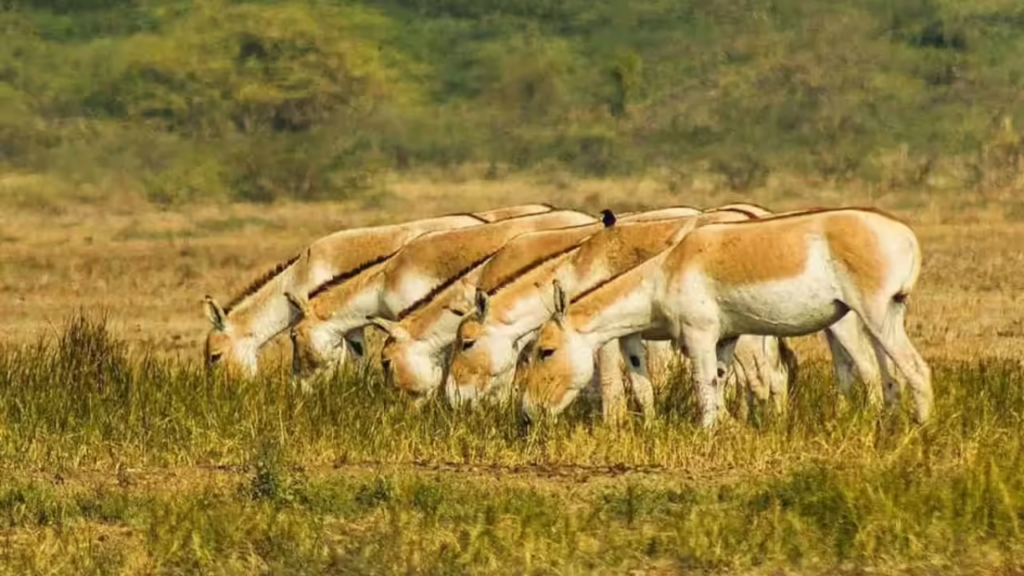
    • The proposed solar project by NTPC Renewable Energy Limited in Gujarat’s Banni grasslands has raised concerns over its impact on local communities, biodiversity, and wetlands.

    Banni Grassland

    • Location – The Banni grasslands in Kachchh
    • Uniqueness – Asia’s largest natural grasslands
    • Pastoral communities – Fakirani Jat.
    • The region contains over 70 species of nutritious grasses and supports grazing of camels, buffaloes, sheep, and goats.
    • Nearby – Chhari Dhand Wetland Conservation Reserve is a Ramsar site important for migratory birds and local biodiversity.

    Concerns

    • Local communities fear loss of grazing land, cultural spaces, graveyards, and traditional livelihoods.
    • Conservationists warn that solar infrastructure, light pollution, and human activity may disturb bird habitats and migratory routes.

    Majuli Island

    Geography
    Context

    • A recent study by scientists from the Birbal Sahni Institute of Palaeosciences has reconstructed nearly 4,000 years of climate, vegetation, and river dynamics of Majuli Island.

    Majuli Island

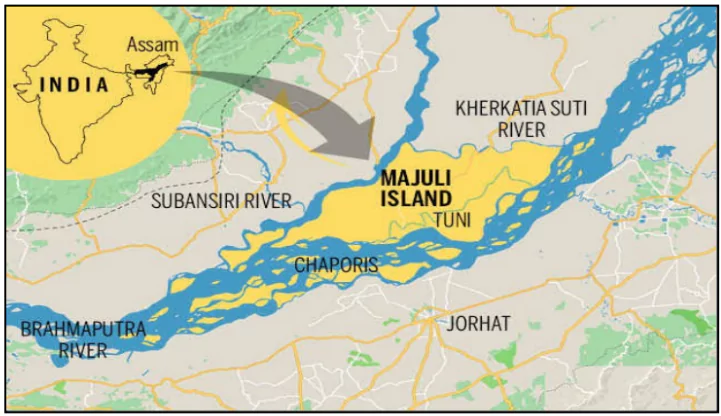
    • Majuli is located in the Brahmaputra River system in Assam.
    • Uniqueness – world’s largest inhabited river island.
    • Majuli is a unique fluvial island formed by the Brahmaputra River and its tributaries, covering about 875 sq. km.
    • It is bounded by the Subansiri River in the north, Kherkatia Suti in the northeast, and the Brahmaputra River in the south.
    • Geographical features – Its landscape consists of alluvial plains, braided channels, wetlands (Beels), and riverine sandbars known as Chaporis.
    • The island is an important centre of Neo-Vaishnavite culture established by Srimanta Sankardeva.
    • It hosts around 30 Sattras (Vaishnavite monasteries), which serve as centres of religion, culture, education, and community governance.
    • It is home to several indigenous tribal communities, including the Mising, Deori, and Sonowal Kachari tribes.
    • Threats- The island faces recurrent floods, riverbank erosion, deforestation, and land loss.

    Additional Information- Brahmaputra River
    • The Brahmaputra is a major transboundary river in Asia.
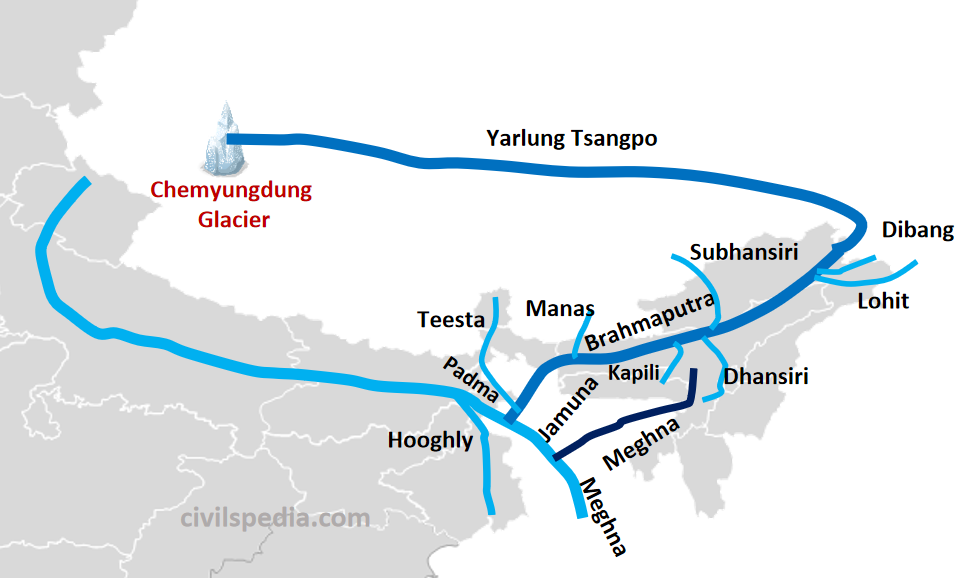
    • It originates from the Chemayungdung Glacier near Lake Manasarovar (Mapam Yumco) in Tibet.
    • It is known variably as Yarlung Tsangpo in Tibet (its longest upper stretch), Siang or Dihang in Arunachal Pradesh, Brahmaputra in Assam & Jamuna in Bangladesh.
    • It flows east through Tibet’s plateau, enters India via Arunachal Pradesh, widens in Assam’s plains, and merges with the Ganges in Bangladesh before reaching the Bay of Bengal.

    AUKUS Alliance

    International Relations
    Context

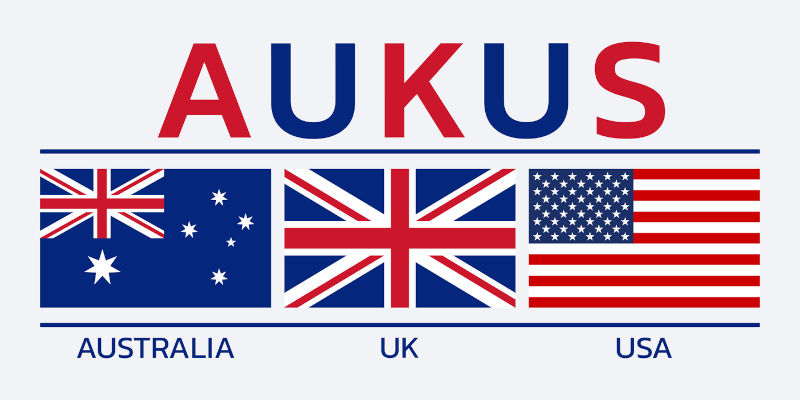
    • The AUKUS alliance between Australia, the United Kingdom, and the United States has completed five years and recently expanded cooperation in maritime defence and advanced technologies.

    AUKUS

    • It was launched in September 2021
    • It is a trilateral strategic security partnership.
    • Objective – to strengthen defence capabilities, technological cooperation, and strategic stability in the Indo-Pacific region.

    Two Pillars of AUKUS

    Pillar I:

    • Focuses on helping Australia acquire conventionally armed nuclear-powered submarines (SSNs).
    • It will make Australia the seventh country to operate nuclear-powered submarines.

    Pillar II:

    Focuses on cooperation in advanced technologies such as artificial intelligence, quantum computing, cyber capabilities, undersea technologies, and advanced weapon systems.

    Forest Rights Act and PESA

    Polity and Governance

    Context

    • The constitution of a task force in Chhattisgarh to fast-track the implementation of laws such as the Forest Rights Act, 2006 and the Panchayats (Extension to the Scheduled Areas) Act, 1996, has led to controversy.

    Forest Rights Act

    • It is also called The Scheduled Tribes and Other Traditional Forest Dwellers (Recognition of Forest Rights) Act, 2006
    • Mandate – to recognize the rights of forest-dwelling communities, including Scheduled Tribes, over forest resources
    • Nodal Ministry: Ministry of Tribal Affairs (MoTA).

    Four Main Rights

    1. Title Rights: Ownership of cultivated forest land up to 4 hectares.
    2. Use Rights: Right to collect, use, and sell Minor Forest Produce (MFP) like bamboo and honey.
    3. Development Rights: Right to use land for local schools, clinics, and roads.
    4. Forest Management: Power to protect and manage their traditional forests.

    PESA Act, 1996

    • PESA Act, 1996 stands for the Provisions of the Panchayats (Extension to Scheduled Areas) Act, 1996.

    The PESA Act (1996) grants self-governance to tribal areas across 10 Indian states.

    • Gram Sabha Power: Village assemblies protect tribal culture and approve all local development plans.
    • Land Protection: Must give permission before land is taken or mined for sand and stone.
    • Resource Ownership: Full rights over minor forest items (fruits, honey) and small water bodies.
    • Economic Control: Regulates local markets, stops bad money lenders, and can ban alcohol.
    • Tribal Leadership: Scheduled Tribes must hold at least 50% of seats and all chairperson roles.

    Base Year Revision of Wholesale Price Index (WPI)

    GS3/ Economy

    Context

    • The Government of India has approved the revision of the base year of the Wholesale Price Index (WPI) from 2011–12 to 2022–23.

    Wholesale Price Index (WPI)

    • Objective – It tracks the price of goods sold in bulk by wholesale businesses.
    • Published by – The Office of the Economic Adviser, Ministry of Commerce and Industry.
    • It covers goods only. It does not track services.
    • Base Year: 2022–23 (Updated in 2026 from 2011–12).
    • Note – WPI will be phased out by 2031. India is moving to a new Producer Price Index (PPI).

    Additional Information – Core Differences Between WPI and CPI

    Feature

    Wholesale Price Index (WPI)

    Consumer Price Index (CPI)

    Stage of Transaction

    Tracks prices when goods are traded in bulk between businesses.

    Tracks prices at the final retail stage when bought by households.

    Commodity Coverage

    Only Goods. It completely excludes the service sector.

    Both Goods and Services (e.g., education, medical care, housing).

    Published By

    Office of Economic Adviser, Ministry of Commerce and Industry.

    National Statistical Office (NSO), Ministry of Statistics and Programme Implementation (MoSPI).

    Base Year

    2011-12 (An official panel transition to 2022-23 / PPI is underway).

    2024 (Updated from 2012 by MoSPI to reflect modern spending).

    Policy Target

    Used mostly to monitor macroeconomic producer-level price trends.

    Used by the RBI as the headline metric for inflation targeting

  • India-Oman Comprehensive Economic Partnership Agreement (CEPA) | Lokmata Ahilyabai Holkar | PM SVANidhi Scheme Completes Six Years | Shangri-La Dialogue

    India-Oman Comprehensive Economic Partnership Agreement (CEPA)

    Economy

    In News

    • The India–Oman Comprehensive Economic Partnership Agreement (CEPA) came into force on 1 June 2026, creating one of India’s most comprehensive trade agreements in the Gulf region.

    Comprehensive Economic Partnership Agreement (CEPA)

    • It goes far beyond a traditional Free Trade Agreement (FTA).
    • While a standard FTA focuses mostly on cutting tariffs on physical goods, a CEPA is a holistic agreement.

    It covers:

    1. Trade in Goods (reducing or removing customs duties).
    2. Trade in Services (allowing professionals and service industries to work smoothly).
    3. Investment Facilitation (protecting and easing foreign direct investments).
    4. Intellectual Property Rights (IPR) and competition policies.
    5. Regulatory Cooperation (standardizing certifications, customs rules, and reducing non-tariff barriers).

    India’s Active CEPAs – Currently, India has active agreements with:

    1. South Korea (Signed in 2009, effective 2010)
    2. Japan (Effective 2011)
    3. Malaysia
    4. United Arab Emirates (UAE) (Effective May 2022)
    5. Oman (Effective June 1, 2026)

    Additional Information – Comparing India’s Trade Agreements

    Agreement Type

    Level of Integration

    Primary Focus

    Preferential Trade Agreement (PTA)

    Lowest

    Lowers duties on a very limited, agreed number of products.

    Free Trade Agreement (FTA)

    Moderate

    Focuses mostly on reducing or eliminating tariffs on a wide list of goods.

    Comprehensive Economic Cooperation Agreement (CECA)

    High

    Deals broadly with tariff reductions and Tariff Rate Quotas (TRQ). Considered a stepping stone to a CEPA.

    Comprehensive Economic Partnership Agreement (CEPA)

    Highest

    Extends a CECA to include deep targets for investments, service sectors, and strict regulatory standards.


    Lokmata Ahilyabai Holkar

    Art & Culture

    Context

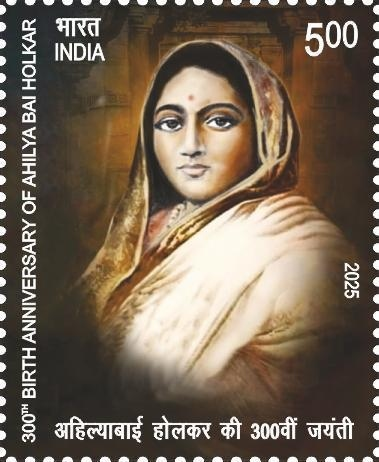
    • Prime Minister Narendra Modi paid tribute to Lokmata Ahilyabai Holkar on her birth anniversary.

    Ahilyabai Holkar (1725–1795)

    • She was the celebrated queen of the Holkar dynasty who ruled the Malwa kingdom in the 18th century.
    • Revered as the “Philosopher Queen” for her enlightened and people-centric governance.
    • Born in Chondi village, Ahmednagar (Maharashtra) and married to Khanderao Holkar, son of Malhar Rao Holkar.
    • After the deaths of her husband, father-in-law and son, she assumed the administration of Malwa in 1767.

    Major Contributions

    • She is remembered for her model of justice, welfare-oriented governance, and cultural preservation.
    • Ahilyabai rebuilt important temples such as the Kashi Vishwanath Temple and Somnath Temple in the 18th century.
    • She promoted women’s education, widow remarriage, and opposed practices like sati.
    • She also worked for the upliftment of tribal communities and lower castes.
    • Under her rule, Maheshwar and Indore became major trade centres, and the famous Maheshwari saree tradition flourished.

    PM SVANidhi Scheme Completes Six Years

    Government Schemes

    Context

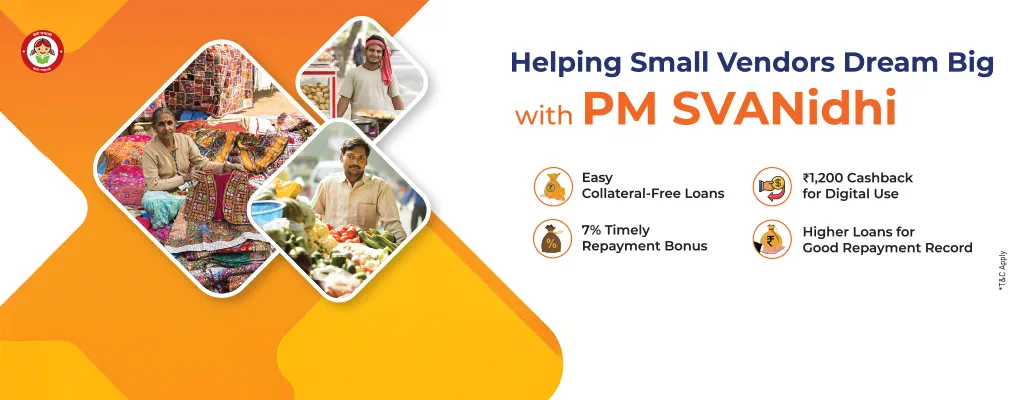
    • PM Street Vendor’s AtmaNirbhar Nidhi (PM SVANidhi) Scheme, has completed six years of empowering street vendors through affordable collateral-free credit, digital inclusion and social security.

    PM SVANidhi Scheme

    • Financing – It is a Central Sector Scheme
    • Launched on – 1 June 2020
    • Objective – to provide affordable working capital loans to street vendors affected by the COVID-19 pandemic.
    • Implementing Agencies: Ministry of Housing and Urban Affairs (MoHUA)
    • Eligible criteria: Street vendors in possession of Certificate of Vending/Identity Card issued by Urban Local Bodies (ULBs).

    Key Features

    • Working Capital Loan: Collateral-free loans of ₹15,000, ₹25,000, and ₹50,000.
    • UPI-linked RuPay Credit Cards: Vendors successfully repaying the second tranche are eligible for UPI-linked RuPay Credit Cards with limits up to ₹30,000.

    SVANidhi se Samriddhi (SSS):

    • It is an Indian government scheme that links street vendors and their families to eight welfare programs for safety and health.
    • Main Purpose – It helps vendors who got a PM SVANidhi loan.
    • Workers visit vendors to check what their families need.
    • It connects them to benefits without complex paperwork.

    The 8 Benefits Included

    1. Life Insurance (PM Jeevan Jyoti Bima)
    2. Accident Insurance (PM Suraksha Bima)
    3. Free Bank Accounts (PM Jan Dhan Yojana)
    4. Food Ration Anywhere (One Nation One Ration Card)
    5. Old Age Pension (PM Shram Yogi Maandhan)
    6. Safe Birth Cash Help (Janani Suraksha Yojana)
    7. Mother & Baby Support (PM Matru Vandana Yojana)
    8. Construction Worker Aid (BoCW Registration)

    Shangri-La Dialogue

    International

    In News

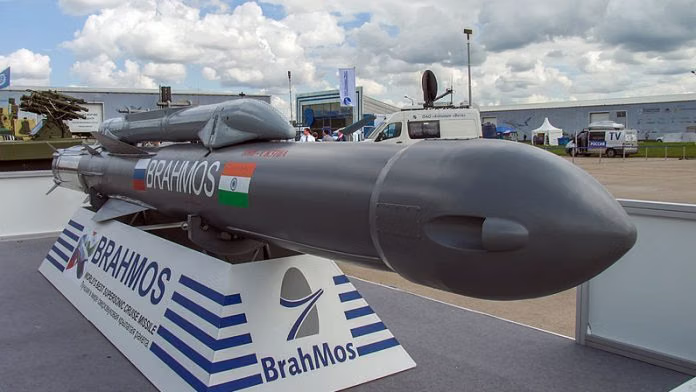
    • India has officially signed a deal to supply BrahMos supersonic cruise missiles to Vietnam, as confirmed at the Shangri-La Dialogue in Singapore.

    Shangri-La Dialogue

    • Established in – 2002
    • It is also known as the Asia Security Summit
    • It is Asia’s premier defence and security forum.
    • It is held annually at Singapore’s Shangri-La Hotel.
    • Organised by – International Institute for Strategic Studies (IISS), London, with support from Singapore’s Ministry of Defence.
    • Mandate – The dialogue focuses on both traditional security issues (territorial disputes, military cooperation) and non-traditional challenges (terrorism, cybersecurity, climate change).
    • Note – India’s Raisina Dialogue is considered to be modelled on the Shangri-La Dialogue.

    Additional Information – BrahMos Missile

    • Type: Two-stage supersonic cruise missile (World’s fastest operational cruise missile).
    • Joint Venture: India (DRDO) and Russia (NPOM).
    • Named after Brahmaputra and Moskva rivers.
    • Speed: Mach 2.8 to 3.0 (Nearly 3 times the speed of sound).
    • Principle: “Fire and Forget” (Requires no control after launch).
    • Platform: Multi-platform (Can launch from land, air, sea, and submarines).
    • Warhead: 200–300 kg conventional (tactical weapon, not nuclear).
    • Range Evolution & MTCROriginal Range (290 km): Restricted due to Russia being bound by MTCR (Missile Technology Control Regime) rules.
    • Extended Range (400–450 km+): Upgraded after India joined MTCR in 2016, lifting the range limits.
  • Albino Hog Deer | Babesia Infection

    Albino Hog Deer

    Environment

    Context

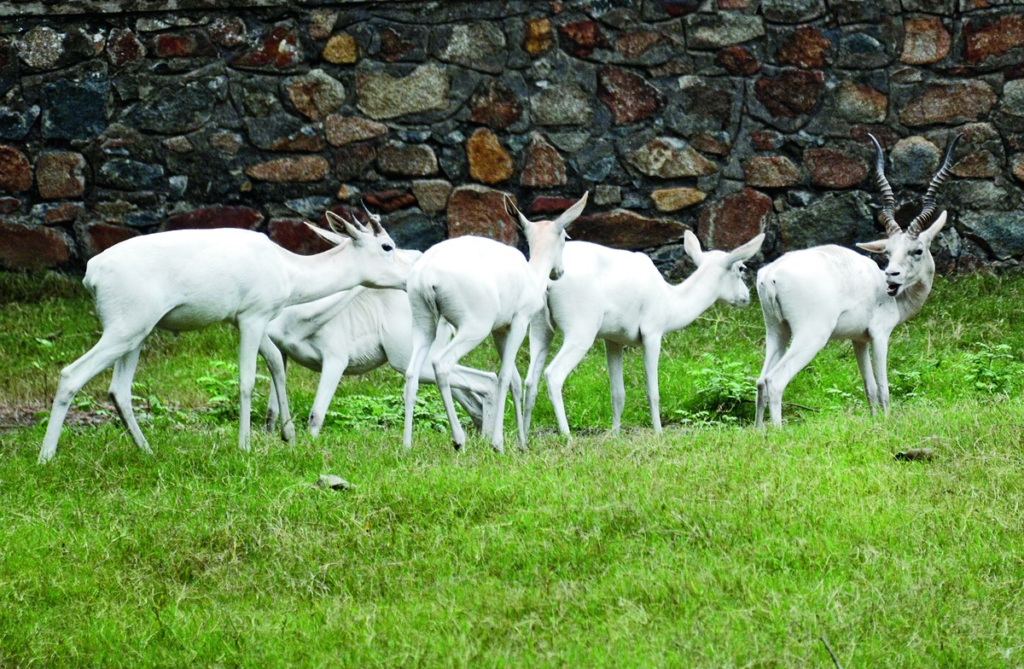
    • A rare albino hog deer was recently spotted roaming inside Assam’s Kaziranga National Park.
      • About
      • The albino hog deer is a small cervid native to the region of the Indian subcontinent and Indo-Gangetic Plain. 
      • It is characterised by white fur, pink eyes and pale hooves.
      • Due to a rare genetic mutation known as albinism, the animal entirely lacks melanin pigment.
      • Albinism can make survival difficult in nature as these animals often struggle with camouflage, visibility to predators, and sensitivity to sunlight.
      • Beyond hog deers, India is also home to a variety of albino species, such as the Gaur, Indian cobra and primates like rhesus macaque.
    • Odisha’s Bhitarkanika National Park is famously home to rare albino saltwater crocodiles.

    Babesia Infection

    Science & technology

    Context

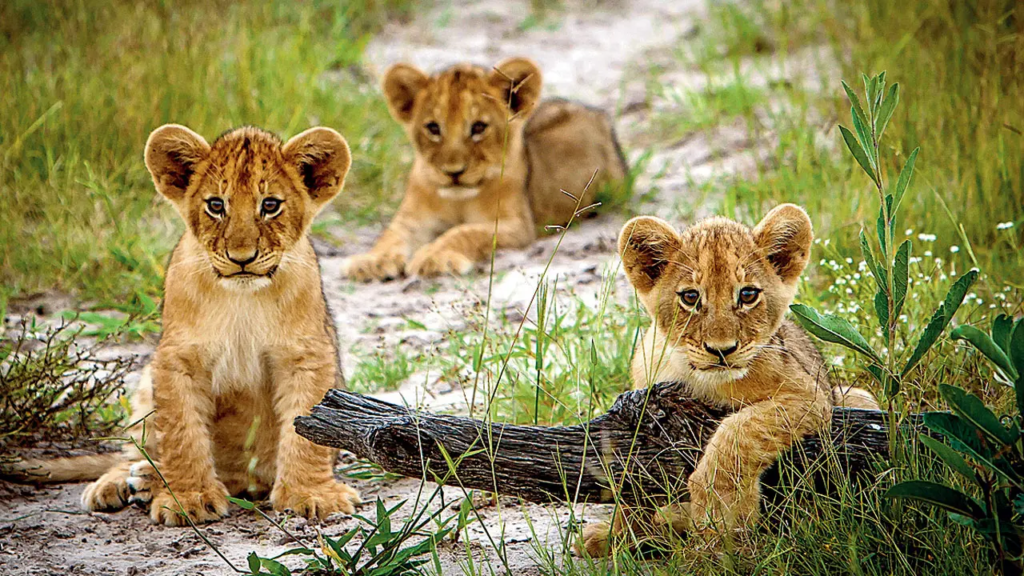
    • Eight lion cubs have died in Gujarat due to a suspected Babesia infection, raising concerns about the health of the Asiatic lion population.

    About

    • Babesia is a parasitic disease transmitted through ticks and can cause weakness, fever, coughing and nasal discharge in infected animals.
    • It is a zoonotic disease, meaning it can transmit from animals to humans.
    • Atovaquone plus azithromycin is used to treat most mild to moderate cases and is usually taken for 7 to 10 days.

    Asiatic Lion (Panthera leo persica)

      • It is one of the five big cat species found in India.
      • Physical Characteristics: Asiatic lions are slightly smaller than African lions. 
    • Males have less developed manes, leaving their ears visible.
      • Prominent longitudinal fold of skin along the belly (a distinguishing feature from African lions).
    • Distribution: In India, concentrated in the state of Gujarat in and around the Gir Forest mainly in;
    1. Gir National Park and Wildlife Sanctuary
    2. Paniya Wildlife Sanctuary
    3. Mityala Wildlife Sanctuary
    4. Barda Wildlife Sanctuary

    Conservation Status:

    1. IUCN Red List status: Endangered
    2. CITES: Appendix I
    3. Wildlife Protection Act, 1972: Schedule I
  • INS Sudarshini and Lokayan 26 Expedition | White-Bellied Heron Concerns over Kalai-II Hydel Project

    INS Sudarshini and Lokayan 26 Expedition

    Defence

    Context

    • INS Sudarshini arrived in Antigua and Barbuda after successfully completing a historic trans-Atlantic passage as part of the Lokayan 26 Expedition.

    INS Sudarshini

    • INS Sudarshini is a sail training ship of the Indian Navy designed to train naval personnel in traditional sailing and seamanship skills.
    • The vessel was built by Goa Shipyard Limited and was commissioned into the Indian Navy in 2012.

    Lokayan 26 Expedition

    • The Lokayan 26 Expedition is a landmark 10-month, 22,000-nautical-mile transoceanic voyage by the Indian Navy’s sail training ship, INS Sudarshini.
    • The expedition aims to promote maritime diplomacy, strengthen relations with friendly nations, and enhance professional sailing skills among naval personnel.
    • The voyage marks the first Atlantic crossing by INS Sudarshini, while the last such crossing was undertaken by INS Tarangini in 2007.

    About Antigua and Barbuda

    • It is a twin-island country in the Caribbean Sea, made up of two main inhabited islands, Antigua and Barbuda, along with a few smaller, neighboring islands.
    • The islands gained independence from the United Kingdom in 1981.
    • Antigua: The larger island is the economic hub, home to the capital city of St. John’s.
    • Barbuda: Located about 25 miles north of Antigua, this island is much flatter, less developed, and known for its pristine natural beauty and bird sanctuaries.

    White-Bellied Heron Concerns over Kalai-II Hydel Project

    Environment

    Context

    • The Union Environment Ministry’s Forest Advisory Committee (FAC) has granted in-principle forest clearance to the Kalai-II Hydroelectric Project, raising concerns due to its potential impact on the White-Bellied Heron.

    Kalai-II Hydroelectric Project

    • The project is a 1,200 MW run-of-the-river hydropower project proposed by THDC (Tehri Hydro Development Corporation Limited) India Limited.
    • It is located in Anjaw district of Arunachal Pradesh, near the India–China border.
    • The project involves the construction of a 128.5-metre concrete gravity dam and an underground powerhouse.
    • Concerns: Around 869 hectares of forest land will be diverted, including the submergence of 638 hectares of forest area.
    • Since Arunachal Pradesh has more than two-thirds of its geographical area under forests, compensatory afforestation will be undertaken in Madhya Pradesh.

    White-Bellied Heron

      • Scientific Name: Ardea insignis.
      • Significance: The species serves as an indicator of healthy riverine ecosystems.
      • IUCN Status: Critically Endangered.
      • Its global distribution is restricted mainly to Bhutan, India, and Myanmar.
    • In India, it is primarily found in Arunachal Pradesh and parts of Assam.
    • Concerns: The submergence of forest and riverine areas may destroy the bird’s nesting, feeding, and breeding habitats.
  • National Family Health Survey (NFHS)-6 | India’s GDP Base Year Revision

    National Family Health Survey (NFHS)-6

    Science & technology

    Context

    • The Ministry of Health and Family Welfare has released the National Family Health Survey (NFHS)-6 for the period 2023-24. 

    About

    • Nodal Agency – International Institute for Population Sciences (IIPS), Mumbai 
    • Objective – to evaluate India’s progress toward the Sustainable Development Goals (SDGs).
    • Scope: 6.79 lakh households across 715 districts. Manipur was excluded.
    • Funding: 100% domestic funding by the Government of India (no external aid).
    • Key Exclusions: Omitted previous indicators like anaemia, disability, and cancer screenings.

    Major Data Trends: NFHS-5 vs NFHS-6

    • Total Fertility Rate (TFR): Remained stable at 2.0 (below the 2.1 replacement level).
    • Institutional Deliveries: Rose from 88.6% to 90.6%.
    • Full Immunisation: Increased from 83.8% to 87.1%.
    • Child Stunting (<5 years): Dropped significantly from 35.5% to 29.3%.Health 
    • Insurance Cover: Jumped from 41.0% to 60.2% (Ayushman Bharat impact).
    • Women’s Internet Use: Surged from 33.3% to 64.3%.

    Critical Challenges 

    • Lifestyle Disease Surge: Diabetes rose to 20.9% for men and 17.8% for women.
    • Obesity Double Burden: Overweight women hit 30.7% globally (42.8% in urban areas).
    • High C-Sections: Unnecessary Caesarean deliveries continue to exceed WHO safety limits.
    • Data Gaps: Dropping anemia metrics makes long-term policy monitoring difficult.

    India’s GDP Base Year Revision

    Indian Economy

    Context

    • India has revised its GDP base year from 2011–12 to 2022–23, resulting in changes to GDP estimates and growth rates to better reflect the current structure of the economy.

    Why was the GDP series revised?

      • India periodically revises its GDP base year to reflect changes in the economy’s structure, production patterns, consumption behavior, and data availability.
      • Such revisions are usually undertaken every five years, but this exercise was delayed due to the implementation of GST and the COVID-19 pandemic.
    • The objective is to improve the accuracy and reliability of national income estimates.

    Connect with the basics – Gross Domestic Product (GDP)

    • Definition – It is the total monetary value of all final goods and services produced within a country’s domestic territory during a specific period (usually a quarter or a year).
    • Released By: National Statistical Office (NSO), Ministry of Statistics and Programme Implementation (MoSPI).
    • Calculation of GDP: GDP is calculated using three main methods;
    1. The Expenditure Approach: This method sums up all spending on final goods and services in the economy.
    2. The Income Approach: This method sums all incomes earned by factors of production (labor, capital).
    3. The Production/Value-Added Approach: This method adds up the value added by each industry at every stage of production.

    Nominal Vs Real GDP

    • Nominal GDP measures a country’s economic output at current market prices, thereby incorporating the effects of inflation and making it useful for assessing the economy’s size in present-value terms.
    • Real GDP adjusts for inflation by valuing output at constant base-year prices, providing a more accurate measure of actual growth in production over time.

    Base Year

    • A base year is a benchmark year used for comparison in economic and statistical calculations. 
    • It provides a reference point against which current values of indicators like GDP, CPI, and IIP are measured to track real changes over time.
  • Abraham Accords | SARTHAK-PDS Scheme to Modernise Public Distribution System | India–US Critical Minerals Framework

    Abraham Accords

    International

    Context

    • Pakistan’s Defence Minister has said that he is not in favour of Pakistan joining the Abraham Accords to normalise relations with Israel.

    Abraham Accords

      • The Abraham Accords refer to a series of normalisation agreements signed in 2020 between Israel and several Arab countries, brokered by the United States under the Trump administration.
      • For decades, most Arab nations refused to recognise Israel until the Palestinian issue was resolved. 
      • The Abraham Accords marked a major shift in Middle East diplomacy by establishing open relations between Israel and certain Arab states without prior resolution of the Israel–Palestine conflict.
      • UAE became the first Gulf country to normalise relations with Israel in 2020 as part of the Abraham Accords.
    • Countries: USA, Israel, UAE, Bahrain, Sudan, Morocco and Kazakhstan.

    Main Objectives

    • Normalisation of diplomatic relations (embassies, direct flights, trade, tourism, and technology cooperation).
    • Security and intelligence cooperation, especially against Iran’s regional influence.
    • Economic collaboration in sectors like innovation, agriculture, defence, and renewable energy.
    • Promotion of interfaith understanding named after Abraham, the patriarch revered in Judaism, Christianity, and Islam.

    SARTHAK-PDS Scheme to Modernise Public Distribution System

    Economy

    Context

    • The Cabinet Committee on Economic Affairs (CCEA), approved the continuation and integration of two key food distribution schemes under a new umbrella programme titled “Scheme for Assistance in Ration Transport and Handling-Income with Automation in PDS” (SARTHAK-PDS).

    SARTHAK-PDS scheme 

    • It integrates two existing initiatives;
    1. Assistance to State Agencies for intra-State movement of foodgrains and FPS dealers’ margin under NFSA and 
    2. Scheme for Modernization and Reforms through Technology in Public Distribution System (SMART PDS) with the objective of strengthening implementation of the National Food Security Act.
    • Significance- The scheme proposes the use of advanced technologies such as Artificial Intelligence (AI), Machine Learning (ML), Natural Language Processing (NLP) and Blockchain to modernise and optimise PDS operations.

    Additional Information – PDS System

    • The Public Distribution System (PDS) is a food security mechanism in India through which essential food commodities are distributed to eligible beneficiaries at subsidised prices through Fair Price Shops (FPSs).
    • The system primarily distributes rice, wheat and coarse grains to economically weaker sections of society.
    • The PDS is a joint responsibility of the central and state governments. 
    • The central government, through the Food Corporation of India (FCI), procures, stores, transports, and allocates food grains to the states.

    India–US Critical Minerals Framework

    Science & Technology

    Context

    • India and the United States signed a major framework agreement to strengthen cooperation in the supply, mining, processing, recycling, and management of critical minerals and rare earth elements (REEs).
    • The initiative follows concerns over China’s 2025 export controls on REEs, which disrupted global technology supply chains.

    List of Critical Minerals

    • A total of 30 minerals were found to be most critical for India : Antimony, Beryllium, Bismuth, Cobalt, Copper, Gallium, Germanium, Graphite, Hafnium, Indium, Lithium, Molybdenum, Niobium, Nickel, PGE, Phosphorous, Potash, Rare Earth Elements (REEs), Rhenium, Silicon, Strontium, Tantalum, Tellurium, Tin, Titanium, Tungsten, Vanadium, Zirconium, Selenium and Cadmium.

    India’s Policy Push for Mineral Exploration

      • Domestic Reserves: India has vast untapped mineral potential, with lithium in Jammu and Kashmir (J&K) and Rajasthan, and REEs in Odisha and Andhra Pradesh.
      • Policy Initiatives: National Mineral Exploration Policy (NMEP), 2016 and Mines and Minerals (Development and Regulation) Act, 2021 have accelerated exploration through private participation and advanced surveys.
    • KABIL (Khanij Bidesh India Ltd) is acquiring overseas mineral assets to ensure supply security.
    • National Critical Mineral Mission (NCMM) – It aims to strengthen the value chain from exploration to recovery.

    Additional Information – Rare Earth Elements (REEs)

    • REEs are a group of 17 metallic elements, including the 15 lanthanides along with scandium and yttrium.
    • They are widely used in consumer electronics, defence systems, renewable energy technologies, EVs, communication systems, and nuclear energy.
    • India has the world’s third-largest rare earth reserves, mainly found in monazite minerals.

    ‘Pax Silica’

    • launched in – December, 2025
    • It is a coalition comprising the United States, Australia, Greece, Israel, Japan, Qatar, the Republic of Korea, Singapore, the UAE, the UK, and now India.
    • Objective – It is a US-led strategic initiative to build a secure, prosperous, and innovation-driven silicon supply chain from critical minerals.
    • The term ‘Pax Silica’ derived from Latin ‘Pax’ (peace) and ‘Silica’ (a core compound in semiconductors).
    • Significance – It symbolizes the pursuit of technological peace and prosperity through resilient, transparent, and cooperative supply chains.
  • Oreshnik Missile | Algoza | Khajuraho

    Oreshnik Missile

    Defence

    Context

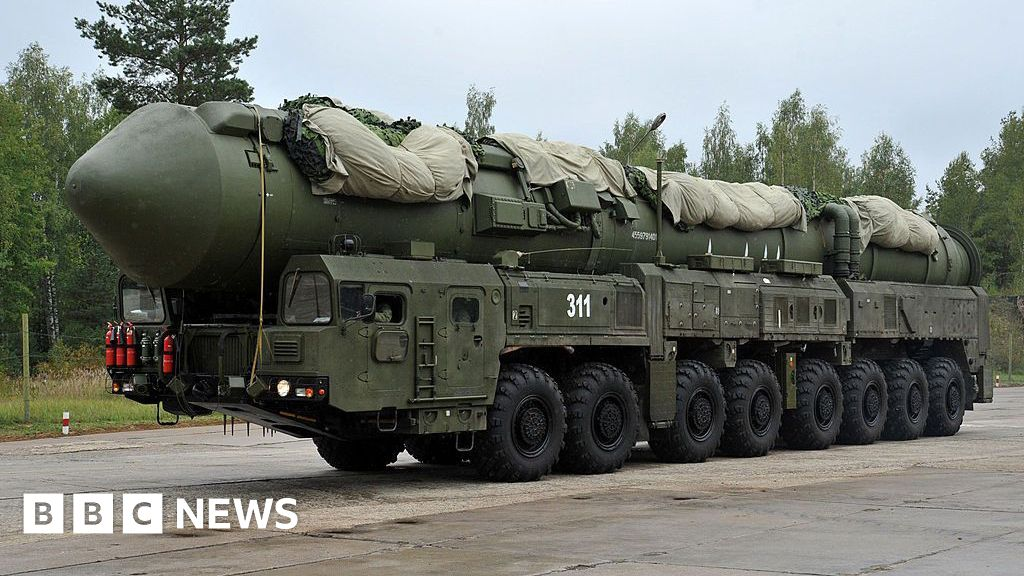
    • Russia used its powerful Oreshnik hypersonic ballistic missile in an overnight missile and drone attack on Kyiv, Ukraine.

    Oreshnik 

    • It is an intermediate-range hypersonic weapon believed to be based on Russia’s RS-26 Rubezh system. 
    • It can carry both nuclear and conventional warheads. 
    • Its strike range is estimated between 3,000 and 5,500 kilometres, allowing it to target large parts of Europe.
    • It is almost impossible for modern air defence systems to intercept the missile owing to its speed of Mach 10, or nearly 2.5–3 kilometres per second.

    Algoza

    Culture

    Context

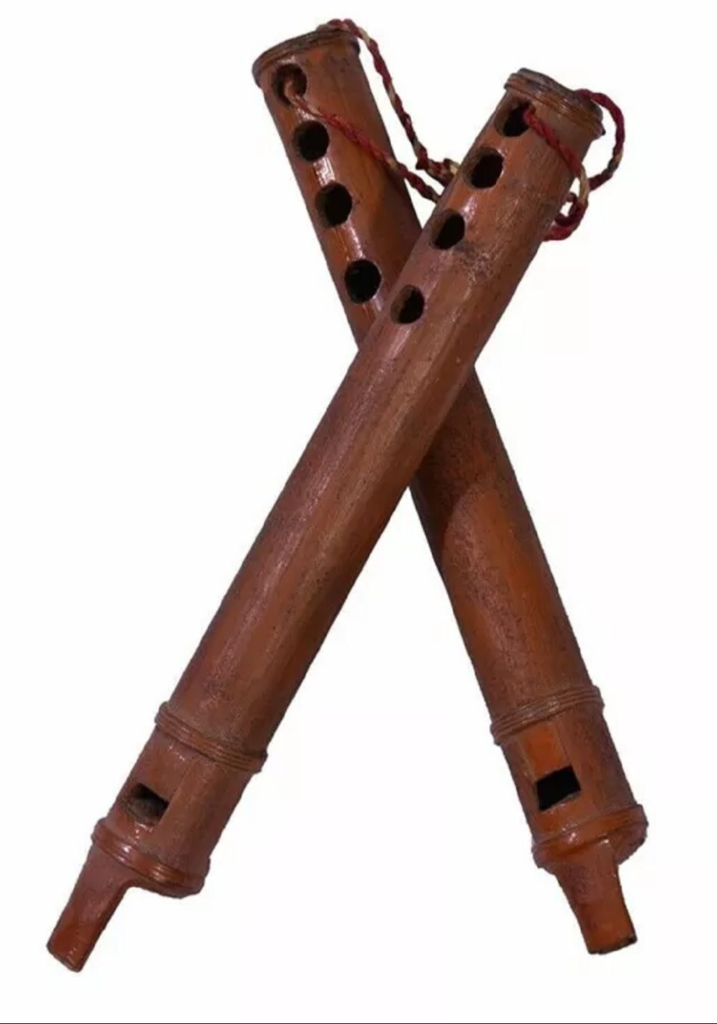
    • Taga Ram Bheel of Jaisalmer was honoured with the Padma Shri 2026 for preserving and promoting traditional Rajasthani folk music through the ancient instrument called the Algoza.

    Algoza

    • The Algoza is a traditional folk wind instrument associated with Rajasthan, Punjab, Sindh, and parts of western India and Pakistan. 
    • It consists of two wooden flutes played simultaneously — one creates the melody while the other provides a rhythmic base.
    • What makes the instrument unique is the use of circular breathing, a difficult technique that allows musicians to produce continuous music without stopping for breath.
    • Often called the soul of Thar Desert folk music, the Algoza has traditionally been played during festivals, weddings, storytelling sessions, and devotional gatherings.

    Khajuraho

    Art & Culture

    In News

    • World Heritage Site Khajuraho, is set to host the 25-day countdown event for the International Day of Yoga (IDY) 2026.

    Khajuraho

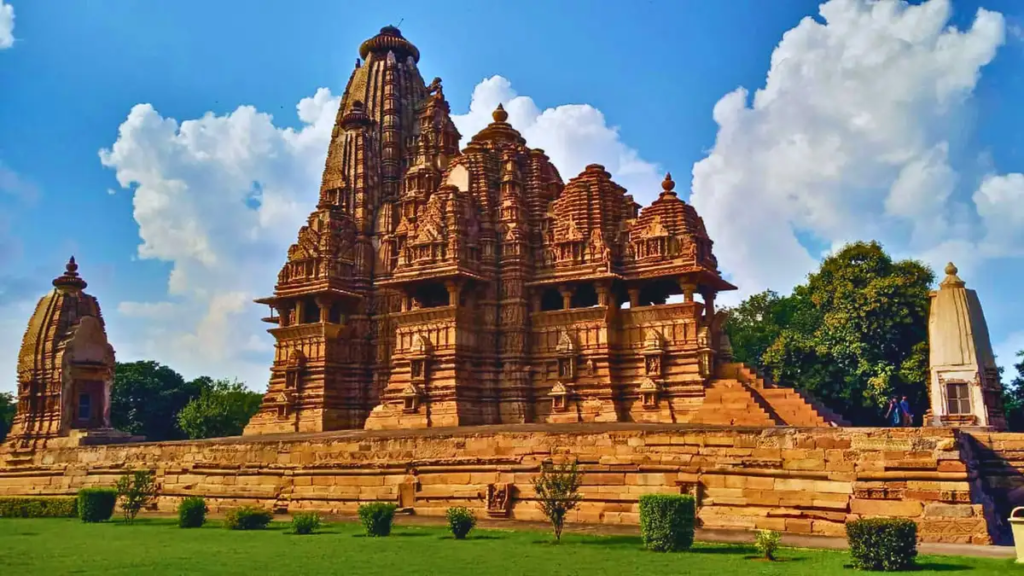
    • The Khajuraho Group of Monuments, a group of Hindu and Jain temples located in Chhatarpur district of Madhya Pradesh, was inscribed as a UNESCO World Heritage Site in 1986. 
    • The temples are famous for their nagara-style architectural symbolism and their erotic sculptures.

    Historical records:

    • Most Khajuraho temples were built between 950 and 1050 CE by the Chandela dynasty. 
    • Historical records note that the Khajuraho temple complex once had 85 temples spread across 20 square kilometres. 
    • At present, only about 25 temples have survived, spread over six square kilometres.
  • Simultaneous Election Bill | Digital Public Infrastructure (DPI)@2047 Roadmap | Anti-Defection Law | Prevention of Insults To National Honour Act, 1971

    Simultaneous Election Bill

    Syllabus: GS2/Polity and Governance

    Context

    • The Joint Parliamentary Committee (JPC) on ‘One Nation, One Election’ has said that simultaneous elections can save nearly 7 lakh crore rupees, improve governance efficiency and increase India’s GDP growth by up to 1.6%.

    Background

    • To introduce simultaneous elections, the Constitution (One Hundred and Twenty-Ninth Amendment) Bill, 2024 and the Union Territories Laws (Amendment) Bill, 2024 were introduced in Lok Sabha in 2024.

    Key Features of the Bills

    • Bodies Responsible: The Constitution (129th Amendment) Bill, 2024 empowers the Election Commission to conduct elections for Lok Sabha and all State Assemblies together (referred to as simultaneous elections).
    • The Union Territories Laws (Amendment) Bill, 2024 extends this framework to Union Territory (UT) Assemblies.
    • Commencement of simultaneous elections: The terms of all State and Union Territory Assemblies constituted after the date of the notification will expire with the expiry of the full term of Lok Sabha.
    • Hence, elections to Lok Sabha and all State and UT Assemblies thereafter will be conducted together.
    • Premature dissolution of Lok Sabha or Assemblies: If Lok Sabha or a State/UT Assembly is dissolved sooner than its full term of five years, a fresh election will be held for a term equal to the remainder of the five-year term.
    • This will synchronise elections for Lok Sabha and all Assemblies every five years.
    • Deferring a state election: If the Election Commission is of the opinion that the election for a particular State Assembly cannot be held as part of the simultaneous elections, it may make a recommendation to the President in this regard.
    • Thereafter, the President may issue an order to conduct election for that State Assembly at a later date.
    • The UT Laws Amendment Bill does not have such provisions.

    Digital Public Infrastructure (DPI)@2047 Roadmap

    Syllabus: GS3/Economy

    In News

    • NITI Aayog has launched DPI@2047 for Viksit Bharat, a roadmap for India’s next phase of Digital Public Infrastructure (DPI) aimed at driving inclusive and productivity-led growth.

    Digital Public Infrastructure (DPI)

    • It refers to foundational digital systems that are accessible, secure, and interoperable, supporting essential public services.
    • India’s Digital Public Infrastructure began with the JAM trinity—Jan Dhan bank accounts, Aadhaar identity, and mobile connectivity—which linked citizens directly to government systems.
    • Significance – This enabled direct transfer of welfare benefits, reducing intermediaries, delays, and leakages, and laid the foundation for India’s broader digital transformation.

    Importance of DPI

    • Governance Efficiency: DPI Enables direct benefit transfers, subsidy delivery, and e-governance platforms, reducing leakages and corruption.
    • Financial Inclusion: UPI has transformed payments, now operational in 8 countries, supporting cross-border transactions.
    • Economic Growth: India is the world’s 3rd-largest digitalised economy, with digital platforms embedded in daily economic and social life.

    Key Digital Public Infrastructure (DPI) and digital solutions are as follows

    • Aadhaar – A biometric-based digital identity platform that enables unique identification and authentication of residents for efficient service delivery.
    • Unified Payments Interface (UPI) – A real-time digital payment system enabling instant, interoperable, and secure person-to-person and merchant transactions.
    • UPI is now active in 8 countries, improving cross-border payments, remittances, and financial inclusion, and strengthening India’s fintech influence globally.
    • CoWIN – A digital platform for end-to-end management of vaccination services, including registration, scheduling, and certification.
    • API Setu – A platform that enables secure and standardized sharing of government data and services through APIs.
    • DigiLocker – A digital document wallet that allows citizens to store, access, and share authenticated electronic documents.
    • Aarogya Setu – A digital health application providing risk assessment, health advisories, and access to health-related services.
    • Government e-Marketplace (GeM) – An online platform for transparent and efficient procurement of goods and services by government entities.
    • UMANG – A unified mobile and web platform providing single-window access to a wide range of government services.
    • DIKSHA – A national digital platform supporting teachers and learners with e-content, training, and academic resources.
    • e-Sanjeevani – A telemedicine platform enabling remote doctor-to-patient consultations, particularly in rural and underserved areas.
    • e-Hospital – A hospital management system providing online registration, appointments, diagnostics, a nd billing services.
    • e-Office – A digital platform for paperless governance enabling electronic file management and decision-making in government offices.
    • eCourts – A mission-mode project for digitising court processes and improving access to judicial services.
    • POSHAN Tracker – A mobile-based application for real-time monitoring of nutrition service delivery under ICDS.
    • National Non-Communicable Diseases Platform (NCD) – A digital platform for screening, diagnosis, and management of major non-communicable diseases.
    • Skill India Digital Hub (SIDH) – A unified digital platform integrating skilling, training, and employment-related services.
    • Public Financial Management System (PFMS) – A platform for end-to-end monitoring of government funds and direct benefit transfers.
    • PM GatiShakti – A GIS-based digital platform for integrated planning and coordinated implementation of infrastructure projects.

    Anti-Defection Law

    Syllabus: GS2/Polity and Governance

    Context

    • More than two-thirds of the MPs of the Aam Aadmi Party in the Rajya Sabha have decided to merge with the Bharatiya Janata Party, raising questions around the application of the anti-defection law.

    Anti-defection law

    • Aaya Ram Gaya Ram was a phrase that became popular in Indian politics after a Haryana MLA Gaya Lal changed his party thrice within the same day in 1967.
    • The anti-defection law (Tenth Schedule of the Constitution) was inserted by the 52nd Amendment in 1985 to prevent political defections.
    • Constitutional Disqualifications [Articles 102(1) & 191(1)]: A person shall be disqualified if he/she:
    1. Holds an office of profit under the Central or State Government;
    2. Is of unsound mind, as declared by a competent court;
    3. Is an undischarged insolvent;
    4. Is not a citizen of India, or has acquired citizenship of a foreign State, or shows allegiance to a foreign State;
    5. Is disqualified under any law made by Parliament.

    Features of the Anti-Defection Law

    • Disqualification on ground of defection: A legislator belonging to a political party will be disqualified if he: (i) voluntarily gives up his party membership, or (ii) votes/abstains to vote in the House contrary to the direction issued by his political party.
    • A member is not disqualified if he has taken prior permission of his party, or if the voting or abstention is condoned by the party within 15 days.
    • Independent members will be disqualified if they join a political party after getting elected to the House. Nominated members will be disqualified if they join any political party six months after getting nominated.
    • The decision to disqualify a member from the House rests with the Chairman/Speaker of the House.

    Exceptions

    • The Tenth Schedule originally provided for two exceptions that would not render the members liable for disqualification.
    • One-third members of the ‘legislature party’ split to form a separate group.
    • Merger of their ‘political party’ with another party that is approved by two-third members of its ‘legislature party’.
    • However, the first exception (one-third split) was removed in 2003 to strengthen the law.

    Supreme Court Judgments

    • Kihoto Hollohan v. Zachillhu (1992): The decisions of the Speaker regarding disqualification under the Tenth Schedule (Anti-defection Law) are subject to judicial review by the High Courts and the Supreme Court.
    • Keisham Meghachandra Singh v. Speaker, Manipur (2020): The Supreme Court set a clear outer limit of three months for the Speaker to decide on a disqualification petition.

    Prevention of Insults To National Honour Act, 1971

    Syllabus: GS2/ Polity and Governance

    Context

    • The Union Cabinet gave the go-ahead to amend The Prevention of Insults To National Honour Act, 1971.

    About

    • Aim: To make any insult or obstruction to the singing of National Song Vande Mataram a punishable offence.
    • At present, insults to the National Anthem, the National Flag and the Constitution of India is mentioned in the 1971 Act and is punishable by an imprisonment of up to three years or a fine or both.

    Vande Mataram

    • Vande Mataram was composed by Bankim Chandra Chatterjee in Sanskrit and first appeared in the novel Anandamath in 1882.
    • Anandamath is set against the backdrop of the 1769–73 Bengal famine and the Sanyasi Rebellion.
    • First sung by Rabindranath Tagore at the 1896 Indian National Congress session gave it national exposure.
    • During the Swadeshi Movement of 1905, Vande Mataram emerged as the anthem of civil resistance.
    • Vande Mataram, as a political slogan, was first used on 7 August 1905.
    • National Song: On 24 January 1950, the Vande Mataram was adopted as India’s National Song.

    Constitutional Provisions

    • Article 51A(a) Fundamental Duties: Mandates every citizen to abide by the Constitution and respect its ideals and institutions, the National Flag and the National Anthem.
    • Absence of Explicit Constitutional Protection: Unlike the national anthem, Vande Mataram is not explicitly protected by any constitutional provision.
    • Its status flows from Constituent Assembly resolutions, not from enforceable constitutional text.
  • Water Hyacinth Livelihood Initiative in Assam | PM Modi Receives Agricola Medal | PRAGATI 2026 Exercise | Zwan-Wolf Effect

    Water Hyacinth Livelihood Initiative in Assam

    Syllabus: GS3/ Environment

    Context

    • A livelihood initiative supported by the International Rhino Foundation has enabled women living near the Laokhowa-Burhachapori Wildlife Sanctuary in Assam to convert invasive water hyacinth into marketable household products.

    Water Hyacinth (Eichhornia crassipes or Pontederia crassipes)

    • It is a free-floating, perennial aquatic plant native to tropical and subtropical South America.
    • It is widely recognized as one of the world’s most aggressive Invasive Alien Species (IAS).
    • It is famously referred to as the “Terror of Bengal” in India due to its devastating ecological and economic footprint.

    Laokhowa-Burhachapori Wildlife Sanctuary (LBWLS)

    • Location – Situated on the southern bank of the Brahmaputra River in Assam
    • Ecological Connectivity: Strategically nestled between Kaziranga National Park to the east and Orang National Park to the west.
    • Vegetation – A mosaic of wet alluvial grasslands, riparian forests, moist deciduous woods, and significant wetland systems (like the Rowmari-Donduwa wetland complex).
    • Keystone Species: Great Indian one-horned rhinoceros, Royal Bengal Tiger, Asian elephant, and Asiatic water buffalo.

    PM Modi Receives Agricola Medal

    Syllabus: GS2/ International Relations

    Context

    • Prime Minister Narendra Modi was conferred the prestigious Agricola Medal by the Food and Agriculture Organization (FAO) at its headquarters in Rome, Italy.
    • The medal was presented by FAO Director-General Qu Dongyu.

    About Agricola Medal

    • The Agricola Medal is the highest honour conferred by the Director-General of the FAO.
    • The medal is named after Georgius Agricola, a German scholar widely considered the “father of mineralogy” and a pioneer in agricultural and mining sciences.
    • It is awarded to distinguished world leaders and individuals for exceptional and long-term contributions to global food security, sustainable agriculture, poverty reduction and improved nutrition.

    Food and Agriculture Organization (FAO)

    • FAO is a specialized agency of the United Nations that leads international efforts to defeat hunger and improve food security.
    • It was founded on 16 October 1945.
    • Members: The FAO comprises 195 members, including 194 countries and the European Union.
    • Headquarters: Rome, Italy.

    PRAGATI 2026 Exercise

    Syllabus: GS3/Defence

    Context

    • The multilateral military exercise PRAGATI 2026 commenced at Umroi Military Station in Meghalaya.

    PRAGATI

    • Abbreviation – Partnership of Regional Armies for Growth and Transformation in the Indian Ocean Region.
    • Participating countries – India, Bhutan, Cambodia, Indonesia, Laos, Malaysia, the Maldives, Myanmar, Nepal, the Philippines, Seychelles, Sri Lanka, and Vietnam.
    • Significance – The exercise will focus on counter-terrorism operations in semi-mountainous and jungle terrain.

    Zwan-Wolf Effect

    Syllabus: GS3/ Science and Technology

    Context

    • A recent study published in Nature Communications has provided evidence of the Zwan-Wolf effect at Mars using data from NASA’s MAVEN spacecraft.

    Zwan-Wolf Effect

    • The Zwan-Wolf effect is a space weather phenomenon where electrically charged particles (plasma) are compressed and squeezed along magnetic field lines when a planet’s magnetic boundary interacts with the solar wind.
    • First identified in 1976 by scientists B.J. Zwan and R.A. Wolf.

    Significance of Discovery

    • Mars lacks a strong global magnetic field unlike the Earth.
    • The discovery shows that even relatively “unmagnetised” planets can experience complex magnetic interactions.

    MAVEN Mission

    • MAVEN stands for Mars Atmosphere and Volatile Evolution Mission.
    • It is a NASA mission launched in 2013 to study the Martian atmosphere and its interaction with the solar wind.
    • The mission investigates how Mars lost much of its atmosphere and water over time.

    Connect with the basics – Mars

    • It is the fourth planet from the Sun
    • It is the second-smallest planet in the Solar System.
    • Mars is about half the size of Earth.
    • Rotation period – Its rotation period is 6 hours, which is very similar to that of Earth (23.9 hours).
    • Red Planet – The reason Mars looks reddish is due to oxidation or rusting of iron in the rocks, and dust of Mars. Hence it is also called the Red Planet.
    • Moon of Mars – Phobos and Deimos

    Mars Orbiter Mission (MOM) or Mangalyaan

    • Launched from – Satish Dhawan Space Centre in Andhra Pradesh
    • Launched by – It was launched by Indian Space Research Organisation in November 2013.
    • Rocket used – PSLV C-25 rocket
    • Objective – To study Martian surface and mineral composition as well as scan its atmosphere for methane (an indicator of life on Mars).
  • India Backs Ethiopia’s WTO Entry | Myopia Pandemic | BHAVYA Scheme | International Booker Prize

    India Backs Ethiopia’s WTO Entry

    Syllabus: GS2/IR

    Context

    • India and Ethiopia signed a bilateral accession protocol in Geneva as part of Ethiopia’s process of joining the World Trade Organization (WTO).

    World Trade Organization (WTO)

    • Mandate – It is the only global international organization responsible for regulating and facilitating trade between nations.
    • Established on – January 1, 1995, as the successor to the General Agreement on Tariffs and Trade (GATT), which had governed global trade since 1948.
    • Member countries- 166 representing over 98% of global trade
    • Headquartered in – Geneva, Switzerland.

    Myopia Pandemic

    Syllabus: GS2/Health

    Context

    • By 2050, approximately 4.75 billion people,nearly half the world’s population, are expected to be myopic.
    • The prevalence of myopia among urban children in India has increased from 4.44% in 1999 to 21.15% in 2019 and is projected to rise to nearly 48% by 2050.

    Myopia

    • It is primarily a refractive condition caused by excessive axial elongation of the eye.
    • In a myopic eye, the axial length, which is the distance between the front and back of the eye, becomes too long.
    • As a result, incoming light rays focus in front of the retina instead of directly on it, causing distant objects to appear blurred.
    • Concerns: As the axial length of the eye increases, the tissues of the eye, including the sclera, choroid, and retina, undergo stretching and thinning. This increases the risk of retinal detachment, myopic macular degeneration, glaucoma, and early cataract formation.
    • High myopia, generally defined as a refractive error of −6 dioptres or greater, is associated with potentially irreversible visual impairment and blindness.
    • Prevention: Research suggests that more outdoor time may help reduce progression risk.
    • Regular eye exams are important, especially in school-age children.

    BHAVYA Scheme

    Syllabus: GS2/Government Schemes

    Context

    • The Department for Promotion of Industry and Internal Trade (DPIIT), under the Ministry of Commerce & Industry, has released the operational guidelines for implementation of the BHAVYA Scheme.

    Bharat Audyogik Vikas Yojna (BHAVYA)

    • Aim: To create 100 “future ready” industrial parks that will integrate with the PM GatiShakti programme so that they can avail of that programme’s multi-modal connectivity and last-mile access.
    • These parks will set new benchmarks in industrial infrastructure, ensuring reliability, reducing inefficiencies, and enhancing productivity across sectors.
    • Land Use: Industrial parks ranging from 100 to 1,000 acres will be taken up for the development.
    • Funding: While the Central government will provide funding of up to Rs 1 crore per acre, the scheme is meant to include the involvement of the respective State governments as well as the private sector.
    • Infrastructure: Core infrastructure like internal roads, underground utilities, drainage, common treatment facilities, ICT and administrative systems.
    • The National Industrial Corridor Development Corporation (NICDC), under the Department for Promotion of Industry and Internal Trade, will play a key role in implementing the initiative.
    • The scheme duration would be for six years starting in 20526-27.

    Additional Information –  PM GatiShakti

    • It was launched in – 2021
    • Objective – to enhance the country’s infrastructure and promote seamless connectivity across various sectors.
    • Significance – It is a transformative approach for economic growth and sustainable development which is driven by seven engines – railway, roads, ports, waterways, airports, mass transport and logistics infrastructure.
    • Implementation: PM Gati Shakti will incorporate the infrastructure schemes of various Ministries and State Governments like Bharatmala, Sagarmala, inland waterways, dry/land ports, UDAN etc.

    International Booker Prize

    Syllabus: Miscellaneous

    Context

    • The International Booker Prize completed a decade in its present form in 2026.

    International Booker Prize

    • Establishment: Originally set up in 2005 as the Man Booker International Prize.
    • It is a prestigious literary award presented annually for a single work of fiction translated into English and published in the United Kingdom or Ireland.
    • Prize Value: £50,000, which is split equally between the author and the translator.
    • Shortlisted authors and translators each receive £2,500.Core
    • Objective: To promote global fiction and elevate the critical, historically invisible role of translators.

    Additional Information – Comparison: Booker Prize vs. International Booker Prize


    The Booker Prize

    The International Booker Prize

    Inception Year

    1969

    2005

    Language Rule

    Originally written in English

    Translated into English from any language

    Recipient

    The Author only

    Shared equally between Author and Translator

    Latest Winner

    Flesh by David Szalay (2025)

    Taiwan Travelogue by Yáng Shuāng-zǐ (2026)