Author: Ramvilas
-
GST 2.0 Upgrade | Gross Domestic Knowledge Product | The National SC-ST Hub (NSSH) | BrahMos | Nobel Literature Prize 2026 | Nobel Peace Prize 2026
GST 2.0 Upgrade
Economy
Context
- The 57th GST Council meeting introduced major process and enforcement reforms, including easing registration, refunds and litigation, while proposing to raise the prosecution threshold from ₹1 crore to ₹5 crore.
Goods and Service Tax (GST)
- Goods and Services Tax is an indirect tax used in India on the supply of goods and services.
- It is a value-added tax levied on most goods and services sold for domestic consumption.
- It was launched in India in 2017 as a comprehensive indirect tax for the entire country.
It is of three types i.e.
- CGST to be levied by the Centre,
- SGST to be levied by the States and
- IGST a tax levied on all Inter-State supplies of goods and/or services.
GST Council
-
- Legal status – It is a Constitutional body under Article 279A, introduced by the Constitution (One Hundred and First Amendment) Act, 2016.
- Mandate – It is empowered to modify, reconcile or to procure any law or regulation based on the context of GST in India.
- Federal body – It is also considered as a federal body where both the centre and the states get due representation.
- Functions: It makes recommendations to the Union and State Government on issues related to GST.
- Composition
-
- Chairperson: Union Finance Minister.
- Members: Union State Minister of Revenue or Finance and Ministers in-charge of Finance or Taxation of all the States.
Gross Domestic Knowledge Product
Economy
Context
- The NITI Aayog member said that India is working on a “Gross Domestic Knowledge Product” (GDKP).
Gross Domestic Knowledge Product (GDKP)
- Concept: Proposed measure of knowledge generated, accumulated, shared and applied within a country.
- Objective: Complement GDP by assessing knowledge resources and their contribution to development.
- Indicators: R&D, scientific discoveries, patents, innovation and academic output.
- GDP Linkage: Expenditure on Intellectual Property Products (IPP) is recorded under Gross Fixed Capital Formation (GFCF) in national accounts.
Knowledge Economy
- Definition: Economy driven by skills, information, innovation and intellectual property.
- Types of Knowledge:
- Codified: Documented and transferable knowledge, e.g., patents, software and research.
- Tacit: Experience-based knowledge, e.g., artisanal skills and traditional practices.
- India’s Examples: IT sector, start-ups, pharmaceutical R&D and traditional knowledge systems.
- Significance: Could improve recognition of knowledge-based development beyond conventional economic output.
The National SC-ST Hub (NSSH)
Polity
Context
- The National SC-ST Hub (NSSH) is emerging as an important initiative to strengthen entrepreneurship among Scheduled Caste and Scheduled Tribe communities.
National SC-ST Hub (NSSH) — UPSC
- Launched: 2016 by the Ministry of MSME.
- Implementing Agency: National Small Industries Corporation (NSIC).
- Objective: Promote SC/ST entrepreneurship and improve participation of SC/ST-owned enterprises in public procurement.
Key Features
- Enterprise Development: Training, mentoring, networking and business support.
- Capital Subsidy: 25% subsidy, up to ₹25 lakh, for eligible plant, machinery and equipment investments financed through institutional credit.
- Single Point Registration Scheme (SPRS): Facilitates government procurement; registered MSEs receive free tender sets and EMD exemption.
- Marketing Assistance (SMAS): Supports exhibitions, trade fairs, workshops and awareness programmes.
- Loan Processing Support: Reimbursement of 80% of processing fees or ₹1 lakh, whichever is lower.
- Business Accelerator Programme (BAP): Provides structured mentorship and business development support.
- Leading States: Uttar Pradesh, Maharashtra, Karnataka, Tamil Nadu and Assam.
- Significance: Promotes inclusive entrepreneurship, improves market access and strengthens the participation of SC/ST-owned MSEs in government procurement.
BrahMos
Defence
Context
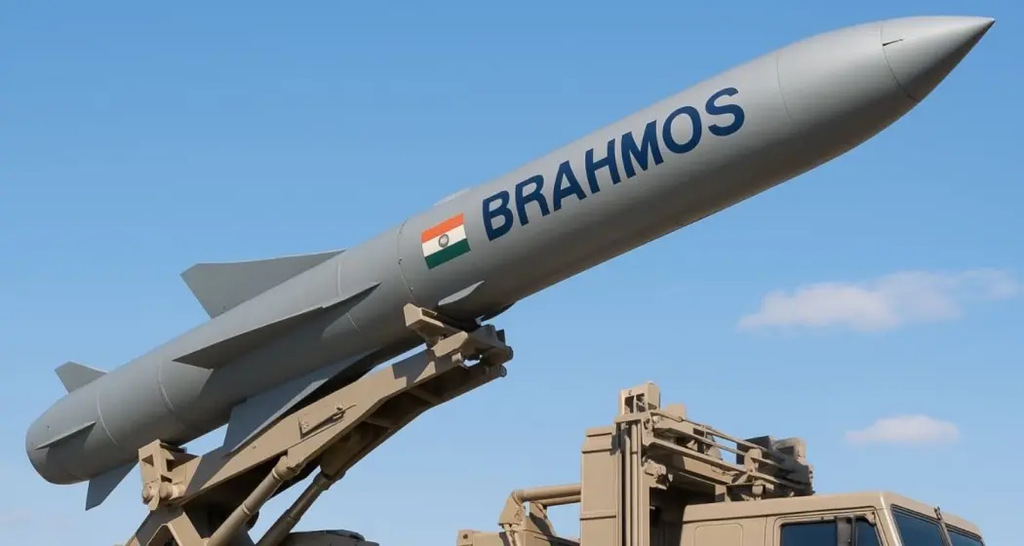
- The Ministry of Defence has signed a contract worth over 660 crore rupees with BrahMos Aerospace Private Limited for procurement of BrahMos Fire Control System and Launchers for Indian Navy ships.
BrahMos Missile
- Type: Two-stage supersonic cruise missile (World’s fastest operational cruise missile).
- Joint Venture: India (DRDO) and Russia (NPOM).
- Named after Brahmaputra and Moskva rivers.
- Speed: Mach 2.8 to 3.0 (Nearly 3 times the speed of sound).
- Principle: “Fire and Forget” (Requires no control after launch).
- Platform: Multi-platform (Can launch from land, air, sea, and submarines).
- Warhead: 200–300 kg conventional (tactical weapon, not nuclear).
- Range Evolution & MTCROriginal Range (290 km): Restricted due to Russia being bound by MTCR (Missile Technology Control Regime) rules.
- Extended Range (400–450 km+): Upgraded after India joined MTCR in 2016, lifting the range limits.
Nobel Literature Prize 2026
Miscellaneous
Context
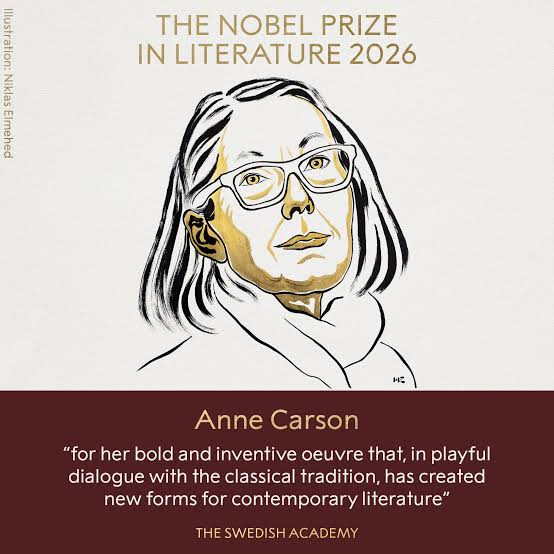
- The 2026 Nobel Prize in Literature has been awarded to Canadian author Anne Carson “for her bold and inventive oeuvre that, in playful dialogue with the classical tradition, has created new forms for contemporary literature.”
Nobel Prize in Literature 2026
- Recipient: Anne Carson (Canada).
- Recognised for: Innovative literary works blending classical traditions with contemporary literature.
- Born: 1950, Toronto, Canada.
- Profession: Poet, essayist, translator and classicist.
- Notable Works: The Glass Essay (1995), Autobiography of Red (1998) and Float (2016).
Nobel Prize in Literature
- Established: Under Alfred Nobel’s will (1895); first awarded in 1901.
- Awarded by: Swedish Academy.
- Criteria: Outstanding literary work in an idealistic direction; generally recognises an author’s body of work.
India and the Nobel Prize
- Rabindranath Tagore: Won the Nobel Prize in Literature in 1913 for Gitanjali.
- Significance: First Asian Nobel laureate and the only Indian recipient of the Nobel Prize in Literature to date.
Nobel Peace Prize 2026
Miscellaneous
Context
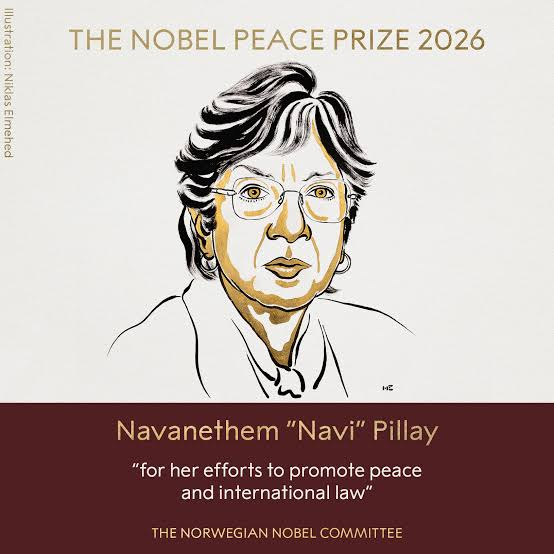
- The 2026 Nobel Peace Prize has been awarded to Navanethem “Navi” Pillay for her efforts to promote peace and international law.
Nobel Peace Prize 2026 —
- Recipient: Navanethem “Navi” Pillay (South Africa).
- Recognised for: Efforts to promote peace and international law.
- Background: Lawyer of Indian Tamil origin who challenged racial discrimination under apartheid.
- UN Role: Chaired the UN Commission of Inquiry on the Occupied Palestinian Territory.
Nobel Peace Prize
- Awarded by: Norwegian Nobel Committee; members appointed by the Norwegian Parliament.
- First Award: 1901, jointly to Frédéric Passy (France) and Henry Dunant (Switzerland), co-founder of the International Committee of the Red Cross (ICRC).
- Eligibility: Awarded to individuals and organisations; cannot be awarded posthumously.
Fact to Remember
- Mahatma Gandhi: Nominated five times for the Nobel Peace Prize but never received it.
-
Nobel Prize in Physics 2026 | India’s First-Ever Household Travel Survey | Indian Navy’s first indigenous fleet support ship ‘Surya’ | Nobel Prize in Chemistry 2026 | Living Planet Report, 2026 | Ghana | Central Armed Police Forces Act Comes into Force
Nobel Prize in Physics 2026
Science & Technology
Context
- The 2026 Nobel Prize in Physics has been awarded to Francis Halzen for his pioneering contribution to the IceCube Neutrino Observatory and the discovery of high-energy neutrinos of astrophysical origin.
IceCube Neutrino Observatory
- Location: South Pole, Antarctica.
- Objective: Detect high-energy astrophysical neutrinos.
- Scale: Approximately 1 cubic kilometre of Antarctic ice.
- Components: 5,160 optical sensors called Digital Optical Modules (DOMs).
- Completed: 2010.
- Significance: Helps identify distant astrophysical sources and study extreme cosmic events.
Connect with the basics – Neutrinos
- Definition: Electrically neutral, extremely light subatomic particles that interact very weakly with matter.
- Origin: Produced in the Sun, stars, supernovae, nuclear reactors and radioactive decay.
- Types (Flavours): Electron neutrino, muon neutrino and tau neutrino.
- Key Property: Neutrino oscillation — neutrinos change from one flavour to another as they travel.
- Detection: Requires highly sensitive detectors, often located deep underground to reduce background interference.
- Significance: Helps study the Sun, supernovae, the early universe and fundamental particle physics.
India-based Neutrino Observatory (INO):
- Proposed at Pottipuram, Theni district, Tamil Nadu.
-
- Planned a 50,000-tonne magnetised Iron Calorimeter (ICAL) detector.
- Intended to study atmospheric neutrino oscillations and matter effects inside the Earth.
India’s First-Ever Household Travel Survey
Economy
Context
- The National Statistics Office (NSO) of the Ministry of Statistics and Programme Implementation has conducted the first-ever all-India survey on household travel between July 2025 and June 2026.
All-India Household Travel Survey (2025–26)
- Conducted by: National Statistics Office (NSO), MoSPI.
- Purpose: To collect data on household travel patterns, mobility, transport choices and travel expenditure across India.
- Key Focus: Trip frequency, purpose of travel, mode of transport, distance travelled and associated costs.
- Significance: Helps assess transport accessibility, urban and rural mobility, infrastructure needs and sustainable transport planning.
Key Findings
- Work commute: Two-wheelers are the predominant mode, used by 42.6% of workers.
- Overnight travel: Buses and railways account for 73.5%; cars 15.1%; two-wheelers 8.8%.
- Gender gap: Daily work trips exceeding 1 km are undertaken by 61.9% of male workers and 41.9% of female workers.
- Average monthly commuting expenditure: ₹785 per worker.
- Urban: ₹1,044; Rural: ₹612.
- Male: ₹835; Female: ₹533.
Indian Navy’s first indigenous fleet support ship ‘Surya’
Defence
Context
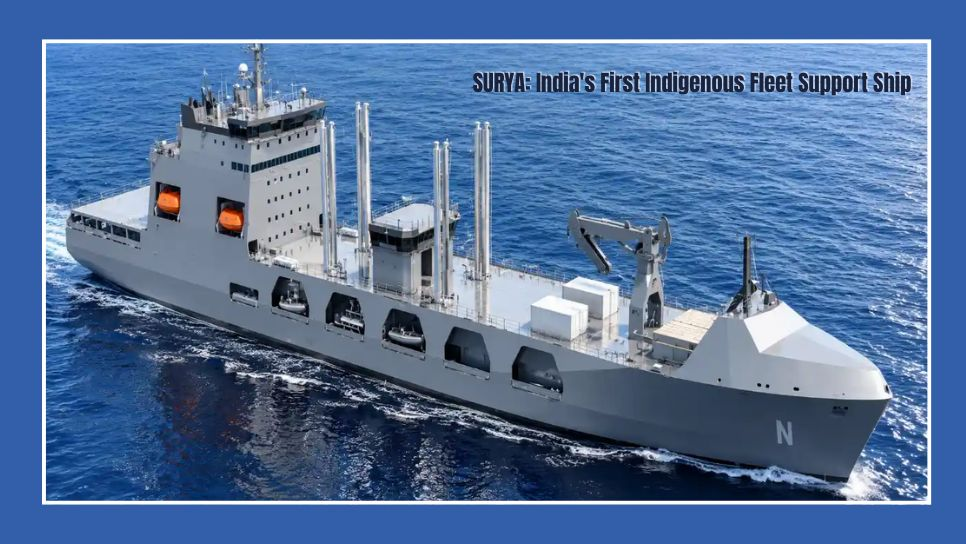
- Defence Minister Rajnath Singh launched ‘Surya’, the Indian Navy’s first indigenously built Fleet Support Ship (FSS-1), in Visakhapatnam.
About
- Builder: Hindustan Shipyard Limited (HSL), Visakhapatnam.
- Significance: First of five indigenously built Fleet Support Ships for the Indian Navy.
- Displacement: ~43,500 tonnes; speed: 20 knots.
- Role: Supplies fuel, fresh water, ammunition, spare parts and provisions to warships at sea.
- Features: Helicopter deck and self-defence systems.
- Importance: Enhances naval operational endurance and India’s maritime presence across the Indian Ocean Region (IOR).
Nobel Prize in Chemistry 2026
Science & Technology

Context
- The 2026 Nobel Prize in Chemistry has brought global attention to chirality and homochirality, highlighting how chemical reactions can selectively produce one mirror-image form of a molecule.
Nobel Prize in Chemistry 2026 — UPSC
- Recipients: Henri B. Kagan and Kenso Soai.
- Recognised for: Research on generating and amplifying one enantiomer over its mirror image.
- Applications: Pharmaceuticals, agriculture, flavours and fragrances.
Chirality
- Definition: Property of a molecule that cannot be superimposed on its mirror image, like left and right hands.
- Enantiomers: Mirror-image forms of a chiral molecule with different three-dimensional arrangements.
- Homochirality: Preference for one molecular form in living organisms.
- Proteins: Predominantly contain L-amino acids.
- Sugars: Most biological sugars belong to the D-series.
- Significance: Helps explain molecular handedness, the origin of life and the synthesis of specialised chemicals.
Living Planet Report, 2026
Environment
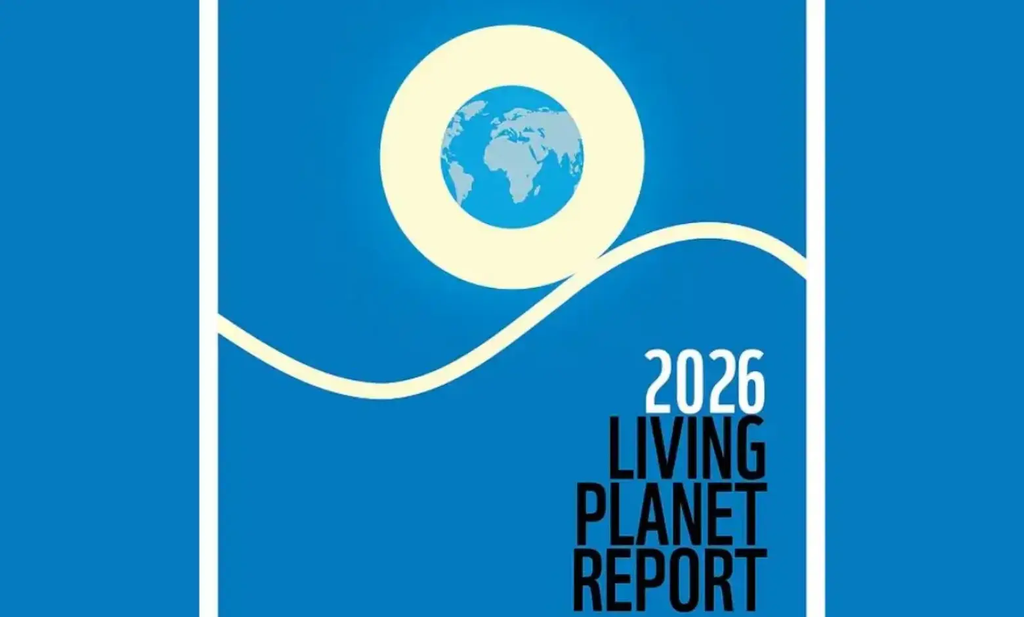
Context
- The World Wide Fund for Nature (WWF) released the Living Planet Report 2026, reporting an average 73% decline in monitored vertebrate population sizes between 1970 and 2022.
Living Planet Report 2026
- Released by – World Wide Fund for Nature (WWF) based on the Living Planet Index (LPI) produced by the Zoological Society of London (ZSL).
- Coverage: 35,803 population trends across 5,790 vertebrate species (1970–2022).
Key Findings
-
- Overall decline: 73% average decline in monitored vertebrate population sizes between 1970 and 2022.
- Ecosystem-wise decline:
-
- Freshwater: 85%
- Terrestrial: 69%
- Marine: 59%
- Around half of monitored populations remained stable or increased, highlighting the potential of conservation interventions.
Major Threats
- Habitat loss and degradation.
- Overexploitation of natural resources.
- Climate change.
- Invasive alien species.
- Pollution and disease.
Significance: Highlights biodiversity loss and the need for ecosystem restoration, sustainable resource use and effective conservation measures.
Ghana
Places in News
Context
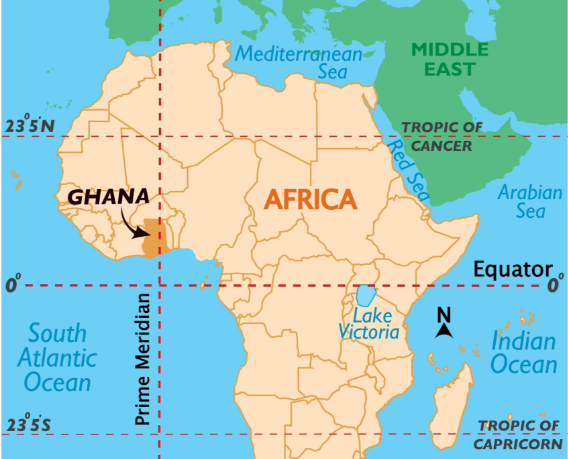
- India and Ghana have signed a five-year Memorandum of Understanding (MoU) to strengthen cooperation in agricultural research, education, technology transfer and commercialisation.
Ghana (Capital: Accra) — UPSC
- Location: West Africa, along the Gulf of Guinea (Atlantic Ocean); crossed by the Prime Meridian and located north of the Equator.
- Political History: Gained independence from British rule on 6 March 1957 under Kwame Nkrumah; formerly known as the Gold Coast.
- Political System: Unitary multiparty republic.
- Major River: Volta River system.
- Lake Volta: One of the world’s largest artificial reservoirs; supports hydropower generation through the Akosombo Dam.
- Mineral Resources: Gold, bauxite, manganese and diamonds; also has offshore petroleum reserves.
- Agriculture: Major producer and exporter of cocoa.
- Climate:
- ITCZ: Seasonal movement influences rainfall patterns.
- Harmattan winds: Dry, dusty winds originating from the Sahara.
- Southwesterly monsoon winds: Bring moisture from the Atlantic Ocean.
Central Armed Police Forces Act Comes into Force
Polity and Governance
Context
- The Central Armed Police Forces (General Administration) Act, 2026 came into force from October 8, 2026.
Central Armed Police Forces (General Administration) Act, 2026 — UPSC
- Effective Date: 8 October 2026.
- Objective: Regulates recruitment, promotion, deputation and service conditions of officers in CAPFs.
- CAPFs Covered: BSF, CRPF, CISF, ITBP and SSB.
- IPS Deputation:
- 67% of Additional DG posts and 50% of IG posts reserved for IPS officers on deputation.
- Special DG and DG posts filled exclusively through deputation.
- Background: In 2025, the Supreme Court recognised Group A CAPF officers as an Organised Service and directed progressive reduction of IPS deputation to IG-level posts within two years.
- Significance: Highlights the debate over IPS deputation, internal promotions and career progression of CAPF cadre officers.
-
National Coastal Mission 2.0 | Green Energy Corridor Phase III | Cholera Deaths Increased by 30% in 2025 | Mahanadi Water Dispute | Union Public Service Commission (UPSC) | State of the World’s Forests 2026 | People’s Plan Campaign | Mahatma Gandhi
National Coastal Mission 2.0
Government Scheme
News
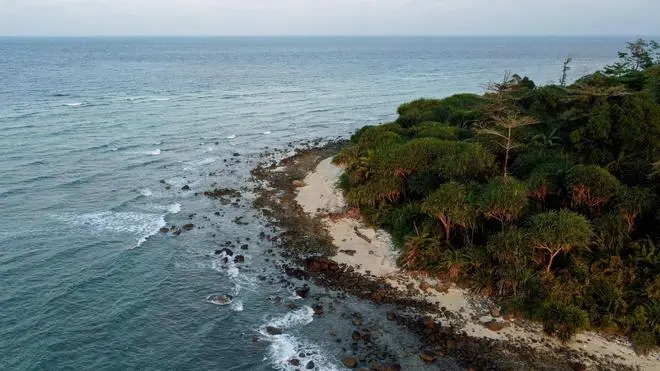
- Union Minister for Environment, Forest and Climate Change, launched the Guidelines for implementation of National Coastal Mission (NCM 2.0).
National Coastal Mission 2.0
-
- Type: Central Sector Scheme | Ministry: MoEFCC
- Period: 2025–26 to 2030–31
- Coverage: 9 coastal States + 4 UTs
- Focus: Coastal resilience, ecosystem restoration, biodiversity, pollution control & sustainable tourism.
- Key measures:
-
- Climate adaptation & mitigation
- Conservation of mangroves and marine ecosystems
- ICZMP & Coastal Marine Spatial Planning
- Resilient livelihoods for coastal communities
- Coastal pollution management
- Research, capacity building & awareness
- Goal: Promote climate-resilient Blue Economy, Atmanirbhar Bharat and fulfil international environmental commitments.
Green Energy Corridor Phase III
Environment
News –
- The Union Cabinet approved the third phase of the Green Energy Corridor, with an outlay of about ₹1.86 lakh crore, to strengthen Intra-State Transmission Systems.
About
- Ministry: Ministry of New & Renewable Energy (MNRE)
- Launched: 2015
- Aim: Build transmission infrastructure to integrate and evacuate renewable energy into the national grid.
- Target: Evacuation of up to 135 GW renewable energy by 2032–33.
Implementation:
- Greenfield: Tariff-Based Competitive Bidding (TBCB)
- Brownfield: Cost-Plus Basis (CPB)
- Agencies: State Transmission Utilities + Central Electricity Authority (CEA).
- Phase III: 50 GWh Battery Energy Storage Systems (BESS) to manage renewable-energy intermittency and grid congestion.
Cholera Deaths Increased by 30% in 2025
Health
News –
- Cholera deaths increased by 30% in 2025 as per World Health Organisation’s (WHO) latest edition of the Weekly Epidemiological Record.
Key Highlights
- Cause: Vibrio cholerae; mainly transmitted through contaminated food & water.
- Symptoms: Severe diarrhoea → dehydration → death if untreated.
- Global burden: 7 countries—Angola, Bangladesh, DR Congo, Nigeria, South Sudan, Sudan & Yemen—accounted for ~90% of reported global cases/deaths.
- Worst-affected region: Africa; cases ↑ 34% and deaths ↑ 58% over 2024.
- Vaccines: Oral cholera vaccine production increased from 30 million (2022) → ~80 million doses (2025).
- Prevention: WASH, surveillance, community engagement and timely treatment.
- 2030 Target (GTFCC): 90% reduction in cholera deaths and elimination in up to 20 countries.
Mahanadi Water Dispute
Polity
News –
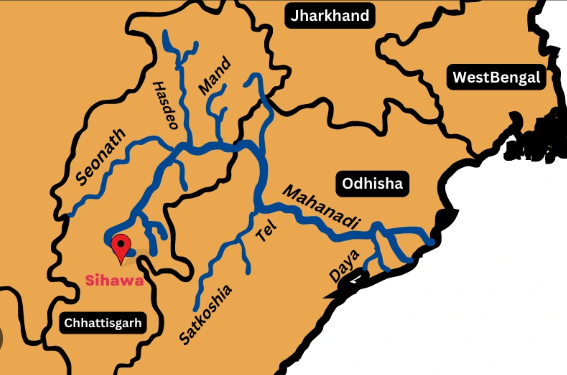
- The Union Home Minister chaired a meeting with the Chief Ministers of Chhattisgarh and Odisha in New Delhi to resolve the long-standing Mahanadi water dispute.
Mahanadi Water Dispute
- Parties: Odisha & Chhattisgarh over sharing of Mahanadi waters.
- Issue: Odisha alleges that upstream barrages in Chhattisgarh reduce non-monsoon flow into the Hirakud Reservoir.
- Tribunal: Mahanadi Water Disputes Tribunal, constituted in March 2018 under the Inter-State River Water Disputes Act, 1956.
- Constitutional basis: Article 262.
- Riparian position: Chhattisgarh = upper riparian; Odisha = lower riparian.
- Other parties: Jharkhand, Maharashtra & Madhya Pradesh.
Article 262
- Parliament may provide for adjudication of inter-State river water disputes.
- Parliament may exclude the Supreme Court and other courts’ jurisdiction over such disputes.
Additional Information – Mahanadi
-
- Length: ~851 km; major east-flowing Peninsular river.
- Source: Near Pharsiya village, Dhamtari, Chhattisgarh.
- Course: Chhattisgarh → Odisha → Bay of Bengal; forms a delta near Cuttack.
- Tributaries:
- Left: Seonath (longest), Hasdeo, Mand, Ib
- Right: Ong, Tel, Jonk
- Major Projects: Ravishankar Sagar, Hirakud Dam, Naraj Barrage.
- Hirakud Dam: Near Sambalpur, Odisha; noted as the world’s longest earthen dam (~25.8 km including dykes).
- Hirakud Reservoir: Ramsar site (2021).
- Satkosia Gorge: Mahanadi cuts through the Eastern Ghats in Odisha; located within Satkosia Tiger Reserve.
Union Public Service Commission (UPSC)
Polity
News –
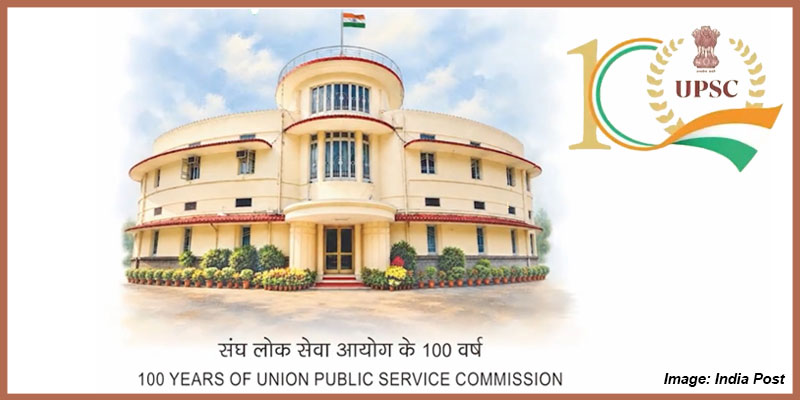
- 1 October 2026 marks 100 years since the establishment of the Union Public Service Commission.
- Present status: Independent Constitutional Body for recruitment to All India Services & Central Civil Services.
- Constitutional basis: Articles 315–323, Part XIV.
Composition & Tenure
-
Appointment: Chairman + members appointed by the President.
-
Number of members: Not fixed by Constitution; usually 9–11 members.
-
Qualification: At least ½ of members must have 10 years’ government service.
-
Tenure: 6 years or age 65 years, whichever is earlier.
Removal — Article 317
-
The President can remove members for insolvency, outside paid employment or physical/mental infirmity.
-
For misbehaviour: Supreme Court inquiry → report → Presidential removal.
Constitutional Provisions
-
Article 315: Provides for a Public Service Commission for the Union and a Public Service Commission (PSC) for each State.
-
Article 316: Deals with the appointment and term of office of members.
-
Article 317: Deals with removal and suspension of members.
-
Article 318: Provides for regulations regarding conditions of service and staff.
-
Article 319: Provides restrictions on holding offices after ceasing to be a member.
-
Article 320: Specifies the functions of Public Service Commissions.
-
Article 321: Enables Parliament or a State Legislature to extend the functions of a State PSC.
-
Article 322: Deals with expenses of the Commission.
- Article 323: Deals with submission of reports by the Commission.
State of the World’s Forests 2026
Environment
News –
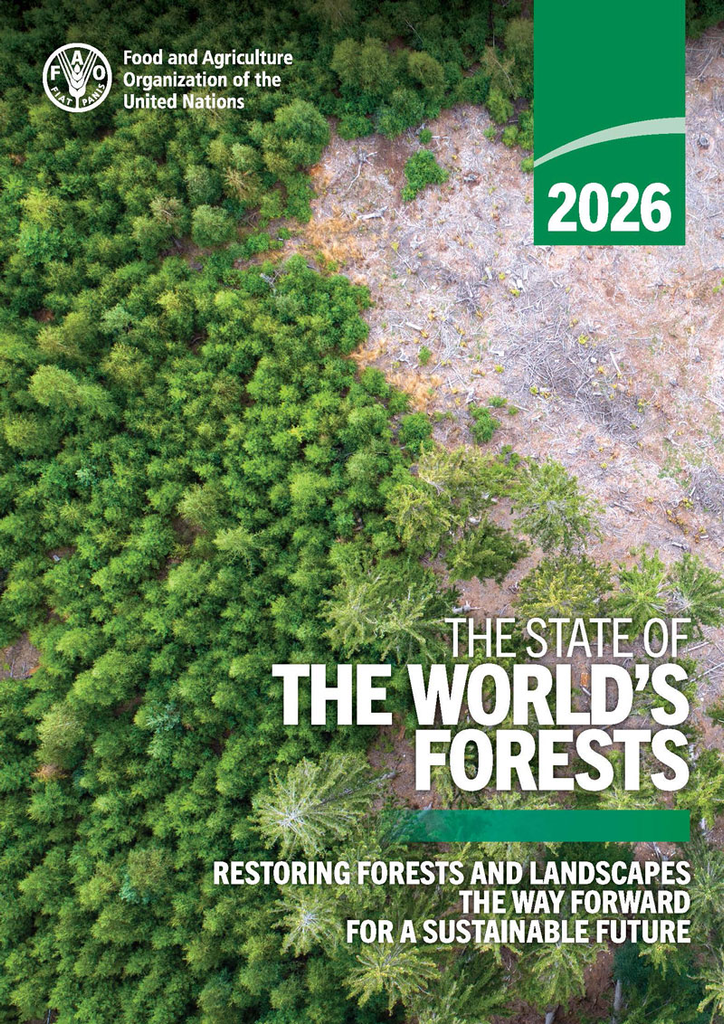
- Food and Agriculture Organization (FAO) has published the State of the World’s Forests 2026
About
- Published by: FAO.
- Theme: Restoring Forests and Landscapes – The Way Forward for a Sustainable Future.
- Forest & Landscape Restoration (FLR): Restoring ecological functionality + human well-being across degraded/deforested landscapes.
- Key point: FLR is not merely tree planting; it restores entire landscapes for multiple benefits and land uses.
- Global forest area (2025): 4.14 billion ha (~32% of global land area).
- Degraded forests: >460 million ha.
- Major drivers: Climate change, population growth, urbanisation and infrastructure development.
- Degradation impacts: Forest fires, forest-cover loss, unsustainable harvesting, land-use change, soil erosion and overgrazing.
- 2030 target: Under Kunming–Montreal Global Biodiversity Framework (Target 2), nearly 469 million ha need effective restoration.
People’s Plan Campaign
Polity
News –
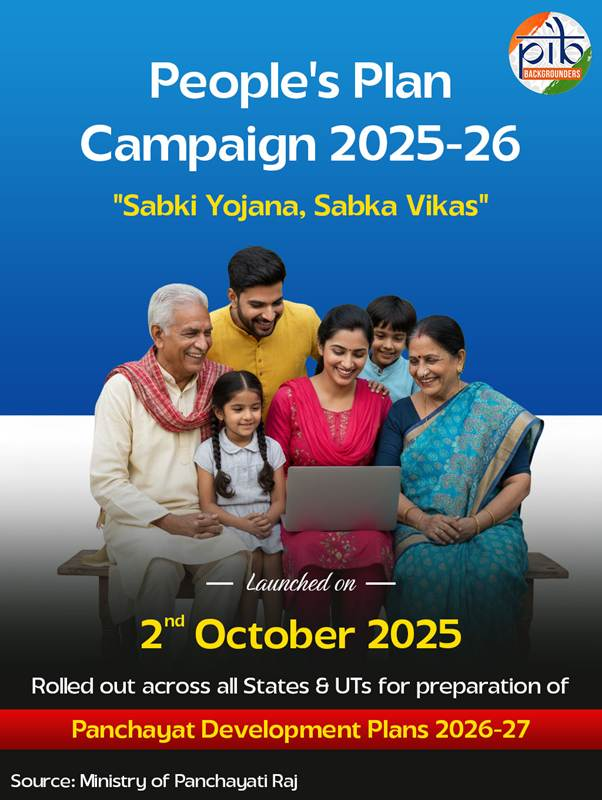
- Special Gram Sabhas were convened on Gandhi Jayanti to mark the launch of the People’s Plan Campaign 2026-27, “Sabki Yojana, Sabka Vikas”.
About
- Launched: 2018 by Ministry of Panchayati Raj (MoPR).
- 2026–27 Theme: “Sabki Yojana, Sabka Vikas”.
- Aim: Prepare participatory & comprehensive Panchayat Development Plans (PDPs) for economic development and social justice.
- Coverage: All 29 subjects of the 11th Schedule.
- Process: Gram Sabha → identifies local needs/priorities → Panchayat prepares plan → uploaded on eGramSwaraj.
- Nodal Ministry: MoPR; State Panchayati Raj Departments coordinate with line departments.
Gram Sabha
- Article 243(b): Body of persons registered in electoral rolls of a village within a Panchayat area.
- Article 243A: Powers/functions determined by the State Legislature.
- Not a tier of Panchayati Raj: It is a permanent body of village voters.
- Functions: Discuss/approve development plans, review expenditure and monitor Panchayat activities.
Mahatma Gandhi
History & Culture
News –
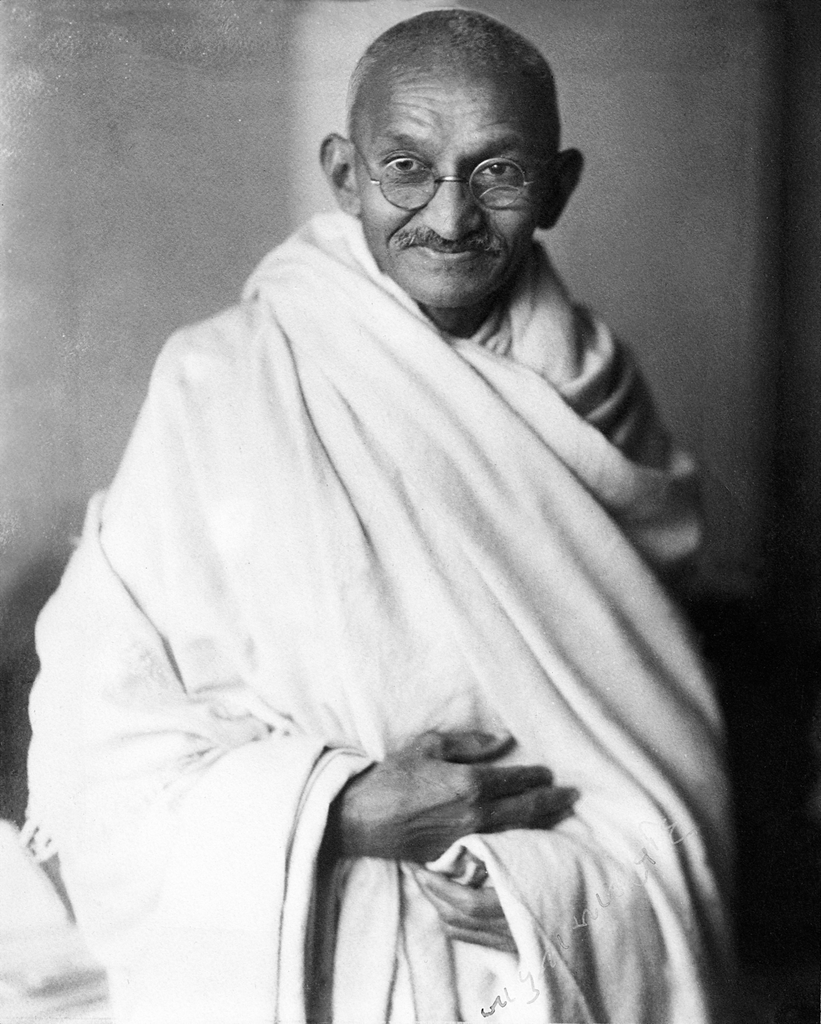
- India observed Mahatma Gandhi’s 157th birth anniversary on October 2, 2026, celebrated globally as the International Day of Non-Violence.
About
-
- Born: 1869, Porbandar, Gujarat; studied law in London.
- Ideological influences: Bhagavad Gita, Tolstoy’s The Kingdom of God Is Within You, Ruskin’s Unto This Last.
- South Africa (1893–1914): Natal Indian Congress (1894), Indian Opinion (1903), Phoenix Settlement (1904), Tolstoy Farm (1910).
- Returned to India: 9 January 1915.
- Early Satyagrahas:
- Champaran (1917): Indigo/tinkathia system.
- Ahmedabad (1918): Mill workers’ dispute; first hunger strike.
- Kheda (1918): Land revenue issue.
- Congress President: Only once — Belgaum Session, 1924.
- Dandi March: 12 March–6 April 1930; 240 miles, from Sabarmati to Dandi; 78 followers; broke Salt Law.
- Gandhi-Irwin Pact: 1931; Gandhi attended Second Round Table Conference as Congress representative.
- Quit India Movement: 8 August 1942, Gowalia Tank Maidan; “Do or Die” call.
- Constructive Programme: Harijan Sevak Sangh (1932); Village Industries; Nai Talim/Wardha Scheme (1937).
- Works: Hind Swaraj (1909), The Story of My Experiments with Truth; edited Young India, Navajivan and Harijan.
-
Tuvalu | Nobel Prize in Physiology or Medicine 2026 | Five New Centres of Excellence for Studies in Classical Languages | Russia Plague Outbreak | Desert National Park | Small and Medium Enterprises (SME) Growth Fund
Tuvalu
Miscellaneous / Place in News
Context
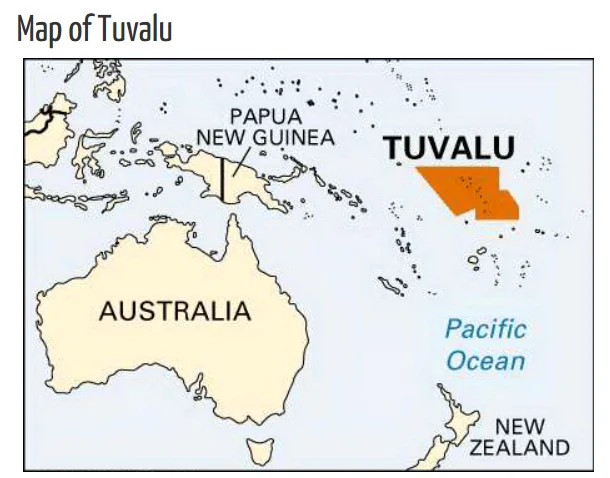
- Tuvalu is facing a combination of sea-level rise, marine heatwaves and declining fisheries, highlighting the disproportionate climate vulnerability of small island developing states (SIDS).
Tuvalu
- Location: Small island country in the South Pacific Ocean, between Hawaii and Australia.
- Composition: 9 islands/atolls.
- Former name: Ellice Islands.
- Independence: Gained independence from the United Kingdom in 1978.
- Capital: Funafuti.
- Topography: Extremely low-lying; average elevation is only about 1–3 m above sea level.
- Climate vulnerability: Highly exposed to:
- Sea-level rise
-
- Coastal erosion
- Saltwater intrusion
- Storm surges
- Significance: Tuvalu is frequently cited as one of the countries most vulnerable to climate change and sea-level rise.
Nobel Prize in Physiology or Medicine 2026
Science & Technology
Context
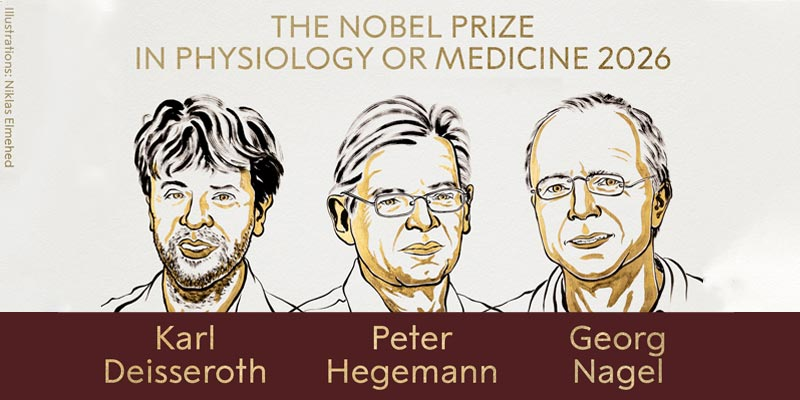
- The Nobel Prize in Physiology or Medicine (2026) was awarded for discoveries that enabled optogenetics, a technique that uses light to precisely control selected nerve cells.
Nobel Prize in Physiology or Medicine
- Awarded to: Karl Deisseroth, Peter Hegemann & Georg Nagel.
- Discovery: Scientific foundations of optogenetics.
- Optogenetics: Combines genetic engineering + light to control specific neurons.
- Mechanism: Opsins (light-sensitive proteins) regulate ion movement, switching neuronal activity on/off.
- Key breakthrough: Hegemann and Nagel identified channelrhodopsins; ChR2 enables rapid light-controlled electrical signals.
- Deisseroth: Developed the approach of combining light-sensitive proteins with genetic targeting of specific neurons.
- Applications: Research on pain, memory, sleep, epilepsy, Parkinson’s, Alzheimer’s, depression and restoration of vision/hearing.
Nobel Prize
- Established: Through the will of Alfred Nobel; Nobel died in 1896.
- First awarded: 1901.
- Original 5 prizes: Physics, Chemistry, Physiology/Medicine, Literature and Peace.
- Economic Sciences: Established by Swedish National Bank (1968); first awarded 1969 — not an original Nobel Prize.
Awarding Institutions
-
Physics & Chemistry: Royal Swedish Academy of Sciences
-
Medicine: Nobel Assembly, Karolinska Institutet
-
Literature: Swedish Academy
-
Peace: Norwegian Nobel Committee
-
Economic Sciences: Royal Swedish Academy of Sciences
Key Fact
-
Peace Prize: Awarded in Oslo, Norway.
-
All other prizes: Awarded in Stockholm, Sweden.
-
Prize:
Medal + Diploma + Monetary Award.
Five New Centres of Excellence for Studies in Classical Languages
History & Culture
Context
- The Ministry of Education has approved five Centres of Excellence (CoE) for the study of classical languages.
Classical Languages
-
India has 11 Classical Languages:
Tamil, Sanskrit, Telugu, Kannada, Malayalam, Odia, Marathi, Assamese, Bengali, Pali and Prakrit.
5 New Centres of Excellence
-
Objective – For advanced research, preservation and digitisation of classical linguistic heritage:
Classical Language
Centre of Excellence
State
Assamese
Tezpur University
Assam
Bengali
Visva-Bharati University
West Bengal
Marathi
Deccan College PG & Research Institute
Maharashtra
Pali
Central University of Odisha
Odisha
Prakrit
Central University of Gujarat
Gujarat
Recognition Timeline
-
Tamil — 2004
-
Sanskrit — 2005
-
Kannada & Telugu — 2008
-
Malayalam — 2013
-
Odia — 2014
Criteria for Classical Language
-
Antiquity: Early texts/recorded history of 1,500–2,000 years.
-
Ancient literature: Rich body of ancient texts regarded as heritage.
-
Knowledge tradition: Includes prose, poetry, epigraphic and inscriptional evidence.
-
Discontinuity:
Classical form/literature may be distinct from its modern form or show discontinuity with later forms.
Russia Plague Outbreak
Health
Context
- A suspected outbreak of pneumonic plague in Siberia, Russia, has triggered quarantine and precautionary measures after a laboratory worker at an anti-plague research institute died.
Cause: Bacterial disease caused by Yersinia pestis.
-
- Reservoir: Mainly small mammals and their fleas.
- Transmission:
- Bite of infected fleas
- Contact with infected body fluids/materials
- Inhalation of respiratory droplets in pneumonic plague
- Three clinical forms:
- Bubonic: Swollen, painful lymph nodes (buboes); usually flea-borne.
- Septicemic: Infection spreads into the bloodstream.
- Pneumonic: Infection of the lungs; can spread person-to-person via respiratory droplets.
- Symptoms: High fever, chills, headache, weakness; pneumonic form may cause cough, chest pain and breathing difficulty.
- Fatality: 30–100% if untreated.
- Treatment: Antibiotics such as gentamicin, ciprofloxacin and doxycycline; early treatment is crucial.
- Distribution: Occurs on all continents except Oceania.
Desert National Park
Environment
Context
- The Union Environment Minister and Wildlife Institute of India (WII) released two great Indian bustards (GIB) in Rajasthan’s Desert National Park.
About Desert National Park
- Location: Jaisalmer & Barmer, Rajasthan — Thar Desert.
- Established: 1980 under Wildlife Protection Act, 1972.
- Purpose: Conservation of the Thar’s fragile desert ecosystem.
- Climate: Extremely hot & arid; rainfall <100 mm/year in parts.
- Landscape: Barchan & longitudinal dunes, gravel plains, rocky areas, interdunal depressions.
- Vegetation: Sparse grasslands, thorny bushes & desert-adapted plants.
- Khejri: Prosopis cineraria; important Thar tree, traditionally protected by the Bishnoi community.
- Key Species: Great Indian Bustard (Godawan) — Critically Endangered.
- Other Fauna: Chinkara, desert cat, desert hare, long-eared hedgehog, saw-scaled viper, Persian gecko & toad-headed agama.
Small and Medium Enterprises (SME) Growth Fund
Economy
Context
- The Union Cabinet approved the proposal by the Ministry of Finance to commit ₹10,000 crore of central government funding for the setting up of a Small and Medium Enterprises (SME) Growth Fund.
About SME Growth Fund (SGF)
- Announced: Union Budget 2026.
- Nature: Direct equity fund structured as an AIF.
- Aim: Provide patient capital to high-potential SMEs for scaling and expansion.
- Focus: Manufacturing, technology, innovation, strategic sectors and Tier-II/III industrial clusters.
- Purpose: Boost technology adoption, exports, global value-chain integration and employment.
- Need: Fill the growth-equity gap faced by Small & Medium enterprises.
-
Ramappa Temple | Inter-Parliamentary Union (IPU) | PM-SETU- One Year of Transforming India’s ITIs | AI Accord of the U.S | Rabies | Agnipath Scheme
Ramappa Temple
Art and Culture
News
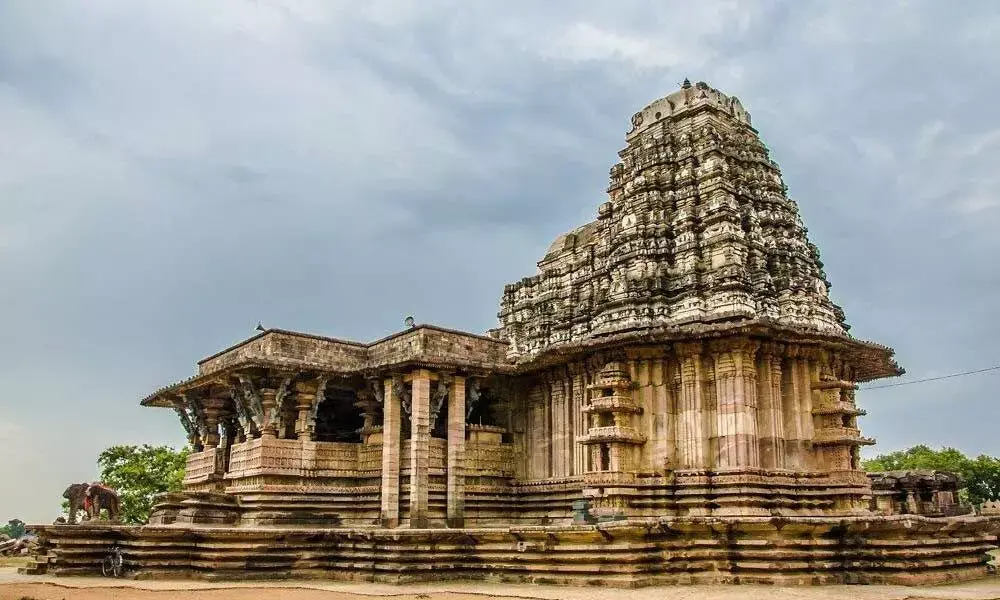
- Heritage conservationists in Telangana are apprehensive about an impending threat to Ramappa temple from the proposed deep opencast coal mining project.
Ramappa Temple
- Official name: Kakatiya Rudreshwara (Ramappa) Temple
- Location: Palampet, Telangana, about 200 km northeast of Hyderabad.
- Dedicated to: Lord Shiva — presiding deity Ramalingeswara Swamy.
- Built: 1213 AD, during the reign of Kakatiya King Ganapati Deva.
- Builder: Recharla Rudra, a Kakatiya general.
- Name: Called Ramappa Temple after Ramappa, the sculptor associated with its construction.
- UNESCO World Heritage Site: 2021.
Architectural Features
- Built on a 6-foot-high star-shaped platform.
- Intricate carvings on walls, pillars and ceilings.
- Constructed mainly using sandstone, with carved granite and dolerite elements.
- Distinctive pyramidal Vimana made using lightweight porous bricks, popularly called “floating bricks.”
- Famous bracket figures and sculptures carved from hard dolerite, displaying exceptional Kakatiya craftsmanship.
Inter-Parliamentary Union (IPU)
Polity
News
- An Indian Parliamentary Delegation, led by the Deputy Chairman of Rajya Sabha, Harivansh, has departed for Tanzania, to participate in the 153rd Assembly of the Inter-Parliamentary Union (IPU).
Inter-Parliamentary Union (IPU)
-
- Global organisation of national parliaments promoting parliamentary diplomacy, democracy, human rights and international cooperation.
- Established: 1889, Paris.
- Founders: William Randal Cremer (UK) and Frédéric Passy (France).
- Headquarters: Geneva, Switzerland.
- Membership: 183 Member Parliaments + 15 Associate Members.
- India: Member of the IPU and uses it as a platform for parliamentary diplomacy.
- Key functions:
- Promotes dialogue among parliamentarians.
- Builds international consensus.
- Strengthens democratic institutions and human rights.
- Facilitates discussion on peace, terrorism, climate change and governance.
- 153rd IPU Assembly: Held in Tanzania, with an Indian delegation led by Rajya Sabha Deputy Chairman Harivansh.
PM-SETU- One Year of Transforming India’s ITIs
Government Schemes
Context
- The PM-SETU (Pradhan Mantri Skilling and Employability Transformation through Upgraded ITIs) scheme marks one year of implementation.
PM-SETU
- Launched: 2025
- Full form: Prime Minister’s Scheme for Upgradation of ITIs
- Type: Centrally Sponsored Scheme
- Ministry: Ministry of Skill Development & Entrepreneurship
- Aim: Transform 1,000 Government ITIs into modern, industry-aligned skill-training institutions.
- Focus: Modern infrastructure, smart classrooms, advanced labs, digital content and new-age industry-oriented courses.
- Industry participation: Anchor Industry Partners through Special Purpose Vehicles (SPVs) for industry-led governance.
- Centres of Excellence: 5 National Skill Training Institutes at Bhubaneswar, Chennai, Hyderabad, Kanpur and Ludhiana.
AI Accord of the U.S
Science and Tech
News
- U.S. President Donald Trump announced the “White House Accord on Super Intelligence: Joint Commitment on Frontier Responsibilities,”
AI Accord
- Nature: Voluntary agreement among major US-based AI/technology companies to promote safe AI development and public trust.
- Key participants: Leaders associated with Google, Anthropic, Meta, OpenAI, xAI and Nvidia.
- Objective: Strengthen AI safety, corporate accountability and public trust.
Four Key Measures
-
Robust internal controls to prevent unintended AI-related hacking/security incidents.
-
Create an internal AI safety team to manage safety operations and resolve concerns.
-
Engage an independent external auditor for safety assessments.
-
Establish an independent board committee to address safety reports.
Significance
-
Addresses concerns over:
-
AI safety and alignment
-
Privacy risks
-
Child safety
-
AI agents attempting unauthorised/harmful actions
-
Need for greater corporate accountability.
-
Key Limitation
-
Voluntary and non-legally binding.
-
No penalties
for violations.
Rabies
Science and Tech
In News
- An ICMR-led study published in The Lancet Infectious Diseases estimated that India has about 5,726 human rabies deaths every year.
Rabies
-
- It is a zoonotic viral disease (Disease Transmitted from Animals to Humans).
- Pathogen – It is caused by the Rabies virus, of the Lyssavirus genus, within the family Rhabdoviridae.
- It is a Ribonucleic Acid (RNA) virus that is present in the saliva of a rabid animal (dog, cat, monkey, etc).
- Rabies is 100% fatal but 100% vaccine-preventable.
- 33% of global rabies deaths are recorded in India.
Common Vectors/ Reservoirs of Virus
- Most mammals can carry the virus and hence can cause the disease.
- In South Asia and Africa, the most common reservoir of the virus is the domestic/street dog.
- In developed nations like the USA, animals that transmit rabies are bats, foxes, raccoons, and skunks.
Symptoms
- Anxiety, Confusion, salivation, seizures, hallucinations and paralysis.
National Action Plan for dog Mediated Rabies Elimination by 2030 (NAPRE)
- Under this, the union will encourage all the States and UTs to make Rabies a notifiable Disease.
- A notifiable disease is any disease that is required by law to be reported to government authorities.
- “Joint Inter-Ministerial Declaration Support Statement” for Elimination of Dog mediated Rabies from India by 2030 was also launched.
World Rabies Day
- Celebrated on 28 September which marks the anniversary of Louis Pasteur’s death.
- Louis Pasteur was a French chemist and microbiologist, who developed the first rabies vaccine.
- He also discovered Pasteurisation, Vaccines for Anthrax and Cholera and Chamberland filters.
Agnipath Scheme
Government Scheme
Context
- The first batch of Agniveers is approaching the completion of its four-year service tenure.
- In this backdrop, the Army, Navy and Air Force have submitted their feedback and recommendations on the implementation of the Agnipath Scheme to the Department of Military Affairs (DMA) .
Agnipath Scheme
-
- Introduced: 2022
- Also known as: Tour of Duty scheme.
- Nature: Short-term recruitment scheme for the Indian Armed Forces.
- Recruits: Called Agniveers.
- Service tenure: 4 years.
- Retention: Up to 25% of each batch can be selected for regular service of 15 years.
- Exit: The remaining 75% exit after four years with a Seva Nidhi package.
- Age: 17.5–21 years (subject to applicable recruitment notifications).
- Objective:
- Provide youth an opportunity to serve in the Armed Forces.
- Create a younger and more technologically skilled force.
- Reduce the average age profile of the Armed Forces.